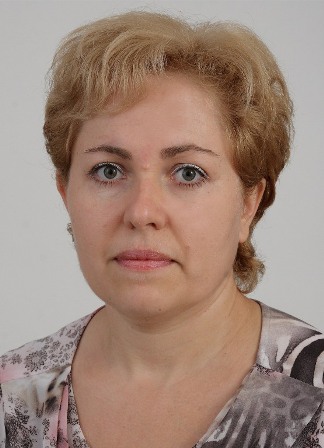
Fatme Yuseinova Rashidova is a Senior Lecturer at the Technical University - Gabrovo , affiliated with the College of Engineering and the Department of Automation, Information and Control Technology . Her work bridges computer science , educational technology , and systems engineering . Research Focus: Automated scheduling, distance learning platforms, cybersecurity in Industry 4.0, and AI applications in education. Publications: 29 scientific works, including a 2025 textbook on internet-based systems and recent papers on timetabling optimization, SWOT analysis in education, and AI challenges. Projects: Participated in 14 research initiatives, including electronic voting systems, smart medicine dispensers, and cybersecurity frameworks for industrial environments. Contributions: Developed centralized timetabling systems, virtual admission environments, and online testing platforms. Her projects emphasize reducing administrative burdens, improving accuracy in educational processes, and enhancing student satisfaction.
Alexandra Andreeva Soskova is a Full Professor in the Department of Mathematical Logic and its Applications at Sofia University's Faculty of Mathematics and Informatics. She holds a PhD in Mathematics (1990) and has held academic roles since 1979, including Head of Department (2008-2016) and Vice Dean (2015-2016). Her research focuses on computability theory, computable structure theory, and enumeration reducibility, with notable contributions to degree spectra and abstract structures. Education: BS (1978), MS (1979) in Mathematics, PhD (1990) in Mathematical Logic (Sofia University) Award: Honorary badge 'St. Kliment Ohridski' (2020) Her work explores effective properties of abstract structures, including coding in graphs, cohesive powers, and jump inversion theorems. She has supervised multiple PhD and MS students, including Stefan Vatev. Key grants include collaborations with institutions in Austria, Russia, and the US. She actively participates in academic service, including roles with the Association for Symbolic Logic and organizing international conferences.
St. Cyril and St. Methodius University of Veliko TarnovoBulgaria
Assoc. Prof. Ivaylo Donchev is affiliated with the University of Veliko Tarnovo , specifically the Faculty of Mathematics and Informatics . His research focuses on Object-Oriented Programming , C++ , C# , .NET , Functional Programming , and Informatics Didactics . Current projects: "Methodology for Modeling and Development of Information Systems with Artificial Intelligence in Education" (2025) "Digital Accessibility for Visually Impaired in Research/Education" (2023) His publications (2015–2025) emphasize Object-Oriented Programming , Modern C++ , Exception Handling , and Programming Education . Recent work includes optimizations in C# memory handling, AI-driven systems for academic resource management, and accessibility improvements for research platforms. He contributes to STEM education , Software Engineering Methodologies , and Digital Inclusion , with a focus on practical implementations in academic settings.
St. Cyril and St. Methodius University of Veliko TarnovoBulgaria
Dovgun Andriy Yaroslavovych is an Associate Professor at the Department of Computer Science, Yuriy Fedkovych Chernivtsi National University. His academic profile includes a Candidate of Physical and Mathematical Sciences degree (specialty 01.05.01 - Theoretical Foundations of Informatics and Cybernetics) and formal certification in computer science teaching methods. Research Focus : Stochastic dynamic systems, automatic control, biomedical optics, algorithms, and information technologies. Key Publications : Authored educational manuals on data structures (2024), algorithms (2022), and contributed to cross-platform decision support systems analysis (2023). Professional Affiliation : Member of the Chernivtsi IT Cluster since 2019.
St. Cyril and St. Methodius University of Veliko TarnovoBulgaria
Dr. Yuliya Volodymyrivna Tanasyuk is an Associate Professor at the Department of Computer Systems and Networks, Chernivtsi National University named after Yu. Fedkovych . She holds a Candidate of Physical and Mathematical Sciences degree (2003) and has been an active researcher and educator in computer science and physics domains. Academic Rank: Associate Professor Email: y.tanasyuk@chnu.edu.ua Her research spans multiple disciplines: Cryptography Cellular Automata Internet of Things (IoT) Software Engineering Network Technologies Project Management Notable trends in her publications include: Applications of cellular automata in cryptographic hash functions (2017–2021) Advancements in CdTe semiconductor materials (2003–2007) Interdisciplinary work bridging physics and computer science Scientific recognition includes: Multiple Cisco certifications (CCNA Security, DevNet Associate) 2023 UGEN Uni-Biz Bridge award for teaching flexibility British Council Academic Teaching Excellence (2016) International conference presentations at E-MRS and ISCP As an academic advisor, she has supervised numerous student research projects including: TensorFlow-based pattern recognition Traffic sign tracking systems Blockchain interaction frameworks University event planning software Smart parking detection systems Her work often intersects hardware-software integration and security protocols, with educational contributions through methodological guides in C++ programming and network technologies.
St. Cyril and St. Methodius University of Veliko TarnovoBulgaria
Assoc. Prof. Zlatko Georgiev Varbanov is a distinguished academic at the Faculty of Mathematics and Informatics, University of Veliko Tarnovo (Bulgaria). With expertise spanning discrete mathematics, coding theory, and software development, he has established himself as a prominent researcher in both theoretical and applied computer science domains. His scholarly work bridges mathematical theory with practical implementations, particularly in DNA coding, quantum error correction, and software engineering principles. Dr. Varbanov's research interests encompass a diverse range of topics including Discrete Mathematics, Coding Theory, Algorithms, Programming, DNA codes, Quantum codes, and Information security. His scholarly work demonstrates a consistent focus on the intersection of algebraic structures and practical coding applications, with particular emphasis on self-dual codes over finite fields and their applications in DNA computing and quantum information theory. In software engineering, he has made significant contributions to design patterns, asynchronous programming in C#, and static site generation techniques. Analysis of Dr. Varbanov's recent publications reveals a dual research trajectory: one strand focusing on theoretical aspects of coding theory (particularly DNA codes and quantum codes), and another addressing practical software engineering challenges. His work on design patterns, SOLID principles, and asynchronous programming in C# demonstrates his commitment to improving software development practices. The publications on static site generation and data storage services reflect his engagement with contemporary web development technologies and their optimization. Dr. Varbanov has been actively involved in numerous research projects, with current engagements extending into 2025. These projects focus on AI-driven information systems, mobile technologies for students with special needs, digital accessibility for visually impaired users, and enhancement of research indicators for faculty members. His collaborative work spans multiple institutions and demonstrates a strong commitment to both theoretical research and practical applications that address real-world challenges.
St. Cyril and St. Methodius University of Veliko TarnovoBulgaria
Valentina Volodymyrivna Dvorak serves as an Assistant Professor in the Department of Computer Science at Chernivtsi National University. Her professional activities span across computer vision, deep learning, IT project management, and business analysis, with significant contributions to both academic research and practical applications in these fields. Dr. Dvorak holds a Candidate of Technical Sciences degree with specialization in Pressure Processing Processes and Machines. Her educational background includes a Master's in Metallurgical Equipment (2004) and a degree in Organizational Management (2010) from Donbass State Machine-Building Academy. This unique combination of metallurgical engineering and computer science expertise informs her interdisciplinary research approach. Her research interests prominently feature Computer Vision and Deep Learning applications across diverse domains including medical diagnostics, satellite imagery analysis, and industrial process optimization. Dr. Dvorak has made significant contributions to convolutional neural network implementations, automated recognition systems, and polarization-correlation microscopy techniques for biomedical applications. Her work bridges theoretical computer science with practical implementations in healthcare, manufacturing, and environmental monitoring. Analyzing her publication record reveals a strong focus on practical applications of deep learning, with particular emphasis on computer vision systems for medical diagnostics, industrial quality control, and environmental monitoring. Her research demonstrates consistent progression from fundamental metallurgical process optimization to advanced AI applications. Certificate of acknowledgment as scientific supervisor for BLACK SEA SCIENCE 2022 Educational Grant from SoftServe for developing training course (2021) Dr. Dvorak actively contributes to IT education through multiple textbooks including 'Deep Learning for Computer Vision,' 'IT Project Management,' and 'Intelligent Data Analysis.' Her professional development includes numerous certifications from Sigma Software University and SoftServe, reflecting her commitment to staying current with industry practices. She serves as a member of the Bukovina Information Technology Cluster and provides scientific consulting for SKB 'Electronmash KM.'
St. Cyril and St. Methodius University of Veliko TarnovoBulgaria
Yatsko Oksana Myroslavivna is an Associate Professor at the Department of Computer Science, Chernivtsi National University named after Yuriy Fedkovych. She holds a Candidate of Pedagogical Sciences degree (specialty 13.00.02 - theory and methods of teaching informatics) and has been certified as an Associate Professor since 2022. Her research focuses on computer-oriented methodological systems for teaching computer disciplines, with specializations in data mining for business applications, game theory implementation in economic decision-making, web technologies development, and algorithm design. She actively contributes to educational literature with multiple textbooks on Discrete Mathematics, Operations Research, Web Technologies, and Systems Modeling. Her professional engagements include membership in the Bukovina Information Technology Cluster, Chernivtsi Mathematical Society, and participation in international conferences like SPIE Optical Engineering and Correlation Optics. She has completed advanced certifications in machine learning, data visualization, and online education technologies from Prometheus, SoftServe, and other institutions. Her publications demonstrate expertise in strategic business analysis, cross-platform decision support systems, and educational software development. The 15 most recent works (2023-2024) cover data structures, game theory applications, web development tools, and polarization-based biomedical diagnostics. She serves as an expert for Ukraine's Ministry of Education and National Agency for Quality Assurance in Higher Education.
Atanas Cvetanov Semerdzhiev serves as an Associate Professor in the Department of Computer Informatics at the Faculty of Mathematics and Informatics, Sofia University. His institutional contact includes email (asemerdzhiev@fmi.uni-sofia.bg) and phone (+359 2 8161 558), with office location in room FMI-517. His research spans core computational disciplines with emphasis on: Computer Science Informatics Artificial Intelligence Data Structures Algorithms Software Engineering As an active academic staff member, he contributes to the educational framework of Sofia University's Faculty of Mathematics and Informatics through teaching and research initiatives in computational fields. No specific details regarding student advising, grant acquisitions, or laboratory affiliations are documented in the available institutional records.
Dr. Silviya Parvanova Boumova is an Associate Professor at the Faculty of Mathematics and Informatics, Sofia University 'St. Kliment Ohridski' , with a PhD in Algebra from Eindhoven University of Technology. Her research focuses on combinatorial structures in Coding Theory and Design Theory , particularly Orthogonal Arrays and Spherical Designs . Research Interests Her work investigates the minimum distance and covering radius of orthogonal arrays using distance distributions, with applications in polynomial metric spaces and error-control codes. She collaborates extensively with researchers like Peter Boyvalenkov and Maya Stoyanova. Publications Recent studies (2022–2000) analyze bounds for orthogonal arrays, Diophantine problems, and geometric properties of codes. Key subfields include distance distributions , polynomial identities , and combinatorial optimization . Contact Email: boumova@fmi.uni-sofia.bg
Prof. Dr. Deyan Radev is a full Professor of FinTech, Banking, and Systemic Risk at Sofia University "St. Kliment Ohridski", where he has served since 2020. He also holds the EUI Fernand Braudel Senior Fellow position at the European University Institute in Florence, Italy, and directs the CEE Centre for Digital Finance. His academic career spans institutions including the University of Bonn, Goethe University Frankfurt, and Johannes Gutenberg University Mainz. Doctor of Economics (Summa cum laude) - Goethe University Frankfurt (2013) Master of Business Administration - University of Konstanz (2008) Bachelor of Science in Economics - Sofia University (2006) Prof. Radev's research focuses on systemic risk and financial contagion in the EU, with groundbreaking work on sovereign-bank linkages during the Eurozone crisis. His current work explores FinTech , banking regulation , and digital finance through projects like "Development of AI-based algorithms for credit risk" and "Leveraging alternative data for unbiased credit scoring". His recent publications analyze topics like fintech cluster competitiveness, digital euro implications, and bank resolution regimes. His systemic risk indices are used by the European Central Bank in the ESRB Risk Dashboard. He has secured multiple grants exceeding €200,000 from Bulgarian National Science Fund and Sofia University. Scientific Awards: Hochschulpreis des Deutschen Aktieninstituts (2014) Deutsche Bundesbank Special Prize (2014) Professional Memberships: American Economic Association European Finance Association International Network of Financial Education
Prof. Plamen Tsvetkov is a faculty member at New Bulgarian University (NBU) in the Department of Telecommunications since 2013. He previously held roles at Technical University of Sofia (1986–2019), including Head of the Department of Electrical Metrology (2004–2019). His academic career spans over 35 years in teaching and research. Education : PhD in Electrical Metrology from Technical University of Sofia (1998), specializing in robust structures for measurement systems. Research Interests : Metrology and calibration of measurement devices Power quality and electromagnetic field analysis Design of information-measurement systems Robust structures for measurement accuracy Applications in telecommunications and computer technology Recent Work Trends : His 15 most recent publications focus on power quality calibration methods, 4G/5G network protocols, and advanced signal processing techniques. Collaborations with international researchers emphasize standards like BDS EN 50160 and tools such as LabVIEW and MATLAB. Scientific Awards : Silver Medal, Technical University of Sofia Grants and Projects : Led 8 international projects and participated in over 30, including EU-funded initiatives on measurement standards and power quality. He also contributed to educational reforms in electrical engineering curricula. Publications and Leadership : Authored over 20 books and 130+ publications, with 15+ indexed in Scopus/Web of Science. Active in symposiums like International Symposium Metrology and Metrology Assurance as committee member.
Asst. Tsvetelina Simeonova, PhD, is a faculty member at New Bulgarian University in the Department of Telecommunications. She holds a PhD in Telecommunications and Computer Technology from VTTU "T. Kableshkov" (2013) and transitioned to a regular faculty role in 2022 after serving as an honorar assistant (2020-2022) and teaching at VTTU "T. Kableshkov" (2016-2022). Education: PhD in Telecommunications and Computer Technology (2013), VTTU "T. Kableshkov" Experience: 7 years of teaching across 15+ courses in SCADA systems, IoT, cybersecurity, and network reliability Research Interests: Her work focuses on network reliability, risk analysis, and integration of SCADA systems with IoT. She explores mathematical and simulation modeling of telecommunications structures, cybersecurity protocols, and algorithmic approaches to risk management in transport infrastructure. Recent Publications highlight trends in 6G communication services, Tactile Internet, Digital Twin technology, and SCADA-IoT integration. These align with her expertise in network security and future telecommunications infrastructure.
St. Cyril and St. Methodius University of Veliko TarnovoBulgaria
Sergey Vasilyevich Golub is a Professor at the Department of Software for Automated Systems at Cherkasy State Technological University. He holds a Doctor of Technical Sciences degree and has been part-time faculty since 2018. His career spans multiple roles, including dean at CHNU and head of departments in intelligent systems and software engineering. His research focuses on agent programming, intelligent monitoring, medical informatics, and machine learning. He has contributed to interdisciplinary projects linking software engineering with environmental monitoring and healthcare diagnostics. Recent publications emphasize multi-agent systems, social network analysis, and data-driven disease prediction. Key article trends include integrating satellite data for climate monitoring, authorship classification in social media, and agent-based modeling for pandemic forecasting. He collaborates with researchers in Ukraine and abroad, with works in Springer LNNS and CEUR-WS proceedings. Thanks and honorary diplomas from Cherkasy National University (2000, 2003, 2015) Honorary diplomas from Cherkasy Regional State Administration (2001, 2014) Honorary diploma from Ukraine's Ministry of Education and Science (2011) He has authored monographs on data analysis technologies and cross-platform decision support systems. His work bridges academic research and practical applications in intellectual monitoring across healthcare, ecology, and cybersecurity domains.
St. Cyril and St. Methodius University of Veliko TarnovoBulgaria
Myroslav Lyubomyrovych Kovalchuk serves as an Associate Professor in the Department of Computer Science at Yuriy Fedkovych Chernivtsi National University. His academic foundation includes degrees in Electronics and Microelectronics, culminating in a Candidate of Physical and Mathematical Sciences qualification. His educational background comprises: Bachelor of Electronics, Yuriy Fedkovych Chernivtsi National University (2001) Engineer-physicist in Microelectronics and Semiconductor Devices, Yuriy Fedkovych Chernivtsi National University (2002) Candidate of Physical and Mathematical Sciences, Specialty 01.04.01 (2010) Kovalchuk's research centers on neural networks, database systems, information system development, and electronics engineering. His work bridges theoretical computer science with practical engineering applications, particularly in AI-driven solutions for real-world problems. He has developed specialized systems for image analysis, financial forecasting, and tourism infrastructure, demonstrating consistent innovation in computational methodologies. Over the past five years, his publication record reveals a strategic focus on neural network optimization, distributed database systems, and intelligent information architectures. His textbooks and research articles show increasing integration of cloud computing with traditional AI techniques, reflecting industry trends toward scalable, accessible computational solutions across finance, healthcare, and tourism sectors. Kovalchuk actively contributes to the Bukovina Information Technology Cluster (since 2019) and provides scientific consulting to KM TRADE LLC on security systems. He maintains professional currency through Sigma Software University's Teachers' Smart Up program and international training initiatives in Warsaw and Suceava, emphasizing modern pedagogical approaches for technical education.