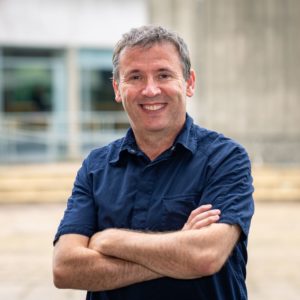
David Malone is a Professor and Director of the Hamilton Institute at Maynooth University, affiliated with the Department of Mathematics & Statistics. His research focuses on networking security, wireless network modeling (802.11 and IPv6), power line communications, and password security analysis. Education: B.A.(mod), M.Sc., Ph.D. in Mathematics from Trinity College Dublin Research Interests: Mathematical modeling of networks, WiFi/PLC measurement, password security, IPv6 administration, and wireless network optimization Email: david.malone@mu.ie Recent publications analyze non-cryptographic hash functions, password guessing algorithms, and network security protocols. He has supervised numerous Ph.D. and M.Sc. students in networking and security domains.
Rafael de Andrade Moral is a Professor of Statistics at Maynooth University's Faculty of Science & Engineering (since 2025), with prior roles as Associate Professor (2023-2025) and Assistant Professor (2018-2023). He holds a PhD in Statistics (University of São Paulo, 2014-2017) and dual bachelor's degrees in Biology and Education. His work bridges Statistical Ecology , Computational Biology , and Data Science , focusing on modeling ecological systems, agricultural pest dynamics, and biodiversity-ecosystem function relationships. Key research themes include Bayesian modeling , multivariate ecological forecasting , and machine learning applications . He founded the Theoretical and Statistical Ecology Research Group and serves on committees like the Young-ISA Chair . His recent articles span topics like insect abundance forecasting , weed-crop competition under climate change , and neuroinformatics-based learning analysis , reflecting interdisciplinary engagement. Scientific accolades include the Young Statistician Showcase Prize (2018), A-mu-sing Competition First Place (2021), and Maths Week Award (2022). He has advised three PhD students and contributed to over 50 peer-reviewed publications. Active in teaching innovation (e.g., Teaching Statistics through Music ), he also provides statistical consultancy to organizations like NIBIO and Jomakol .
Ronan Farrell is a Professor in the Department of Electronic Engineering at Maynooth University’s Faculty of Science & Engineering and currently serves as Vice President Academic and Registrar. He earned a BE and PhD from University College Dublin (1993, 1998) and previously worked at ICI/Zeneca Chemicals (1993–1995) and Parthus Technologies (1998–2001) as a mixed-signal ASIC designer. His academic career at Maynooth spans from Lecturer to Professor (2016), with leadership roles as Head of Department (2012–2019) and Director of the Callan Institute (2008–2015). He leads SFI research initiatives in radio frequency electronics and sensor networks. Education: BE (1993), PhD (1998) – University College Dublin Leadership: Head of Electronic Engineering (2012–2019), Director of Callan Institute (2008–2015) Research Focus: Wireless system design, RF/mixed-signal electronics, technology transfer, and innovation. His work bridges theoretical advancements (e.g., MIMO capacity optimization) with practical applications (e.g., 5G transmitters, digital predistortion techniques). Publication Trends: Recent articles emphasize 5G wireless systems, power amplifier linearization, OFDM signal processing, and behavioral modeling. Collaborations span institutions in Ireland, Europe, and Asia, with a focus on hardware implementation and system optimization. Students & Collaborations: Mentions co-authors in publications but no explicit student list provided. Collaborates with researchers in Ireland, Germany, and China.
Dr. Edgar Galván is an Associate Professor in the Department of Computer Science at Maynooth University's Faculty of Science & Engineering. He is a leading expert in Genetic Programming (GP) and Evolutionary Algorithms, with a focus on semantic-based approaches, neutrality, and multi-objective optimization. His work spans applications in combinatorial optimization, gaming (e.g., Carcassonne), and software engineering, including neuroevolution for deep learning architectures. Current Affiliation: Maynooth University Previous Roles: Senior Researcher at University College Dublin, Trinity College Dublin, and INRIA Paris-Saclay Research interests include: Semantic-based Genetic Programming Multi-objective Evolutionary Algorithms Monte Carlo Tree Search Circular Economy Applications Privacy-Preserving Optimization Neuroevolution in Autonomous Systems His recent publications analyze semantic diversity in GP, neural architecture search, and privacy-aware swarm optimization. Key awards include being ranked among the top 1% of GP researchers by University College London (2020), a Marie Curie Fellowship (2014), and a Best Paper Award at ECTA 2015. Current Projects: REBUILD (Circular Economy Buildings, 2024-2027), VISION (Circular Business Models, 2023-2026) Previous Grants: Stochastic Bio-inspired Algorithms (2014-2017, €267k), circAI (2022-2023, €142k) Dr. Galván serves on program committees for IEEE, ACM, and Springer conferences, and as Scientific Adviser for institutions in Ireland, France, and Mexico. His work bridges theoretical GP analysis with real-world applications in energy optimization and AI.
Professor Gerard (Gerry) Lacey is Professor of Electronic Engineering at Maynooth University within the Faculty of Science and Engineering. He also serves as Head of the Department of Electronic Engineering and is affiliated with the Hamilton Institute and ALL Institute at Maynooth. Education BE in Computer Engineering – Trinity College Dublin PhD in Robotics – Trinity College Dublin MBA – University College Dublin Research Focus Professor Lacey’s research integrates robotics, real-time computer vision and human-machine systems with healthcare applications. His work spans assistive robotics for the elderly and visually impaired, augmented-reality surgical simulation, and technology-enabled infection prevention. Key themes include psychomotor learning in digital training tools, AI-driven hand-hygiene monitoring, and the design of user-centred healthcare technologies. Publication Trends Recent publications (2020-2021) concentrate on leveraging augmented reality and artificial intelligence to improve hand-hygiene compliance among healthcare workers, reflecting a translational trajectory from vision-based algorithms to large-scale hospital deployment. Earlier work (1995-2014) laid foundational contributions in mobility aids for the blind, endoscopic image enhancement, and robotic guidance systems. Awards & Recognition RESNA PVA Design Award for Robotics EU IST Award Irish Software Association Innovation Award Enterprise Ireland Technology Commercialisation Award Trinity College Innovation Award Entrepreneurship & Impact Professor Lacey has founded two university spin-outs: Haptica (2000), which created mobile healthcare robots and AR surgical simulators (acquired by CAE Healthcare in 2011), and SureWash (2010), whose hand-hygiene training systems are deployed internationally in hospitals. These ventures bridge academic research and clinical practice, securing real-world impact for his innovations. Laboratories & Collaborations He leads research activities within the Electronic Engineering Department and participates in interdisciplinary initiatives at the Hamilton Institute (systems modelling) and ALL Institute (assisted living and learning). His teams bring together engineers, healthcare professionals and industry partners to advance assistive and medical technologies.
Oliver Mason is a Professor at Maynooth University's Faculty of Science & Engineering , specializing in Mathematics and Statistics . His academic career includes significant contributions to systems theory, matrix analysis, and data privacy. PhD in Lyapunov Stability Theory (2004, Maynooth University) Prior work in satellite communications and Institute of Technology sector Research Interests : Systems and Control Theory for switched systems with time-delay and uncertainty Matrix Theory including D-stability and diagonal stability Mathematics of Data Privacy with focus on differential privacy Max-Algebra applications in asymptotic behavior analysis Wave Energy Converters (WECs) performance optimization Recent Publications show expertise across Ecological Modeling (2023), Control Theory (2022-2018), Linear Algebra (2018-2015), and Data Privacy (2020-2016). Teaching includes modules like Numerical Analysis, Mathematical Biology, and Computational Tools for Research. Professional Roles : Organizer of Hamilton Institute Workshops, TPC member for multiple international conferences.
Jim Buckley is a Professor in the Computer Science and Information Systems Department at the University of Limerick, Ireland, and a Principal Investigator in Lero. He leads the ARC research group focused on software evolution and legacy system modernization, with significant industry collaborations including Huawei, IBM, and Fidelity. Education: BSc in Biochemistry, University of Galway (1989) MSc in Computer Science, University of Limerick (1994) PhD in Computer Science, University of Limerick (2002) Research Focus: His work centers on AI-enhanced software engineering (AI4SE/SE4AI), featuring breakthroughs in clone detection, software architecture evaluation, and feature location. He has developed industry-adopted tools for software comprehension and evolution, with recent emphasis on explainable AI (XAI) and scalable neural network applications for industrial codebases. His research consistently bridges academic rigor with industrial implementation. Publication Trends: Recent articles (2022-2025) reveal a dominant shift toward AI-driven software engineering solutions, particularly in clone detection and architecture recovery. Key themes include industrial scalability, developer experience optimization, and responsible AI integration, with strong representation in top-tier venues like IEEE Transactions and ACM Computing Surveys. Scientific Awards: No awards specified in source material. Grants & Industry Impact: Leads the Huawei-funded TREES Programme and maintains active partnerships with 9+ companies. His research has yielded licensed tools (e.g., for legacy system evolution), two IP assignments from LLM-based clone detection work, and practical frameworks adopted by seven Irish enterprises. Research Infrastructure: Directs the ARC group within Lero, which combines academic researchers and industry practitioners to address real-world software maintenance challenges through empirical studies and tool prototyping.
Nadeem Rather is a Research Fellow at the Wireless Communications and AI Research Lab, Tyndall National Institute, University College Cork (UCC), Ireland, where he has conducted research since 2019. His work focuses on developing AI-driven electromagnetic systems with emphasis on RF technologies and intelligent antenna design. His academic background includes: Bachelor’s degree in Electronics and Communication Engineering Research Master’s degree in Communication Systems PhD from University College Cork (2024) Dr. Rather’s research integrates advanced AI algorithms with electromagnetic systems to optimize RF components for emerging IoT applications. His work spans chipless RFID, NFC sensor networks, and adaptive antenna design, addressing challenges in spectrum efficiency, robust detection, and practical implementation across agriculture, healthcare, and cultural heritage domains. He bridges theoretical electromagnetic modeling with real-world sensor deployment. His publication trend reveals a concentrated focus on machine learning for electromagnetic systems, particularly in chipless RFID and NFC applications. Recent works demonstrate innovative approaches to spectrum utilization, tag design, and robust detection techniques using deep learning architectures like U-Net, with significant contributions to agricultural monitoring, museum preservation, and animal health tracking. His scientific achievements have been recognized through: Best Application of AI in a Student Project (AI Awards Ireland) Wrixon Research Excellence Bursary Postgraduate Publication of the Year Awards (2020, 2023) Best Student Research Paper, International Workshop on Antenna Technology (2021) Best Demonstration Award, VistaMilk Conference (2023) As an active IEEE Member, Dr. Rather contributes to the Wireless Communications and AI Research Lab’s mission of advancing electromagnetic systems through AI. His current projects include transparent epidermal antennas for human-centric IoT and battery-less NFC sensors for health monitoring, with demonstrated impact in cattle health tracking and museum artifact preservation.
Barry Cardiff is a Researcher at the Department of Electronic Engineering within the College of Engineering at University College Dublin (UCD) . He joined UCD's academic staff in 2013, contributing to both teaching and research, including collaborative initiatives in Beijing (BDIC). His expertise centers on Digital Signal Processing (DSP) and its application to communication systems, with a focus on theoretical analysis and practical advancements. His research also explores power and complexity reduction techniques in circuit design , particularly through DSP algorithms for digitally assisted analog circuits. Prior to his academic role, he gained extensive industry experience as a design engineer at Nokia Mobile Phones Ltd (1993–2001) and as a Systems Architect at Silicon & Software Systems (2001–2007, 2011–2013), working on embedded hardware/software projects for wireless communications and hearing aids.
Akbar Majidi is a Research Fellow at the CONNECT Centre , Trinity College Dublin (TCD). His work focuses on network edge problems , AI-driven network customization , and smart cities . Previously, he held roles at Huawei Technologies Ireland, iMAR in MTU Kerry, University College Cork (UCC), and the 6G Mobile Research Lab in Prague. Research Interests include: Network Edge Computing and Optimization Real-Time Multi-Resource Allocation AR-VR Streaming Over Cellular Networks Vehicular Edge Computing AI Applications in Networking Publication Trends (2020–2023): First-author works in top venues like IEEE/ACM Transactions on Networking and INFOCOM , with a focus on solving latency issues and resource allocation in next-gen networks. Teaching Experience : Lecturer at Griffith College Cork (Cloud Computing module) and supervisor of Master’s students at CCT College Dublin. Research Affiliations : CONNECT Centre, Enable Research Programme at TCD, 6G Mobile Research Lab (Prague), and collaborations with Huawei Technologies.
Brendan Mullane is a Senior Research Fellow at the University of Limerick (UL) affiliated with the Department of Electronic and Computer Engineering. He serves as Course Director for the Masters of Engineering programme in Edge Computing and lectures on Digital Signal Processing (DSP) and Deep Learning topics. Education: BEng in Electronic Engineering (University of Limerick, 1992) PhD (University of Limerick, 2010) Research Focus: Brendan’s work centers on advanced signal processing techniques, deep learning edge AI applications, and biomedical health technologies. His expertise spans data acquisition systems and AI-driven solutions in engineering contexts. Contributions: He has acted as principal investigator on multiple research projects, supervised postgraduate students, published over 40 peer-reviewed articles, authored a book chapter, and holds 5 patents with 7 invention disclosures.
Anderson Augusto Simiscuka is a Researcher affiliated with the Performance Engineering Laboratory and the Insight Centre for Data Analytics at Dublin City University (DCU). His work centers on Internet of Things (IoT) communications performance and integrating rich media with IoT devices. Education : B.Sc. in Information Systems (2014), Mackenzie Presbyterian University, São Paulo, Brazil Ph.D. in Electronic Engineering (2020), Dublin City University, Ireland Research Interests : IoT Communications Performance Engineering Rich Media Integration with IoT Devices Adaptive Video Streaming in Collaborative Environments Virtual Reality (VR) and 360º Multimedia Systems Real-Time Communication Technologies Professional Affiliations : IEEE Young Professionals IEEE Communications Society IEEE Broadcast Technology Society Current Projects : He is a key contributor to the EU Horizon 2020 TRACTION project, focused on Opera co-creation for social transformation. His responsibilities include developing tools, algorithms, and technologies for real-time communication in rich-media environments, supporting adaptive video, VR, and 360º content collaboration. Past Experience : Prior to his postdoctoral work, he collaborated with Wittel (2010–2013), DCU/Ericsson (E-Stream Project, 2014), Arkadin (2014), and IBM (2015) on telecom and software development initiatives.
Prof. Mark Keane has served as Chair of Computer Science at University College Dublin since 1998. A cognitive psychology expert with a PhD from Trinity College Dublin, his career spans multiple institutions including the University of London, Open University, Cardiff University, and TCD. He has held leadership roles such as Director of ICT at Science Foundation Ireland (2004-2006) and Director General at SFI (2006-2007), overseeing €700M+ research investments. His work focuses on explainable AI, counterfactual reasoning, and sustainable agriculture applications. BA (UCD), PhD (TCD) in Cognitive Psychology Over 200 publications, H-index 45, 10,800+ citations Key advisor for Ireland's €3.7B Science, Technology & Innovation Strategy His research explores counterfactual explanations , semi-factual reasoning , and XAI in domains like dairy farming and climate resilience. Recent work combines machine learning with cognitive models to improve grass growth prediction and mastitis detection . He also investigates surprise theory through computational models. As Vice-President of Innovation & Partnerships at UCD (2007-2009), he drove academic-industry collaborations. Current affiliations include the Insight Centre for Data Analytics, where he leads AI research teams advancing case-based reasoning and deep learning integrations for explainable systems.
Kieran Moran is a Professor and Principal Investigator leading the Personal Sensing research group at the Insight Centre for Data Analytics, Dublin City University. His work focuses on biomechanics of human movement with applications in sports performance and functional rehabilitation across the lifespan. His research interests include: Quantifying human motion outside laboratory settings using wearable and fixed sensor technology for connected health applications Developing novel algorithms for complex movement data analysis Identifying individualized optimal movement techniques rather than universal standards Understanding neuromuscular injury mechanisms and developing targeted rehabilitation interventions Moran currently supervises a substantial research team comprising 9 PhD students, 3 MSc students, 5 Postdoctoral Researchers, 3 Research Assistants, and 1 Project Officer. His behavioral change approach integrates sensor feedback to correct movement abnormalities in sports and daily activities, with emphasis on real-world applicability beyond controlled laboratory environments.
Dr. Derek Greene is an Assistant Professor at the School of Computer Science, University College Dublin, and a Funded Investigator at the Insight Centre for Data Analytics and the VistaMilk Research Centre. His research spans machine learning, natural language processing, and network analysis, with a focus on interdisciplinary applications in cultural analytics, smart agriculture, and political science. Dr. Greene has published over 60 research papers at international conferences and journals. His work includes developing methods for natural language processing , network analysis , and deep learning applied to diverse domains such as literary text mining, dairy industry monitoring, and political communication analysis. He leads projects integrating machine learning into cultural analytics, enhancing agricultural practices, and modeling policy agendas. The articles in his Google Scholar profile highlight a trend toward explainable AI , synthetic data generation , and network-based modeling . Key sub-fields include counterfactual explanations , transformer-based frameworks , temporal analysis of historical texts , and interdisciplinary knowledge transfer . His work bridges machine learning with applications in cultural studies , agriculture , and political science . Dr. Greene collaborates with institutions like the Insight Centre for Data Analytics and the VistaMilk Research Centre , integrating academic research with industry and policy needs. His funded investigator roles reflect ongoing support for applied research in data analytics and agricultural technology.