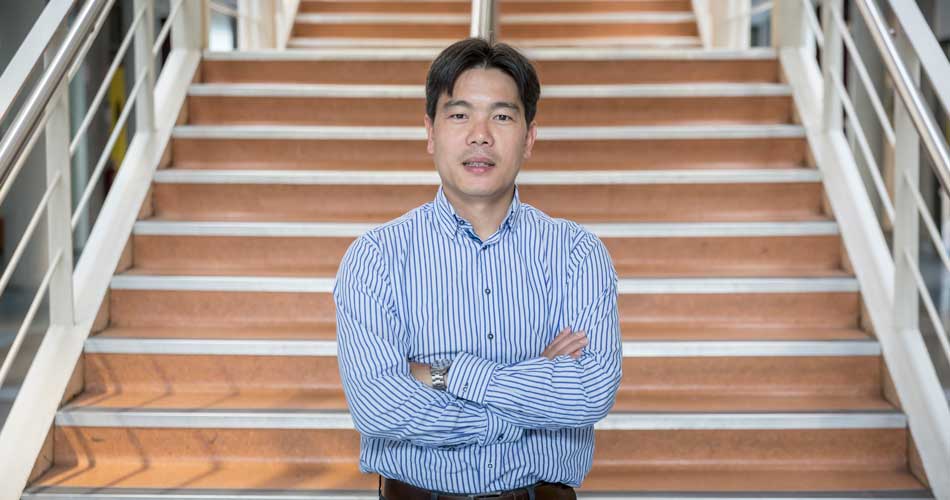
Usman Ali is an Assistant Professor and Adjunct Lecturer at the School of Mechanical and Materials Engineering, University College Dublin. He holds a Ph.D. in 'A data-driven GIS-based approach for multi-scale residential building energy modeling' (2020) from UCD and an M.Sc. in Computer Science from Lahore University of Management Science (2013). His research focuses on machine learning, GIS modeling, urban building energy systems, and energy performance certification. He has contributed to projects like the U.S.-Ireland R&D initiative on building stock classification and energy prediction, and collaborated with the Sustainable Energy Authority of Ireland (SEAI) on energy policy research. His work emphasizes data-driven solutions for energy efficiency, urban sustainability, and policy decision-making. Education: Ph.D., University College Dublin (2020) M.Sc., Lahore University of Management Science (2013) B.Sc., International Islamic University Islamabad (2008) Research emphasizes machine learning applications in energy modeling, GIS integration for urban planning, and energy policy frameworks. His recent work includes synthetic building datasets, occupancy-based energy analysis, and uncertainty quantification in energy systems.
Assoc. Prof. Nhien An Le Khac is an Associate Professor at the School of Computer Science, University College Dublin. He serves as Programme Director for the MSc in Forensic Computing & Cybercrime Investigation, which has trained over 1,500 law enforcement officers globally. His research focuses on cybersecurity, digital forensics, AI security, and secure healthcare IT systems. He holds a PhD from Institut National Polytechnique de Grenoble (France) and has supervised 9 PhD students. His work includes pioneering contributions to electromagnetic side-channel analysis (EM-SCA) for IoT forensics, blockchain forensics, and AI-based fraud detection. Education: BSc/MSc: Vietnam National University, Ho Chi Minh City PhD: Institut National Polytechnique de Grenoble, France Professional Certificate in University Teaching & Learning: UCD Research Interests: Cybersecurity, Digital Forensics, AI Security, Machine Learning, Cloud Computing, Big Data Analytics, Healthcare IT Security. Recent Article Trends: Focus on EM-SCA for IoT device forensics, illicit Bitcoin transaction tracking, and cross-device ML portability. His work bridges theoretical AI advancements with practical forensic applications, emphasizing privacy preservation and explainable AI. Awards & Recognition: World’s Top 2% Scientists (2024) UCD Teaching Excellence Awards (2022, 2018) Best Paper Awards at Elsevier, AI-2022, and DFRWS conferences Grants & Advising: Principal Investigator on grants like Cloud Atlas, CERBERUS, and Urban ARK. Advised 9 PhD students who now work in academia/research globally. Active in funding initiatives like ML-Labs (SFI-funded). Labs & Teams: Leads ASEADOS Lab and maintains datasets like EM-SCA and InSDN. Collaborates globally on forensic frameworks and cybersecurity tools.
Rui Teixeira is an Assistant Professor in the School of Civil Engineering at University College Dublin (UCD). He leads UCD's Centre for Critical Infrastructure Research (CCIR) and focuses on Uncertainty Quantification, Safety, and Risk in civil engineering systems, with applications to infrastructure resilience. His research emphasizes reliability analysis, multi-fidelity modeling, and AI-driven risk assessment. Education: MSc in Civil Engineering, University of Porto, Portugal PhD in Civil Engineering, Trinity College Dublin Professional Certificate in University Teaching and Learning, UCD Research Interests: Development of novel reliability analysis techniques Resilience of infrastructure systems Artificial intelligence applications for risk assessment Probabilistic system evaluation and safety standards Grants & Projects: Smart Enforcement of Transport Operations (SETO), Horizon Europe (2023–2026) Optimality-Tracking Civil Engineering Systems, Enterprise Ireland (2023–2025) Floating Offshore Wind Dynamic Cables (FlOWDyn), Sustainable Energy Authority of Ireland (2024–2027) Teaching: Coordinates courses such as 'Civil Engineering Systems' and 'Design of Structures 1'. Labs/Teams: Director of the Centre for Critical Infrastructure Research (CCIR), focusing on interdisciplinary approaches to infrastructure resilience.
Dr. Le-Nam Tran is a researcher at the UCD School of Electrical & Electronic Engineering , University College Dublin. His work focuses on optimizing the last hop of 5G/6G wireless networks through mathematical programming, with emphasis on energy efficiency, interference management, and security against eavesdropping. Develops low-cost, low-complexity transmission techniques Projects supported by Science Foundation Ireland Career Development Award Author of over 80 peer-reviewed publications Research Keywords: Wireless Communications Network Security Signal Processing Energy-Efficient Systems Beamforming Optimization Interference Mitigation
Dr. Felix Mezzanotte is an Assistant Professor of Law at Trinity College Dublin and Director of the MSc in Law and Finance Programme, a collaboration between Trinity Law School and Trinity Business School. He holds a PhD and advanced degrees from the University of East Anglia, SOAS (University of London), and the University of Warwick. His research focuses on the legal dimensions of sustainable finance, corporate sustainability reporting, investor protection, and compliance frameworks within financial markets. Academic Role: Assistant Professor of Law Affiliations: Trinity Law School, Trinity Business School (MSc Programme Director) Professional Experience: Former teaching at Hong Kong Polytechnic University, policy advisor for the World Bank, and visiting scholar at Columbia Law School and others. Dr. Mezzanotte's research interests span sustainable finance regulatory design, ESG compliance, blockchain applications in reporting, and cross-border enforcement challenges. His recent work emphasizes the legal accountability mechanisms linking corporate sustainability disclosures to investor rights under EU directives. Publications reflect a focus on EU sustainable finance policy, with analysis of regulatory complexity, blockchain innovations, and investor protection gaps. Recent articles address double materiality frameworks, impact reporting standards, and the role of robo-advisors in ESG integration. Key Award: Faculty of Business Award for Outstanding Teaching (Hong Kong Polytechnic University) Research Collaborations: European-China Law Studies Association, Columbia Center for Sustainable Investment He supervises doctoral candidates exploring topics like greenwashing prevention, non-financial disclosure obligations, and regulatory enforcement in sustainable finance contexts.
David Mangan is an Assistant Professor at Maynooth University's School of Law & Criminology , with adjunct professorships at Osgoode Hall Law School and Université Catholique Lyon. He holds a Ph.D. and has served as Associate Professor and Deputy Associate Dean (International) in Canada and the UK. His research spans labour/employment law , contract law , and privacy law , focusing on information technology's impact on workplaces. Degree : BA(Hons), B.Ed., J.D., LL.M., Ph.D. Editorial Roles : Associate Editor of the European Labour Law Journal; Co-Editor of Global Workplace Law & Policy. Consultancy : Legal expert for the Israel Public Policy Institute, Portuguese Confederation of Employers, and Law Commission Ontario. His labour law research examines digitalization of work, platform economy challenges, and privacy in employment relationships. Current projects include the Privacy@Work study (2021-2023) and a Land Steiermark Fellowship (2025) in digital law. He supervises Ph.D. students through Advance CRT and chairs a dual degree program with Université Catholique Lyon. Recent article trends highlight his work on GDPR implications in employment, remote work regulation , and platform worker rights . Notable contributions include comparative analyses of European and transatlantic labour law frameworks, focusing on technological disruptions. Awards & Grants : Land Steiermark Fellowship in Digital Law (2025) ERC Grant (€1.5M) for ResPecTMe project (2022-2025)
Simon Colreavy Donnelly is an Associate Professor in the Department of Computer Science & Information Systems at the University of Limerick. He is a member of the Interaction Design Centre and focuses on interdisciplinary research at the intersection of artificial intelligence, educational technology, and healthcare informatics. His work spans machine learning applications in medical data analysis, virtual reality (VR) and extended reality (XR) for inclusive education, and deep learning techniques in chemical analysis and spectroscopy. Research Interests: His primary areas of investigation include generative AI for education equity, semisupervised learning algorithms, virtual learning environments design, and the ethical deployment of immersive technologies in healthcare and palliative care. He also explores NMR spectroscopy analysis using deep learning and develops tools for nutritional content estimation through image processing. Collaborations: His recent collaborations span international teams addressing challenges in toxicity-free online discourse (PAN 2024), semisupervised learning distribution mismatches, and VR applications for post-pandemic blended learning. His work integrates computational methods with real-world applications in education, healthcare, and chemical analysis. Labs/Teams: Active within the Interaction Design Centre at UL, his research group develops practical solutions for accessibility in digital education and healthcare systems, emphasizing user-centered design principles for extended reality applications.
Constantine Evans is a Research Fellow at the Hamilton Institute, Maynooth University, focusing on the physics of complex self-assembly processes. His work examines how simple particles organize into intricate structures through algorithmic self-assembly, with applications in DNA nanotechnology and computational modeling. Institution: Maynooth University Research Unit: Hamilton Institute Location: Eolas Building, 3rd Floor, Office 339 Research Interests: Evans investigates non-equilibrium self-assembly systems, particularly DNA tile crystal growth and kinetic control mechanisms. His research bridges physics, computational theory, and molecular engineering to uncover unexpected behaviors in basic physical processes. Publication Trends: His recent work (2018-2024) demonstrates interdisciplinary advancements in DNA computing, focusing on proofreading systems, tile compiler optimization, and kinetic modeling. These publications span peer-reviewed journals, conference proceedings, and algorithmic frameworks that connect theoretical computer science with experimental biophysics. Labs & Teams: He is affiliated with the Hamilton Institute, a research center specializing in systems biology, computational modeling, and interdisciplinary scientific investigations.
Dr. Barry Cardiff is an Assistant Professor in the School of Electrical and Electronic Engineering at University College Dublin (UCD), where he has been a member of academic staff since September 2013. His career spans both industry and academia, with significant experience at Nokia Mobile Phone (UK) Ltd and Silicon & Software Systems (S3 group) before returning to complete his PhD at UCD. Education: B.Eng (1992), M.Eng.Sc. (1995), PhD (2011) from University College Dublin Professional Experience: Design Engineer at Nokia (1993-2001), Systems Architect at S3 group (2001-2007, 2011-2013) Current Position: Assistant Professor at UCD School of Electrical and Electronic Engineering Dr. Cardiff's research focuses on Digital Signal Processing applications in communication systems, with particular emphasis on theoretical analysis and practical implementation. His work bridges traditional communication theory with emerging biomedical applications, especially in wearable IoT sensors. He has made significant contributions to power/complexity reduction techniques in circuit design, specifically DSP algorithms for digitally assisted analog circuits. His research program addresses critical challenges in biomedical signal processing, sensor fusion, and efficient data transmission for healthcare applications. His recent publications demonstrate a strong trend toward biomedical applications of signal processing techniques, with a focus on ECG analysis, atrial fibrillation detection, and respiratory rate estimation using multimodal sensor fusion. The research shows a clear progression from traditional communication systems toward healthcare applications, with an emphasis on edge computing solutions that reduce power consumption in wearable devices. IEEE BioCas best paper award (2024) IEEE senior member since 2019 Active reviewer for multiple IEEE journals including Transactions on Biomedical Circuits and Systems, Circuits and Systems, and VLSI Systems Dr. Cardiff has supervised numerous research projects and has been instrumental in developing curriculum for digital communications, signal processing, and wireless systems. His teaching philosophy emphasizes open, friendly, and hands-on approaches that encourage independent thinking. He coordinates multiple modules including Communication Theory, Digital Electronics, DSP Technology, and Wireless Systems, demonstrating his commitment to both theoretical foundations and practical applications of electrical engineering principles. His research group works at the intersection of signal processing, machine learning, and biomedical engineering, developing innovative solutions for wearable healthcare monitoring. Current projects focus on event-driven processing architectures, decentralized classification systems, and signal quality-aware fusion techniques that enable robust performance in noisy real-world environments.
Dr. Fatemeh Golpayegani is an Assistant Professor at the School of Computer Science, University College Dublin. She leads the Multi-agent Systems and Sustainable Solutions lab (MAS3.ucd.ie) and has secured over €1.5M in research grants. Her academic roles include BSc Stage 4 Coordinator and Chair of Women@CS (2012–2023). She holds a PhD from Trinity College Dublin (2018) and professional qualifications in university teaching from UCD. Education: PhD in Computer Science, Trinity College Dublin (2018) Professional Diploma in University Teaching & Learning, University College Dublin (2024) Professional Certificate in University Teaching & Learning, University College Dublin (2023) Research Interests: Focuses on multi-agent systems, sustainability, intelligent transport systems, autonomous decision-making, and edge computing. Her work integrates reinforcement learning, ontology-based models, and adaptive systems to address challenges in smart cities, energy grids, and infrastructure monitoring. Grants & Projects: Principal Investigator for the EU-funded RE-ROUTE project (€multi-million, 2023–2026) on intelligent transport networks. Co-Principal Investigator for the Augmented CCAM project on connected/cooperative autonomous mobility. Funded investigator in SFI centres (I-Form, CONNECT, Biorbic). Awards & Recognition: Researcher of the Year Award (2022) Member of Young Academy of Ireland (2023) Teaching & Mentoring: Coordinates modules in algorithms, Java programming, and operating systems. Supervises PhD students in SFI centres and mentors postdoctoral researchers. Active in promoting EDI as Chair of d-real doctoral training centre. Labs & Collaborations: Leads the MAS3 lab, collaborating on projects like CAPTAIN CARBON (sustainable transport gamification) and ontology-enhanced traffic signal control systems.
Ian Pitt is a Lecturer in Usability Engineering and Interactive Media at University College Cork (UCC). He leads the Interaction Design, E-Learning and Speech (IDEAS) Research Group, focusing on multimodal human-computer interaction, auditory interfaces, and accessibility solutions for visually impaired users. Pitt holds a D.Phil from the University of York, followed by research fellowships at Otto-von-Guericke University in Germany before joining UCC in 1997. His research interests include speech-based interfaces, e-learning systems, and accessibility technologies for blind users. Key projects include the EU-funded ENABLE Network (2011–2014) and prototype development for UniWink. He has secured significant grants, including €72,009 from IRCSET for voice analysis research and €19,478 from the EU for ICT-supported learning initiatives. Pitt has advised numerous PhD students, including Flaithri Neff (2011), Emma-Kate Crowley (2014), and current candidates Aine Kearns and Patrick Egan. His publications span journals like International Journal of Game-Based Learning and conferences such as ICCHP and ACM SIGACCESS. He has contributed to committees for conferences like CHI and the Irish HCI conference. Teaching modules include Usability Engineering, Human-Computer Interaction, and Digital Media Development. His work emphasizes inclusive design principles, with projects addressing navigation systems for blind students and adaptive e-learning frameworks. Recent research trends focus on ICT-delivered aphasia rehabilitation, emotional BCI interfaces, and multimodal learning systems. Collaborations include international partners through EU grants, reflecting his global impact in accessibility and educational technology.
Philip Cardiff is a Professor in Computational Mechanics at the School of Mechanical and Materials Engineering, University College Dublin. He holds a BE (2008) and PhD (2012) in Mechanical Engineering from UCD. His research focuses on computational mechanics, machine learning, and their integration, with expertise in finite volume methods, fluid-solid interaction, and biomechanics. He leads the Bekaert University Technology Centre and contributes to editorial roles in the Journal of Open Source Software and OpenFOAM Journal . Cardiff has secured grants from ERC, I-Form, and the UCD Energy Institute, addressing challenges in offshore energy, advanced manufacturing, and cardiac xenotransplantation. Education: BE in Mechanical Engineering, University College Dublin (2008) PhD in Development of the Finite Volume Method for Hip Joint Analysis, University College Dublin (2012) Professional Diploma in University Teaching & Learning, University College Dublin Research Interests: Computational mechanics, finite volume methods, and machine learning integration Fluid-solid interaction, biomechanics, and materials science Applications in additive manufacturing, energy systems, and biomedical engineering Grants & Awards: ERC Consolidator Grant (2020–2025) Funded Investigator in I-Form and UCD Energy Institute Principal Investigator in UCD Centre for Biomedical Engineering Teaching & Leadership: Programme Director for MEngSc in Materials Science and Engineering (2018–2023) Coordinates modules in computational mechanics and advanced materials processing Advocates constructivist teaching approaches with active learning strategies Labs & Collaborations: UCD Centre for Mechanics Bekaert University Technology Centre MaREI and I-Form Research Centres
Dr. Md Noor-A-Rahim is an Assistant Professor (Lecturer-Above the Bar) at the School of Computer Science and Information Technology, University College Cork (Ireland). He previously served as a Senior Researcher and Marie Curie Fellow at the same institution. His academic journey includes a PhD from the University of South Australia (2015) and the prestigious Michael Miller Medal for his outstanding thesis on wireless communication systems. His research focuses on Intelligent Transportation Systems, Machine Learning, IoT, Wireless Networks, and DNA-based data storage. He has published extensively on topics like 6G-V2X systems, time-sensitive networking, and error characterization in DNA storage. His work integrates cutting-edge technologies such as intelligent reflecting surfaces (IRS), federated learning, and ultra-reliable low-latency communication (URLLC). Research Interests : Dr. Rahim's research bridges theoretical advancements and real-world applications in vehicular networks, smart manufacturing, and next-generation communication systems. He explores challenges in autonomous driving, edge computing, and bio-constrained data storage. His contributions include novel coding schemes for anytime transmission and frameworks for mitigating big vehicle shadowing in V2X communications. Key Publications : His recent work includes a comprehensive survey on wireless TSN (2025), analysis of 6G-V2X systems (2022), and breakthrough studies on DNA data storage error modeling (2023). These publications highlight his expertise in both foundational research and industry-relevant solutions. Awards : Recipient of the Michael Miller Medal (2015) for doctoral research excellence. Grants & Labs : While specific grants are not listed in the text, his research portfolio suggests involvement in collaborative projects with industry partners and funding bodies. He leads interdisciplinary efforts in smart manufacturing and vehicular communication systems.
Dr. Gavin McArdle is an Associate Professor at the University College Dublin (UCD) School of Computer Science, specializing in spatial data analysis and smart cities. He holds academic affiliations with the National Centre for Geocomputation (Maynooth University) and CeADAR (Data Analytics Centre). His research focuses on urban dynamics, geovisual analytics, smart transportation, and remote sensing applications. He has received a College of Science Teaching Excellence Award for his contributions to education. McArdle earned his BSc, PhD, and a Prof Dip in University Teaching & Learning from UCD. His work bridges academia and industry through collaborative grants, including those from Science Foundation Ireland and EU funding. Notable projects include the Dublin Dashboard (urban analytics platform) and DubSim (traffic simulation using digital footprints). His research outputs span over 147 publications, with recent work addressing Airbnb's impact on urban gentrification, sustainable mobility, and environmental monitoring via satellite data. He actively contributes to professional committees, including roles in the UCD Data Protection Impact Assessment Committee and international conferences like Web and Wireless GIS. McArdle coordinates courses such as Research Practicum and Computer Programming II, emphasizing practical research and technical skills. His interdisciplinary approach integrates machine learning, spatial statistics, and urban informatics to address real-world challenges in smart cities and environmental sustainability.
Dr. Hamid Rabiei is an Assistant Professor in Geography at the School of History and Geography, Dublin City University. He holds a PhD in Spatial Planning and Urban Development from Politecnico di Milano, Italy. His research focuses on sustainable development, spatial inequalities, climate change, and remote sensing/GIS applications. He has secured prestigious grants like the Marie Skłodowska-Curie Fellowship and published extensively in top-tier journals such as Habitat International and Applied Geography . His work bridges engineering, social science, and data science to address global challenges like environmental degradation and urbanization patterns. Key research interests include smart cities, spatial composite indicators, gentrification, and social vulnerability to natural hazards. He has contributed to developing novel models like the Adaptive Inverse Distance Weighting (AIDW) for population estimation and the Ordered Geographically Weighted Averaging (OGWA) for composite indicators. Recent work includes spatial analysis of internal migration impacts in Iran, Afghan immigrant segregation in Tehran, and ensemble modeling of extreme temperatures. He serves on editorial boards of academic journals in environmental studies and urban planning. His research emphasizes policy relevance, collaborating with decision-makers to translate findings into actionable strategies. Publications span 2023-2025, reflecting interdisciplinary approaches to urban sustainability, disaster risk, and big data applications. Grants and fellowships highlight his international recognition, particularly in integrating geospatial techniques with socioeconomic analysis.