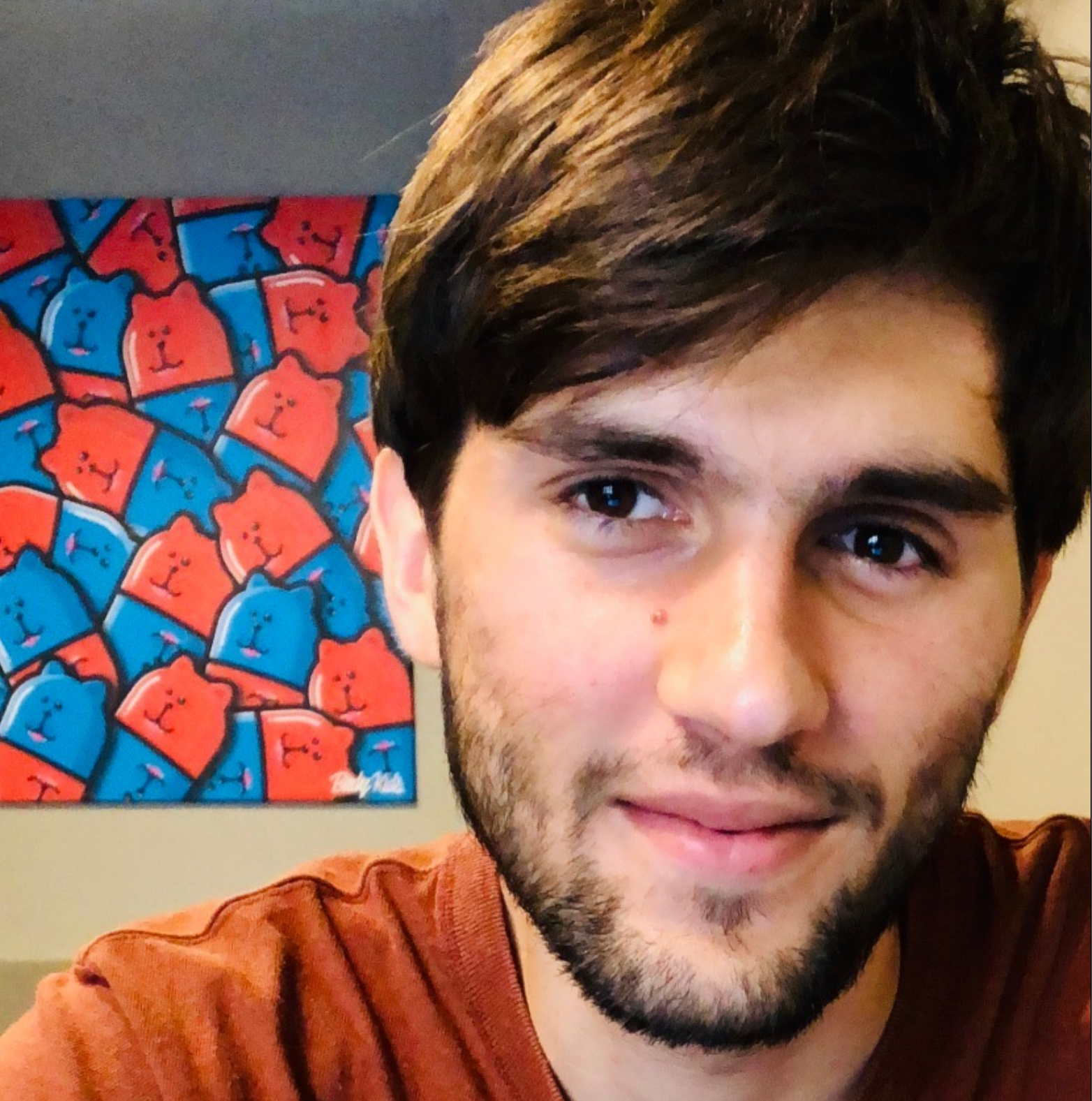
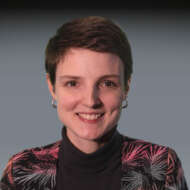
Freddy Bouchet is a Directeur de Recherche at CNRS and a Professeur attaché at École Normale Supérieure de Paris (ENS-PSL). His work bridges mathematical physics, climate science, data science, and statistical mechanics , focusing on turbulent flows, climate extremes, and large deviation theory . He will lead the Laboratoire de Météorologie Dynamique (LMD) starting 2025. Research Themes : Statistical mechanics of geophysical flows (Jupiter's jets, ocean currents). Large deviation theory for rare events in turbulence and climate. Non-equilibrium phase transitions in atmospheric/oceanic systems. Ensemble inequivalence in systems with long-range interactions. Scientific Awards : Three Physicists Prize Collaborations : Tapio Schneider, Antoine Venaille, J. Laurie, O. Zaboronski, B. Dubrulle, A. Venaille. Labs & Teams : Climate and Statistical Mechanics group at ENS de Lyon Future director of Laboratoire de Météorologie Dynamique (LMD/IPSL) Publications span climate dynamics, turbulence, statistical mechanics, and large deviation theory , with applications to Jupiter's atmosphere, ocean vortices, and non-equilibrium systems . His work often challenges paradigms like Tsallis non-extensive statistics.
Antonio A. Casilli is a Professor of Sociology at Télécom Paris (Institut Polytechnique de Paris) and a researcher at the Interdisciplinary Institute of Innovation (i3) . He is an associate member of LACI-IIAC (formerly the Edgar Morin Center) at EHESS and serves as a Faculty Fellow at the Nexa Center for Internet and Society (Polytechnic University of Turin) since 2018. Research Focus: Digital labor, platform economy, AI ethics, and the social implications of technology Awards: Prix Étoiles de la SCAM, Prix Meilleur Documentaire de l'Année (Bangkok), selected as Nature Journal Top Science Pick His work analyzes how digital platforms reshape labor dynamics, privacy norms, and social inequalities. Recent studies explore global AI data work, including fieldwork in Latin America, Africa, and Europe. He advocates for ethical frameworks recognizing human labor behind automation. Media Engagement: Regular contributor to France Culture , Le Monde , Wired , and Rue89 . Authored En attendant les robots (2019) and Schiavi del clic (2020), investigating hidden digital labor structures.
Stefania Dumbrava is an Associate Professor of Computer Science at ENSIIE (École Nationale Supérieure d'Informatique pour l'Industrie et l'Entreprise) and a permanent member of the ACMES team in the SAMOVAR laboratory at Télécom SudParis, Institut Polytechnique de Paris. She is also actively involved in the Property Graph Schema Working Group and the European Research Network on Formal Proofs (EuroProofNet). Education PhD in Computer Science, Université Paris-Sud (2016) MSc in Computer Science, Jacobs University Bremen (2012) BSc in Mathematics, Jacobs University Bremen (2010) Research Interests Dumbrava's research lies at the intersection of formal methods and data management . She designs and verifies algorithms and systems for graph databases , with emphasis on property graphs , schema discovery , query optimization , and distributed graph processing . Recently, her work focuses on certifying large-scale distributed graph systems under the ANR JCJC VERDI project (2025–2029). Awards & Honors SIGMOD Best Paper Award 2023 – “PG-Schema: Schemas for Property Graphs” SIGMOD Research Highlight Award 2023 – “Threshold Queries” VLDB 2022 Best Regular Research Paper Runner-Up – “Threshold Queries in Theory and in the Wild” SIGMOD 2025 Distinguished Reviewer Award ICDE 2025 Best Program Committee Member Award EASST Best Software Science Paper Award, ICGT 2025 Students & Grants Dumbrava has supervised numerous research interns and is actively recruiting PhD students for her ANR VERDI project on verified foundations of large-scale distributed graph systems. She has also served on six PhD thesis committees as examiner since 2021. Labs & Teams She leads the ACMES research group within the SAMOVAR laboratory (Télécom SudParis, Institut Polytechnique de Paris), where her team develops formally verified graph-database engines and tools such as GRASP, VerDILog, and DatalogCert.
Marco Di Renzo is a CNRS Research Director (Professor) and Head of the iPhyCom group at the Laboratory of Signals and Systems (L2S) at Paris-Saclay University, France. He is affiliated with both CNRS and CentraleSupélec. His roles include: Member of L2S Management Committee and Board Council Member of the Ph.D. School Admission Committee Academic Vice Chair, ETSI Industry Specification Group on RIS Editorial and leadership roles in IEEE communications journals Education: Laurea (cum laude) and Ph.D. in Electrical Engineering from University of L’Aquila (2003, 2007) Habilitation à Diriger des Recherches from Paris-Saclay University (2013) Research focuses on 6G networks , reconfigurable intelligent surfaces (RIS) , and integrated sensing and communications (ISAC) . He explores electromagnetic theory, machine learning applications, and energy-efficient wireless systems. His work addresses challenges in near-field communications, multi-user MIMO, and holographic beamforming. He advocates for physics-driven design principles in next-gen networks. Key awards include IEEE/IEE Fellowships, the Michel Monpetit Prize, and multiple IEEE Best Paper Awards. He holds international visiting professorships at institutions like the University of Oulu (Finland) and Nanyang Technological University (Singapore). Active in standardization via ETSI ISG RIS and contributes to global initiatives like the ITU 6G Vision. His research bridges theoretical models with practical implementations, emphasizing interdisciplinary collaboration between physics, signal processing, and AI.
Edouard Oyallon is a CNRS Researcher at Sorbonne University's MLIA team within the Institute of Intelligent Systems and Robotics (ISIR). His research focuses on machine learning foundations, particularly the symmetries of deep neural networks, and large-scale distributed/decentralized training algorithms. He has contributed to frameworks like Kymatio for wavelet scattering transforms and collaborates on projects such as SHARP (Frugal Learning) and ADONIS (ANR-funded). He advises multiple PhD and postdoctoral researchers and teaches advanced deep learning courses at Institut Polytechnique de Paris (IPP). Grants include the ADONIS project (ANR/Sorbonne) and participation in VHS and CoCa4AI initiatives. His work spans theoretical and applied aspects, with recent emphasis on optimizing LLM training at exascale. He maintains active roles in academic service, including organizing workshops on federated learning and graph machine learning.
David Gesbert serves as Professor and Director of EURECOM, a leading research institution in Sophia Antipolis, France, specializing in digital sciences. Previously heading the Communications Systems Department, he now directs EURECOM while leading the Foundations & Algorithms research group within the Communication Systems Department. His leadership spans institutional administration and cutting-edge research supervision. Dr. Gesbert's research portfolio demonstrates exceptional depth across communications theory and wireless networking: Communication theory and information theory fundamentals Signal processing for wireless networks with emphasis on robustness Machine learning applications for decentralized network optimization Connected robotics and UAV-enabled flying radio access networks 6G wireless architecture with focus on AI integration Distributed decision making under information uncertainties His publication trajectory reveals a strategic evolution from classical communication theory toward AI-integrated wireless systems, particularly focusing on UAV-aided networks and connected robotics for 6G. Recent work emphasizes learning-based approaches for network optimization under asymmetric information conditions, with growing emphasis on sustainability and green communications. Dr. Gesbert's scientific recognition includes: Fellow of IEEE (2011) and Asia Pacific Artificial Intelligence Association (2021) Thomson-Reuters List of Highly Cited Researchers in Computer Science Multiple Best Paper Awards at IEEE conferences (EW 2017, ICC 2019) ERC Advanced Grant recipient for the PERFUME project on Smart Device Communications 3IA Chair funding for AI for future IoT Networks 2019 Winner of 'Fundamental research project of the year' by French SCS He actively mentors PhD students and researchers, welcoming collaboration in his research domains. His group secures substantial research funding including ERC grants, 3IA Chairs, and participation in major European projects like the WINDMILL ITN Marie Curie project on Machine Learning in Wireless Communications. Dr. Gesbert serves on editorial boards and regularly delivers keynotes at premier international conferences, establishing himself as a thought leader in next-generation wireless communications.
Prof. Diane DE SAINT AFFRIQUE is a full-time Professor at SKEMA Business School (France) since 2019, specializing in Business Law, Ethics, and Governance. She holds a Doctorat d'Etat en Droit (2002) from Université Paris 2 Panthéon-Assas, with additional qualifications from ESSEC Business School and other institutions. Her academic leadership roles include Head of the Contract Law Master program (2016–present), Head of the Law Department (2003–2014), and responsible for the Master in Business Law (2006–2016). Research Focus: Her work centers on corporate governance, sustainable finance, AI ethics in healthcare and business, and legal frameworks for responsible business practices (RSE). She explores tensions between regulatory compliance and corporate autonomy, with recent emphasis on duty of vigilance legislation and AI accountability. Key Contributions: Over 30+ publications include analyses of: Legal implications of AI in medicine and business Corporate social responsibility and judicialization trends Religious freedom in French workplaces Data sovereignty and AI governance Affiliations & Impact: She chairs the French Academy of Legal Studies and Business, serves on the Board of VITAMINE T, and advises institutions like IFSI Ambroise-Paré. Her work frequently bridges legal theory with practical business challenges, emphasizing interdisciplinary solutions for global governance issues.
Francis Bach is a Professor and researcher at INRIA, leading the SIERRA project-team since 2011, which is part of the Computer Science Department at Ecole Normale Supérieure (ENS) within PSL Research University. His work bridges CNRS, ENS, and INRIA as a joint research effort. Elected to the French Academy of Sciences in 2020, he currently runs the ERC project SEQUOIA following his previous ERC project SIERRA (2009-2014). His research spans statistical machine learning with focus on optimization, sparse methods, kernel-based learning, neural networks, graphical models, and signal processing. Bach completed his Ph.D. in Computer Science at U.C. Berkeley under Professor Michael Jordan, followed by work at Ecole des Mines de Paris and the WILLOW project-team at INRIA/ENS/CNRS (2007-2010). His recent book "Learning Theory from First Principles" was published by MIT Press in December 2024. Bach's publication record shows consistent high-impact contributions across machine learning theory and applications, with recent work focusing on conformal prediction, diffusion models, optimization theory, and learning theory foundations. His research demonstrates strong connections between theoretical guarantees and practical algorithms, with applications spanning generative modeling, robust optimization, and statistical inference. Elected to French Academy of Sciences (2020) ERC project SIERRA (2009-2014) ERC project SEQUOIA (current) Author of "Learning Theory from First Principles" (MIT Press, 2024) Bach actively mentors numerous PhD students and postdocs, with many alumni now holding faculty positions at institutions like EPFL, Ecole Polytechnique, University of Washington, and University of Montreal. His teaching includes advanced courses on learning theory at ENS's Master's programs. He regularly presents tutorials at major conferences including COLT, NeurIPS, and ICML, demonstrating his leadership in the theoretical machine learning community.
Édouard Bonnet is a CNRS researcher at the Laboratoire de l'Informatique du Parallélisme (LIP) in the MC2 team at École Normale Supérieure de Lyon. His research focuses on algorithmic and structural graph theory, representing significant contributions to theoretical computer science. Dr. Bonnet serves as principal investigator of the ANR JCJC grant TWIN-WIDTH (2021-2025), demonstrating recognition of his research excellence. He coordinates the ENS Lyon computer science master 2 internships, playing a key role in graduate education. His involvement in multiple thesis defense committees scheduled for July 2025 confirms his active mentorship role. Within the broader academic community, Bonnet serves on the board of GT CoA (Complexité et Algorithmes) and acts as local correspondent for both GT CoA and GT Graphes, highlighting his standing in the French theoretical computer science community. His habilitation thesis represents a significant scholarly achievement in the French academic system. While specific publications aren't detailed in the provided information, his research focus suggests contributions to graph algorithms, graph classes, parameterized complexity, and structural graph theory, with particular relevance to the twin-width parameter development that has gained prominence in recent years.
Dond Asha Kisan is an Assistant Professor at the School of Mathematics , Indian Institute of Science Education and Research Thiruvananthapuram (IISER TVM). His research focuses on numerical analysis and computational mathematics , particularly in finite element methods for partial differential equations. He can be contacted at ashadond@iisertvm.ac.in or via phone at +91 (0)471-2778247. PhD : Mathematics, Indian Institute of Technology Bombay M.Sc. : Mathematics, K.T.H.M. College, Nashik Kisan's research spans adaptive finite element methods , stabilized formulations for convection-diffusion problems , and optimal control governed by Stokes equations . His work includes convergence analysis, nonconforming discretizations, and hybrid numerical schemes. Recent publications (2023-2025) address stochastic modeling in liquid crystal physics, advanced WENO schemes, and adaptive algorithms for control problems. Scientific Awards : No explicit awards mentioned in the data, though he held prestigious postdoctoral fellowships including National Post-Doctoral Fellowship and NBHM Post-Doctoral Fellowship. Kisan has extensive teaching experience , including MATLAB workshops and undergraduate course assistantships. He has presented at major international conferences like ICIAM and Hyperbolic Problems, demonstrating global engagement in computational mathematics.
Mingsheng Ying is a Distinguished Professor and Research Director of the Centre for Quantum Computation and Intelligent Systems (QCIS) at the Faculty of Engineering and Information Technology, University of Technology Sydney, Australia. He also holds the position of Cheung Kong Professor at the State Key Laboratory of Intelligent Technology and Systems, Department of Computer Science and Technology, Tsinghua University, Beijing, China. Professor Ying graduated from the Department of Mathematics, Fuzhou Teachers College, Jiangxi, China, in 1981. His primary research interests span quantum computation (particularly quantum programming and model-checking quantum systems), programming theory and formal methods, and the foundations of artificial intelligence (focusing on logic and uncertainty). As an author of the books "Foundations of Quantum Programming" (Elsevier - Morgan Kaufmann 2016) and "Topology in Process Calculus: Approximate Correctness and Infinite Evolution of Concurrent Programs" (Springer-Verlag, 2001), he has published over 100 papers in top international journals and conferences. His recent research publications demonstrate a strong focus on quantum programming languages, verification techniques for quantum systems, and the theoretical foundations of quantum computation. The trend in his work shows increasing emphasis on formal verification methods for quantum systems, particularly model-checking techniques for quantum Markov chains and quantum processes. His research bridges theoretical computer science with quantum information theory, creating frameworks for reliable quantum software development. Editorial Board, Artificial Intelligence, Elsevier, Amsterdam Editorial Board, Fuzzy Sets and Systems, Elsevier, Amsterdam Vice President, International Fuzzy Systems Association (elected in 2005) Program Chair, IFSA 2005, World Congress of International Fuzzy Systems Association Chairman, Chinese Association of Fuzzy Systems and Mathematics Professor Ying has secured significant research funding including multiple Australian Research Council Discovery Projects such as "Model-checking quantum Markov chains: towards verification techniques for quantum cryptographic systems" (2013-2015) and "Process algebra approach to distributed quantum computation and secure quantum communication" (2011-2013). His work has also received funding from the National Natural Science Foundation of China and Tsinghua University. At QCIS, he leads research in quantum software theory and methodology, with applications in quantum cryptography and secure communication.
Summary Clotilde Coron is a Full Professor of Management Sciences at the Faculté Jean Monnet, Université Paris-Saclay. She previously held an Associate Professor position at IAE Paris (2017–2022). Her research focuses on gender equality, gender stereotypes, and the role of quantification in HR management. She earned a PhD in Management Sciences (Université Paris-Est, 2015) and a HDR (Université de Poitiers, 2021). She is also a graduate of ENSAE (2012) and Sciences Po (2013). Academic Roles: Full Professor, Université Paris-Saclay Vice-President for Equality, Diversity, and Inclusion (since 2024) Elected member of the Research Committee (since 2024) Co-responsible for the M1 Master in Management (since 2023) Research Interests: Dr. Coron’s work critically examines gender equality policies, the societal impact of gender stereotypes, and the ethical implications of algorithmic HR practices. She emphasizes the need for organizations to adopt intersectional frameworks to address systemic inequalities. Grants and Projects: ANR funding for lesbian workplace inclusion (2024–2025) Research on gender in health innovation (2023–2024) Studies on chatGPT in education and LGBTQ+ mental health (2023–2024) Awards: EFMD-FNEGE Best Research Book Award (2023, 2019) FNEGE Label for multiple academic contributions Teaching: She teaches advanced courses in quantitative methods, HR analytics, and gender studies at undergraduate and graduate levels. Recent courses include Data Analysis Tools (M1), Quantitative Methods (M2), and distance-learning modules on HR management.
Tom Schrijvers is a Professor at the Department of Computer Science in the Faculty of Engineering Science at KU Leuven, Belgium. He leads the Programming Languages Group within the Declarative Languages and Artificial Intelligence (DTAI) research group. His research focuses on programming languages, particularly functional and logic programming, with special emphasis on Haskell, type systems, and algebraic effects. His research interests include: Functional Programming, especially Haskell Type Systems and Type Theory Algebraic Effects and Handlers Logic Programming, particularly Prolog Constraint Programming Domain-Specific Languages Programming Language Theory Prof. Schrijvers' recent research has focused on effect systems, staged programming, and language composition. His work on algebraic effect handlers has been particularly influential, providing new insights into how effects can be modularly composed and handled in functional languages. He has also made significant contributions to the understanding of type classes and their implementation in Haskell. His publications demonstrate a consistent focus on practical applications of programming language theory, with work spanning from foundational type theory to applied domain-specific languages for areas like fluorescence microscopy. His research often bridges the gap between theoretical programming language concepts and practical implementation concerns. Prof. Schrijvers has supervised numerous PhD students to completion, including Pieter Wuille, Benoit Desouter, George Karachalias, Steven Keuchel, Amr Saleh, Alexander Vandenbroucke, and Ruben Pieters. He currently supervises PhD students Klara Mardirosian, César Santos, Gert-Jan Bottu, Koen Pauwels, Birthe van den Berg, and Roger Bosman. His research group has received funding from various sources including EU projects like GRACeFUL. The Programming Languages Group at KU Leuven, which he leads, focuses on functional (Haskell) and logic (Prolog, Datalog, CLP) programming languages, as well as general programming language theory. The group has been active in numerous research projects and collaborations across Europe.
Thomas Grenier is an Associate Professor in the Department of Electrical Engineering at INSA Lyon and a member of the CREATIS laboratory (CNRS UMR 5220, INSERM U1294). He obtained his HDR (Habilitation à Diriger des Recherches) in 2023 and his Ph.D. in Image Processing from INSA Lyon in 2005. His research focuses on medical image segmentation, clustering, and filtering using feature space, scale-space, and deep learning approaches. Doctoral School: EEA (Electronics, Energy, and Automatics) Research Affiliation: CREATIS Lab (CNRS/INSERM/INSA Lyon/Université Lyon 1/Université Jean Monnet Saint-Etienne) He has contributed to 20 papers and co-supervised 5 PhD students, including Léo Dumortier and Florent Guépin. Grenier leads the annual Deep Learning for Medical Imaging (DLMI) school, which he co-founded, and has organized five editions across Lyon and Montreal since 2019. The school emphasizes practical deep learning applications in medical imaging for participants of all expertise levels. His work spans interdisciplinary domains such as medical imaging , deep learning , and image processing , with recent publications on generative AI for MRI synthesis, explainable networks, and segmentation of neurological pathologies in preclinical models. He manages pedagogical platforms, coordinates LabEx PRIMES project activities, and oversees lab room infrastructure for 200 hours/year across 10 training programs. Grenier also leads the MUSIC transversal project on Multiple Sclerosis since 2019.
Christine Di Martinelly is an Associate Professor in Operations Management at IÉSEG School of Management. She holds two PhDs in Economic and Management Sciences from Louvain School of Management and Applied Sciences from INSA Lyon. Her research focuses on operations management, healthcare systems, supply chain optimization, and resource allocation. Di Martinelly's extensive publication record addresses operational challenges in healthcare, including surgical scheduling, inventory management, and resource allocation. Her work employs mathematical modeling, optimization algorithms, and multicriteria decision analysis to improve efficiency in healthcare delivery systems. She has served as Academic Director at IÉSEG since 2014 and has professional experience as a consultant at Arthur Andersen earlier in her career.