Henry EhlersView profile
Researcher
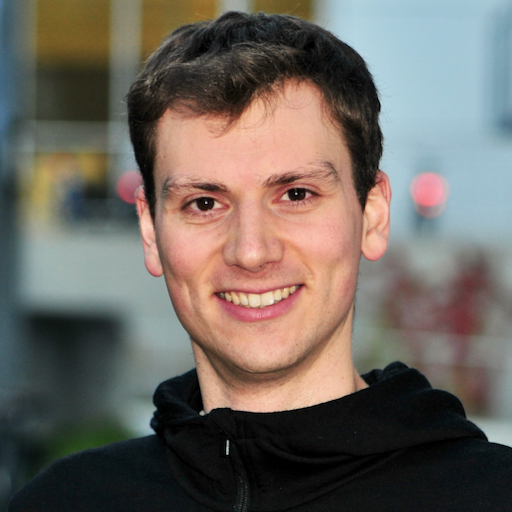
Henry Ehlers is a PreDoc Researcher and PhD Candidate at the Vienna University of Technology (TU Wien), working within the Faculty of Informatics, Institute of Visual Computing & Human-Centered Technology, specifically in the Computer Graphics Group (E193-02). He holds the position of University Assistant (Univ.Ass.) and is actively pursuing his doctoral studies under the supervision of Renata Raidou since 2021, with expected completion in 2024. His research focuses on advanced visualization techniques, particularly in the areas of network and graph visualization. Ehlers specializes in biological network visualization, compound graphs, uncertainty visualization, and data physicalization. His work bridges theoretical computer science with practical applications in visual analytics, creating innovative methods for representing complex network structures and making them accessible to domain experts. Analysis of his publication record reveals a strong emphasis on improving network visualization techniques, with particular focus on biological applications, uncertainty representation, and physical data representations. His research trajectory shows increasing sophistication in addressing visualization challenges across multiple domains including biology, environmental science, and social networks. Recent publications demonstrate his leadership in developing novel interaction techniques and visualization metaphors for complex data structures. Ehlers is actively involved in multiple research projects including ArtVis (2022-2027), SANE (2024-2027), and SMGV-Esprit (2024-2027), which support his research in visualization techniques. His collaborative approach is evident in his extensive co-authorship network across international institutions and research groups at TU Wien. As a member of the Visualization Group led by Renata Raidou, Ehlers contributes to the team's mission of developing innovative visualization solutions for complex data challenges. His work particularly focuses on creating more intuitive and effective ways to represent network structures through both digital and physical means, pushing the boundaries of how we interact with complex relational data.