Prof. Ahmed Abou-Zaid is a Professor of Economics at Eastern Illinois University (EIU), teaching courses in Advanced Macroeconomics, International Economics and Finance, Money/Banking, and Pop Culture Economics. His research focuses on macroeconomic policies, international financial markets, and development economics with notable work on exchange rate dynamics and Middle Eastern economies. He holds a PhD in Economics from Southern Illinois University Edwardsville (2008), an MA from the American University in Cairo (2002), and a B.Sc. from Cairo University (1997). His recent studies include analyzing real exchange rate fluctuations in Egypt (2024), exploring exchange rate pass-through mechanisms in North American and MENA markets, and examining the impact of nanotechnology on sustainable development. Prof. Abou-Zaid has received grants including the 2013 Faculty Development Grant and a 2008-2012 Early Research Support Grant. He has supervised 18 academic works and contributed to over 15 peer-reviewed articles since 2008. Media engagement includes commentary on U.S. dollar trends (2022). His research spans diverse topics from religious influences on interest rates to healthcare supply chain challenges, showcasing interdisciplinary strengths in economics and finance.
Whitney Phillips is an Assistant Professor of Information Politics and Ethics at the University of Oregon, affiliated with the Folklore Program and the School of Journalism and Communication (SOJC). Her interdisciplinary research examines the intersection of US politics, media ethics, and digital culture, focusing on conspiracy theories, moral panics, right-wing media ecosystems, and the ethical implications of information sharing. PhD in English with a folklore structured emphasis (digital culture focus), University of Oregon (2012) MFA in Creative Writing, Emerson College (2007) BA in Philosophy, Humboldt State University (2005) Her work bridges qualitative methods from literary/cultural theory and folklore with participant observation, rhetorical analysis, and symbolic critique to develop cultural histories of information dynamics. She has published extensively on topics including online trolling, media literacy, and the ecological impact of social media. Selected publications include her 2025 MIT Press book The Shadow Gospel (on anti-liberal demonology in US politics) and the 2023 MITeen guide Share Better and Stress Less (on social media well-being). Her research has informed ethics consultations for global news outlets and congressional briefings. Scientific Awards Nancy Baym Best Book Award (Association of Internet Researchers) for This Is Why We Can't Have Nice Things
Metin COŞKUN is a Lecturer at Kastamonu University's Faculty of Fine Arts and Design, Department of Traditional Turkish Arts since 2025. Previously, he served as a Lecturer at Kastamonu University's Bozkurt Vocational School (2012-2025), focusing on Jewelry and Jewelry Design. His academic journey includes a Proficiency in Arts degree (2022) from Hacı Bayram Veli University, a Master's in Traditional Turkish Handicrafts (2010) from Gazi University, and a Bachelor's in Jewelry Technology (2007) from Mersin University. Research Interests: COŞKUN's work bridges traditional Turkish jewelry techniques with modern innovations. He explores enamel art's historical evolution, digital integration in jewelry design, and cultural symbolism in metalware. His projects include adapting historical motifs (e.g., Ince Minare Medrese) and analyzing cardiorespiratory fitness in vocational training. Key subfields span material science , cross-cultural design , generative AI applications , and sustainable craftsmanship . Publications & Exhibitions: With 17 publications (including 6 journal articles and 2 book chapters), his research appears in journals like Otuzyedi Sanat ve Tasarım Dergisi and Academic Journal of History and Idea . He actively participates in international art exhibitions, including the 4th International Group Exhibition (2025) and ArtWORLD International Exhibition (2023), showcasing works like 'Okyanus' and 'Kam Adam Gümüş Kolye'. Professional Roles: Beyond teaching, he held administrative positions as Vocational School Director (2023-2026) and Deputy Director (2013-2019). His 2018 project on firefighters' cardiorespiratory fitness highlights interdisciplinary interests in occupational physiology and design education.
Dr. Erin Cowling is an Associate Professor and Discipline Coordinator of Spanish at MacEwan University's Department of Humanities, Faculty of Arts and Science. Her research bridges the Early Modern Spanish Theatre, Renaissance Literatures, and Latin American Cultural Studies. Education: PhD in Spanish (Johns Hopkins University) Research Focus: Analyzing historical Spanish texts for contemporary relevance, particularly through adaptation and digital humanities. Her groundbreaking work on chocolate in Spanish Golden Age literature recontextualizes colonial trade through cultural memory. Dr. Cowling actively collaborates with international theatre groups, exploring how performance transforms textual understanding. She has received prestigious accolades including: 2023 SSHRC Insight Grant 2022 SSHRC Institutional Grant 2022 Matthew Stroud Comedia Article Prize Dr. Cowling serves on the executive board of the Association for Hispanic Classical Theatre and mentors senior students in independent research projects.
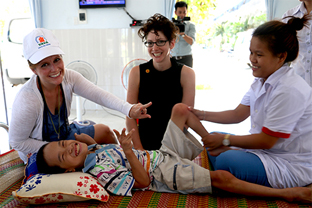
Sarah-Beth Long is Associate Professor and Internship Director in the Department of English at Appalachian State University, where she has taught since 2015. Her academic specialty centers on Rhetoric & Technical Communications, with research bridging discourse analysis and data science methodologies. Prior to Appalachian State, she was a graduate teaching assistant at the University of South Florida, receiving the Provost’s 21st Century Teaching and Learning award. Dr. Long holds a Ph.D. in English from the University of South Florida (2012-2015) with certificates in Instructional Design and Technical Writing, an M.A. in Literature from Mercy College (2012), an M.A. in Creative Writing with distinction from Lancaster University (2001), and a B.A. in Journalism from Florida Southern College (2000). She was the 2000-2001 Rotary Ambassadorial scholar. Her research investigates public discourses on contentious scientific issues through computational rhetoric, focusing on climate change communication, sustainability practices, and Agent Orange legacy. She employs sentiment analysis and social network mapping to examine how social media platforms facilitate community engagement, as demonstrated in her work with the Roatan Marine Park and Vietnam Association for Victims of Agent Orange. Dr. Long's publication trajectory shows increasing integration of data science with rhetorical analysis, moving from traditional technical communication scholarship toward algorithmic text analysis and cross-cultural discourse studies. Her recent work emphasizes practical applications for social change through nonprofit partnerships and community-based research. Notable recognitions include the Alma Bryant Outstanding Graduate Student Award (2014) and the competitive USF 21st Century Teaching Fellowship ($20,000). She has secured over $10,000 in Appalachian State research funding and is pursuing a $150,000 NSF grant. Dr. Long actively mentors students through honors theses and master's committees, emphasizing real-world applications of technical communication. Her grant portfolio supports international fieldwork in Vietnam and computational social science projects examining stakeholder engagement in technical democracy. Though not leading a formal laboratory, Dr. Long collaborates with interdisciplinary teams through professional organizations including SIGDOC and CPTSC. Her consulting work with nonprofits on social media for social change extends her academic research into practical community impact through sarahbethhopton.com.
İbrahim SAĞLAM currently serves as a Lecturer at the Department of Basic Islamic Sciences , Faculty of Islamic Sciences , Kırşehir Ahi Evran Üniversitesi since 2021. He holds a PhD in Hadith from Ankara University (2017) and an MA in Hadith from Gazi University (2008). Education : PhD (Hadith), Ankara University (2017) MA (Hadith), Gazi University (2008) BA (Theology), Ankara University (1999) Research Interests focus on Hadith Studies , Islamic Theology , and Arabic Linguistics , with particular emphasis on: Textual criticism of Prophetic traditions Applications of artificial intelligence in Hadith analysis Prophetic models for social cohesion Historical evolution of Hadith compilation Publications demonstrate expertise in: Hadith hermeneutics Medieval Islamic textual practices Modern reinterpretations of classical sources Intersections between Islamic tradition and contemporary issues Awards : Achievement Certificate (2014) His academic career includes extensive work on hadith criticism , Qur'anic exegesis , and contemporary Islamic sociology , with a notable focus on how traditional Islamic concepts address modern social challenges.
Dr. Ali Murat Mirçik is an Assistant Professor at Bingöl University's School of Social Sciences Vocational School, Media and Communication Program. With over 14 years of academic experience, he has held various administrative positions including Media and Communication Program Chair (2011-2019), Deputy Director of the Continuing Education Center (2012), and currently serves as the Coordinator of Bingöl University Radio Campus since February 2022. His academic journey began with a Journalism degree from Selçuk University where he graduated first in his department. Dr. Mirçik's educational background is exceptionally diverse, spanning multiple disciplines. He holds a PhD in Basic Communication Sciences from Atatürk University, a Master's in Communication Sciences from Lefke European University, and is currently pursuing additional degrees in Geography and Political Science. His academic credentials are complemented by numerous professional certificates in digital technologies, AI applications, and information security. His research interests center on Digital Media, TV Journalism, and Social Media studies, with a particular focus on how digital platforms transform cultural representation and communication practices. Dr. Mirçik has published extensively on topics including attention economy in social media, local journalism's digital adaptation, and political content production on platforms like Instagram. His work demonstrates a strong interdisciplinary approach that bridges communication theory with practical applications in evolving digital landscapes. Analysis of his recent publications reveals a consistent focus on the intersection of traditional media practices with digital transformations. His research spans cultural studies, political communication, and technological applications, with particular attention to how local cultures and communities adapt to and utilize digital platforms. The growing emphasis on AI applications in his recent work indicates an evolving research trajectory that incorporates emerging technologies. Selçuk University Faculty of Communication 2009 Journalism Department First Place Selçuk University Faculty of Communication 2009 Faculty Third Place Dr. Mirçik actively supervises academic work and has been involved in research projects such as the 'Hardworking Bee, Productive Women, Quality Honey' initiative. His teaching portfolio is extensive, covering both theoretical and practical aspects of media production, digital communication, and emerging technologies. As Coordinator of Bingöl University Radio Campus, he oversees a significant media production facility that serves as both a teaching resource and community service platform.
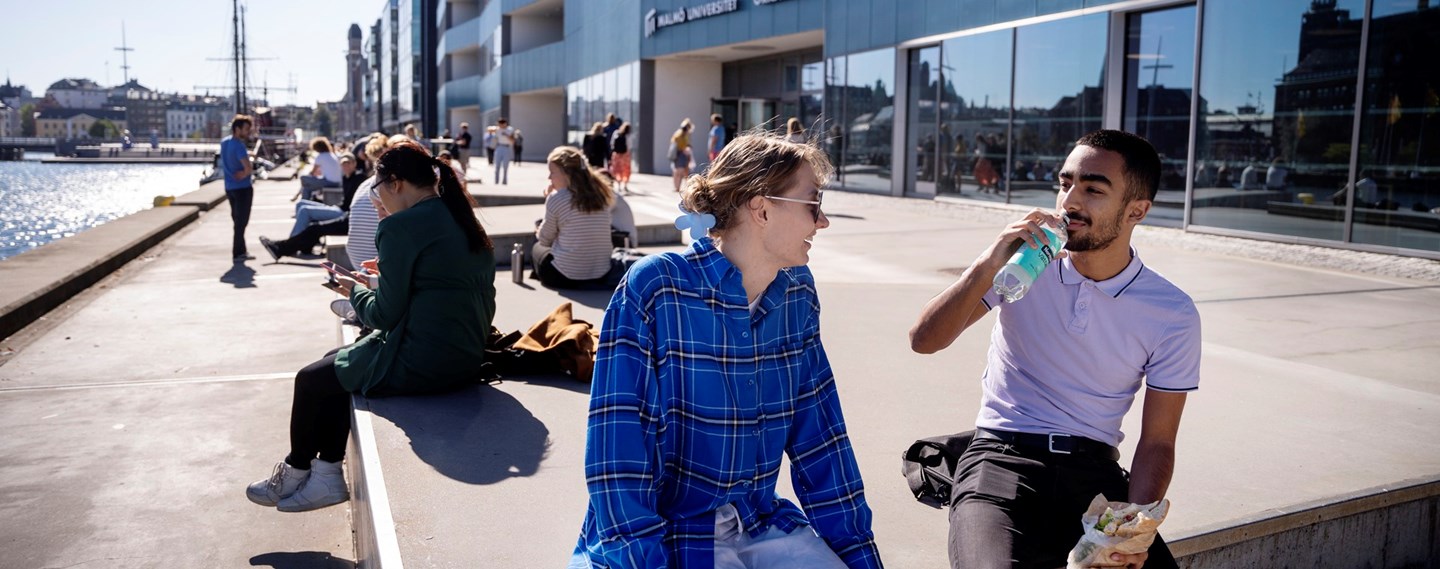
Line Henriksen is a Lecturer in Literature and Creative Writing at Malmö University's Faculty of Culture and Society, Department of Art, Culture and Communication. She holds a PhD in Gender Research from Linköping University and is affiliated with the MEDEA Lab and The Monster Lab research groups. Her research explores: Monster theory and cultural representations of horror Hauntology and temporal studies Creative writing as methodological practice Digital ethics and bot communication Feminist posthumanism and speculative fiction Through artistic research approaches, she examines intersections of gender, technology, and cultural narratives. Recent publications demonstrate interdisciplinary engagement across gender studies, digital humanities, and literary theory, with consistent focus on ethical dimensions of human/non-human relationships. Her 2024 co-authored book examines feminist reconceptualizations of alien encounters. At MEDEA Lab, she contributes to multidisciplinary projects addressing societal challenges through experimental media approaches. Her work with The Monster Lab investigates cultural manifestations of monstrosity in contemporary media landscapes.
Steffen Damkjær Moestrup serves as an Associate Professor at the Danish School of Media and Journalism, specializing in the Department of Journalism. With a PhD from the University of Copenhagen (2016-2019), he maintains active research and teaching roles focusing on evolving journalistic practices. His research centers on digital journalism —particularly intersections with computer games and art— narrative journalism including persona-driven approaches, and documentary film analysis. Additional expertise spans cultural journalism, literary journalism, and critical commentary. His work explores how digital transformation reshapes storytelling while maintaining journalistic integrity. Recent publications reveal strong thematic trends: microphenomenological studies of embodied experience ( Human in Water ), feminist reinterpretations of folklore, and critical examinations of cultural journalism's depth. His documentary film analyses frequently address migration narratives (Afghanistan conflicts) and animated storytelling techniques, often connecting to broader themes of personal identity and social commentary. Moestrup actively contributes to journalism innovation through multiple funded projects, including AI integration in newsrooms ( Brug af AI og generativ AI ), podcast audience engagement strategies, and streaming-era narrative structures. His media appearances in Le Monde Diplomatique and Danish outlets demonstrate applied expertise in cultural criticism. He regularly participates in academic knowledge exchange through conference presentations (Nordmedia Conference 2025), workshops (DOX:Anthropology), and editorial reviews. Current activities emphasize practical implementation of emerging technologies while critically examining journalism's evolving societal role.
Ivailo Saraliyski serves as an Assistant Professor in the Department of Arts and Design at New Bulgarian University (NBU), teaching core courses in Visual Media, Advertising and Vector Design (Adobe Illustrator), and Computer Layout Design of Printed Matter (InDesign). Concurrently, he operates as a creative director at CreateX digital agency, merging academic rigor with professional design practice. His academic credentials include: Bachelor's degree in Graphics from the National Academy of Arts (2016) Master's degree in Poster and Visual Communication from the National Academy of Arts (2018) Doctoral degree in Visual Arts from New Bulgarian University (2023) Saraliyski's research bridges historical art analysis and digital frontiers, with primary focus on Tarot symbolism's evolution from Renaissance to contemporary contexts. His work examines how Tarot iconography transforms across cultural movements while maintaining relevance in modern visual communication. Secondary research trajectories explore NFT ecosystems, generative art algorithms, and AI's disruptive impact on artistic originality, positioning him at the intersection of tradition and technological innovation in visual culture. His publication pattern (2022-2025) reveals a clear scholarly trajectory: early works establish foundational Tarot scholarship (2022-2023), while recent outputs pivot decisively toward digital disruption (2024-2025). This evolution demonstrates increasing engagement with blockchain art markets and machine learning's creative implications, reflecting broader shifts in art historical methodology toward technology-integrated analysis. Saraliyski maintains active artistic practice through exhibitions like "LET THERE BE LIGHT" (2020) and "LET THERE BE COLOR" (2021), while his professional role at CreateX facilitates real-world application of academic research. His office hours operate across physical (NBU II Building) and virtual (Google Meet) spaces, emphasizing accessibility for students navigating both traditional and digital art domains.