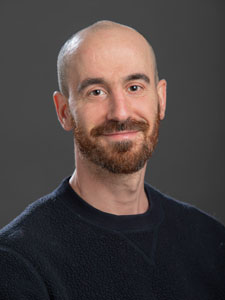
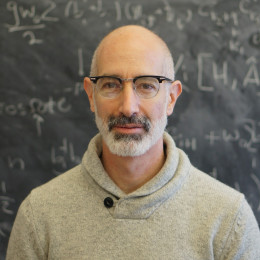
Jonah Gaster is an Assistant Professor in the Department of Mathematical Sciences at the University of Wisconsin-Milwaukee, where he also serves as the Program Coordinator for the Topology Research Group and Colloquium Chair. His research focuses on mathematical topology, geometric group theory, and combinatorial structures in low-dimensional topology. His research explores the interplay between combinatorial methods and geometric structures, with specific interests in curve systems on surfaces, harmonic maps between manifolds, and the computational aspects of topological invariants. Recent work investigates combinatorial representations of geometric objects and their applications in low-dimensional topology. Analysis of Dr. Gaster's recent publications reveals a consistent focus on topological combinatorics, surface embeddings, and geometric group theory. His work bridges discrete mathematics with continuous geometric structures, particularly in the contexts of hyperbolic geometry and curve complexes. He leads the Topology Research Group at UWM, fostering collaborative investigations into fundamental questions in geometric topology and discrete mathematics.
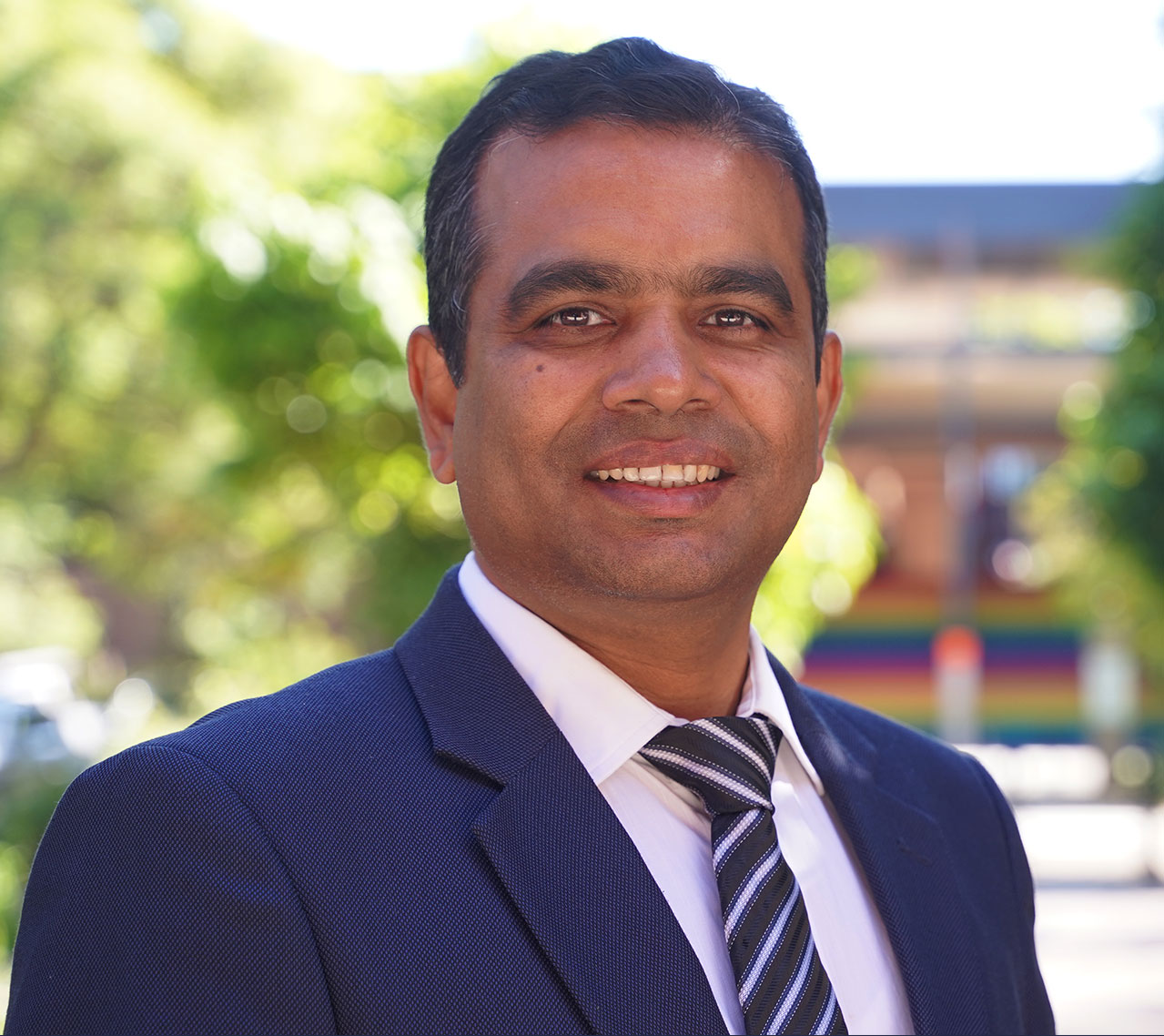
Dr. Gea Rahman is a Lecturer in Computing at Charles Sturt University (CSU), specializing in data science and machine learning. He holds a PhD in Computer Science from CSU, and MSc/BSc degrees from Rajshahi University, Bangladesh, where he was awarded a Gold Medal for academic excellence. With over 20 years of teaching experience, he previously served as Professor and Programme Director at Bangladesh Agricultural University. Education: PhD in Computer Science (Data Science/ML), Charles Sturt University (2011-2015) MSc in Computer Science & Engineering, Rajshahi University (2002-2003) BSc (Hons) in Computer Science & Technology, Rajshahi University (1998-2002) Research Interests: Data science applications in agriculture, healthcare, and environmental monitoring Machine learning techniques including ensemble/deep learning, transfer learning, and incremental learning Data preprocessing methods (missing value imputation, outlier analysis) AI ethics and healthcare consent strategies Awards: Global Research Impact Recognition Award 2020 Best Researcher Award Gold Medal for Academic Excellence (2003) Advising & Grants: Principal supervisor for multiple postgraduate students Recipient of grants including: Ai-Enabled Segmentation of Brain MRI (2024) Adaptive Federated Learning Framework (2024) Unusual Behaviour Detection in Aged Care (2023) He is part of the Data Mining Research Group (DaMRG) and actively contributes to conferences/journals as a reviewer and editorial board member.
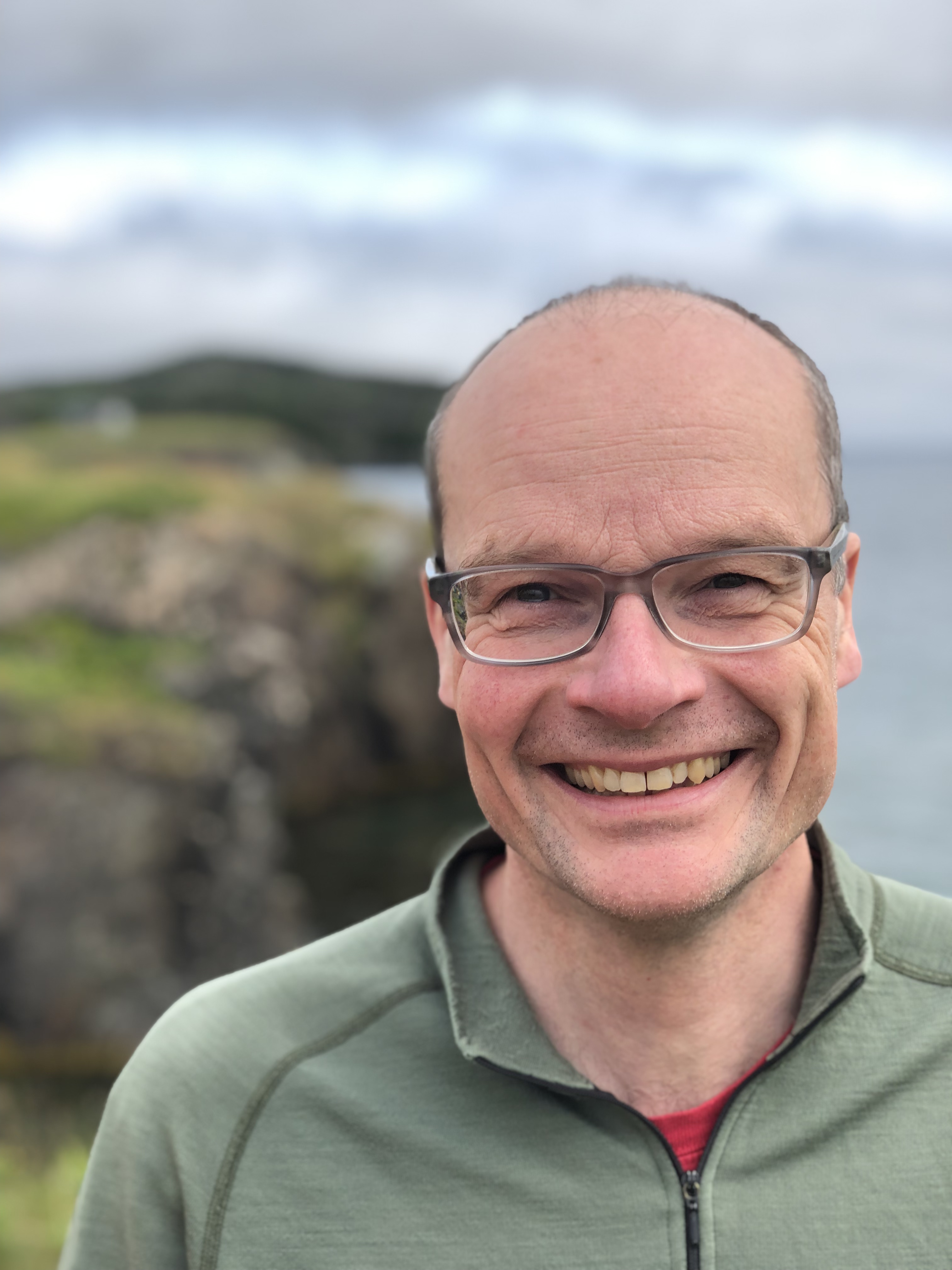
Colin G. Farquharson is a Professor in the Department of Earth Sciences at Memorial University of Newfoundland. His career spans roles including Assistant Professor (2008-2018), Associate Professor (2014-2018), and full Professor since 2018. He holds a Ph.D. in Geophysics from the University of British Columbia (1995) and a B.Sc. (Honours) in Geophysics from the University of Edinburgh (1990). His research focuses on forward modeling and inversion of geophysical electromagnetic data, particularly surface geometry inversion (SGI), meshfree methods for unstructured grids, and joint inversion techniques. Key projects include SGI for hydrothermal vent systems, 3D EM modeling for mineral exploration, and computational methods on unstructured tetrahedral meshes. His work addresses challenges in uranium exploration, subsurface imaging, and geological interface reconstruction. Publications emphasize advancements in electromagnetic theory, inversion algorithms, and applications in mineral and hydrocarbon exploration. Notable collaborations include work with Peter Lelièvre on surface-based inversion and stochastic optimization. Research groups include the CAG Group and FacetModeller team, focusing on integrating geological models with geophysical data. Awards and recognitions are not explicitly listed, but his extensive contributions to geophysical methodology and exploration geophysics are well-documented. He advises numerous graduate students and leads projects funded by NSERC, industry partnerships, and international collaborations.
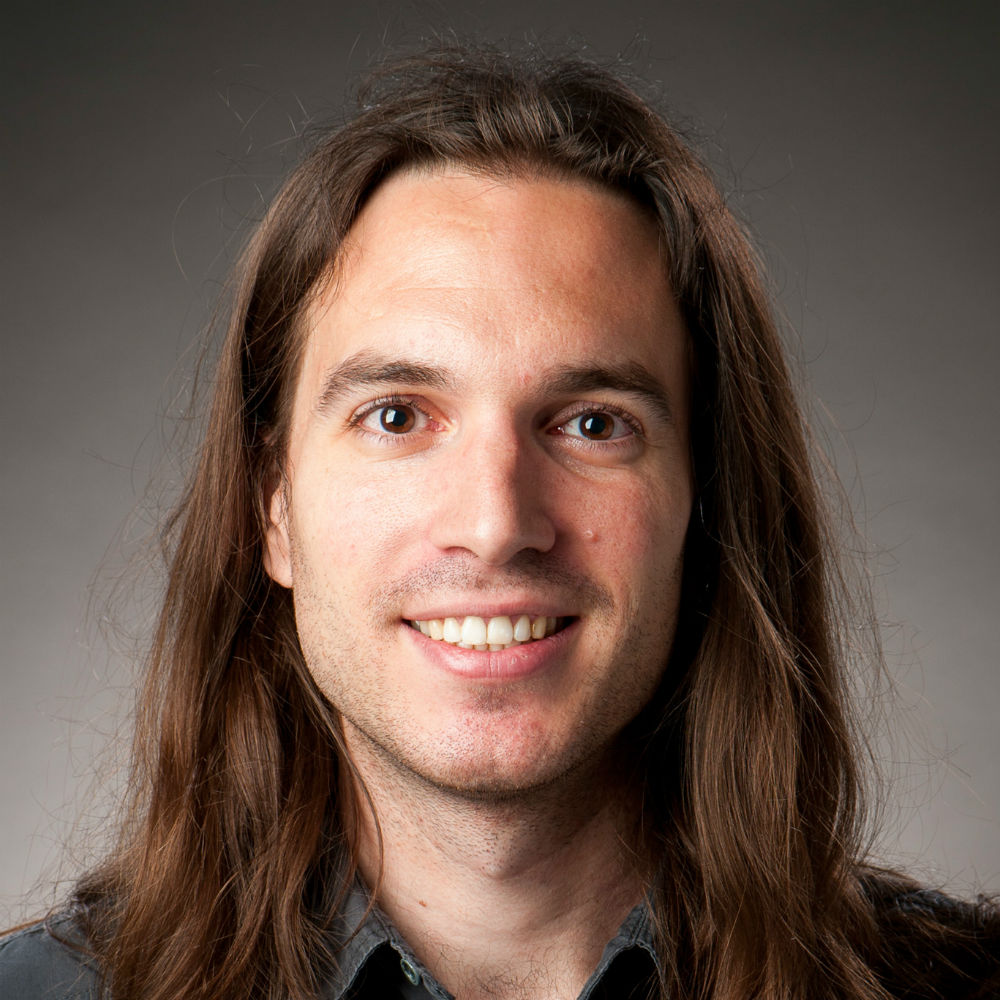
Dr Jesus Martinez-Garcia is a Senior Lecturer in the Department of Mathematical Sciences at the University of Essex, within the School of Mathematics, Statistics and Actuarial Science (SMSAS). His research focuses on algebraic and complex geometry, particularly birational geometry of Fano varieties, K-stability, moduli spaces, and computational algebraic geometry. He has held postdoctoral positions at the University of Bath, Max Planck Institute for Mathematics in Bonn, and Johns Hopkins University, and briefly served as an Adjunct Professor at Korea University. Dr Martinez-Garcia holds a PhD in Mathematics from the University of Edinburgh (2013), an MASt in Mathematics from the University of Cambridge (2009), and dual degrees from Universidad Autónoma de Madrid: MEng in Computer Engineering (2008) and MSci in Mathematics (2008). His research interests include Kähler-Einstein metrics, classification of Fano varieties, geometric invariant theory (GIT), and computational methods in algebraic geometry. He has contributed to foundational work on K-moduli spaces, asymptotic log Fano varieties, and moduli compactifications. Dr Martinez-Garcia’s publications span theoretical advancements and computational tools, including the Variations of GIT quotients package. His work bridges algebraic geometry with differential geometry, emphasizing connections between stability conditions and geometric structures. Grants and funding details are listed on his profile, though specific grants are not detailed here. He actively advises students in his field and contributes to teaching at Essex, with academic support hours coordinated via Moodle. He is affiliated with STEM 5.9 on the Colchester Campus and can be reached via email at jesus.martinez-garcia@essex.ac.uk .
Professor Burak Erman is a distinguished academic currently serving as a Professor of Science and Engineering at Koç University. He holds a Ph.D. from Istanbul Technical University (1974) and has held faculty positions at Robert College School of Engineering (1969–1971), Boğaziçi University (1971–1998), and Sabancı University (1998–2002). His research focuses on applying statistical mechanics to predict protein function, drug design, and protein-drug interactions. Erman has authored over 200 scientific papers, two books, and two edited volumes. Affiliations: Turkish Academy of Sciences, TÜBİTAK Science Board, and editorial boards of Computational Polymer Science and Polymer Gels and Networks . Collaborations: Max-Planck Institute, ESPCI Paris, and Cincinnati University. His research interests include protein dynamics, entropy changes in mutations, and computational methods for drug design. Key contributions include the Gaussian Network Model for protein behavior analysis and studies on KRAS mutations in cancer. Erman has received prestigious awards like the 2007 American Chemical Society Whitby Award. Awards: 1991 Simavi Science Award, 1991 TÜBİTAK Science Award, 2007 ACS Whitby Award. Labs/Teams: Erman Research Group focuses on protein dynamics and computational biology. Grants and advising details are not explicitly mentioned, but his extensive publications and collaborations highlight significant contributions to interdisciplinary research in biophysics and molecular biology.
Joel E. Cohen is the Abby Rockefeller Mauzé Professor at The Rockefeller University, where he leads the Laboratory of Populations. With over five decades of research experience, Cohen has pioneered innovative mathematical approaches to study biological populations and variability. His work bridges mathematics, biology, and environmental science, fundamentally changing how scientists understand population dynamics and the significance of biological variability. Dr. Cohen's research focuses on developing new mathematical tools to address population problems in demography, epidemiology, and ecology. He has made seminal contributions to the understanding of heavy-tailed distributions that describe extreme events like hurricanes and disease outbreaks, challenging traditional statistical approaches. His laboratory has conducted groundbreaking research on the spatial distribution of human populations in relation to geophysical factors, with unexpected practical applications ranging from soap formulation to semiconductor manufacturing. Cohen has also developed mathematical models for Chagas disease control in rural Argentina and created algorithms to predict international migration patterns. Analysis of Cohen's recent publications reveals a sustained focus on Taylor's law of fluctuation scaling, population dynamics, and ecological statistics. His work consistently demonstrates how abstract mathematical concepts can transform our understanding of biological systems, from cellular processes to global population trends. The research spans theoretical mathematics to practical applications in disease control, conservation biology, and environmental management. Olivia Schieffelin Nordberg Prize for excellence in writing in the population sciences (March 1997) Gheorghe Lazar Prize of Romanian Academy (December 2000) As director of the Laboratory of Populations, Cohen has led research on human population growth, infectious diseases, food webs, and international migration. His methods for assessing the uncertainty of population projections have been applied in court cases for predicting future claimants of asbestos-related diseases. Cohen's laboratory has collaborated with the United Nations Population Division on migration studies and developed mathematical models that account for more than half of the variability in annual migration numbers among 229 countries. Current research directions include understanding how demographic, economic, and cultural changes interact with Earth's physical, chemical, and biological environments. The Laboratory of Populations employs a multidisciplinary approach that combines mathematical modeling, statistical analysis, and field studies to address complex population issues. Their work exemplifies how basic quantitative research on populations frequently yields unexpected practical applications, demonstrating the profound connections between theoretical mathematics and real-world challenges in public health, environmental science, and resource management.
Hans U. Boden is a Professor in the Department of Mathematics & Statistics at McMaster University's Faculty of Science. His research focuses on low-dimensional topology, gauge theory, and knot theory with emphasis on virtual knots, braid theory, and moduli spaces. Current teaching includes Math 2X03, Math 4E03, and iSci 2A18 as of the 2022-2023 academic year. His research interests center on gauge theory and low-dimensional topology , specifically investigating knots, links, braids and their invariants , moduli spaces of flat connections over 3-manifolds , and moduli spaces of vector bundles over Riemann surfaces . Recent work includes collaborations on virtual knot concordance, alternating links in thickened surfaces, and braid representatives minimizing simple walks with student Matthew Shimoda. Analysis of his recent publications (2019-2025) reveals a strong trend toward virtual knot theory and surface embeddings , with significant contributions to alternating virtual links, generalized Tait conjectures, and concordance invariants. His work bridges combinatorial topology with geometric structures, frequently employing computational methods like SageMath for braid analysis. He has co-edited three major books: Gauge Theory and Low-Dimensional Topology: Progress and Interaction (2022), Chern Simons Gauge Theory: 20 years after (2011), and Geometry and Topology of Manifolds (2005). Supervised 22+ theses including PhDs by Jie Chen (2023), Homayun Karimi (2018), and Lindsay White (2016) Mentored undergraduate researchers through USRA projects and Fields Institute summer programs Collaborated with international researchers including Chris Herald, Paul Kirk, and Homayun Karimi His research group maintains active projects in knot tabulation, virtual knot invariants, and computational topology, with recent work on mutation of surface graphs and minimal crossing diagrams. The group utilizes both theoretical approaches and computational tools like SageMath for knot analysis.
Ching-Yao Lai is an Assistant Professor of Geophysics at Stanford University, leading the Lai Research Group. His work integrates mathematical and machine-learned models with observational data to study ice dynamics, geophysics, and fluid mechanics across vast spatial scales. Key focuses include understanding ice-sheet behavior under climate change, fluid-elastic interactions, and interdisciplinary collaborations. He holds a Ph.D. (2018, Princeton University) in Mechanical and Aerospace Engineering and a B.S. (2013, National Taiwan University) in Physics. Research interests span ice dynamics, climate science, and fluid mechanics, with emphasis on machine learning applications to uncover missing physics in ice-sheet models. Notable contributions include discovering self-similar blow-up solutions for Euler equations and developing physics-informed neural networks. His work bridges theory and observation, addressing global challenges like ice-sheet vulnerability. Scientific awards include the 2024 Sloan Research Fellowship and 2023 Google Research Scholar Award. He leads NSF-funded projects on singularities in incompressible flows and Greenland meltwater pathways. Advising highlights include mentoring students like Yongji Wang (Science publication, 2025) and Yuno Iwasaki (2024 Soros Fellow). Labs/Teams: Lai Research Group at Stanford, collaborating across geophysics, engineering, and computer science. Active in open science, with a YouTube channel and Google Scholar profile.
David R. Reichman is the Centennial Professor of Chemistry at Columbia University, affiliated with the Department of Chemistry within the School of Arts and Sciences. His research focuses on the chemistry, physics, and biology of disordered materials, including glass-forming systems, soft materials (gels, colloids, emulsions), and biological systems. Key themes include disorder, dynamical heterogeneity, and metastable configurations. His work spans computational methods such as Quantum Monte Carlo, time-dependent variational principles, and exciton theory. Notable contributions include studies on singlet fission mechanisms, halide perovskites, and optically pumped phonon dynamics in superconductors. Leads the Reichman Group, based at 520 Havemeyer Hall. Active in cross-disciplinary collaborations, as seen in publications across journals like Nature Communications and Physical Review B . Research emphasizes bridging microscopic quantum phenomena with macroscopic material behavior, particularly in energy-related materials and nanostructured systems.
David Karger is a Professor of Computer Science at MIT, affiliated with the Computer Science and Artificial Intelligence Laboratory (CSAIL). He holds a B.A. from Harvard University and a Ph.D. from Stanford University. His research spans algorithms, information retrieval, human-computer interaction, and theory of computation. He leads the Haystack group, focusing on information management systems and collaborative tools. Notable contributions include the Scatter/Gather browsing system, the Mavo web application framework, and projects like Wikum and Squadbox for online collaboration and harassment prevention. Education: A.B. Summa cum Laude in Computer Science, Harvard University (1989) Ph.D. in Computer Science, Stanford University (1994) Research Interests: Karger’s work integrates algorithmic theory with practical systems, emphasizing human-centered design. Current projects address misinformation detection, social interaction systems, and educational tools. His research bridges theoretical computer science and applied domains such as web technologies and healthcare informatics. Awards: ACM Doctoral Dissertation Award (1994) Mathematical Programming Society Tucker Prize (1997) National Academy of Sciences Award for Initiative in Research (2004) Advising & Grants: Karger has advised over 30 students, many of whom have gone on to leadership roles in academia and industry. His work has been supported by grants from the MIT Schwarzman College of Computing and collaborations with companies like Akamai and Google. Labs & Teams: He leads the Haystack Group within CSAIL, collaborating with interdisciplinary teams on projects such as Mavo, Wikum, and Eyebrowse. His research also intersects with the Theory of Computation and Algorithms groups at MIT.
Dr. FENG Ling is an Adjunct Assistant Professor at the National University of Singapore and Manager of the Complex System Group at the Institute of High Performance Computing, A*STAR. His work bridges theoretical and applied research in complex systems, focusing on statistical physics principles underlying deep learning and phase transitions in neural networks, as well as percolation phenomena in inter-dependent networks. Education: PhD in Physics, National University of Singapore (2013) His research spans complexity science, artificial neural networks, and social/economic systems. By analyzing critical states between periodic cycles and chaos, he explores optimal neural network training and explainability. He also develops frameworks for systemic spreading in complex networks, applicable to disease propagation, information diffusion, and blockchain dynamics. The selected publications highlight his contributions to understanding 1/f noise in deep neural networks (2024), reconstructing networked complex systems (2024), and edge-of-chaos training principles (2024). Earlier works investigate generalization in deep learning (2020), viral spreading on social networks (2018), and global spreader identification (2018), reflecting interdisciplinary applications of percolation theory and machine learning. Scientific Awards 9th place in Predicting Generalization in Deep Learning Competition at NeurIPS 2020 Dr. Feng leads the Complex System Group at A*STAR's Institute of High Performance Computing, where his team develops algorithms for maximizing or mitigating systemic spread in social, financial, and blockchain networks. His work integrates nonlinear dynamics, computational modeling, and data science to address challenges in artificial intelligence and networked systems.
Laks V.S. Lakshmanan is a Professor in the Department of Computer Science at the University of British Columbia (UBC), within the Faculty of Science. His research focuses on data management, graph computing, machine learning, and algorithms, with notable contributions to dense subgraph discovery, influence maximization, and healthcare informatics. He teaches advanced courses on databases and data management, including CPSC 404 (Advanced Relational Databases) and CPSC 534L (Topics in Data Management). His awards include the ACM SIGMOD Research Highlight Award, the IEEE Data Science Best Paper Award, and recognition as an ACM Distinguished Scientist (2016). His work bridges theoretical algorithm design with practical applications in social networks, bioinformatics, and healthcare. Key research themes include optimizing graph algorithms for large-scale data, combating misinformation through network analysis, and developing efficient methods for subgraph enumeration and influence propagation. His recent publications explore topics like clinical event prediction (TRACE), cost-effective LLM selection (ThriftLLM), and cross-modal consistency in AI systems. Education: Details not explicitly provided in sources. Grants & Funding: Recipient of NSERC Discovery Accelerator Supplements. Labs/Teams: Engaged in UBC's data management research groups and collaborative initiatives with industry partners.
Margaret Michelle Torres is an Assistant Professor in the Department of Political Science at the University of California, Los Angeles (UCLA). Her research focuses on political methodology, computer vision, causal inference, and survey methodology, with substantive interests in political media communication, participation, and attitude formation. She holds a Ph.D. in Political Science and an A.M. in Statistics from Washington University in St. Louis, alongside a B.A. in Political Science and International Relations from CIDE (Mexico City). Her work bridges computational methods and social science inquiry, emphasizing innovative tools for analyzing visual and textual data. Recent projects explore how ideology influences perceptions of political groups, the role of visual frames in protests, and methodological issues in causal inference. Torres has authored influential papers on topics ranging from election dynamics to the application of machine learning in political analysis. Notable contributions include frameworks for unsupervised visual analysis and critiques of posttreatment variable pitfalls in experiments. Her research frequently intersects with questions of media representation, public opinion, and institutional trust. Torres advises students in quantitative methods and political behavior, though specific advisee names are not listed here.
Prof. Martin Otto is a Professor of Mathematics at the Technische Universität Darmstadt, specializing in Logic and Mathematical Foundations of Computer Science. He holds a position in the Department of Mathematics (Fachbereich 4) and serves as Dean of Studies. His academic journey includes a PhD from the University of Freiburg (1990), habilitation from RWTH Aachen (1996), and prior roles as a Lecturer/Reader at Swansea University (1999–2003). Research Interests: Mathematical Logic, Model Theory, Complexity Theory, Algorithmic Model Theory, Finite Model Theory, and Logic in Computer Science. Notable contributions include work on bisimulation, guarded logics, and inquisitive semantics. His research bridges structural properties in mathematics and computational expressiveness. Teaching: Courses span Mathematical Logic, Model Theory, Linear Algebra, and Modal Logics. Recent offerings include Introduction to Mathematical Logic (2024/25), Logic & Knowledge Representation, and advanced seminars on model-theoretic topics. Publications: Over 50 peer-reviewed papers in journals like the Journal of Symbolic Logic, and conference proceedings such as LICS and CSL. Key works address guarded fragments, bisimulation invariance, and finite model theory applications. Affiliations: Member of the Logic Group at TU Darmstadt. Editorships include the Bulletin of Symbolic Logic and Lecture Notes in Logic. Organized workshops like AlMoTh 2020 (cancelled due to pandemic) and participated in Simons Institute programs (2016).
Aaron Bernstein is Charles S. Baylis Associate Professor in Computer Science at NYU Tandon School of Engineering. His research advances theoretical foundations of graph algorithms, with breakthroughs in dynamic algorithms, shortest path problems, and distributed computing. Research contributions: Pioneering work on near-linear time algorithms for shortest paths with negative weights Fundamental advances in dynamic graph algorithms for connectivity and matching Innovative frameworks for distributed load balancing and network optimization Breakthroughs in maximum flow and matching problems Publications demonstrate consistent theoretical innovation with numerous best paper awards at top theory conferences. Recent work resolves long-standing open problems in graph algorithms and establishes new algorithmic paradigms. Current research group includes PhD students working on graph algorithms and distributed computing. Recipient of prestigious awards including Presburger Award and Sloan Research Fellowship. Research funded by NSF CAREER grant and Google Research Scholar award.