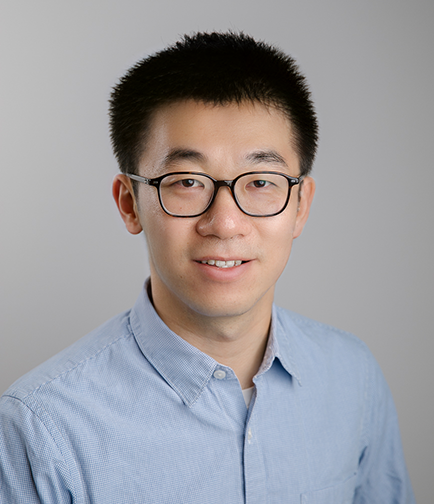
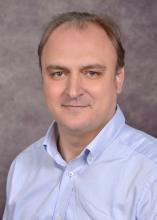
Dr. Dong Gong is a Senior Lecturer and ARC DECRA Fellow (2023-2026) at the School of Computer Science and Engineering (CSE), UNSW. He holds an adjunct position at the Australian Institute for Machine Learning (AIML), University of Adelaide. His research focuses on machine learning challenges in dynamic environments, including continual learning, foundation models, generative models, and applications in interdisciplinary areas like mining and agriculture. Research interests include learning with non-ideal supervision, foundation model adaptation, generative models, and interdisciplinary problems combining CV/ML with domain-specific applications. His work often addresses real-world scenarios such as mineral exploration and soil trait analysis using CV/ML technologies. Outstanding Reviewer: NeurIPS 2018 Outstanding Area Chair: ACM MM 2024 ARC DECRA Fellowship (2023-2026) Advising and grants: Actively supervises PhD/MPhil students in computer vision and ML. Collaborates with industry and government on research projects. Utilizes advanced infrastructure like UNSW's Katana supercomputing cluster and Gadi (NCI). Labs/Teams: Involved in interdisciplinary research groups at UNSW CSE and AIML, focusing on dynamic learning paradigms and real-world applications of AI.
Ran Dai is a Professor in the Department of Aeronautics and Astronautics at Purdue University's College of Engineering. His research focuses on optimal control theory, trajectory optimization, and robotics applications, with an emphasis on aerospace systems and energy-efficient solutions. He leads the Autonomous Optimization Lab (AOL) and has contributed extensively to advancements in learning-based control, mixed-integer programming, and deployable space systems. His work spans applications such as spacecraft guidance, unmanned vehicle path planning, and energy management for solar-powered systems. Notable contributions include algorithms for fuel-optimal powered descent, real-time trajectory optimization, and origami-inspired deployable mechanisms. He holds a Ph.D. in Aerospace Engineering and has published over 100 peer-reviewed articles. Research interests include: Optimal control and trajectory optimization Reinforcement learning for decision-making Autonomous systems and robotics Energy-efficient aerospace engineering Recent work emphasizes meta-reinforcement learning frameworks and adaptive optimization engines for complex systems.
Dr. Tao Hong is the Duke Energy Distinguished Professor and NCEMC Faculty Fellow at the Department of Systems Engineering and Engineering Management, University of North Carolina at Charlotte. He directs the Big Data Energy Analytics Laboratory (BigDEAL) and has been a Founding Chair of the IEEE Working Group on Energy Forecasting (2011-2019). Ph.D., Electrical Engineering & Operations Research (2010), NC State University M.S., Operations Research & Industrial Engineering (2008), NC State University B.Eng., Automation (2005), Tsinghua University His research focuses on Energy Forecasting with applications in power systems operations, renewable integration, risk management, and cross-sector forecasting for healthcare, transportation, and sports. He has led major Delivery point level load analysis (2017-present) Short-term probabilistic forecasting (2016) Demand response modeling using smart meter data (2014-2015) Dr. Hong's scientific contributions include 9+ journal articles on energy forecasting methodologies and 3 major forecasting competitions (GEFCom2012-2017, BigDEAL Challenge 2022). His work has been cited in leading journals like International Journal of Forecasting and IEEE Transactions on Smart Grid . Charlotte Business Journal Energy Education Leader of the Year (2017) IEEE PES PSPI Technical Committee Prize Paper Award (2016) As a dedicated educator , Dr. Hong has advised multiple PhD and Master's students including Shreyashi Shukla (2023), Yike Li (2022), and Jordan McCorey (2021). He teaches specialized courses in energy systems planning and computational intelligence.
Zicheng Chi is an Assistant Professor in the Department of Electrical Engineering and Computer Science at Cleveland State University. His research focuses on Internet of Things (IoT) and cyber-physical systems, with expertise in wireless networks, embedded systems, and RF sensing. Ph.D. in Computer Engineering, University of Maryland, Baltimore County (2020) M.E. in Microelectronics and Solid Electronics, South China University of Technology (2011) B.S. in Electronic Information Science and Technology, Lanzhou University (2007) Chi's work explores fundamental networking and energy challenges in IoT, including LTE backscatter systems, cross-technology communication protocols, and interference-negligible RF sensing. His research bridges communication efficiency and security in heterogeneous IoT environments. Recent publications demonstrate expertise in high-throughput backscatter (2024), secure asymmetric communication (2024), vehicle-to-vehicle perception (2023), and tactical IoT protocols (2022). His work spans wireless network optimization, security mechanisms, and energy-efficient system design. Best Paper Award Candidate, SenSys 2019 Best Paper Runner-up, SenSys 2018 Chi teaches graduate and undergraduate courses in computer networks, data communication, and system programming. His NSF-funded SWIFT project investigates spectrum coexistence in IoT systems.
Zeyu Ding is an Assistant Professor in the School of Computing at Binghamton University, with a courtesy appointment in the Department of Mathematics and Statistics. He holds two PhDs: one in Computer Science from Penn State University and another in Mathematics from Binghamton University, along with a BS in Mathematics from Zhejiang University. Research Interests His work focuses on the intersection of privacy, security, machine learning, and algorithmic fairness. He investigates how to protect sensitive personal information through differential privacy mechanisms, formal verification, numerical optimization, and privacy-preserving statistical inference. Article Trends Ding's publications highlight advancements in differential privacy, including the Report Noisy Max with Gap Mechanism and the Permute-and-Flip approach. His research also addresses security challenges like reconstruction attacks and automated verification tools (e.g., Checkdp and DPGen), alongside mathematical explorations of automorphism group schemes and Barsotti-Tate groups. Scientific Awards CCS Outstanding Paper Award, 2018 Caper Bowden PET Award Runner-up, 2019 CCS Best Paper Award Runner-up, 2020 CCS Best Paper Award Runner-up, 2021 Research Award from Penn State University, 2019 Teaching Award from Penn State University, 2021 His research is supported by the NSF grant 2317233, underscoring his contributions to privacy-preserving computational methods.
Prof. Lionel C. Briand is a leading academic in software engineering and trustworthy AI, holding appointments at the University of Ottawa (EECS Department, Nanda Laboratory) and the University of Limerick (Lero - National Software Research Centre). He serves as Director of Lero and Scientific Director of the SnT software verification lab in Luxembourg. His research focuses on software testing, model-driven engineering, AI-driven quality assurance, and regulatory compliance. He has held the Canada Research Chair (Tier 1) since 2003 and led major institutions like Simula Research Laboratory (Norway) and Fraunhofer Institute (Germany). Education & Career: Full Professor at Carleton University (2008–2012) Head of Software Quality Engineering at Fraunhofer IESE (2000–2008) Research Scientist at NASA Software Engineering Lab (1990s) Research Interests: His work spans secure AI systems, automated legal compliance (e.g., GDPR), metamorphic testing, search-based software engineering, and safety-critical systems. He emphasizes practical applications, collaborating with industry partners globally. Awards & Recognition: IEEE Fellow (2010), ACM Fellow (2020) Harlan Mills Award (2012), ERC Advanced Grant (2016) Fellowships from Royal Society of Canada (2023) and Academia Europaea (2025) Grants & Labs: PEARL grant from Luxembourg FNR for SnT lab ERC Advanced Grant for software testing research Leadership roles in Lero and Nanda Lab Publications: Over 500+ papers on testing methodologies, AI ethics, and regulatory compliance. Notable tools include CompAI (GDPR compliance) and Teasma (DNN test adequacy).
Michele Gattullo serves as an Assistant Professor within the Department of Mechanics, Mathematics & Management at the Polytechnic University of Bari, Italy, specializing in design methods for industrial engineering (ING-IND/15). His research bridges cutting-edge extended reality technologies with practical industrial applications, focusing on human-centered solutions for manufacturing, maintenance, and workplace design. Dr. Gattullo's research portfolio centers on Augmented Reality, Virtual Reality, and Biophilic Design, with significant contributions to Human-Computer Interaction in industrial contexts. He investigates how nature-inspired elements in virtual workspaces enhance employee well-being and productivity, while simultaneously developing practical AR tools for assembly guidance, technical documentation, and maintenance support. His work uniquely integrates ergonomics, cognitive psychology, and industrial engineering to optimize human-technology interaction in complex production environments. Analysis of his 15 most recent publications reveals two dominant research trajectories: biophilic design frameworks for virtual/metaverse workspaces (2023-2025) and industrial AR authoring methodologies. The biophilic stream establishes evidence-based guidelines for digital nature integration, while the AR stream delivers validated tools like ADAM and minimal AR approaches that streamline technical documentation creation. Both trajectories emphasize user experience validation through rigorous industrial studies, demonstrating strong interdisciplinary impact across computer science, industrial engineering, and environmental psychology. Scientific Awards: No awards or honors were documented in the available sources. Advising and Grants: The provided materials contain no information regarding graduate student supervision, research grants, or funding sources. His academic profile emphasizes publication output over mentoring activities or project financing details. Laboratories and Teams: While Dr. Gattullo's research involves advanced XR technologies, the source text does not specify laboratory facilities, research groups, or collaborative teams associated with his work at Politecnico di Bari.
Benjamin Garner serves as Associate Professor of Marketing in the College of Business at the University of Central Arkansas (UCA), maintaining an active research program from his office in COB 312I. His contact information includes email bgarner3@uca.edu and phone (501) 450-5329, reflecting ongoing institutional affiliation. Dr. Garner's research centers on consumer behavior in experiential marketing contexts with three primary thrusts: Social media engagement dynamics in wine tourism and farmers' markets Authenticity construction through scarcity and sustainability messaging Innovative business education pedagogy including flipped classroom methodologies Analysis of his 2021-2025 publications reveals consistent methodological emphasis on ethnographic observation and text-mining of user-generated content across platforms like Facebook, Instagram, and Twitter. His work uniquely bridges agricultural marketing contexts with digital communication strategies, particularly examining how language structures influence consumer perceptions of authenticity. No scientific awards or student advising information appears in available records. Similarly, grant funding details and laboratory affiliations remain undocumented in the provided materials, though his publication output indicates sustained research activity across multiple scholarly domains.
Nuno Pereira Lopes is an Associate Professor at Instituto Superior Técnico , part of Universidade de Lisboa , and a researcher at INESC-ID . He also serves as an advisor at FuriosaAI , focusing on tensor contraction processors for AI workloads. Research Interests : Compilers, formal verification of LLVM optimizations, machine learning frameworks, undefined behavior exploitation, probabilistic model checking, blockchain security, and many-core code generation. Teaching : Compilers and Computer/Informatics Engineering projects. Funding : Supported by Google, Matter Labs, NLnet, Oracle, PRACE, RNCA, and Woven by Toyota. Recent Publications focus on LLVM backend validation , PyTorch pipeline parallelism , C++ dynamic cast optimization , undefined behavior in C/C++ , and AI tensor processors . His work bridges compiler design, formal methods, and AI hardware. Academic Service includes representing Portugal in ISO/IEC JTC 1/SC 22 (C++), organizing FLoC'26 , and serving on program committees for PLDI, EuroLLVM, and CGO.
Benjamin Lubin is a Clinical Associate Professor in the Information Systems Department at Boston University's Questrom School of Business. He holds office 621A in the Rafik B. Hariri Building at 595 Commonwealth Avenue, Boston, MA 02215. His academic journey began with a Bachelor's degree in Computer Science from Harvard University in 1999, followed by six years working at BBN Technologies, where he contributed to advanced multi-agent modeling, scheduling, and logistics systems. He later returned to Harvard to complete his Ph.D. at the intersection of computer science, game theory, and economics. Dr. Lubin's research spans three primary areas: (1) mechanism design, particularly combinatorial auctions and exchanges that support efficient reallocation of goods with complex participant preferences; (2) application of spectral graph theory to advance social network analysis; and (3) leveraging network science and machine learning to improve healthcare delivery systems. His work demonstrates a consistent pattern of bridging theoretical computer science with practical economic applications, with recent publications showing increasing focus on healthcare applications while maintaining strong contributions to auction theory and network analysis. His research has been supported by significant funding from NIHCM and the Veterans Administration, and he has received prestigious recognition including the Siebel Fellowship and Yahoo Key Technical Challenge award. Dr. Lubin has mentored numerous graduate students including PhD candidates Vatche Ishakian, Marisabel Guevara, and Sarah Zheng, as well as Master's students Benedikt Buenz and Michael Weiss. Siebel Fellowship Yahoo Key Technical Challenge award As an educator, Dr. Lubin teaches several courses including IS 710 (Core MBA Class on Information Systems), IS 716 (Accelerated Part-Time Evening MBA), IS 717 and IS 756 (MSMBA Intensives), and QD601x (Business Experimentation on edX). His teaching materials include innovative approaches like using adventure games to teach web development and creating practical exercises for understanding analytics in business contexts. He has developed several software tools including JOpt for MIP programming, the Iterative Combinatorial Exchange market software, InvEigen for inverse eigenvector problems, SpectralGOF for network model goodness-of-fit testing, and SATS for spectrum auction instance generation.
R.K. Shyamasundar is a Professor at the Indian Institute of Technology Bombay , with a focus on Real-Time and Reactive Programming, Logic Programming, Pi-Calculus, and Parallel Programs. Research spans formal verification, concurrency, and distributed systems. Key contributions include RT-CDL semantics, Esterel language extensions, and hybrid system controller synthesis. Scientific awards include JC Bose National Fellow, Fellowships at Indian Academy of Sciences and Indian National Science Academy, and Senior Membership in IEEE. His work involves collaborations with institutions like TCS Group and researchers such as Basant Rajan, N. Raja, and Deepak Kapur.
Cédric Soutil is a Researcher at the Conservatoire National des Arts et Métiers (CNAM) , affiliated with the CEDRIC Laboratory. His work spans combinatorial optimization , integer programming , quadratic programming , and algorithm design , with a focus on solving complex optimization problems in scheduling and graph theory. Recent publications highlight his expertise in non-separable and non-convex quadratic integer programming , knapsack problems , and online computation . His research trends emphasize mathematical reformulations , upper bound algorithms , and optimization models for real-world applications like horse race scheduling and hydrogen production . He has collaborated extensively with researchers such as A. Houdayer , D. Quadri , and P. Tolla , contributing to over two decades of academic output in operations research and combinatorial optimization .
Stefan Decker is a full University Professor (Universitätsprofessor) at RWTH Aachen University, Germany, where he heads the Chair of Information Systems and Databases (Informatik 5) within the Faculty of Mathematics, Computer Science and Natural Sciences. He is actively involved in teaching, research, and the supervision of numerous ongoing and completed doctoral, master’s, and bachelor theses. Education & Academic Background Doctorate (Dr. rer. pol.) – field of Information Systems or related (exact institution/year not stated in text). Appointed as University Professor and Chair of Information Systems and Databases at RWTH Aachen University. Research Interests Prof. Decker’s work lies at the intersection of databases, knowledge graphs, semantic web technologies, data science, and cybersecurity . He investigates architectures and algorithms for large-scale, privacy-preserving, decentralized data analytics , develops ontology-driven information systems , and explores the use of large language models (LLMs) for educational technology, anomaly detection, and incident-response playbooks. Additional focal areas include smart energy systems, mixed-reality learning environments, FAIR data principles, and federated machine learning . Scientific Contributions & Trends His recent publications (2022-2025) demonstrate a clear trend toward explainable AI, LLM-enhanced systems, secure data spaces, and semantic interoperability . Key contributions include novel anomaly-detection frameworks for encrypted power-grid communications, knowledge-graph-driven chatbots for higher-education support, and methodological advances in decentralized analytics and FAIR data sharing. These works are disseminated in top-tier venues such as AAAI, IEEE ISGT Europe, ESWC, IDEAL, and various Springer LNCS and IEEE Transactions. Supervision & Grants Doctoral Theses Advised: A. T. Neumann – “Chatbots as professional companions in large-scale community information systems” (2024) S. M. Welten – “Methods for practical data sharing and decentralized analytics” (2025) Master’s Theses Co-Advised: A. R. Küsters – “Object-centric process constraints using variable bindings” (2025) Additionally supervising more than 30 ongoing bachelor, master, and doctoral projects covering topics such as LLM-driven cybersecurity playbooks, knowledge-graph construction for German law, privacy-preserving analytics in smart grids, and mixed-reality learning agents. Principal investigator or senior researcher in large collaborative projects including NFDI4DS, WestAI, champI4.0ns and several EU/national initiatives on sovereign data spaces and AI services. Labs & Teams Prof. Decker leads the Information Systems & Databases (DBIS) Research Group . The group operates well-equipped laboratories for knowledge-graph engineering, mixed-reality applications, privacy-enhancing technologies, and secure distributed analytics . Current team size exceeds 30 researchers including PhD candidates, postdocs, and scientific programmers, supported by national and EU funding streams.
Dominique Unruh is a Professor at RWTH Aachen University , leading the Chair for Quantum Information Systems . Additionally, they hold a Professorship in Cryptography at the Institute of Computer Science of the University of Tartu , Estonia. Their research spans quantum computing , quantum cryptography , post-quantum cryptography , and formal verification of cryptographic protocols and programs. Research Focus : Quantum programs, zero-knowledge proofs, lattice-based cryptography, and quantum random oracle model. Key Contributions : Advancements in NTRU encryption efficiency, quantum Hoare logic, and rewinding techniques for security proofs. Tools : Active development in the EasyCrypt framework for cryptographic verification. Email : unruh@cs.rwth-aachen.de
Boro Jakimovski is an Assistant Professor at the Institute of Informatics, Faculty of Natural Sciences and Mathematics, Ss. Cyril and Methodius University in Skopje. He specializes in Grid computing, High-performance computing, and Parallel and distributed processing, with significant contributions to international projects like the European Grid Initiative and SEE-GRID series. PhD in Informatics (2010) - Thesis: Modelling and verification of Grid workflows MSc in Informatics (2004) - Thesis: Communications in Grids BSc in Informatics (2000) - Graduated top of class His research focuses on optimizing computational grids through adaptive workflows and genetic algorithms. He teaches courses such as Distributed Operating Systems and Software Construction, while previously tutoring foundational informatics topics including Algorithms and automata, Data structures, and Parallel processing. Publications span 18 international conferences and 1 journal article, with a notable awarded paper at MII 2003 . Key projects include FP7 coordination for Pan-European infrastructure and leadership in SEE-GRID initiatives as Grid Infrastructure Manager for Macedonia. Scientific Awards : Awarded paper at MII 2003 International Conference Grants : Participated in 15+ international projects (FP6, FP7, TEMPUS, UNESCO, DAAD, INTERREG III) International Engagement : Lectured at 20+ workshops, visited 10+ universities/summer schools Specializations include Grid infrastructure development, having completed professional visits to institutions like CERN (Switzerland), Humboldt University (Germany), and Software Technology Research Laboratory (UK). He chairs Macedonia's coordination in European Grid Initiative projects and contributes to curriculum development across SEE countries.