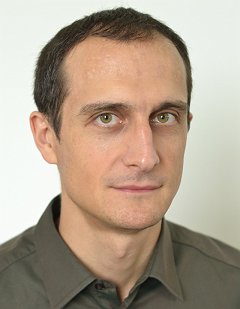
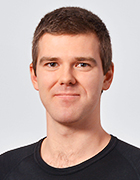
Professor Mooly Sagiv is a Chair of Software Systems at the School of Computer Science, Tel Aviv University , focusing on static program analysis and formal verification. His work bridges automated theorem proving with abstract interpretation to develop practical techniques for verifying software systems. Key Research Areas : Static analysis, formal verification, abstract interpretation, and automated reasoning about distributed systems and smart contracts. Notable Contributions : Development of the IVY tool for distributed protocol verification and frameworks for dynamic information flow control in cloud applications. Scientific Recognition : Fellow of the ACM Best Paper Award at PLDI'12 Recent Publications focus on binarized neural networks, stateful network verification, and liveness properties in infinite-state systems using decidable logic fragments.
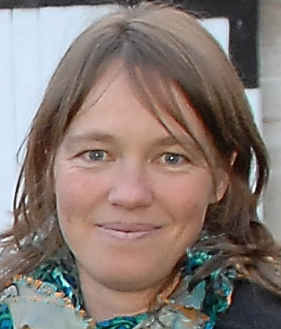
Sylvie Putot is a Professor of Computer Science at École Polytechnique, where she is affiliated with the LIX (Computer Science Laboratory) and a member of the Cosynus research team. Her office is located in the Alan Turing Building in Palaiseau. She is actively involved in research, teaching, and organizing the LIX Seminar series. PhD in Computer Science, École Polytechnique (specific year not provided) Previous affiliation: CEA LIST, where she contributed to the FLUCTUAT static analyzer Her research focuses on the formal verification of numerical programs, hybrid systems, and cyber-physical systems. She employs abstract interpretation, particularly using zonotopic domains, to analyze floating-point computations, rounding errors, and robustness. Her work bridges theoretical computer science with practical applications in safety-critical domains such as aerospace, robotics, and embedded systems. She is also extending these methods to ensure the safety and explainability of AI systems. The recent publications highlight a strong trend toward formal methods for AI safety, mobile robotics, and quantified reachability. Her work consistently involves collaboration with Eric Goubault and others, and spans from foundational static analysis to applied verification in complex systems. Keywords across publications include formal methods, verification, cyber-physical systems, abstract interpretation, and AI safety. Scientific Awards No specific awards mentioned in the provided text. She advises numerous PhD students on topics related to verification, robotics, and numerical analysis. Her research is funded by major projects such as SAIF (Safe AI through Formal methods), FARO (algorithmic foundations of robot swarms), and ANR projects like NusSCAP and COVERIF. She has led or participated in many national and international research initiatives. She is a key member of the Cosynus team at LIX, which focuses on the co-design of safe and intelligent systems. She organizes the monthly LIX Seminar, fostering academic exchange within the laboratory and the broader Institut Polytechnique de Paris community.
Viktor Kunčak is an Associate Professor with tenure at the École Polytechnique Fédérale de Lausanne (EPFL) in the School of Computer and Communication Sciences. He leads the Laboratory for Automated Reasoning and Analysis (LARA) and has been at EPFL since 2007 after completing his PhD at the Massachusetts Institute of Technology (MIT). His educational background includes: PhD from Massachusetts Institute of Technology (MIT), 2007 Professor Kunčak's research focuses on bridging the gap between human goals and computational realizations through program synthesis , verification , and automated reasoning . His work has significant applications in software development, formal methods, and programming languages. He is particularly known for developing practical tools like Leon and Stainless that implement theoretical advances in automated reasoning. His recent publications demonstrate a consistent focus on advancing program synthesis techniques, verification frameworks, and formal methods. The research trajectory shows progression from foundational theoretical work to practical applications and tools that can be used by developers. Many papers focus on making verification and synthesis more accessible and efficient for real-world programming tasks. His notable scientific achievements include: ACM SIGSOFT Distinguished Paper Award for work on automated testing European Research Council (ERC) Grant of 1.5M EUR (2012) Communications of the ACM Research Highlight for a PLDI paper Professor Kunčak has supervised 13 completed PhD theses and teaches courses on functional and parallel programming, compilers, and verification at EPFL. He has also co-taught a popular MOOC on Parallel Programming that reached over 100,000 learners worldwide. His research has been supported by significant funding including a 5-year ERC grant. He has served in leadership roles for major conferences including as program co-chair for FMCAD 2014 and VMCAI 2012. He leads the Laboratory for Automated Reasoning and Analysis (LARA) at EPFL, which develops tools like Stainless for program verification. The lab has established an international presence through collaborations including a European COST Action to establish standardized formats for verification and synthesis (Rich Model Toolkit).
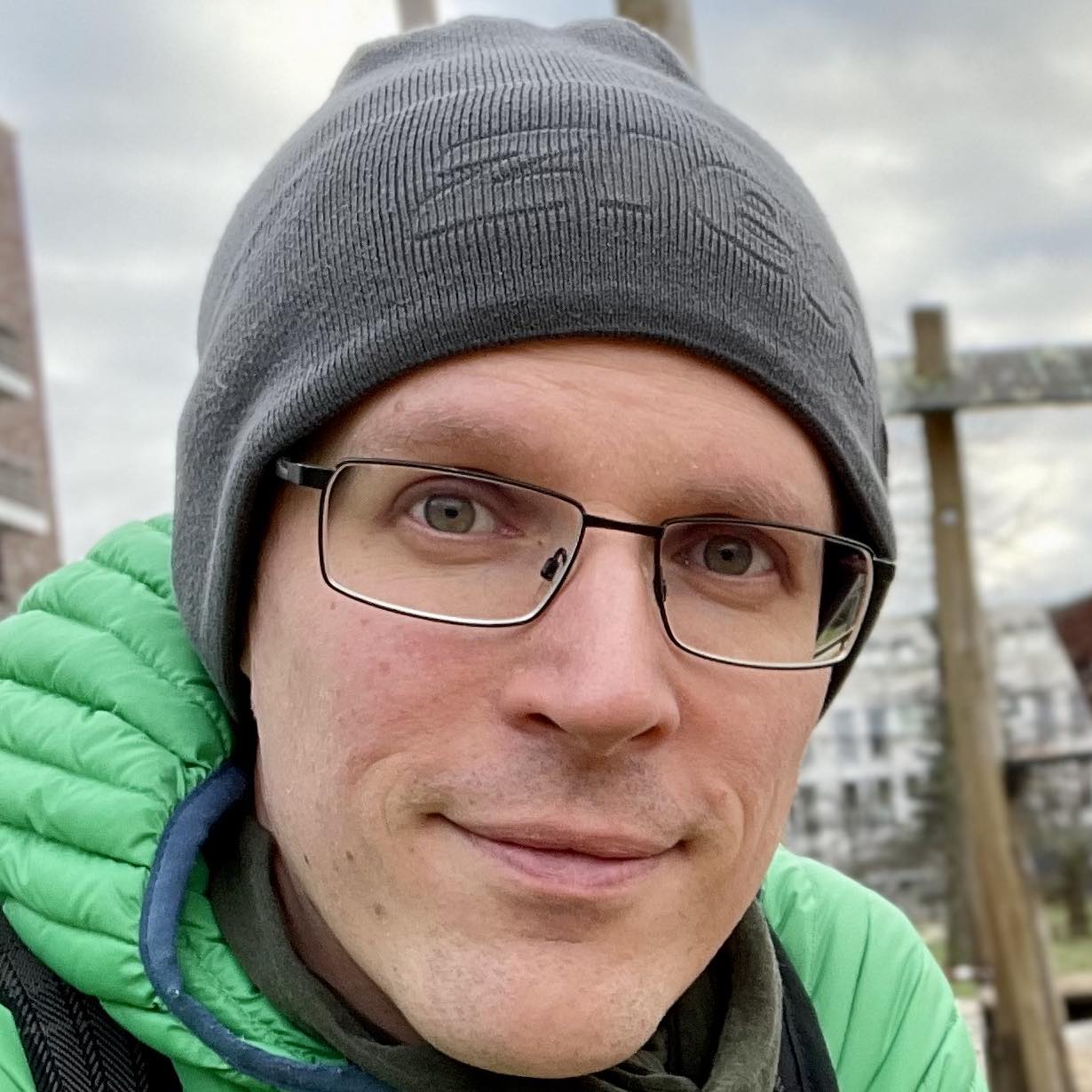
Umut A. Acar is a Professor at the Department of Computer Science, Carnegie Mellon University, and an Amazon Scholar. His research bridges formal methods, systems, algorithms, and AI, focusing on concurrency, quantum computing, self-adjusting computation, and dynamic algorithms. 2025: Promoted to Full Professor 2025: PC Chair for SPAA 2025 His research group includes current PhD students like Pengyu Liu, Colin McDonald, and Mingkuan Xu (jointly advised with Zhihao Jia). Alumni include notable researchers like Sam Westrick (now at NYU) and Stefan Muller (now at IIT Chicago). Recent publications span quantum computing (e.g., Atlas for GPU-based simulation, GraFeyn for sparse circuits), parallel functional programming (e.g., Quartz, DePa), and self-adjusting computation (e.g., dynamic trees, mesh refinement). Key themes: Bridging safety and performance in parallel systems Quantum circuit optimization and simulation Incremental algorithms for dynamic data Provenance tracking in functional programs Scientific awards include: Best paper (QCE 2024) Distinguished paper (POPL 2024, ICFP 2022, POPL 2021) Intel Award (2022), JP Morgan Chase AI Award (2021) ACM SIGPLAN Research Highlight (2019) CMU Teaching Innovation Award (2019) He has supervised numerous projects (Diderot, MPL, Quartz) and advised students on PhD theses in parallel and quantum computing. His work emphasizes practical implementations of theoretical principles.
Derek Dreyer is a Professor at the Max Planck Institute for Software Systems, where he leads research in programming languages, formal verification, and type systems. His work bridges theoretical foundations with practical applications, particularly in the verification of systems programming languages. His research focuses on developing rigorous semantic foundations for modern programming languages, with significant contributions to the verification of Rust, separation logic frameworks, module systems, and concurrency models. Dreyer's work combines deep theoretical insights with practical verification techniques, often implemented in proof assistants like Coq. His research spans formal semantics, type theory, program logics, and verification methodologies for both sequential and concurrent programs. Dreyer's publication record shows a consistent focus on foundational verification techniques, with recent work advancing separation logic (Iris framework), Rust verification, multi-language semantics, and novel program logics. His publications in top venues like POPL, PLDI, and ICFP demonstrate both theoretical depth and practical impact in programming language research. Dreyer has established himself as a leading researcher through extensive collaborations with prominent figures in the programming languages community, including Lars Birkedal, Ralf Jung, Robbert Krebbers, and Viktor Vafeiadis. His work often bridges multiple subfields, connecting theoretical concepts with practical verification challenges in systems programming.
Prof. Dr. Christian Schemer is a Professor of General Communication Science at the Institute of Journalism , Johannes Gutenberg University Mainz , since 2014. His research encompasses media effects , political communication , advertising effectiveness , and social group prejudices . He has been involved in comparative studies across 18+ countries, focusing on disinformation , media trust , and political engagement . Former roles include Acting Professor at LMU Munich and Visiting Scholar at the University of Pennsylvania.
David Elsweiler is a Professor in the Department of Computer Science at the University of Regensburg's Faculty of Mathematics, Computer Science and Physics. With an extensive publication record spanning over two decades, he has established himself as a leading researcher in information retrieval, conversational search systems, and health/food recommender systems. His work bridges theoretical computer science with practical human-centered applications, particularly in domains requiring nuanced understanding of user behavior and credibility assessment. Dr. Elsweiler's research primarily focuses on how people interact with information systems, with special emphasis on conversational interfaces, credibility assessment in search, and personalized recommendation technologies. His work in health informatics has led to innovative approaches for behavior change support through conversational agents, while his food recommendation research explores cross-cultural dietary preferences and nutritional considerations. He has made significant contributions to understanding how users verify information accuracy, particularly regarding controversial topics and health misinformation. His recent publications reveal a strong trend toward leveraging large language models for behavior change applications, investigating how users blend traditional search with conversational interfaces, and developing methods to combat health misinformation. The work spans theoretical contributions to practical system implementations, with a consistent focus on real-world impact and user-centered design principles. His research often involves interdisciplinary collaboration with experts in health sciences, behavioral psychology, and nutrition. Dr. Elsweiler has successfully supervised numerous doctoral students who have become active researchers in their own right, including Selina Meyer, Markus Bink, and Alexander Frummet. He has organized multiple workshops on health recommender systems at major conferences like RecSys, fostering community development in this specialized domain. His work has been supported by various research grants focused on improving information access in critical domains like healthcare and nutrition.
Dr. Philipp Terhörst is a Research Group Leader at Paderborn University, specializing in Responsible AI for Biometrics . His work focuses on fairness, privacy, explainability, and uncertainty in machine learning systems for biometric applications. Education: Ph.D. in Computer Science (2021) from Technical University of Darmstadt Previous Affiliations: Fraunhofer IGD (2017–2022), ERCIM Fellowship at Norwegian University of Science and Technology His research addresses critical ethical challenges in biometric AI, including demographic bias mitigation , privacy-enhancing technologies , and confidence-aware verification systems . Recent publications explore explainability frameworks, backdoor attacks, and fairness in deepfake detection. Scientific contributions have earned awards from the European Association for Biometrics and International Joint Conference for Biometrics . He actively participates in academic service as a reviewer for TPAMI, CVPR, and IEEE journals. Teaching: Offers courses in Human-Centered Machine Learning Collaborations: Member of Transregional Collaborative Research Centre 318 Management Programs: Alumnus of the BMBF-funded 'Software Campus' initiative
Prof. Dr. Uwe Meyer is a faculty member at Technische Hochschule Mittelhessen (THM), where he serves as the Head of the Computer Science BSc program and Deputy Managing Director of the Institute for Programming Languages and their Application. He has held leadership roles in international conferences such as Program Chair of the 15th International Conference on Reversible Computation (RC 2023) and member of program committees for RC2024 and RC2025. Research Focus: Reversible programming, compiler construction, and automata theory. Key Contributions: Development of the RC3 compiler and reversible syntax analysis methods. Recent Publications center on deterministic automata, hybrid computing models, and language design. His work spans conferences like RC, DLT, and IFL, as well as journals including Acta Informatica and Theoretical Computer Science. Notable projects include the Janus programming language and RSSA virtual machine . Scientific Awards : Program Chair for RC2023 Program Committee Member for RC2024 and RC2025 Advising topics include compiler development, functional programming, and reversible computing projects. His teaching includes courses like Compiler Construction and Functional Programming .
Arne Meier is a Professor at Leibniz Universität Hannover, affiliated with the Faculty of Electrical Engineering and Computer Science and the Institute of Theoretical Computer Science. He heads the Algorithms research group, focusing on theoretical aspects of computer science with applications to artificial intelligence and database systems. Meier obtained all his academic degrees—Bachelor's, Master's, PhD, and Habilitation—at Leibniz Universität Hannover, establishing a strong foundation in theoretical computer science. His academic journey at the same institution reflects his deep commitment to advancing research in computational theory. Meier's research spans several interconnected areas in theoretical computer science. His primary focus is on complexity theory, particularly the parameterized complexity of problems in non-classical logics with applications to AI. He also investigates enumeration algorithms and the logical foundations of artificial intelligence. His work bridges theoretical computer science with practical applications in knowledge representation and reasoning systems. He has a notable interest in LaTeX and typography, having developed the 'timeline' package for creating timelines in LaTeX documents. His recent publications (2023-2025) demonstrate a consistent focus on the intersection of logic, complexity, and artificial intelligence. Meier's work shows progression from foundational research in dependence and team logics toward more applied areas in argumentation theory and database systems. His research increasingly addresses computational challenges in AI systems, particularly in reasoning under uncertainty and handling inconsistent information. Meier actively contributes to the academic community through extensive program committee service for major conferences including AAAI (2021, 2023, 2024, 2025), IJCAI (2021-2025), and FoIKS (2024 as Co-Chair, 2026). He has also served as a reviewer for numerous conferences and journals in theoretical computer science and artificial intelligence. His current research projects include the DAAD-funded 'Applications and Complexity of Logics in Semiring-Team-Semantics' (2024-2025) and the DFG project 'Team Logics: New Bridges to Database Repairs' (2023-2026). Previously, he led the DFG project 'Nonclassical logics: parametrised and enumeration complexity' (2013-2022) and the MWK project 'Innovation Plus: Komplexität von Algorithmen' (2020-2022). Meier leads the Algorithms research group at Leibniz Universität Hannover, which focuses on theoretical aspects of algorithms with applications to logic and artificial intelligence. The group's work spans complexity theory, logical formalisms, and their applications to computational problems in knowledge representation and database systems.
Oliver Westphal is a Researcher at the University of Duisburg-Essen , Germany, affiliated with the Formal Methods of Computer Science department. Since 2020, he has been actively involved in teaching activities related to programming paradigms, functional programming, and foundational logic courses. His academic work focuses on functional programming education, automated assessment of programming assignments, and domain-specific languages (DSLs) for e-learning systems. His recent publications highlight expertise in developing frameworks for Haskell I/O exercise generation and testing, as well as implementing DSLs for educational technology. Westphal has contributed to international workshops such as WFLP, TFPIE, FLOPS, and ABP, with a focus on improving programming education through formal methods and automated evaluation techniques. Contact: oliver.westphal@uni-due.de | Office: Room LF 232, Lotharstr. 65, Duisburg
Jan Křetínský is an Assistant Professor at the Technical University of Munich (TUM) , affiliated with the TUM School of Computation, Information and Technology . His work focuses on formal methods for software reliability, including error detection, correctness proofs, and performance optimization of stochastic and real-time systems. He employs techniques from automata theory, logic, probability theory, and machine learning in his research. Education: Studied computer science, mathematics, philosophy, and linguistics at Masaryk University (Brno, Czech Republic); earned a doctorate (summa cum laude) in 2013 from Masaryk University and TUM. His research emphasizes verification and synthesis of safe controllers, with applications in probabilistic and temporal logic frameworks. Publications highlight intersections of formal methods, machine learning, and stochastic systems. Scientific Awards: IST Fellow (Institute of Science and Technology Austria)
Innocenzo Fulginiti is a researcher at the Technische Universität München (TUM) associated with the Department of Languages and Description Structures in Informatics. He contributes to the Munich Quantum Valley (MQV) initiative, focusing on quantum computing ecosystem development. Research Interests: Compile-time optimization of quantum circuits, quantum programming language design, hardware-specific algorithm mapping, and quantum tool development. Teaching: Involved in courses like Functional Programming and Verification and Quantum Computing at Compile Time from Winter Semester 2021/22 to Summer Semester 2024/25. Publications: Key works include probabilistic circuit modeling for quantum computing and logic synthesis techniques for autosymmetric functions. Contact: innocenzo.fulginiti@tum.de
Michael Schwarz is a postdoctoral researcher at the Technical University of Munich (TUM) in Prof. Helmut Seidl's group within the Department of Informatics, and a member of the DFG Research Training Group ConVeY (Continuous Verification of Cyber-Physical Systems). His educational background includes: B.Sc. in Computer Science from TUM (2016) M.Sc. in Computer Science from TUM (2019) Dr. rer. nat. (PhD) from TUM (2025, summa cum laude) His research centers on Static Analysis , specializing in Sound Static Analysis by Abstract Interpretation . Key contributions include developing techniques for efficient abstract interpretation of multi-threaded programs, making static analysis incremental to enhance usability, and designing novel analyses for overlooked C language features. His work primarily utilizes the Goblint framework for multi-threaded C programs, which he co-maintains with researchers from the University of Tartu. Recent publications (2023-2025) reveal a concentrated focus on advancing concurrency analysis and precision recovery in flow-sensitive contexts, with notable emphasis on thread-modular approaches and context-sensitivity optimizations for C programs. This trajectory has yielded recognition including a VMCAI 2024 Best Paper Award and SV-COMP'25 competition wins. Award highlights: Best Paper Award at VMCAI 2024 SV-COMP'25 data race category winner (2025) Recognition Award from Huawei for Goblint's industrial benchmark performance (2025) While specific advisee listings aren't provided, Schwarz actively contributes to academic service as PC member for SOAP '25 and NSAD '24, plus reviewer for STTT and CSV conferences. His research is supported by the DFG ConVeY grant focusing on cyber-physical systems verification. He leads development of the Goblint static analysis framework and participates in the ConVeY research consortium, maintaining active collaborations with the University of Tartu on multi-threaded program analysis.
Sarah Tilscher, M.Sc., is a researcher at the Chair for Languages and Structures in Computer Science at the Technical University of Munich (TUM). She contributes to teaching tutorials for courses including Advanced Concepts of Programming Languages and Compiler Construction , and has supervised seminars on static analysis and programming paradigms. Her research focuses on: Incremental and interactive static analysis using abstract interpretation Verification of fixpoint algorithms in Isabelle theorem prover Development of the Goblint static analyzer for concurrent C programs Formal methods for program correctness and verification Her publications (11 recent works) predominantly explore static analysis techniques, abstract interpretation frameworks, and verification tools. Key themes include top-down solvers, weak relational domains, parser generators, correctness witnesses, and concurrency modeling, primarily applied to programming languages and compiler design. She actively supervises student theses on topics including incremental static analysis, visualization of analysis results, and verification of fixpoint algorithms. Current opportunities include master's projects on verified top-down solvers and bachelor's projects on solver code generation. As a core member of the Goblint project team, she develops static analysis tools for memory safety and termination verification, collaborating with TUM researchers and external partners.