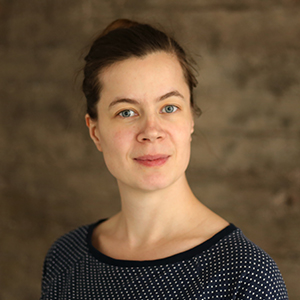
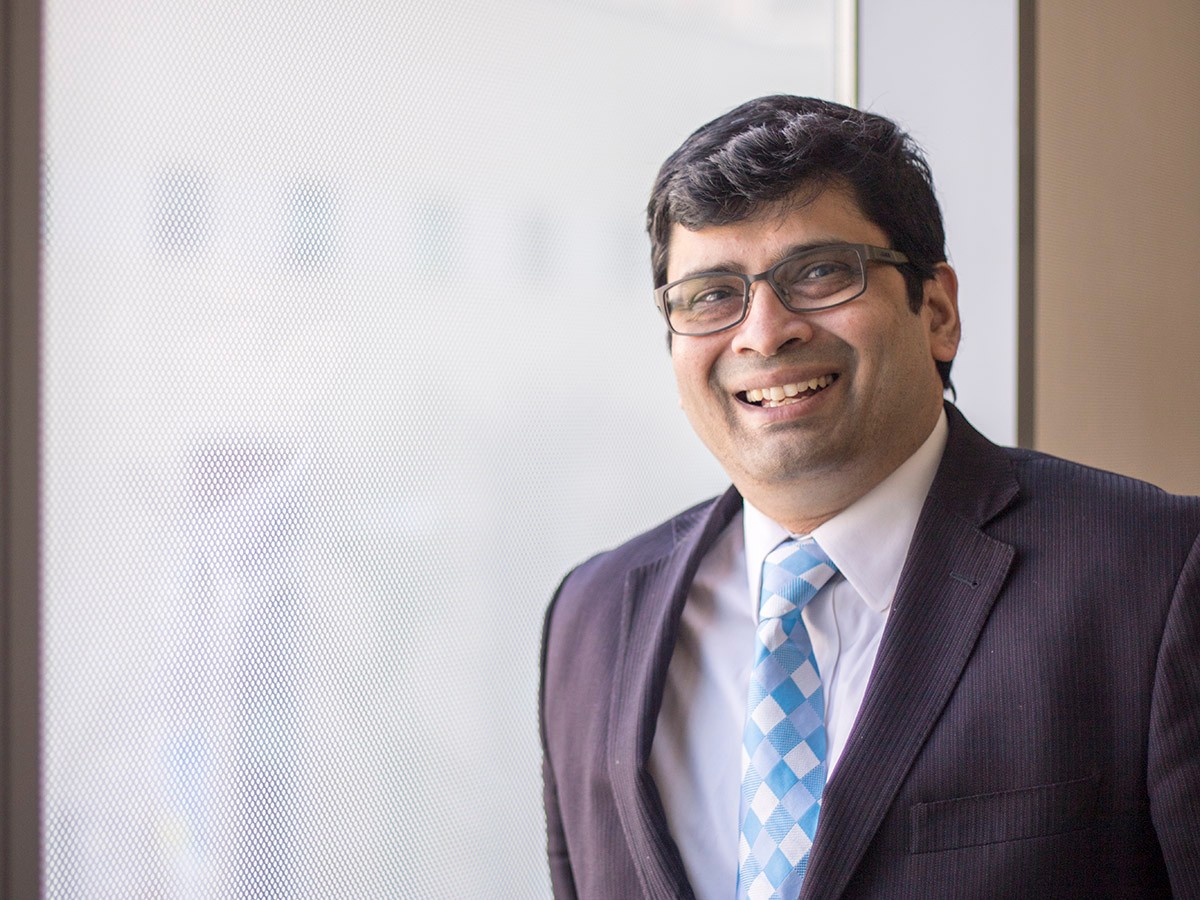
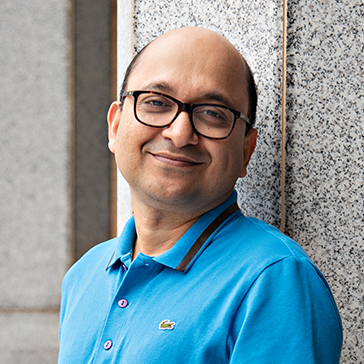
Joakim Löfgren is a Visiting Professor at the Department of Applied Physics, focusing on interdisciplinary research that bridges machine learning with materials science and biorefinery technologies. His work spans advanced applications in smart textiles, thermally-activated polymer actuators, and sustainable biomass processing. His research interests center on integrating machine learning systems into biorefinery and polymer science to enhance materials design and sustainability. Key areas include e-textiles , conductive polymers , and lignin-carbohydrate complexes . The latest publications highlight a trend in applying data-driven optimization to polymer actuators and biorefinery processes. Notable work involves polypyrrole-grafted yarns for flexible electronics and NMR spectroscopy for biomass characterization.
Professor Martin Charlton is a photonics and nano-electronics specialist affiliated with the University of Southampton , where he works in the Department of Electronics and Computer Science . His research focuses on optoelectronic devices , photonic crystal fabrication , and organic electronics for sustainable applications.
Mauro Vallati is a Full Professor of Artificial Intelligence at the Department of Computer Science, School of Computing and Engineering, University of Huddersfield. He is also the Director of the Centre for Autonomous and Intelligent Systems and holds leadership roles in several AI-focused research centres, including the Centre for Planning, Autonomy and Representation of Knowledge and the Centre of Artificial Intelligence for Mental Health. Additionally, he is a member of the Sustainable Living Research Centre. Vallati is currently accepting PhD students and is an active researcher with over 200 publications. His research expertise lies in Artificial Intelligence, with a strong focus on Automated Planning and Argumentation. He applies these techniques to real-world problems, particularly in Urban Traffic and Mobility, which is the central theme of his UKRI Future Leaders Fellowship. He also explores innovative applications of AI in Medicine and Computational Creativity. His work aligns with UN Sustainable Development Goals, especially in sustainable cities and communities. The recent articles highlight a consistent trend in applying AI and planning techniques to urban mobility challenges, including traffic signal optimization, autonomous vehicle routing, and passenger demand prediction. There is also a strong theoretical foundation in argumentation, plan robustness, and macro-actions. The research spans both practical implementations and algorithmic advancements, with increasing emphasis on sustainability and real-world impact. Scientific Awards and Recognitions: UKRI Future Leaders Fellow ACM Senior Member ACM Distinguished Speaker on AI for the UK Vallati has secured significant research funding through projects such as AI4ME, AI for Autonomic Urban Traffic Control, MIREL, and SimplifAI. He supervises PhD students and early-career researchers, contributing to the development of the next generation of AI scientists. His leadership in organizing key academic events, such as the UK Planning and Scheduling Special Interest Group workshop, underscores his active role in the international AI community. He leads and contributes to multiple research centres, including the Centre for Autonomous and Intelligent Systems, where he drives innovation in AI applications for traffic, mental health, and sustainability. His interdisciplinary collaborations span engineering, computer science, and environmental research, particularly evident in projects involving textile waste recycling and legal text mining.
Aleksander Väljamäe is an Associate Professor in Physiological Computing at Tallinn University's School of Digital Technologies (HCI group) and a Grant Consultant at Tartu University. His research focuses on multisensory perception, physiological computing, and neurofeedback applications in brain disorders, BCI, and neurocinema. He has held postdoctoral roles at institutions like Pompeu Fabra University and Graz University, and was a Marie Skłodowska-Curie Fellow (2013–2015). He actively participates in EU projects (e.g., Future BNCI) and art-science collaborations, such as the Multimodal Brain Orchestra. His administrative roles include chairing Tallinn University’s internal research committee and advising for the European Commission and Italian Ministry of Health. Education: PhD in Applied Acoustics (Chalmers University, 2007) M.Sc. in Digital Communication (Chalmers, 2003) BSc in Radio Engineering (Tallinn University of Technology, 2000) Research Interests: Developing novel methods for diagnosing brain disorders (e.g., depression, migraine) using audiovisual media and BCI. Explores wearable technologies, affective computing, and the psychophysiology of emotion. Recent projects include SoniWeight Shoes (2024) and Magic Lining (2019), which investigate body-perception modulation via wearable devices. Grants & Awards: Marie Skłodowska-Curie International Outgoing Fellowship (2013–2015). Active in EU-funded initiatives like POEMS and BrainAble. Labs/Teams: Leads the HCI group at Tallinn University, collaborating with institutions globally. Co-developed the eXperience Induction Machine for mixed-reality interaction studies.
Jaume Amoros Torrent is a Professor in the Department of Mathematics at the Universitat Politècnica de Catalunya (UPC), affiliated with the School of Industrial Engineering of Barcelona (ETSEIB). He leads the GEOMVAP research group focusing on Geometry of Varieties and Applications. His research spans algebraic geometry, symplectic geometry, dynamical systems, and applications in robotics and superconductivity. He has authored over 148 publications and contributed to numerous competitive research projects, including studies on galactic dynamics, textile manipulation, and superconducting materials. His work bridges pure mathematics with engineering and physics, emphasizing computational models and experimental validation. He advises doctoral students such as Franco Coltraro and collaborates with institutions like the Institut de Matemàtiques de la UPC. His contributions include textbooks on linear algebra and geometric modeling. Despite no listed awards, his extensive publication record and project leadership highlight his academic impact.
Benjamin Mako Hill is an Associate Professor in the University of Washington Department of Communication and an Adjunct Associate Professor in the Paul G. Allen School of Computer Science & Engineering, the Information School, and the Department of Human-Centered Design & Engineering. His research focuses on the social dynamics of online communities, particularly those producing digital public goods like Wikipedia and Linux. He is a founding member of the Community Data Science Collective and affiliated with the Berkman Klein Center for Internet & Society at Harvard University. Education: PhD in Communication and Media Arts from MIT (2013), advised by Eric von Hippel, Yochai Benkler, Tom Malone, and Mitch Resnick. Notable for his dissertation on early collaborative encyclopedia projects, which won the Dordick Award for Best Dissertation in Communication & Technology. Research interests include peer production, open source governance, algorithmic fairness, and computational social science. His work combines large-scale data analysis with qualitative methods, often addressing how technology design influences community outcomes. Key themes include underproduction in open source, gender disparities in tech, and the role of anonymity in collaboration. He has published over 50 peer-reviewed articles in venues like ACM CHI, CSCW, and New Media & Society, with awards for contributions to understanding remix culture, computational thinking in education, and community moderation. Active in grants totaling over $2M from NSF, Sloan Foundation, and others. Current roles include a 2023–2024 fellowship at Princeton’s Center for Information Technology Policy. Engaged in projects like the Community Data Science Workshops, promoting data literacy, and advising Wikimedia Foundation initiatives. Maintains a prolific blog and contributes to free culture projects like AcaWiki.
Katharina Bredies is a Researcher at the Design Research Lab and the Berlin University of the Arts , where she explores the intersection of electronic textiles , interaction design , and design theory . Her work emphasizes user agency and the repurposing of digital objects in everyday contexts. Education : Integrated Design (Diploma), Hochschule für Künste Bremen (2006) Current Affiliation : Berlin University of the Arts, School of Textiles (Borås, Sweden) Her research focuses on electronic textiles and the integration of traditional textile techniques with digital functionality , promoting sustainable design and social inclusivity in technology. She has contributed to 15 publications spanning topics like smart textiles , user-driven innovation , and design philosophy . Key projects include Architextiles , Cushion Pressure Sensors , and MINODU (fostering local sustainable development). Her work has been featured in DRS , CHI , and AMBIENT conference proceedings.
Anxiang Zeng is a researcher affiliated with the University of Kansas School of Business , Department of Management and Leadership. His work focuses on machine learning applications in e-commerce , particularly in search engines, recommender systems, and preference optimization.
Tanjila Kanij is a Lecturer at the School of Science, Computing and Emerging Technologies , Swinburne University of Technology, with an ORCID identifier 0000-0002-5293-1718 . Her research focuses on gender inclusion in software engineering, user-centred design , and human-computer interaction . Research Themes : Software Engineering, Human-Centred Computing, Information Systems Teaching : Final-year Capstone project units Her recent publications address ethical challenges in Generative AI , gender bias in IT/SE job ads , and privacy-awareness applications . She explores persona development for diverse user groups like children and the elderly, and knowledge graph construction for fisherfolk communities. She is funded by the Digital Shores grant (2024-2025) from the Department of Foreign Affairs and Trade (Cwlth), focusing on empowering coastal communities through technology.
Dr. Sri Krishnan is a Professor and Dean at the Department of Electrical, Computer, and Biomedical Engineering at Toronto Metropolitan University. With a focus on interdisciplinary research, he bridges electrical engineering, computer science, and biomedical applications. His work emphasizes mathematical signal analysis for healthcare solutions. PhD, University of Calgary (1999) MSc, University of Calgary (1996) BE, College of Engineering, Guindy, Anna University (1993) Research Interests: Dr. Krishnan specializes in biomedical signal analysis, affective computing, and compressive sensing. He develops wearable technologies and machine learning algorithms for applications in mental health, cardiovascular diagnostics, and neurological disorders. Scientific Contributions: His recent publications highlight advancements in fetal ECG separation, seizure detection via EMD dictionaries, acoustic scene classification using local binary patterns, compressive sensing in gait signals, and wavelet-based gait diagnostics. Fellow, Canadian Academy of Engineering Outstanding Canadian Biomedical Engineer Award Canada Research Chair in Biomedical Signal Analysis Sarwan Sahota Distinguished Scholar Award Laboratory: He leads the Signal Analysis Research Group, fostering innovation in time-frequency theory and non-stationary signal processing.
Dr. Abbasali Saboktakin is a current faculty member at Izmir University of Economics, affiliated with the Department of Aerospace Engineering. He holds a PhD in Mechanical/Aerospace Engineering from Canada and focuses on hypervelocity impact, composite materials, and next-generation aircraft research. Biography : PhD in Mechanical/Aerospace Engineering from Canada. Fields : Hypervelocity, Composite Materials, Next Generation Aircrafts. Industrial Collaborations : Propulsion Components Manufacturing, Heavy Industry. His research bridges theoretical and industrial applications, with publications on vibrothermography, 3D textile preforms, and space propulsion. Key trends include multiscale damage analysis and non-destructive testing for aerospace structures.
Subhajit Chakrabarty serves as Associate Professor and Director of the Master of Science in Computer Systems Technology program within the Department of Computer Science at Louisiana State University Shreveport's College of Arts & Sciences. He joined LSUS in 2020 after relocating to the USA in 2016 to pursue research in data science and machine learning, bringing three decades of professional experience spanning IT management, government service, and corporate leadership. His educational credentials include: PhD in Computer Science from University of Massachusetts Lowell (2020) PhD in International Business from Indian Institute of Foreign Trade, New Delhi Alumnus of INSEAD (France/Singapore) Chakrabarty's research spans data science, machine learning, deep learning, bioinformatics, cybersecurity, and econometrics, with recent emphasis on biomedical applications of deep learning. His interdisciplinary approach integrates computer science with business analytics, neuroscience, and educational technology, reflecting his dual expertise in technical and business domains developed through extensive industry experience. His publication record from 2016-2022 demonstrates consistent innovation across multiple domains, with significant contributions to ensemble learning for financial forecasting, independent component analysis for high-dimensional data processing, and educational assessment tools for computer science pedagogy. Key trends include the adaptation of transformer networks for stock volatility prediction, novel denoising techniques for sensor data, and evidence-based studies on programming skill development. No scientific awards were documented in the source material. As an educator, Chakrabarty directs the MS in Computer Systems Technology program while teaching core courses including Introduction to Programming, Database Implementation, Machine Learning, and Deep Learning. His prior industry roles as Deputy Commandant in India's Border Security Force and National Security Guard, plus Director of IT & IS in corporate settings, inform his practical teaching methodology and student mentorship approach.
Bahşende ÇOBAN AZİZOĞLU is a Ph.D. Research Assistant at Üsküdar University's Faculty of Communication, Department of Advertising. She completed her Ph.D. in Public Relations at Marmara University (2024) after earning her BSc (2016) and MSc (2019) in related fields at Kocaeli University. Research Interests: Social media, sustainability communication, branding, AI ethics in advertising Academic Roles: Research Assistant (Üsküdar University, since 2023) Administrative Roles: Committee member in multiple university commissions (Strategy Development, Accessibility, Graduation Committees, etc.) Research Focus combines emerging technologies and ethical frameworks, particularly in: AI applications in advertising Sustainability branding strategies Social media communication Post-truth media dynamics Digital consumer behavior Stakeholder relationship management Recent Publications demonstrate her expertise in AI ethics, virtual influencers, and pandemic-era marketing challenges. Her 2024 MEDCOM conference work on brand love and well-being has gained cross-cultural attention.
Rabih Younes is an Associate Professor of the Practice in the Department of Electrical and Computer Engineering at Duke University's Pratt School of Engineering. He also serves as the Associate Director of Undergraduate Studies and is a Faculty Network Member of the Duke Institute for Brain Sciences. Additionally, he is the Duke FRC Program Director for team 8429, Valence Robotics, and Head of the Duke KEEN Leadership Team. Dr. Younes received his PhD in Computer Engineering from Virginia Tech in 2018, following his MSE in Computer Engineering from the Lebanese American University in 2013 and his BE in Computer Engineering from the same university in 2011. He speaks nine languages (fluent in three) and holds various certificates including Engineering Education and Future Professoriate, Cisco Networking Academy certifications (CCNP, CCNA, ITE Instructor Trainer), National Instruments CLAD, and USPA A-Licensed Skydiver. His research spans wearable computing, ubiquitous/pervasive computing, activity recognition, context awareness, machine learning, engineering education, and Middle Eastern politics. Dr. Younes has published extensively on topics ranging from wearable health monitoring systems to innovative approaches in engineering education. His recent work demonstrates a growing integration of machine learning techniques with wearable sensor data for health applications, activity recognition, and educational assessment tools. Dr. Younes' scholarly output shows a consistent trajectory from fundamental wearable computing research toward practical applications in health monitoring and educational technology. His publications reveal an increasing focus on real-world implementation challenges, data augmentation techniques, and educational assessment tools that bridge engineering theory with practical classroom applications. Tau Beta Pi honor society member Eta Kappa Nu honor society member Phi Kappa Phi honor society member Golden Key honor society member KEEN Annual Support grant (2024-2026) Dr. Younes actively mentors students through various programs including EGR 393: Research Projects in Engineering and ECE 899: Special Readings in Electrical Engineering. He has received grant support through the KEEN Annual Support program for 2024-2026, focusing on innovative engineering education approaches. His teaching philosophy emphasizes student development beyond academics, incorporating life skills and critical thinking. As Director of Valence Robotics (team 8429), Dr. Younes leads high school robotics initiatives that have earned state championship qualifications. His lab work focuses on wearable computing systems with applications in health monitoring (including pet emotional health tracking), activity recognition, and educational technology tools. He utilizes agile project management frameworks like Scrum in his courses and implements tools to enhance student learning retention.
Dr. Damian Backes leads the Energy Management and Drives research group at RWTH Aachen University's Institute of Automotive Engineering. His research focuses on thermal systems and energy efficiency in automotive applications, particularly for electric and fuel cell vehicles. Contact: +49 241 80-25420, office@ika.rwth-aachen.de. Research Focus: Dr. Backes investigates innovative solutions across these key areas: Thermal management of fuel cells and electric drivetrains Predictive energy optimization strategies for vehicles Human thermal comfort modeling in vehicle cabins Development of energy-efficient heating/cooling systems Smart materials for thermal regulation Research Trends: His recent publications (2015-2021) demonstrate consistent focus on improving vehicle energy efficiency through thermal innovations. Major themes include: predictive thermal management algorithms, human comfort optimization, integrated component design, and experimental validation of thermal systems. The work bridges fundamental thermodynamics with practical automotive applications. Laboratory Leadership: Dr. Backes heads the Energy Management and Drives research group, developing solutions for next-generation vehicle thermal systems. The group utilizes RWTH Aachen's testing facilities including specialized benches for combined acoustic-thermal analysis.