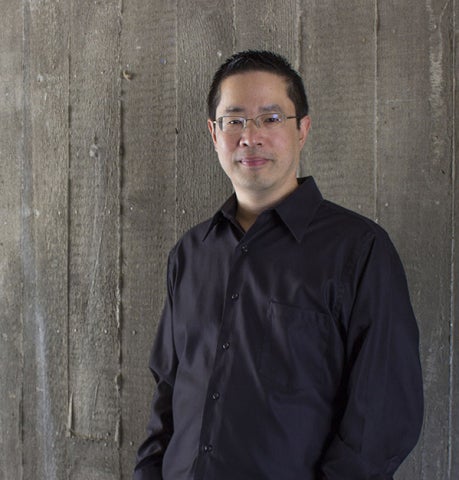
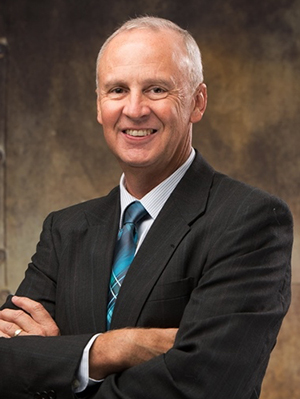
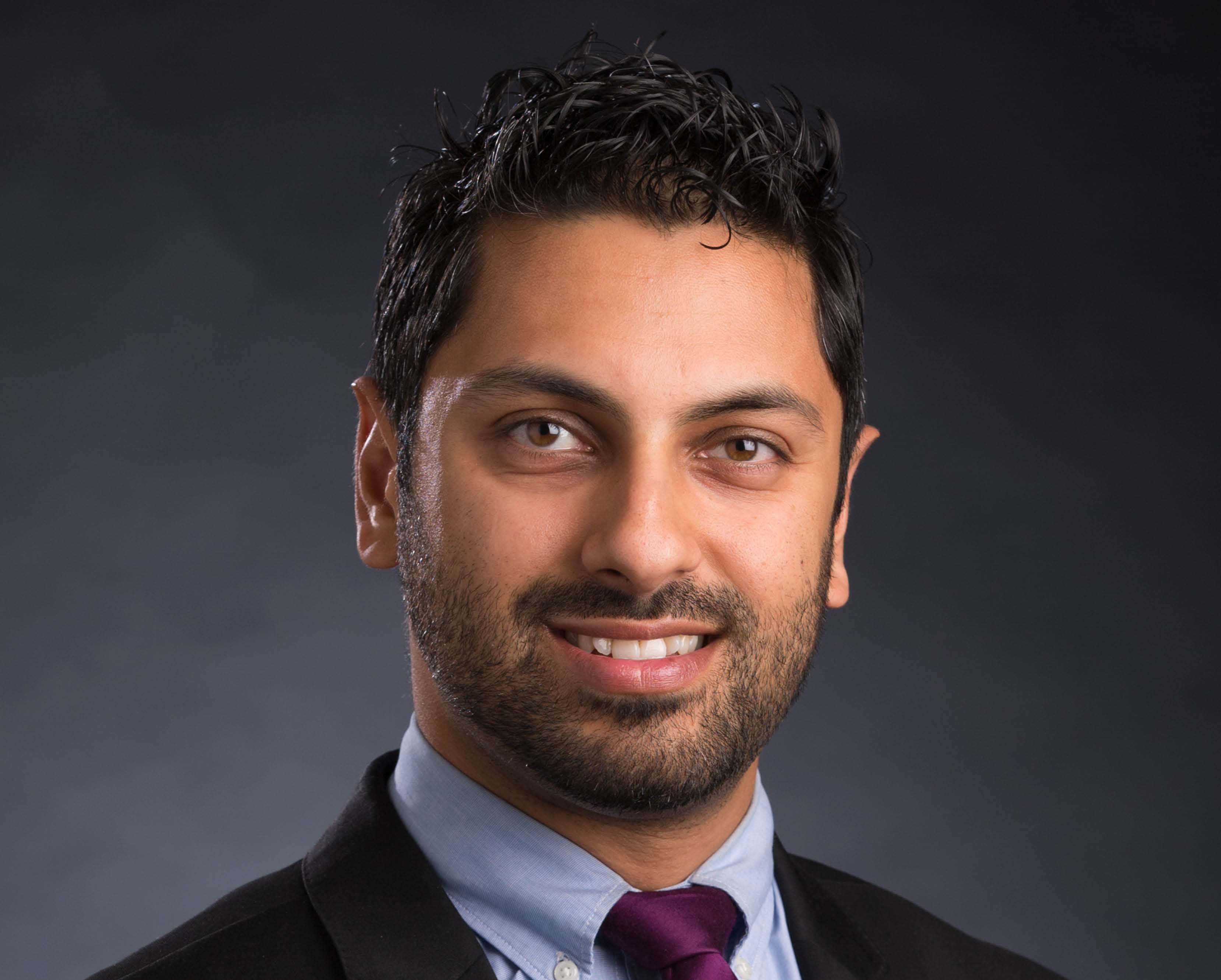
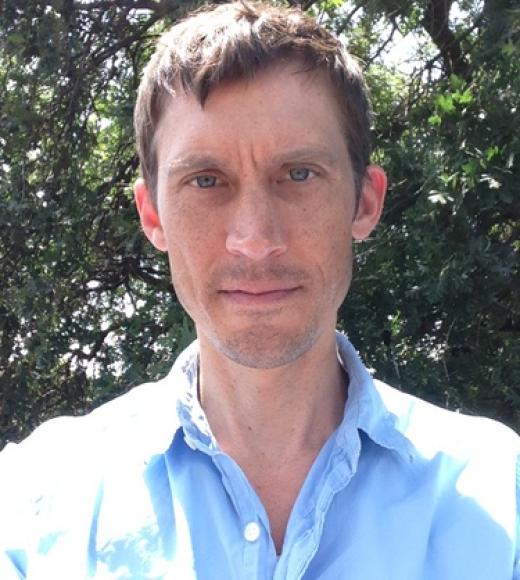
Geoff Hollinger is a Professor in the Department of Mechanical, Industrial, and Manufacturing Engineering at Oregon State University, and a Ron and Judy Adams Faculty Scholar. His research focuses on robotic decision-making, planning, and coordination for autonomous systems, particularly in underwater and multi-robot environments. He leads the Robotic Decision-Making Laboratory and has expertise in mission planning, control systems, and marine robotics. Dr. Hollinger holds a PhD in Robotics from Carnegie Mellon University (2010), an MS in Robotics (2007), and a BS in General Engineering and BA in Philosophy from Swarthmore College (2005). His work spans theoretical advancements and practical applications, including underwater docking systems, autonomous exploration, and soft robotics for hazardous environments. Research Interests: Autonomous underwater vehicle (AUV) systems and docking Multi-robot coordination and task assignment Probabilistic planning and decision-making Behavior trees and formal grammars for task planning Underwater manipulation and grasping Energy-efficient trajectory planning Key Achievements: Recipient of the 2017 ONR Young Investigator Award 2017 Celebrate Excellence Awards and Engelbrecht Young Faculty Award Developed frameworks like Angler for intervention tasks and Wave for underwater emulation Labs/Teams: Robotic Decision-Making Laboratory, Collaborative Robotics and Intelligent Systems Institute (CRIS).
Matti Tedre is a Professor at the School of Computing, Faculty of Science, Forestry and Technology, University of Eastern Finland. His research focuses on computer science education, ICT4D, social studies of computer science, and the history and philosophy of computer science. He leads the Technologies for Learning and Development research group and is involved in the Generation AI project (2022–2028), exploring AI education for security mindset development. His work bridges theory and practice, emphasizing educational technology, AI literacy, and participatory design. Recent projects include developing low-cost AI kits for novice learners and co-designing ML-driven apps with children. He collaborates globally on topics like K-12 computing education, data agency, and ethical AI integration in classrooms. Key contributions include studies on scaffolding in ML education, children’s understanding of algorithmic biases, and the role of generative AI in creative learning. His research also addresses challenges in Tanzanian ICT adoption, including financial management systems for informal groups and timetabling software for higher education institutions. Tedre’s interdisciplinary approach spans computer science, education, and sociology, with a focus on democratizing AI access and fostering critical digital literacy among youth and educators.
Dr. Tim Oates is a Professor in the Department of Computer Science and Electrical Engineering at the University of Maryland, Baltimore County . His research spans machine learning, artificial intelligence, and brain-machine interfaces, with a focus on weakly supervised methods, human-in-the-loop reinforcement learning, and grounded policy development for robotics. Ph.D., Computer Science, University of Massachusetts, Amherst, 2000 M.S., Computer Science, University of Massachusetts, Amherst, 1997 B.S., Computer Science and Electrical Engineering, 1989 Current research threads include: Developing non-invasive brain injury severity assessment via medical time series Modeling human brain development through computational frameworks Designing algorithms for autonomous robotic learning Recent publications highlight AI security mechanisms (backdoor detection via tensor decomposition, matrix factorization) Medical applications (3D artery reconstruction, skin lesion diagnosis, EEG denoising) Neuro-symbolic integration (holographic representations, language-guided reinforcement learning) Mathematical reasoning (schema-based problem solving, subitizing algorithms) Contact: oates@cs.umbc.edu | Office: 336 Information Technology and Engineering (ITE) Building
Chris Monico is an Associate Professor in the Department of Mathematics & Statistics at Texas Tech University . He has been a faculty member there since 2003, following post-doctoral research at the University of Notre Dame. Education B.S. in Mathematics – Monmouth University M.S. in Mathematics – University of Notre Dame Ph.D. in Mathematics – University of Notre Dame Research Focus Monico’s scholarship centers on the intersection of cryptology , computational algebra , and number theory . A significant recent thrust has been the application of machine-learning techniques to mathematical finance , evidenced by work on random-forest models for option pricing and high-frequency trading risk metrics. Parallel lines of inquiry include post-quantum cryptographic schemes built on tropical algebra and semigroup actions, as well as classical problems in Ramsey theory and combinatorial semigroups . Publication Trends Between 2015 and 2025 Monico has published prolifically, with a clear shift around 2020 toward mathematical finance and machine-learning applications , alongside continued output in algebraic cryptanalysis and combinatorics . His 2024–2025 articles emphasize data-driven models in trading, whereas 2020–2021 works concentrate on cryptanalyses of tropical and group-based key-exchange systems. Earlier contributions focus on computational number theory and semigroup-based cryptography. Contact Information Email: c.monico@ttu.edu Phone: 806-834-4144 Office: Department of Mathematics & Statistics, Texas Tech University, 1108 Memorial Circle, Lubbock, TX 79409-1042 Advising & Grants No specific doctoral or master’s students, funded grants, or named awards are detailed in the provided text. Laboratory or Research Group The text does not mention any dedicated laboratory or research group.
Dr. Sander Leemans is a Professor at RWTH Aachen University leading the Business Process Management Foundations and Engineering research group. His work focuses on advancing process mining theory and practice with emphasis on stochastic modeling and conformance verification. Leemans' research centers on process mining, business process management, and stochastic process modeling. He investigates conformance checking techniques for probabilistic models, process discovery algorithms, and the integration of exogenous data into process analysis. His work bridges theoretical foundations with practical applications in healthcare, robotic process automation, and inter-organizational systems. Recent publications reveal a concentrated research trajectory in stochastic conformance checking, where Leemans develops methods for matching observed traces to stochastic process models using alignment techniques, entropy metrics, and partial-order reasoning. He also pioneers object-centric process mining frameworks and explores silent transitions in labeled Petri nets, significantly enhancing the precision and applicability of process mining in real-world scenarios. The Business Process Management Foundations and Engineering group under Leemans' leadership drives innovation in process mining through rigorous theoretical development and open-source tooling, maintaining RWTH Aachen's position at the forefront of business process intelligence research.
Lyndia Wu is an Assistant Professor in the Department of Mechanical Engineering at the University of British Columbia's Faculty of Applied Science, where she holds the prestigious Canada Research Chair in Wearable Brain Injury Sensing. She leads the SimPL (Sensing in Biomechanical Processes Lab) and maintains an active research program focused on biomechanics and medical device development. Her educational background includes: B.A.Sc. from the University of Toronto M.S. from Stanford University Ph.D. from Stanford University Postdoctoral Fellowship from Stanford University Dr. Wu's research program centers on developing novel sensing and data analytics technologies to study human biomechanics in health and disease states. Her primary research areas encompass brain injury or concussion biomechanics using advanced sensing, modeling, and machine learning approaches, as well as the development of innovative sensors and algorithms for studying sleep disorders like obstructive sleep apnea. She specializes in wearable sensors for brain health monitoring, traumatic brain injury mechanisms, and AI applications in healthcare settings. Analysis of her recent publications reveals a strong focus on sports-related head impacts (particularly in soccer), EEG monitoring following impacts, and sleep monitoring after concussions. Her work demonstrates interdisciplinary collaboration across biomechanical engineering, neuroscience, and clinical medicine, with publications spanning biomechanics, neurotrauma, biomedical instrumentation, and signal processing domains. Dr. Wu has received significant recognition for her work, including: Scholar Award from the Michael Smith Foundation for Health Research (2019) Junior Faculty Teaching Award from UBC Mechanical Engineering (2022) She actively supervises graduate students in Mechanical Engineering programs (MASc and PhD) and collaborates extensively across disciplines. Dr. Wu is affiliated with multiple research centers including the Institute for Computing, Information and Cognitive Systems (ICICS), Origins of Balance Deficits and Falls, and SmarT Innovations for Technology Connected Health (STITCH), reflecting her interdisciplinary approach to solving complex biomedical challenges. As director of the SimPL lab, she leads a research team developing cutting-edge sensing solutions for biomechanical processes with particular emphasis on brain injury prevention, monitoring, and recovery assessment through innovative engineering approaches.
Patrick Lin is a Professor in the Philosophy Department at California Polytechnic State University (Cal Poly), where he serves as Director of the Ethics + Emerging Sciences Group, a non-partisan organization established at Cal Poly in 2007 to focus on the risk, ethical, and social impact of emerging sciences and technologies. He is frequently quoted in national publications on topics including ethics of autonomous vehicles, artificial intelligence, robotics, outer space, Arctic frontiers, military and policing applications, virtual and augmented reality, and smart cities. Lin received his Ph.D. and M.A. from the University of California, Santa Barbara, and his B.A. from the University of California, Berkeley. His academic appointments include Affiliate Scholar at Stanford Law School's Center for Internet and Society, Fulbright Specialist at the University of Iceland's Centre for Arctic Policy Studies (2018), and Visiting Senior Research Fellow at the Centre for Applied Philosophy and Public Ethics in Australia (2010-2016). Lin's research spans technology ethics broadly, with specific expertise in AI ethics, robotics ethics, autonomous vehicle ethics, space ethics, cybersecurity ethics, and military ethics. His work bridges philosophical theory with practical application, examining how emerging technologies challenge traditional ethical frameworks. His research demonstrates consistent themes across different technological domains: examining risk assessment methodologies, developing ethical frameworks for emerging technologies, analyzing social and political implications of technological adoption, and providing practical guidance for developers, policymakers, and users. His publication record shows a progression from early work on nanotechnology ethics to current focus areas including space cybersecurity, AI kitchens, and ethical frameworks for autonomous systems. The articles reflect his interdisciplinary approach, combining insights from philosophy, law, engineering, and policy studies to address complex ethical challenges in emerging technologies. Cal Poly/Academic Senate, Distinguished Scholarship Award (2017) American Philosophical Association's Public Philosophy Op-Ed Award (2015) Cal Poly/College of Liberal Arts, Outstanding Scholarship Award (2009) Lin has secured significant grant funding from organizations including the National Science Foundation, US Department of Defense, and Canadian Institute for Advanced Research for research on military AI risk assessment, AI kitchens and robot cooks, outer space cybersecurity, and autonomous vehicles. He has advised numerous students through his teaching and research activities at Cal Poly, where he teaches courses including Philosophy of Technology, Ethics of Science and Technology, and Introduction to Philosophy. Lin directs the Ethics + Emerging Sciences Group at Cal Poly, which serves as a hub for interdisciplinary research on technology ethics. He also participates in several other research initiatives including his role as Research Director for the Consortium for Emerging Technologies, Military Operations, and National Security (CETMONS) and as a member of the Emerging Technologies of National Security and Intelligence initiative at the University of Notre Dame.
Benoit Rosa is currently a CNRS Researcher within the Robotics, Data science, and Healthcare technologies Team at the ICube Laboratory, University of Strasbourg. Previously, he was a Research Fellow at the Pediatric Cardiac Bioengineering Lab, Boston Children's Hospital, Harvard Medical School (2015-2016), and a postdoctoral fellow in the Robot Assisted Surgery group at the Mechanical Engineering department of KU Leuven, Belgium (2013-2015). He received his Ph.D. in 2013 from Pierre & Marie Curie University (now Sorbonne University) under the supervision of Pr. Guillaume Morel and Pr. Jerome Szewczyk. His PhD was awarded the best PhD thesis award by the CNRS research group on robotics for 2013. Prior to his PhD, he obtained an Engineering Degree (equivalent to a Master's) from Ecole Centrale Paris. Rosa's research focuses on surgical robotics and image-guided control, with particular expertise in the design and control of miniature, distally-actuated and flexible systems for minimally invasive surgery. His work spans from mechatronic design of minimally invasive surgical devices to advanced control algorithms for surgical robots. Key areas include continuum robotics, visual servo control, surgical tool segmentation, and OCT-guided interventions. His research has significant applications in cardiac surgery, endomicroscopy, and various minimally invasive procedures, with a strong emphasis on translating theoretical robotics into practical clinical solutions. His recent publications demonstrate a growing trend toward applying deep learning techniques to enhance surgical robotics, with focus on autonomous systems that improve precision and reduce surgeon cognitive load while addressing challenges in medical imaging and surgical navigation. Scientific Awards: Best PhD thesis award by the CNRS research group on robotics (2013) Rosa has led multiple significant research projects including Image-based tracking of continuum robots (ongoing), Robot-assisted endomicroscopy (2010-2013), Beating heart intracardiac cardioscopy-guided interventions (2015-2019), and Intuitive control of active catheters (2014-2015). His work has resulted in numerous patents and collaborations with leading medical institutions worldwide, securing research funding for advancing surgical robotics technology. He actively participates in the academic community through invited talks and workshops, and maintains strong collaborations with institutions including Harvard Medical School, KU Leuven, and various French research entities, bridging theoretical robotics with practical clinical applications across multiple medical specialties.
Ozgur S. Oguz is an Assistant Professor at Bilkent University , Faculty of Computer Engineering, and the lead of the Learning for Intelligent Robotic Agents (LiRA) Lab . His research focuses on enhancing autonomous agents' capabilities in learning, reasoning, and planning, particularly for robotics applications. Education : PhD in Computer Science from TU Munich , studies at University of British Columbia (UBC) and Koç University , postdoctoral work at University of Stuttgart and Max Planck Institute for Intelligent Systems . His research explores algorithms for autonomous decision-making, with emphasis on deep learning , reinforcement learning , and robotics . Recent work includes diffusion-based reinforcement learning , hindsight experience prioritization , and hybrid manipulation planning , often addressing challenges in sequential task execution and tactile-based control. Key trends in his publications revolve around robotic manipulation , motion planning , and human-robot interaction . He has contributed to conferences like NeurIPS , ICRA , IROS , and journals such as IEEE TRO and Scientific Reports .
John Valasek is a Professor in the Department of Aerospace Engineering at Texas A&M University, holding the Drs. L. Diane '88 and John E. Hurtado '91 Professorship. He directs the Vehicle Systems & Control Laboratory (VSCL) and serves as Site Director for the NSF Center for Autonomous Air Mobility and Sensing (CAAMS) and the FAA Center for General Aviation Research (PEGASAS). His research focuses on autonomous control systems, UAV navigation, and cybersecurity for aerospace vehicles. Valasek earned his Ph.D., M.S., and B.S. in Aerospace Engineering from the University of Kansas (1995) and California State Polytechnic University (1986). Education: Ph.D., Aerospace Engineering, University of Kansas - 1995 M.S., Aerospace Engineering, University of Kansas - 1990 B.S., Aerospace Engineering, California State Polytechnic University - 1986 Research Interests: Autonomous systems, nonlinear control, vision-based navigation, UAV control, bio-nano materials control, and aerospace systems engineering. Key Contributions: Over 100 invited lectures/seminars, leadership in NSF-funded research centers, and development of advanced control algorithms for aerospace systems. Notable publications include work on reinforcement learning for autonomous systems and real-time system identification for UAS. Awards: John Leland Atwood Award (2015) McElmurry Outstanding Teaching Award (2001, 2004, 2014) Engineering Hall of Fame inductee (2019) Advising & Grants: Advised over 60 graduate students, including recent NSF GRFP winner Evelyn Madewell. PI on multi-million-dollar grants, including the NSF CAAMS project and Air Force-funded research on autonomous systems. Labs & Teams: Directs the Vehicle Systems & Control Laboratory (VSCL), focusing on low-cost attritable aircraft technology and autonomy. Collaborates with industry partners like Stratolaunch and VectorNav through CAAMS initiatives.
Imraan Faruque is an Associate Professor in the Department of Mechanical and Aerospace Engineering at Oklahoma State University (OSU), part of the College of Engineering, Architecture and Technology (CEAT). His research focuses on biologically-inspired flight control systems, engineered autonomy for unmanned aerial vehicles (UAVs), and the integration of sensory feedback mechanisms in autonomous systems. Education: Faruque holds a Ph.D. and M.S. in Aerospace Engineering from the University of Maryland (2011 and 2010) and a B.S. in Aerospace Engineering from Virginia Tech (2006). Research Interests: His work emphasizes bio-inspired solutions for aerial autonomy, including swarm coordination, gust-aware flight control, and human-autonomy interaction. Key areas include unmanned systems design, visual feedback algorithms, and adaptive control strategies derived from insect flight dynamics. Awards: He has received notable accolades such as the ONR Young Investigator Award (2019), AIAA Hal Andrews Young Engineer/Scientist Award (2017), and multiple 'Best in Session' recognitions at major conferences. His team also secured 1st Place in the International Aerial Robotics Championship (2005). Publications: Faruque’s research spans topics like orbital debris management, swarm intelligence, and tornado sensing with UAVs. His work bridges biological principles and engineering, with applications in aerospace, robotics, and environmental monitoring.
Gijs Krijnen serves as a Professor at the University of Twente within the Faculty of Electrical Engineering, Mathematics and Computer Science, based in Room Carré 3435 with contact email gijs.krijnen@utwente.nl. His research spans advanced engineering domains including: Additive manufacturing 3D printed sensors & actuators Embedded sensing systems Parametric & nonlinear transduction mechanisms Bio-inspired control algorithms Wearable & soft robotics platforms Current initiatives involve Mission I.A.M., Wearable Robotics, IRE, and the RaM laboratory, driving innovation in robotic sensing and actuation. No scientific awards were documented in the source material. Advising activities and research funding details remain unspecified in the provided information. The RaM laboratory constitutes his primary research environment for developing integrated robotics and mechatronics solutions.
Mohammad Alshibli serves as an Assistant Professor in the Department of Computer Systems at Farmingdale State College under a 10-month appointment, teaching courses including Introduction to Robotics, Computer Networks, Operating Systems, Database Systems, Programming Languages (C/C++/C#/Python/Matlab/Java/VB.NET), and Artificial Intelligence. His academic credentials: Ph.D. in Computer Science and Engineering (Artificial Intelligence and Robotics), University of Bridgeport, 2018 Master's in Computer Science, Albalqa Applied University, Elsalt, Jordan, 2011 B.S.c in Computer Science, Philadelphia University, Amman, Jordan, 2006 His research integrates Robotics, Artificial Intelligence, and Machine Learning to develop cognitive robotic systems for electromechanical disassembly sequencing and navigation optimization. Recent work presented at Farmingdale State College's Celebration of Scholarship and the LI Regional Virtual CSTEP Research Conference demonstrates applications in 3D-printed sketching robots, orthogonal array robust design, and heuristic optimization algorithms for end-of-life product disassembly.
Lee M. Miller is a Professor and Vice Chair of Academic Affairs in the Department of Neurobiology, Physiology and Behavior at the University of California, Davis, affiliated with the Center for Mind and Brain. His research focuses on neuroengineering, computational neuroscience, and neural mechanisms underlying attention, speech processing, and multisensory integration. Research interests include the development of neural prosthetics, decoding of neuromuscular signals for prosthetic control, and understanding how auditory and visual systems interact during speech perception and attentional processes. His work bridges clinical applications (e.g., cochlear implants) with fundamental neuroscience, leveraging tools like electrophysiological recordings, EEG/MEG, and advanced signal processing techniques. Recent publications highlight innovations in electromyographic speech neuroprosthetics, the topology of neuromuscular signals, and the neural basis of speech-in-noise processing. Miller’s studies emphasize translational potential, such as improving speech synthesis from brain signals and designing haptic feedback systems for motor coordination. His contributions have advanced understanding of neural mechanisms in sensory integration, auditory attention, and the impact of cognitive factors on perception. Miller maintains a lab dedicated to these interdisciplinary efforts, with a focus on both basic science and clinical applications.
Dr. Sasha Rubin is a Senior Lecturer and leader of the Computational Logic for AI (LOGIC-AI) group at the School of Computer Science, The University of Sydney. He holds a PhD in Mathematics and Computer Science from the University of Auckland and previously worked at the University of Naples Federico II. His research focuses on logic foundations of AI, including synthesis, planning, formal methods, and multi-agent systems. He teaches courses like Models of Computation and supervises students in topics like probabilistic systems and reinforcement learning. Research Interests: Mathematical Logic, Formal Verification, Temporal Logic Synthesis, Automated Reasoning, and Multi-Agent Systems. He has published extensively in top venues like IJCAI, AAAI, and ACM Transactions. His work includes verification of agent navigation, strategy logic, and planning under uncertain environments. Awards: Recognized as an Australian Research Field Leader in Theoretical Computer Science (2020). He serves on editorial boards for JAIR and conferences like KR, and organizes events such as the Australasian Association for Logic Conference (2024). Supervision and Grants: Current students include Ethan HIRSCHOWITZ and Kunal OSTWAL. Past supervision spans MPhil/PhD projects on probabilistic systems, ML classifier fairness, and symbolic automata. His grants include studies on logic and robots in anonymous graphs. Professional Activities: Member of EATCS, ACM, and mentor for the Sydney Summer Innovation Programme. He leads the LOGIC-AI lab and collaborates internationally, notably with Giuseppe De Giacomo at Sapienza University of Rome.