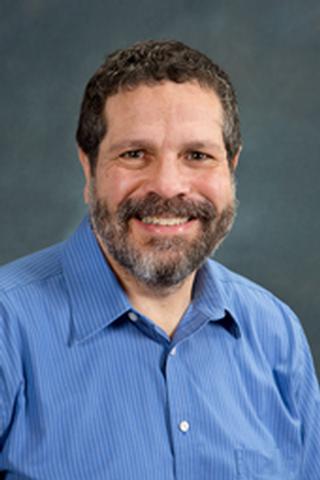
Mary Hegarty is a Distinguished Professor in the Department of Psychological & Brain Sciences at UC Santa Barbara. She has been on the faculty since 1988 following her PhD from Carnegie Mellon University. Her research focuses on spatial thinking, navigation strategies, and individual differences in spatial abilities, with emphasis on STEM education. She leads the Spatial Thinking Lab, employing methods like fMRI and virtual environments. Current NSF-funded projects explore navigation variability and spatial ability’s role in STEM success. Education: BA and MA from University College Dublin, PhD in Psychology from Carnegie Mellon (1988). Research Interests: Spatial cognition (e.g., mental rotation, navigation strategies), spatial representation in STEM, and effects of technology like GPS on spatial skills. Unique focus on integrating experimental psychology with individual difference analysis. Awards: APS Fellow, Spencer Postdoctoral Fellowship, former Cognitive Science Society board chair. Editorial roles at Journal of Experimental Psychology: Applied and Topics in Cognitive Science. Lab Activities: Develops VR tools for spatial assessment, collaborates on projects like Sea Hero Quest. Focuses on translating spatial cognition research into educational interventions. Current research examines neural correlates of navigation and midlife spatial aging effects.
Kaiyi Ji is an Assistant Professor in the Department of Computer Science and Engineering at the University at Buffalo, SUNY. He earned his PhD in Electrical and Computer Engineering from Ohio State University in 2021 and completed a postdoctoral fellowship at the University of Michigan. His research focuses on large-scale optimization, machine learning, and foundation models. PhD: Electrical and Computer Engineering, Ohio State University (2021) Postdoc: University of Michigan (2022) BSc: University of Science and Technology of China (2016) Research interests include bilevel optimization, multi-task learning, continual learning, and AI4Science, with applications in robotics and crystal property prediction. Recent work explores efficient algorithms for LLM training and optimization. His publications span top venues like ICLR, ICML, NeurIPS, and IEEE Transactions on Information Theory. He received the CSE Junior Faculty Research Award (2023) and NSF CAREER Award (2025). He advises PhD students and actively participates in departmental service as Associate Chair for Graduate Student Admissions and organizer of academic workshops.
Surajit Chaudhuri is a Researcher at Microsoft , with a career spanning decades in database systems and data management . He has received the prestigious SIGMOD Edgar F. Codd Innovations Award (2011) for his contributions to query optimization , index tuning , and data lakes . Research Interests : His work focuses on database tuning , approximate query processing , fuzzy similarity joins , automated data transformations , and machine learning integration for scalable data systems. Recent Publications : In 2025, his research includes Auto-Test for unsupervised error detection in tables, Esc for budget-aware index tuning, and MMTU for multi-task table understanding benchmarks. Earlier works in 2024–2023 address spreadsheet formula recommendation , low-overhead index filtering , and time-series pattern recognition . Scientific Impact : He has co-authored influential papers in SIGMOD , VLDB , and IEEE Transactions , shaping practices in cloud databases , query optimization , and self-service BI . His collaborations span institutions like Microsoft, MIT, and ETH Zurich.
Leonard P. Wesley is an Associate Professor at the Computer Science Department, College Of Science, San Jose State University. With a Ph.D. and M.S. in Computer Science from University of Massachusetts and a B.A. in Physics and Math from Northeastern University, his work spans bioinformatics, pharmaceutical discovery, machine learning, robotics, and evidential reasoning. He has published extensively on SVM/QSAR-based drug prediction, autonomous systems, and uncertainty management. Ph.D., University of Massachusetts - Computer Science M.S., University of Massachusetts - Computer Science B.A., Northeastern University - Physics and Math His research focuses on developing predictive models for drug discovery, autonomous robotics, and data analytics. Recent publications emphasize SVM applications in medical diagnostics and pharmaceutical modeling. He has contributed to conferences in aerospace, robotics, and biotechnology, with invited talks at NASA and Los Alamos National Laboratory. 3D-QSAR & SVM prediction of drug inhibitors Evidential decision analytics Autonomous robotic control PCA/SVM-based sepsis diagnostics Hybrid network congestion management Professor Wesley teaches courses in artificial intelligence, bioinformatics, and advanced programming. His lab investigates applications of machine learning in biotechnology and aerospace, including biomarker identification and CFD expert systems. He has served as session chair at international conferences and collaborated with institutions like NASA and Advanced Decision Systems.
Ulrich Schroeders is a Professor of Psychological Diagnostics at the University of Kassel, where he has been employed since October 2017. His work focuses on developing and validating psychological assessment tools, with particular expertise in cognitive diagnostics and educational measurement. He teaches various programs for approximately 500 students annually and serves as a supervisor for teacher training students preparing for their oral state examinations in Pedagogy/Psychology. Dr. Schroeders earned his PhD from Humboldt University of Berlin in 2010 with a dissertation titled "Measurement of Cognitive Abilities Using Modern Technologies: Artifacts, Equivalence, and New Constructs." Prior to that, he completed his Diploma in Psychology at Julius-Maximilians-University Würzburg in 2004 with a thesis on diagnosing dyscalculia in first-grade students. His research spans several key areas in psychological assessment. He specializes in technology-based competency diagnostics, developing innovative methods for measuring cognitive abilities and school competencies. A significant portion of his work involves applying Machine Learning and metaheuristics to psychometric problems, particularly in structural equation modeling. His methodological expertise includes advancing techniques in Local Structural Equation Modeling (LSEM) and Meta-Analytic Structural Equation Modeling (MASEM), with applications across educational and clinical psychology contexts. Analysis of Dr. Schroeders' recent publications reveals a strong focus on computational approaches to psychological assessment. His work frequently employs optimization algorithms like Ant Colony Optimization and Bee Swarm Optimization to address challenges in test construction and validation. There's a clear trajectory toward game-based and technology-enhanced assessment methods, as seen in studies using Mastermind and Wordle as assessment tools. His research also demonstrates growing interest in applying machine learning to predict behavioral outcomes, including juvenile delinquency, suicide risk, and psychotherapy outcomes. Dr. Schroeders has secured significant research funding, including projects funded by the German Research Foundation (DFG) and the Hector Foundation. His current projects include "Facing the Replication Crisis in Machine Learning Modeling" (2025-2027) and "PINGUIN: Potenzialidentifikation IN der GrUndschule" (2024-2027), which focuses on identifying elementary students' initial competencies. He leads the development of the BEFKI assessment system (Berliner Test zur Erfassung fluider und kristalliner Intelligenz), which includes versions for different age groups (5-7, 8-10, and 11+). His methodological toolbox includes specialized approaches for test construction and validation, particularly focusing on optimization algorithms applied to psychological measurement problems.
Nuno Pereira Lopes is an Associate Professor at Instituto Superior Técnico , part of Universidade de Lisboa , and a researcher at INESC-ID . He also serves as an advisor at FuriosaAI , focusing on tensor contraction processors for AI workloads. Research Interests : Compilers, formal verification of LLVM optimizations, machine learning frameworks, undefined behavior exploitation, probabilistic model checking, blockchain security, and many-core code generation. Teaching : Compilers and Computer/Informatics Engineering projects. Funding : Supported by Google, Matter Labs, NLnet, Oracle, PRACE, RNCA, and Woven by Toyota. Recent Publications focus on LLVM backend validation , PyTorch pipeline parallelism , C++ dynamic cast optimization , undefined behavior in C/C++ , and AI tensor processors . His work bridges compiler design, formal methods, and AI hardware. Academic Service includes representing Portugal in ISO/IEC JTC 1/SC 22 (C++), organizing FLoC'26 , and serving on program committees for PLDI, EuroLLVM, and CGO.
Chun-Liang Li is a research scientist at Apple MLR and an affiliate assistant professor at the Paul G. Allen School of Computer Science & Engineering, University of Washington. His work bridges machine learning theory with practical applications in computer vision and natural language processing, focusing on efficient model training and representation learning. His educational background includes: Ph.D. in Machine Learning from Carnegie Mellon University (2014-2019), supervised by Prof. Barnabás Póczos B.S. and M.S. in Computer Science and Information Engineering from National Taiwan University (2008-2013), supervised by Prof. Hsuan-Tien Lin Li's research centers on generative models and representation learning , with significant contributions to document understanding (FormNet series), multimodal systems (Pic2word), and large language model efficiency . His work consistently addresses real-world challenges like reducing training costs while maintaining performance, as seen in distillation techniques and synthetic data optimization. Analysis of his 2022-2024 publications reveals three dominant trends: (1) LLM efficiency through curriculum training and model updating, (2) structural document understanding via graph-based methods, and (3) multimodal representation learning for vision-language tasks. These reflect his cross-cutting approach to improving model scalability and applicability. His scientific recognition includes: IBM Ph.D. Fellowship (2018) Best student paper runner-up at IJCAI (2017) Double first-place wins in KDD Cup Tracks (2011, 2013) While specific grant details aren't listed, his award-winning KDD Cup performances and extensive publication record suggest strong funding support. He collaborates widely with students and researchers, though formal advisees aren't specified. His current roles at Apple MLR and UW position him at the industry-academia interface for cutting-edge AI development. At Apple, Li contributes to the Machine Learning Research group's core vision-language projects, while his UW affiliation enables academic mentorship and cross-institutional collaboration on foundational ML research.
Dr. Wolfgang Eppler is a Researcher at the Institute for Technology Assessment and Systems Analysis (ITAS) at the Karlsruhe Institute of Technology (KIT), where he has been working since 2023. His research focuses on the societal implications of digital technologies, particularly artificial intelligence and digital transformation. Prior to his current position, he served in various leadership roles related to staff representation at KIT and its predecessor institutions. Dr. Eppler received his education at the University of Stuttgart, where he completed his computer science studies from 1980 to 1986. He then worked as a research assistant at the University of Karlsruhe and the Research Center for Information Technology (FZI) from 1987 to 1993, during which time he earned his doctorate on the topic of "Pre-structuring of neural networks with fuzzy logic." Dr. Eppler's research spans multiple domains at the intersection of technology and society. His early work focused on neural networks, fuzzy logic, and their applications in areas such as electronic noses, medical imaging, and high-energy physics data processing. In recent years, his research has shifted toward technology assessment, particularly examining the societal impacts of artificial intelligence, digital transformation, and the governance of emerging technologies. His interdisciplinary approach combines technical expertise with social science perspectives to address complex questions about the role of technology in society. Analysis of Dr. Eppler's recent publications reveals a strong focus on the ethical, governance, and societal implications of artificial intelligence. His 2024-2025 work addresses critical issues such as EU AI regulation, generative AI for technology assessment, the grounding of large language models, and algorithmic bias. This represents an evolution from his earlier technical work on neural networks and data processing systems toward more policy-oriented research that bridges technical and social dimensions of technological change. Throughout his career, Dr. Eppler has been actively involved in institutional governance and staff representation. From 2009 to 2023, he served as Chairman of the Staff Council at KIT, and from 2005 to 2009 as Chairman of the Works Council at the Karlsruhe Research Center. His publications on university governance, particularly regarding the KIT merger and models for democratic science institutions, reflect his practical experience and theoretical interest in participatory decision-making in academic settings. Dr. Eppler is a member of the Research Group "Digital Technologies and Social Change" at ITAS, where he contributes to projects examining the societal dimensions of technological innovation. His interdisciplinary background enables him to bridge technical and social science perspectives in assessing emerging technologies.
Dominique Unruh is a Professor at RWTH Aachen University , leading the Chair for Quantum Information Systems . Additionally, they hold a Professorship in Cryptography at the Institute of Computer Science of the University of Tartu , Estonia. Their research spans quantum computing , quantum cryptography , post-quantum cryptography , and formal verification of cryptographic protocols and programs. Research Focus : Quantum programs, zero-knowledge proofs, lattice-based cryptography, and quantum random oracle model. Key Contributions : Advancements in NTRU encryption efficiency, quantum Hoare logic, and rewinding techniques for security proofs. Tools : Active development in the EasyCrypt framework for cryptographic verification. Email : unruh@cs.rwth-aachen.de
Michel J. Berg, M.D. is a Professor of Neurology (Part-Time) at the University of Rochester School of Medicine and Dentistry, where he has served since 1992. He is certified by the American Board of Psychiatry and Neurology with subspecialty boards in Clinical Neurophysiology and Epilepsy, and by the American Board of Internal Medicine. Dr. Berg served as Director and Chief of the University of Rochester Epilepsy Center from 2016 to 2023. He is a Fellow of both the American Academy of Neurology (FAAN) and the American Epilepsy Society (FAES). Dr. Berg's research interests span multiple areas within epilepsy and neurology, with particular focus on seizure prediction from EEG, medication adherence with smart medication dispensers, establishing equivalence of generic anti-epilepsy drugs, automating MRI analysis, and the genetics of cerebral cavernous malformations. His work combines clinical neurology with technological innovation to improve diagnosis and treatment of neurological conditions. His publications demonstrate significant contributions to understanding brain-responsive neurostimulation for focal epilepsy, bioequivalence of generic antiepileptic medications, and the genetic basis of cerebral cavernous malformations. Dr. Berg has been involved in numerous multicenter clinical trials and has contributed to advancing treatment protocols for medically intractable epilepsy. Scientific Awards and Recognition Epilepsy Pralid Frederick Wagner Lifetime Service Award (2020) Fellow of the American Academy of Neurology (2009) Multiple Neurology Faculty Teaching Awards (2009, 2000, 1994) Volunteer of the Year, Epilepsy Foundation of Rochester and Syracuse Regions (1999) Dr. Berg has demonstrated exceptional commitment to clinical education and patient care, particularly in the field of epilepsy. His work bridges clinical practice, research, and educational initiatives, contributing significantly to both local patient care and broader advancements in neurological science. He has been instrumental in developing protocols for epilepsy management and has contributed to numerous professional guidelines in the field.
Dr. Xiong Yi is an Assistant Professor at the School of System Design and Intelligent Manufacturing (SDIM) at Southern University of Science and Technology (SUSTech) in Shenzhen, China. He leads the Computational Design and Fabrication (CoDeFab) research group, focusing on the integration of computational design methods with advanced manufacturing technologies, particularly in the field of additive manufacturing. Dr. Xiong has established himself as a leading researcher in computational design for additive manufacturing, with a strong international research background spanning Europe and Asia. Dr. Xiong's educational journey includes: Doctor of Science (DSc) in Engineering Design and Production from Aalto University, Finland (2012-2016) Master of Science (MSc) in Machine Automation from Tampere University of Technology, Finland (2010-2012) Bachelor of Engineering (BEng) in Mechanical Engineering from Hubei University of Technology, China (2006-2010) Dr. Xiong's research primarily focuses on computational design and fabrication methodologies, with particular emphasis on design for additive manufacturing (DfAM), intelligent manufacturing systems, and smart materials. His work bridges the gap between theoretical design principles and practical manufacturing constraints, developing novel approaches for the production of complex engineered products. He has pioneered research in continuous fiber-reinforced composite additive manufacturing, developing innovative process planning and optimization techniques that enable the production of high-performance structural components. His research in electrothermally controlled origami and 4D printing of smart materials represents cutting-edge work at the intersection of materials science, mechanical engineering, and computational design. Dr. Xiong's recent publications reveal a strong focus on continuous fiber-reinforced composites, with significant contributions to 4D printing, metamaterials, and intelligent process planning. His work integrates computational design with manufacturing constraints, creating novel approaches for topology optimization, toolpath planning, and structural design that consider both performance requirements and manufacturability limitations. The research demonstrates increasing sophistication in materials science applications, particularly in programmable materials and multi-functional structures. Dr. Xiong has received multiple prestigious awards for his research contributions, including: Best Presentation Award at the 24th Chinese Conference on Mechanisms and Machine Science (IFToMM CCMMS2024) Best Presentation Award at the International Conference on Frontiers of Additive Manufacturing Research (RAAM 2024) Best Paper Award at the International Conference on Design for 3D Printing (ICD3DP 2023) PhD Scholarship from Aalto University (2016) Research Travel Grant from the International Association for Vehicle System Dynamics (IAVSD) (2013) National Scholarship from the Ministry of Education (2008) As a dedicated educator and mentor, Dr. Xiong serves as a PhD supervisor at SUSTech and has successfully guided students who have gone on to pursue advanced studies and careers at prestigious institutions including Hong Kong Polytechnic University, Beihang University, DJI Innovations, and Singapore's A*STAR research institute. His research is supported by multiple competitive grants, including key projects from the National Key R&D Program of China, the National Natural Science Foundation of China, and provincial and municipal funding agencies. Dr. Xiong also serves on the editorial board of the Journal of Engineering Design and as a guest editor for Composites Communications, contributing to the advancement of his field through scholarly service. Dr. Xiong leads the CoDeFab research group, which maintains a strong collaborative culture focused on 'design leading manufacturing, manufacturing driving design, and digital-intelligent integration.' The group has developed several advanced manufacturing platforms, including multi-axis continuous fiber-reinforced composite additive manufacturing systems, smart composite additive manufacturing platforms, and multifunctional soft matter open manufacturing platforms. With a focus on practical applications and innovation, the CoDeFab group actively collaborates with industry partners and has established a joint laboratory to bridge academic research with industrial implementation.
Manohar N. Murthi serves as an Associate Professor in the Department of Electrical & Computer Engineering at the University of Miami's College of Engineering. His academic profile shows active engagement across both technical engineering domains and social science research, with recent publications spanning quantum computing applications, neural network models for biomedical signal processing, and political conspiracy theories. Dr. Murthi's research interests bridge multiple disciplines, with primary focus areas including machine learning, quantum computing, signal processing, belief theory, and conspiracy theory research. His work demonstrates a unique interdisciplinary approach that connects electrical engineering methodologies with social science applications, particularly in analyzing belief systems and misinformation patterns. The breadth of his research is evident in publications ranging from technical algorithms for Dempster-Shafer belief theory to sociological studies on White Replacement theory and QAnon conspiracy beliefs. Analysis of his recent publications (2020-2024) reveals two distinct but complementary research trajectories: technical work in quantum tensor networks, graph neural networks, and belief theory frameworks; and social science applications examining conspiracy theories, political extremism, and misinformation. His technical papers often develop novel computational frameworks for uncertainty quantification and data analysis, while his social science work applies these methodologies to understand belief formation and political behavior. This dual focus creates a distinctive research profile that connects engineering rigor with social science insights. Dr. Murthi maintains active research collaborations, particularly with Kamal Premaratne, across multiple publications in both engineering and political science journals. His work has been published in venues including IEEE transactions, The Journal of Politics, and Politics, Groups and Identities, demonstrating successful cross-disciplinary scholarship. His research appears to be supported by collaborative grants, though specific funding sources aren't detailed in the available information. While specific laboratory information isn't provided in the source material, Dr. Murthi's research suggests involvement in computational laboratories focused on machine learning, signal processing, and data analysis. His work with sEMG signals for gesture recognition indicates potential connections to biomedical engineering labs, while his belief theory research suggests computational theory groups. His interdisciplinary approach likely involves collaboration across multiple research teams within and beyond the College of Engineering.
L. Jason Anastasopoulos is an Associate Professor of Public Administration and Policy and Statistics (by courtesy) at the University of Georgia's School of Public and International Affairs (SPIA). He holds dual appointments as a Faculty Fellow at the Benson-Bertsch Center for International Trade and Security (formerly CITS) and a faculty affiliate at the Institute for Artificial Intelligence, with additional affiliation at USC’s Civic Leadership Education and Research Initiative. His research centers on the political economy of technology, investigating how political institutions adapt to technological change and its implications for democratic governance. Key focus areas include AI’s impact on bureaucracy, causal inference methodologies, machine learning applications in social science, historical analysis of democratic backsliding during technological transitions, and the evolving political role of central banks. His methodological work emphasizes Bayesian approaches and computational techniques for improving empirical analysis in political science. Recent publications reveal a dominant trend in integrating artificial intelligence with public administration and political economy, spanning temporal causal inference frameworks, comparative AI governance across sectors, historical technological disruptions (e.g., rural electrification), and algorithmic bias in public services. His work consistently bridges theoretical political science with cutting-edge computational methods, particularly natural language processing and deep learning applications for policy analysis. Dr. Anastasopoulos has mentored eight graduate students across International Affairs, Political Science, Public Administration, and Statistics programs. His advisees include tenure-track professors at Ripon College, University of Florida, and California State University, alongside industry professionals at Lockheed Martin and the Tampa Bay Rays. He actively contributes to interdisciplinary research through leadership roles at the Benson-Bertsch Center for International Trade and Security and UGA’s Institute for Artificial Intelligence.
Prof. Dr. Valentina Dagienė serves as a Professor and Senior Researcher at the Educational Systems Group within the Institute of Data Science and Digital Technologies at Vilnius University, Lithuania. Her academic career spans several decades with significant contributions to informatics education globally, particularly through her leadership in the international Bebras contest initiative. Her research focuses on computational thinking education through constructionist learning approaches, with particular emphasis on task design that promotes deep conceptual understanding in K-12 settings. Prof. Dagienė has pioneered methods for integrating computational thinking into primary education curricula while addressing cultural differences in learning approaches. Her work bridges theoretical frameworks with practical classroom implementations, making complex informatics concepts accessible to young learners through engaging short tasks. Analysis of her recent publications reveals a clear progression toward interdisciplinary integration of computational thinking with STEAM education and digital competence frameworks. Her research increasingly addresses assessment methodologies for computational thinking skills and explores the connections between computational and algebraic thinking. The Bebras contest serves as both a research platform and practical implementation vehicle for her educational theories. Prof. Dagienė has established herself as a key figure in international informatics education through her editorial work, conference organization, and cross-national collaborations. She has fostered partnerships between educators and researchers across Europe and beyond, creating sustainable communities around computational thinking education. Her leadership in the Bebras International Contest has engaged millions of students worldwide in computational problem-solving activities. Through her work with the Educational Systems Group, Prof. Dagienė has developed comprehensive teacher training programs that support educators in implementing computational thinking concepts in diverse classroom settings. Her research on student approaches to problem-solving has informed the design of learning environments that accommodate different learning styles and cultural backgrounds.
Cecilio Angulo Bahón is a full Professor at the Polytechnic University of Catalonia (UPC), affiliated with the Barcelona School of Industrial Engineering (ETSEIB) and the Department of Systems, Automatics and Industrial Informatics Engineering . He leads research in Artificial Intelligence and Robotics , with significant contributions to healthcare data analytics, digital twins, and human-robot collaboration. His research spans machine learning for medical data harmonization, generative adversarial networks in health informatics, and evolutionary algorithms for control systems. Recent publications focus on synthetic healthcare data generation, climate-resilient agriculture , and UMAP-based data analysis . His work bridges AI theory with practical applications in industrial and healthcare domains. Scientific awards include the Sant Jordi 2023 Digital Polytechnic Initiative Award . He has supervised doctoral candidates like Carlos Flores-Vázquez and N. Raya, with key collaborations at the IDEAI-UPC Intelligent Data Science and AI Research Group and the Institute of Robotics and Industrial Informatics (CSIC-UPC).