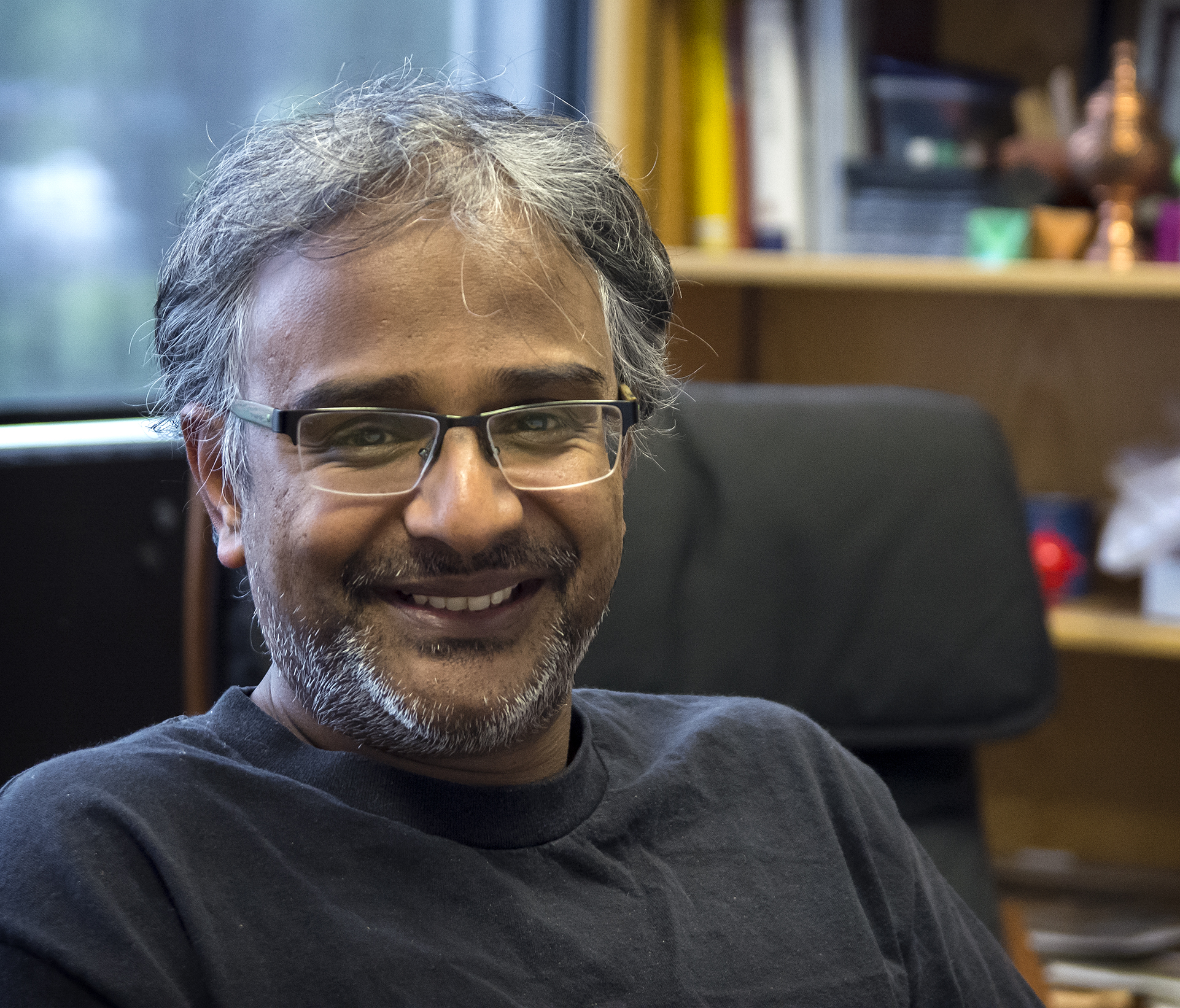
Professor Joe Burton is a leading academic in International Security at Lancaster University's Department of Politics, Philosophy and Religion (PPR). He joined Lancaster in July 2023 as part of the Security and Protection Science initiative, following roles at the University of Nottingham, University of St Andrews, and as a Marie Curie Fellow at Université libre de Bruxelles. His expertise spans cyber conflict, emerging technologies, and interdisciplinary security studies. Education: Doctorate in International Relations, University of Otago Master of International Studies, University of Otago Bachelor of International Relations, University of Wales, Aberystwyth Research interests include cyber security, terrorism, organized crime, maritime security, norm diffusion, and non-proliferation. He has advised governments in New Zealand and the UK, participated in ASEAN policy processes, and conducted research funded by NATO, the EU, and U.S./Taiwan governments. Awards include the US Department of State SUSI Fellowship and Taiwan Fellowship. His grants include projects on cyber deterrence, NATO-EU cooperation, and cyber-biodefense strategies. He leads the CYBER MALCULT project (2024–2027) on countering malicious online security cultures. He collaborates with Security Lancaster research groups focusing on behavioral science, policing, law/ethics, secure machine learning, societal threats, and sociology. His advisory work spans cyber warfare, AI ethics, and transatlantic security policy.
Toby Davies is an Associate Professor in Criminal Justice Data Analytics at the University of Leeds, School of Law. His work focuses on quantitative criminology, spatial analysis, and computational methods to inform crime prevention. He holds a Mathematics degree from the University of Oxford (2008) and a PhD from University College London (UCL), followed by postdoctoral research on the EPSRC-funded Crime, Policing and Citizenship project. Before joining Leeds in 2023, he was at UCL’s Department of Security & Crime Science. His research spans interdisciplinary topics including urban form and crime, crime modeling, social networks, and cybercrime. He has collaborated with police agencies (West Yorkshire, Thames Valley, West Midlands Police) and governmental bodies (UK Home Office, London Mayor’s Office). A strong advocate for Open Science, he co-founded JDI Open to promote open practices in crime science. His recent work emphasizes policy interventions like phasing out pointed kitchen knives to reduce knife crime, leveraging data-driven approaches. He publishes widely in criminology, physics, network science, and general science journals, and has guest-edited special issues. His applied research aims to bridge theory and practice, developing tools deployed operationally in policing. Current interests include financial crime dynamics, social contagion of crime, and street network configurations’ impact on crime patterns.
Andrew D. Selbst is a Professor of Law at UCLA School of Law and currently serves as the William J. Friedman and Alicia Townsend Friedman Visiting Professor of Law at Harvard Law School. He has been on the UCLA faculty since 2020 and previously held positions as a Postdoctoral Scholar at the Data & Society Research Institute and a Visiting Fellow at Yale Law School's Information Society Project. He has also taught as an Adjunct Professor at Fordham Law School. Professor Selbst received his educational training from prestigious institutions: S.B. in Physics and Electrical Science and Engineering from MIT (2004) M.Eng. in Electrical Engineering and Computer Science from MIT (2005) J.D. from the University of Michigan Law School (2011) Before entering academia, Professor Selbst worked as a design engineer at Cirrus Logic and Analog Devices. Following law school, he served as a Privacy Research Fellow at NYU School of Law's Information Law Institute, an Alan Morrison Supreme Court Assistance Fellow at Public Citizen Litigation Group, a Senior Associate in Hogan Lovells US LLP's Communications group, and clerked for federal judges including the Honorable Dolly M. Gee and the Honorable Jane R. Roth. Professor Selbst's research examines the complex relationship between law, technology, and society. Drawing on resources from computer science, sociology, and science and technology studies, he seeks to understand how technologies interfere with existing legal regimes and how legal actors can respond to the social effects of new technology. His recent work has focused specifically on the effects of machine learning and artificial intelligence on various legal domains, including discrimination law, policing practices, credit regulation, data protection frameworks, and tort law. His interdisciplinary approach combines technical understanding of AI systems with deep legal analysis to address emerging challenges in the digital age. Professor Selbst teaches courses in torts, information privacy and data protection, a seminar on law, technology and society, and beginning in 2025, a dedicated course on Artificial Intelligence Law. His publications have appeared in leading law journals including Boston University Law Review, California Law Review, Harvard Journal of Law and Technology, and University of Pennsylvania Law Review, as well as in the ACM Conference on Fairness, Accountability and Transparency. He is also the coauthor of a forthcoming casebook on Artificial Intelligence Law. His scholarly contributions demonstrate a consistent focus on the intersection of emerging technologies and legal frameworks, with particular attention to how AI systems create novel challenges for established legal doctrines. Professor Selbst's work has been influential in shaping academic and policy discussions around AI regulation, algorithmic accountability, and the adaptation of legal systems to technological change.
Dr. Oliver Guidetti serves as a Level A Lecturer in Psychology at the University of Wollongong, specializing in human factors, cyber vigilance, and applied cognitive science. His interdisciplinary research bridges psychology, cybersecurity, and artificial intelligence to address critical challenges in human-machine collaboration and security operations environments. His educational foundation includes: Bachelor of Mathematics from Edith Cowan University (2011-2014) Bachelor of Science in Psychology from Edith Cowan University (2011-2014) Bachelor of Science (Psychology Honours) from Edith Cowan University (2015) Doctor of Philosophy from Edith Cowan University (2019-2022) Guidetti's research centers on the cognitive and physiological dimensions of human performance in security contexts. He investigates how eye-tracking, biometric monitoring, and neuroergonomic approaches can optimize vigilance in cybersecurity operations, while exploring socio-technical impacts of AI on human decision-making. His work extends to digital relationship literacy and AI bias mitigation, demonstrating applications across defense, healthcare, and industrial settings through collaborations with the Department of Home Affairs and Western Australian Cyber Defence Taskforce. His 2023-2024 publications reveal a cohesive research trajectory focused on cyber vigilance task design, human-AI teaming frameworks, and neuroergonomic validation methods. The corpus shows increasing integration of biometric data with cognitive theory to develop real-time performance assessment tools, alongside growing attention to ethical AI governance and cross-sector resilience in critical infrastructure protection. As an educator, Guidetti supervises Honours and PhD students in human factors and AI-driven research while teaching psychology research methods and cybersecurity applications. He co-developed an Australian Psychological Society-certified professional development course for psychologists entering cybersecurity fields, demonstrating his commitment to translating research into industry practice. His professional leadership includes advising on cyber vigilance frameworks, developing AI bias mitigation strategies, and serving on APS committees focused on digital psychology applications. Current projects involve designing AI-driven dating simulators for relationship literacy interventions and creating certified training programs for security operations personnel.
Patrick Lin is a Professor in the Philosophy Department at California Polytechnic State University (Cal Poly), where he serves as Director of the Ethics + Emerging Sciences Group, a non-partisan organization established at Cal Poly in 2007 to focus on the risk, ethical, and social impact of emerging sciences and technologies. He is frequently quoted in national publications on topics including ethics of autonomous vehicles, artificial intelligence, robotics, outer space, Arctic frontiers, military and policing applications, virtual and augmented reality, and smart cities. Lin received his Ph.D. and M.A. from the University of California, Santa Barbara, and his B.A. from the University of California, Berkeley. His academic appointments include Affiliate Scholar at Stanford Law School's Center for Internet and Society, Fulbright Specialist at the University of Iceland's Centre for Arctic Policy Studies (2018), and Visiting Senior Research Fellow at the Centre for Applied Philosophy and Public Ethics in Australia (2010-2016). Lin's research spans technology ethics broadly, with specific expertise in AI ethics, robotics ethics, autonomous vehicle ethics, space ethics, cybersecurity ethics, and military ethics. His work bridges philosophical theory with practical application, examining how emerging technologies challenge traditional ethical frameworks. His research demonstrates consistent themes across different technological domains: examining risk assessment methodologies, developing ethical frameworks for emerging technologies, analyzing social and political implications of technological adoption, and providing practical guidance for developers, policymakers, and users. His publication record shows a progression from early work on nanotechnology ethics to current focus areas including space cybersecurity, AI kitchens, and ethical frameworks for autonomous systems. The articles reflect his interdisciplinary approach, combining insights from philosophy, law, engineering, and policy studies to address complex ethical challenges in emerging technologies. Cal Poly/Academic Senate, Distinguished Scholarship Award (2017) American Philosophical Association's Public Philosophy Op-Ed Award (2015) Cal Poly/College of Liberal Arts, Outstanding Scholarship Award (2009) Lin has secured significant grant funding from organizations including the National Science Foundation, US Department of Defense, and Canadian Institute for Advanced Research for research on military AI risk assessment, AI kitchens and robot cooks, outer space cybersecurity, and autonomous vehicles. He has advised numerous students through his teaching and research activities at Cal Poly, where he teaches courses including Philosophy of Technology, Ethics of Science and Technology, and Introduction to Philosophy. Lin directs the Ethics + Emerging Sciences Group at Cal Poly, which serves as a hub for interdisciplinary research on technology ethics. He also participates in several other research initiatives including his role as Research Director for the Consortium for Emerging Technologies, Military Operations, and National Security (CETMONS) and as a member of the Emerging Technologies of National Security and Intelligence initiative at the University of Notre Dame.
Erin Comartin is a Professor at Wayne State University School of Social Work, where she has served on faculty since 2016 after transitioning from Oakland University. Her scholarship critically examines social welfare policies and interventions for vulnerable populations within the criminal legal system, with particular emphasis on behavioral health needs and systemic reform initiatives. Her educational foundation includes: Ph.D. in Social Work from Wayne State University MSW from Wayne State University Post-Graduate Diploma of Arts in Community & Family Studies from University of Otago, New Zealand BA in Sociology from Oakland University Comartin's research program integrates clinical expertise from her prior work with homeless youth and domestic violence survivors to address critical gaps in justice-involved behavioral health services. She specializes in sex offender management policies, jail diversion interventions, and Behavioral Threat Assessment teams designed to prevent mass violence. Her methodological expertise spans qualitative, quantitative, and mixed-methods program evaluation with strong community engagement components. Analysis of her 15 most recent publications (2023-2025) reveals intensified focus on suicide prevention in correctional settings, overdose response systems, and law enforcement behavioral health training efficacy. Her work increasingly employs journey mapping and multi-site trial designs to evaluate systemic interventions across rural-urban divides, reflecting evolving priorities in criminal legal health services research. As principal investigator for Center for Behavioral Health and Justice initiatives, Comartin leads community-engaged projects including veteran reentry evaluations and Sequential Intercept Model implementation assessments. Her teaching portfolio encompasses advanced policy analysis, macro practice theory, and program evaluation within Wayne State's social work curriculum.
Peter N. Salib is an Assistant Professor at the University of Houston Law Center and Associate Faculty in Public Affairs. He serves as Law and Policy Advisor to the Center for AI Safety in San Francisco and co-Director of the Center for Law & AI Risk. University of Houston Law Center Public Affairs Faculty Center for AI Safety Center for Law & AI Risk His research combines constitutional law and economic analysis to address AI governance challenges. Current work focuses on legal frameworks for mitigating catastrophic AI risks through regulatory innovation. Publications appear in top law reviews including University of Chicago Law Review, Virginia Law Review, and Texas Law Review. Recent scholarship trends indicate expertise in: Algorithmic discrimination in health equity Constitutional implications of AI rights Jury nullification theories in abortion cases AI arms race international law Computational law applications As former Climenko Fellow at Harvard Law School and attorney at Sidley Austin LLP, he brings both academic and practical legal experience. Judicial clerkship with Hon. Frank H. Easterbrook informs his constitutional analysis approach.
Babak Akhgar serves as Professor of Informatics and Director of CENTRIC (Centre of Excellence in Terrorism, Resilience, Intelligence and Organised Crime Research) at Sheffield Hallam University's College of Business, Technology and Engineering, with additional affiliation to the Culture and Creativity Research Institute. Recognized as a Fellow of the British Computer Society (FBCS), he maintains active leadership in security informatics research and education. His academic foundation includes a Software Engineering degree from Sheffield Hallam University, complemented by a Master's degree with distinction in Information Systems in Management and a PhD in Information Systems. This academic trajectory followed substantial industry experience as a Strategy Analyst and Methodology Director for multiple organizations. Professor Akhgar's research program bridges theoretical knowledge management with practical security applications, focusing on cyber security, counter-terrorism, intelligence frameworks, and big data analytics for national security. His scholarly output demonstrates consistent evolution from foundational knowledge management systems toward contemporary security challenges including cryptocurrency tracing, AI accountability in law enforcement, and smart city security frameworks. Recent work shows particular emphasis on ethical considerations, citizen acceptance of security technologies, and practical implementation of security solutions. Fellow of the British Computer Society (FBCS) Co-editor of influential security publications including 'Intelligence Management: Knowledge Driven Frameworks for Combating Terrorism and Organised Crime' Member of editorial boards for three international journals Chair and program committee member for numerous international security conferences As a doctoral supervisor, Professor Akhgar has guided research on cyber situational awareness, digital music ontology, and e-government services. His leadership extends to major EU-funded security initiatives including the MIICT project for migrant integration and development of the AP4AI accountability framework for artificial intelligence in security contexts. Through CENTRIC, he directs a research ecosystem that connects academic inquiry with real-world security challenges while addressing ethical, legal, and societal implications of security technologies.
Professor Pamela Ugwudike is a Professor of Criminology at the University of Southampton, with expertise in AI ethics, algorithms in justice systems, and trustworthy AI. She holds fellowships from the Higher Education Academy and the Alan Turing Institute. Her research focuses on data-driven technologies in criminal justice, including predictive policing algorithms and social media analytics. Education includes an LLB (Hons), MA, and PhD. Current projects include the ESRC-funded ProTechThem2.0 (2021–2024), exploring AI ethics and sharenting risks. She co-edits the Criminology & Criminal Justice journal and serves on editorial boards for leading criminology journals. External roles include memberships in the ESRC Peer Review College, Ada Lovelace Institute's biometric data advisory group, and the Howard League for Penal Reform’s Research Advisory Group. Her research spans interdisciplinary AI ethics, with recent publications analyzing sharenting’s digital harms, algorithmic transparency in policing, and AI’s role in sentencing. Supervising three PhD students, she also advises on technology policy through roles like Hampshire Constabulary's Science and Technology Advisory Committee.
Theo Kindynis is a Senior Lecturer in Criminology at the Department of Sociology and Criminology, City St George's, University of London, where he joined in March 2024. Previously, he taught at Goldsmiths, University of London, and the University of Roehampton. His academic affiliations reflect a strong commitment to critical, ethnographic, and spatially informed criminological inquiry. PhD in Criminology, University of Greenwich, United Kingdom MPhil in Criminological Research, University of Cambridge, United Kingdom BA Hons in Sociology, University of Kent, United Kingdom Fellowship of the Higher Education Academy, Higher Education Academy, United Kingdom Theo Kindynis’s research centers on the intersections of urban space, lawbreaking, and social control. He is a leading expert on deviant subcultures, particularly graffiti writing and urban exploration, having conducted long-term ethnographic fieldwork in London. His work bridges empirical investigation with theoretical innovation, most notably through co-pioneering the concept of "ghost criminology" —a framework that examines the haunting aftereffects of crime, violence, and punishment. His methodological contributions include publishing legal, ethical, and practical guidance for criminological ethnographers researching criminalized groups, especially in digital and high-surveillance environments. His recent publications reveal a sustained engagement with spatial criminology, subcultural practices, and the ethics of ethnographic research. Themes across his work include the policing of urban aesthetics, the affective engineering of consumer spaces, the spectral presence of past violence, and the information security challenges faced by researchers in sensitive fields. His scholarly output combines theoretical rigor with grounded empirical insight, frequently published in top journals such as The British Journal of Criminology and Crime, Media, Culture . Theo Kindynis has contributed to public discourse as an expert commentator on graffiti and urban exploration, appearing in media outlets including the BBC Evening News and The Guardian. His work on information security for ethnographers addresses a critical gap in methodological literature, drawing from journalism, activism, and digital rights advocacy. Co-authored the foundational book Ghost Criminology: The Afterlife of Crime and Punishment (NYU Press, 2022) Pioneered methodological guidance on protecting ethnographic data from state and non-state threats Developed innovative approaches to anonymization and data protection in high-risk research Advocates for ethical rigor in researching criminalized populations As a supervisor, Theo welcomes doctoral proposals on urban space, deviant subcultures, and ethnographic methods. He is actively involved in shaping the future of criminological theory and methodology, particularly in relation to digital surveillance, researcher safety, and the cultural afterlives of crime. Theo Kindynis is affiliated with research teams exploring the intersections of space, crime, and memory. His ongoing projects continue to develop the framework of ghost criminology, while expanding into issues of algorithmic surveillance, border control, and the digital footprints of academic research. His work is increasingly relevant in an era of automated state profiling and data-driven social control.
Darius Whelan is a Senior Lecturer in Law at University College Cork (UCC), where he serves as Director of the LLB programme. He holds a BCL from University College Dublin, an LL.M. in 'The Comparative Method and Law Reform', and a Ph.D. in 'Criminal Procedure and Mental Health' from Trinity College Dublin. His academic career spans over three decades, with roles at UCC since 1997, including Senior Lecturer since 2013. His research focuses on Mental Health Law, Employment Law, and Internet Regulation. Notable works include Mental Health Law and Practice: Civil and Criminal Aspects (2009) and contributions to the Mental Health Act, 2001 Toolkit (2022). He co-founded UCC's IT Law Clinic and is President of the Irish Mental Health Lawyers Association. Key grants include the Irish Research Council-funded 'Improving Human Rights for People with Mental Health Difficulties' (2021–2022) and a 2002 project on Employment Equality Law. Awards include Supreme Court citations for his research and UCC's President's Award for Innovative Teaching. Whelan has advised on mental health law reforms, participated in over 40 conferences, and collaborated with international organizations like Creative Commons. His teaching interests extend to Cybercrime, Copyright Law, and Digital Learning. He supervises Ph.D. students in areas like AI and Law, Employment Law in the Digital Age, and Human Rights in Mental Health. Labs/Teams: Director of UCC's IT Law Clinic; Board member of Sample Studios; Member of Creative Commons Ireland.
Ben K. Grunwald serves as Professor of Law at Duke University School of Law, where he has been a faculty member since 2017 after completing a Bigelow Fellowship at the University of Chicago Law School. His scholarly work bridges legal theory and empirical analysis to address critical issues in criminal justice systems. JD, PhD in Criminology, AM in Statistics, and BA from the University of Pennsylvania Clerked for the Honorable Thomas Ambro on the U.S. Court of Appeals for the Third Circuit Bigelow Fellow at the University of Chicago Law School (2016-2017) Professor Grunwald's research program centers on evidence-based criminal justice reform, with particular emphasis on prosecutorial power dynamics, sentencing fairness, juvenile justice boundaries, and police accountability mechanisms. His methodological approach integrates advanced statistical techniques with legal scholarship to produce actionable insights for policymakers. Current projects examine racial bias in criminal records, optimal decarceration strategies, and the labor market consequences of police discipline. His recent publications demonstrate a consistent focus on translating empirical findings into practical legal reforms, particularly in law enforcement practices and juvenile justice systems. Through interdisciplinary collaborations with criminologists and statisticians, his work challenges conventional wisdom using rigorous data analysis while maintaining strong connections to constitutional principles and procedural justice. Professor Grunwald teaches foundational courses including Criminal Law and Criminal Procedure: Investigation, along with specialized seminars in Criminology and Criminal Procedure that emphasize empirical methodologies. His curriculum development reflects his commitment to training future lawyers in evidence-based legal practice and policy analysis.
Alan Rubel is a Professor and Director of the Information School at the University of Wisconsin-Madison. He also serves as a member of the Department of Medical History & Bioethics and an affiliate of the UW Law School. His research focuses on information ethics, policy, and law, particularly addressing privacy, surveillance, algorithmic decision-making, and bioethics. Rubel holds a PhD in Philosophy (2006) and a JD (2003), both from the University of Wisconsin-Madison. He has held academic positions since 2010, including visiting researcher roles at the 4TU Centre for Ethics and Technology in the Netherlands. His work bridges philosophy, law, and technology, emphasizing ethical challenges in automated systems and data-driven societies. Education: PhD in Philosophy (2006), JD (2003), both from UW-Madison. Professional roles include former Director of the Center for Law, Society & Justice, and prior fellowships at Johns Hopkins and Georgetown Universities. Rubel’s interdisciplinary approach addresses contemporary issues like learning analytics, neurotechnology ethics, and digital privacy. His research highlights privacy in higher education, ethical implications of AI, and bioethical dilemmas in emerging technologies. Notable contributions include the book Algorithms and Autonomy: The Ethics of Automated Decision Systems (2021) and influential articles on algorithmic transparency, surveillance, and information fiduciaries.
Suresh Venkatasubramanian is a Professor at Brown University, previously at the University of Utah's School of Computing. His research focuses on algorithmic fairness, automated decision systems, computational geometry, and the societal impacts of AI. He co-founded the FAT* conference and sits on the ACLU of Utah board. He holds a B.Tech from IIT Kanpur and a Ph.D. from Stanford University. Education : B.Tech (Computer Science, IIT Kanpur), Ph.D. (Stanford University). Key Roles : Member of Computing Community Consortium Council, Research Advisory Council for NYC's FTA Tool, and First Judicial District of Pennsylvania. Research interests emphasize fairness, accountability, and transparency in algorithms. Notable contributions include work on predictive policing biases, Shapley-value critiques, and information access gaps. Awards include an NSF CAREER Award and an ICDE Test-of-Time Award. Grants : Mozilla Foundation, NSF BIGDATA, DARPA A4V. Teaching : Advanced Algorithms, Ethics of Data Science, and courses on algorithmic fairness. Service roles include organizing conferences like FAT* and ALENEX, and advising on algorithmic governance in criminal justice systems.
Prof. Dr. Nedžad Polić is a faculty member at the Faculty of Economics, University of Economics Sarajevo. He holds a Ph.D. in Economic Sciences from the University of Sarajevo's Faculty of Economics. His research focuses on corporate finance, financial systems, banking regulation, data science applications in finance, and privatization models. He teaches courses in Financial Management and actively contributes to academic discourse through numerous peer-reviewed publications. Education: Bachelor's in Economics: Faculty of Economics, University of Banja Luka Master's in Economic Sciences: Faculty of Economics, University of Tuzla Ph.D. in Economic Sciences: Faculty of Economics, University of Sarajevo Research Interests: Prof. Polić explores corporate finance principles, financial leverage impacts, banking regulatory frameworks (e.g., Basel III), and financial market development in emerging economies. He also examines privatization models and their socio-economic implications in transition economies like Bosnia and Herzegovina. His recent work integrates data science methodologies into financial decision-making processes across industries. Article Trends: His publications analyze empirical evidence from Bosnia and Herzegovina and the Western Balkans, focusing on corporate bond markets, banking sector reforms, and corporate restructuring cases. He emphasizes policy-relevant research to address challenges in emerging financial systems. Advising & Grants: No advisees or grants explicitly mentioned in the provided texts. His academic contributions are primarily through teaching and research publications. Labs/Teams: No specific research teams or laboratories associated with his profile in the available information.