Dr Seb Franklin is a Senior Lecturer in the Department of English Language & Literature at King's College London, Faculty of Arts & Humanities. Their research explores intersections between media theory, racial capitalism, Marxism, and the history of science and technology. Key research areas include: Digital humanities and media archaeology Critical race and postcolonial studies Cybernetics and technocultural analysis Political economy of digital labor Visual culture and post-Fordism Recent publications examine: 2024 works on analog-digital distinctions and digital ethics 2023 analyses of data dispossession and racial capitalism 2021 monograph 'The Digitally Disposed' 2015 foundational text 'Control: Digitality as Cultural Logic'
Dr. Nathanael L. Baisa is a Lecturer in Artificial Intelligence at De Montfort University (DMU), part of the Computing, Engineering and Media faculty within the School of Computer Science and Informatics. His academic career includes roles as a senior research associate at Lancaster University, researcher at AnyVision, and research fellow at the University of Lincoln, focusing on computer vision and machine learning projects funded by ERC, EPSRC, and Innovate UK. Education: PhD in Electrical Engineering (Computer Vision/ML - Heriot-Watt University, 2018) MSc in Computer Vision and Robotics (Erasmus Mundus program, 2013) Research focuses on computer vision applications including object detection, scene understanding, autonomous systems, and biometrics. He leads work on deep learning for visual tracking, hand-based person identification, and robotic perception. He teaches courses like Introduction to Computer Vision and Deep Learning frameworks. His recent publications emphasize vision-language models, multi-object tracking algorithms, and geoscience machine learning applications. He collaborates with the Institute of Artificial Intelligence (IAI) and contributes to interdisciplinary projects in robotics and energy exploration.
Keerthana Jaganathan is a researcher at Northumbria University, specializing in the application of machine learning to toxicology and health risk assessment. Her work bridges computational biology, artificial intelligence, and chemical safety analysis. Her research focuses on developing explainable AI models for toxicity prediction, including applications in respiratory, liver, and mitochondrial toxicity. She has published extensively on multimodal fusion approaches, feature selection techniques, and hybrid molecular representations in predictive toxicology. Recent publications highlight her expertise in deep learning for dermal toxicity assessment, fuzzy mutual information for multi-label classification, and comparative studies of tree-based ensemble models in pulmonary toxicity prediction. While specific departmental affiliations are not detailed in the provided texts, her work aligns with interdisciplinary research initiatives at Northumbria.
Prasad Tadepalli is a Professor in the School of Electrical Engineering and Computer Science at Oregon State University, serving as the AI Graduate Program Director. He is affiliated with the Collaborative Robotics and Intelligent Systems Institute. His expertise spans artificial intelligence, machine learning, reinforcement learning, and automated planning, with impactful contributions to explainable AI and natural language processing. Tadepalli holds a Ph.D. from Rutgers University and M.Tech/B.Tech degrees from Indian institutions. He has authored over 100 papers, organized international conferences, and received awards such as the AAAI Outstanding Paper Award (2013) and ICAPS Best Student Paper (2009). Education: Ph.D. (Rutgers University, 1990), M.Tech (IIT Madras, 1981), B.Tech (Regional Engineering College, 1979) His research focuses on advancing AI through techniques like relational planning, reinforcement learning, and interpretable models. Recent work includes integrating planning and RL for multiagent systems and developing explainable models via tree ensemble compression. His articles highlight contributions to time-series imputation, adversarial attacks on bandits, and chess rating estimation using CNN-LSTM networks. Awards: AAAI Outstanding Paper Award (2013), ICAPS Best Student Paper (2009) Tadepalli emphasizes independent thinking in students and has advised numerous researchers. His work bridges theoretical AI with practical applications, such as robotics and data-driven decision-making.
Ulrike Sattler is a Professor in the Department of Computer Science at the University of Manchester, where she also serves as Deputy Head of Department and Senior Mentor. Her academic journey includes a PhD from RWTH Aachen University (1998) and a Habilitation from the University of Manchester (2003). She has held roles such as Reader and Senior Lecturer at Manchester, and previously worked as a Senior Researcher at TU Dresden and RWTH Aachen. Her research focuses on logic-based knowledge representation, automated reasoning, and Description Logics, with contributions to OWL ontology languages and standardization. Notable awards include the Friedrich Wilhelm Preis (1999) for her PhD thesis. She has co-supervised over 20 PhD students, including prominent figures like Birte Glimm and Matthew Horridge. Her service contributions include co-chairing conferences (KR 2010, IJCAR 2012), editorial roles in journals like JAR and JAIR, and leadership in the W3C OWL Working Group. She teaches courses on ontology engineering and semantic web technologies, emphasizing practical applications in molecular biology and knowledge graphs.
Rayna Dimitrova is a Tenure-track faculty member at the CISPA Helmholtz Center for Information Security in Saarbrücken, Germany. Previously, she held positions as Lecturer (Assistant Professor) at the University of Sheffield and University of Leicester, and postdoctoral roles at the University of Texas at Austin and the Max Planck Institute for Software Systems. She earned her PhD from Saarland University. Her research focuses on formal methods, including verification and synthesis of reactive systems, applications to control and robotics, quantitative analysis of probabilistic systems, and information-flow security. Key interests include strategic synthesis under partial observability, probabilistic uncertainty, and continuous dynamics, with applications to autonomous systems. She has served in numerous prestigious roles, including PC co-chair for VMCAI 2024, HYPER 2023, and SMT 2018. Her awards include the RS3 Best Paper Award (VMCAI 2012) and nominations for ETAPS (TACAS 2015) and EMSOFT (2014) Best Paper Awards. Her research group includes PhD students Rafael Dewes, Philippe Heim, and Saleh Soudijani. She has taught courses on reactive synthesis, program analysis, and decision procedures at multiple institutions, including the University of Sheffield and TU Kaiserslautern.
Dr. Ngoc Nha Vi Tran is an Associate Professor of Computer Science at UiT The Arctic University of Norway. She holds a PhD from UiT and was a visiting scholar at Rutgers University, USA. Her research focuses on high-performance and energy-efficient computing, machine learning, and bioinformatics. She is a member of the NORA.startup Steering Group and leads the Arctic Green Computing Group. Education: PhD in Computer Science (UiT), M.Sc. in Software Engineering via Erasmus Mundus (Blekinge Institute of Technology, Sweden & Technical University of Kaiserslautern, Germany). Research interests include energy-efficient algorithms, bioinformatics tools (e.g., vCOMBAT), and applications of machine learning in healthcare and robotics. She teaches courses such as INF-2200 Computer Architecture, INF-2900 Software Engineering, and INF-2202 Concurrent Programming. Her work spans computational models for antibiotic target-binding, runtime energy optimization (REOH framework), and power models for embedded systems (RTHpower/ICE). She contributed to the EXCESS project on energy-efficient computing systems. Labs/Teams: Arctic Green Computing Group, EXCESS consortium.
Aerambamoorthy Thavaneswaran is a Professor in the Department of Statistics at the University of Manitoba , specializing in inference for stochastic processes and dynamic data science applications. His research bridges financial economics, machine learning, and fuzzy logic to develop innovative volatility models and trading strategies. University: University of Manitoba Department: Statistics Email: Aerambamoorthy.Thavaneswaran@umanitoba.ca Research Interests: His work focuses on neuro volatility models, financial network analysis, and fuzzy logic applications in portfolio optimization. Recent projects include hybrid deep learning architectures for cryptocurrency prediction and dynamic covariance modeling. Publications (2023-2025): His articles highlight advancements in volatility forecasting, algorithmic trading strategies, and neuro-fuzzy systems. Key topics include transformer networks for stock markets, adaptive fuzzy adjacency matrices, and Kalman filter integration for cryptocurrency trading.
Marko T. Milojkovic is a full professor at the Faculty of Electronics, University of Nis, leading the Department of Automation since 2022. He holds a PhD in Systems Management (2012), Master's in Automation (2008), and a Bachelor's in Computer Engineering & Informatics (2003), all from the same institution. His research focuses on adaptive control systems, neural networks, and dynamical systems modeling, with 27 papers in impact-factor journals. He currently heads the Laboratory for Modeling, Simulation and Systems Management and participates in 2 national and 2 international projects. Education: PhD: Systems Management (2012) MSc: Automation (2008) BSc: Computer Engineering & Informatics (2003) Research interests include neuro-fuzzy systems, MIMO system optimization, and endocrine neural networks applied to adaptive control. His publications demonstrate expertise in quasi-orthogonal filters, sliding mode control, and time-series forecasting. No scientific awards are explicitly mentioned, but his extensive project participation highlights active collaboration in control systems and automation. Prof. Milojkovic's work bridges theoretical modeling and practical applications, with recent emphasis on intelligent control systems and nonlinear dynamics. His laboratory facilitates interdisciplinary projects addressing complex system management challenges.
Prof. Victor Grigoras is a faculty member at the Technical University of Iași, holding the rank of Professor. He specializes in electrical engineering and computer science, focusing on signal processing, parallel architectures, and nonlinear dynamics in power systems. His research interests include smart grid technologies, renewable energy integration, and data-driven methodologies for grid optimization. He teaches courses such as 'Semnale, Circuite și Sisteme' and 'Algoritmi și Structuri Paralele de Calcul.' His research spans over 15 recent articles (2021–2025), emphasizing advancements in smart grid automation, machine learning applications in voltage quality analysis, and optimal power flow solutions for renewable integration. Notable trends include SCADA system improvements, energy storage strategies for prosumer grids, and IoT-based energy management. His work addresses challenges in grid reliability, power quality, and future urban grid resilience under high EV adoption scenarios. Prof. Grigoras has contributed to frameworks for electric vehicle charging station placement, hydropower plant optimization via data mining, and demand response mechanisms using smart metering. His methodologies often combine clustering techniques with fuzzy logic or metaheuristic algorithms to solve complex grid problems.
Tom Henzinger is a Professor at the Institute of Science and Technology Austria (ISTA), leading the Tom Henzinger Group. His research focuses on formal methods to enhance software quality, addressing challenges in concurrent systems, real-time and embedded systems, quantum computing, neural networks, and biochemical reaction networks. He has advised numerous PhD students and postdoctoral researchers, contributing to advancements in these fields. His work emphasizes mathematical rigor in software analysis and verification. Current projects include VAMOS (Middleware for best-effort third-party monitoring) and SPyCoDe (Semantic and Cryptographic Foundations of Security and Privacy by Compositional Design). Past projects involved model checking and runtime verification techniques. Research interests span concurrent software synthesis, quantitative modeling of reactive systems, predictability of real-time systems, and formal methods applied to quantum computation and neural networks. He is also engaged in exploring hardware-optimal solutions for quantum algorithms. Administrative Assistant Ksenja Harpprecht supports the group. Courses taught include 'Formalisms Every Computer Scientist Should Know,' focusing on logics, automata, and semantics. The group hosts regular seminars, such as the Tuesday group seminar and the Wednesday joint formal methods seminar with TU Wien's FORSYTE group.
Geoff Sutcliffe is a Professor in the Department of Computer Science at the University of Miami's College of Arts and Sciences. He holds a PhD from the University of Western Australia (1992), MSc from the University of Natal (1986), and BSc (Hons) from the University of Natal (1983). His research focuses on Automated Theorem Proving (ATP), evaluation methodologies for reasoning systems, and distributed computational frameworks. His primary research areas include developing infrastructure for ATP systems through the TPTP (Thousands of Problems for Theorem Provers) World project, organizing the CADE ATP System Competition (CASC), and creating standards for logic representation. His work bridges theoretical foundations with practical implementations in AI and computational logic. Research publications demonstrate sustained focus on ATP system improvements, logical framework extensions, and historical analyses of automated reasoning. Recent works explore non-classical logics, semantic web integrations, and performance benchmarking techniques. Scholarship consistently emphasizes practical tool development alongside theoretical advances.
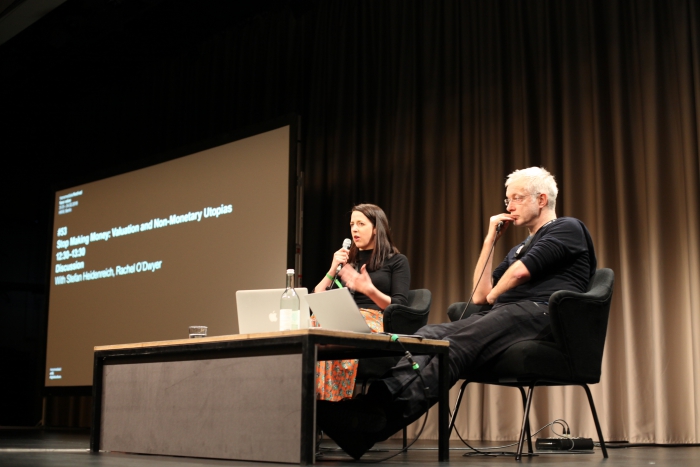
Rachel O’Dwyer is a Lecturer in Digital Cultures at the School of Visual Culture, National College of Art and Design (NCAD), Dublin. She holds a PhD from Trinity College Dublin (2014), an M.Phil. in Music and Media Technologies (2009), a B.A. Honours in Fine Art (Digital Media) from IADT Dun Laoghaire (2006), and a City & Guilds Diploma in Sound Engineering (2007). Her research explores the intersection of digital cultures and cultural economies, focusing on how digital networks transform ownership, value, and production of art, knowledge, and information. She critiques neoliberal logics in blockchain and algorithmic systems, advocating for a return to commons-based models. Education: PhD, Trinity College Dublin (2014): Spectre of the Commons: A Political Economy of Radio Spectrum M.Phil., Trinity College Dublin (2009): Music and Media Technologies B.A. Honours, IADT Dun Laoghaire (2006): Fine Art (Digital Media) City & Guilds Diploma, Sound Engineering (2007) Research Interests: Rachel’s work interrogates money, algorithms, AI, and their implications for cultural production and resistance. She investigates the role of blockchain in crypto-art, freeports, and art markets, while also examining how IoT and 5G reshape payments and surveillance. Her critical lens extends to the political economy of communications, digital value systems, and tactical media strategies like Openhere and D.A.T.A. Scientific Awards: 2018: Fulbright Scholar Award (Blockchain & Art) 2018: RIA Charlemont Scholar Award 2014: SFI Public Engagement Grant 2010-2014: Science Gallery Seed Funding Advising & Grants: Rachel has coordinated modules in the history of creative industries and designed MOOCs on technology and society. She organized the Openhere festival (2012, 2014), Data Politics conferences (2016), and Quantified Self events (2011). Her current book project with MIT Press examines radio spectrum ownership. Labs & Teams: She is a core member of the P2P Foundation’s academic research network and coordinates the Orthogonal Methods Group (OMG) at Trinity College Dublin. She advises the DECODE EU project on data sovereignty and contributes to ADAPT’s Ethics and Privacy Working Group.
Dr. Dan Hassler-Forest is an Assistant Professor in the Department of Media and Culture Studies at Utrecht University, within the Faculty of Humanities. He specializes in cultural theory, media history, and popular culture analysis, particularly focusing on transmedia storytelling and critical race theory. His research examines how social power dynamics manifest in popular media, with a focus on major entertainment franchises like Fast & Furious . He is also a member of the Utrecht Young Academy, an interdisciplinary network for early-career researchers. Background: After completing his PhD at the University of Amsterdam on post-9/11 superhero films, he held positions there before joining Utrecht University in 2015. His teaching covers fan culture, media industries, and critical race theory. Research & Publications: He has authored/co-authored books on topics ranging from science fiction to Janelle Monáe’s Afrofuturism. Ongoing projects include a monograph on the Fast & Furious franchise. His work appears in journals like Science Fiction Film and Television and Adaptation . Public Engagement: A frequent media commentator, he contributes to platforms like The Washington Post and collaborates with cultural institutions such as EYE Film Museum and Impakt. His analyses address contemporary media’s role in political identity formation and societal debates. Awards: Recognized through his Utrecht Young Academy membership, highlighting his interdisciplinary contributions to open societies research.
Dr. Carlos Cotrini Jimenez is a Lecturer at the Department of Computer Science at ETH Zurich, affiliated with the Institute of Machine Learning under Prof. Joachim Buhmann. He holds a PhD in Information Security from ETH Zurich (supervised by Prof. David Basin) and previously worked on infon logic under Prof. Yuri Gurevich. His research focuses on privacy-preserving machine learning, security analysis, and educational methodologies. Education: PhD in Information Security (ETH Zurich), prior work on infon logic. Research Interests: Privacy-preserving technologies, robust machine learning, security compliance analysis, and educational frameworks for complex concepts. His recent work includes developing distributed differentially private algorithms and analyzing cookie notice compliance at scale. He teaches courses on machine learning, software engineering, and AI applications, emphasizing theoretical foundations and practical implementations. Current opportunities include graduate research projects in privacy-preserving ML, security compliance, and robust algorithm development. He leads the Institute of Machine Learning’s educational initiatives and contributes to open-access materials for machine learning education.