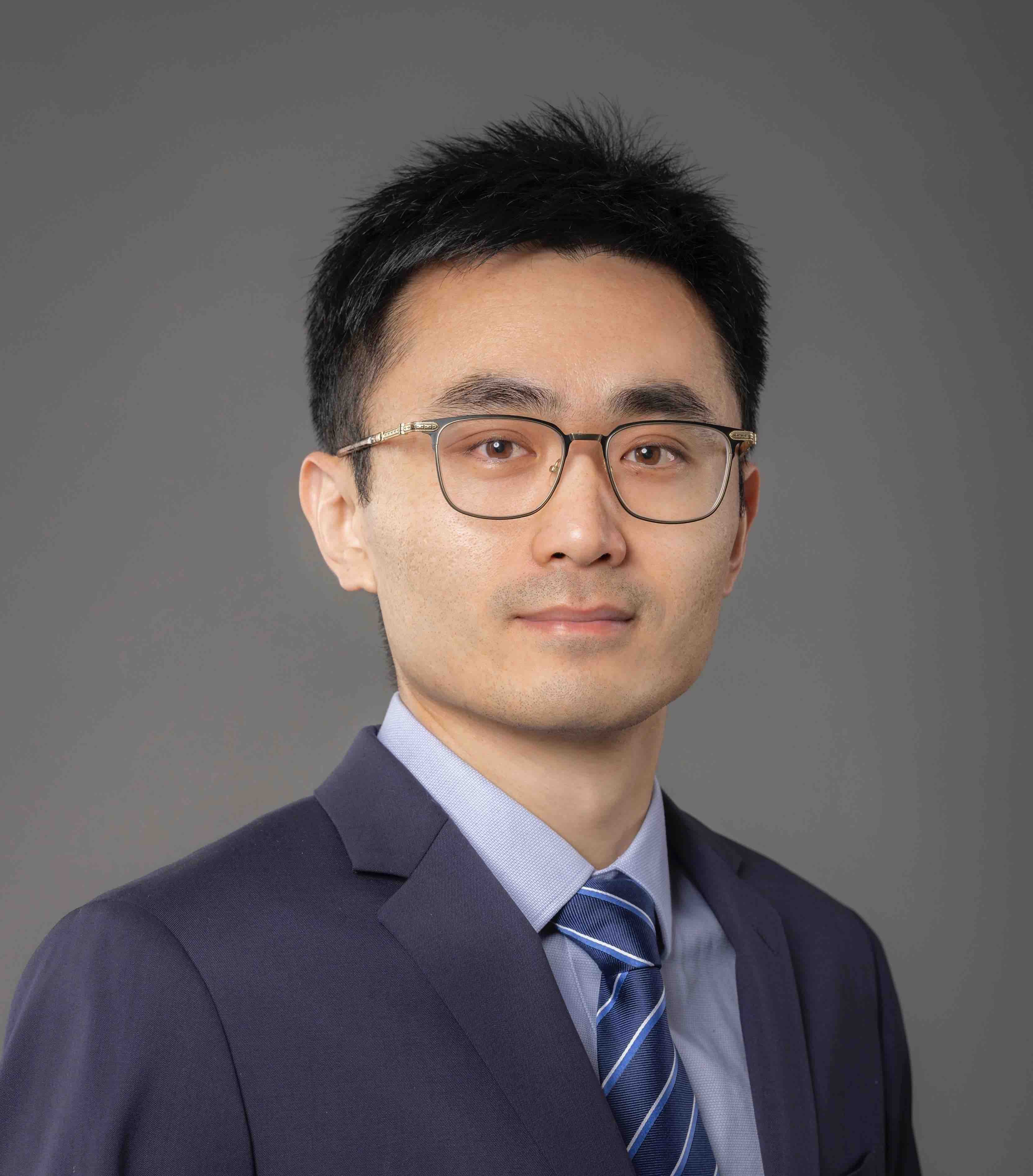
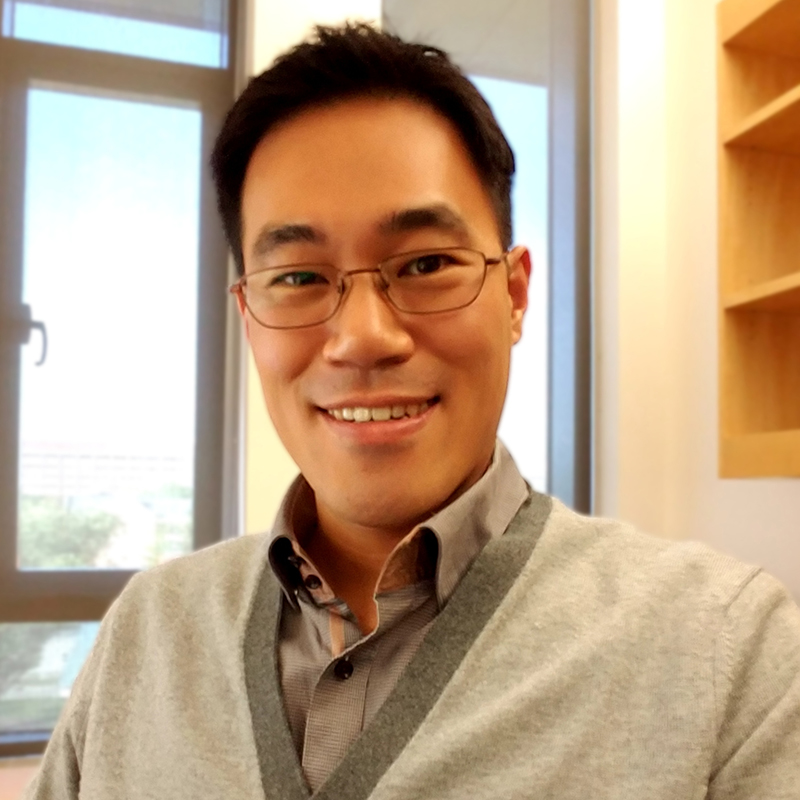
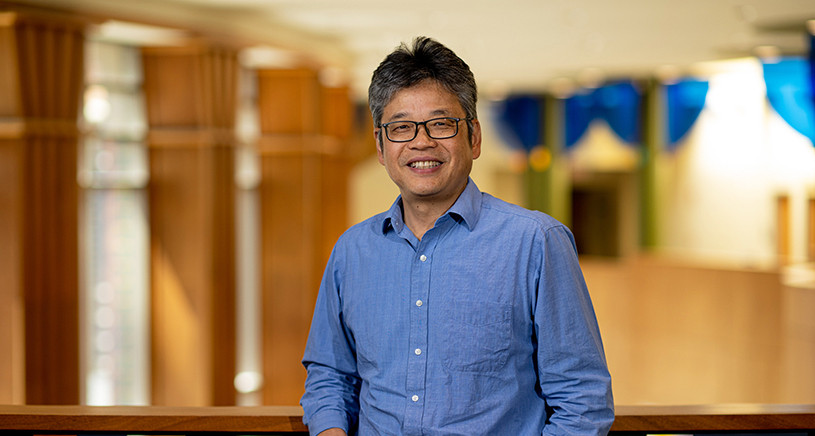
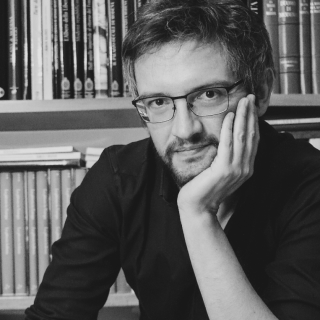
Lirong Xia is a Professor of Computer Science at Rutgers University - New Brunswick and Deputy Director of DIMACS (Center for Discrete Mathematics and Theoretical Computer Science). He holds a Ph.D. in Computer Science from Duke University, an M.A. in Economics from Duke, and a B.E. in Computer Science and Technology from Tsinghua University. His research focuses on the intersection of artificial intelligence, machine learning, and social choice theory, addressing challenges in voting systems, fair division, privacy, and multi-agent systems. Key research areas include algorithmic fairness, computational social choice, and mechanism design. Recent work explores equitable voting rules, privacy-preserving mechanisms, and strategic behavior analysis. Notable publications include advancements in computational social choice and privacy in voting systems. Xia has been recognized with prestigious awards such as the NSF CAREER Award and IEEE’s “AI’s 10 to Watch.” Education: Ph.D. Computer Science, Duke University (2011) M.A. Economics, Duke University (2010) B.E. Computer Science and Technology, Tsinghua University (2004) Awards: NSF CAREER Award Simons-Berkeley Research Fellowship 2018 Rensselaer James M. Tien’66 Early Career Award IEEE Intelligent Systems “AI’s 10 to Watch” Advising: Supervised over 30 students, including PhDs and master’s candidates in AI, algorithms, and social choice theory.
Ling Zhao is a distinguished Professor at the School of Management, Huazhong University of Science and Technology, China, with extensive research contributions spanning artificial intelligence, machine learning, information systems, and biomedical applications. With over 150 publications since 2008, Dr. Zhao has established herself as a leading researcher in multiple interdisciplinary domains, particularly in applying computational methods to solve complex real-world problems. Dr. Zhao's research interests encompass a broad spectrum of cutting-edge topics including artificial intelligence, machine learning, data mining, control systems, and information systems. Her work demonstrates exceptional versatility, bridging theoretical computer science with practical applications in healthcare, transportation, cybersecurity, and business management. Notably, she has made significant contributions to sentiment analysis, medical image processing, algorithmic management, and privacy-preserving data analysis. Her research methodology often combines deep learning approaches with domain-specific knowledge to develop innovative solutions. Analysis of Dr. Zhao's recent publications (2023-2025) reveals a strong focus on interdisciplinary applications of AI, with particular emphasis on healthcare informatics (medical image analysis, disease diagnosis), human-computer interaction (algorithmic management effects), and advanced machine learning techniques (graph neural networks, multimodal learning). Her work shows a consistent trend toward increasingly complex and integrated systems that address real-world challenges across multiple domains. Dr. Zhao has made substantial contributions to academic advising and research mentorship, though specific student names aren't detailed in the available publications. Her research has been supported by various grants enabling work in AI applications, biomedical engineering, and information systems. Dr. Zhao maintains active collaborations with researchers across China and internationally, as evidenced by her co-authorship patterns. While specific laboratory information isn't explicitly mentioned in the publication records, Dr. Zhao appears to lead or be significantly involved in research groups focusing on AI applications in management and healthcare. Her work on medical imaging, sentiment analysis, and control systems suggests involvement in multiple specialized research teams addressing different application domains through computational approaches.
Bohan Chen is a Postdoctoral Scholar Research Associate in the Department of Computing and Mathematical Sciences. Their work focuses on advancing graph-based machine learning techniques and their applications in environmental science, remote sensing, and AI-driven analysis. Research interests include graph neural networks, active learning strategies, hyperspectral image analysis, and knowledge graph integration. Notable contributions include the development of the GLL layer for neural networks, the CUSP permafrost dataset, and hybrid models for multispectral image processing. Key research trends span theoretical advancements in graph-based learning and practical applications such as environmental monitoring, SAR data analysis, and pandemic modeling. Their work bridges computational methodologies with real-world environmental and societal challenges. Advising and grants: No student advisees listed. Contributions include foundational research without explicit grant mentions in provided text. Labs/teams: No specific lab or team affiliations mentioned in the text.
Diego Garlaschelli is a Professor of Theoretical Physics at Leiden University, affiliated with the Leiden Institute of Physics (LION) and the Biological, Soft and Complex Systems department within the Faculty of Science. His research focuses on the structure, dynamics, and physics of complex networks in financial, economic, social, neural, and biological systems. Combining statistical physics, information theory, and data science, his group explores interdisciplinary topics such as systemic risk in financial networks, mesoscopic organization in neural systems, and mathematical modeling of networks using maximum-entropy ensembles. Garlaschelli’s work emphasizes collaboration across fields like mathematics, computer science, economics, and neuroscience. Recent grants include NWO Open Competition funding for projects on network theory and systemic risk. He advises several PhD candidates, including Alessio Catanzaro, Francesca Giuffrida, and Jingjing Wang. His publications span high-impact journals like Nature Physics , Nature Reviews Physics , and Science , addressing topics from ensemble equivalence in networks to cultural diversity models. Key research themes include: (1) statistical physics of constrained systems, (2) financial network reconstruction from limited data, (3) early-warning signals for economic instabilities, and (4) information-theoretic bounds for large data structures. Garlaschelli co-leads the Leiden Complex Network Network (LCN2), fostering Dutch network science collaboration.
Sandrine Dudoit is a Professor and Chair of the Department of Statistics at the University of California, Berkeley. She earned her PhD in Statistics from UC Berkeley in 1999 and joined the faculty in 2001. Her research focuses on statistical methodology and computing with applications to genomics, biomedical research, and precision health. She co-founded the Bioconductor Project , an open-source software initiative for biological data analysis, and leads interdisciplinary projects in single-cell transcriptomics and computational biology. Education: PhD in Statistics (UC Berkeley, 1999), M.Sc. in Mathematics (Carleton University, Canada). Research interests include high-dimensional statistical learning, single-cell RNA-Seq analysis, stem cell differentiation in the olfactory system, and statistical computing. She collaborates with biologists like John Ngai to study neuroepithelial regeneration using cutting-edge sequencing technologies. Recent work emphasizes trajectory inference, biomarker discovery, and methodological advances in handling high-dimensional genomic data. Her lab develops tools for normalization, clustering, and differential expression analysis in large-scale biological datasets. She teaches courses on statistical genomics and serves as a leader in UC Berkeley’s Division of Computing, Data Science, and Society (CDSS). Advising: Supervises PhD students in statistical methodology, computational biology, and bioinformatics. Grants: Active in securing funding for interdisciplinary research projects in genomics and data science. Labs/Teams: Core member of the Center for Computational Biology (CCB) and contributes to the Bioconductor community.
David P. Woodruff is a Professor in the Department of Computer Science at Carnegie Mellon University, part of the Theory Group within the School of Computer Science. He is actively involved in academic leadership roles, including chairing the CATCS (Conference on Theoretical Computer Science) and serving as PC chair for SODA 2024 and ICALP 2022. His research focuses on algorithms, data streams, machine learning, numerical linear algebra, sketching, and sparse recovery. He has been recognized with awards such as the Herbert Simon Award for teaching and the PODS Best Paper Award. Woodruff has advised numerous students and postdocs, including notable scholars like Ainesh Bakshi, Rajesh Jayaram, and Hongyang Zhang. His work often addresses foundational challenges in theoretical computer science, with contributions to distributed computing, streaming algorithms, and privacy-preserving techniques. He has published extensively in top conferences like NeurIPS, ICML, FOCS, and STOC, covering topics ranging from low-rank approximation to adversarial robustness in data streams. His teaching includes courses like Algorithms for Big Data and core algorithms courses, reflecting his commitment to both research and education. Collaborations span academia and industry, with applications in genomics and secure computation. Woodruff is a key contributor to the Foundations of Data Science program at the Simons Institute.
Ivan Viola is an Associate Professor at the Institute of Computer Graphics and Algorithms, part of the Faculty of Informatics at TU Wien, Austria. He holds a leave of absence until December 2024 while also being affiliated with King Abdullah University of Science and Technology (KAUST) as an Associate Professor funded by the Vienna Research Groups program. His research focuses on visualization techniques in medicine, biological sciences, and earth sciences, with a specialty in illustrative visualization and DNA-nanotechnology applications. Viola has contributed over 100 scientific works and serves as a reviewer and panelist for major conferences in computer graphics and visualization. Education: M.Sc. (2002) and Ph.D. (2005) in Computer Graphics from TU Wien. Postdoctoral research at the University of Bergen (2006-2011), where he became Full Professor before returning to TU Wien. Research Interests: Whole-cell visualization Molecular modeling Interactive 3D environments Biomedical visualization Data-driven colormap techniques Awards: IEEE VIS 2017 Best Paper Honorable Mention, 'Best Overall Concept' for CellView, and multiple visualization awards. Active in EuroVis and IEEE VIS organizing roles. Grants & Supervision: Leads the Visualization Group at TU Wien, supervising student projects and master’s theses. Involved in grants like the Vienna Research Groups program. Labs/Teams: Visualization Group at TU Wien, collaborating on projects like CellView and Molecumentary.
Juanita Duque-Rosero is a Research Assistant Professor at Boston University, specializing in computational number theory and arithmetic geometry. She collaborates with Jennifer Balakrishnan on explicit Chabauty methods and triangular modular curves. Her research focuses on rational points on curves, modular curves, and p-adic heights. Education: PhD from Dartmouth College (2023, advised by John Voight), Masters from Colorado State University (2019, advised by Rachel Pries), and undergraduate degree from Universidad de los Andes. Research interests include arithmetic properties of curves, geometric quadratic Chabauty, and computational aspects of modular forms. She has contributed to databases of Hilbert modular surfaces and studies of Artin-Schreier curves. Her recent articles explore invariants of curves, p-adic heights, and geometric methods in number theory. Talks include presentations at CIRM, IPAM, and Texas A&M. Teaching includes courses like Modern Algebra and Graph Theory at Boston University, and calculus courses at Dartmouth and Colorado State. She mentors students in algebraic geometry and number theory through directed reading programs. She advocates for equitable mathematics education through Federico Ardila’s axioms and participates in outreach activities. A creative hobby is mathematical origami, leading a club at Colorado State University.
Yan Huang is an Associate Professor in the Department of Software Engineering and Game Development at Kennesaw State University (KSU). His work bridges Federated Learning (FL) and Cybersecurity Education , with a focus on personalization and privacy in distributed systems. Research spans Machine Learning , Extended Reality (XR) , and Data Privacy . He has served as Editor of WCMC and Program Co-Chair for CyberSciTech 2020-2024. Research Trends: Recent publications emphasize Federated Learning for non-IID data, VR-based Cybersecurity Education , and Privacy-Preserving Algorithms in IoT and social media analytics. Key subfields include personalized learning architectures, graph learning, and game-theoretic privacy frameworks. Scientific Awards: Excellent Paper Award (Tsinghua Science and Technology, 2021) Best Paper Award (Future Generation Computer Systems, 2019) Best Paper Awards at IEEE SmartWorld 2021, COCOA 2019, and WASA 2019 Grants: Led over $600,000 in NSF and NSA-funded projects, including VR cybersecurity education for K-12 and XR engineering curricula. His lab recruits VR/AR Research Assistants via industry partnerships.
Michael Molloy is a Professor in the Department of Computer Science at the University of Toronto, with a cross-appointment to the Department of Computer and Mathematical Sciences at the University of Toronto Scarborough (UTSC). He teaches courses in Discrete Mathematics and the Probabilistic Method, including CSC/MAT A67 and CSC2427/MAT1500 . Research Focus: Graph Theory, Probabilistic Methods, Random Graphs, Constraint Satisfaction Problems, and Markov Chain analysis. His work includes foundational contributions to graph coloring, such as adaptable/conflict coloring and correspondence coloring, and exploring phase transitions in random graphs. He has supervised numerous graduate students, including Lora Hrisch, Jurgen Aliaj, and Hamed Hatami, advancing combinatorial and algorithmic research. Recent publications analyze random graph processes, the freezing threshold for k-colorings, and the resolution complexity of constraint satisfaction problems. These studies intersect theoretical computer science, combinatorics, and probabilistic modeling, often revealing deep structural insights through rigorous mathematical proofs.
Dr. Patrick Park is an Assistant Professor at the Software and Societal Systems Department within Carnegie Mellon University's School of Computer Science. His work bridges computational and social sciences to analyze network dynamics, digital communication, and open source systems. Current position: Assistant Professor Institution: Carnegie Mellon University Department: Software and Societal Systems Park's research focuses on social network analysis, behavioral modeling, and computational sociology. Key contributions include studies on network diversity, geospatial visualization techniques, and digital communication patterns across civilizations. His recent publications (2023-2024) highlight expertise in network visualization, social contagion, and open source innovation. Earlier work spans topics like organizational classification, user behavior paradoxes, and cross-cultural communication networks.
Peter X. K. Song is a Professor in the Department of Biostatistics at the University of Michigan School of Public Health. With expertise spanning statistical methodology development and interdisciplinary applications, Dr. Song maintains active collaborations across Nutritional Sciences, Environmental Health Sciences, Chronic Disease research, and Nephrology. His work bridges theoretical statistics with practical healthcare solutions, focusing on innovative approaches to complex data challenges in public health and medicine. Based at the M4140 SPH II building in Ann Arbor, he leads the Song Lab and contributes significantly to the academic community through teaching, research mentorship, and scholarly publications. PhD, University of British Columbia, Vancouver, 1996 BS, Jilin University, Changchun, 1985 Dr. Song's research focuses on the statistical foundation of big data analytics, with particular emphasis on data integration, distributed inference, high-dimensional data analysis, longitudinal data analysis, mediation analysis, and spatiotemporal modeling. His methodological innovations address critical challenges in smart health applications, including organ exchange programs, children's health, chronic disease management, environmental health assessment, and nutritional sciences. His approach combines statistical theory, integer optimization, and algorithm development to create practical tools that help researchers understand complex relationships between environmental exposures and health outcomes. Dr. Song's publication record demonstrates a consistent trajectory of methodological innovation applied to pressing health challenges. His recent work shows increasing focus on sleep classification using AI techniques, personalized treatment effect analysis, distributed statistical methods for high-dimensional data, and epigenetic applications in adolescent health. The interdisciplinary nature of his research is evident in publications spanning biostatistics journals, computer science venues, and domain-specific medical publications. His work increasingly addresses the challenges of integrating diverse data sources while maintaining statistical rigor in the era of big data. IMS Fellow ASA Fellow Elected Member of the International Statistical Institute 2017 ENAR John Van Ryzin Award Dr. Song has mentored an impressive 22 PhD students and 6 postdoctoral trainees throughout his career, with many now holding faculty positions at prestigious institutions or working as data scientists in leading technology companies. His lab, the Song Lab, currently supports two postdoctoral research fellows and eight doctoral students working on cutting-edge statistical methodology development. His collaborative research extends across numerous grants that support interdisciplinary projects in kidney paired donation programs, environmental health studies, nutritional sciences, and chronic disease research, demonstrating his commitment to translating statistical innovation into practical health solutions. The Song Lab serves as a hub for interdisciplinary statistical research at the University of Michigan, bringing together experts from statistics, operations research, and machine learning to address complex challenges in medical and public health sciences. Current lab members include eight doctoral students and three postdoctoral fellows working on projects related to optimal organ matching strategies, causal mediation pathways of omics biomarkers, and statistical methods for big data integration. The lab maintains strong connections with clinical researchers across nephrology, pediatrics, environmental health sciences, and nutritional sciences, ensuring that methodological developments remain grounded in real-world applications.
Aris T. Pagourtzis is a Professor of Computer Science at the School of Electrical and Computer Engineering of the National Technical University of Athens (NTUA), where he also serves as the Head of the Computer Science Division. He is additionally a Lead Researcher at the Archimedes Research Center, Athena RC. His academic career includes positions at the University of Ioannina, the University of Liverpool, the ETH Zuerich, the University of Athens, and the Athens University of Economics and Business. Education: Diploma in Electrical Engineering (1989) and Ph.D. in Electrical and Computer Engineering (1999), both from the National Technical University of Athens Professor Pagourtzis's research spans multiple areas of theoretical computer science, with particular emphasis on computational complexity, graph algorithms, distributed algorithms, approximation algorithms, network algorithms, cryptography, and counting complexity. His work often bridges theoretical foundations with practical applications in network design, security protocols, and optimization problems. He has developed novel algorithms for problems ranging from community detection in networks to Byzantine fault-tolerant protocols and privacy-preserving voting systems. His recent publications show a continued focus on fundamental algorithmic problems while expanding into newer areas like temporal graph analysis, blockchain applications, and privacy-preserving technologies. There's a clear trend toward addressing real-world challenges through rigorous theoretical frameworks, particularly in distributed systems, secure computation, and optimization under constraints. Professor Pagourtzis has served on program and organizing committees for numerous theoretical computer science and cryptography conferences, co-chairing CIAC 2017 and FCT 2021. His research has received funding from diverse sources including US, UK, French, EU, and Greek national resources. He is actively involved in teaching both undergraduate and graduate courses at NTUA, including Algorithms and Complexity, Foundations of Computer Science, Computational Cryptography, and Network Algorithms and Complexity. He leads the Computation and Reasoning Laboratory (corelab) at NTUA, which focuses on theoretical computer science research.
Fabio Furini is an Associate Professor at the Department of Computer Science, Automatics, and Management (DIAG) at Sapienza University of Rome since September 2021. Prior to this position, he served as a CNR researcher at IASI-CNR in Rome (2020-2021), Maître de Conférences at Université Paris-Dauphine, France (2013-2019), postdoctoral researcher at Université Paris-13, France (2012-2013), and research fellow at the University of Bologna (2011-2012). His educational background includes a Ph.D. in Control Engineering and Operations Research from the University of Bologna in 2011. He further obtained the Habilitation à Diriger des Recherches (HDR) in France in 2017 and the National Scientific Qualification for Full Professor in Operations Research in Italy in 2019. Fabio Furini conducts theoretical and methodological research on Combinatorial Optimization and Operations Research. His primary focus is on developing exact algorithms based on decomposition and reformulation techniques for integer linear programming problems. His research spans various applications including network optimization, graph theory, and combinatorial problems such as the maximum clique problem, bin packing problem, and vertex separator problem. His work often bridges theoretical developments with practical applications in transportation, logistics, and network security. His recent publications demonstrate a strong focus on exact algorithms for combinatorial optimization problems, particularly in network interdiction, bin packing with temporal constraints, and graph-based problems. His work consistently combines integer programming techniques with combinatorial search methods to develop novel formulations and efficient solution approaches that advance the state-of-the-art in these domains. Among his notable scientific awards are the Prime d'encadrement doctoral et de recherche (PEDR), which he received annually from 2014 to 2020, recognizing him among the top 15% of researchers in the French university system. He also holds the prestigious Habilitation à Diriger des Recherches from France (2017) and the National Scientific Qualification for Full Professor in Operations Research from Italy (2019). Fabio Furini has been actively involved in supervising PhD students and has served as principal investigator for numerous national and international research projects. His extensive network includes over 60 co-authors across European and American universities. He is also a member of the editorial boards for three prestigious international journals: Omega, Annals of Operations Research, and Discrete Applied Mathematics. His research activities include collaborations with various institutions across Europe and the United States, including Imperial College London and the University of Colorado. These collaborations have resulted in a robust research program focused on advancing the theoretical foundations and practical applications of combinatorial optimization.
Shuangping Li is an Assistant Professor in the Department of Statistics and Data Science at Yale University. She was previously a Stein Fellow in the Department of Statistics at Stanford University (2022–2025). Her research lies at the intersection of probability theory, high-dimensional statistics, theoretical machine learning, and the theory of algorithms. Ph.D. in Applied and Computational Mathematics, Princeton University (2022) B.Sc. in Mathematics, University of Hong Kong Her research interests include probability theory , high-dimensional statistics , theoretical machine learning , and theory of algorithms . She investigates foundational aspects of random constraint satisfaction problems, neural networks, spectral methods, and phase transitions in high-dimensional models. Her work often draws from statistical physics and combinatorics to explain algorithmic behavior. The recent articles highlight a strong focus on binary perceptrons , clustering in network models , and algorithmic phase transitions . Keywords across publications include probability, theoretical computer science, machine learning, and statistical inference. Subfields reveal deep engagement with spin glass theory, discrepancy minimization, spectral embedding, and information-computation gaps. Scientific awards include: Stein Fellow, Department of Statistics, Stanford University (2022–2025) She has advised and taught at both Stanford and Yale, including courses such as Advanced Probability , Theory of Probability , and Stochastic Processes . She has organized seminars at Stanford and has delivered invited talks at institutions including Cornell, Duke, UC Berkeley, and Princeton. Her collaborative research involves prominent scholars such as Allan Sly, Emmanuel Abbe, and Tselil Schramm. There is no mention of external grants, but her postdoctoral fellowship suggests research funding support. She is involved in academic service through organizing the Stanford Statistics and Probability Seminars. She maintains an active research presence with publications in top venues like STOC, FOCS, COLT, ICLR, and journals such as Annals of Probability and Annals of Statistics .