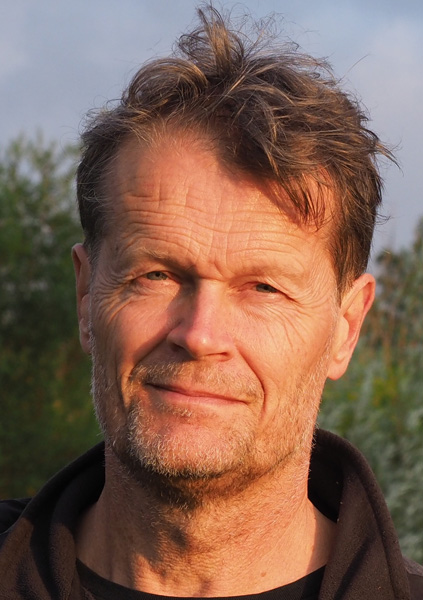
Diana Marin is a PostDoc Researcher at TU Wien's Institute of Visual Computing & Human-Centered Technology. She holds a BSc, MEng, and Dr.techn. (PhD) in technical fields. Her research focuses on computational geometry, point cloud processing, and distributed computing for large-scale datasets. She has contributed to projects like Distributed Surface Reconstruction and RE:STOCK INDUSTRY. Education: BSc, MEng, Dr.techn. (PhD) Her work emphasizes curve and surface reconstruction from unorganized point clouds, leveraging proximity graphs and distributed computational methods. Key projects include optimizing surface reconstruction for massive datasets and developing parameter-free algorithms for connectivity analysis. Her publications span topics like SING neighborhood graphs, Riemannian manifold curve reconstruction, and distributed processing techniques. She collaborates on projects such as PostDisaster and Mixed Reality Lab.
Pavel Pevzner is the Ronald R. Taylor Chair and Distinguished Professor of Computer Science at the University of California, San Diego (UCSD). He also serves as a Howard Hughes Medical Institute Professor and directs the NIH National Technology Center for Computational Mass Spectrometry. Education: B.S. from Moscow Technological Transport Institute (1979), Ph.D. from Moscow Institute of Physics and Technology (1988). His research spans genomic rearrangement algorithms , de novo sequencing , proteomics , and computational mass spectrometry . Notable contributions include the SPAdes genome assembler, algorithms for sorting signed permutations by reversals, and methods for top-down proteomics. Recent publications highlight advancements in single-cell genome assembly (2016) and synthetic long-read processing (2013), alongside foundational work in DNA fragment assembly (2001) and tandem mass spectrometry (1999). Scientific Awards: ACM Fellow (2010), ISCB Fellow (2012), RECOMB Test of Time (2013), ACM Kanellakis Theory and Practice Award (2019). He has advised 28 doctoral/postdoctoral students, including professors at Harvard, Princeton, and UCSD, and co-founded Coursera's Bioinformatics Specialization (2015). His editorial roles include executiv editor of the Journal of Computational Biology.
Zhang Yan is a Full Professor at the Department of Informatics, University of Oslo, Norway. He previously served as Head of Department and Chief Scientist at Simula Research Laboratory (2014–2016). His research focuses on advanced communication technologies including Internet of Things (IoT), 5G/6G networks, mobile edge computing, and blockchain applications. He has held significant roles such as IEEE VTS Distinguished Lecturer (2016–2020) and Chair of IEEE TCGCC (2019–2021). His honors include IEEE Fellow (2020), election to Academia Europaea (2020), and recognition as a Web of Science Highly Cited Researcher (2018–2019). Research interests span interdisciplinary areas like network dynamics, socio-economic systems, and algorithmic design. His work bridges theoretical foundations with practical applications in smart grids, vehicular networks, and global trade systems. Recent publications emphasize network science methodologies applied to economic complexity and information diffusion. Professional contributions include editorial roles for top journals and leadership in EU-funded projects. His awards reflect impactful contributions to both technical innovation and scientific leadership in informatics and communications.
Professor Wenfei Fan is a Chair of Web Data Management at the University of Edinburgh since 2006. He holds adjunct roles at Huawei Edinburgh Research Laboratory and the International Research Center on Big Data at Beihang University. His research focuses on database systems, theory, big data, data quality, and constraint applications. He is a Fellow of the ACM and Royal Society of Edinburgh, and recipient of the ERC Advanced Grant (2015). His work includes foundational contributions to XML constraints, data quality management, and graph databases, with over 160 top-tier publications and 8 patents. Education: BSc and MSc from Peking University (1985, 1988); PhD from the University of Pennsylvania (1999). Professional Roles: Editor for TODS, TCS, VLDBJ, and TBD; PC Chair for PODS, CIKM, APWeb, and others. Key awards include the Roger Needham Award (2008), Yangtze River Scholar (2007), and multiple best paper awards at SIGMOD, PODS, VLDB, and ICDE. He has led over 15 grants totaling €6M and advised students who all received top conference awards. His labs and initiatives drive industry collaboration, with deployed solutions at Huawei for big data query optimization.
Michael Krivelevich is a Full Professor at the School of Mathematical Sciences, Tel Aviv University, holding this position since 2005. He previously served as Associate Professor (2002-2005) and Senior Lecturer (1999-2002) at the same institution. From 2015 to 2020, he acted as Dean of the Faculty of Exact Sciences at Tel Aviv University. Research Interests: Probabilistic and extremal combinatorics Random structures Applications of combinatorics to computer science Scientific Contributions: Authored two books: Positional Games (2014) and Random Graphs, Geometry and Asymptotic Structure (2016) Published over 200 research papers in combinatorics and related fields Editor-in-Chief of the Journal of Combinatorial Theory Series B (JCTB) Recognitions: Clay Lecturer (2019) Fellow of the American Mathematical Society (2017) Invited Speaker at ICM (2014) Pazy Memorial Award (2007) Academic Leadership: Dean of Faculty of Exact Sciences (2015-2020) Supervised 9 PhD and 16 MSc students at Tel Aviv University
Dr. Martin Loidl is a researcher in Geoinformatics at the University of Salzburg's Department of Geoinformatics - Z_GIS, part of the Faculty of Digital and Analytical Sciences. His work focuses on GIS applications in mobility, urban planning, and cartography. Key projects include developing tools like NetAScore for assessing bikeability and walkability, and frameworks for analyzing transportation networks. He has authored over 75 publications, with recent work emphasizing spatial analysis for sustainable urban mobility. His research integrates agent-based modeling, spatial data science, and real-world transportation challenges. Education: Dr., MSc in Geoinformatics. Key Projects: GISMO Study on active commuting, Bike Sharing System Planning, Digital Twins for Urban Sustainability. Research Interests: GIS and mobility optimization, cartography, agent-based simulations, and spatial data science for urban planning. His contributions include software tools like NetAScore and frameworks for bicycle infrastructure analysis. Grants & Awards: Secured funding from various research initiatives; part of interdisciplinary teams addressing urban mobility challenges. Labs/Teams: Mobility Lab | UNIGIS, collaborating on projects like the Bicycle Observatory and spatial network analysis.
Stefan Rass is a Professor at the Institute of Networks and Security within the Faculty of Engineering & Natural Sciences at Johannes Kepler University Linz (JKU), where he leads the LIT Secure and Correct Systems Lab. As Principal Investigator for FFG-funded projects including reSilienz (digital supply chain resilience, 2023–2025) and ITPUK (AI signature verification, 2022–2024), he bridges theoretical game theory with practical cybersecurity solutions for critical infrastructures and robotics systems. His research spans game-theoretic security models (patrolling games, defense-in-depth strategies), quantum cryptography (QKD network architectures), and cyber deception frameworks like Honeyquest for measuring honeypot effectiveness. Recent work addresses robotics security benchmarking (RobotPerf), cryptographic instruction chaining for control flow protection, and risk assessment methodologies for interdependent infrastructures. His mathematical decision-making approach integrates bounded rationality and stochastic modeling to solve real-world security challenges. Professor Rass actively shapes the field through program committee roles (ARES 2023), peer reviews, and invited talks on security transparency. His current projects focus on cost-benefit-aware monitoring for cyber-physical systems and quantum key distribution standardization, reflecting Austria’s strategic priorities in digital resilience. The LIT Secure and Correct Systems Lab under his direction develops foundational theories while deploying tools for industrial applications, particularly in critical infrastructure protection and secure robotics workflows.
Thomas Gärtner is a Professor at the Institute of Logic and Computation within the Faculty of Informatics at Vienna University of Technology, leading the Machine Learning research group (E194-06). His work bridges theoretical machine learning with practical applications in chemistry, biology, and network analysis. His primary research focuses on graph neural networks (GNNs) and geometric deep learning, with significant contributions to GNN expressivity, graph transformations, and kernel methods for structured data. He explores fundamental questions about the limitations of message-passing architectures while developing practical enhancements like path-based extensions and expectation-complete representations. His chemical informatics work applies these techniques to binding affinity prediction, reaction classification, and solvent selection, demonstrating real-world impact in computational chemistry. Analysis of his 15 most recent publications (2023-2025) reveals three dominant research thrusts: theoretical GNN advancements (35% of articles), chemical informatics applications (40%), and novel learning frameworks (25%). The theoretical work increasingly addresses expressivity limitations through graph transformations and path-based approaches, while chemical applications show growing sophistication in molecular representation. Recent publications also indicate expanding interest in foundation models for graphs and robustness verification. He actively supervises master's students including Fabian Traxler (binding affinity prediction), Maximilian Plattner (SGD optimization), Fabian Jogl (graph transformations), and Thomas Schmied (reinforcement learning). His research is conducted through the Network Lab at TU Wien, where he serves as Principal Investigator for the Structured Data Learning with Generalized Similarities project.
Stefan Lengauer is a Senior Researcher at the Institute of Visual Computing (IVC), Graz University of Technology. His work bridges cultural heritage analysis and health informatics through advanced visualization techniques. PhD in Computer Science (2022), Graz University of Technology MSc in Space Sciences (2018), TU Graz BSc in Computer Science (2014-2022) and Aviation (2015), FH JOANNEUM Research focuses on visual analytics , 3D object retrieval , and cross-modal search , with applications in: Medical domains (diabetes care, health information systems) Cultural heritage (pottery analysis, fragment matching, digital restoration) Pattern recognition (geometric motifs, surface textures) Recent publications highlight trends in adaptive visualization (2024-2025) and 3D cultural heritage analysis (2021-2023). Key projects include: HEREDITARY (2024-present): HORIZON Europe project on gut-brain interaction A+CHIS (2020-present): FWF research group on adaptive health information systems CrossSAVE-CH (2019-2022): Cross-modal search in cultural heritage Scientific recognition includes: Best Challenge Entry (2024) Honorable Mention (2020) PhD distinction (2022) Mentored 12+ students in topics ranging from medical chatbots to 3D pottery analysis . Reviewing activities span journals like Springer Nature and conferences including WSCG.
Hsiang-Yun Wu is a Research Fellow at the Computer Graphics department of Vienna University of Technology (TU Wien), actively contributing to information visualization and visual analytics. Her work spans biological network visualization, graph drawing, schematic network maps, and data physicalization, with a focus on interactive techniques and human-centric design. Projects: ArtVis (2022–2027) , SANE (2024–2027) , SMGV-Esprit (2024–2027) , and HumAlgo (2018–2023) . Affiliations: Member of the Visualization Group at TU Wien. Her recent publications emphasize uncertainty visualization, network physicalization, and dynamic graph representations. Notably, she received the EuroVis 2019 Honorable Mention Award for optimizing stepwise animations. Wu supervises diploma theses in areas like metabolic pathway visualization and semantic-aware character animation. Key research trends include integrating biological data with urban-style schematic maps ( Metabopolis ), physicalization workflows for anatomical education ( Slice and Dice ), and mixed labeling strategies in 3D environments.
Andreas Manfred Pointner is an Assistant Professor at FH Hagenberg , specializing in interdisciplinary research at the intersection of computer science, healthcare informatics, and software engineering. He leads research in graph databases, process mining, and attribute grammars with applications in healthcare IT and automated data systems. His affiliations include the Web Intelligence and Innovation Laboratory , AIST Center of Excellence , and Medical Engineering/TIMed Center . He has contributed to projects such as RiskAI (risk management in enterprises), PASS (plan analysis automation), and REPO (radiology e-health platforms). Research Interests: Graph database optimization, interoperability in healthcare systems (HL7 standards), fuzzing techniques for software testing, and process mining for audit event analysis. His work bridges theoretical formal methods with practical applications in clinical workflows and automated data cleansing. Notable Contribution: Developed a graph transformation framework for complex data structures Recipient of the Best Paper Award 2022 for contributions to intelligent systems Collaborative Projects: Focus on AI-driven solutions for enterprise risk management and healthcare interoperability He actively participates in international conferences and has supervised projects involving 3D model analysis, contour extraction, and global disease monitoring systems.
Reinhard Pichler is a Full Professor at the Vienna University of Technology (TU Wien), affiliated with the Faculty of Informatics and the Department of Databases and Artificial Intelligence . His research focuses on Database Theory , Computational Logic , and Parameterized Complexity . He leads multiple research projects like DeConquer (2023–2027) and HyperTrac (2018–2022), addressing challenges in query optimization and hypergraph decompositions. He holds the prestigious START Prize (2014–2022) for young researchers. His work spans theoretical foundations (e.g., hypertree decompositions) and practical applications (e.g., SPARQL query processing systems like SparqLog). He contributes to academic governance, serving on faculty councils and curriculum commissions. His research innovations bridge algorithmic theory and real-world database systems, emphasizing efficient query evaluation and tractability analysis. Key contributions include advancing fractional hypertree decompositions , SPARQL query optimization , and consistent query answering . His projects often involve collaborations with industry and international funders like the Austrian Science Fund (FWF) and Vienna Science and Technology Fund (WWTF). He actively publishes in top venues like Journal of the ACM , ACM Transactions on Database Systems , and Proceedings of the VLDB Endowment . His academic leadership extends to course design, teaching advanced topics like Complexity Theory and Theoretical Computer Science . He mentors doctoral students and oversees research teams exploring cutting-edge areas like uncertain databases and cloud-based computational social choice .
Johannes Peter Wallner is an Associate Professor at Graz University of Technology (TU Graz), working in the Institute of Software Engineering and Artificial Intelligence within the Faculty of Computer Science and Biomedical Engineering. He leads the Knowledge Representation and Reasoning (KRR) research group and has previously been a researcher at TU Wien's DBAI group and the Constraint Reasoning and Optimization group at the University of Helsinki. Dr. Wallner's research focuses on knowledge representation and reasoning, artificial intelligence, argumentation, abduction, belief change, inconsistency handling and measurement, computational social choice, computational complexity, Boolean satisfiability, and answer set programming. His work bridges theoretical foundations with practical applications, particularly in developing computational models for argumentation systems. He has made significant contributions to structured argumentation frameworks, including assumption-based argumentation and ASPIC+. His recent publications demonstrate a strong trend toward advancing algorithmic approaches to probabilistic argumentation, abstraction techniques in argumentation systems, and applications of argumentation in domains like healthcare. He has been particularly active in exploring the computational complexity of various argumentation semantics and developing efficient algorithms for reasoning tasks. Dr. Wallner has received multiple prestigious awards including being selected for the IJCAI 2024 Early Career Track (only 12 researchers globally selected), being named a Top Scholar by ScholarGPS in 2024 (top 0.5% worldwide in AI), and receiving the AI 2000 Most Influential Scholar Honorable Mention in Knowledge Engineering in 2021 and 2022. As Principal Investigator, Dr. Wallner has secured significant research funding from the Austrian Science Fund (FWF), including two major projects: "A Novel Computational Workflow for Argumentation in AI" (grant P 35632, 358,848 €) and "Extending Belief Change to Advance Dynamics in Argumentation" (grant P30168-N31, 353,438 €). He is highly active in the academic community, serving on program committees for major AI conferences including AAAI, IJCAI, KR, and ECAI, and was a member of the Program Committee Board of IJCAI (2022-2024). He leads the Knowledge Representation and Reasoning (KRR) research group at TU Graz, which develops both theoretical foundations and practical implementations for computational argumentation systems. The group has contributed to several software systems including CEGARTIX (a SAT-based argumentation system), Vispartix (visualization of argumentation frameworks), ADFsys (an ASP-based argumentation system for abstract dialectical frameworks), and others that implement various argumentation frameworks.
Aad van der Vaart is a distinguished Professor of Statistics at Delft University of Technology (since 2021). Previously, he held Full Professorships at Leiden University (2012–2021) and Vrije Universiteit Amsterdam (1996–2012). His research focuses on foundational statistical theory and applications, including high-dimensional statistics, Bayesian methods, inverse problems, and genomics. He has made seminal contributions to nonparametric Bayesian inference, empirical processes, and semiparametric theory. Van der Vaart has authored influential textbooks such as Asymptotic Statistics (1998) and Fundamentals of Nonparametric Bayesian Inference (2017, with S. Ghosal). His work bridges theoretical rigor and practical applications, with over 34,830 citations (Google Scholar, 2023) and an H-index of 60. Key honors include the Spinoza Prize (2015, Netherlands’ highest science award), DeGroot Prize (2020), and membership in the Royal Netherlands Academy of Sciences. His academic journey includes roles such as Miller Fellow at UC Berkeley (2000), visiting positions at leading universities, and leadership in statistical societies. His research group actively explores modern challenges in statistical theory and methodology, including causal inference, adaptive estimation, and large-scale data analysis. Notable grants include an ERC Advanced Grant (2012) for Bayesian inverse problems. Collaborations span academia and industry, emphasizing interdisciplinary impact. While specific lab affiliations are not explicitly stated, his work is rooted in foundational mathematical statistics with broad applicability.
Robert F. Tichy is a Professor at the Institute of Analysis and Number Theory , Graz University of Technology, Austria. His career spans over four decades with significant contributions to Diophantine equations , uniform distribution , and quasi-Monte Carlo methods . He has held multiple editorial board positions and administrative roles , including Dean of the Faculty of Mathematics, Physics and Geodesy (2018-2019). Research Interests : Uniform distribution, Diophantine equations, algorithmic number theory, fractal structures, quasi-Monte Carlo methods, and mathematics in finance/insurance. Awards : Austrian Mathematical Society award (1985), Honorary Doctorate (University of Debrecen, 2017), Jean-Morlet Chair (2020), and memberships in prestigious societies. Publications : Over 200 papers with recent works (2024) focusing on Diophantine problems , pseudorandom sequences , and Carlitz coefficients . Teaching : Regular courses for engineering and mathematics students, including annual lectures on insurance mathematics .