Yiannis GiannakopoulosView profile
Senior Lecturer
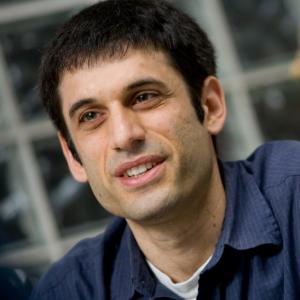
Yiannis Giannakopoulos is a Senior Lecturer (equivalent to Associate Professor) in Algorithms and Complexity at the University of Glasgow and a Turing Fellow. He previously held faculty positions at FAU Erlangen-Nürnberg and TU Munich, and was a postdoctoral researcher at TU Munich and the University of Liverpool. PhD (DPhil) in Computer Science, University of Oxford, advised by Elias Koutsoupias MSc in Logic, Algorithms and Computation (MPLA), University of Athens BSc in Mathematics, University of Athens His research centers on algorithms, complexity, and optimization, with a strong emphasis on algorithmic game theory. Key topics include auction design, mechanism design, equilibrium computation, congestion games, and computational economics. His work bridges theoretical computer science and economic theory, focusing on the algorithmic aspects of strategic behavior. The recent publications highlight a consistent focus on equilibrium computation in auctions and congestion games, optimal mechanism design, and complexity analysis. Trends include smoothed complexity, approximation algorithms for equilibria, robust revenue maximization, and structural analysis of inefficiency in games. His work frequently appears in top venues such as EC, SAGT, ICALP, SICOMP, and MOR. Scientific Awards: Best Paper Award at ICALP 2015 for 'Selling Two Goods Optimally' He is actively supervising PhD students, including Johannes Hahn, and has mentored several others such as Charalampos Kokkalis and Alexander Grosz. He is involved in academic service, including organizing the 1st UK Workshop for Junior Researchers in Economics and Computation (2025) and serving on the program committee of SAGT 2025. PhD positions are currently available with funding for UK students. He is affiliated with research groups in Algorithms & Complexity and has collaborated extensively with leading researchers in the field, including Aris Filos-Ratsikas, Elias Koutsoupias, and Diogo Poças. His work is supported by institutions such as the Simons Foundation.