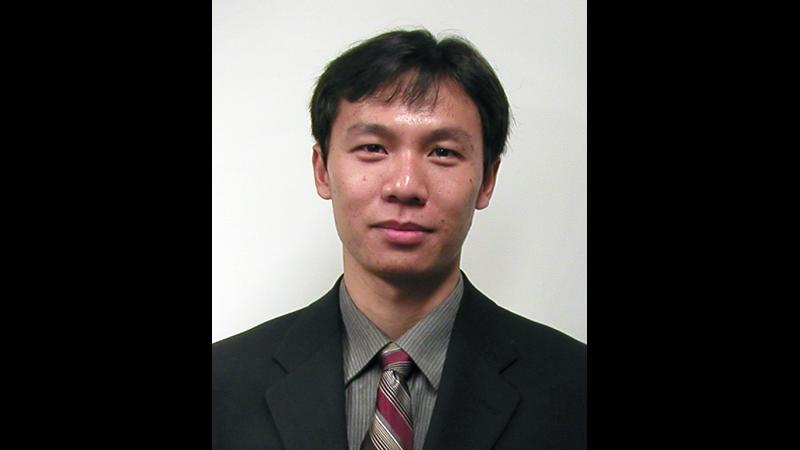
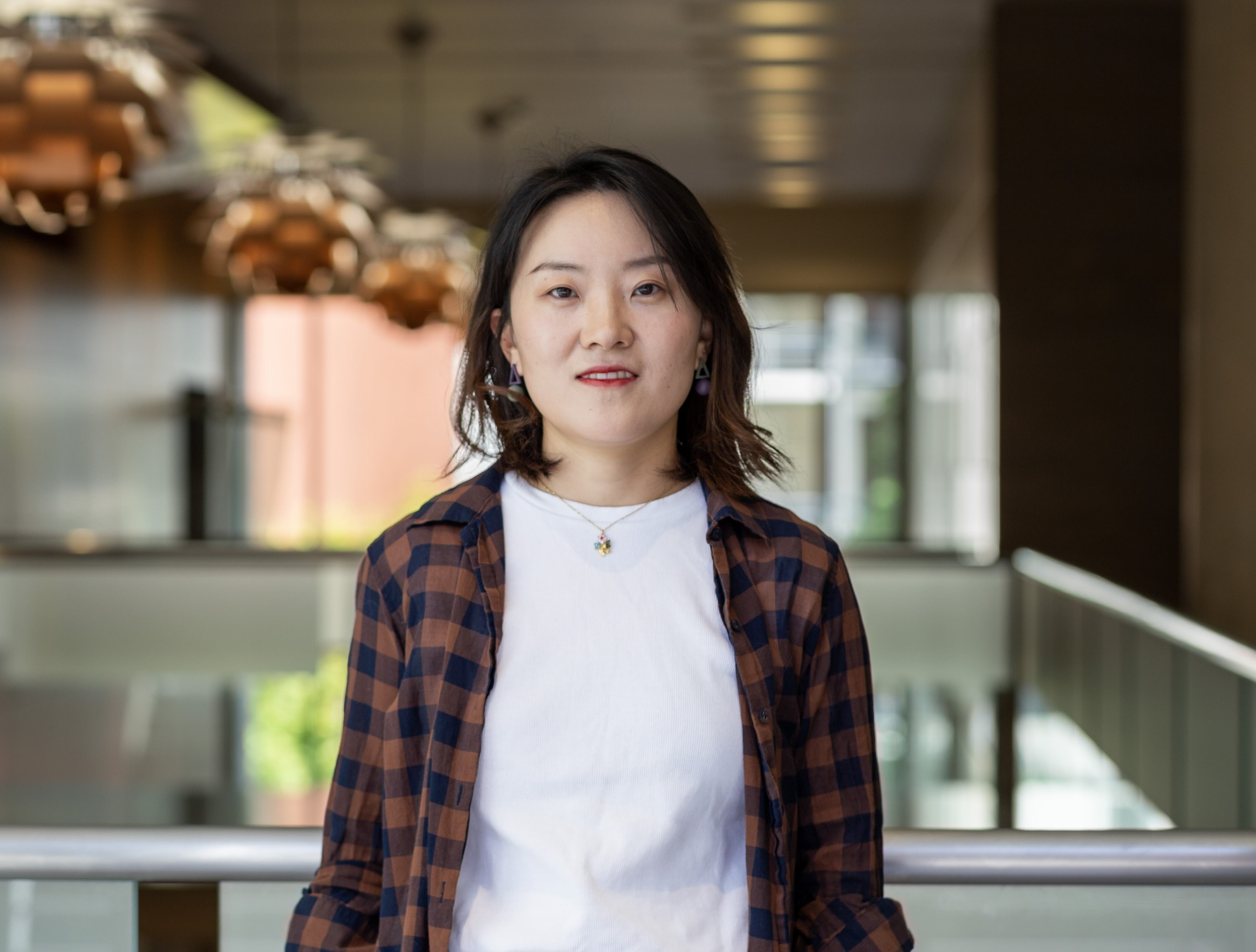
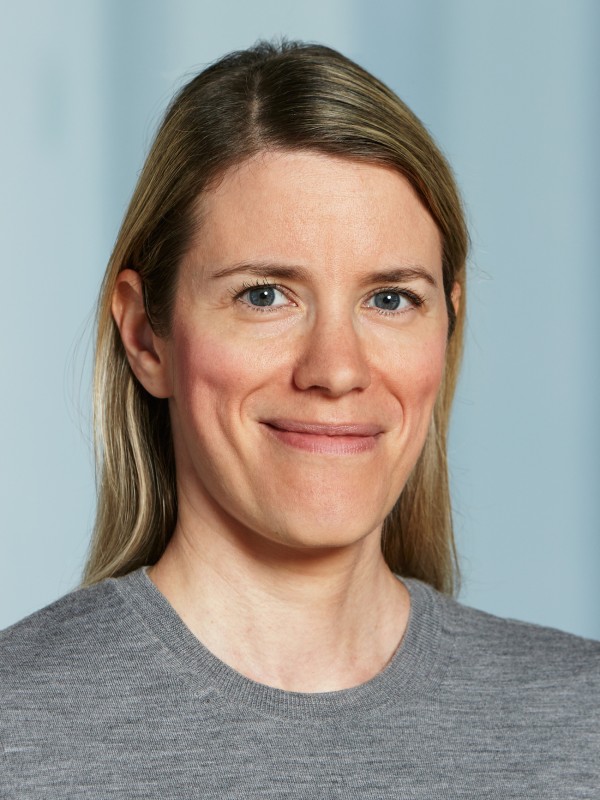
Yu-Ru Lin is an Associate Professor at the School of Computing and Information, University of Pittsburgh, and serves as Research & Academic Director at the Institute for Cyber Law, Policy and Security (Pitt Cyber). She leads the Pitt Computational Social Dynamics Lab (PICSO Lab) and holds secondary appointments in Political Science, Computer Science, and the Intelligent Systems Program. PhD in Computer Science from Arizona State University Postdoctoral research at Harvard University and Northeastern University Her research focuses on computational approaches for: Networked social dynamics High-dimensional social information summarization Trust and distrust propagation Misinformation detection Policy diffusion analysis Recent publications span 2014-2020, covering: Social media crisis response Graph visualization techniques Policy diffusion patterns Misinformation mitigation Temporal topic modeling Scientific support includes: National Science Foundation (NSF) awards Minerva/ONR funding AFOSR grant for distrust modeling DARPA Understanding Group Biases program As director of PICSO Lab, she leads interdisciplinary research teams on: Digital accountability Urban mobility patterns Health informatics via crowdsourcing Trust-influence dynamics
Kevin D. Ashley is a Professor of Law at the University of Pittsburgh School of Law. He is also a senior scientist at the Learning Research and Development Center and an adjunct professor of computer science at the University of Pittsburgh. His interdisciplinary work bridges artificial intelligence, legal analytics, and ethical reasoning. JD, Harvard Law School M.A. and PhD, University of Massachusetts BA, Princeton University His research focuses on computational modeling of legal reasoning , AI and ethics , legal text analytics , and case-based reasoning . He has pioneered AI applications for legal decision support, automated argumentation, and bias detection in legal corpora. Recent publications include studies on large language models in legal annotation, argument mining, and empirical legal analysis. His work has been supported by multiple National Science Foundation grants, emphasizing fairness in AI and access to justice. 2022 Codex Prize for Computational Law 2015 University of Massachusetts Outstanding Achievement Award 2002 AAAI Fellow for AI in Law contributions 2000 Chancellor’s Distinguished Research Award A former President of the International Association for Artificial Intelligence and Law, Ashley has held visiting roles at the University of Bologna, Stanford CodeX, and IBM Watson Research Center. He co-edits the journal Artificial Intelligence and Law and teaches courses on applied legal analytics.
Antonio Rangel is the Bing Professor of Neuroscience, Behavioral Biology, and Economics at the California Institute of Technology (Caltech), where he also serves as Head Faculty in Residence. He is a faculty member in the Division of Humanities and Social Sciences (HSS) with research focusing on the computational and neurobiological basis of value-based decision-making. Dr. Rangel received his educational training at prestigious institutions: B.Sc. from Caltech in 1993 M.S. from Harvard University in 1996 Ph.D. in 1998 Professor Rangel's research lies at the intersection of neuroscience, economics, and psychology, with a focus on understanding how the brain makes decisions. His work investigates the neural mechanisms underlying value computation, choice processes, self-control, and social decision-making. Using a multidisciplinary approach that combines functional magnetic resonance imaging (fMRI), eye-tracking, computational modeling, and behavioral experiments, his lab has made significant contributions to the field of neuroeconomics. His research has revealed how value signals are represented in the brain, how attention influences choice, and the neural basis of self-control failures. Professor Rangel has pioneered methods for studying decision processes with high temporal resolution using eye-tracking data, demonstrating how fixation patterns relate to value computations and choice outcomes. His work spans from theoretical frameworks of value-based decision-making to practical applications in behavioral public economics. Professor Rangel's work has been recognized with prestigious awards: 2019 NOMIS Distinguished Scientist Award 2018 Fellow of the Association for Psychological Science As an academic leader, Professor Rangel has mentored numerous students and researchers who have gone on to make their own contributions to neuroscience and economics. His lab, the Rangel Neuroeconomics Laboratory at Caltech, serves as a hub for interdisciplinary research, bringing together students and scholars from neuroscience, economics, psychology, and computer science. The lab has received significant funding to support its research on the neural basis of decision-making, including support from the NOMIS Foundation. The Rangel Neuroeconomics Laboratory is equipped with state-of-the-art facilities including fMRI analysis capabilities, eye-tracking systems, and computational resources for modeling decision processes. The lab fosters a collaborative environment where researchers apply methods from experimental economics and cognitive neuroscience to unravel the complexities of human decision-making.
Xiangyu Zhang is the Samuel D. Conte Professor of Computer Science at Purdue University. He specializes in AI security, software analysis, and cyber forensics, with a focus on detecting vulnerabilities in traditional software and AI systems. His research includes dynamic slicing, program profiling, and securing AI models against backdoors. He has led projects funded by DARPA, IARPA, NSF, and industry, securing over $13 million in grants. He has mentored 30+ PhD students and postdocs, many of whom hold academic positions or industry roles. His work has been recognized with awards like the ACM SIGPLAN Distinguished Dissertation Award and NSF Career Award. Education: PhD, Computer Science, University of Arizona (2006) MS & BS, Computer Science, University of Science and Technology of China (2000 & 1998) Research Interests: AI Security: backdoor detection, adversarial attacks, model integrity Program Analysis: dynamic slicing, static/dynamic debugging Cyber Forensics: log analysis, attack investigation Software Reliability: fault localization, vulnerability detection Key Projects: DARPA V-SPELLS: domain-specific program analysis IARPA TrojAI: AI backdoor detection competitions NSF-funded research on model debugging and co-reasoning of software/NL artifacts Awards & Recognition: Top performer in IARPA TrojAI competitions (13/18 rounds) ACM SIGPLAN Distinguished Dissertation Award (2006) NSF Career Award (2009) Ranked 8th globally in systems research productivity (2024) Career Contributions: Secured over $13M in research funding Guided 25 PhDs and 8 postdocs Published 89+ top-tier papers (2014–2024)
Jieyu Zhao is an Assistant Professor in the Thomas Lord Department of Computer Science at the University of Southern California (USC), part of the Viterbi School of Engineering. She holds a Ph.D. from UCLA and was a NSF Computing Innovation Fellow at the University of Maryland. Her research focuses on fairness in machine learning and NLP, particularly addressing biases in AI systems and promoting ethical AI practices. Education: Ph.D. in Computer Science (UCLA, 2021), Postdoc at University of Maryland (2022-2023), and multiple research internships at Microsoft Research, Google Research, and AI2. She also completed her undergraduate studies at the University of Virginia. Research interests include bias detection and mitigation in NLP models, trustworthy AI, and social responsibility in technology. Her work has been recognized with awards such as the EMNLP Best Long Paper Award (2017), Microsoft PhD Fellowship (2020), and EECS Rising Star (2021). She has delivered talks at conferences like NeurIPS, EMNLP, and USC Law School, and serves on committees including AAAI workflow chair. Her lab explores topics like alignment of LLMs, fairness in sequential decision-making, and ethical model interventions. She actively participates in initiatives promoting diversity and inclusion in AI, such as the UN-WOMEN Beijing panel on gender equality. Awards: 100 Brilliant Women in AI Ethics (2025), Capital One Research Award (2024), Microsoft PhD Fellowship (2020) Grants: NSF Computing Innovation Fellowship, USC Viterbi funding Labs/Teams: Leads the USC Lab focused on trustworthy AI and ethical NLP
Ram Rajagopal is an Associate Professor of Civil and Environmental Engineering and Electrical Engineering at Stanford University, and a Senior Fellow at the Precourt Institute for Energy. He leads the Stanford Sustainable Systems Lab (S3L), focusing on large-scale monitoring, data analytics, and stochastic control for infrastructure networks, particularly power systems. His research emphasizes renewable energy integration, smart distribution systems, and demand-side data analytics. Education: PhD in Electrical Engineering and Computer Sciences & MA in Statistics (UC Berkeley), MS in Electrical and Computer Engineering (UT Austin), and BEng in Electrical Engineering (Federal University of Rio de Janeiro). Research interests include power grid optimization, renewable energy systems, and data-driven approaches to infrastructure challenges. He has pioneered work in grid flexibility, distributed energy resources, and machine learning applications for energy systems. His lab develops technologies like Smart Dim Fuses and the EV-EcoSim platform for EV charging infrastructure optimization. Received NSF CAREER Award, Powell Foundation Fellowship, and Berkeley Regents Fellowship Over 30 patents and best paper awards Advises/founded companies in sensor networks, power systems, and data analytics Labs/Teams: Stanford Sustainable Systems Lab (S3L), Powernet Project. His work spans grid resilience, energy equity, and scalable energy solutions.
Prof. Olga Sorkine Hornung is a Full Professor of Computer Science at ETH Zürich, leading the Interactive Geometry Lab. She holds a BSc and PhD from Tel Aviv University (2000 and 2006) and conducted postdoctoral research at Technical University Berlin. Her research focuses on computer graphics, geometric modeling, and geometry processing, with applications in shape editing, digital fabrication, and animation. She has received numerous accolades, including the ACM Fellowship (2020), ERC Consolidator Grant (2020), and the Golden Owl Teaching Award (2021). Her work bridges theoretical foundations and practical algorithms, addressing challenges in parameterization, surface compression, and interactive design tools. Her research interests span: Computer Graphics & Visualization Geometric Modeling & Processing 3D Content Creation & Digital Fabrication Garment Design & Simulation Human Motion Analysis & Animation Awards and grants include: 2024: Best Paper Honorable Mention (EUROGRAPHICS) 2023: Member of Swiss Academy of Engineering Sciences (SATW) 2020: ERC Consolidator Grant 2017: Rössler Prize (ETH Zurich) Her lab focuses on developing novel methods for interactive geometry processing, with recent advancements in garment modeling (e.g., AIpparel, Rags2Riches) and motion retargeting systems like WalkTheDog. She actively collaborates on interdisciplinary projects, including biomedical applications and sustainable fashion technology.
Dai Zhongxiang is an Assistant Professor and Presidential Young Fellow at the School of Data Science, The Chinese University of Hong Kong, Shenzhen (CUHKSZ), where he joined in August 2024. Previously, he was a Postdoctoral Associate at MIT's Laboratory for Information and Decision Systems (January-June 2024) and a Postdoctoral Fellow at the National University of Singapore's Department of Computer Science (April 2021-December 2023). He completed his Ph.D. in Artificial Intelligence at NUS under the supervision of Bryan Kian Hsiang Low and Patrick Jaillet. Dr. Dai's research focuses on the intersection of theoretical and practical AI, with particular emphasis on large language models (LLMs) and optimization techniques. His work spans both theoretical foundations of multi-armed bandits and Bayesian optimization, as well as practical applications in LLM inference, including prompt optimization, in-context learning, personalization of LLMs, LLM-based agents, and scaling up test-time computation of LLMs. His research approach often bridges theoretical principles with real-world applications, particularly in AI4Science problems. His recent publications demonstrate a clear trend toward advancing LLM capabilities through optimization techniques, with increasing focus on practical deployment challenges. The research spans both theoretical contributions to optimization theory and applied work on enhancing LLM performance in real-world scenarios. His work on dueling bandits, neural bandits, and zeroth-order optimization has been consistently published in top-tier venues including NeurIPS, ICML, ICLR, and ACL. Presidential Young Fellow, CUHKSZ (2024) Dean's Graduate Research Excellence Award, NUS (2021) Research Achievement Award × 2, NUS (2019 & 2020) Singapore-MIT Alliance Graduate Fellowship (2017) Dr. Dai actively mentors multiple Ph.D. students and research assistants, with several of his students' papers accepted to top conferences. His research has received significant attention, with invitations to serve as Area Chair for NeurIPS 2025 and ICLR 2025, reflecting his growing influence in the machine learning community. His work bridges theoretical machine learning with practical applications in large-scale AI systems.
Dr. K. Max Zhang is a Professor in the Sibley School of Mechanical and Aerospace Engineering at Cornell University. He is the director of the Energy and the Environment Research Laboratory (EERL) and a fellow at the Atkinson Center for a Sustainable Future. His research is deeply interdisciplinary, focusing on sustainable energy systems, air quality, and environmental justice, with significant impacts on policy and community development in New York and beyond. Ph.D., Mechanical Engineering, University of California-Davis, 2004 B.S., Thermal Engineering, Tianjin University, 1998 B.A., English Language, Tianjin University, 1998 Dr. Zhang’s research centers on the integration of energy and environmental systems. He investigates air pollution dynamics using advanced numerical models like CTAG, with applications in near-source pollution, indoor air quality, and environmental justice. His work on renewable energy systems includes designing sustainable solar farms and managing distributed energy resources such as heat pumps to enhance grid flexibility. He also leads a pioneering initiative to create the first statewide public IoT network in the U.S., enabling hyperlocal weather forecasting and microclimate monitoring. His recent publications reflect a strong trend toward agrivoltaics, peer-to-peer energy markets, and IoT-based environmental monitoring. These works demonstrate a consistent focus on data-driven modeling, community-scale energy solutions, and the integration of social considerations into technical systems. The keywords across his articles highlight expertise in sustainability, machine learning, air quality, and energy transition. Cornell Town-Gown Achievement Award (2022) Engaged Scholar Prize, Cornell University (2017) People's Choice Sign of Sustainability Award, Sustainable Tompkins (2016) Scientific and Technological Achievement Award, Environmental Protection Agency (2015) Fellow of the American Society of Mechanical Engineers Dr. Zhang is actively involved in mentoring students and securing research grants from agencies such as the National Science Foundation (NSF) and the New York State Energy Research and Development Authority (NYSERDA). His projects often involve interdisciplinary collaboration across eight Cornell colleges and 16 academic departments. He has led initiatives such as the Cornell Atkinson Academic Venture Fund projects and the development of a county-level energy roadmap for Tompkins County. He also teaches courses in engineering thermodynamics, future energy systems, and air quality, emphasizing experiential and community-based learning. Dr. Zhang leads the Energy and the Environment Research Laboratory (EERL) and collaborates with the Atkinson Center for a Sustainable Future. His lab functions as a hub for innovation in sustainable communities, combining advanced modeling with real-world applications. Through partnerships with community organizations, government agencies, and industry, his team develops science-driven solutions to urban and rural sustainability challenges.
Associate Professor Adam Irwin is an NHMRC Emerging Leadership Fellow and Associate Professor in Infectious Diseases at the University of Queensland (UQ) and Queensland Children’s Hospital. He holds positions within the UQ Centre for Clinical Research, Faculty of Health, Medicine and Behavioural Sciences. His work focuses on early sepsis recognition, antimicrobial stewardship, and pediatric infectious diseases. Dr. Irwin completed his medical degree at the University of Birmingham and his PhD in 2016 from the University of Liverpool’s Institute of Infection and Global Health. He has led initiatives like the Queensland Paediatric Sepsis Program, recognized with a Global Sepsis Alliance Award and Queensland Health Excellence Awards. His research spans sepsis pathway implementation, antimicrobial resistance trends, and rapid diagnostic tools. Notable grants include NHMRC funding for studies on multi-drug resistant infections and Children’s Hospital Foundation support for genomics and antimicrobial stewardship projects. He supervises PhD candidates in areas like bloodstream infections and molecular diagnostics. Dr. Irwin collaborates across institutions, contributing to projects such as the RAPIDS Study Group and the PAEDS surveillance network. Awards include the NHMRC Emerging Leadership Fellowship and recognition for sepsis program excellence. His work emphasizes translating research into clinical practice, improving outcomes for critically ill children through evidence-based protocols and innovative diagnostics.
Peter Henderson is an Assistant Professor at Princeton University with joint appointments in the Department of Computer Science and the School of Public and International Affairs. He is affiliated with the Center for Information Technology Policy (CITP), Princeton Language and Intelligence Initiative (PLI), Center for Statistics and Machine Learning (CSML), and Program in Law & Public Policy (PLAW). J.D./Ph.D., Stanford University, 2023 M.Sc., McGill University and Montréal Institute for Learning Algorithms Henderson's research focuses on the critical intersection of artificial intelligence and law, with particular emphasis on AI safety, methods to improve reasoning in foundation models, interdisciplinary approaches to law and AI, and AI governance. His work spans language-grounded reinforcement learning, alignment techniques, strategic decision-making in legal contexts, and public interest artificial intelligence. He investigates how legal frameworks can guide the development of AI systems that benefit society while addressing potential harms. Henderson's recent publications reveal a strong trajectory toward addressing the safety, governance, and legal implications of foundation models. His work combines rigorous technical AI research with deep legal analysis, particularly examining how intellectual property law interacts with AI development, regulatory pathways that balance innovation with harm prevention, and the role of law in shaping responsible AI deployment. A significant thread throughout his research is the development of better evaluation methodologies for AI systems, especially in critical domains like law. SEAS Excellence in Teaching Award (2025) Henderson leads the Princeton Law+Language, AI, & Society (POLARIS) Lab, where he advises students and researchers working at the intersection of AI and legal studies. His research has been supported through collaborations with government agencies, including work with the IRS on audit selection algorithms. His findings have informed practical applications in government efficiency and equity, as well as legal system improvements. Henderson runs the POLARIS Lab at Princeton, which focuses on developing AI systems that work for the public interest, particularly in legal contexts. His team develops sequential decision-making systems for government efficiency, foundation models capable of reasoning about law, and improved safety evaluation frameworks for AI systems. The lab maintains strong connections with legal practitioners and policymakers to ensure research has real-world impact.
Jeff Alstott is a Professor of Policy Analysis at the RAND School of Public Policy, serving as the Director of RAND's Center for Technology and Security Policy (TASP) . He holds a concurrent role as a Senior Information Scientist at RAND and directs a program on technology forecasting and improving R&D investment returns at the National Science Foundation. Previously, he held leadership roles in the U.S. government, including the White House as Director for Technology and National Security at the National Security Council and Assistant Director for Technology Competition and Risks at the Office of Science and Technology Policy. Prior to that, he was a program manager at IARPA, focusing on AI, biosecurity, and science forecasting, and has held academic and research positions at MIT, Singapore University of Technology and Design, the World Bank, and the University of Chicago. Education : Doctorate in complex networks from the University of Cambridge; MBA and bachelor's degrees from Indiana University. Alstott's research spans artificial intelligence , technology forecasting , complex networks , and science and technology policy . His recent publications focus on AI security , existential risk from advanced technologies , and collaborative frameworks for AI safety , reflecting his expertise in balancing technological innovation with national and global security. He has contributed to understanding AI model weight protection , cybersecurity challenges , and policy implications of emerging technologies . Alstott has received recognition for his work, including being part of an award-winning team on technology counterintelligence . His policy recommendations and technical research have informed federal strategies for responding to advanced technologies , emphasizing the need for proactive governance and cross-sector collaboration.
Nils Fleischhacker is an Assistant Professor for Cryptography at Ruhr University Bochum, where he leads the Theoretical Cryptography group within the Faculty of Computer Science. His research focuses on foundational aspects of cryptography with particular emphasis on zero-knowledge proofs, digital signatures, and secure computation. Prior to joining Ruhr University, he held postdoctoral positions at Johns Hopkins University and Carnegie Mellon University. Dr. Fleischhacker received his PhD in Computer Science from Saarland University in February 2017, advised by Dominique Schröder. During his doctoral studies, he was a research intern at Microsoft Research with Chris Brzuska and a research visitor at the University of Maryland, College Park with Jonathan Katz and Dana Dachman-Soled. His research spans theoretical cryptography with significant contributions to zero-knowledge proofs, multi-signature schemes, property-preserving hash functions, and security proofs for cryptographic primitives. Fleischhacker's work often addresses fundamental questions about the limits and possibilities of cryptographic constructions, with particular attention to black-box separations and lower bounds. His recent publications demonstrate a strong focus on lattice-based cryptography and post-quantum secure protocols. Fleischhacker's publications over the past five years reveal a consistent research trajectory focused on improving the efficiency and security of cryptographic primitives, with particular emphasis on signature schemes, zero-knowledge protocols, and secure computation frameworks. His work frequently appears in top-tier cryptography venues including CRYPTO, EUROCRYPT, and CCS. Dr. Fleischhacker actively mentors PhD students, with numerous successful graduations spanning from 2010 to 2024. His former PhD students include Önder Askin (2024), Floyd Zweydinger (2023), and Lars Schlieper (2022), among others. His research is supported through various academic channels and collaborations. He is affiliated with several prominent research organizations including the Horst Görtz Institute (HGI) for Information Security, the DFG Excellence Cluster CASA, the EU Marie Curie Network QSI, and the International Association for Cryptologic Research (IACR). These affiliations provide a strong institutional framework for his theoretical cryptography research.
Sendhil Mullainathan is the Roman Family University Professor of Computation and Behavioral Science at the University of Chicago Booth School of Business and a Professor of Economics and the Peter de Florez Professor of EECS at the Massachusetts Institute of Technology . His work bridges machine learning , behavioral science , and computational medicine , focusing on social problems like discrimination , poverty , and health equity . Research Interests : Behavioral economics, algorithmic fairness, poverty, AI in healthcare, and policy evaluation. Teaching : Courses on Artificial Intelligence and Algorithmic Solutions to Human Problems. Publications : Over 150 papers in journals like Science , Quarterly Journal of Economics , and Nature Medicine , with recent work on AI-driven healthcare disparities and behavioral economics. Scientific Awards : MacArthur ‘Genius’ Grant, Infosys Prize, ‘Top 100 Thinker’ (Foreign Policy Magazine), ‘Young Global Leader’ (World Economic Forum). Organizations : Co-founder of ideas42 (behavioral science non-profit), J-PAL (randomized trials in development), and Dandelion Health (healthcare data for AI). Serves on the MacArthur Foundation board.
Sujaya Maiyya is an Assistant Professor at the Cheriton School of Computer Science, University of Waterloo. Prior to this, she completed a postdoc at Cornell University and earned her PhD from the University of California, Santa Barbara. Her research focuses on distributed systems, databases, and privacy/security, particularly in designing secure and efficient data management systems. She leads projects on oblivious databases, trusted execution environments (TEEs), and scalable privacy-preserving systems. Education: PhD in Computer Science, University of California, Santa Barbara (2018) MSc in Computer Science, University of California, Santa Barbara (2017) BE in Information Science, PESIT Bangalore (2014) Research Interests: Distributed systems, database privacy, oblivious datastores, genomics data security, and secure computation using TEEs. Her work emphasizes practical solutions for privacy-preserving storage and query processing, including tunable-privacy mechanisms and fault-tolerant ORAM systems. Awards and Grants: CFI/ORF Infrastructure Grant (2024-2029) NCC Research Awards (2024-2028) NSERC Discovery Grant (2023-2027) MIT EECS Rising Stars (2021) Teaching: Courses include CS348 (Introduction to Databases) and CS848 (Privacy Enhancing Data Systems). She emphasizes foundational concepts and system internals in database design and secure systems. Professional Service: Chair of Ontario Database Day (2024), PC member for SIGMOD, EDBT, VLDB, and ICDE. Frequent reviewer for journals like TKDE and DKE.