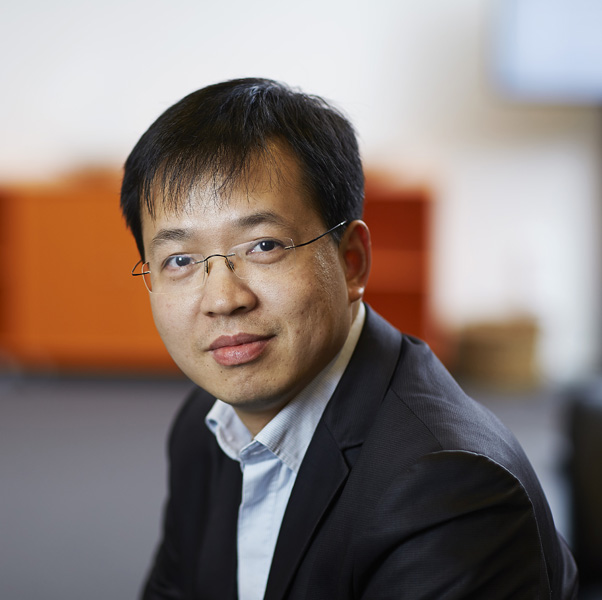
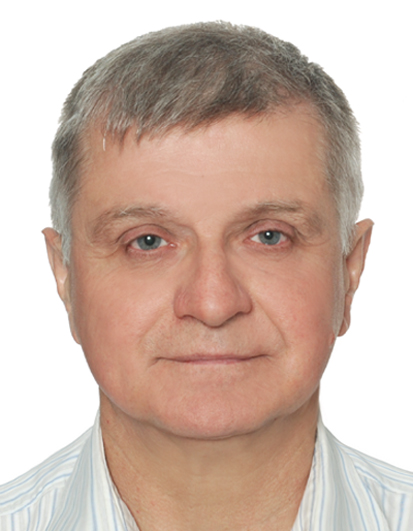
Anke Wiese is an Associate Professor at the School of Mathematical & Computer Sciences, Heriot-Watt University, within the Actuarial Mathematics & Statistics department. Prior to her academic roles, she worked in risk management in the financial services industry and held positions at the University of Hamburg and the University of Karlsruhe (now KIT). She earned her PhD from the University of Karlsruhe, Germany. Her research focuses on stochastic systems, particularly developing methods for solving stochastic differential equations (SDEs) while preserving qualitative characteristics. Key areas include algebraic structures of SDEs, integration methods for SDEs with jumps, and applications in computational finance. She bridges mathematical disciplines such as stochastic analysis, algebra, and quantum stochastics. Recent publications explore Grassmannian flows in coagulation systems, integrable equations via Pöppe triples, and efficient inversion techniques in the Heston model. Her work emphasizes numerical methods, stochastic processes, and interdisciplinary applications. Dr. Wiese actively supervises PhD students and welcomes inquiries for doctoral applications. Her research has been published in journals like Physica D, SIAM Journal on Financial Mathematics, and the Proceedings of the Royal Society A.
Maura R. Grossman is a Research Professor at the University of Waterloo, specializing in High-Recall Information Retrieval, AI ethics, and legal technology. Her work focuses on ensuring comprehensive information retrieval in high-stakes contexts like electronic discovery in law, healthcare data curation, and medical evidence synthesis. She explores the intersection of artificial intelligence and legal systems, particularly addressing challenges posed by AI-generated evidence and deepfakes in judicial processes. Education: J.D. (Georgetown University Law Center, 1999), Ph.D. (Adelphi University, 1984), M.A. (Adelphi University, 1982), A.B. (Brown University, 1980). Research interests include AI accountability in courts, responsible data science practices, and improving electronic discovery methodologies. Recent work analyzes AI’s role in legal proceedings, ethical AI frameworks, and healthcare data governance. Her publications emphasize validating technology-assisted review (TAR) systems and evaluating generative AI impacts on marginalized communities. Her articles highlight trends in AI’s legal implications, healthcare data sharing protocols, and the need for transparent algorithmic systems in justice contexts. She contributes to TREC tracks, advancing high-recall retrieval techniques for legal and medical document analysis. Notable projects include developing frameworks for unbiased health data sharing and analyzing AI’s effects on marginalized writers. Her work underscores interdisciplinary collaboration between law, computer science, and healthcare to address emerging technological challenges.
Philippe Baecke is a Professor of Business Analytics and Artificial Intelligence at Vlerick Business School, where he also serves as Programme Director for the Master in Business Analytics & AI and two executive programmes. He holds adjunct roles as Lecturer at Trinity Business School, Ireland, and Professor at the University of Namur. He earned his Doctorate in Applied Economics from Ghent University, complemented by an Advanced Master and Master in Applied Economics, both from Ghent University. His research focuses on leveraging big data analytics across marketing, operations, and finance, with specialties in digital marketing, customer relationship management, and network analysis. Notable areas include ad targeting, spatial modeling, and the application of AI in call center optimization and emotion recognition. He advises companies like KBC, ING, and Telenet on data strategy, blending strategic and operational insights. His recent work explores digital transformation trends, cost-effective AI adoption for SMEs, and the integration of human judgment in forecasting systems. He has published extensively in peer-reviewed journals, addressing topics like telecom data monetization, churn detection, and consumer privacy in addressable TV advertising. Baecke’s expertise also extends to vehicle telematics in insurance risk selection and spatial econometrics in customer acquisition modeling. He has collaborated on projects involving Bluetooth tracking in retail environments and the analysis of urbanization effects on customer behavior.
Jean-Jacques Herings is a Full Professor of Quantitative Microeconomics at Tilburg University's Tilburg School of Economics and Management (TiSEM), specifically within the Department of Econometrics and Operations Research. He has held this position since March 2022, having previously been a Professor of Economics at Maastricht University from September 1999 to February 2022. Herings' research focuses on five primary themes: Cooperative game theory, non-cooperative game theory, networks, general equilibrium theory, and equilibrium computation. His work spans theoretical foundations and practical applications, particularly in financial networks, matching markets, and strategic decision-making. He has published over 200 research outputs including articles in top journals such as Econometrica, Journal of Economic Theory, Management Science, and Mathematics of Operations Research. His recent publications reveal a continued focus on game-theoretic applications to economic problems, with particular attention to financial networks, bankruptcy problems, matching theory, and information design. There's a clear trend toward computational methods for finding equilibria and increasingly sophisticated modeling of strategic interactions in networked environments, with over 13 publications in 2024 alone demonstrating his active research program. Johannes Cornelis Ruigrok Prize (1997) Lionel W. McKenzie Prize (2008) VICI grant from NWO Fellow of the Game Theory Society (2017) Secretary-Treasurer of Game Theory Society (2014-2022) Fellow of the Society for the Advancement of Economic Theory (2019) As an advisor, Herings has supervised over 20 PhD students to completion, with research spanning game theory applications in economics, finance, and network theory. His editorial service includes membership on the boards of Games and Economic Behavior, Journal of Mathematical Economics, International Journal of Game Theory, and Mathematics of Operations Research. He also serves on the International Advisory Board of the Center for Mathematical Research in Economics and Finance at the University of Manchester.
Professor Gareth Peters is the Janet & Ian Duncan Endowed Chair of Actuarial Science and holds the Chair in Statistics for Risk and Insurance at the Department of Statistics & Applied Probability, University of California Santa Barbara (UCSB). His research focuses on statistical solutions for risk and insurance, with emphasis on actuarial science, financial engineering, environmental data analysis, and cybersecurity risk. He has received notable recognition including the 2024 IFoA Peter-Clark Prize, the oldest actuarial award established in 1891. His academic contributions span advanced statistical modeling techniques for financial markets, climate-related risk analysis, and healthcare analytics. Notable projects include developing methodologies for green bond valuation, cyber insurance frameworks, and machine learning applications in audiology and speech disorders. He has pioneered software tools such as CovRegpy for covariance regression and DivFolio for portfolio divestment analysis. Educations: Advanced degrees in statistics and actuarial science (specific details not provided) Professional Memberships: Fellow of multiple academic societies including the Royal Statistical Society and Institute of Mathematics and its Applications Research interests include: Statistical causality in financial and environmental time series Mortality modeling incorporating long-memory processes Quantifying climate change impacts on energy consumption Machine learning for cybersecurity risk mitigation His recent work emphasizes interdisciplinary applications of statistics in climate finance, sustainable investing, and precision agriculture. Over 2020-2025, his publications explore topics ranging from municipal green bonds to vocal analysis for Parkinson’s diagnostics. Awards: 2024 IFoA Peter-Clark Prize Elected Member of ISI (International Statistical Institute) IEEE Senior Member Labs/Initiatives: Develops open-source software packages for statistical analysis (e.g., AdvEMDpy, PyKronecker) and contributes to regulatory frameworks via tools like AuditChain for blockchain-based trading audits.
Prof. Dr. Peter Buxmann is a full professor of business informatics at the Technical University of Darmstadt, holding the Chair in this field. He is an internationally renowned speaker, senior business advisor, and podcaster for the Frankfurter Allgemeine Zeitung. His roles include advisory board memberships for institutions like the Weizenbaum Institute for the Networked Society and Eckelmann AG. His research focuses on AI applications, digital transformation, and future work paradigms, with over 300 publications in top journals and conferences. Education: PhD and habilitation from University of Frankfurt, including a research stay at UC Berkeley's Haas School of Business. Previous positions: Professor at Technical University of Freiberg (2000-2004). Research Interests: Artificial Intelligence (applications in business, healthcare, and ethics), Digital Transformation (organizational and societal impacts), Data-Driven Business Models (platform economics, innovation ecosystems), and Future of Work (human-robot collaboration, agile principles). Keynote Topics: Generative AI and its industry applications Strategic digital transformation frameworks Ethical AI governance Labs/Teams: Leads the HIGHEST innovation center at TU Darmstadt and collaborates with TechQuartier Frankfurt. Founded multiple startups focusing on AI solutions.
Chyrell D. Bellamy, PhD, MSW is Professor of Psychiatry at Yale University's Department of Psychiatry and Director of the Yale Program for Recovery and Community Health (PRCH). She also serves as Director of Peer Support Services & Research and Director of the Yale Lived Experience Transformational Leadership Academy (LET(s)Lead). Additionally, Dr. Bellamy functions as a Senior Policy Adviser for the Office of the Commissioner for the State of Connecticut Department of Mental Health and Addiction Services (DMHAS). Yale School of Medicine, Department of Psychiatry Yale Program for Recovery and Community Health (PRCH) Yale Lived Experience Transformational Leadership Academy (LET(s)Lead) Connecticut Mental Health Center Center for Brain & Mind Health Dr. Bellamy's research expertise centers on community-based participatory research and co-design with communities of color and individuals living with psychiatric illness, substance use disorders, HIV, homelessness, and incarceration histories. Her work focuses on healthcare disparities, sociocultural pathways of recovery, development of culturally responsive interventions, qualitative research methods, and community/clinic-based psychosocial and wellness interventions. She brings personal and professional expertise as a frontline service provider, clinician, social worker, and community organizer, openly identifying as a person with lived experience of multiple marginalized identities including mental illness, trauma, and addictions. Dr. Bellamy's publication record demonstrates significant contributions to mental health equity, with a focus on culturally responsive interventions for marginalized populations. Her research trends show a consistent emphasis on community-driven approaches, particularly through initiatives like Harambee (a wellness intervention for serious mental illness) and Imani Breakthrough (a faith-based opioid recovery program). Her recent publications increasingly incorporate technology and AI considerations in mental healthcare while maintaining strong community engagement principles. The breadth of her work spans from local Connecticut implementations to international collaborations in Brazil. PCORI award for co-located primary care for people with mental illness NIMH R34 award for whole health intervention mechanisms CT DMHAS/SAMHSA State Opioid Recovery funds for Imani Breakthrough program NIH Common Fund/NIDA grant for culturally responsive substance use recovery NIH R34 grant for peer support implementation in Brazil NIH NIMHD grant for Recovery Finance study Dr. Bellamy actively mentors researchers through her leadership roles and directs multiple federally funded research initiatives. Her work with the Yale Program for Recovery and Community Health has secured substantial grant funding from NIH, PCORI, NIMH, and state agencies, focusing on innovative approaches to mental health and substance use recovery. Her research portfolio demonstrates strong community partnerships and a commitment to translating research into practice through programs like LET(s)LEAD, which provides leadership training for people with lived experiences. Dr. Bellamy leads the Yale Program for Recovery and Community Health, which operates through a collaborative network of researchers, community members, and practitioners. Her work with the Lived Experience Transformational Leadership Academy (LET(s)LEAD) represents a significant team-based approach that centers lived experience in research and service delivery. She collaborates extensively with community organizations, particularly faith-based institutions serving Black and Latinx communities, and maintains international partnerships in Brazil for mental health system transformation.
Dr. Jiabin Luo is a Senior Lecturer in Business Analytics at Aston University's Aston Business School, within the College of Business and Social Sciences. She holds a PhD in Management Science from the University of Southampton and has held academic and research roles at institutions including Coventry University and De Montfort University. Her research focuses on optimization and decision-making in logistics, supply chain management, maritime shipping, and production planning. She is Programme Co-Director of the MSc Degree Apprenticeship in Digital & Technology Solutions Specialist. Education: PhD in Management Science, University of Southampton, UK MSc in Risk and Stochastics, London School of Economics and Political Science, UK MSc in Statistics, University of Nottingham, UK BSc in Mathematics, Zhongshan University, China PGCert in Learning and Teaching in Higher Education Research Interests: Transportation and logistics optimization Maritime shipping and port operations Production planning and inventory management Supply chain management and sustainability Fuzzy optimization and scenario-based modeling Recent Research Trends: Her work emphasizes optimization techniques in logistics systems, including automated container terminals, intermodal transport, and risk management. Recent articles explore machine learning for credit risk prediction and geospatial analysis of traffic datasets. Awards and Memberships: Fellow of The Higher Education Academy Member of The Operational Research Society Member of British Academy of Management Grants and Collaborations: Newton Researcher Links: Strategy & Policy Innovation in Supply Chain Management (2018) Newton Researcher Links: Emission Control in Green Port Development (2017) EPSRC Grant: Resilience of Manufacturing Supply Networks (2013–2016)
Zhang Yan is a Full Professor at the Department of Informatics, University of Oslo, Norway. He previously served as Head of Department and Chief Scientist at Simula Research Laboratory (2014–2016). His research focuses on advanced communication technologies including Internet of Things (IoT), 5G/6G networks, mobile edge computing, and blockchain applications. He has held significant roles such as IEEE VTS Distinguished Lecturer (2016–2020) and Chair of IEEE TCGCC (2019–2021). His honors include IEEE Fellow (2020), election to Academia Europaea (2020), and recognition as a Web of Science Highly Cited Researcher (2018–2019). Research interests span interdisciplinary areas like network dynamics, socio-economic systems, and algorithmic design. His work bridges theoretical foundations with practical applications in smart grids, vehicular networks, and global trade systems. Recent publications emphasize network science methodologies applied to economic complexity and information diffusion. Professional contributions include editorial roles for top journals and leadership in EU-funded projects. His awards reflect impactful contributions to both technical innovation and scientific leadership in informatics and communications.
Fatima Fabião is an Assistant Professor at the Lisbon School of Economics and Management (ISEG), University of Lisbon, where she has been affiliated since 1990. Her work bridges mathematical methodologies with economic and financial theory, focusing on growth models, optimal control, and differential equations. She teaches courses in mathematical analysis, difference equations, and complex equations in economics and management programs. Affiliations: ISEG – University of Lisbon (since 1990) Roles: Course coordinator for key subjects like Mathematical Analysis III and Difference Equations Her research explores economic growth dynamics through modified Solow models incorporating time delays, optimal resource extraction strategies via control theory, and financial applications of Black-Scholes equations. She has also contributed to pedagogical innovations integrating mathematical logic into primary education.
Ranjodh Singh is a Senior Lecturer at the School of Accounting, Economics and Finance within the Faculty of Business and Law at Curtin University. He holds a BSc (Hons) and PhD in disciplines relevant to his research focus. His teaching responsibilities include undergraduate and postgraduate courses in Data Analytics and Econometrics, and he supervises Honours, Masters, and PhD students in these areas. Ranjodh’s research interests center on Applied Econometrics , Applied Statistics , and Housing Economics . His work explores topics such as housing market dynamics, policy impacts on mental wellbeing, Indigenous mobility, and nonlinear econometric modeling. Recent studies include analyzing rental subsidy effectiveness, cannabis-tobacco consumption linkages, and post-pandemic housing demand shifts. His publications span leading journals like Housing Studies , International Journal of Housing Policy , and Journal of Population Economics . He frequently collaborates with researchers across disciplines, including economists, statisticians, and sociologists. His research has addressed policy-relevant issues such as rental affordability, remote infrastructure planning, and pandemic-driven economic shifts. Ranjodh’s contributions extend to major research initiatives like the AHURI Final Reports series, focusing on housing stress and Indigenous community needs. His methodologies blend traditional econometrics with machine learning advancements, as seen in his work on nonlinear models and forecast combinations.
Prof. Dr. hab. Marek Pawlak is a tenured Professor at the Department of Business Management , Institute of Journalism and Management , Faculty of Social Sciences , John Paul II Catholic University of Lublin . He holds academic degrees including MBA, Technical University of Lublin (1980) PhD, Technical University of Gdańsk (1987) Hab. PhD, Institute of Organization and Management in Industry, Warsaw (1997) Professor, Institute of Organization and Management in Industry, Warsaw (2009) His research focuses on Corporate Governance Computer Sciences Application in Management Business Ethics Strategic Management Project Management . His recent publications analyze generational changes in family business leadership, tax haven usage by multinational corporations, and moral development indices of future leaders. He has coordinated international projects like TEMPUS JEP 04214 and received grants from the Polish Ministry of Science and Higher Education on topics including genetic algorithms for production scheduling and CSR impact on consumer behavior. He has served as a Vice-Dean at both Technical University of Lublin and John Paul II Catholic University of Lublin. Professional activities include multiple Erasmus+ teaching assignments at Spanish institutions (Universidad Francisco de Vitoria, University of Seville) and industry consultancy roles. His scientific work spans 40+ years with over 140 publications, including books like Zarządzanie projektami (PWN, 2006) and Zarządzanie grupą przedsiębiorstw (KUL, 2015).
Stefan Thomas is a Professor at the Law Faculty of Eberhard Karls University Tübingen, holding the Chair in Private Law, Commercial Law, Competition and Insurance Law since 2009. He serves as Director of the Tübingen Research Institute on the Determinants of Economic Activity (TRIDEA) and holds affiliations with the Institute for Global Law, Economics and Finance (Queen Mary University of London) and the Center for Advanced Studies on the Foundations of Law and Finance (Goethe-Universität Frankfurt). Johannes Gutenberg University Mainz: Dr. iur. (2004, summa cum laude) German Lawyer Qualifications: First State Examination (2000), Second State Examination (2002) His research focuses on antitrust law , particularly merger control , algorithmic collusion , and integrating sustainability into competition analysis . He examines the role of competition in balancing economic efficiency and societal goals , with recent work on AI in legal design and shipping costs in platform retail . Key article trends reveal: digital economy challenges (2024), sustainability and antitrust (2023), algorithmic pricing (2022), and merger jurisprudence (2021). Collaborations with Roman Inderst and Felix Rhiel are frequent. 2021: Antitrust Writing Awards (Academic Articles/Mergers) 2005: Peregrinus Stiftung Prize for dissertation He co-edits the Zeitschrift für Wettbewerbsrecht (ZWeR) and leads the AI MEETS LAW platform. His teaching includes advanced civil law courses and specialized competition law programs at Tübingen University.
Assoc. Prof. Meltem Gürünlü serves as a faculty member and department head of the Department of International Trade and Finance (Eng.). She has conducted Erasmus teaching mobility at the University of Split, Croatia (May 2023), delivering a seminar on legislative-environment interactions and strengthening academic ties. Her research focuses on corporate finance, behavioral finance, sustainability, and emerging markets, with particular attention to digital transformation, corporate governance, and fintech innovations. Recent work explores topics like cryptocurrency ecosystems, green bonds, and the future of financial systems. Her academic contributions span over 40 publications since 2007, addressing themes such as capital structure dynamics, foreign ownership impacts, and the role of technology in finance. Key areas include analyzing business groups' financial behaviors, evaluating earnings management practices, and investigating investor perceptions of sustainability initiatives. Her work bridges theoretical frameworks with empirical evidence, often using Turkish market data (e.g., Borsa Istanbul). Notably, Prof. Gürünlü’s research highlights interdisciplinary intersections—e.g., blockchain’s governance implications, renewable energy financing challenges, and the ethical dimensions of AI in finance. Her scholarship emphasizes practical policy recommendations for regulatory frameworks and corporate strategies in evolving financial landscapes.
Koen Van Dam is a Research Fellow at Imperial College London's Department of Chemical Engineering, part of the Urban Energy Systems group within the Faculty of Engineering. His work focuses on agent-based modelling of socio-technical systems to support decision-making in urban energy and transport infrastructure design. He leads the SEF05 Urban Energy Systems module in the Sustainable Energy Futures MSc program and co-organizes computational social science summer schools. Koen has held visiting researcher positions at the National University of Singapore and TU Delft, and previously served as president of Eurodoc (European council for doctoral candidates). Education: MSc in Artificial Intelligence (Vrije Universiteit Amsterdam), PhD from TU Delft (2009) with thesis on agent-based modelling of socio-technical systems. Research interests emphasize integrating spatial/temporal data across energy and transport sectors to model urban systems at multiple scales. Projects include: FCDO Climate Compatible Growth (CCG) project COP26 Rapid Response Facility technical lead EPSRC-funded Digital City Exchange (DCE) and IDLES projects resilience.io (DFID project) Key contributions include decision support tools for: Electric vehicle infrastructure planning Low-carbon energy systems Smart district design Post-pandemic urban resilience Awards: None explicitly listed, though his extensive project leadership indicates recognition in sustainability research. Advising: Supervised over 40 MSc/MEng projects on smart cities, energy demand, EVs, bioenergy, and resilient infrastructure. Active in education through master's course leadership and international summer schools. Labs/Teams: Affiliated with Energy Futures Lab, Network of Excellence in Air Quality, and the Artificial Intelligence Climate Compatible Growth initiative.