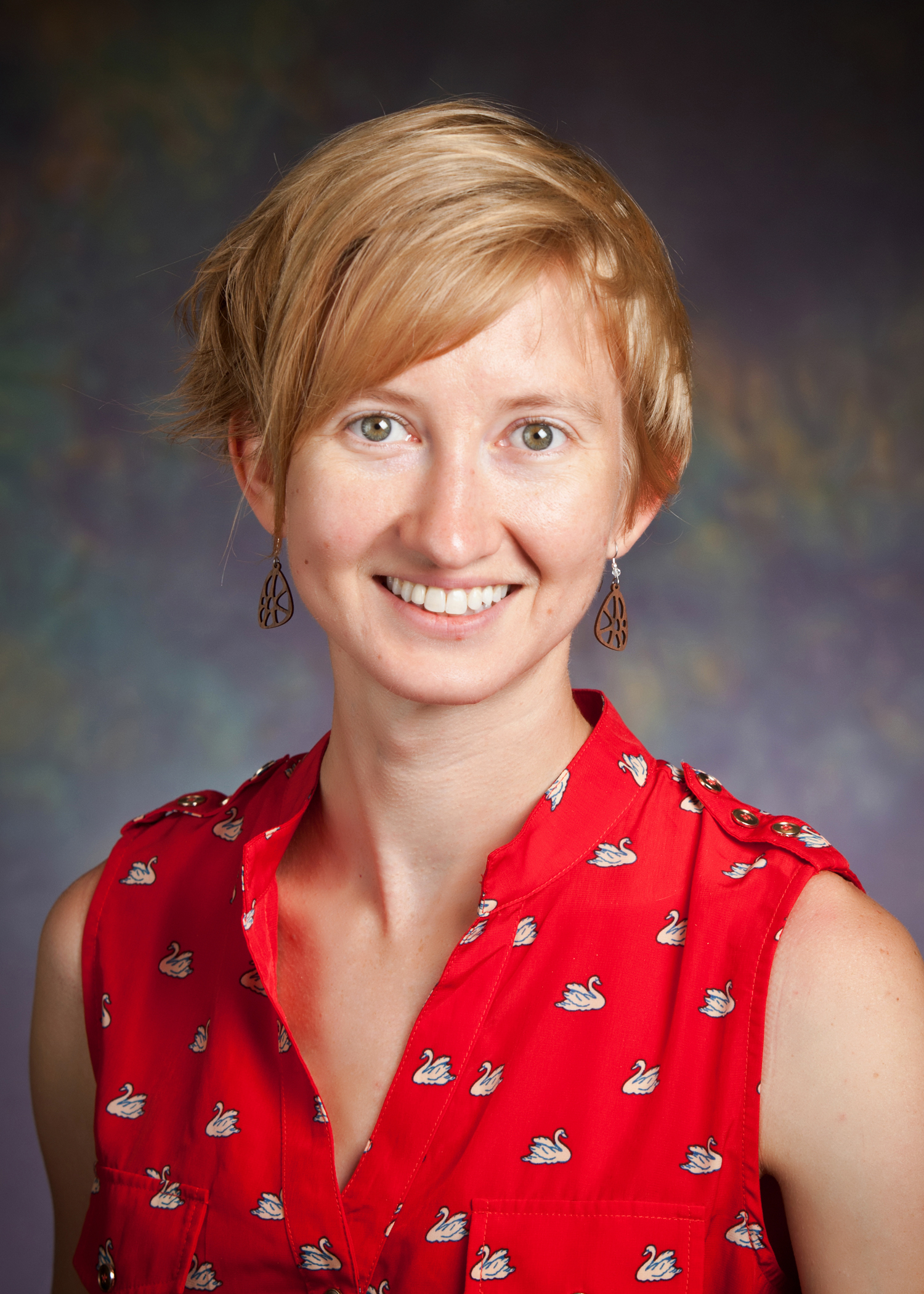
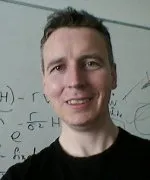
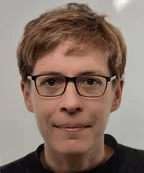
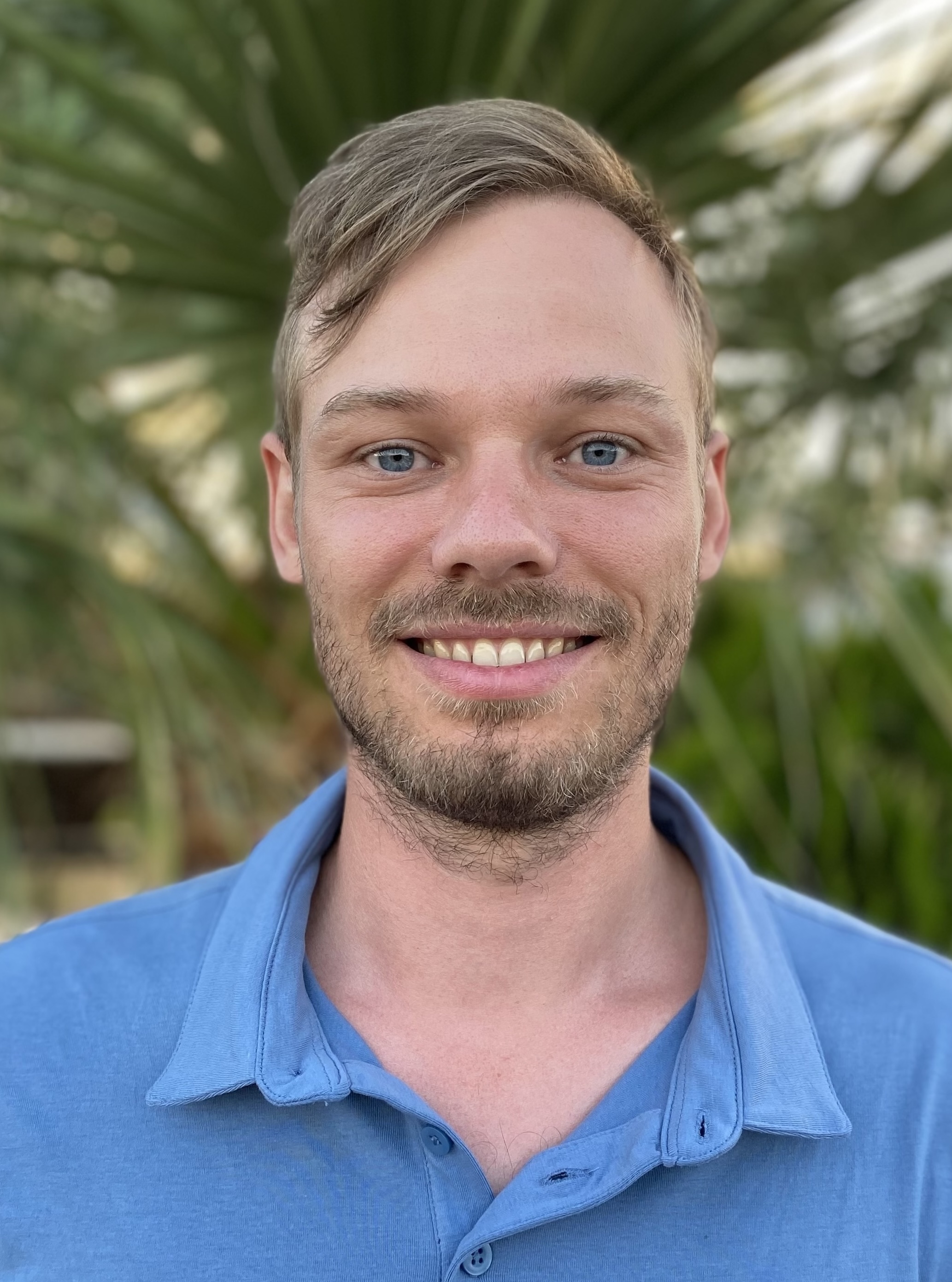
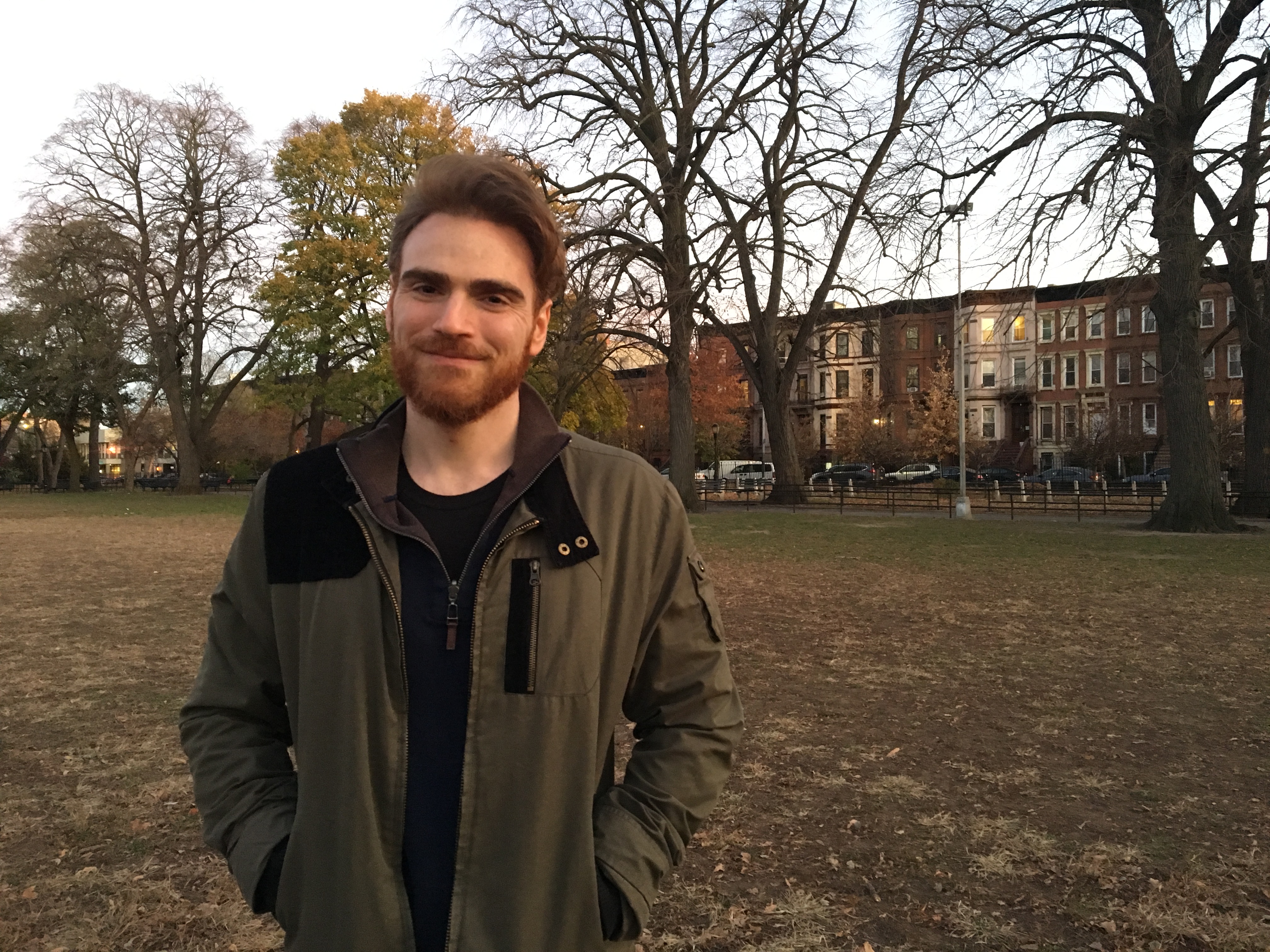
Katherine Davis is an Associate Professor in the Department of Electrical and Computer Engineering at Texas A&M University, part of the College of Engineering. Her research focuses on cyber-physical systems, power grid security, and resilient energy infrastructure. She holds a Ph.D., M.S., and B.S. in Electrical Engineering from the University of Illinois Urbana-Champaign and the University of Texas at Austin. Her work addresses challenges such as cyber-physical attack detection, smart grid resilience, and integration of renewable energy systems. Education: Ph.D., Electrical Engineering (Power and Energy Systems), University of Illinois Urbana-Champaign, 2011 M.S., Electrical Engineering (Power and Energy Systems), University of Illinois Urbana-Champaign, 2009 B.S., Electrical Engineering (High Honors), University of Texas at Austin, 2007 Research interests include: - Operation and control of power systems - Cyber-physical security and situational awareness - Data-driven analysis of coupled infrastructure - Interactions between computer and power networks - False data injection attack detection using machine learning Her recent publications emphasize scalable tools for cyber-physical systems, AI-driven grid optimization, and resilient energy management. Notable trends include leveraging graph neural networks for anomaly detection, blockchain for secure data exchange, and multi-agent frameworks for distributed energy resources. Dr. Davis’s work has been applied to real-world scenarios such as wildfire response optimization and geomagnetic disturbance analysis. She collaborates on interdisciplinary projects involving cybersecurity, power systems engineering, and environmental resilience.
Greg Sword is Regents Professor and Charles R. Parencia Endowed Chair in Entomology at Texas A&M University. Research spans plant-insect interactions, population genomics, and integrated pest management, with applications in agricultural sustainability. Education includes BS in Ecology & Evolutionary Biology from University of Arizona and PhD in Zoology from University of Texas. Interdisciplinary work integrates ecology, evolution, genomics, and microbiology. Research focuses on locust swarm behavior, insect resistance mechanisms, and microbial ecology approaches to pest control. Recent publications examine Vip3Aa resistance in moths, geomagnetic field effects on insect migration, and genomic patterns in fall armyworm populations. Patents include novel agricultural products from plant-microbe interactions. Field studies investigate collective motion in locusts and genomic adaptation in crop pests. Research contributes to sustainable pest management strategies.
Sharifah Sekalala is a Professor and Director of EDI at the University of Warwick's School of Law, specializing in Global Health Law, Human Rights, and International Law and Development. She leads major funded projects including Wellcome and ESRC initiatives on health data justice and digital health governance in Sub-Saharan Africa. Her work integrates human rights frameworks to address systemic inequalities in global health crises. Research interests focus on pandemic governance, health equity, and decolonizing global health frameworks. Notable contributions include advocating for feminist approaches in medical supply chains and reimagining pandemic treaties to prioritize equity and subsidiarity principles. Her Feminist Legal Prize (2024) recognizes groundbreaking scholarship on equitable supply chain frameworks during pandemics. Current grants include leadership on AI ethics in healthcare and health data governance across Canada, Germany, and the UK. Outputs span legal critiques of digital health commercialization, pandemic treaty negotiations, and anti-corruption measures in global health financing. She actively supervises doctoral candidates in Global Health Law and regularly contributes to policy dialogues on health equity through media engagements. Key Projects: Wellcome-funded health apps study in SSA, ESRC health data justice project Awards: Feminist Legal Prize 2024 Policy Impact: UN treaty negotiations advocacy, submissions to Global Fund reforms Media Engagement: Regular commentaries on health equity and pandemic governance Her interdisciplinary approach bridges law, public policy, and health systems to drive systemic change in global health inequities.
Ayse Gizem Yasar de France is a Lecturer at the LSE Law School since 2023, specializing in Competition Law, Innovation Studies, and AI Regulation. She teaches courses on Information Technology Law, Competition Law, and Cyberlaw. Previously, she held roles as a Research Fellow at Sciences Po (Paris) and Postdoctoral Researcher at the University of Glasgow’s CREATe Centre. Her work includes supervising the DIGILAW Program at Sciences Po Law School Clinic and designing courses on law and innovation at Sciences Po and Bilkent University. Her educational background includes a PhD from Sciences Po Paris, a Magister Juris from the University of Oxford, an LL.M. from Université Paris II-Panthéon-Assas, and an LLB from Bilkent University. Practicing as a competition lawyer between 2013–2016, she remains a member of the Istanbul Bar Association. Research focuses on EU innovation policy, competition dynamics in the video game sector, and AI regulation. Ongoing projects include analyses of Schumpeter’s economic theories and the evolving landscape of cloud gaming. She contributes to interdisciplinary initiatives like CREATe’s Cloud Gaming Project and EAAMO’s Algorithms, Law, and Policy working group. Her publications span AI integration in regulatory frameworks, digital merger control challenges, and multisided market competition. She is co-director of ASCOLA’s UK Chapter and a member of the European Society for the History of Economic Thought.
Miguel Pupo Correia is a Full Professor in the Department of Computer Science and Engineering at Instituto Superior Técnico, University of Lisbon. He serves as President of the Executive Committee of INESC-ID and is a researcher in the Distributed, Parallel and Secure Systems (DPSS) group. He represents Portugal in the European Blockchain Partnership (EBP) and holds roles in Associação .PT. He holds a PhD in Computer Science from the University of Lisbon Faculty of Sciences. His research focuses on cybersecurity, dependability in distributed systems, and their applications in blockchain, cloud, and mobile environments. Key projects include TRUSTyFOOD, BIG, and MAFTIA, among others. He is an Associate Editor for IEEE Transactions on Computers and a Senior Member of IEEE. His work spans blockchain interoperability, secure cloud storage, intrusion detection, and fault-tolerant algorithms. Notable contributions include BlockSim (a blockchain simulator) and SRX (SGX data recovery). He has over 200 publications and leads initiatives like BLOCKCHAIN.PT to advance Portugal’s blockchain adoption.
Colm Connaughton is a Professor and Director of the Centre for Complexity Science at the University of Warwick's Mathematics Institute. His research focuses on non-equilibrium statistical mechanics, fluid dynamics, turbulence, nonlinear waves, and complexity science. He has contributed to interdisciplinary studies ranging from wave turbulence theory to applications in traffic modeling and machine learning. Connaughton co-organized the Warwick EPSRC Mathematics Symposium and has led workshops on topics like complex networks and nonlinear science. His work bridges theoretical physics and applied mathematics, with recent projects addressing reinforcement learning in traffic control systems and the social complexity of fictional narratives. Connaughton's research often involves collaborations across disciplines, including contributions to understanding epidemic spreading dynamics and the statistical mechanics of cluster aggregation. Notable contributions include the study of Rossby wave turbulence models, the dynamics of energy condensation in two-dimensional turbulence, and the application of kinetic theory to aggregation processes. His work frequently emphasizes the interplay between mathematical rigor and real-world applications, such as optimizing traffic flow prediction and analyzing network-based disease spread. Connaughton maintains active engagement in academic service, including editorial roles and organizing international conferences. His research has been published in high-impact journals across physics, mathematics, and engineering disciplines.
Professor Marie-Therese Wolfram holds a faculty position at the Mathematics Institute of the University of Warwick. Her research focuses on applied partial differential equations, mathematical modeling in socio-economic and life sciences, and inverse problems. She is actively involved in organizing international workshops and serves on editorial boards for journals like ESAIM M2AN and Kinetic and Related Models. Her academic journey includes grants such as the Royal Society International Exchange (2022-2024) and the EPSRC First Grant (2017-2019). Notable awards include the Excellence in Gender Equality Award (2023) and the Whitehead Prize (2023). She co-leads the EDI committee at Warwick and contributes to initiatives like the Young Academy of the Austrian Academy of Sciences. Her research spans opinion dynamics, crowd modeling, and optimal transport theory. Recent work explores consensus-breaking in social networks and applications of mean-field games to knowledge growth. She collaborates internationally on projects such as the 'Multiscale Modelling of Crowded Transport' and the 'Wasserstein Gradient Flows' initiative. Teaching responsibilities include MA265 Methods for Mathematical Modelling and MA4M2 Inverse Problems. Her work bridges theoretical analysis with practical applications, reflecting her dual expertise in pure mathematics and interdisciplinary modeling.
Carl Fredrik Berg is a Professor in the Department of Geosciences at the Norwegian University of Science and Technology (NTNU). His research focuses on porous media flow, subsurface reservoir modeling, and energy-efficient production strategies in petroleum engineering. Key areas include multiphase flow dynamics, CO₂ sequestration, phase-field modeling, and digital rock physics. Recent work emphasizes the interplay between material microstructure and macroscopic properties, particularly in porous media. Collaborations involve developing advanced computational methods for reservoir simulation, optimization algorithms for well placement, and energy policy analysis under CO₂ taxation frameworks. Publications highlight contributions to phase-field equations, permeability estimation from CT scans, and stochastic modeling for subsurface flows. His work bridges theoretical physics, applied mathematics, and engineering applications in oil recovery and environmental geoscience.
Gunnar Tufte is a Professor and Deputy Head of Research at the Department of Computer Technology and Informatics, NTNU. He leads the Computer Architecture Lab and advises PhD programs in Computer Science and Informatics within the Faculty of Information Technology and Electrical Engineering. His primary research focuses on unconventional computing, including artificial spin ice systems, self-organizing nanomaterials, and bio-inspired architectures. Research Interests include: Unconventional Machines: Architecture, Design, and Computation Spin-based Computing and Energy Efficient Systems Evolution-in-Materio and Nanoscale Computation Reservoir Computing and Dynamical Systems Nano-Magnetic Orchestration and Self-Organization Key Projects: SpinENGINE (EU Horizon 2020 FET-Open): Developing parallel computing platforms using nanomagnet ensembles. SPrINTER (Norwegian Research Council): Low-power spin-based computing technology. flatspin: Open-source simulator for artificial spin ice systems (GPLv3). Grants and Collaborations: Horizon 2020 FET-Open funding for SpinENGINE. NFR funding for SPrINTER project. Lab/Team: Maintains the Computer Architecture Lab and collaborates on interdisciplinary projects with researchers in nanotechnology, AI, and biology.
Professor On Kit Tam is a Professor of Finance at RMIT University and Vice President of the Australia China Business Council Victoria. His academic journey includes prior roles as Deputy Pro Vice-Chancellor (Business International) at RMIT and Deputy Dean of the Faculty of Business and Economics at Monash University. He has held visiting/adjunct positions at global universities and served as a PhD lead supervisor at UNSW, ANU, Monash, and RMIT, mentoring students who earned prestigious research awards. His research focuses on corporate governance, China’s economic reforms, foreign investment, and capital markets, yielding significant grants and awards. Professor Tam has advised international organizations and corporations, including directorships at a China-based fund management company (Commonwealth Bank of Australia affiliate) and the Royal District Nursing Services. His work bridges academic contributions with practical industry insights, emphasizing cross-border financial strategies and institutional development. Research Interests: Professor Tam’s work spans corporate governance mechanisms, China’s financial system evolution, and the impact of globalization on emerging markets. He explores themes such as ownership structures, fund performance evaluation, and the environmental implications of trade policies. His recent studies incorporate AI/ML techniques for analyzing fund behaviors and evaluating investment strategies. Professional Contributions: Beyond academia, Professor Tam’s advisory roles and board memberships reflect his expertise in translating research into real-world solutions. His publications (over 50 articles) span topics from cross-border M&A success factors to the governance of Chinese financial institutions. He frequently collaborates internationally, contributing to policy discussions on financial reforms and market accessibility.
Kenneth Ayotte is a Professor of Law at the University of California, Berkeley - School of Law , where he conducts research and publishes extensively in the areas of bankruptcy law, corporate finance, and corporate governance. His research interests include Chapter 11 reorganization , creditor rights , financial distress , debtor-in-possession (DIP) financing , and contract theory . His work often bridges legal doctrine with economic analysis, making significant contributions to the law and economics literature. The trends in his recent scholarly articles indicate a sustained focus on the mechanisms of corporate bankruptcy, including valuation disputes, governance in financial distress, and the design of bankruptcy processes. His publications frequently appear in top-tier law reviews and interdisciplinary journals, reflecting broad disciplinary reach across law , finance , and economics . Bankruptcy or Bailouts? (2010) Valuation Disputes in Corporate Bankruptcy (2018) Bankruptcy Process for Sale (2021) Loopholes in Complex Contracts (2023) The Promise and Perils of DIP Financing (2025) Kenneth Ayotte has collaborated with leading legal scholars such as David A. Skeel , Edward R. Morrison , and Patrick Bolton . While no formal advising roles or grants are mentioned in the provided text, his extensive publication record and institutional affiliation underscore his active academic engagement and scholarly influence. He has contributed to edited volumes and interdisciplinary research projects, including the Enterprise Law Conference of 2014 , and his work is frequently disseminated through research paper series such as those from Columbia, Northwestern, and the University of Pennsylvania. His scholarship is hosted on SSRN, where it has garnered substantial downloads and citations, affirming its impact in the academic community.
Andrew John Campbell is a Knowledge Exchange Fellow in the Department of Electronic & Electrical Engineering at the University of Strathclyde's Faculty of Engineering. With a Doctor of Engineering in Advanced Manufacturing, Dr. Campbell specializes in applying image processing and hyperspectral imaging techniques to solve complex measurement challenges across nuclear decommissioning, aerospace, and industrial manufacturing contexts. His research bridges academic innovation with practical industrial applications, particularly in environments where traditional measurement approaches are impractical or hazardous. Doctor of Engineering, Advanced Manufacturing Dr. Campbell's research focuses on developing advanced image analysis methodologies for diverse applications. His primary expertise lies in hyperspectral imaging for nuclear fuel characterization during decommissioning processes, where his work enables remote analysis of radioactive materials through specialized techniques like short-wave infrared imaging through leaded glass. He has also applied similar methodologies to space object identification, granular material analysis in foundry applications, and biomedical contexts such as platelet analysis. His approach consistently combines cutting-edge image processing algorithms with domain-specific knowledge to address real-world industrial challenges. Analysis of Dr. Campbell's recent publications (2019-2025) reveals a clear research trajectory from fundamental image analysis techniques toward increasingly specialized applications in high-consequence environments. The 2024-2025 publications demonstrate a strong emphasis on nuclear decommissioning applications, with multiple papers addressing the characterization of nuclear fuel debris through multimodal spectroscopy. This work represents a significant advancement in the field, enabling safer and more efficient nuclear site cleanup. His publications span multiple high-impact venues including IEEE conferences and scientific journals, reflecting the interdisciplinary nature of his work. Best Technical Paper in IIF Journal Award (Non-Ferrous Category) - February 2025 Dr. Campbell has secured significant research funding through multiple competitive grants, serving as Principal Investigator for the "Spectroscopy Suite for Direct Low Waste Measurement for All States of Matter" project funded by Sellafield Limited (January-March 2024), and as Co-investigator on several other substantial projects including the HSI for Granular Material project funded by Fraunhofer UK Research Limited (2023-2024). His funding portfolio spans nuclear, aerospace, manufacturing, and biomedical applications, demonstrating the versatility of his image processing expertise. He has supervised doctoral research as evidenced by his role in the thesis "Image processing for the analysis of TI-6AL-4V microstructures" and has presented research at professional venues including a 2020 presentation on "Automated tracking of mitochondrial motility using image processing and epifluorescence microscopy". Dr. Campbell works within research groups focused on advanced imaging applications, collaborating extensively with researchers including Paul Murray, Jaime Zabalza, and Stephen Marshall. His laboratory work suggests capabilities in hyperspectral imaging, spectral analysis, and advanced image processing techniques. He appears to be part of Strathclyde's nuclear technology research initiatives and contributes to the Universities' Nuclear Technology Forum. His fingerprint analysis indicates significant contributions to image processing (100%), space object identification (87%), and microstructure analysis (65%), reflecting the interdisciplinary nature of his research program.
Jordi Ripoll Misse is an Associate Professor at the University of Girona (UdG) in the Department of Computer Science, Applied Mathematics and Statistics. He specializes in population dynamics with applications in ecology and epidemiology, and is affiliated with the research group 2021 SGR 00113 focused on stochastic and deterministic models in biosciences. Education: PhD in Mathematical Sciences (2005) from the University of Barcelona Research: Epidemic models, Basic reproduction number (R₀), Metapopulations, Complex networks Research Trends include discrete-time epidemic modeling, analytical computation of R₀ in periodic environments, and structured population models using partial differential equations and evolutionary models. His work connects mathematical theory with practical applications in biology and telecommunications network analysis. Teaching Expertise spans mathematics subjects like algebra, calculus, differential equations, and numerical methods, with a focus on interdisciplinary applications through the Mathematical Models course for Sciences students. He actively integrates AI methodologies into university teaching through the XID group. Academic Affiliations include research stays at Cornell University (2022) and University of Trento (2006-2007), and teaching roles at UNED and UOC universities in Spain.
Dr. Lars Schütze is a researcher at the Chair for Compiler Construction within the Faculty of Computer Science at Dresden University of Technology (TU Dresden). Holding a PhD in Computer Science from TU Dresden, he currently serves as a PostDoc specializing in domain-specific compilers for verifiable Full Homomorphic Encryption (vFHE) and hybrid quantum-classical computing systems. His academic credentials from TU Dresden include: Bachelor's degree in Computer Science Master's degree in Computer Science PhD in Computer Science (awarded February 2025) Schütze's research centers on advanced compiler design for emerging computational paradigms. His foundational work explores context-oriented and role-based programming languages, focusing on runtime optimization and dispatch mechanisms. Recent efforts pivot toward post-quantum security through homomorphic encryption compilers and hybrid quantum-classical computing frameworks. His research bridges theoretical language design with practical compiler implementation, emphasizing verifiable security and performance efficiency in next-generation computing environments. Publication analysis reveals a clear evolution from context-oriented programming (2017-2020) toward cryptographic compiler development (2022-2025). Early work optimized role-based dispatch systems, while recent publications establish compiler frameworks for Fully Homomorphic Encryption using MLIR infrastructure. His research consistently addresses performance bottlenecks in dynamic language features while transitioning toward quantum-resistant cryptography solutions. Scientific Awards: No awards documented in source materials Dr. Schütze supervises student theses in Homomorphic Encryption and Quantum-Classical Computing frameworks, offering projects spanning Bachelor to Master levels. His research is funded through institutional projects including (verifiable) Full Homomorphic Encryption and Hybrid Quantum-Classical Computation, though specific grant details remain undisclosed. He actively develops compiler infrastructure for encrypted computation and quantum-classical orchestration. As core personnel in TU Dresden's Chair for Compiler Construction, Schütze contributes to the RoSI project (role-based software infrastructures) and leads current initiatives in vFHE. His team collaborates on building domain-specific compiler toolchains that address quantum computing threats through post-quantum cryptographic solutions while advancing hybrid execution models for emerging hardware architectures.
Wesley Tansey serves as Assistant Professor in the Computational Oncology group within the Department of Epidemiology and Biostatistics at Memorial Sloan Kettering Cancer Center (MSKCC). His research bridges statistical machine learning with cancer biology, focusing on developing novel computational frameworks for oncology applications. Dr. Tansey's research program centers on Bayesian statistical methods for biological data analysis, with particular emphasis on spatial transcriptomics (evidenced by his BayesTME framework), drug response modeling , and multi-omics integration . His lab develops scalable algorithms for high-dimensional biological data, including UnitedMet for metabolite imputation and MultiTME for spatial profiling analysis. Current projects address combinatorial drug screening optimization, tumor microenvironment characterization, and predictive oncology platforms for rare cancers. His recent publications (2023-2025) demonstrate strong focus areas: Bayesian active learning for drug screening (6+ publications) Spatial biology methods (BayesTME, MultiTME) Metabolomics-transcriptomics integration (UnitedMet) Causal inference in biological systems Scientific recognition includes serving as Area Chair for AISTATS 2022 and frequent invited talks at major conferences including SIAM's Mathematics of Data Science meeting. Dr. Tansey actively mentors lab members including Sophie Jaro (Spotlight presenter at ICML Workshop), Haoran Zhang (contributed talk presenter), Christopher Tosh (Associate Research Scientist), and Jeff Quinn (Bioinformatics Software Engineer). His lab receives research funding supporting development of computational oncology platforms with clinical translation potential. The VIVO Lab maintains active GitHub repositories for core methodologies including BayesTME, reflecting strong software engineering practices in computational biology.