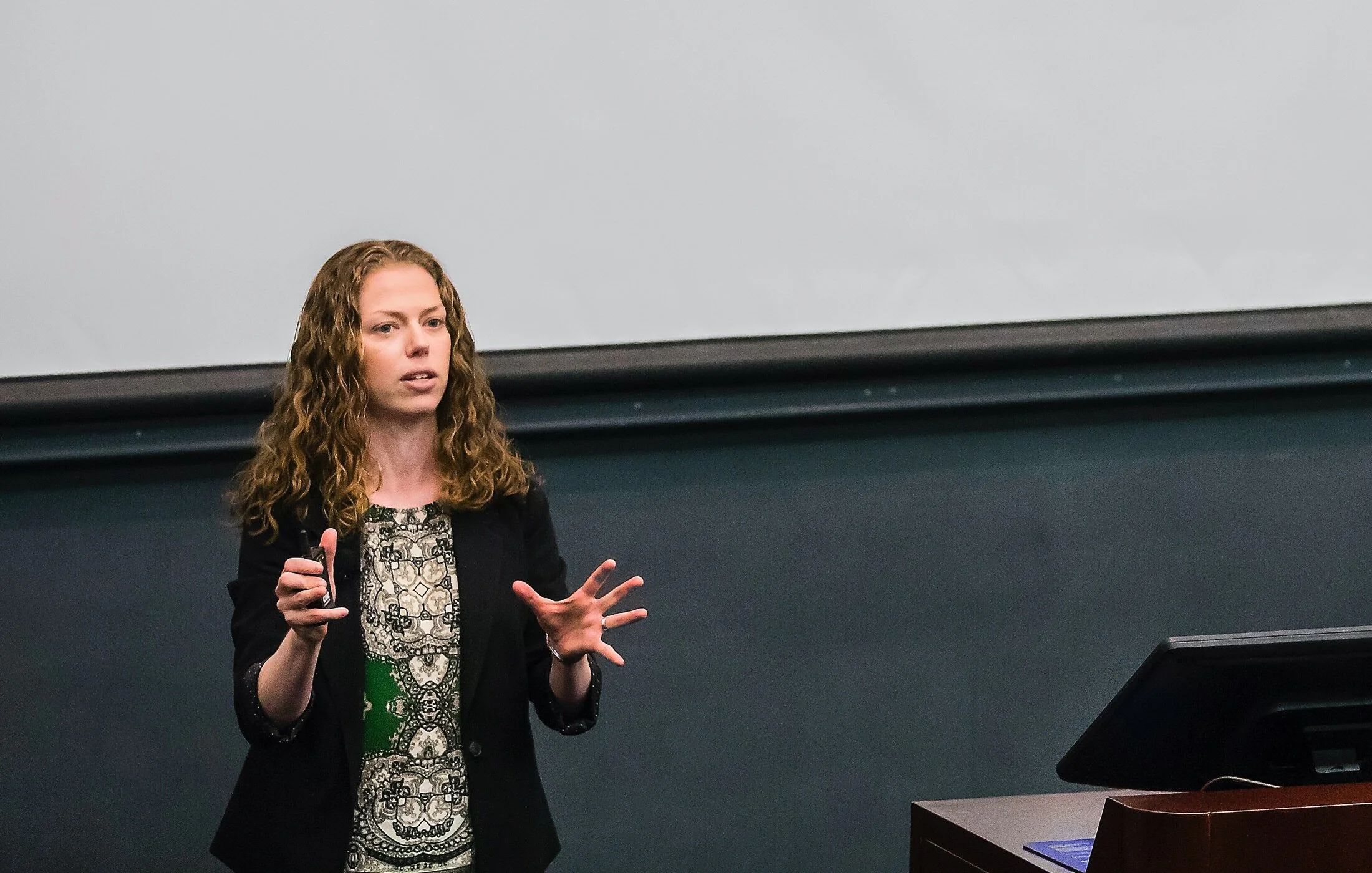
Sijia Geng is an Assistant Professor in the Department of Electrical and Computer Engineering (ECE) at Johns Hopkins University (JHU) and a core researcher at the Ralph O’Connor Sustainable Energy Institute (ROSEI). She directs the Power and Energy Network Systems Analysis (PENSA) Laboratory and co-leads the NSF-funded Electric Power Innovation for a Carbon-free Society (EPICS) Center as co-PI. Her research focuses on integrating control theory, mathematical analysis, and optimization to enhance renewable energy utilization and grid resiliency. Education: Ph.D. and M.S. (ECE & Mathematics) from the University of Michigan-Ann Arbor (2016–2022), B.S. in Automation from Harbin Institute of Technology (2016). Postdoctoral work at MIT (2022) and visiting scholar roles at Purdue University (2015) and Pacific Northwest National Lab (2018). Research Interests: Dynamic analysis of inverter-based power systems, nonlinear control theory, data-driven decision-making, and multi-energy systems. Her work emphasizes achieving autonomous, resilient energy systems through advanced computational tools and theoretical frameworks. Awards: Best Paper Award at MIT/Harvard Applied Energy Symposium (2022), MIT Rising Stars in EECS (2021), Barbour Scholarship (2021), Towner Prize (2018), and Gerald and Esther Forrest Fellowship (2016). She is active in IEEE and INFORMS, organizing sessions at PES General Meeting and CISS conferences. Grants & Collaborations: Funded by NSF, DOE, MIT Energy Initiative, and industry. Leads global initiatives through EPICS, collaborating with UK, Australian, and international stakeholders. Co-leads ROSEI’s Grid pillar to advance fossil-free energy systems. Labs & Teams: Directs PENSA Lab, affiliated with JHU’s Data Science and AI Institute, Applied Mathematics & Statistics, and Computer Science departments.
Thayer Morrill is a Professor of Economics at North Carolina State University, holding a position in the Department of Economics. He earned his Ph.D. from the University of Maryland in 2008 and specializes in Market Design, School Assignment, and Auction Theory. He actively contributes to the Economics Graduate Program and teaches EC 468, a Game Theory course with comprehensive self-developed materials. Education: Ph.D. in Economics, University of Maryland, 2008 Professor Morrill's research centers on Market Design applications in school choice and auction theory, developing novel mechanisms for efficient and fair resource allocation. His work bridges theoretical game theory with empirical analysis, examining strategic behavior in school assignment systems, kidney exchange programs, and procurement auctions. Key methodological contributions include characterizations of matching algorithms like Top Trading Cycles and Deferred Acceptance. His publication history (2010-2022) reveals consistent focus on matching theory and market design across leading journals including Journal of Economic Theory and American Economic Journal. Recent work analyzes ranking mechanisms in competitive processes (2022), while earlier research established foundational characterizations of matching algorithms. His interdisciplinary approach connects theoretical rigor with real-world applications in education and healthcare markets. Scientific Awards: No awards listed Advising and Grants: The provided documentation contains no details regarding student advising activities or grant funding. His research collaborations include prominent economists such as Umut Dur, Pete Troyan, and Robert Hammond across multiple publications.
Dr. Francisco Vitor Santos da Silva is a Senior Lecturer at University College Cork (UCC), Ireland, with a joint appointment between the School of Microbiology and the School of Engineering and Architecture. He holds a PhD from Otto von Guericke University Magdeburg (2017, Summa Cum Laude) and a first-class honours degree from Federal University of Paraná (2012). His research focuses on reducing uncertainty in bioprocess development through hybrid modelling techniques combining first-principles and statistical inference. He has contributed to novel strategies for monoclonal antibody capture and sustainable biopharmaceutical production. Key academic milestones include a FAPESP postdoctoral fellowship (2018) and leadership roles in the Bernal Bio Labs at University of Limerick. His work has been published in journals like Journal of Chromatography A and supported by grants from FAPESP and CAPES. He actively engages in science communication, including Wikipedia contributions and public outreach events. Dr. da Silva teaches bioprocess design using modern data-driven approaches and serves as a peer reviewer for multiple journals. His research spans bioprocess optimization, PAT implementation, and sustainable chemical/biotechnological processes for food and pharmaceuticals. Education: BSc (Hons) Bioprocess Engineering & Biotechnology, Federal University of Paraná (2012) PhD (Summa Cum Laude), Otto von Guericke University Magdeburg (2017) Awards: Top Student of the Year Award, Federal University of Paraná (2012) Summa Cum Laude PhD Distinction (2017) Grants: FAPESP Postdoctoral Fellowship (2018) CAPES Brazil grants His professional activities include organizing international conferences, reviewing PhD funding applications, and advising on industry collaborations. He leads UCC's efforts in integrating cutting-edge simulation tools into bioprocess education and research.
Charlie Beckett is a Professor of Practice and Director of Polis and the Polis/LSE JournalismAI project at the London School of Economics and Political Science (LSE), Department of Media and Communications. He specializes in the transformation of journalism in the digital age, focusing on AI integration, media ethics, and international news dynamics. His roles include leading research initiatives on journalism’s societal role and advising on media policy. Research Interests: Beckett’s work explores Artificial Intelligence in journalism, networked media systems, and the ethical challenges of digital communication. He examines how journalism adapts to technological changes, particularly in AI-driven news production and disinformation landscapes. His projects include the JournalismAI global survey and the LSE Truth, Trust & Technology Commission. Articles Trends: His recent work emphasizes AI’s impact on newsrooms, media trust dynamics, and global journalism practices. Themes include ethical AI adoption, generative AI applications, and regulatory frameworks for digital platforms. Awards: While no specific honors are listed, his contributions to media policy and journalism innovation are widely recognized internationally. Advising & Grants: Directs major initiatives like Polis and JournalismAI, fostering collaborations between academia, industry, and policymakers. His work often addresses funding challenges in journalism sustainability and ethical technology use. Labs/Teams: Leads Polis, a think-tank for journalism-society research, and oversees the JournalismAI project analyzing global AI trends in media. Collaborates with international institutions on media governance and innovation.
Associate Professor Jenni Ilomaki holds a position at Monash University's Centre for Medicine Use and Safety. With expertise in clinical pharmacy, epidemiology, and public health, she leads a research group analyzing administrative claims data. Her work spans collaborations with governmental and non-governmental organizations globally, yielding over 150 peer-reviewed publications and $4 million in grants. She previously served as Chair of ASCEPT's Pharmacoepidemiology Special Interest Group and currently serves as Science Lead for the Monash Addiction Research Centre and Executive Editor of the British Journal of Clinical Pharmacology. Education includes a Bachelor of Science (Pharmacy) from the University of Kuopio (1999) and Master of Science (Pharmacy) from the University of Kuopio (2004). She completed a PhD in alcohol epidemiology at the University of Eastern Finland (2011) and a postdoc at the University of South Australia (2011-2014). Notable recognitions include Young Epidemiologist of the Year (2011) and the Ronald D. Mann Best Paper Award (2021). Key research focuses on quality use of medicines, medicine safety, large population studies, and innovative epidemiological methods. Major projects include developing clinical decision support tools for cardiovascular prevention, analyzing preventable hospitalizations in aged care, and investigating psychotropic medication trends in youth. Her work contributes to UN Sustainable Development Goals related to health equity and non-communicable disease reduction. Recent publications emphasize drug repurposing (e.g., SGLT2 inhibitors), opioid prescribing patterns, hip fracture outcomes, and dementia detection algorithms. She chairs multinational studies on stroke and myocardial infarction cost burdens, demonstrating interdisciplinary impact across pharmacology, epidemiology, and health economics.
Prof. Tijani CHAHED is a Professor at Telecom SudParis, part of Université Paris-Saclay, affiliated with the SAMOVAR laboratory and the NeSS research group. His work focuses on network optimization, edge computing, machine learning applications in telecommunications, and game-theoretical frameworks for distributed systems. He holds a position in the Department of Computer Science and Telecommunications. His research spans resource allocation in 5G/6G networks, energy efficiency strategies for mobile infrastructure, reinforcement learning for dynamic systems, and coalitional game theory for multi-agent systems. Key contributions include optimization of cache allocation in edge computing, latency-critical traffic management (URLLC), and strategic investment models for distributed computing infrastructures. Selected articles highlight advances in edge computing resource management, metaverse data transport over 5G, and energy-efficient sleep mode control for base stations. His work often intersects with industrial applications in green networks and smart grid integration for mobile infrastructure. Collaborations involve institutions like École Polytechnique, INRIA, and industry partners in telecommunications. Current projects include 6G network architectures, metaverse-enabled edge services, and decentralized resource allocation frameworks. Labs/Teams: SAMOVAR Lab (Signal and Media Access Networks, Optical and Radio Networks), NeSS Group (Networked Systems and Services).
Professor Nicholas Carah is a leading academic at the School of Communication and Arts , The University of Queensland , and serves as Director of the Centre for Digital Cultures & Societies . He is also an Associate Investigator in the ARC Centre of Excellence for Automated Decision-Making and Society . His research focuses on the algorithmic and participatory advertising model of digital media platforms , with a sustained investigation into digital alcohol marketing . His research spans digital media, algorithmic culture, and affective capitalism , examining how platforms like Instagram, Snapchat, and Facebook shape promotional practices and user behavior. He has led major ARC-funded projects and co-edited works such as Digital Intimate Publics and Social Media (2018) and Conflict in My Outlook (2022). As Deputy Chair of the Foundation for Alcohol Research and Education , he contributes to policy development on unhealthy product marketing. His recent publications highlight trends in social media advertising, algorithmic transparency, and health-risk marketing . Supervision roles include Principal Advisor for PhD projects on topics like digital labor, FemTech, and augmented reality , and Associate Advisor for cross-cultural studies in media and communication. He advocates for citizen science approaches to monitor digital marketing and its societal impacts.
Sendil Ethiraj is a Professor of Strategy and Entrepreneurship at London Business School (LBS) and serves as Deputy Dean (Faculty). Originally from India, he earned his PhD in Management from The Wharton School at the University of Pennsylvania. Prior to joining LBS, he spent over a decade as faculty at the Ross School of Business, University of Michigan. His research focuses on strategic management, covering innovation processes, competitive strategy, organizational design, human capital management, and technology-driven industry transformation. He has extensively studied innovation in complex systems across sectors like oil and gas, mutual funds, and healthcare insurance. His work addresses organizational structures for capability development, employee goal alignment, and platform governance in digital ecosystems. At LBS, he contributes to academic leadership as a member of the Governing Body since 2022. His initiatives emphasize designing reward systems to attract global research faculty and advancing diversity, inclusion, and belonging through the LBS Advisory Board. He teaches core courses in LBS's Master's, Executive Education, and PhD programs. Key research areas: Innovation in unconventional industries Human capital dynamics Platform governance Strategic response to technological disruption Organizational design for complex systems Contact: sethiraj@london.edu
Dr. Asieh Hosseini Tabaghdehi is a Senior Lecturer in Strategy & Business Economy at Brunel Business School, Brunel University of London. She serves as Programme Lead for the BSc International Business Programme and Trade2Grow Executive Education Programme. Additionally, she is Impact Lead at the Brunel Centre for AI: Social and Digital Innovation, where she leads the capability area in the Future of Work. Dr. Tabaghdehi is also an economist and social impact advisor for the independent NGO, Social Innovation Movement. Dr. Tabaghdehi earned her PhD in Economics and Finance (2008) and MSc in International Money, Finance, and Investment (2015), both from Brunel University London. She also holds a BA in Theoretical Economics from University of Mazandaran. She completed the Postgraduate Certificate in Academic Practice and is a Fellow of the Higher Education Academy. Dr. Tabaghdehi is internationally recognized for her research on digital transformation, with particular expertise in the ethical integration of artificial intelligence and digital technologies. Her work focuses on how emerging technologies shape industries, labor markets, and society, with emphasis on enhancing SME growth through technological innovation. She explores applications across critical sectors including social care, supply chain management, and environmental sustainability. A central theme in her research is smart data governance, ensuring ethical, transparent, and responsible use of data in decision-making processes. Her research portfolio demonstrates a consistent focus on the intersection of technology, ethics, and business strategy. She has developed frameworks like the Digital Business Auditing Framework, which has been adopted internationally for smart city initiatives. Her work connects academic research with practical policy applications, as evidenced by her presentations as oral and written evidence to the House of Commons Select Committee. Her publications span AI ethics, digital footprint implications, fertility economics, and healthcare cost analysis, showing interdisciplinary breadth while maintaining thematic coherence around digital transformation's societal impact. Scientific Awards and Recognition Semi-finalist: Research Impact Award at Brunel University London, 2023 Staff Award: Exceptional in Collegiality and Supportive to Colleagues at Brunel University London, 2022 Exceptional Performance at Regents University London, 2018-19 Staff Award in Teaching, Learning and Assessment at Regents University London, 2016 Best Lecturer Award at London Brunel International College, 2014 Best Lecturer Award at London Brunel International College, 2013 Dr. Tabaghdehi actively supervises PhD students researching areas including Smart Data Governance, Ethical AI Governance, Digital Innovation Impact, Responsible AI Adoption Strategies, Sustainability, and Future of Labour Market. She has secured research funding from multiple sources including the Economic & Social Research Council (ESRC), Brunel University London, and Brunel Business School. Her current projects include research on AI Adoption and Governance, Youth digital addiction, Algorithm Reliability Framework, and SMEs digital footprints. She has also co-designed the "Digital Adoption" module for the UK Government's Help to Grow Management program, demonstrating the practical application of her research. As a member of multiple professional organizations, Dr. Tabaghdehi serves as an associate practitioner at Social Value International, associate member of the Big Innovation Centre, and member of the All-Party Parliamentary Group on AI. She is also a member of the ESRC Review College, British Academy of Management Review College, and Energy Institute UK, contributing to the broader academic and policy communities through these roles.
Guido Perboli is a Full Professor in the Department of Management and Production Engineering (DIGEP) at the Polytechnic University of Turin, where he also serves as Logistics Coordinator and Project Coordinator for activities supporting relationships with government bodies. He is a member of the Interdepartmental Center CARS@PoliTO (Center for Automotive Research and Sustainable Mobility) and serves as Director of the ICT for City Logistics and Enterprises (ICElab@Polito) research center, which he founded in 2016. His research interests span a broad range of topics including Operations Research, Logistics, Last-mile Delivery, Sustainable Logistics, Combinatorial Optimization, Stochastic Programming, Business Development, and Lean Business methodologies. His work particularly focuses on City Logistics, Green Logistics, and the application of emerging technologies like Blockchain and AI in supply chain management. He has developed GUEST, a Lean Business methodology for innovation processes from early idea definition to implementation. Professor Perboli's recent publications demonstrate a strong focus on urban logistics, last-mile delivery optimization, blockchain applications in supply chains, and the integration of AI techniques in transportation systems. His work shows an increasing trend toward interdisciplinary research that combines optimization methods with emerging technologies to address sustainable urban mobility challenges. Professional Recognition: CASE Best Paper award from IEEE Conference on Automation Science and Engineering (2011) Effective member of INFORMS (2019-present) Effective member of EURO (1995-present) Effective member of AIRO (1995-present) Associate Editor for Journal of Applied Research and Technology (2020-present) Associate Editor for Sustainability (2018-present) Professor Perboli actively advises PhD students and has supervised numerous research projects, including EU-funded initiatives like SINFONICA, HESTER, and 5G-LOGINNOV. He serves as Scientific Director for multiple commercial research projects focused on blockchain, IoT, and AI applications in logistics. Beyond academia, he is Chief Scientific Officer of Arisk S.p.A., a fintech company specializing in business crisis prediction using AI and machine learning. His research group, ICElab@Polito, focuses on two main areas supporting urban growth: logistics and enterprises. The center collaborates with numerous companies including Amazon, DHL, and FCA, addressing real-world challenges in urban logistics and supply chain management through innovative research approaches.
Professor Imre S. Szalai is a leading scholar in arbitration law and dispute resolution, currently serving as Professor of Law at the Elisabeth Haub School of Law at Pace University. His expertise spans arbitration, litigation, professional responsibility, and legal ethics. He is nationally recognized for his work on the Federal Arbitration Act and its impact on civil justice. University: Pace University School: Elisabeth Haub School of Law Department: Dispute Resolution Academic Rank: Professor Education: Bachelor of Arts (BA), Yale University – Double Major in Economics and Classical Civilizations JD, Columbia University School of Law – Harlan Fiske Stone Scholar Research Interests: Professor Szalai specializes in the legal, historical, and ethical dimensions of arbitration. His work critically examines the expansion of forced arbitration in consumer and employment contexts, the erosion of trial rights, and the role of arbitration in undermining accountability. He explores the historical roots of the Federal Arbitration Act and advocates for reforms that restore fairness and consent in dispute resolution. His recent scholarship delves into emerging issues such as artificial intelligence in arbitration and the impact of pop culture on legal interpretation. Publication Trends: His recent publications (2022–2025) reflect a strong focus on contemporary challenges in arbitration law, including the #MeToo movement's influence on forced arbitration, AI-driven dispute resolution, the role of the Supreme Court in shaping arbitration policy, and high-profile cases involving Ticketmaster and Taylor Swift. His work combines doctrinal analysis, historical inquiry, and policy critique, often drawing from media and cultural references to make complex legal issues accessible. Scientific Awards: Harlan Fiske Stone Scholar, Columbia Law School Advising and Grants: Professor Szalai actively collaborates with students on amicus briefs and scholarly work. While specific grant funding is not detailed in the provided text, his extensive publication record and media engagements suggest sustained scholarly support. He mentors students in legal research, writing, and advocacy, particularly in the areas of arbitration and civil rights. Labs, Teams, and Initiatives: He maintains a public blog on arbitration law developments, where he analyzes recent court decisions, legislative changes, and policy debates. This platform serves as an educational resource and contributes to public discourse on arbitration reform. He also participates in academic and professional networks focused on dispute resolution and legal ethics.
Teemu Malmi is a Professor in the Department of Accounting at the School of Business, Aalto University, Finland. He has been an influential figure in management accounting research, particularly in management control systems and performance measurement. His academic qualifications include a Doctoral degree (1997), Licentiate degree (1994), and Master's degree (1990), all in Business and Economics from the Helsinki School of Economics. His research interests span management control, performance measurement, digitalization in finance, public sector accounting, and organizational behavior. His work often integrates empirical analysis with case studies, including a notable investigation into Nokia’s management control challenges. He has published extensively in top-tier journals and contributed to major handbooks in accounting and information systems. The recent trend in his publications (2020–2025) reflects a growing emphasis on digital transformation, blockchain, data analytics, and the evolving role of finance functions. His research increasingly bridges traditional accounting with technology and public policy, especially in healthcare financing and sustainability. Scientific Awards: “Thirst for knowledge” (“Tiedon Jano”) award by JOKO Executive Education Oy (2001) Teemu Malmi has supervised at least five theses and led externally funded research projects, including the SOTE/Kaks project (2015–2016) on social and healthcare services. He has been actively involved in academic service, such as serving on editorial boards, hosting international scholars, presenting keynote lectures, and participating in funding organization committees. His media appearances demonstrate his engagement in public discourse on welfare policy and regional financing in Finland. There is no indication of part-time status, retirement, or former staff designation; he remains an active academic.
Katherine L. Milkman is the James G. Dinan Endowed Professor at The Wharton School of the University of Pennsylvania, with secondary appointments in the Perelman School of Medicine and School of Arts and Sciences. She co-founded and co-directs the Behavior Change for Good Initiative , focusing on harnessing behavioral economics and psychology for societal benefit. Education: PhD in Computer Science and Business, Harvard University Undergraduate degree (summa cum laude) in Operations Research and American Studies, Princeton University Her research bridges behavioral economics , decision-making , and health psychology , with applications in education, finance, and public health. Recent studies explore quantification fixation , streak incentives , and diversity interventions using megastudy methodologies. Scientific awards include Thinkers50 Top 50 Management Thinker (2021, 2023) APS Fellow (2020) FABBS Early Career Award (2015) Wyss Award (Harvard, 2008) She teaches courses in decision-making and judgment research , including OIDD9950 (Dissertation) and OIDD2990 (Judgment & Decision Making Research). Media outlets like The New York Times and Nature regularly feature her work, while her podcast Choiceology disseminates behavioral economics insights to a broader audience.
Brett Hemenway Falk is a Researcher in the Department of Computer and Information Science at the University of Pennsylvania. He serves as director of the Crypto and Society Lab, focusing on privacy and security in digital environments and facilitating transparency and trust. His work combines rigorous mathematical approaches with practical implementations in cryptography and blockchain technology. Education: Sc.B. in Mathematics from Brown University Ph.D. in Mathematics from UCLA Research Interests include: Cryptography and secure multi-party computation protocols Blockchain technology (cross-chain interoperability, financial network stability, on-chain governance) Privacy-preserving algorithms and data security Coding theory applications in secure systems Scientific Contributions include: Developing practical secure computation protocols Advancing ORAM (Oblivious RAM) architectures Analyzing decentralized governance mechanisms Exploring DeFi network stability and token economics His teaching activities feature the popular MCIT 582 Blockchain course at Penn. Research funding comes from NSF, DARPA, IARPA, ONR, ARL, NIH , and the Laura and John Arnold Foundation.
Vesa Pursiainen is an Associate Professor at the School of Business and Economics , University of St. Gallen (SBF-HSG). His research focuses on corporate finance, fintech, environmental economics, crowdfunding, and behavioral finance, with a particular emphasis on how technology, social dynamics, and crises impact financial decisions and market behavior.