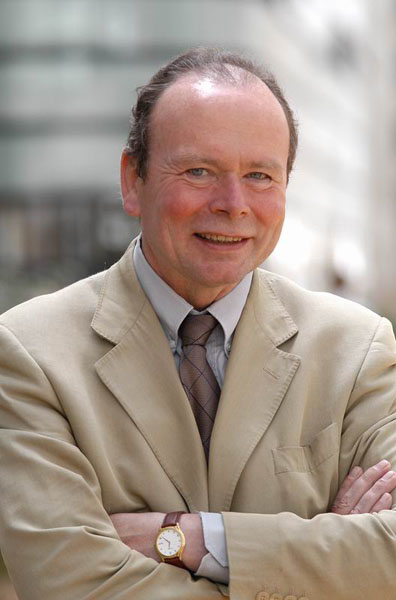
Dominique Perrin is a Professor at the University of Paris-Est Marne-la-Vallée since 1993 and serves as Director of ESIEE Paris since 2004. He is an Ordinary Member of the Academy of Europe in the Informatics section, elected in 1989. His research spans Theoretical Computer Science , with a focus on Automata Theory and Combinatorics on Words . His work investigates symbolic dynamics, bifix codes, dendric shifts, and dimension groups in dynamical systems, often collaborating with researchers like Marie-Pierre Béal and Francesco Dolce. Key article trends include S-adic shifts, substitution dynamics, and algebraic properties of shift spaces Recent publications address recognizability, density of group languages, and dendric structure applications Honors include being named Chevalier de la Légion d'Honneur , reflecting his contributions to theoretical computer science.
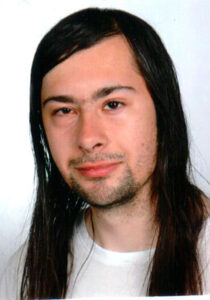
Daniel Brosch is a Postdoctoral Researcher (Researcher) at the Institute of Mathematics, University of Klagenfurt, holding a doctorate (Ass. Dr.) and Master of Science degree. His contact details include email daniel.brosch@aau.at, homepage http://www.danielbrosch.com, and office N.2.19 in the Main Building's North Wing West. Dr. Brosch's research spans Optimization, Algebra, Computer algebra, Combinatorics, and Graph theory, forming an integrated focus on discrete mathematics and computational algebra with applications in computer science and operations research. His work in computer algebra and graph theory emphasizes algorithmic methodologies, while optimization and combinatorics address structural problem-solving in complex systems. As an active postdoctoral researcher, he contributes to the Institute's scholarly output. Though specific projects, grants, or advising roles aren't detailed in available text, his position indicates ongoing engagement in mathematical research and academic collaboration within the university's research ecosystem.
Daniel Krenn is an Assistant Professor in the Mathematics Department at Paris Lodron University of Salzburg. He holds a Ph.D. in Technical Mathematics from TU Graz (2013) and a Habilitation in Mathematics from Alpen-Adria Universität Klagenfurt (2019). His research focuses on discrete mathematics, including asymptotic enumeration, analysis of algorithms, analytic combinatorics, digit expansions, and graph theory. He has contributed to software development in SageMath, particularly in automata and transducer modules. Education: 2003–2009: Diploma in Electrical Engineering (TU Graz) 2005–2008: Bachelor's in Technical Mathematics (TU Graz) 2008–2010: Master's in Mathematical Computer Science (TU Graz) 2010–2013: Ph.D. in Technical Mathematics (TU Graz) 2019: Habilitation in Mathematics (Alpen-Adria Universität Klagenfurt) Research Interests: Discrete Mathematics Analysis of Algorithms and Data Structures Digit Expansions and Cryptography Combinatorics and Analytic Number Theory Key Awards: Promotio sub auspiciis Praesidentis rei publicae (2013) Austrian Mathematical Society Study Prize (2013) Austrian Federal Ministry of Science and Research Prize (2013) Professional Contributions: Coordinator of the doctoral program “Discrete Mathematics” at TU Graz (2015) Contributions to SageMath software development Over 30 peer-reviewed publications in journals like Algorithmica, Theoretical Computer Science, and Journal of Number Theory
Frank Sommer is a Humboldt fellow (Feodor Lynen scholarship for Postdocs) at Vienna University of Technology since June 2024. He is affiliated with the Institute of Logic and Computation, where he conducts research in theoretical computer science and algorithms. Previously, he held postdoc positions at Friedrich Schiller University Jena (May 2023-May 2024) and Philipps University Marburg (November 2022-May 2023). Dr. Sommer earned his PhD in Mathematics from Philipps-University Marburg (2017-2022), following a Master's degree (2015-2017) and Bachelor's degree (2012-2015), both in Mathematics from Friedrich Schiller University Jena. His research focuses on parameterized algorithms , algorithm engineering , and graph algorithms , with applications to hard problems in Data Science and Machine Learning. He has made significant contributions to the theoretical foundations of graph problems, particularly in network analysis, community detection, and subgraph optimization. His methodology combines theoretical analysis with practical implementation, emphasizing both computational complexity and real-world applicability. Dr. Sommer's publication record shows a strong emphasis on parameterized complexity, kernelization techniques, and practical algorithm implementations. His work spans from theoretical foundations to practical applications in network analysis, machine learning, and data science, with particular expertise in graph-theoretic problems and their computational aspects. Scientific Awards: Humboldt fellow (Feodor Lynen scholarship for Postdocs) Dr. Sommer collaborates extensively with researchers including Christian Komusiewicz, Niels Grüttemeier, and Tomohiro Koana. His work is supported by the Humboldt Foundation and has been published in top-tier computer science venues including Algorithmica, Journal of Graph Algorithms and Applications, and proceedings of major conferences like ESA and ISAAC. He is part of the Algorithms and Complexity Group within the Institute of Logic and Computation at TU Vienna, contributing to research on fundamental algorithmic problems with applications across various domains. His current research explores the intersection of theoretical computer science with practical challenges in data science and machine learning.
Dr. Martin Charles Golumbic is a Professor of Computer Science and former Director of the Caesarea Edmond Benjamin de Rothschild Institute for Interdisciplinary Applications of Computer Science at the University of Haifa. He previously held positions at IBM Research, Columbia University, Bar-Ilan University, and others. His research focuses on algorithmic graph theory, combinatorial mathematics, and artificial intelligence. PhD in Mathematics (Columbia University, 1975) M.A. and B.S. in Mathematics (Pennsylvania State University, 1970) Research interests include perfect graphs, temporal reasoning, constraint scheduling, and discrete applied mathematics. He has authored influential books such as *Algorithmic Graph Theory and Perfect Graphs* and *Fighting Terror Online*. His work bridges theoretical computer science with real-world applications in AI and security. Awards include the EurAI Fellowship (2005), Lifetime Achievement Award from the Israeli AI Association (2019), and membership in Academia Europaea (2013). He has supervised 5 PhD students and 21 M.Sc. students, along with 18 postdocs. Key contributions include editorial roles at *Annals of Mathematics and Artificial Intelligence*, patents in instruction scheduling, and leadership in over 50 international conferences. His interdisciplinary work at the Caesarea Rothschild Institute integrates computer science with other fields.
Birgit Vogtenhuber serves as an Associate Professor at the Institute of Software Technology within the Faculty of Computer Science at Graz University of Technology (TU Graz). She holds the significant administrative position of Dean of Studies for Computer Science and maintains teaching authorization specifically in Theoretical Computer Science. Her office is located at Münzgrabenstrasse 36/II, Room M3602026 in Graz, Austria, with consultation hours held on Tuesdays from 10:00-11:00. Dr. Vogtenhuber's research centers on Discrete and Computational Geometry , particularly investigating arrangements of geometric objects and graph drawings as fundamental tools in mathematical and computational problem-solving. Her work spans multiple specialized areas including Erdős-Szekeres type problems, combinatorial properties of point sets, and geometric graph optimization. She leads the DACH-Project 'Arrangements and Drawings' which connects research groups from TU Berlin, FU Berlin, ETH Zürich, and TU Graz, structured around four focus areas: Arrangements of lines and pseudolines, Drawings of graphs, Structure of intersection, and Planar and near-planar structures. This continues from previous successful collaborations in the EuroGIGA program. As a key participant in the Doctoral Program 'Discrete Mathematics' funded by the Austrian Science Fund, she contributes to advanced PhD training across institutions including TU Graz, University of Graz, and University of Leoben. Her additional research projects include the OeAD project on Erdős-Szekeres type questions for point sets and participation in the EUROCORES ComPoSe project on combinatorics of point sets. Dr. Vogtenhuber has established extensive international collaborations across Europe, working with researchers from institutions in Austria, Spain (Universidad de Alcala), France (INRIA Geometrica), Germany, and Switzerland, demonstrating her significant standing in the computational geometry research community.
Leslie Valiant is the T. Jefferson Coolidge Professor in Computer Science and Applied Mathematics at Harvard University's School of Engineering and Applied Sciences. His career spans institutions including Carnegie-Mellon, Leeds, Edinburgh, and Oxford Universities, with roles from Lecturer to Visiting Research Fellow. Ph.D. in Computer Science (Warwick, 1974) Diploma in Computing Science (Imperial College, 1971) B.A. in Mathematics (King's College, Cambridge, 1970) His research bridges computer science with biology, focusing on computational complexity , machine learning , evolutionary algorithms , and computational neuroscience . He has pioneered theories in PAC (Probably Approximately Correct) learning , holographic algorithms , and neural circuit modeling . His work connects parallel computing to brain function and evolvability to machine learning. Recent publications (2018-2008) emphasize holographic algorithms , neural computation , and evolvability . Trends include integrating biological principles into algorithm design and neuroscience into cognitive models . Scientific Awards and Honors: Guggenheim Fellowship (1985-1986) Nevanlinna Prize (1986) Knuth Prize (1997) EATCS Award (2008) ACM Turing Award (2010) Fellowships in Royal Society, AAAS, ACM, and AAAI Multiple honorary degrees and appointments Valiant has authored books like Circuits of the Mind and Probably Approximately Correct , holding three US patents on parallel computing . His work on knowledge infusion and neural architectures has influenced both AI and theoretical neuroscience.
Jörg Thuswaldner is a Professor at the Chair of Mathematics, Statistics and Geometry at Montanuniversität Leoben. His research focuses on fractal geometry, number theory, dynamical systems, and combinatorics, with a particular emphasis on topics such as self-affine tiles, continued fraction algorithms, and digit systems. He has published extensively in top-tier journals such as Advances in Mathematics and Journal of Number Theory , contributing to the understanding of fractal structures, metric number theory, and symbolic dynamics. His editorial roles include serving on the boards of Lithuanian Mathematical Journal and Combinatorics and Number Theory , highlighting his influence in academic publishing. He actively collaborates internationally, hosting visiting scholars and participating in conferences to advance interdisciplinary research. Recent work explores applications of fractal geometry to permeable sets and the analysis of Weyl sums with digital restrictions. Thuswaldner’s research spans over two decades, with publications ranging from foundational studies in tiling theory to cutting-edge analyses of non-standard digit systems. His contributions bridge pure mathematics with applications in algebraic geometry and ergodic theory, making him a leading figure in modern mathematical research.
Norbert Kaiblinger is an Associate Professor at the Institute of Mathematics, BOKU University, Vienna, Austria. His research focuses on applied mathematics, harmonic analysis, and numerical methods, with applications in fluid mechanics, statistics, and chemical engineering. He holds a habilitation in Mathematics from the University of Vienna, granting him teaching authorization in the field. His work bridges theoretical mathematics with practical computational problems, particularly in adsorption modeling and fluid dynamics. Key research interests include multicomponent batch adsorption models, dynamics of subaqueous systems, analysis of variance (ANOVA) methodologies, and special functions. Recent publications (2023–2025) highlight advancements in equilibrium composition calculations and statistical experimental design. His earlier work (2007–2019) explores Fourier analysis, operator theory, and algebraic structures like cyclotomic rings and circulant matrices. While no formal advising relationships or grants are listed, his collaborative research involves co-authors from diverse fields such as chemical engineering and fluid mechanics. Kaiblinger’s work is disseminated through journals like Adsorption, Journal of Fluid Mechanics, and Transactions of the American Mathematical Society.
Günther Rothe is a Professor at the Technische Universität Berlin , affiliated with the Institute of Discrete Mathematics since April 1, 1999. His research focuses on foundational areas of discrete mathematics, theoretical computer science, and algorithmic structures. Contact: rothe@inf.fu-berlin.de
Chris Dowden is a Research Fellow at the Institute of Discrete Mathematics, Graz University of Technology. His research project 'Asymptotic properties of graphs on a surface', funded by the Austrian Science Fund (FWF Grant P27290), investigates combinatorial and probabilistic aspects of graphs embeddable on 2-dimensional surfaces. Key focus areas include random planar graphs, genus evolution, and extremal graph properties. Recent publications analyze topological constraints in random graphs, with works examining genus evolution in Erdős-Rényi models, surface embedding phase transitions, and extremal problems for cycle-free planar graphs. Research employs combinatorial probability, asymptotic analysis, and topological graph theory to establish fundamental properties of random graph embeddings. Teaching activities include courses in Analytic Combinatorics and Probabilistic Methods in Combinatorics and Algorithmics. No awards, student advisements, or laboratory information are detailed in available sources.
Vladimir Kolmogorov is a Professor at the Institute of Science and Technology Austria (IST Austria), leading the Kolmogorov Group focused on Discrete Optimization. He previously held positions as Assistant Professor at IST Austria (2011–2014), Lecturer at University College London (2005–2011), and Associate Researcher at Microsoft Research (2003–2005). His research spans algorithm development for graphical models, combinatorial optimization, and applications in computer vision. Education: M.S. in Applied Mathematics and Physics from the Moscow Institute of Physics and Technology, and Ph.D. in Computer Science from Cornell University (2003). Research interests include complexity classifications, algorithm design for discrete optimization problems (e.g., max-flow, min-cost matching), and applications in computer vision. Notable contributions include the 'Boykov-Kolmogorov' max-flow algorithm and 'Blossom V' for minimum cost perfect matching. Honors include the ERC Consolidator Grant (2014–2019), Koenderink Prize (2012), and best paper awards at CVPR and ECCV. His work on optimization algorithms and theoretical complexity has significantly impacted computer vision and combinatorial optimization fields. Advising and grants: Supervised multiple PhD students and postdocs, with current advisees including Martin Dvořák and Pavel Arkhipov. His team explores inference in graphical models, combinatorial optimization, and discrete optimization theory.
Christoph Flamm is a researcher in the Department of Theoretical Chemistry at the Faculty of Chemistry, University of Vienna. His work spans theoretical chemistry, bioinformatics, and computational biology with a particular focus on RNA structure prediction, chemical graph theory, and reaction network analysis. He maintains an active research profile with numerous publications in high-impact journals and has been involved in several collaborative research projects. Flamm's research interests include RNA folding kinetics, chemical graph rewriting, barrier trees, discrete landscapes, and systems chemistry. His work bridges theoretical approaches with practical applications in biochemistry and molecular biology, particularly focusing on the computational aspects of chemical and biological systems. He has made significant contributions to RNA secondary structure prediction algorithms and the theoretical foundations of chemical reaction networks. His publication record demonstrates consistent output across multiple disciplines, with recent work focusing on graph-based approaches to chemical reaction networks, RNA folding kinetics using machine learning techniques, and theoretical frameworks for chemical systems. The research shows a clear trajectory from fundamental theoretical work on RNA folding landscapes to more recent applications involving graph theory, hypergraphs, and computational approaches to chemical systems. Flamm has been actively involved in teaching activities related to theoretical chemistry and computational methods, as indicated by his website's teaching section. While specific grant information isn't detailed in the provided content, his extensive publication record suggests successful funding of research projects. His work appears to be conducted within the Theoretical Biochemistry group at the University of Vienna, collaborating with researchers in bioinformatics, chemistry, and computer science.
Werner Schachinger is an Associate Professor in the Department of Statistics and Operations Research at the Faculty of Business, Economics and Statistics. His research focuses on optimization theory, mathematical analysis, and game theory, with particular emphasis on completely positive matrices, quadratic optimization, and evolutionary dynamics. He has authored over 18 publications since 2007, exploring topics such as CP-rank bounds, combinatorial asymptotics, and algorithmic methods in optimization. Education background not explicitly stated but inferred through research focus and academic rank. His research interests span operations research, mathematical optimization, probability theory, and combinatorics. Notable contributions include studies on the complexity of optimization models, equilibrium analysis in game theory, and the application of copositive programming techniques. Publications highlight trends in optimization theory, with recent works addressing geometric distribution analysis (2023) and Plancherel averages (2023). Earlier contributions include work on moral play equilibrate (2021) and cp-rank lower bounds (2015–2020). No scientific awards explicitly mentioned in the texts. Advising and grants details are not provided in the text. However, activities include organizing the 2018 Workshop on Optimization, Game Theory, and Data Analysis, and contributing to talks on copositive optimization and duality in conic programming. Labs or research teams are not explicitly mentioned, though collaborations with researchers like Immanuel Bomze and Jörgen Weibull suggest active participation in interdisciplinary projects.
Georg Grasegger is a Researcher in the Symbolic Computation group at the Johann Radon Institute for Computational and Applied Mathematics (RICAM), Austrian Academy of Sciences. His work focuses on rigidity theory, algebraic geometry, and symbolic computation with applications to combinatorial and geometric structures. Research interests include rigidity of graphs and frameworks, algebraic differential equations, and geometric configurations. Recent work explores paradoxical motions of graphs, flexible polyhedra, and counting realizations of rigid structures using algebraic methods. Publications highlight contributions to graph rigidity, computational geometry, and algebraic combinatorics, with a focus on theoretical foundations and algorithmic approaches. His research bridges discrete mathematics and applied algebraic geometry. Contributions include software tools like FlexRiLoG for studying graph motions and RigiComp for computational rigidity analysis. No notable awards are listed, though his work is widely cited in combinatorial geometry and symbolic computation fields. Labs/Teams: Active in RICAM's Symbolic Computation group, collaborating with institutions on geometric and algebraic problems. Supervises research projects on rigidity and discrete structures.