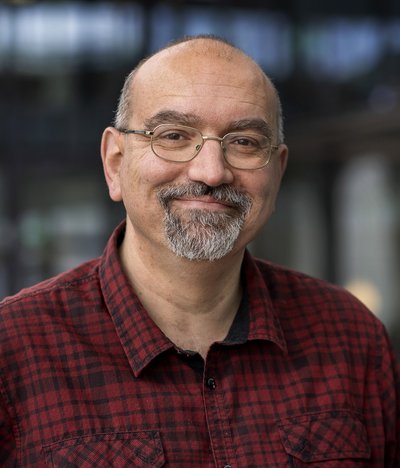
Vipul Goyal is an Associate Professor at the Computer Science Department of Carnegie Mellon University and a Senior Scientist at NTT Research in California. He is on leave from CMU since joining NTT Research in June 2020 after a 7-year tenure at Microsoft Research. His research focuses on Cryptography , Quantum Cryptography , Security & Privacy , and Theoretical Computer Science , supported by grants from NSF, DARPA, Department of Energy NETL, JP Morgan, Cisco, PNC, Ripple, and CyLab initiatives.
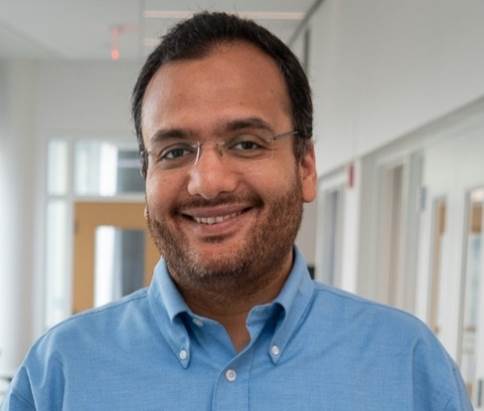
Martin Huber is Professor of Applied Econometrics and Policy Evaluation at the University of Fribourg, Switzerland, within the Faculty of Management, Economics and Social Sciences, Department of Economics. He leads the Chair of Applied Econometrics and maintains an active research profile with numerous publications in top economics and statistics journals. His work bridges theoretical econometrics with practical policy applications across multiple domains including labor, health, and education economics. Professor Huber earned his Ph.D. in Economics and Finance in 2010 and served as Assistant Professor at the University of St. Gallen until 2014. He has conducted research stays at Harvard University (2011/2012) and the University of Sydney (2014 and 2019), establishing an international research network. His academic affiliations include the Committee for Econometrics of the Verein für Socialpolitik, Global Labor Organization, Soda Labs (Monash Business School), and Centre for European Economic Research (ZEW) Mannheim. Huber's research focuses on data-based causal analysis , machine learning applications in economics , and policy evaluation methods . He specializes in developing and applying statistical and econometric methods for measuring causal effects, with particular emphasis on semi- and nonparametric microeconometrics. His work spans labor economics (gender occupational segregation, maternal labor supply), health economics, education policy, and competition policy (bid-rigging cartels detection). His recent publications (2023-2025) demonstrate a clear trajectory toward integrating machine learning techniques with traditional econometric methods for causal inference. This includes developing frameworks for causal discovery, improving difference-in-differences methods with machine learning, and creating novel approaches for detecting collusion in markets. His 2023 book "Causal Analysis: Impact Evaluation and Causal Machine Learning with Applications in R" (MIT Press) has become a key reference in the field. As an active researcher, Professor Huber directs several research projects including experimental evaluations of gender occupational segregation in the Swiss apprenticeship market. His work combines theoretical rigor with practical policy relevance, often employing experimental and quasi-experimental methods to address questions of causal mechanisms in social and economic phenomena. Through his Chair of Applied Econometrics, Huber supervises Ph.D. students and maintains an active research group focused on advancing causal inference methodologies. His work has significant implications for evidence-based policymaking across multiple sectors, particularly in evaluating the effectiveness of social programs and economic policies.
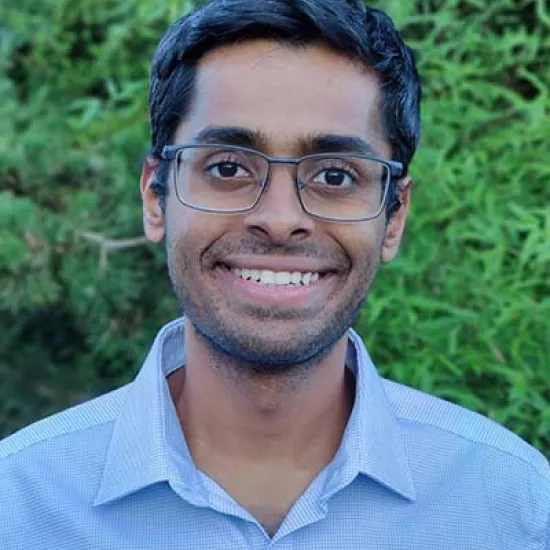
Yan Huang is an Associate Professor of Business Technologies at the Tepper School of Business, Carnegie Mellon University. She holds a Ph.D. in Information Systems and Management from Carnegie Mellon University (2013) and a B.Sc. (with honors) in Information Systems and Management from Tsinghua University, Beijing, China (2009). Prior to joining Carnegie Mellon University, she served as an Assistant Professor of Technology and Operations at the University of Michigan–Ann Arbor, Ross School of Business (2013-2018). Her educational background includes: B.Sc. (with honors) in Information Systems and Management, Tsinghua University, Beijing, China (2009) Ph.D. in Information Systems and Management, Carnegie Mellon University, Pittsburgh, United States (2013) Dr. Huang's research examines the economic and social impacts of technologies and identifies effective designs and policies for technology-enabled markets and platforms. She employs economic theories, structural modeling, statistical modeling, machine learning methods, and an understanding of the underlying technologies in her research. Her recent work focuses on the economics of artificial intelligence (AI) and machine learning (ML), with particular attention to algorithmic fairness, transparency, and collusion. She is among the first to bring economic and social perspectives to research on fair ML. Additionally, she studies digital platforms and online markets, examining how firms can leverage data-driven strategies to optimize pricing, personalization, and user engagement. Her recent publications demonstrate a strong focus on the intersection of AI/ML with economic principles, particularly in areas like algorithmic bias, pricing strategies, and platform regulation. A significant portion of her work examines how machine learning algorithms impact financial lending decisions, housing markets, and content creation platforms. Her research methodology frequently combines structural econometric modeling with empirical analysis of real-world data, providing both theoretical insights and practical implications for platform design and policy. Dr. Huang has received several prestigious awards for her scholarly contributions: AIS Senior Scholar Best Publication of 2023 Award for "Algorithmic Transparency with Strategic Users" Runner Up, Best Paper Published in Information Systems Research for 2021 for "Crowds, Lending, Machine, and Bias" INFORMS Information Systems Society Sandy Slaughter Early Career Award Finalist, Best Student Paper Award, CIST 2021 for "Human-Algorithmic Bias: Source, Evolution, and Impact" Pounds Fellowship As an active member of the academic community, Dr. Huang serves on various committees at CMU including the MSBA Curriculum Review Committee and the Tepper School Strategic Plan Task Force. She has also held editorial positions for Management Science, Information Systems Research, and the International Conference on Information Systems. Her teaching portfolio includes courses on Human and Algorithmic Bias, Modern Data Management, and PhD-level instruction at the Tepper School.
Friederike Mengel is a Professor of Economics at the University of Essex and holds a Visiting Professorship at Erasmus University Rotterdam. She is also a Fellow of the Academy of Social Sciences (UK). Her research focuses on Behavioural Economics , integrating Game Theory , Evolutionary Dynamics , and Social Network Analysis . Key research themes include social influence in networks , opinion dynamics , emergence of social norms , and links between social identity, bounded rationality, and discrimination . Recent work explores Covid-19 impacts on productivity and innovation in hybrid work environments . Her scientific awards include the Best Paper Award from Quantitative Economics (2018) and recognition as an Academy of Social Sciences Fellow. Her publications span topics like cooperation in viscous populations , strategic behavior in repeated games , and gender bias in opinion aggregation , with media coverage in outlets like The Economist and Financial Times .
Peter G. Troyan is an Associate Professor of Economics and Director of Graduate Studies at the University of Virginia, where he has served on the faculty since 2014. His research bridges theoretical and experimental economics with practical applications in market design, focusing on strategic behavior in matching systems and auction mechanisms. Education: Ph.D. in Economics, Stanford University (2014) B.S. in Mathematics (with High Honors) and Physics, University of Michigan (2008) Troyan's research centers on microeconomic theory with emphasis on game-theoretic foundations of market design. His work develops novel frameworks for matching under constraints, analyzes strategic manipulation in allocation mechanisms, and pioneers experimental validations of theoretical predictions. Key contributions include formalizing 'obvious strategyproofness' as a solution concept and designing ranking methods that improve welfare in competitive matching processes. His interdisciplinary approach integrates experimental economics to test theoretical models in real-world settings like school choice and labor markets. His publication record reveals a consistent trajectory toward foundational contributions in mechanism design, with increasing focus on simplicity principles and behavioral realism. Recent work in Econometrica establishes theoretical limits of mechanism simplicity, while experimental studies in Games and Economic Behavior validate preference structures in matching markets. The recurring themes across his publications demonstrate how theoretical insights can be operationalized to solve allocation problems with distributional constraints. Scientific Awards: Best Paper Award and Exemplary Theory Paper Award at ACM Conference on Economics and Computation (EC19) UVA Quantitative Collaborative (2022) and Arts & Sciences Research Grant (2022) Roger Sherman Fellowship (2019-2020) and multiple university research grants Stanford and University of Michigan fellowships during graduate training Troyan directs the Economics Department's graduate program while securing continuous research funding, including five consecutive Bankard Fund grants (2017-2024) supporting his theoretical and experimental work. His service includes editorial roles at the American Economic Journal: Microeconomics and extensive peer review for top economics journals. As an active conference participant, he regularly presents at the ACM Conference on Economics and Computation and Econometric Society meetings, contributing to the market design research community through the University of Virginia Bankard Workshop in Economic Theory. His leadership extends to mentoring graduate students in economic theory research and collaborating with international scholars like Marek Pycia and Thayer Morrill. Current projects explore desirable ranking methodologies and the boundaries of strategyproof allocation mechanisms, positioning his work at the forefront of market design theory.
Giacomo Calzolari is a Full-time Professor of Economics at the European University Institute (EUI) in Florence, Italy, and serves as Provost for Research and External Relations. He holds a Ph.D. from the University of Toulouse. His research focuses on Industrial Organization, Competition Policy, Artificial Intelligence, and Banking Regulation, with notable contributions to understanding algorithmic pricing, collusion, and regulatory frameworks. Education: Ph.D. in Economics from the University of Toulouse. Research Interests: Artificial Intelligence and Market Dynamics Competition Policy and Antitrust Economics Algorithmic Pricing and Collusion Banking Regulation and Supervision Behavioral and Experimental Economics Publications: Recent work includes studies on AI-driven markets, algorithmic collusion, and regulatory policy. His research emphasizes the intersection of technology and competition, with over 50 publications in top-tier journals like the American Economic Review and International Journal of Industrial Organization. Awards: Recognized with the 'Best Paper Award' from the Association of Competition Economics (2013) and the 'Young Economist Award' (2005). Advisory Roles: Advises the European Commission on competition policy and the European Parliament on AI in financial markets. Serves as Editor of the International Journal of Industrial Organization and European Economy - Banks and Regulation. Research Groups: Leads projects on digital transformations, technological change, and AI's impact on competition. Supervises numerous graduate students and collaborates with institutions like the Centre for Economic Policy Research (CEPR).
Dr. Yun Lu is an Assistant Professor in the Department of Computer Science at the University of Victoria (UVic), affiliated with the Faculty of Engineering & Computer Science. Their research focuses on differential privacy variants, secure multiparty computation, rational cryptography, and blockchain security under rational attackers. Lu received their PhD from the University of Edinburgh, supervised by Professor Vassilis Zikas, and holds BSc/MSc degrees from UCLA. They advise PhD students in differential privacy and related areas, including Mahboubeh Bahari, Yanchen Fan, Tyler Makaro, and former student Tiger Wu. Their work bridges theoretical foundations with practical applications, emphasizing privacy-preserving technologies and secure cryptographic protocols. Lu teaches courses such as Cryptography (CS 429/529) and Topics on Data Privacy (CS 588A), and has led educational sessions at the Berkeley Math Circle for high school students. Education: PhD (University of Edinburgh), MSc/BSc (UCLA) Research Trends: 2023-2025 focus on differential privacy frameworks, blockchain security, and adversarial model analysis Awards: None explicitly listed
Dr. Felix Mezzanotte is an Assistant Professor of Law at Trinity College Dublin and Director of the MSc in Law and Finance Programme, a collaboration between Trinity Law School and Trinity Business School. He holds a PhD and advanced degrees from the University of East Anglia, SOAS (University of London), and the University of Warwick. His research focuses on the legal dimensions of sustainable finance, corporate sustainability reporting, investor protection, and compliance frameworks within financial markets. Academic Role: Assistant Professor of Law Affiliations: Trinity Law School, Trinity Business School (MSc Programme Director) Professional Experience: Former teaching at Hong Kong Polytechnic University, policy advisor for the World Bank, and visiting scholar at Columbia Law School and others. Dr. Mezzanotte's research interests span sustainable finance regulatory design, ESG compliance, blockchain applications in reporting, and cross-border enforcement challenges. His recent work emphasizes the legal accountability mechanisms linking corporate sustainability disclosures to investor rights under EU directives. Publications reflect a focus on EU sustainable finance policy, with analysis of regulatory complexity, blockchain innovations, and investor protection gaps. Recent articles address double materiality frameworks, impact reporting standards, and the role of robo-advisors in ESG integration. Key Award: Faculty of Business Award for Outstanding Teaching (Hong Kong Polytechnic University) Research Collaborations: European-China Law Studies Association, Columbia Center for Sustainable Investment He supervises doctoral candidates exploring topics like greenwashing prevention, non-financial disclosure obligations, and regulatory enforcement in sustainable finance contexts.
Boris Škorić is an Associate Professor in the Security group at Eindhoven University of Technology (TU/e), affiliated with the Department of Mathematics and Computer Science. His research focuses on security applications leveraging noisy data, quantum physics, and cryptographic techniques. He holds a PhD in Theoretical Physics from the University of Amsterdam and has worked at Philips Research before joining TU/e in 2008. Research interests include secure key storage, anti-counterfeiting, privacy-preserving biometric systems, and quantum security protocols. His work bridges physics, information theory, and cryptography, addressing challenges like collusion-resistant watermarking and quantum-based security solutions. He is part of the Center for Quantum Materials and Technology Eindhoven and teaches courses such as 'Introduction to Quantum Computing and Security.' No ancillary activities are listed, and his contributions are centered within TU/e's academic and research ecosystem.
Elaine Shi is a Professor at Carnegie Mellon University's Computer Science Department and Electrical and Computer Engineering Department, with an Adjunct Professor appointment at the University of Maryland. Her research spans cryptography, security, blockchain technology, algorithms, and privacy-enhancing techniques. Co-founder of Oblivious Labs, Inc. Co-developer of cryptographic protocols adopted by Signal, Meta, and Google Co-founder of CyLab's crypto seminar series Her work has been recognized with prestigious awards including the Packard Fellowship, Sloan Research Fellowship, ACM Fellow, and IACR Fellow. She has advised numerous PhD students and postdocs, many of whom now hold academic or industry positions. 2023 ACM CCS Test of Time Award 2020 CyLab Distinguished Alumni Award 2016 ONR YIP Award Recent publications focus on advancing cryptographic protocols, privacy-preserving algorithms, and blockchain security, with key contributions in garbled RAM, oblivious computation, and differentially private mechanisms.
Gururaj Saileshwar is an Assistant Professor in the Department of Computer Science at the University of Toronto, within the Mathematical and Computational Sciences school. His research focuses on securing computing hardware and systems, with a focus on microarchitectural security (cache side-channels, Rowhammer attacks), system security (memory safety), and security for machine learning systems. Education: PhD in Computer Science from Georgia Institute of Technology (2019), advised by Prof. Moinuddin Qureshi. B.Tech and M.Tech from Indian Institute of Technology Bombay (India). Prior to UofT, he was with NVIDIA Research. Research interests include developing new attacks, defenses, and tools for automated security analysis. His work has received multiple awards including the IEEE Top Pick in Hardware and Embedded Security, HPCA Best Paper Award, and IEEE HOST Best PhD Dissertation Award. He teaches courses on secure computer systems and hardware security, including CSC427 (Computer Security) and a topics course on secure computer systems. His lab focuses on hardware-software co-design solutions for security and reliability challenges in modern computing systems. Labs/Teams: Leads the Secure Hardware Systems Lab at UofT, collaborating on Rowhammer mitigation, cache attack defenses, and machine learning security. Grants: Active funding from NSF, industry partnerships with NVIDIA, and other hardware security initiatives. Advising: Currently recruiting PhD students interested in hardware security, system security, and machine learning systems security.
Giacomo Calzolari is a Full Professor of Economics at the European University Institute (EUI) in Florence, previously affiliated with the University of Bologna's Department of Statistical Sciences. His research focuses on competition policy, industrial organization, artificial intelligence, and banking regulation. He holds roles as a Research Fellow at the Centre for Economic Policy Research (CEPR) and serves on steering committees for the European Association of Industrial Economics and the Association of Competition Economics. Education: PhD in Economics from Toulouse School of Economics. His work spans theoretical and applied economics, with notable contributions to algorithmic pricing, collusion dynamics, and digital market regulation. Key publications include studies on AI-driven collusion and policy implications, featured in Science and top journals like the American Economic Review . Awards include the Young Economist Award (European Economic Association) and the ACE Best Paper Award. His research bridges economic theory and policy, addressing modern challenges in digital markets and AI governance.
Giuseppe Colangelo is an Associate Professor of Law and Economics at the University of Basilicata and holds adjunct roles at LUISS Guido Carli (Rome, Italy) and the Transatlantic Technology Law Forum (TTLF). He specializes in innovation policy, competition law, and economic analysis of legal frameworks. His research bridges EU and U.S. antitrust approaches, focusing on digital markets, data governance, and transnational litigation. Education includes a Law degree from LUISS Guido Carli, an LL.M. in Competition Law from Erasmus University Rotterdam, and a Ph.D. in Law and Economics from LUISS. He has been a TTLF Affiliate since 2017. Key research interests include AI-driven collusion, antitrust implications of data accumulation, and interoperability policies. Over 15 publications analyze topics like anti-suit injunctions in SEP litigation, EU-US regulatory divergence in digital platforms, and privacy-antitrust intersections. His work emphasizes transatlantic comparative law and policy recommendations for addressing market power in tech sectors.
Dr. Robert Clark is a Professor and Stephen J.R. Smith Chair in Economic Policy at Queen's University's Department of Economics (Faculty of Arts and Science). He holds an affiliated professorship at HEC Montréal's Department of Applied Economics and is a Bank of Canada Fellow (2022-2026). His research focuses on antitrust, competition policy, financial markets, and industrial organization. Clark has contributed to landmark studies on cartels, algorithmic pricing, and banking regulation. Education: PhD (2003) and MA (1998) in Economics from the University of Western Ontario, and HBSc (1997) in Quantitative Methods in Economics from the University of Toronto. Research interests include collusion detection, banking fragility, algorithmic competition, and regulatory policy. He has received awards for his work on merger effects and algorithmic pricing, including the 2020 Public Utility Research Prize. Clark advises the John Deutsch Institute and serves as a fellow at CIRANO. He has organized major conferences such as the Montreal Summer IO Conference series (2012–2025) and sessions on Competition Policy at the Canadian Economic Association meetings (2021–2024). His research bridges theoretical models and empirical evidence, addressing real-world economic challenges like cartel behavior and macroprudential policies.
Ryan Henry is an Assistant Professor in the Department of Computer Science at the University of Calgary. His research focuses on applied cryptography, emphasizing the development of secure systems that prioritize user privacy. His work spans designing privacy-enhancing technologies, implementing cryptographic protocols, and analyzing number-theoretic attacks on cryptographic assumptions. He also explores theoretical aspects of cryptographic efficiency and practical deployment challenges. While specific educational background details are not provided in the text, his research contributions highlight expertise in cryptography, secure systems, and privacy-preserving technologies. His work has addressed topics such as Private Information Retrieval (PIR), secure messaging, and blockchain privacy. Key research interests include: Secure Multiparty Computation Privacy-Preserving Data Access Efficient Cryptographic Protocols Zero-Knowledge Proofs IoT Security Cryptocurrency and CBDC Design His recent publications emphasize advancements in distributed systems security, privacy in recommendation systems, and cryptographic efficiency. Notable contributions include the Grotto and Duoram frameworks for secure computation, and proposals for Canadian CBDC frameworks. Despite extensive research output, no scientific awards or grants are explicitly mentioned in the provided text. Collaborations and lab affiliations are not detailed, though his work suggests involvement in interdisciplinary projects on privacy and security technologies.