Jennifer Gabrys is Chair in Media, Culture and Environment at the Department of Sociology, University of Cambridge. As Principal Investigator of the ERC-funded projects Smart Forests and Citizen Sense , she investigates intersections between digital technologies, environmental practices, and citizen participation. Her research focuses on: Digital environmental sensing Citizenship and data practices Smart technologies and urban ecosystems Environmental storytelling and justice Her recent publications include the books Citizens of Worlds (2022) and How to Do Things with Sensors (2019), while earlier works address computational ecologies ( Program Earth , 2016) and electronic waste ( Digital Rubbish , 2011). She co-edits the Planetarities book series and contributes to journals like Big Data & Society and New Media & Society . Scientific recognition includes: Ziman Award (2018) for public science engagement Goldsmiths Public Engagement Award (2018) She supervises graduate research in digital social research, environment-society relations, and citizen participation. Her work involves developing open-air toolkits for environmental struggle and examining how sensor technologies transform environmental practices.
Martin Reisigl serves as Associate Professor in the Department of Linguistics at the University of Vienna's Faculty of Philology and Cultural Studies. His academic profile shows active engagement in teaching courses including Introduction to Pragmatics, Text Linguistics and Discourse Analysis, Introduction to Sociolinguistics, and Introduction to Language Policy for both the 2025 winter and summer semesters. His research spans multiple interdisciplinary domains with a strong focus on critical approaches to language and society. Reisigl's research interests form a rich tapestry of linguistic inquiry centered on Applied Linguistics with particular emphasis on Critical Discourse Analysis . His work explores the intersections of language with power structures, examining sociolinguistic phenomena, discourse practices, and pragmatic functions across various contexts. He investigates how language operates in political communication, medical settings, environmental discourse, and gender relations. His theoretical framework draws extensively from semiotics, particularly Peirce's sign theory, and integrates perspectives from political linguistics, ecolinguistics, and argumentation theory. A significant portion of his recent work focuses on climate change discourse, analyzing how narratives, storytelling, and linguistic framing shape public understanding of the climate crisis. His scholarship consistently addresses issues of discrimination, examining manifestations of racism, nationalism, populism, and gender-based discrimination through linguistic analysis. Analysis of Reisigl's recent publications reveals a strong trajectory toward examining contemporary sociopolitical issues through linguistic lenses. His work demonstrates increasing focus on climate discourse, where he critically examines narrative frameworks and their implications for public understanding of environmental crises. Simultaneously, he maintains rigorous engagement with right-wing populism, analyzing ambivalent discursive strategies particularly regarding gender relations. His scholarship shows integration of computational approaches to discourse analysis, as seen in his work on AI applications for detecting hate speech. The publications consistently employ the Discourse-Historical Approach, reflecting his methodological commitment to understanding language in its social and historical contexts. Reisigl actively contributes to academic discourse through numerous invited lectures at international institutions, addressing topics ranging from climate communication to critical discourse analysis methodology. His work bridges theoretical linguistic inquiry with practical applications for social understanding and intervention, maintaining a consistent critical perspective on language-power relationships across diverse contexts.
Colin J. Carlson is an Assistant Professor of Epidemiology (Microbial Diseases) at the Yale School of Public Health , with affiliations at the Yale Institute for Global Health . His research focuses on the intersection of climate change and infectious disease risks, particularly cross-species viral transmission, global health governance, and data science applications in disease modeling. Education : PhD in Environmental Science, UC Berkeley (2017); Postdoctoral Fellow, Georgetown University (2020) and National Socioenvironmental Synthesis Center (2018) His work addresses planetary health challenges, including climate-driven disease emergence, legal epidemiology of outbreak reporting, and open data frameworks for pandemic preparedness. Recent publications highlight innovations in virome network analysis, geospatial vaccine strategies, and climate-health attribution studies. Key Scientific Awards : Co-founder & Executive Director of Verena (2019 NSF Biology Integration Institute, $12.5M) Contributor to IPCC and IPBES reports Dr. Carlson advises doctoral students in cross-university collaborations and leads the Carlson Lab , which develops open platforms for viral risk assessment. His policy work includes roles on the PEPFAR Scientific Advisory Board and editorial boards for npj Climate Action and Viruses .
Tim Wappenhans is a Research Fellow and doctoral candidate at the Department of Comparative Political Behavior, Institute for Social Sciences, Humboldt University. His work bridges experimental research on political behavior with data science applications in electoral analysis and redistricting. Education: Ph.D. candidate (DYNAMICS Research Training Group, 2021–present), M.A. in Social Sciences (Humboldt University, 2020), B.A. in Cultural History and Theory (Humboldt University, 2014) Affiliations: DYNAMICS Research Training Group, Humboldt Governance Lab Research focuses on radical right party dynamics, democratic resilience, and methodological innovations in electoral data analysis. He employs field experiments, conjoint studies, and large-scale ballot data mining to explore voter behavior and institutional accountability. Key publications analyze: Ticket splitting patterns in nationalized elections Racial polarization in congressional districts Gerrymandering's impact on electoral competition Privacy risks in transparent election results Scientific contributions include developing open-source tools for MRP analysis, redistricting simulations, and co-authoring datasets on U.S. elections.
Florian Irgmaier serves as a Research Fellow at the Weizenbaum Institute for the Networked Society, currently affiliated with the “Technology, Power and Domination” research group since September 2023. His career at the institute spans multiple roles including Visiting Researcher (2023) and prior Research Fellow positions in “Quantification and Social Regulation” (2017-2022), alongside earlier work at the Alexander von Humboldt Institute for Internet and Society. His academic foundation includes a Master’s in Social Sciences from Humboldt-Universität zu Berlin (2013-2018) and a Bachelor’s in Political and Administrative Sciences and Sociology from the University of Potsdam (2009-2013), establishing interdisciplinary expertise at the intersection of technology and social systems. Irgmaier’s research critically examines the sociology of knowledge and technology, with emphasis on feasibility/responsibility frameworks, behavior change techniques (particularly “nudging”), and automation’s impact on organizational action. His work consistently interrogates how digital technologies reshape societal power structures, regulatory paradigms, and human agency through empirical and theoretical lenses. Analysis of his 2017-2022 publications reveals a cohesive trajectory exploring algorithmic governance (notably Uber case studies), ethical implications of AI-generated media, and behavioral economics in public policy. These works demonstrate methodological diversity across journal articles, book chapters, and policy reports, united by critical interrogation of digitalization’s societal consequences without technological determinism. As an active member of the “Technology, Power and Domination” research group, Irgmaier contributes to interdisciplinary investigations into digital power dynamics, organizational transformation, and regulatory innovation within contemporary networked societies.
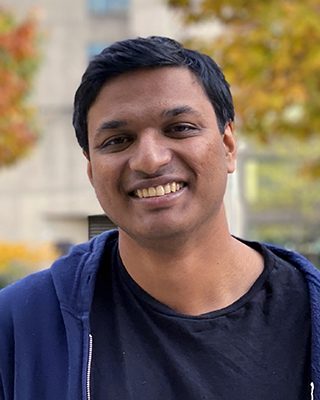
Abhishek Gupta is an Assistant Professor in the Department of Computer Science and Engineering at the Paul G. Allen School of Computer Science & Engineering, University of Washington, where he leads the Washington Embodied Intelligence and Robotics Development (WEIRD) Lab. His research focuses on developing algorithms that enable robotic systems to learn complex tasks in unstructured environments like offices and homes. Dr. Gupta completed his Ph.D. in Machine Learning and Robotics at Berkeley Artificial Intelligence Research (BAIR) at UC Berkeley, advised by Professors Sergey Levine and Pieter Abbeel. Prior to his faculty position, he was a post-doctoral scholar at MIT, collaborating with Russ Tedrake and Pulkit Agarwal. He also earned his bachelor's degree from UC Berkeley. His research interests span computer vision, machine learning, and robotics with particular focus on deep reinforcement learning algorithms that can learn in real-world environments with and around humans. His recent work explores deployment time reinforcement learning, foundation models from off-domain data, fast real-world adaptation, human-in-the-loop interaction, and real-to-sim-to-real policy learning methods. His publications reveal a strong emphasis on practical robotic applications, especially in dexterous manipulation, assistive robotics, and embodied intelligence. Dr. Gupta has received several prestigious recognitions including a Best Paper award at LLARLA workshop at ICML 2018, a RSS 2023 Best Systems Paper Finalist, and multiple spotlight/oral presentations at top conferences including NeurIPS, ICLR, and CoRL. As a principal investigator, Dr. Gupta leads the WEIRD Lab which focuses on developing embodied intelligence for robotics. He actively collaborates with major institutions including MIT, UC Berkeley, and industry partners. His research is funded by grants supporting fundamental advances in robotics and AI, with applications ranging from assistive technologies to industrial automation. Dr. Gupta is currently recruiting highly motivated Ph.D. students and postdoctoral researchers to join his lab.
Giacomo Pailli serves as an Associate Professor in the Department of Law at the University of Palermo, specializing in civil procedure and consumer law. His academic activities are centered at Via Maqueda 172 with regular office hours held Wednesdays 10:00-12:00 via TEAMS or in-person. Research focuses on evolving civil litigation frameworks across three interconnected domains: technological integration in judicial systems (evidentiary digitalization, AI-assisted dispute resolution), transnational consumer protection mechanisms (cross-border redress, EU regulatory harmonization), and constitutional dimensions of collective redress. His work critically examines the tension between traditional Italian legal culture and global class action paradigms , particularly regarding mass tort litigation and arbitration. Publication analysis reveals consistent engagement with procedural innovation since 2012, shifting from foundational studies on Cappelletti's constitutional legacy toward urgent digital-age challenges in evidence management and global deterrence systems. Key trends include the declining US hegemony in transnational dispute resolution and emerging European models for collective redress . Professional engagement includes active participation in national legal discourse through specialized conferences and scholarly reviews, though no formal awards or major grants are documented in available sources. Teaching responsibilities encompass jurisprudence instruction with structured student consultation protocols, utilizing both physical and virtual office hour formats to accommodate graduate legal education demands.
Hannah Knox is an Honorary Professor of Anthropology in the Department of Anthropology at University College London's Faculty of Social & Historical Sciences. She joined UCL in 2014 as a Lecturer in Digital Anthropology and Material Culture, having previously worked at the ESRC Centre for Research on Socio-Cultural Change at the University of Manchester and Manchester Business School. Her research spans digital anthropology, infrastructure studies, climate change, and energy futures. Her educational background includes a PhD from the University of Manchester (2003) focused on new media start-up firms and economic development organizations, examining cultural imaginaries associated with ICTs. She also holds a Postgraduate Certificate in Teaching and Learning in Higher Education from the Institute of Education, London. Professor Knox's research interests focus on the intersection of digital technologies with social and cultural practices, particularly in the context of infrastructure, climate change, and energy transitions. Her work explores how digital technologies frame ideas about economy, exchange, and work in contemporary society, with particular attention to how communities engage with energy futures and climate action through data practices and material interventions. Her extensive publication record reveals a consistent focus on the social life of digital technologies, with recent work emphasizing energy futures, climate action, and infrastructure. Her articles demonstrate an interdisciplinary approach that bridges anthropology with environmental studies, data science, and energy policy, highlighting the political and social dimensions of technological systems. As co-editor of the influential 'Digital Anthropology' textbook (2nd Edition, 2021), Professor Knox has helped shape the field's theoretical and methodological frameworks, contributing significantly to anthropological understandings of digital culture and its global implications.
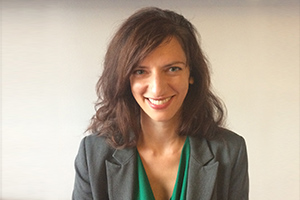
Sabine von Mering is a Professor of German and Women’s, Gender, and Sexuality Studies at Brandeis University , where she chairs the Department of German, Russian, and Asian Languages and Literature and serves as Director of the Center for German and European Studies. She is also affiliated with the Environmental Studies Program at Brandeis and the Minda de Gunzburg Center for European Studies at Harvard University.
Abraham Glasser serves as an Assistant Professor in the Department of Accessible Human-Centered Computing within Gallaudet University's School of Science, Technology, Accessibility, Mathematics, and Public Health. His teaching portfolio includes graduate courses such as AHC-604 Applied Information Accessibility, AHC-691 Thesis Accessibility Project Planning, and specialized topics in accessibility standards and data visualization, reflecting his commitment to advancing accessible technology education. Professor Glasser's research centers on dismantling digital barriers for deaf and hard of hearing communities through innovative human-computer interaction solutions. His work pioneers sign language interfaces for personal assistants, investigates captioning system optimization, and explores AI-driven accessibility enhancements. Methodologically, he combines empirical user studies with technical development to create genuinely inclusive technologies that address real-world communication challenges faced by deaf users in digital environments. Analysis of his recent publications reveals a strong trajectory toward integrating artificial intelligence with accessibility needs, particularly through large language models for caption customization and robust sign language recognition systems. His research consistently prioritizes deaf user perspectives in technology design, with increasing focus on ethical AI implementation and workplace accessibility solutions as evidenced by his 2025 publications on employment barriers and AI action planning. Professor Glasser actively mentors graduate students, currently advising five master's candidates in accessibility-focused research. His professional service includes leadership roles as Chair for the ASSETS 2023 Student Research Competition and Associate Chair for ACM CHI 2024, demonstrating significant contributions to the accessibility research community. He has secured internal funding through Gallaudet's Faculty Development Committee grant to advance his accessibility initiatives.
Dr James Muldoon is a Reader (Research) in Management and Marketing at the Essex Business School , University of Essex. His research bridges political theory, digital labor, and critical AI ethics, focusing on the intersections of democracy, platform economies, and socialist thought. He is actively involved in supervising PhD research, including Dougie Booth's work on the political economy of the energy transition.
Dr. Mohammad Salahshour is a Research Fellow at the Department of Collective Behavior, Max Planck Institute of Animal Behavior in Konstanz, Germany. His work focuses on understanding collective behavior, evolutionary game theory, and ecological dynamics across biological and robotic systems. Research interests include the mechanisms behind swarm intelligence, predator-prey interactions, cooperation dynamics in heterogeneous populations, and the interplay between ecological resources and evolutionary processes. He explores these themes through agent-based modeling, game theory frameworks, and interdisciplinary approaches. Recent work highlights contributions to understanding how noise impacts cooperation, the evolution of moral norms, and the adaptability of robot swarms in dynamic environments. His studies often bridge ecological observations with theoretical models to uncover universal principles governing collective systems. Labs/Teams: Active in the Department of Collective Behavior, collaborating on projects involving animal behavior, robotics, and computational ecology.
Dr. Jessica Feldman is an Assistant Professor in the Communication, Media and Culture department at the American University of Paris. She holds a PhD in Media, Culture, and Communication from NYU (2017) and an MFA in Intermedia Art from Bard (2007). Her research focuses on the intersection of democratic values and digital technology design, particularly in social movements and decentralized communication systems. She previously served as a Postdoctoral Fellow at Stanford University's Digital Civil Society Lab. Education: PhD in Media, Culture, and Communication, New York University, 2017 MFA in Intermedia Art, Bard College, 2007 MA in Experimental Music, Wesleyan University, 2005 BA in Music, Columbia University, 2001 Research Interests: Feldman explores how democratic values are inscribed into digital tools through ethnographic studies of movements like Nuit Debout and Occupy. Her current book project, Radical Protocols , examines decentralized communication technologies' potential for democratic practice. Key themes include surveillance studies, AI ethics, and the socio-technical dimensions of sound and listening. Awards: Cité international des arts Grant (2020-21) Ford Foundation Critical Digital Infrastructure Research Grant (2019) NSF CRISSP-INSPIRE Fellowship (2014-17) Teaching: Teaches courses on digital advocacy, global communications, media aesthetics, and AI ethics. Recent courses include DIGITAL TOOLKIT: COMMUNICATION DESIGN PRACTICUM and GLOBAL ADVOCACY . Labs/Teams: Active in the Civic Media Lab at AUP and collaborates with interdisciplinary groups on projects like Coding Caring and Radical Protocols .
William Cunningham is a Professor at the University of Toronto, cross-appointed at the Vector Institute for Artificial Intelligence and the Department of Computer Science. His research integrates artificial intelligence with multi-level approaches from neuroscience, psychology, sociology, and cultural anthropology to study social cognition and group dynamics. The Social Cognitive Science and SocialAI lab focuses on computational models of cooperation, competition, and social judgment, leveraging deep neural networks and multi-agent systems. Cunningham’s work addresses how societies navigate collective challenges through emergent behaviors and algorithmic frameworks like Sorrel and Concordia. Research interests include generative AI ethics, stereotype persistence, and the interplay between computational models and human social structures. He explores how technology and social systems co-evolve, examining topics like polarization, punishment psychology, and cultural influences on cognition. Recent projects use reinforcement learning to simulate generational social norms and analyze mental health in the context of autistic trait camouflage. Cunningham’s interdisciplinary approach bridges machine learning, neuroscience, and social science to address pressing questions about human behavior and societal progress. His work on societal and technological progress emphasizes adaptive systems through frameworks akin to 'patchwork quilts,' highlighting incremental innovation and cultural integration. Public health studies during the pandemic demonstrated how national identity influences policy support, reflecting broader interests in crisis-driven social coordination and computational epidemiology.
Kristine Bærøe is Professor at the Centre for Medical Ethics, University of Oslo. Research focuses on translational ethics addressing public health challenges including social inequality, priority setting, and ethical implications of AI in healthcare. Holds leadership roles: Leader of medical ethics teaching Member of Norwegian Ethics Committees for Clinical Trials on Medicinal Products and Medical Devices Research areas span: Social inequality in health and governing determinants Priority setting and accountability in healthcare Ethics of AI and medical algorithms Climate change impacts on health ethics Teaches medical/health ethics and research ethics courses. Extensive publication record examines fairness in resource allocation, trustworthy AI implementation, and pandemic ethics frameworks. Leads projects on equitable health governance and ethical AI implementation in clinical settings. Research informs policy development through national ethics committees.