Nicholas Vincent is an Assistant Professor in the School of Computing Science at Simon Fraser University. His research focuses on Human-Computer Interaction (HCI), Responsible Artificial Intelligence, and Human-Centric Machine Learning. He holds a Ph.D. in Technology and Social Behavior from Northwestern University (2022) and a B.Sc. in Electrical Engineering from UCLA (2016). Education: Ph.D., Northwestern University (2022); B.Sc., UCLA (2016) Affiliations: Simon Fraser University School of Computing Science His work examines the societal implications of AI, including data labor rights, algorithmic governance, and ethical design. Notable contributions include frameworks for measuring attentional agency on digital platforms and studies on collective action in tech contexts. He received the SIGCHI Outstanding Dissertation Award in 2024. Recent publications explore topics like AI ethics, governance of generative models, and Wikipedia's role in content ecosystems. He actively participates in policy discussions through media engagements and conference talks, advocating for public-oriented AI development.
Sandra Fredman is Professor of the Laws of the British Commonwealth and the United States at the University of Oxford, with a professorial fellowship at Pembroke College. A leading scholar in equality and human rights law, she has authored seminal works including Human Rights Transformed and Discrimination Law . Her research focuses on comparative equality frameworks, socio-economic rights, and the intersection of gender with legal structures. Fredman holds degrees from the Universities of Witwatersrand and Oxford, and has advised governments globally on anti-discrimination legislation. She founded the Oxford Human Rights Hub in 2012, directing its interdisciplinary research on rights-based approaches to labor, education, and marginalized populations. Her academic contributions span 48 peer-reviewed articles addressing contemporary issues like gig economy labor rights, pandemic-era equality obligations, and platform work regulation. Fredman has received significant recognition including British Academy Fellowship (2005) and honorary QC status (2012). Her work emphasizes 'substantive equality' as a proactive duty, challenging traditional legal paradigms through intersectional analysis. Key research initiatives include the Oxford Martin Programme on Human Rights for Future Generations and the Fairwork Foundation, addressing modern work challenges. Fredman's scholarship bridges theory and practice, influencing global policy through engagement with UN agencies, the EU, and international NGOs. Her teaching encompasses human rights law, labor law, and equality jurisprudence.
Ian Hawkins is an Assistant Professor at the University of Alabama at Birmingham , focusing on Media Psychology , Intergroup Conflict , and Collective Action . He holds a Ph.D. in Communication and Media from the University of Michigan, with prior M.S. and B.S. in Psychology from Central Michigan University. His research employs social scientific methods to analyze how media representations of marginalized groups shape societal attitudes and policy preferences. Current work explores cross-device news consumption dynamics using eye-tracking to assess attention patterns in headline processing. He publishes in New Media and Society , Journal of Communication , and Psychology of Popular Media . Teaching responsibilities include Mass Communication History and Effects and Social Media Use courses. Contact: ihawkins@uab.edu
Laura K. Nelson is an Associate Professor of Sociology at the University of British Columbia , where she also directs the Centre for Computational Social Science . Her work bridges computational methods with sociological inquiry, focusing on gender inequality, social movements, and organizational dynamics. She previously held faculty roles at Northeastern University and affiliated with institutions like the NULab for Texts, Maps, and Networks and the Network Science Institute . Education: PhD in Sociology (2014), University of California, Berkeley MA in Sociology (2009), University of California, Berkeley BA in Sociology (2006), University of Wisconsin-Madison (Phi Beta Kappa) Research Interests span computational sociology, social movement strategy, intersectionality, and STEM equity. She pioneered frameworks like computational grounded theory and radical objectivity , integrating machine learning with qualitative paradigms. Recent publications analyze gender dynamics in emergency medicine, feminist movement histories, and the NSF ADVANCE program’s impact on equity. Her 2024 Social Science Quarterly paper quantifies ADVANCE’s interdisciplinary reach. Awards include the 2020 Best Meta-Reviewer at SocInfo20 and Outstanding Faculty of the Year at Northeastern University. She serves on editorial boards for American Journal of Sociology , Poetics , and Acta Sociologica . She co-PIs a National Science Foundation grant studying gender-equity dissemination in higher education networks and supervises graduate student Jinyang Yu . Her lab, Centre for Computational Social Science , drives open-source methodological innovation.
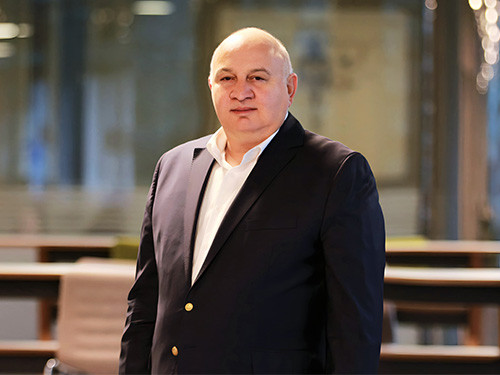
Cem Zafer is an academic researcher affiliated with İstanbul Okan University , specifically the Faculty of Humanities and Social Sciences . His scholarly work spans interdisciplinary topics in sociology, religious studies, and technology's societal impacts. Research Focus: Digital transformation, gender dynamics, and cultural identity. Publications: 15+ peer-reviewed articles and book contributions since 2012. Key Themes: Social media ethics, religious discourse, and labor sociology. His recent publications highlight the interplay between artificial intelligence, social justice, and historical narratives in modern Turkey. While no formal awards or grants are documented in the provided text, his academic output demonstrates sustained engagement with contemporary sociocultural challenges.
Associate Professor Dr. Martin Gruber-Risak has been a core faculty member at the University of Vienna’s Institute for Labour and Social Law since 1996, serving as Associate Professor from 2012 onward and as Scientific Director of the LL.M. programme "Labour Law". Education & Career: 1989-1993 Law studies, University of Vienna 1993-1999 Doctoral studies in law, University of Vienna 2003 William Evans Visiting Fellow, University of Otago, NZ 2007 Habilitation in Labour & Social Law, University of Vienna 2010-2012 Marie Curie International Outgoing Fellow (University of Otago & Vienna) 2020 Visiting Professor, University of Salzburg Research Interests: Gruber-Risak’s scholarship covers Austrian and European labour law, working-time regulation, collective bargaining, dispute resolution & mediation, atypical employment, and the legal challenges of digital platform work. His recent projects analyse crowd-work, algorithmic management and EU initiatives for fair platform working conditions. Publications & Trends: Author of 19 monographs and more than 140 articles since 1999, he explores evolving employment forms, unilateral wage clauses, dismissal protection, and the transposition of EU directives into Austrian law, combining doctrinal analysis with socio-legal and comparative perspectives. Scientific Awards: Leopold Kunschak Science Prize 2009 Cardinal Innitzer Prize 2009 Projects & Grants: He currently leads the FWF project "Virtual Employees" investigating platform work and has participated in EU studies on digitalisation and labour law reform. Labs & Teams: He heads the "Labour Law" LL.M. programme team and is a key member of the Institute for Labour and Social Law research group focusing on digitalisation and European labour standards.
R. Michael Alvarez , Flintridge Foundation Professor of Political and Computational Social Science at Caltech, is a leading scholar in election technology, political methodology, and machine learning applications in social science. Affiliated with the Caltech/MIT Voting Technology Project , the Social and Decision Neuroscience Program , and the Resnick Sustainability Institute , his work bridges technology and democracy. Education: B.A. from Carleton College, Ph.D. from Duke University Academic Career: Caltech faculty since 1992 His research spans: Election Integrity : Monitoring election security, fraud detection, and ballot systems Computational Social Science : Applying machine learning to voter behavior and policy analysis Climate Policy : Examining public attitudes and behavioral interventions for sustainability Online Behavior : Analyzing toxicity in gaming and social media dynamics Key article trends show focus on election forensics (2025 Nature Climate Change study), game toxicity analysis (2025 CHI Play paper), and LLM applications in social science. His students include Jacob Morrier, Mitchell Linegar, and teams of postdocs and undergraduates in Caltech's SURF program. Scientific recognition includes: Google Cloud Research Innovators Class of 2022 Co-editor of multiple academic series including Cambridge Elements in Quantitative Methods
Professor Ruth E Dukes is a Professor of Labour Law and Deputy Director of Research in the School of Law at the University of Glasgow. She holds fellowships with the Academy of Social Sciences and is an emeritus member of the Young Academy of Scotland. Since 2024, she has served as Vice President of the Institute of Employment Rights. Her roles include membership in the Labour Law Research Network, Adapt International Scientific Committee, and the Editorial Board of the Spanish Labour Law and Employment Relations Journal. Education: Graduated from the University of Edinburgh, Humboldt University Berlin, and the London School of Economics. Notable fellowships include an Arts and Humanities Research Council Early Career Fellowship (2011/12) and a MacCormick Fellowship at Edinburgh University. In 2022, she was the Innis Christie Visiting Professor at Dalhousie University, Canada. Research Interests: Focus on collective labour law, worker representation theories, trade union law, and labour history (British, German, European). Current projects include analyzing Otto Kahn-Freund’s contributions to labour law and the Work on Demand ERC-funded study on evolving work contracts. Recent publications include Democracy at Work (2023) and The Labour Constitution (2014, SLSA Prize runner-up). Grants & Awards: Recipient of the European Research Council Starting Grant (€1.42M, 2017–2023). Other grants include a British Academy International Fellowship (2024) and a Marie Curie-Sklodowska Fellowship (2020). Awards include the SLSA Socio-Legal Theory and History Prize (2016). Supervision & Teams: Advising PhD students Neil Saddington (algorithmic management) and Qingqin Zhang (workplace surveillance). Collaborates with Wolfgang Streeck and others on interdisciplinary projects. Leads the Class Conflict and Institutional Change initiative exploring the origins of labour law.
Gregory Lewkowicz is a Professor at the Université libre de Bruxelles (ULB) , Director of the Perelman Center's Smart Law Hub , and a Senior Research Fellow at the University of Nice Sophia Antipolis in Economic Law and Artificial Intelligence. He also teaches at Science Po Paris Law School and the University of Paris II Panthéon-Assas , and is a recurring professor at HEC-Paris for digital transformation programs. Expertise: Digital law and technology, global/transnational law, legal professions Research Focus: Interactions between law and digital technologies (SMART Law), algorithmic law, AI in legal analysis, and transformations of legal professions Leadership: Director of "Penser le droit" collection at Bruylant Publishing , in charge of the Brussels Bar Observatory , and member of AI4Belgium advisory board His recent articles explore trends in algorithmic governance , trustworthy AI , legal argumentation , and digital transformation of legal systems. He has contributed extensively to Brussels School scholarship , focusing on its sociological and philosophical foundations. Gregory Lewkowicz directs research programs on AI ethics , smart city regulations , and global corporate accountability . He is affiliated with the Institute for Artificial Intelligence for the Common Good (FARI) and the Equality Law Clinic (ELC) .
Marylyn D Ritchie, PhD, is the Edward Rose, M.D. and Elizabeth Kirk Rose, M.D. Professor at the Perelman School of Medicine, University of Pennsylvania. She concurrently serves as Director of the Institute for Biomedical Informatics, Vice President for Research Informatics for the University of Pennsylvania Health System, Director of the Division of Informatics in the Department of Biostatistics, Epidemiology, and Informatics, and Vice Dean of Artificial Intelligence and Computing. Education: BS in Biology, University of Pittsburgh at Johnstown, 1999 MS in Applied Statistics, Vanderbilt University, 2002 PhD in Statistical Genetics, Vanderbilt University, 2004 Research Interests Dr Ritchie’s work integrates computational genomics , bioinformatics , pharmacogenomics , and systems genomics to advance precision medicine. She develops statistical and machine-learning approaches to dissect epistasis , genetic epidemiology , and evolutionary computation in large-scale biobanks, with a special focus on cardiovascular disease and Alzheimer’s disease . Her group is also pioneering translational informatics methods that incorporate social determinants of health and fairness metrics into AI-driven clinical decision support. Publication Trends In 2025 alone, Dr Ritchie co-authored more than fifteen high-impact studies spanning vision-language models for 3D CT , multi-omics Alzheimer’s risk prediction , fairness in neuroimaging AI , ancestry-specific pharmacogenomics , and cloud-based polygenic risk score platforms . The collective work highlights a shift from single-omics discovery to integrative, equitable, and clinically actionable models across diverse ancestries. Awards & Honors While specific named awards were not detailed in the text, Dr Ritchie’s endowed professorship and multi-institutional leadership roles signify sustained recognition. Grants & Advising Dr Ritchie leads large NIH, foundation, and industry-funded initiatives that support interdisciplinary teams of postdocs, graduate students, and data scientists. Her lab actively mentors trainees from UPenn’s Cell and Molecular Biology and Genomics and Computational Biology graduate groups. Laboratories & Teams She directs the Ritchie Lab (ritchielab.org), which develops open-source visualization tools such as PhenoGram , PheWAS-View , and Synthesis-View for genome-wide and phenome-wide data exploration. The lab operates within the Institute for Biomedical Informatics and collaborates closely with the Penn Medicine BioBank and multiple clinical departments to translate big-data discoveries into precision medicine workflows.
Dr. Wolfram Barfuss is the Argelander Professor of Integrated Systems Modeling for Sustainability Transitions at the University of Bonn, affiliated with the Center for Development Research (ZEF). He is a member of multiple interdisciplinary research areas including TRA Sustainable Futures, TRA Modeling, and TRA Individual and Societies, as well as the Cluster of Excellence PhenoRob and the Center for Earth System Observation and Computational Analysis (CESOC). He also collaborates with the Potsdam Institute for Climate Impact Research and the Earth Resilience Science Unit. His research focuses on understanding whether humanity is 'smart enough for the good life' by developing formal models of collective learning and decision-making in complex social-ecological systems. He integrates methods from complex systems, multi-agent reinforcement learning, and dynamical systems theory to explore sustainability transitions, cooperation, and Earth system resilience. The recent publications demonstrate a strong focus on modeling collective intelligence, cooperation in stochastic games, decision-making under uncertainty, and integrated World-Earth system modeling. His work spans disciplines including computer science, environmental science, game theory, and cognitive science, with frequent contributions to high-impact journals like PNAS , Nature Communications , and Environmental Research Letters . Argelander Professor for Integrated Systems Modeling for Sustainability Transitions Member, TRA Sustainable Futures Member, TRA Modeling Member, TRA Individual and Societies Cluster of Excellence PhenoRob Center for Earth System Observation and Computational Analysis (CESOC) Earth Resilience Science Unit (Potsdam) Earth Resilience and Sustainability Initiative (Princeton-Stockholm-Potsdam) Dr. Barfuss teaches graduate courses at the University of Bonn and Humboldt University Berlin, including Complex System Modeling of Human-Environment Interactions, Economics on Sustainability, Systems Modeling, and Introduction to Agent-Based Modeling. He leads the BarfussLab, where his team develops computational tools such as pyCRLD for modeling collective reinforcement learning dynamics. While specific student advisees are not listed, his lab and publications suggest active supervision and collaboration with early-career researchers. He has not received any explicitly mentioned scientific awards in the provided text. His research is supported through institutional affiliations and collaborative projects rather than individually listed grants.
Koray Tahiroglu is a University Lecturer at Aalto University's School of Arts, Design and Architecture, specializing in Sound and Music Computing. His work bridges artificial intelligence, digital musical instruments, and embodied interaction, with a focus on deep learning applications in audio synthesis and human-AI creative collaboration. His research explores New Interfaces for Musical Expression (NIME), sonic interaction, and physical computing. He collaborates with SOPI Research Group and Google Brain Team (Magenta) on AI-driven artistic innovation. Recent Publications : 2024 studies on dance-sound cross-correlation and intra-action frameworks; 2023 work on AI-terity and deep learning syllabi; 2022 explorations of GAN synthesis, musical expectations, and lifeworld sonification. Scientific Awards : Co-Creative Artificial Intelligence of Music (2022) 2010 grant for scientific publications and artistic activities 2017 Honorable Mention for mobile cultural heritage research Tahiroglu contributes to digital art education and leads projects at Media Lab Helsinki, advancing sonic interaction and generative audio systems.
Johan Chu is the Sarofim Family Career Development Assistant Professor and an Assistant Professor of System Dynamics at the MIT Sloan School of Management. His research focuses on the dynamics of social power, corporate advantage, and competitive strategies in the digital age. He explores how technological advancements reshape markets, inequality, and organizational structures. Chu holds dual PhDs: a PhD in Physics (Artificial Life) from Caltech (1990s) and a later PhD in Management & Organizations from the University of Michigan Ross School of Business. Prior to academia, he consulted in the U.S., Korea, and China; led enterprise software ventures; and managed a global executive search firm's Asia-Pacific Consumer Practice. His research streams include: 1) durable dominance of firms/ideas; 2) mass attention direction via technology; and 3) evolving work/organizational power in the 21st century. Empirical methods include simulations, large datasets, social network analysis, machine learning, and qualitative interviews. His work bridges physics-inspired computational models with social science theory, addressing topics like scientific collaboration decline, corporate governance shifts, and elite dynamics. Recent insights highlight slowed scientific progress in large fields and the strategic role of attention economies.
Christine ABDALLA MIKHAEIL is an Assistant Professor in the Department of Management of Information Systems at IÉSEG School of Management in France. She holds dual Ph.D. degrees in Business Administration with a focus on Information Technology from the University of Paris Dauphine (France) and Georgia State University (USA), alongside advanced degrees in Business Consulting and Administration from Paris Dauphine. Her research focuses on collective action dynamics in social media, cybersecurity and privacy challenges, artificial intelligence applications, and disinformation propagation. Recent work explores the adoption of privacy-enhancing technologies (PETs), paradoxes in hybrid work visibility, and data adequacy in qualitative IS research. She has published in leading journals such as Information Systems Journal and Information and Organization . Her articles reflect a strong emphasis on understanding socio-technical systems through interdisciplinary lenses, combining behavioral theories with digital technology analysis. No specific awards or grant details are mentioned in her profile. She currently advises no formally listed students.
Giulio Cimini is Associate Professor of Theoretical Physics in the Department of Physics at the University of Rome Tor Vergata and a Research Associate at the 'Enrico Fermi' Research Center. He is a statistical physicist with a strong interdisciplinary focus on complex networks and their applications in socio-economic systems. His research interests include: Statistical Physics of Complex Networks Reconstruction and Validation of Economic Networks Social Network Interactions and Financial Markets Systemic Risk and Financial Contagion Scientific Success, Fitness, and Complexity Adaptive Social Recommendation Codon Usage Bias and Protein Interaction Networks His recent publications reveal a strong trend in applying statistical physics to real-world networks, particularly in finance and social systems. Key themes include the modeling of systemic risk in supply chains and financial networks, the dynamics of collective action on platforms like Reddit (e.g., the GameStop short squeeze), and the development of network reconstruction methods using maximum entropy and optimal transport frameworks. His work often combines empirical analysis with theoretical modeling. Scientific awards and recognitions include: Associate Editor, Frontiers in Physics – Interdisciplinary Physics Board Member, Network Science Society Member, Council of the Complex Systems Society Steering Committee, CCS/Italy He has advised or collaborated with numerous researchers, particularly in projects related to economic networks and complex systems. His work has been supported by Italian national grants such as PRIN and PNRR. He leads or co-leads research projects including RENet and C2T. His research is conducted within interdisciplinary teams involving physicists, economists, and computer scientists, often in collaboration with institutions like ISC-CNR, IMT Lucca, and the Network Science community.