Chunhao Gu is a Doctoral Researcher at Aalto University's Department of Bioproducts and Biosystems. His work intersects Microbial Physiology , Systems Biology , and Machine Learning , focusing on bacterial metabolism under antibiotic stress and computational approaches to biological systems. The 2021 article highlights his integration of metabolic network modeling and machine learning to study bacterial stress responses, while the 2012 work demonstrates expertise in distributed computing for image retrieval systems using Hadoop and Lucene. His research spans interdisciplinary domains, combining bioinformatics with computational methods to address both biological and data-intensive challenges.
Valeriya Nikolaeva Simeonova is an Associate Professor at the Faculty of Mathematics and Informatics, University of Sofia, specializing in Information Technologies . Her research focuses on interdisciplinary applications at the intersection of Bioinformatics , Machine Learning , and Parallel Computing , particularly for error discovery in metagenomics data and QSAR modeling in plant biology. Her work emphasizes Next-Generation Sequencing (NGS) data analysis, where she develops algorithms for error detection and correction. She has contributed to optimizing genome assembly techniques through soft computing approaches and explored distributed computing for financial time series forecasting. Notable publications include studies on Golden Root in vitro culture growth (2013) and metagenomics NGS error detection (2015) in journals like BIOTECHNOLOGY & BIOTECHNOLOGICAL EQUIPMENT . Her collaborations span institutions in Bulgaria, France, and Belgium.
Gürkan Bebek is an Assistant Professor at Case Western Reserve University with cross-departmental affiliations: Department of Nutrition, School of Medicine Center for Proteomics and Bioinformatics, School of Medicine Department of Computer and Data Sciences, Case School of Engineering Gürkan Bebek specializes in bioinformatics analysis of complex biological networks, focusing on precision medicine for cancer and systems biology of Alzheimer's disease. His research explores Shared mechanisms in COPD and lung cancer Causal regulatory network inference Functional subgraph mining in cancer Proteomic differences in Alzheimer's progression Notch signaling in glioma stem cells as reflected in his publications spanning 2007-2025. Key collaborative networks include Alzheimer's disease proteomics with Miyagi Lab Glioblastoma research with Yu/Man/Bao teams Breast cancer metastasis studies with Keri Lab Network biology methodologies with Chance/Koyutürk groups
Karin Dorman is a Professor in the Roy J. Carver Department of Biochemistry, Biophysics and Molecular Biology at Iowa State University, where she conducts interdisciplinary research at the intersection of computational methods and biological systems. Her work bridges bioinformatics algorithm development with investigations into immune signaling pathways and stem cell biology. Her educational background includes: PhD in 2001 from the University of California, Los Angeles B.S. in 1994 from Indiana University, Bloomington Dr. Dorman's research focuses on bioinformatics, computational biology, and molecular genetics, with significant contributions to genomic analysis methods and immunological mechanisms. She develops computational tools like MULTICLUST for population genetics and CAPG for polyploid genotyping, while investigating NOD1-dependent NF-kB signaling in hematopoietic stem cell specification. Her work on antimicrobial resistance prediction models bridges veterinary and human health through One Health frameworks. Analysis of her 2022-2025 publications reveals dual methodological and biological emphases: (1) innovative bioinformatics tools for genotyping, epigenomics, and microbiome analysis; (2) mechanistic insights into inflammatory signaling dynamics in stem cell development. This integration of computational and experimental approaches characterizes her interdisciplinary research program. No scientific awards are documented in the provided information. While specific advisees aren't listed in available materials, Dr. Dorman contributes to graduate education through Iowa State's Bioinformatics and Computational Biology Program. Her collaborative work with researchers like Ambuj Kumar and Robert Jernigan demonstrates active engagement in interdisciplinary teams focused on protein interactions and genomic analysis.
Berta María Guijarro Berdiñas is a Researcher in the Department of Computer Science and Artificial Intelligence at the University of A Coruña , Spain. She is affiliated with the Laboratory for Research and Development in Artificial Intelligence and teaches courses like Machine Learning , Development of Intelligent Systems , and Programming at both undergraduate and postgraduate levels. Research Focus: Her work lies at the intersection of Artificial Intelligence , Machine Learning , and Knowledge-Based Systems . Key contributions include frugal learning (limited data), anomaly explanation , and distributed learning for edge devices. She applies these to areas like health informatics , forest fire management , and human-robot interaction . Recent Publications span explainable AI , anomaly detection , multi-agent systems , and low-power machine learning . Her articles appear in top venues like Expert Systems with Applications and IEEE Transactions on Neural Networks and Learning Systems . Grants & Projects include EU-funded initiatives, Spanish Ministry of Science grants, and regional collaborations. She focuses on AI for healthcare , smart systems , and distributed learning .
Parker Ruth is a PhD student in the Department of Computer Science at Stanford University ’s School of Engineering . He holds dual B.S. degrees in Computer Engineering and Bioengineering from the University of Washington (2021). His research lies at the intersection of ubiquitous computing , mobile health , and wearable sensing , focusing on sensor design and biophysical prior integration into time series algorithms. Parker’s work bridges computer science and biomedical engineering , with applications in neuromuscular disease monitoring , cardiac auscultation , and public health surveillance . NSF Graduate Research Fellowship (2021) Tau Beta Pi Fellowship (2021) Barry Goldwater Scholarship (2020) College of Engineering Dean’s Medal for Academic Excellence (2021) His publications highlight wearable health technology , mobile diagnostics , and RNA biosurveillance in public spaces. Parker’s academic trajectory reflects a commitment to interdisciplinary research and global health innovation .
Prasad Tetali is a Regents' Professor at the Georgia Institute of Technology , with appointments in both the School of Mathematics and the School of Computer Science . He also holds an adjunct professor position at Emory University's Mathematics and Computer Science departments. Education: PhD in Mathematics (1991) from the Courant Institute of Mathematical Sciences at NYU; MS in Mathematics (1987) from the Indian Institute of Science; Postdoc at AT&T Bell Labs His research spans Discrete Mathematics, Probability Theory, and Theoretical Computer Science , focusing on Markov chains, Isoperimetry, Combinatorics, Computational number theory, and Algorithms. Recent work includes applications to statistical physics models and hypergraph structures. He has served as Director of the ACO Ph.D. Program since 2019 and held leadership roles like Interim Chair of the School of Mathematics. His publications reflect a blend of discrete geometry, stochastic processes, and algorithmic analysis . Key Honors: AMS Fellow (2012) SIAM Fellow (2009)
Sara Walker is an Associate Professor at Arizona State University, serving as Deputy Director of the Beyond Center for Fundamental Concepts in Science, Associate Director of the ASU-Santa Fe Institute Center for Biosocial Complex Systems, and a member of the Board of Directors of Blue Marble Space. Her work bridges astrobiology and theoretical physics with a focus on the origin of life. School of Earth and Space Exploration Beyond Center for Fundamental Concepts in Science ASU-Santa Fe Institute Center for Biosocial Complex Systems Walker explores whether universal 'laws of life' exist, emphasizing how information structures physical systems. Her research spans exoplanet atmospheric chemistry, biochemical network analysis, and the application of assembly theory to quantify molecular complexity and evolutionary dynamics. Her recent publications highlight advancements in assembly theory for life detection, biochemical reaction modeling, and exoplanet habitability assessments. Key themes include chemical selection, information processing in biological systems, and the universality of biochemical patterns. Walker actively engages in public science communication through appearances at the World Science Festival, 'Through the Wormhole,' and NPR's Science Friday. She co-founded an astrobiology-themed social website and contributes to STEM education initiatives.
R.L. Lagendijk serves as a Professor within the Faculty of Electrical Engineering, Mathematics and Computer Science at Delft University of Technology, specializing in Cyber Security research. His academic profile demonstrates sustained leadership in privacy-enhancing technologies and cryptographic systems development across diverse application domains. His core research spans Cyber Security, Cryptography, and Privacy-Preserving Computation with specialized expertise in Differential Privacy and Algorithmic Security. Lagendijk pioneers practical implementations for sensitive data protection in supply chain logistics, healthcare diagnostics, and blockchain infrastructure, consistently bridging theoretical cryptography with real-world security challenges through innovative protocol design. Analysis of his publication trajectory since 2020 reveals concentrated advancement in differential privacy applications, particularly for trajectory data obfuscation in supply chains and bin-packing optimization in logistics. His work increasingly integrates blockchain security with AI ethics frameworks, demonstrating evolving focus toward human-centric privacy solutions in emerging technologies. His distinguished career includes recognition through significant professional honors: NAE Fellow (2023) Professor Lagendijk has guided 44 students through academic supervision while actively leading European research initiatives including H2020 IRIS, SPECIES, and SESAME projects. His editorial contributions to IEEE Transactions on Information Forensics and Security underscore his influence in shaping cryptographic standards. As a core member of TU Delft's Cyber Security research group, he drives collaborative innovation in privacy-preserving computation through both theoretical exploration and industry-engaged solutions development, maintaining active participation in national and international cybersecurity discourse.
Juan Carlos Linares Calderón is a Full Professor at Pablo de Olavide University in the Department of Physical, Chemical and Natural Systems. His research focuses on Mediterranean relict forests' response to climate change through multidisciplinary approaches combining dendrochronology , ecophysiology , genomics , and epigenetics . PhD in Science (2008) from University of Jaén Principal Investigator in 10+ national/international projects Research Themes Specializing in climate change impacts on forest ecosystems , Linares leads the Forests Ecology and Global Change Lab . His work spans from individual tree responses to large-scale biogeographical patterns, challenging CO 2 -induced growth paradigms and emphasizing forest management as climate modulator. Scientific Contributions Over 162 publications with 82,704 reads and 9,074 citations Highly Cited Author status (Ioannidis et al., 2020) Developed SAPFLUXNET global transpiration database Email: jclincal@upo.es
Xiaoyue Ni is an Assistant Professor at Duke University’s Thomas Lord Department of Mechanical Engineering and Materials Science, with additional appointments in Biostatistics & Bioinformatics and Electrical and Computer Engineering. They lead the Ni Lab, developing human-oriented materials intelligence through soft electronics and digital metamaterials. PhD, California Institute of Technology (2018) Research focuses on flexible electronics , mechanical metamaterials , and machine learning to create dynamic materials that sense and adapt to human physiology. Key innovations include soft wireless sensors , liquid metal actuation , and non-invasive biomarker monitoring . Recent publications (2022–2019) highlight expertise in wearable health technology , mechanical-acoustic interfaces , and programmable materials . Collaborative work spans reconstructive surgery , athlete monitoring , and thermal expansion control .
Philip Romero, Ph.D., is an Associate Professor in the Department of Biomedical Engineering at Duke University. He earned his doctorate from the California Institute of Technology in 2012 and leads the Romero Lab, which relocated to Duke in 2023. His research focuses on developing computational and experimental methods for protein engineering, with applications spanning therapeutics, biocatalysis, and synthetic biology. Research Interests: Romero's work integrates machine learning, microfluidics, and high-throughput experimentation to study protein fitness landscapes. Key areas include: Self-driving laboratories for autonomous protein optimization Neural network models for predicting protein functions Therapeutic enzyme engineering (ACE2, caspases, lysins) Microfluidic platforms for deep mutational scanning His recent publications demonstrate a strong emphasis on machine learning-guided protein design, with 80% of post-2022 publications involving AI/ML methods. Therapeutic applications against infectious diseases (particularly SARS-CoV-2) and microbiome engineering represent emerging directions. Lab & Advising: The Romero Lab develops novel technologies for protein engineering, including custom gene library assembly platforms and droplet microfluidics systems. Romero mentors graduate students (e.g., Nishit, who recently defended a thesis on transcription factor engineering) and has collaborated with researchers across computational biology, metabolic engineering, and virology.
Dr Darfiana Nur is an Adjunct Senior Lecturer at the University of Western Australia (UWA) , affiliated with the School of Physics, Mathematics and Computing and the Department of Mathematics and Statistics . She has a rich academic background with experience at Flinders University and Curtin University, and a strong record in teaching and research. Education: BMath – University of Gadjahmada (UGM), Indonesia (1988) MSc (Research) – University of Western Australia (1993) PhD in Statistics – Curtin University of Technology (1999) Research Interests: Her research focuses on nonlinear time series modelling , particularly Smooth Threshold Autoregressive (STAR) and regime-switching volatility models. She applies Bayesian MCMC algorithms and Hidden Markov Models (HMMs) in genetics and bioinformatics, and explores deep learning for time series forecasting. Her work spans DNA sequence modelling , Bayesian inference , and machine learning applications in complex data environments. She has published extensively in top-tier journals and contributed to both theoretical and applied statistics. Scientific Contributions: She has authored 23 journal publications , 10 refereed conference papers , and 35 non-refereed conference papers . Her recent work includes advanced statistical modelling in GARCH, BEKK, and LASSO frameworks. Supervision: She has supervised 7 PhD students , 1 MMath(Research) , 9 Masters by Coursework , and 7 Honours students across UWA, Flinders University, and the University of Newcastle. Teaching: Her teaching portfolio includes courses in Data Science , Mathematical Statistics , Time Series Analysis , and Bayesian Inference , delivered at both undergraduate and postgraduate levels.
Travis Wheeler is an Associate Professor in the Department of Pharmacy Practice & Science at the University of Arizona. His work spans bioinformatics, computational biology, and algorithm development for genomic sequence analysis. Developed tools like HMMER and Dfam Research focuses on transposable elements, sequence alignment, and epigenetics Co-author of key works with Robert Finn, Sean Eddy, and colleagues Research Interests include machine learning applications in biological sequence annotation, drug discovery, and evolutionary genomics. His work bridges computational methods with biomedical applications. Notable Contributions : Advancing profile Hidden Markov Model (HMM) methodologies Creating community resources for transposable element research Developing alignment algorithms for biological sequences Collaborations include institutions like Institute for Systems Biology, Harvard University, and Montana State University.
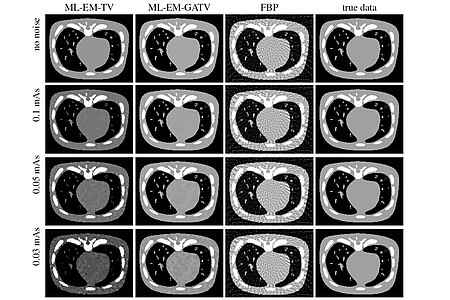
Jürgen Hesser is a Professor at the Mannheim Medical Faculty , Heidelberg University, specializing in Experimental Radiotherapy and Medical Imaging . His research focuses on solving inverse problems in imaging, particularly for CT reconstruction , brachytherapy planning , and low-dose imaging . Current affiliations: Clinic for Radiotherapy and Radiooncology, Mannheim University Hospital Collaborative ties: Interdisciplinary Center for Scientific Computing (IWR) and Center for Bioinformatics (ZITI) at Heidelberg University Research interests center on anisotropic total variation techniques for medical and industrial applications, including MR-guided interventions and real-time radiation therapy . His work has led to a 1000x speed improvement in brachytherapy planning algorithms. Recent publications highlight expertise in image reconstruction (CT/X-ray), noise optimization , machine learning for cancer classification, and big data management solutions. His methods are applied to both clinical and industrial imaging challenges. Additional contributions include scientific data infrastructure development and variance stabilization techniques for medical sensors. The research group maintains strong interdisciplinary links with Physics, Mathematics, and Computer Science faculties.