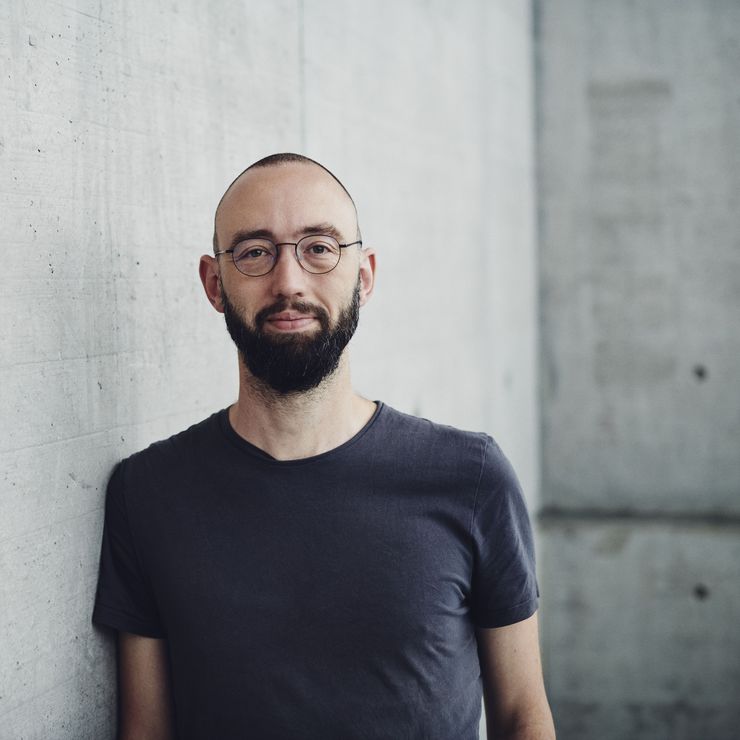
Dr. Juri Kolcak is a researcher at Bielefeld University, holding dual affiliations with the Faculty of Engineering and the Center for Biotechnology (CeBiTec) . He is an active member of the Algorithmic Cheminformatics Group, which operates across both institutional units, indicating interdisciplinary work at the intersection of computer science and chemical sciences. His research focuses on cheminformatics and computational approaches to chemical data analysis . The Algorithmic Cheminformatics Group specializes in developing algorithms for chemical structure analysis, molecular modeling, and bioinformatics applications. His work likely involves creating computational methods to process and analyze complex chemical datasets, bridging engineering principles with biochemical applications. Dr. Kolcak maintains an office at UHG U10-128 with direct contact number +49 521 106-5298. While currently listed in the university directory, the system notes that he does not yet have a formal research profile in the university's FIS portal, suggesting he may be relatively new to his position or still developing his independent research program. The Algorithmic Cheminformatics Group operates as a collaborative unit between engineering and biotechnology domains, indicating Dr. Kolcak works in an environment that emphasizes interdisciplinary research connecting computer science methodologies with chemical and biological applications. His position within this specialized group suggests expertise in both algorithmic development and chemical domain knowledge.
Dr. Bianca Laker is a researcher affiliated with the Faculty of Biology at the University of Bielefeld, specifically within the Computational Biology department. She maintains dual affiliations with both the Faculty of Biology's Computational Biology unit and the Center for Biotechnology (CeBiTec) Computational Biology Group. Her research interests center around computational approaches to biological problems, with focus areas including bioinformatics, computational genomics, and systems biology. As a researcher in this field, her work likely involves developing and applying algorithms for analyzing complex biological datasets, modeling molecular interactions, and interpreting genomic information through computational frameworks. Based at office UHG G2-130 with contact number +49 521 106-8701, Dr. Laker appears to be actively involved in the research community at Bielefeld University. While specific details about her publications and research projects are not currently visible through the university's public profiles, her positioning within both the Faculty of Biology and CeBiTec suggests interdisciplinary work bridging computational methods with biological applications.
Vida Abedi is an interdisciplinary researcher with expertise spanning biochemistry, molecular/genetic medicine, and engineering. Their work integrates computational methods with clinical applications, focusing on machine learning, multi-resolution data analytics, and electronic health record mining.
Maike Buchin is a Professor of Theoretical Computer Science / Algorithmics at the Faculty of Computer Science, Ruhr-University Bochum, where she has been serving since 2019. She also holds the position of Studiendekanin Informatik (Dean of Studies for Computer Science). Prior to her current position, she was a Visiting Professor at Technical University Dortmund (2017-2019) and a Juniorprofessor at Ruhr University Bochum (2013-2017). Dr. Buchin's research focuses on computational geometry, algorithms, and trajectory analysis. Her work particularly emphasizes Frechet distance computations, curve matching, and geometric algorithms. She has made significant contributions to understanding the computational complexity of geometric problems and developing efficient algorithms for trajectory data analysis. Her research has applications in geographic information systems, movement pattern analysis, and shape comparison. Analysis of her recent publications reveals a strong focus on clustering algorithms for polygonal curves, Frechet distance computations, and trajectory analysis. Her work bridges theoretical computer science with practical applications in GIS and movement data analysis. She has developed approximation algorithms, coreset constructions, and efficient query processing techniques for geometric problems. Her research has been published in top-tier venues including ACM Transactions on Algorithms, Computational Geometry: Theory and Applications, and proceedings of major conferences like Symposium on Computational Geometry (SoCG) and European Symposium on Algorithms (ESA). Dr. Buchin has supervised numerous students and taught courses including Algorithm Paradigms, Computer Science 2 - Algorithms and Data Structures, Computer Science 3 - Theoretical Computer Science, Geometric Algorithms, Data Structures, and seminars on Cryptology and Theoretical Computer Science. She leads research in the Theoretical Computer Science / Algorithmics group at Ruhr-University Bochum, collaborating with researchers worldwide on computational geometry problems and their applications.
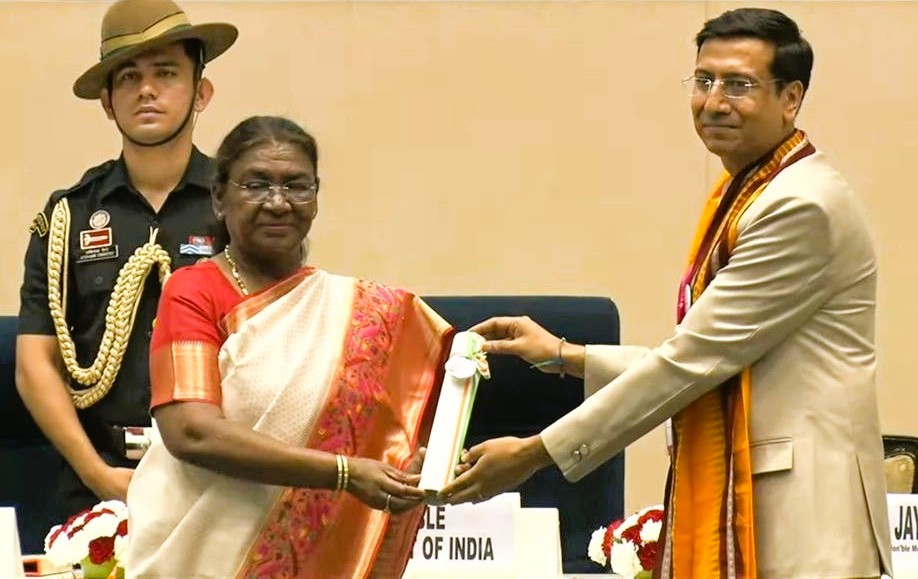
Prof. Kapil Ahuja is a Full Professor in the Department of Computer Science & Engineering at the Indian Institute of Technology Indore (IIT Indore), where he heads the Mathematics of Data Science and Simulation (MODSS) research lab. After completing dual Master's degrees and a Ph.D. from Virginia Tech (USA) followed by postdoctoral work at the Max Planck Institute in Germany, he has held visiting positions at UT Austin, IMT Atlantique, Sandia National Labs, TU Dresden, and TU Braunschweig. His administrative roles include founding Dean of International Affairs and former Head of Computer Science & Engineering at IIT Indore. Education: Ph.D. in Mathematics, Virginia Tech (2011) M.S. in Mathematics, Virginia Tech (2009) M.S. in Computer Science, Virginia Tech (2007) B.Tech. in Mechanical Engineering, IIT (BHU) Varanasi (2001) Research Focus: Prof. Ahuja's work bridges theoretical advances with real-world applications, emphasizing machine learning algorithms for plant/cancer studies, game-theoretic poverty reduction models, exascale climate modeling solvers, and drone trajectory optimization. His interdisciplinary approach integrates numerical linear algebra with network science to solve complex systems problems across healthcare, agriculture, and climate science, supported by 4.85 Crores INR in external funding. Publication Trends: Recent work demonstrates growing emphasis on AI-driven optimization for physical systems (drones, climate models) and biomedical applications (cancer classification). His publications increasingly feature cross-disciplinary collaborations between computer science, biology, and economics, with notable contributions in explainable AI for healthcare and resource allocation algorithms for social networks. Scientific Recognition: National Teacher's Award (2024) from the President of India Five-time recipient of IIT Indore's Best Teacher Award (2013-2023) Best Poster Award at International Workshop on Game Theory & Networks (2019) Steeneck Graduate Research Fellowship (Virginia Tech, 2011) Multiple SIAM travel awards for international conferences Mentorship & Service: Prof. Ahuja has graduated 5 Ph.D. and 4 M.S. (Research) students while mentoring 75 B.Tech. projects. He serves as Associate Editor for Applied Intelligence Journal (Springer Nature) and Knowledge and Information Systems, organizes international conferences, and reviews for 35+ academic sources. His administrative leadership significantly expanded IIT Indore's global partnerships through the Research Park initiative. Research Infrastructure: The MODSS lab maintains active collaborations with Oak Ridge National Lab, Sandia National Labs, and European institutions. Current projects include AI-optimized drone swarms for agricultural monitoring and game-theoretic models for poverty intervention, utilizing high-performance computing resources for large-scale simulations.
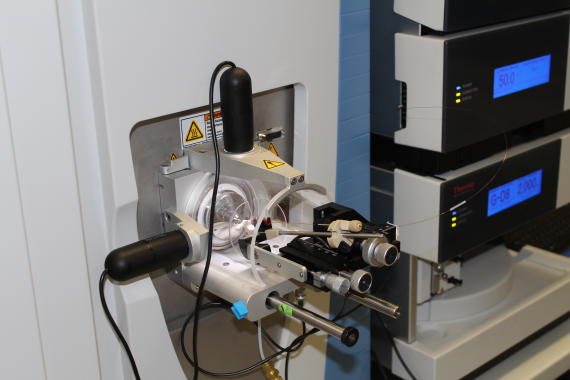
Professor Michael Hippler leads a research group at the Institute of Plant Biology and Biotechnology at the University of Münster, Germany. He also serves as a Special Appointed Professor at Okayama University, Japan, from April 2019 until March 2028 (3 months per year) through the Okayama University RECTOR Program. His research focuses on plant cell responses to environmental stresses and the molecular mechanisms involved in photosynthetic machinery. His primary research interests include adaptation to low iron availability, light-harvesting versus light-dissipation mechanisms, hydrogen metabolism, calcium-dependent protein phosphorylation in plants, photosystem function and regulation, N-glycosylation in algae, and bioinformatics and proteomics. He primarily uses the green alga Chlamydomonas reinhardtii as a model system, combining molecular techniques like reverse genetics and proteomics to study these processes. His recent publications demonstrate a strong focus on N-glycosylation in algae, particularly examining protein modifications and their effects on cellular functions. His work also extensively covers photosystem structure and function, employing techniques like chemical crosslinking, mass spectrometry, single particle electron microscopy, and cryo-electron microscopy. The research has significant implications for understanding photosynthetic regulation and adaptation mechanisms. Professor Hippler leads the Mass Spectrometry-based Proteomics Unit Biology of Plants (MSPUB), which provides large-scale proteomic analyses for research groups at the Institute. The laboratory is equipped with a hybrid linear ion-trap mass spectrometer (Q-Exactive plus-Orbitrap) coupled to an Ultimate Nano liquid chromatography system. He supervises numerous PhD, Master's, and Bachelor's students and has developed several bioinformatics tools including GenomicPeptideFinder (GPF), qTRACE, pyQms, SugarPy, and Crosslinx. His research is funded by various sources including the DFG FOR 5573 "Dynamic Regulation of the Proton Motive Force in Photosynthesis" consortium.
Stefan Niebler is a Lecturer and active researcher in the fields of Bioinformatics , Computational Biology , and Medical Physics . He has contributed to advancements in RNA-Seq data processing and medical imaging techniques through publications from 2019 to 2021. His teaching experience includes co-instructing an Introduction to Programming course during the winter semester 2018/19. Academic Affiliation: Teaching role at Philosophical Seminar Building (Winter Semester 2018/19). Research Focus: Development of computational methods for RNA-Seq analysis (e.g., RNACache, RainDrop) and medical imaging optimization in dentistry. Publication Trends: Recent work highlights applications of algorithmic innovation in bioinformatics and medical physics, emphasizing efficiency and accuracy in data processing. Collaborations: Worked with colleagues like A. Müller, B. Schmidt, and T. Hankeln on interdisciplinary projects bridging computer science and biomedical research.
Prof. Dr. Carsten Duch is a Full Professor (W2) for Neurobiology at the Institute of Zoology, Johannes Gutenberg-University Mainz, Germany. His research focuses on the molecular mechanisms regulating neuronal properties and their functional consequences in health and disease, using Drosophila melanogaster as a model organism. 1990-1994: Biology study at Free University Berlin 1998: PhD in Neurobiology (Free University Berlin) 1998-2000: Postdoc in Neuroscience, University of Arizona 2005: Habilitation in Zoology His work bridges neurophysiology, developmental biology, and evolutionary genetics. Current projects investigate synaptic integration, ion channel regulation, and metamorphosis-related neural plasticity. Recent publications highlight his contributions to evolutionary biology, phylogenetics, and genomics, particularly in fireflies, Drosophila , and plant reproductive strategies. Contact: cduch@uni-mainz.de
Dr. Jinlong Ru is a Research Fellow at the Institute of Virology, Helmholtz Center Munich, Germany, where he leads research in phage therapy, metagenomics, and natural product drug discovery. His work develops advanced computational tools for viromic data analysis to elucidate phage-host interactions and accelerate therapeutic discovery, with strong ties to the Technical University of Munich where he completed his doctoral studies. His academic qualifications include: Ph.D. in Bioinformatics, Technical University of Munich, Germany (2015-2023) M.Sc. in Bioinformatics, Northwest A&F University, China (2012-2015) B.Sc. in Biotechnology, Northwest A&F University, China (2008-2012) Dr. Ru's research integrates computational biology with virology to pioneer phage-based therapeutics, focusing on metagenomic analysis of microbial ecosystems and natural product pipelines for antimicrobial discovery. His expertise spans machine learning applications in genomic data, phage ecology in environmental and clinical contexts, and translational development of viromic insights into novel treatments for antibiotic-resistant infections. His recent publications reveal a trajectory toward interdisciplinary translational science, bridging structural genomics, microbiome dynamics, and clinical oncology. Key themes include machine learning-driven variant detection across species, urbanization's impact on microbiome-cancer links, and bacteriophage-mediated protection in transplantation medicine. This work demonstrates consistent innovation in computational frameworks applied to high-impact biomedical challenges. As an active collaborator in international consortia, Dr. Ru contributes to projects advancing phage therapy through computational design, with emerging focus on personalized antimicrobial strategies and microbiome engineering for clinical applications.
Anton Dignös is a professor at the Free University of Bozen-Bolzano , specializing in temporal databases , time series analysis , and database systems . His research focuses on efficient query processing for interval data, temporal joins, and schema design, with significant contributions to in-memory and time series databases. Key research areas include: Temporal Data Management : Advanced techniques for interval and duration queries. Time Series Analytics : Machine learning integration and pattern detection. Schema Optimization : Automated design and tuning of database schemas. Visual Analytics : Tools for period data comparison and correlation analysis. His work spans collaborations with researchers like Johann Gamper and Michael H. Böhlen , addressing challenges in healthcare systems, industrial applications, and financial data analytics. Notable contributions include algorithms for temporal anti-joins , range-duration queries , and machine learning-based anomaly detection .
Mahdi Vasighi is currently serving as an Assistant Professor at the Department of Computer Science and Information Technology, Institute for Advanced Studies in Basic Sciences (IASBS) in Zanjan, Iran, a position he has held since February 2012. Prior to this, he was a Post-doc Researcher at the same institution from February 2011 to February 2012. He has also served as a Visiting Researcher at the Milano Chemometrics and QSAR Research Group, University of Milano - Bicocca, Milan, Italy from September to October 2009, and as a Guest Lecturer at the Pasteur Institute, Tehran, Iran since September 2016. Dr. Vasighi earned his educational qualifications from the Institute for Advanced Studies in Basic Sciences (IASBS) in Zanjan, Iran, where he completed his Ph.D. in Chemometrics in May 2010 and his M.Sc. in Analytical Chemistry between 2002 and 2005. His undergraduate education was in Pure Chemistry at Imam Khomeini International University, Qazvin, Iran, from 1998 to 2002. Dr. Vasighi's primary research interests lie at the intersection of bioinformatics, machine learning, and data analysis. His work focuses on structural bioinformatics, particularly on modeling relationships between biological sequences and their corresponding structure or function. He has made significant contributions to the field of self-organizing maps with dynamic structure, developing innovative approaches like the Directed Batch Growing Self-Organizing Map (DBGSOM) that enhance topology preservation and visualization of high-dimensional data. His research spans multiple domains including protein structural classification, cancer diagnostics using fluorescence spectroscopy, and drug discovery for diseases like COVID-19. Dr. Vasighi's publication record demonstrates a strong trajectory in applying machine learning techniques to solve complex problems in bioinformatics and medical diagnostics. His recent work shows an increasing focus on applying computational approaches to healthcare challenges, including cancer detection, protein analysis, and drug discovery for viral diseases. He has successfully bridged the gap between theoretical machine learning advancements and practical applications in biology and medicine, with a particular emphasis on developing interpretable models that can be used by domain experts. Dr. Vasighi has actively contributed to the academic community through teaching and conference organization. He has served as Local Chair for the International Conference on Contemporary Issues in Data Science 2019 (CiDaS 19) and as Scientific Committee Member and Organizing Chair for previous CICIS conferences. His teaching portfolio includes graduate courses in Artificial Neural Networks, Computational Data Mining, Bioinformatics, Statistical Pattern Recognition, and Multimedia Systems. Dr. Vasighi has supervised numerous MSc students, with over twenty graduated students and nine current students listed in his profile. His research has been supported through collaborations with institutions like the Pasteur Institute, where he worked on projects related to nuclear magnetic resonance-based screening of thalassemia and determination of coronary heart disease risk using NMR spectra of plasma lipoproteins. Through his Directed Batch Growing Self-Organizing Map (DBGSOM) package and other software contributions, Dr. Vasighi has made his research tools accessible to the broader scientific community. His work continues to push the boundaries of how machine learning can be applied to solve challenging problems in bioinformatics and medical diagnostics.
Daniel Huson is a Professor of Algorithms in Bioinformatics at the University of Tübingen , affiliated with the Faculty of Science and actively contributing to the Computer Science Department . He has held this position since 2002 and previously served as Senior Staff Scientist at Celera Genomics (1999-2002) and Post-Doc at Princeton University and the University of Pennsylvania (1997-99). Education: PhD in Mathematics, Bielefeld University (1990, summa cum laude) Habilitation in Mathematics, Bielefeld University (1997) Studied Mathematics and Physics, University of Washington (1980-86) Research Interests: Designing algorithms for bioinformatics and computational biology Metagenomic data analysis using tools like MEGAN and SplitsTree Phylogenetic networks and evolutionary modeling Microbiome dynamics and industrial bioproduction optimization Development of interactive software for biological data visualization Exploring autocatalytic reaction networks in early biochemistry Scientific Contributions: Developed MEGAN, a widely used metagenome analysis tool Created SplitsTree for phylogenetic network analysis Published extensively on microbiome analysis, metagenomic binning, and evolutionary relationships Contributed to power-to-gas technology and bioelectrochemical systems Awards & Grants: Royal Society of New Zealand International Leader Fellowship (2020-22) PLOS Computational Biology Research Prize (2017) Technology Transfer Prize of the IHK Reutlingen (2016) Co-organizer of major conferences (GCB, RECOMB, ISMB, etc.) Leadership Roles: Head of Computer Science Department (2011-14) Founding member of Computomics (since 2012) Faculty member of IMPRS 'From Molecules to Organisms' (since 2011)
Dr. Kim Völlinger is a Researcher at the Technical University of Berlin in the Models and Theory of Distributed Systems group. Her academic career spans formal methods, trustworthy machine learning, and distributed systems, with a focus on integrating interactive proof assistants like Coq for neural network verification. Education: Computer Science with a minor in Cognitive Psychology at Humboldt University of Berlin and ENSEEIHT in Toulouse, France PhD Supervisors: Wolfgang Reisig (HU Berlin), Kurt Mehlhorn (MPI-INF Saarbrücken), Holger Schlingloff (Fraunhofer FOKUS) Her research bridges theoretical computer science and practical verification, exploring witness-based runtime verification for asynchronous systems, hybrid system formalization, and LLM-supported proof synthesis. She also contributes to interdisciplinary collaborations, particularly evident in her microbiology-related publications. Recent publications on Google Scholar highlight her work in environmental microbiology, including microbial community dynamics in petroleum reservoirs, DNA extraction from crude oil, and bacterial stress responses in extreme saline environments. These studies reflect cross-disciplinary applications of computational modeling to environmental systems. Teaching activities include formal languages, automata theory, and interactive theorem provers. She actively mentors doctoral students, leads research-oriented master's projects, and supervises student theses. The Models and Theory of Distributed Systems group at TU Berlin serves as her primary research environment, where she continues to develop tools for computational verification and machine-reviewed proofs.
Miguel Andrade is a Professor in the Faculty of Biology at the University of Mainz and serves as Adjunct Director at the Institute of Molecular Biology (IMB) since 2014. Previously, he was a Group Leader at the Max Delbrück Center for Molecular Medicine (2007-2014) and Assistant Professor at the University of Ottawa (2003-2007). His research focuses on computational analysis of protein sequences, particularly tandem repeats and low complexity regions, with applications in neurodegenerative diseases like Huntington's. His educational background includes: PhD in Biochemistry from Universidad Complutense de Madrid (1994) Professor Andrade's research spans bioinformatics and computational biology with emphasis on protein sequence evolution, structural implications of repetitive elements, and development of analytical tools. He investigates how tandem repeats and low complexity regions influence protein folding, aggregation, and interactions in diseases, while exploring evolutionary conservation across species. His work bridges computational methodologies with experimental validation in neurodegenerative contexts. Recent publications (2023-2025) demonstrate consistent innovation in protein sequence analysis, featuring computational tools for homorepeat detection, machine learning applications in proteomics, and multi-omics integration. Key themes include neurodegenerative disease mechanisms, immune system regulation, and evolutionary adaptations, with significant contributions to databases like RepeatsDB and tools such as REP2 and seqQscorer. No scientific awards were documented in the source materials. While specific student names and grant details are unlisted, his leadership at IMB indicates supervision of graduate researchers and postdoctoral fellows. His collaborative network spans immunology, cancer research, and neuroscience, evidenced by co-authorship on diverse projects from lipid-disease associations to T-cell differentiation studies. He directs a research group at IMB Mainz focused on computational genomics, developing algorithms for protein sequence analysis and maintaining community resources. The team actively investigates polyglutamine dynamics in neurodegeneration and applies machine learning to proteome-wide challenges, maintaining strong ties with experimental laboratories for biological validation.
Prof. Dr. Philipp Berens is a Full Professor of Data Science at the University of Tübingen and serves as Director of the Hertie Institute for AI in Brain Health. He concurrently holds the position of Speaker for the Excellence Cluster "Machine Learning – New Perspectives for Science" and is core faculty at the Tübingen AI Center, driving interdisciplinary applications of machine learning in neuroscience and ophthalmology to advance disease diagnosis and treatment. His academic trajectory includes a Habilitation in Biostatistics (2017) and a Dr. rer. nat. in Computational Neuroscience (2013), both from the University of Tübingen, preceded by a B.A. in Philosophy (2009) and Dipl. Inform. in Bioinformatics (2008) from the same institution. Berens specializes in developing interpretable machine learning algorithms for integration into scientific and clinical workflows, with research emphasizing neuronal modeling, computational neuroscience, and ophthalmological applications. His work bridges algorithmic innovation with real-world medical challenges, particularly in early disease detection. His scientific contributions have been honored with: DFG Heisenberg Professorship ERC Starting Grant Bernstein Award from the German Ministry for Science and Education He leads the Neuronal Modeling Central Office research group and directs the Hertie Institute for AI in Brain Health, securing competitive funding including an ERC Starting Grant and DFG Heisenberg Professorship. While his group advances AI-driven neuroscience, no specific advisees are documented in the source material. His institutional leadership spans the Excellence Cluster since 2019 and the Hertie Institute since 2023, building synergies between the Tübingen AI Center and clinical neuroscience initiatives to translate algorithmic discoveries into medical practice.