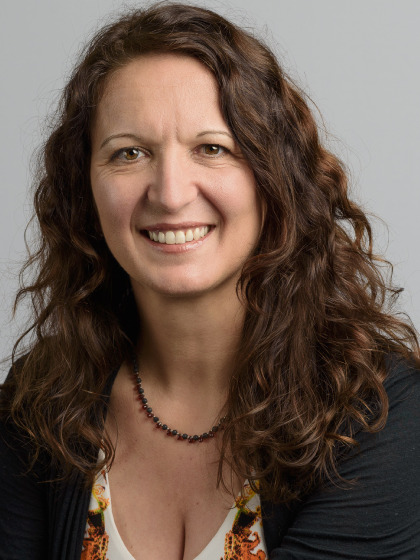
Anqi Shao is a researcher in Life Sciences Communication at the University of Wisconsin–Madison, affiliated with SciLab. Her work merges computational methods with science communication to analyze public sentiment about contentious scientific issues like AI ethics, CRISPR technology, and social distancing during crises. Research Interests: AI hallucinations in science communication Public opinion analysis using NLP Equity in conversational AI Vaccine hesitancy and social media CRISPR technology framing in agriculture Publication Trends: Her recent work (2025–2020) spans AI ethics, misinformation dynamics, and pandemic response communication. She employs mixed methods (qualitative and quantitative) to dissect topics like moral appeals in messaging and algorithmic bias in GPT-3. Labs & Teams: She works in SciLab, focusing on innovative computational approaches to science communication challenges.
Dr. Mandar Gogate is a Senior Research Fellow at the School of Computing Engineering and the Built Environment, Edinburgh Napier University. He actively contributes to the Centre for Artificial Intelligence and Robotics, focusing on multimodal signal processing and AI applications. Research Themes: Audio-Visual Speech Enhancement, Green AI, Data Privacy, Hearing Aid Technology, Climate Modeling Collaborations: Prof. Amir Hussain, Dr. Kia Dashtipour, Prof. Ahmed Al-Dubai His research explores audio-visual speech enhancement for hearing aids, leveraging deep learning and fuzzy logic. He investigates green AI techniques like neural network pruning for energy efficiency and develops privacy-preserving frameworks using thermal imaging. His work spans climate data analysis with partial least squares and underwater image enhancement via dimension decomposition transformers. Recent publications include 2026 surveys on ensemble malware detection and 2025 studies on cognitive load-driven speech enhancement . He has contributed to federated learning for market surveillance and multimodal hearing aid projects. As a second supervisor for Idrees Hasan's research on COG-MHEAR hearing aids, he mentors emerging scholars. His grants include £3.25M from EPSRC for the COG-MHEAR project (2021-2026) and £12k from Royal Society for multilingual speech enhancement studies. He works with the Centre for Artificial Intelligence and Robotics and Centre for Distributed Computing , integrating 5G-IoT systems into assistive technologies. His technical background includes compiler design, embedded systems, and wireless sensor networks from earlier projects like gesture mice and Hadoop-based rule mining.
Lucia Valente is Full Professor of Labor Law at Sapienza University of Rome, where she teaches in the Department of Social and Economic Sciences within the Faculty of Political Science, Sociology, and Communication. Her academic career spans multiple institutions including Sapienza University of Rome, the University of Pavia, and the University of Enna, with significant contributions to labor law scholarship and policy development. Her research focuses on labor law, European labor market regulation, employment policies, workers' rights, and the evolving relationship between labor law and technological innovation. Professor Valente has extensively published on topics including labor market reforms, collective bargaining, gender equality in the workplace, and the legal implications of digital platform work and artificial intelligence. Her scholarly work bridges academic research with practical policy applications, frequently contributing to public debates through articles in outlets like lavoce.info . Professor Valente's recent research demonstrates a clear trajectory toward examining the intersection of labor law with digital transformation, particularly focusing on how artificial intelligence and digital platforms are reshaping employment relationships. Her publications from 2023-2025 reveal increasing attention to regulatory frameworks for platform work, gender pay gap remedies, and the adaptation of traditional labor protections to new forms of work organization. Marco Biagi Prize (2005) for her monograph 'Consuetudini e usi nel rapporto di lavoro subordinato' Rome Capital of Women Award (2013) dedicated to outstanding Roman women professionals Professor Valente actively participates in academic governance, serving on numerous evaluation committees for academic positions across Italian universities. She has held significant public roles including Regional Assessor for Labor in the Lazio Region (2013-2018) and continues to influence labor policy through her membership in scientific committees of organizations like INAPP and Fondimpresa. Her current research agenda reflects contemporary challenges in labor markets, with particular emphasis on digital transformation, gender equality, and the adaptation of labor protections to new work arrangements.
Adithya Vadapalli is an Assistant Professor at the Department of Computer Science and Engineering (IIT Kanpur, India). His research focuses on constructing systems that prevent data leaks through cryptographic methods, with broader applications in secure computation and privacy preservation. Education: Ph.D. in Computer Science from Indiana University Bloomington. Prior Role: Postdoctoral Fellow at the University of Waterloo (CrySP group). His research interests include: Secure Multi-Party Computation (SMPC) Oblivious RAM (ORAM) design Metadata protection techniques Privacy-preserving machine learning Recent publications highlight advancements in cryptographic primitives like distributed point functions, bandwidth-efficient distributed ORAM, and round-efficient 3-party MPC for dynamic data structures. These works span theoretical foundations and practical implementations. Currently, no scientific awards or student records are explicitly listed in the provided materials.
Cornelius Born , M.Sc., is a researcher affiliated with KrcmarLab at the Technical University of Munich (TUM) , specifically within the Department of Information Systems and Business Process Management (Informatik 17). His work sits at the intersection of information systems, healthcare, and human-AI collaboration. Education: M.Sc. in Information Systems – Technical University of Munich Visiting Graduate Student – ETH Zurich, Switzerland Exchange Semester – Tsinghua University, Beijing, China B.Sc. in Information Systems – Duale Hochschule Baden-Württemberg, Mannheim Research Interests: Cornelius focuses on Information Systems in Healthcare , investigating how digital technologies transform clinical workflows. He explores Digital Transformation in Hospitals , from electronic health records to advanced analytics, and studies Human-AI Collaboration , ensuring that AI-driven decision support tools integrate seamlessly and ethically into healthcare settings. Project Involvement: He is actively contributing to the ZNAFlow project, which targets data-driven process optimization in healthcare environments. Industry Experience: Prior to his academic role, Cornelius gained practical experience at Roland Berger and EY , providing strategic IT and process consulting to healthcare and public-sector clients. Contact: cornelius.born@tum.de
Dr. Antonio Carreño-Rodríguez is a faculty member at George Mason University, specializing in Medieval and Early Modern Spain, Colonial Spanish-American literature, and cultural studies. His research spans literary theory, performance studies, and cross-disciplinary analysis of popular culture. His scholarly output includes interdisciplinary work connecting historical texts to modern contexts, as seen in publications like Golden Age 'Diss Tracks' and studies on Lope de Vega's political allegories. Recent collaborations show technical focus in bioinformatics tools and network security. Contact: acarreno@gmu.edu | Office: Horizon Hall 5136 | Office Hours: MW 4:30-5:45pm.
Virginia Dignum is Professor of Responsible Artificial Intelligence and Director of the AI Policy Lab at Umeå University's Department of Computing Science. She serves as senior advisor for AI policy to the Wallenberg Foundations and is an active member of the UN High Level Advisory Body on AI. Her institutional affiliations include the Faculty of Technology Policy and Management at Delft University of Technology. Her research centers on the complex interdependencies between people, organizations, and technology. Key interests include: Responsible AI: Moral/ethical issues in autonomous agent teams and regulatory frameworks Social interaction formalization: Developing computational architectures for agent deliberation based on social practices Human-agent teamwork: Investigating negotiation, trust, and collaboration dynamics in socio-technical environments Her work bridges theoretical AI foundations with real-world policy implementation. Analysis of her recent publications reveals strong focus on AI governance frameworks, explainability mechanisms, and fairness operationalization. Key trends include development of context-sensitive ethical assessment tools, regulatory sandbox implementations, and formal models for human-AI coevolution. Her research increasingly addresses planetary-scale AI impacts and children's rights in digital environments. Major recognitions include: Election to Swedish Royal Academy of Engineering Sciences (IVA), 2020 Fellowship in European Artificial Intelligence Association (EURAI), 2018 Veni Fellowship from NWO for agent-based organizational frameworks, 2006 AI Ethics Professional of the Year award, 2022 Dignum actively shapes global AI policy through leadership roles in the UN High Level Advisory Body, Global Partnership on AI (GPAI), and World Economic Forum Council on AI. She chairs major conferences including AAMAS'24 and serves as Ethics Chair for AAAI'24. Her advisory work extends to the European Commission, IEEE Global Initiative, and UNESCO AI Ethics Recommendation implementation. Current initiatives include the Vatican lecture series on AI ethics and regional AI policy development in Västerbotten. She directs Umeå University's AI Policy Lab, focusing on translating ethical principles into actionable governance frameworks. The lab develops tools for regulatory compliance assessment and stakeholder engagement in AI deployment. Recent projects address digital contact tracing governance and AI's impact on democratic processes.
Markus Schedl is a Full Professor at Johannes Kepler University Linz , Austria, where he leads the Multimedia Mining and Search (MMS) group within the Institute of Computational Perception . He also heads the Human-centered Artificial Intelligence (HCAI) group at the Linz Institute of Technology (LIT) AI Lab . Education: Computer Science (TU Wien), PhD (JKU Linz), Master's in International Business Administration (WU Wien, University of Gothenburg) Research Interests span recommender systems , information retrieval , algorithmic fairness , user modeling , and machine learning . His recent publications focus on: Multimodal and hybrid AI for human-centric personalization Context-aware music recommendation and emotion recognition Graph neural networks for session-based recommendation Technical and regulatory compliance in fair, transparent, and privacy-preserving systems Projects are funded by the Austrian Science Fund (FWF) , Austrian Research Promotion Agency (FFG) , and European Commission (EC) . He maintains industry collaborations with Siemens, Spotify, and Deezer. Teaching includes courses like Introduction to Machine Learning and Social Media Mining and Analysis at JKU, with guest lecturing experiences at Pompeu Fabra, Queen Mary London, and KTH Stockholm. Labs & Teams: MMS group at JKU's Institute of Computational Perception and HCAI group at LIT AI Lab.
Ang Li is an Assistant Professor in the Computer and Information Science Department at the University of Michigan-Dearborn's College of Engineering and Computer Science. His research focuses on cybersecurity, privacy in networked systems, and AI/ML-powered wireless technologies, including RFID, IoT, and 5G/6G networks. Ph.D., Arizona State University M.S., Beihang University B.E., Guangxi University His research integrates cybersecurity with wireless/mobile systems, emphasizing secure authentication, IoT protocols, and machine learning applications. Recent work explores RFID security, drone-aided key generation, and magnetic wearable authentication. Notable scientific awards include the USENIX Security Student Travel Grant (2023), University Grad Fellowship Summer (2023), Electrical Engineering Department Scholarship (2022), and IEEE CNS Student Travel Grant (2018). Ang actively seeks motivated Ph.D. students with interests in security, AI/ML, IoT, and mobile sensing. Contact: anglial@umich.edu
Dr. Ting Sun is an Associate Professor in the Department of Accounting and Information Systems at The College of New Jersey's School of Business. She holds dual PhDs in Accounting Information Systems from Rutgers University (2018) and Accounting from Southwestern University of Finance and Economics (2014). PhD in Accounting Information Systems, Rutgers (2018) PhD in Accounting, Southwestern University of Finance and Economics (2014) Her research focuses on the intersection of artificial intelligence and accounting, particularly machine learning applications in auditing, financial reporting quality analysis, and data analytics for ESG disclosures. She has published extensively in journals like Review of Accounting Studies and Accounting Horizons , with her 2024 work on audit quality measurement using surprise scores representing the culmination of her AI-auditing research trajectory. Dr. Sun serves as editor for the Journal of Emerging Technologies in Accounting and reviewer for multiple high-impact journals. She has received multiple SOSA Awards for scholarly support and the School of Business Curriculum Innovation Award. 2023-present: Associate Professor, TCNJ 2018-2023: Assistant Professor, TCNJ 2015-2018: Part-time Lecturer, Rutgers University
S. Akshay is a Professor in the Department of Computer Science and Engineering at the Indian Institute of Technology Bombay . He is affiliated with the IITB Trust Lab , the Ashank Desai Centre for Policy Studies , and the Centre for Formal Design and Verification of Software Systems . His academic background includes a joint PhD from École Normale Supérieure de Cachan and Chennai Mathematical Institute (2010), postdoctoral work at IRISA/ENS Cachan Bretagne (2012) and National University of Singapore (2011), and earlier degrees from ÉNS-Cachan (2006) and Chennai Mathematical Institute (2004). Research interests focus on formal methods , particularly verification of timed, recursive, and distributed systems; automated functional synthesis; formal modeling of probabilistic and dynamical systems; and trust certification in AI models. Applications span systems biology , cyber-physical systems , and artificial intelligence . His recent publications emphasize verification techniques for Markov chains, timed automata, and Boolean functional synthesis, with algorithmic advancements in probabilistic inference, quantifier elimination, and robustness analysis. Professional activities include serving as Treasurer and Council Member of the Indian Association for Research in Computer Science (IARCS). He has co-chaired FSTTCS 2016 and ATVA 2024, and participated in program committees for major conferences like AAAI, CAV, and LICS. Teaching roles at IIT Bombay include courses on Discrete Structures , Formal Models of Concurrent Systems , and Quantitative Verification . Collaborative projects involve institutions such as University of Waterloo, IIT Delhi, and IRISA, Rennes.
Elisabetta Chicca is a Professor of Bio-Inspired Circuits and Systems at the University of Groningen's Faculty of Science and Engineering. Her work bridges neuromorphic engineering, spiking neural networks, and bio-inspired sensing. University: University of Groningen Department: Bio-Inspired Circuits and Systems Email: e.chicca@rug.nl Research Interests: Focus on developing CMOS models of cortical circuits for brain-inspired computation, combining spiking neural networks with memristive systems. Key areas include bio-inspired vision, olfaction, touch, and motor control to create agents that operate in real-world environments. Recent Article Trends: Explore neuromorphic processors with hybrid CMOS-memristor architectures, event-based vision for motion detection, tactile sensing in robotics, and benchmarking frameworks for neuromorphic algorithms. Scientific Contributions: She co-founded the Neuromorphic Computing and Engineering journal and serves on its Executive Editorial Board. Her team has received EU Horizon 2020, NWO, and DFG grants.
Nicolas Papernot is an Associate Professor at the University of Toronto , affiliated with the Edward S. Rogers Sr. Department of Electrical & Computer Engineering (Faculty of Applied Science & Engineering), the Department of Computer Science (Faculty of Arts & Science), and the Faculty of Law . He holds a Canada CIFAR AI Chair at the Vector Institute and serves as a Co-Director of CIFAR’s Canadian AI Safety Institute (CAISI) Research Program , with an International Chair at Inria (2025–2027). His work bridges security, privacy, and machine learning , focusing on trustworthy AI systems. Education : PhD in Computer Science and Engineering from Pennsylvania State University (Google PhD Fellow), followed by a year at Google Brain. His research explores privacy-preserving machine learning (e.g., differential privacy, cryptographic auditing), security vulnerabilities (model extraction, adversarial examples), and machine unlearning . Recent projects include generative model collapse , verifiable unlearning , and privacy bounds in collaborative learning . His publications span top venues like NeurIPS, IEEE S&P, and ICML, with best paper awards at ICLR 2017 and outstanding paper at ICLR 2022 . Scientific awards include the Alfred P. Sloan Research Fellow (2022) , Member of the Royal Society of Canada’s College of New Scholars (2023) , Schmidt Sciences AI2050 Early Career Fellow (2024) , McCharles Prize for Early Career Research Distinction (2024) , and ACM SIGSAC Outstanding Early-Career Researcher Award (2024) . He co-founded the IEEE Conference on Secure and Trustworthy ML (SaTML) and chairs the IEEE Symposium on Security and Privacy (2026–2027) . His research group, the CleverHans Lab , advises PhD and Master’s students , including Varun Gupta , Andrei Muresanu , and Angela Sha . Collaborative efforts involve institutions like Google DeepMind, CIFAR, and the Schwartz Reisman Institute for Technology and Society . For prospective students, he encourages applications to UofT’s Computer Science or ECE (Software Systems) programs.
Dr. Esat Güzel serves as an Associate Professor in the Department of Physics at Fırat University's Faculty of Science, where he has maintained continuous employment since September 3, 1993. His academic career spans over three decades with sustained research activity through 2025. His research focuses on Ionospheric Physics and Radio Wave Propagation , particularly examining electromagnetic wave behavior in mid-latitude ionosphere, HF radio wave characteristics, lightning-ionosphere interactions, and space weather impacts. Key investigation areas include electron temperature dynamics, Schumann resonance correlations, solar flare effects on VLF signals, and ionospheric modeling validation using IRI models. His work bridges theoretical electromagnetics with atmospheric physics through extensive analysis of wave propagation phenomena. While no formal awards are documented in the source material, his scholarly output demonstrates consistent contributions to ionospheric research through peer-reviewed publications in journals like Journal of Atmospheric and Solar-Terrestrial Physics and Il Nuovo Cimento C. His research methodology combines experimental measurements with theoretical modeling, particularly evident in studies of solar eclipse effects on radio propagation and lightning-induced electron precipitation events. Dr. Güzel's collaborative work appears across Turkish maritime education policy analysis and international space physics research. His recent 2025 publication indicates ongoing engagement with interdisciplinary applications of geospatial analysis in maritime safety compliance. Laboratory work likely involves VLF monitoring systems and ionospheric sounding equipment based on his published methodologies.
Amir-Hossein Karimi is an Assistant Professor in the Department of Electrical and Computer Engineering at the University of Waterloo and a Faculty Affiliate at the Vector Institute. His research focuses on trustworthy human-AI collaboration, including causal inference, algorithmic recourse, and explainable AI. He holds a PhD from ETH Zurich and prior industry experience at Meta, Google Brain, and DeepMind. Education: PhD (ETH Zurich, 2023), MMath (UWaterloo, 2018), BEng (UofT, 2015) Research interests include advancing AI systems that recover from errors, evaluating AI safety/ethics, and combining human-machine strengths. His work spans causal inference, counterfactual explanations, and program synthesis. Recent articles emphasize causal perspectives in fairness, adversarial robustness, and scalable recourse mechanisms. His publications appear in top venues like NeurIPS, ICML, and AAAI. Awards: Google PhD Fellowship (2021), NSERC Scholarship (2018) Teaching: ECE 457B and ECE 657 since 2024. Advises graduate students in AI ethics, causal ML, and human-AI teaming.