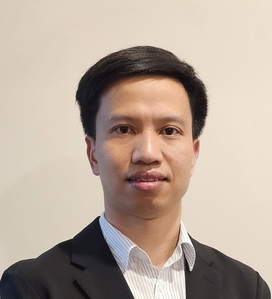
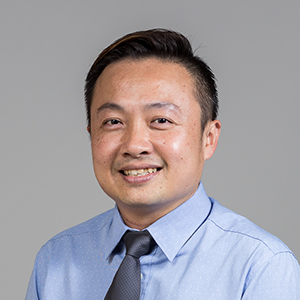
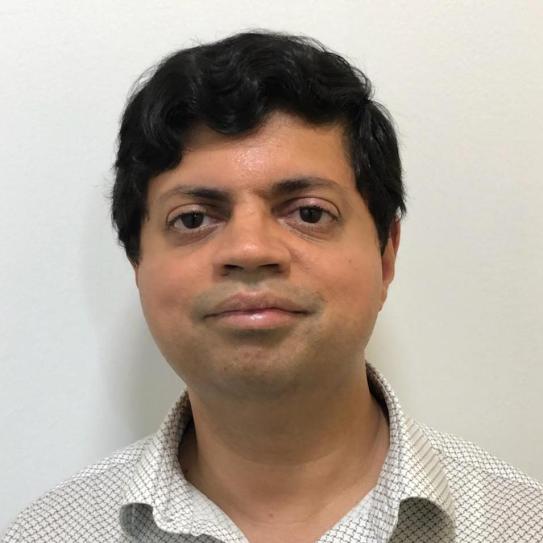
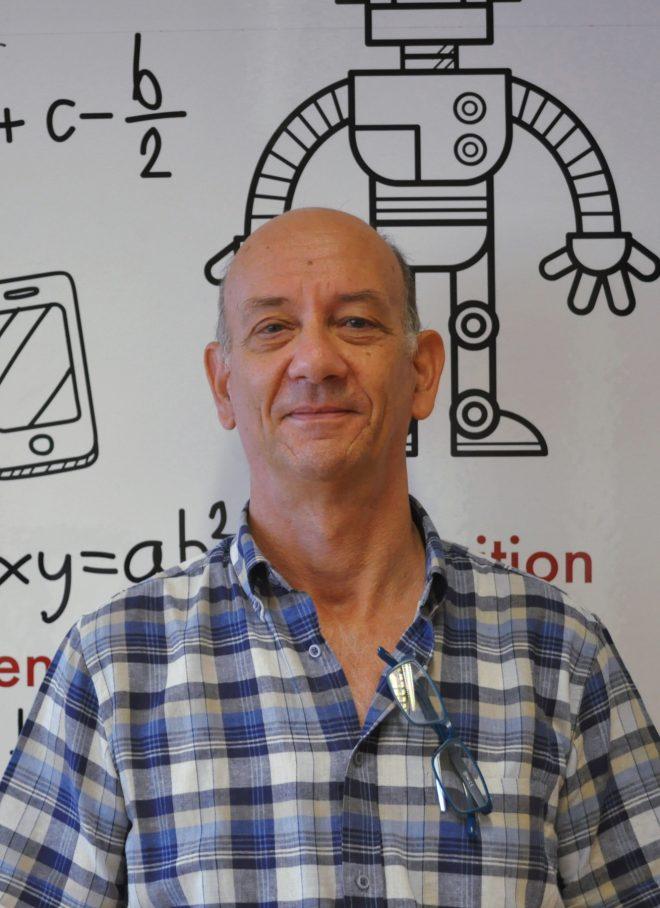
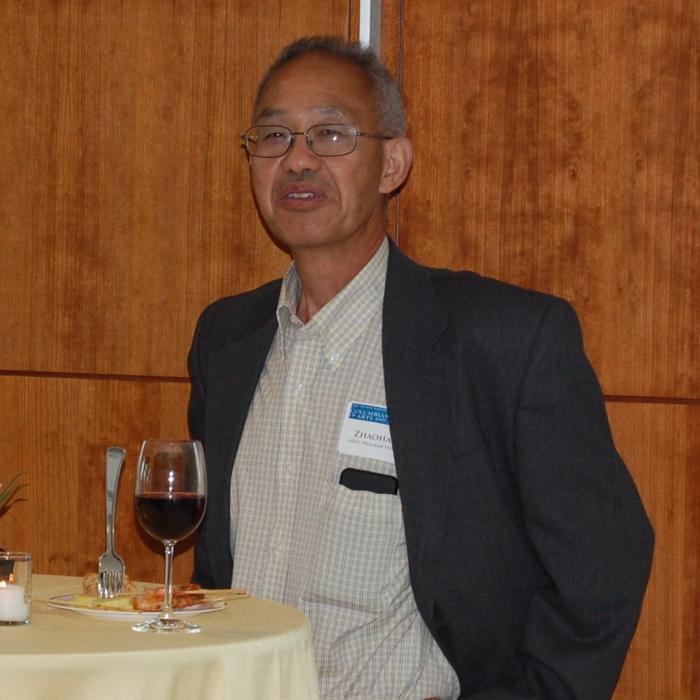
Associate Professor Sonny Pham leads research in artificial intelligence at Curtin University's School of EECMS. His work balances theoretical foundations with practical applications in computer vision, data mining, and deep learning. As head of the IAMAI research group, he collaborates with industry partners on security systems, healthcare AI, and sustainable technologies. His research explores: Computationally efficient deep learning architectures Compressed sensing for high-dimensional data Robust statistical methods for real-world problems Applications in computer vision and industrial automation Recent publications demonstrate a focus on medical imaging interpretation and efficient neural networks, with applications spanning radiology report generation, semantic segmentation for autonomous systems, and cybersecurity. His team's work consistently bridges theoretical AI advancements with industrial applications. Honors include: Multiple WANMA Awards (2021-2024) for industry-impactful research INCITE Award for social impact technology (2024) IEEE Young Author Best Paper Award (2010) Over $5M in competitive research funding including MRFF and DFAT grants He leads the IAMAI research group with 12+ graduate students and coordinates Curtin's Master of Artificial Intelligence program. Industry collaborations include Alcoa Australia, iCetana, and HyprFire.
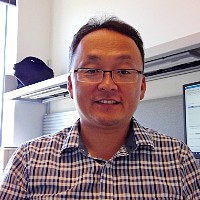
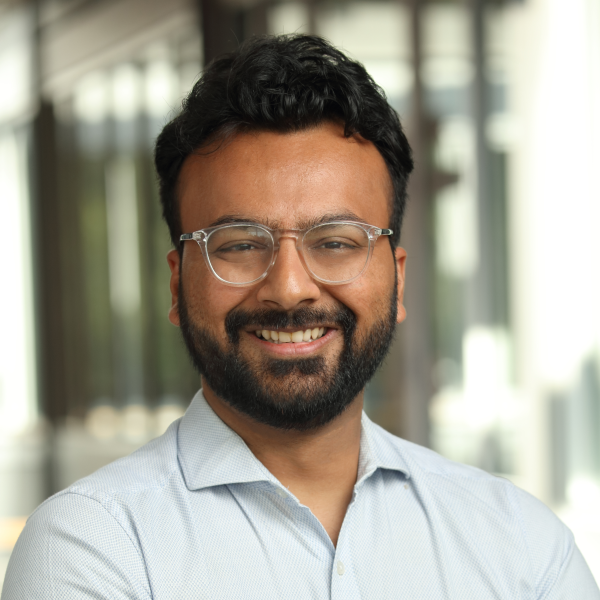
Dr. Hai Phan is an Associate Professor in Data Science at New Jersey Institute of Technology's Ying Wu College of Computing. He holds a Ph.D. in Computer Science and Engineering from CNRS, University Montpellier 2 (2013), an M.S. from Konkuk University (2010), and a B.S. from HCM City University of Technology (2008). His research explores privacy-preserving machine learning and computational health analytics: Federated learning systems and optimization Privacy-enhancing technologies (differential privacy) Health informatics and social media analysis Cybersecurity defenses and adversarial learning Fair and ethical AI systems Dr. Phan's publications demonstrate strong emphasis on federated learning architectures with privacy guarantees, defenses against emerging security threats, and analysis of health-related behaviors through social media. Recent work focuses on IoT applications, large language model security, and mobile federated learning ecosystems. His research integrates techniques from distributed systems, cryptography, and machine learning. No scientific awards are mentioned in available sources. Information regarding student advising, research grants, or laboratory affiliations is not provided in available documentation.
Huazhen Fang is an Associate Professor in the Department of Mechanical Engineering at the University of Kansas School of Engineering, where he joined in 2014. He leads the Information & Smart Systems Laboratory (ISSL) and holds a courtesy appointment in the Department of Electrical Engineering & Computer Science. His research focuses on enabling intelligence for complex systems through information-driven approaches. Dr. Fang received his Ph.D. in Mechanical Engineering from the University of California, San Diego in 2014, following an M.Sc. from the University of Saskatchewan and a B.Sc. in Computer Science & Technology from Northwestern Polytechnic University in China. He was a Visiting Faculty Fellow at Mitsubishi Electric Research Laboratories in 2022. His research interests span Systems and Control, Advanced Battery Management, Energy Storage Systems, and Robotics, with particular focus on system modeling, estimation, control design, machine learning and numerical optimization. Dr. Fang's work has significant applications in energy management, cooperative robotics, and environmental observing systems. His research has been supported by the National Science Foundation, Department of Energy, Army Research Laboratory, and Mitsubishi Electric Research Laboratories. His extensive publication record shows a clear trend toward increasingly sophisticated integration of physics-based modeling with machine learning approaches, particularly in battery management systems and autonomous vehicle control. Recent work demonstrates a growing emphasis on Bayesian inference methods, distributed control architectures, and safety-critical applications of intelligent control systems. Faculty Early Career Award from National Science Foundation (2019) University Scholarly Achievement Award (2024) Miller Professional Development Award (2022) Miller Faculty Scholar Award (2018, 2019, 2023) Wesley G. Cramer Outstanding Mechanical Engineering Faculty Award (2016) Big XII Faculty Fellowship (2015) IEEE Transactions on Transportation Electrification Prize Paper Award (2024) Dr. Fang has successfully mentored numerous graduate students through the Information & Smart Systems Laboratory, with many receiving awards for their research. His research has attracted significant funding from prestigious organizations including the National Science Foundation, Department of Energy, Army Research Laboratory, and Mitsubishi Electric Research Laboratories. He currently serves as an Associate Editor for multiple prestigious journals including Information Sciences, IEEE Transactions on Industrial Electronics, and IEEE Control Systems Letters. The Information & Smart Systems Laboratory (ISSL) under Dr. Fang's leadership has established itself as a center for cutting-edge research in information-driven smart systems. The lab focuses on pushing the frontiers of information extraction, analysis and exploitation for dynamic systems to deal with system complexity and enable system intelligence. The lab actively collaborates with industry partners and local communities, emphasizing research that serves societal needs.
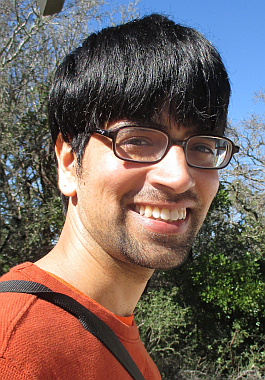
Min Seong Kim is an Associate Professor in the Department of Economics at the University of Connecticut, affiliated with the College of Liberal Arts and Sciences. His research focuses on econometrics, particularly panel data analysis, bootstrap methods, and cross-sectional dependence. He earned his Ph.D. in Economics from UC San Diego in 2011. His contact information includes email: min_seong.kim@uconn.edu , and office location Oak Hall 330. Education: Ph.D., Economics, UC San Diego, 2011 Research Interests: Econometric theory and applications Bootstrap methods and robust inference Panel data models with cross-sectional dependence Time series analysis and spatial econometrics Publications highlight his contributions to econometric methodology, including robust inference techniques for panel data models, bootstrap methods, and policy analysis. Recent work addresses cross-sectional dependence in large panel models and diffusion index forecasts. No scientific awards are explicitly listed. Advising and grant details are not provided in the text. His research is supported through standard academic channels, and he maintains a professional website at http://minseongkim.weebly.com .
Jack Snoeyink is a Professor at the University of North Carolina at Chapel Hill, holding joint appointments in the Department of Computer Science (College of Arts & Sciences) and the School of Data Science and Society. His research focuses on computational geometry, with applications in molecular biology, geographic information systems (GIS), and geometric modeling. His work in computational geometry explores algorithmic design and analysis for problems in solid modeling, computer graphics, and robotics. Key application areas include terrain modeling in GIS, molecular structure validation in biochemistry, and computational topology. He has contributed to output-sensitive algorithms for convex hulls and Voronoi diagrams, and geometric search problems. Articles highlight his expertise in computational geometry, with trends spanning 1999-2000. Topics include contour tree algorithms (SODA'00), watershed extraction (ASPRS'99), and skeleton generation (Crust.pdf). His work bridges theoretical advancements with practical implementations in GIS and structural biology. Jack Snoeyink has collaborated with researchers like Marc van Kreveld, Christopher Gold, and Bettina Speckmann on projects related to Delaunay triangulation, regression depth computation, and geometric assembly problems. He previously served as a program director at the National Science Foundation's CISE division (2015-2018) and co-founded the TRIPODS program for data science foundations.
Sibel Alumur Alev is an Associate Professor and Associate Chair of Graduate Studies at the University of Waterloo. Her research focuses on logistics network design, hub location optimization, and sustainable transportation systems. She actively contributes to the fields of operations research and supply chain management, with a strong emphasis on addressing uncertainty in network design and strategic infrastructure planning. Her work spans applications in autonomous mobility systems, electric vehicle charging infrastructure, healthcare logistics, and pandemic response. She has published extensively on hub-and-spoke network models, reverse logistics for environmental sustainability, and multi-period resource allocation strategies. Notable areas of interest include the integration of stochastic and robust optimization methodologies into real-world logistics challenges. Dr. Alev’s research also bridges academic and industrial needs, addressing practical problems such as optimal testing center locations during pandemics and strategic freight hub expansions. Her contributions have been featured in peer-reviewed journals and conference proceedings, reflecting her commitment to advancing both theoretical and applied aspects of logistics and operations research.
Jann Spiess is an Associate Professor of Operations, Information & Technology at Stanford University's Graduate School of Business and holds a courtesy appointment as Associate Professor of Economics in the School of Humanities and Sciences. He is also a Center Fellow at the Stanford Institute for Economic Policy Research and a Faculty Affiliate of the Golub Capital Social Impact Lab. PhD in Economics (Harvard University, 2018) AM in Economics (Harvard University, 2015) MPP in Public Policy (Harvard University, 2013) MASt in Mathematics (University of Cambridge, 2011) BSc in Mathematics (Technical University of Munich, 2010) Jann's research integrates machine learning with econometric methods to advance causal inference and data-driven decision-making . He explores high-dimensional and robust causal inference, synthetic control methods, and algorithmic fairness, while addressing challenges in human-AI collaboration and policy design. His publications span econometrics, behavioral economics, and data science, focusing on experimental design, robust statistical techniques, and applications of machine learning to public policy. Key themes include replicable inferences from big data, human-AI interaction, and ethical algorithmic design. Philip F. Maritz Faculty Scholar, 2021–22 David A. Wells Prize for best dissertation, Harvard Economics, 2018 Restud Tour, 2018 Jann's work bridges microeconometric methods , statistical decision theory , and mechanism design to enhance analytical frameworks for data-driven policy. He has contributed to robust inference in panel data and synthetic control methods, alongside studies on nudges for vaccination and financial aid renewals. As Faculty Affiliate at the Golub Capital Social Impact Lab, Jann collaborates on projects applying data science to social policy challenges, merging technical rigor with societal impact.
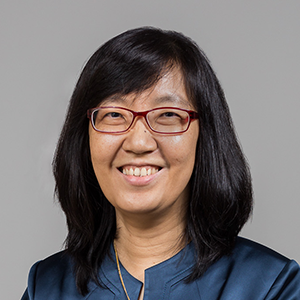
LEE Mong Li is a Professor of Computer Science at the National University of Singapore (NUS) and serves as Director of the NUS Centre for Trusted Internet and Community. She holds a Ph.D., M.Sc., and B.Sc. (First Class Honours) in Computer Science from NUS, where she was awarded the IEEE Singapore Information Technology Gold Medal as the top Computer Science student in 1989. Her academic career includes a visiting fellowship at the University of Wisconsin-Madison (1999) and consultancy with QUIQ USA (2000). Her research spans Data Management, Spatio-temporal Databases, Biomedical Informatics, and Retinal Image Analysis . She has pioneered work in data cleaning, data fusion, and analysis of semistructured data, with applications in social media analytics and healthcare. Her recent publications demonstrate strong interdisciplinary focus, particularly in AI-driven medical diagnostics including diabetic retinopathy screening and chronic kidney disease detection from retinal images. She co-authored foundational books on 'Designing Semi-structured Database' and 'Temporal and Spatio-Temporal Data Mining'. Her 150+ publications in major database conferences and journals reflect leadership in both theoretical and applied research. Recent work shows significant emphasis on Medical AI applications (retinal analysis, kidney disease prediction) Temporal fact verification systems Misinformation detection in multimodal environments Privacy challenges in large language models Key honors include: Singapore's President Technology Award (2014) for co-inventing an AI system screening eye conditions IEEE Singapore Information Technology Gold Medal (1989) She actively contributes to government-funded multidisciplinary projects building practical deployable systems. Her leadership extends to program committees of prestigious database conferences and directing the NUS Centre for Trusted Internet and Community. She teaches BT5110 Data Management and Warehousing and has co-developed an AI system for diabetic retinopathy screening deployed in Singapore's national teleophthalmology program.
Bryan Kian Hsiang Low serves as Associate Professor in the Department of Computer Science at the National University of Singapore's School of Computing, while simultaneously holding leadership positions as Director of AI Research at AI Singapore and Deputy Director of the NUS AI Institute. His academic journey includes a B.Sc. (2001) and M.Sc. (2002) in Computer Science from NUS, followed by a Ph.D. in Electrical & Computer Engineering from Carnegie Mellon University (2009). His research spans probabilistic machine learning, multi-agent systems, and trustworthy AI, with particular focus on Bayesian optimization , federated learning , and data-efficient methodologies . The Low Lab develops frameworks for collaborative AI, automated machine learning, and AI applications in scientific domains through the Group of Learning and Optimization Working in AI (GLOW.AI), which maintains a multi-disciplinary approach bridging computer science, mathematics, and engineering disciplines. Analysis of his recent publications reveals a consistent emphasis on data valuation , privacy-preserving collaborative learning , and robust optimization techniques , with increasing integration of large language models into his research framework. His work demonstrates strong theoretical foundations coupled with practical applications in computational sustainability and robotics. Andrew P. Sage Best Transactions Paper Award (2006) NUS Overseas Graduate Scholarship (2004-2009) Faculty Teaching Excellence Award (2017-2018) IEEE RAS Distinguished Lecturer (2019) World Economic Forum Global Future Councils Fellow (2016-2018) Dr. Low actively mentors PhD students including Rachael Sim, Quoc Phong Nguyen, and Zhongxiang Dai, while leading major initiatives like the AI Phenome Platform for plant breeding optimization. His research group GLOW.AI operates at the intersection of theory and practice, with strong industry engagement through AI Singapore. Current projects focus on scalable AI systems for scientific discovery and developing frameworks for equitable collaborative machine learning with robust privacy guarantees.
Chirag Agarwal is an Assistant Professor of Data Science at the University of Virginia School of Data Science, where he leads the Aikyam Lab focused on trustworthy machine learning. He holds a Ph.D. in Electrical and Computer Engineering from the University of Illinois at Chicago. His research develops frameworks for explainable, fair, and robust AI systems, supported by grants from Adobe, Microsoft, and Google. Core research themes include: Explainability methods for complex models Bias mitigation in vision-language systems Privacy-preserving machine learning Safety certification for large language models Publications demonstrate cross-cutting work in ML theory and applications, with recent emphasis on medical AI safety, multilingual reasoning, and adversarial robustness.
Sofya Raskhodnikova is a Professor in the Department of Computer Science at Boston University, part of the College of Arts and Sciences. She holds a Ph.D. from MIT and has held positions at Penn State University and postdoctoral fellowships at the Hebrew University of Jerusalem and the Weizmann Institute of Science. Her research focuses on sublinear-time algorithms, data privacy, approximation algorithms, and complexity theory. She is a recipient of the NSF CAREER Award and has contributed significantly to the theoretical foundations of privacy-preserving computation and algorithm design. Education: Ph.D. in Computer Science from MIT (2003), postdoctoral research at Hebrew University of Jerusalem and Weizmann Institute of Science (2003–2006). Visiting positions at UCLA, Harvard University, and the Simons Institute for the Theory of Computing. Research Interests: Sofya’s work bridges theoretical computer science and practical applications, emphasizing algorithms that operate efficiently on large datasets. Key areas include property testing (e.g., monotonicity, sortedness), differential privacy, and sublinear-time algorithms. She explores how algorithms can analyze data while preserving privacy guarantees and minimizing computational resources. Publications: Over 50 peer-reviewed articles in top venues such as STOC, FOCS, and SODA, with recent contributions focusing on dynamic graph algorithms under privacy constraints and robust property testing against adversarial noise. Professional Activities: Editor for ACM Transactions on Computation Theory and Algorithmica ; program committee chair for WOLA 2021 and CSR 2022; active in mentoring initiatives like Sigma Camp and Artemis. Advising & Students: Current advisees include Ephraim Linder and Debanuj Nayak. Notable alumni include Iden Kalemaj (Meta Research) and Nithin Varma (Max Planck Institute). She has supervised over 15 Ph.D. students and postdocs, fostering a collaborative research environment.
Jay Pujara is a Research Associate Professor in the Department of Computer Science at the University of Southern California (USC), affiliated with the Viterbi School of Engineering and the Information Sciences Institute (ISI). He directs the Center on Knowledge Graphs and leads research in artificial intelligence, specializing in knowledge graph construction, scalable machine learning, and probabilistic models. Education : PhD in Computer Science (University of Maryland, 2016), MS and BS in Computer Science from Carnegie Mellon University (2005 and 2004), with minors in Robotics, Mathematical Sciences, and Logic & Computation. Research Interests : His work focuses on probabilistic models for dynamic data, knowledge graph construction, entity resolution, and applications in NLP and social network analysis. He emphasizes scalable algorithms and real-world impact in domains like finance, climate science, and healthcare. Awards : Includes the SWSA Ten-Year Award (2023), Best Paper Awards at IUI 2019 and ISWC 2013, and grants totaling over $9M from DARPA, NSF, and industry partners. Grants & Mentorship : Principal Investigator on projects like "Artificial Domain-Understanding and Collaborative Agency" (DARPA) and "Explainable and Robust AI Agents" (NSF). Mentored over 50 students in PhD, MS, and undergraduate programs, focusing on knowledge graphs, NLP, and machine learning. Labs & Teams : Leads ISI’s Knowledge Graph and Neurosymbolic AI teams, coordinating the Open Knowledge Network (OKN) and tools like KGTK. Active in academic service, including roles on PhD admissions committees and ISI’s Space Management Committee.
Prashanth Krishnamurthy is a Research Scientist in the Department of Electrical and Computer Engineering at New York University Tandon School of Engineering. His research focuses on robotics, control systems, and cybersecurity, particularly in cyber-physical systems such as power grids and embedded devices. He holds a Ph.D. in Electrical Engineering from NYU. Key research areas include hardware security (e.g., detecting Trojans in chips), anomaly detection in critical infrastructure, and resilient control strategies for robotic systems. He has led or contributed to projects funded by the U.S. Department of Energy (DOE), Office of Naval Research (ONR), and others, including the Tracking Real-time Anomalies in Power Systems (TRAPS) initiative and hardware Trojan detection using short-term aging phenomena. Education: Ph.D., Electrical Engineering, NYU His work bridges theoretical advancements and practical implementations, such as developing FPGA-based testbeds for hardware security validation and creating AI-driven cybersecurity tools like the CRAKEN LLM agent. Collaborators include institutions like SRI International, Karlsruhe Institute of Technology, and the NYU Center for Cybersecurity. Grants include a $1.94M DOE grant for TRAPS and a $359K DURIP grant for hardware Trojan detection. His technical contributions span control systems, anomaly detection algorithms, and cybersecurity frameworks for embedded systems. He is actively involved in advancing secure cyber-physical systems through innovations in real-time monitoring, robust control mechanisms, and AI-augmented security solutions.
João Paulo Costeira is an Associate Professor at the Department of Electrical and Computer Engineering, Instituto Superior Técnico (IST), Lisbon. He holds a PhD in Electrical and Computer Engineering from IST (1995) and was a Visiting Scientist at Carnegie Mellon University's Robotics Institute (1991–1995). His research focuses on Computer Vision, 3D Reconstruction, and Structure from Motion, with contributions to object recognition, robotics, and multimedia analysis. Education: PhD in Electrical and Computer Engineering, IST (1995); Visiting Scientist, CMU Robotics Institute (1991–1995). Roles: Coordinator of the Signal and Image Processing Group (SIPg), Co-director of the Carnegie Mellon|Portugal Dual PhD Program in ECE and Robotics (2007–2018), and Scientific Director of Carnegie Mellon|Portugal (2014–2018). Research Interests: João's work emphasizes 3D reconstruction from video, rigid and non-rigid motion analysis, and applications in robotics and urban surveillance. He has pioneered methods for motion segmentation and robust correspondence problems in computer vision. Publications: His recent work includes advancements in apple counting systems, rotation averaging for robotics, and domain adaptation for traffic density estimation. These contributions highlight his expertise in real-world computer vision challenges. Awards: None explicitly listed. However, his extensive publication record and academic leadership reflect significant scholarly impact. Advising & Grants: Supervised 13 PhD students, many co-advised with CMU faculty. Active in projects like CityCam (vehicle counting) and MultiDrone (robotics collaboration). Funded by FCT, EU, and industry partnerships. Labs/Teams: Leader of the Signal and Image Processing Group (SIPg) at ISR. Involved in NETSyS program for networked systems and robotics.
Dr. Zhaohai Li Professor of Statistics at George Washington University, specializing in statistical methodologies for genetic epidemiology and clinical biostatistics. His research focuses on meta-analysis techniques, empirical Bayes methods, and population-based study designs. He has contributed extensively to improving statistical approaches in clinical trials and addressing challenges in genetic association studies. Education: Ph.D. in Statistics, Columbia University, 1989 Research Interests: His work addresses critical issues in modern biostatistics including: Population stratification in genetic studies Hardy-Weinberg equilibrium testing Optimal experimental design for case-control studies Handling missing data in genetic linkage analysis Development of robust statistical tests for complex survey data Publications Overview: Dr. Li's recent work emphasizes methodological advancements in: Bayesian approaches to population genetics Meta-analytic frameworks for combining study results Statistical solutions for multi-stage clinical trials Algorithmic improvements for genome-wide association analyses Professional Contributions: His articles consistently address practical challenges in biomedical research, bridging theoretical statistics with real-world genetic and clinical applications.