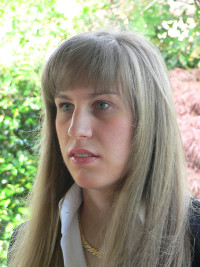
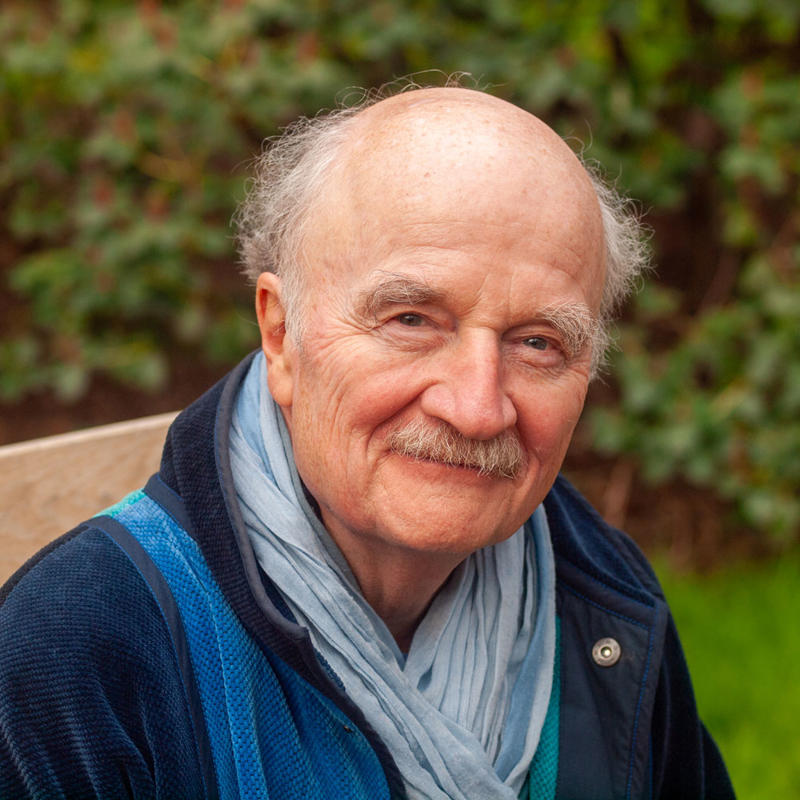
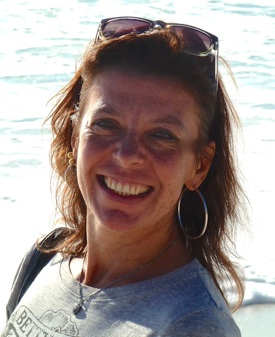
Francesco Pilati is an Associate Professor at the Department of Industrial Engineering, University of Trento, where he serves as local coordinator for the scientific field ING-IND/17 (Industrial Plants and Logistic Systems). He chairs the research group on Industrial Plants, Production Systems, and Logistics, and teaches courses in Industrial Plants and Design of Digital Production and Assembly Systems. As coordinator of the Master's program in Management and Industrial Systems Engineering and University Coordinator for the EIT double degree in Zero-Defect Manufacture, Pilati bridges academic leadership with advanced manufacturing research. He has also served as Invited Lecturer at universities in Vienna and Göttingen. His research focuses on integrating environmental sustainability with technical-economic criteria through multi-objective optimization and impact assessment. Key areas include: Distribution networks and warehousing systems Manufacturing and assembly line design Hybrid energy production systems Digitization of manual production processes using depth cameras Recent publications highlight applications of Industry 4.0 technologies to pandemic safety, logistics optimization, and smart manufacturing. Pilati has received significant recognition including the Philip Morris Italia Empowering Research Award (2016) and Autostrade per l'Italia academic recognition. His editorial contributions include guest editing special issues on Digital Twins and Smart Factories in Q1 journals.
Giuseppe Carlo Marano is a Full Professor at the Department of Structural, Building and Geotechnical Engineering at Politecnico di Torino. He is also a component of the SISCON Interdepartmental Center for Infrastructure Safety. With expertise in civil and structural engineering, his work focuses on machine learning applications, seismic risk reduction, and sustainable structural optimization. Education Graduated cum laude in Structural Engineering from Polytechnic University of Bari PhD in Structural Engineering from University of Florence (2000) Research Interests Marano's research spans structural optimization, seismic engineering, and machine learning applications in civil infrastructure. He develops advanced computational models for: Seismic retrofitting of existing structures Optimization of steel and masonry structures Recycled materials in concrete production AI-driven structural health monitoring Multiobjective design methodologies Publication Trends His recent work emphasizes: Machine learning for concrete mix design and damage assessment Optimization of gridshells and arch structures Seismic isolation systems and vibration control Sustainable construction practices with recycled materials Multiobjective genetic algorithms for structural design Scientific Recognitions National Scientific Qualification - First Band (2013, MIUR Italy) Certificate of Appreciation for Outstanding Lecture (2012, China) Academic Contributions As an educator, he teaches: Consolidamento Strutturale (Structural Consolidation) Dinamica delle Vibrazioni Random (Random Vibration Dynamics) Progettazione Generativa (Generative Design) He also leads Challenge@PoliTo initiatives and contributes to national infrastructure safety regulations. Research Projects ADAPT4CE - Adaptive Digital Systems for Circular Economy (2025-2028) AI-ENVISERS - AI for Seismic Retrofit Environmental Impact (2023-2025) ADDOPTML - Additive Manufacturing Optimization (2021-2025)
Giorgio Grisetti is a Full Professor at Sapienza University of Rome within the Department of Systems and Computer Science, maintaining active research roles in the RoCoCo lab at Sapienza since November 2010 and the Autonomous Intelligent Systems Lab at Freiburg University where he previously served as a Post Doc under Wolfram Burgard starting in 2006. His educational background includes a M.Sc. in Computer Engineering from the University of Rome (2001) and a Ph.D. from Sapienza University of Rome's Intelligent Systems Lab (2006), supervised by Daniele Nardi. His doctoral thesis focused on SLAM using Rao-Blackwellized particle filters. Dr. Grisetti's research centers on mobile robotics with emphasis on robust solutions for autonomous navigation systems. His work spans theoretical and practical advancements in Simultaneous Localization and Mapping (SLAM), robot localization, path planning, and sensor fusion, particularly leveraging LiDAR and multi-sensor configurations. Recent publications demonstrate strong focus on optimization techniques, sensor calibration, and real-time performance for autonomous systems operating in complex environments. His publication trends reveal deep specialization in LiDAR-based SLAM (7 of 15 recent articles), bundle adjustment methods (4 articles), and sensor calibration/perception (3 articles), with consistent contributions to top robotics venues like IEEE Robotics and Automation Letters and ICRA. Key recognitions include: Nomination for the best IROS paper award (2010) Open Source achievement award from Willow Garage (2010) Best paper award at the International Conference and Exhibition on Unmanned Areal Vehicles (2010) Best Paper award at ICRA 2009 (2009) His research is conducted through the RoCoCo lab at Sapienza University of Rome and the Autonomous Intelligent Systems Lab at Freiburg University, focusing on developing foundational algorithms for mobile robot autonomy. Current projects emphasize robust perception systems, optimization frameworks for sensor fusion, and practical implementations for real-world navigation challenges.
Battista Biggio is a Full Professor at the University of Cagliari, Italy, affiliated with the Department of Electrical and Electronic Engineering under the Faculty of Engineering and Architecture. His research focuses on machine learning security, adversarial attacks, and cybersecurity. He co-founded the cybersecurity firm Pluribus One and has pioneered foundational work in poisoning attacks and adversarial robustness. Education: MSc (2006), PhD (2010). He holds editorial roles as Associate Editor-in-Chief for Elsevier's Pattern Recognition Journal and serves on IEEE TNNLS and IEEE CIM editorial boards. His awards include the 2022 ICML Test of Time Award and the 2021 Pattern Recognition Medal. He chairs IAPR TC1 and organizes conferences like S+SSPR and AISec. Research interests span adversarial machine learning, malware detection, and secure AI systems. He leads initiatives such as the sAIfer Lab and co-develops the SecML-Torch library. Teaching includes courses on Machine Learning Security and Industrial Software Development. Notable contributions include seminal papers like 'Poisoning Attacks against Support Vector Machines' and 'Wild Patterns.' He manages over 10 research projects and advises on AI security for industrial applications. His work bridges academic research with practical cybersecurity solutions.
Mirco Musolesi is a Full Professor of Computer Science at both University College London (UCL) and the University of Bologna. He leads the Machine Intelligence Lab at UCL, part of the UCL Centre for Artificial Intelligence. His research focuses on Machine Learning, Generative AI, and computational models of human behavior, with applications in ubiquitous systems and societal impacts of AI. Education: PhD in Computer Science from UCL (2007) and Laurea in Electronic Engineering from the University of Bologna (2002). Previous roles include positions at the University of Birmingham, Dartmouth College, and the Alan Turing Institute. Research spans multi-agent systems, reinforcement learning, and AI ethics. Notable awards include ACM UbiComp 10-Year Impact Award (2020/2024) and the NetExplorateur/UNESCO Top 100 Innovations (2011). His work on EmotionSense and CenceMe applications has been recognized with Test-of-Time awards. Recent publications (2024-2025) address moral alignment in AI agents, multi-agent environmental policy simulations, and creativity in LLMs. His labs explore AI-driven solutions for urban systems and ethical decision-making frameworks.
Corrado De Sio is a Fixed-term Researcher at the Department of Control and Computer Science (DAUIN) , Politecnico di Torino , affiliated with the College of Computer, Film, and Mechatronics Engineering . His academic roles include course instruction and collaboration for Reconfigurable Computing , High Performance Computing (HPC) , and Operating Systems for High-Performance Supercomputers across multiple academic years (2020-2025). Research Interests focus on: Reliability of reconfigurable systems and FPGAs under radiation effects Hardware-software co-design for fault tolerance Embedded systems in aerospace and safety-critical applications Machine learning acceleration on reconfigurable hardware Radiation effects on real-time operating systems and CNN implementations Recent publications address: 2025: Selective hardening of RISCV soft-processors for space applications 2025: Real-time 'signal for help' gesture recognition systems 2024: Reliability analysis of RISC-V processors and CNN placement algorithms 2023: Fault tolerance in FPGA-based CNNs and radiation effects on RTOS Patents include: PyXEL - Python Toolkit for Reconfigurable Hardware Surveillance Software for Real-Time Violence Detection Academic Supervision : Co-supervisor for PhD candidate Arash Amini Bardpareh in Computer and Systems Engineering .
Dino Pedreschi is a Full Professor of Computer Science at the University of Pisa, affiliated with the Department of Computer Science (DI-UNIPI). He co-leads the Pisa KDD Lab, a joint research initiative between the University of Pisa and the Italian National Research Council’s Institute of Information Science and Technology, one of the earliest labs focused on data mining and knowledge discovery. His research spans Big Data Analytics , Social Network Analysis , Human Mobility Analysis , Privacy-by-Design , Explainable AI (XAI) , and ethical data mining . He is a pioneer in privacy-preserving data mining and has contributed significantly to understanding societal impacts of AI and big data. Recent publications highlight trends in explainable AI , fairness-aware data mining , urban mobility modeling , and socio-economic nowcasting , reflecting a strong interdisciplinary focus combining computer science, social science, and policy. Notable scientific awards include: Google Research Award on Privacy (2009) University of Pisa Ordine del Cherubino (2017) Pedreschi has played leadership roles in major conferences such as ECML/PKDD (Co-Chair 2004), ICDM (Vice-Chair 2005), and ICDE (Vice-Chair 2014). He founded the Business Informatics MSc program at the University of Pisa to train interdisciplinary data scientists. He has been a visiting scientist at the University of Texas at Austin, CWI Amsterdam, UCLA, and the Barabási Lab at Northeastern University. He actively contributes to European research initiatives including SoBigData++, FAIR, and TAILOR, and has advised on AI policy, including testimony before the Italian Parliament on AI and labor markets. He is a key member of the Pisa KDD Lab, a leading research group in data science and AI ethics, fostering collaboration between academia and public institutions.
Ana Maria Alonso Rodriguez is a Full Professor of Numerical Analysis at the Department of Mathematics, University of Trento. She holds a PhD in Applied Mathematics from Universidad Complutense de Madrid (1993) and has held academic positions across Italy and Spain since 1990. Her research focuses on numerical methods for partial differential equations, computational electromagnetism, finite element methods, and domain decomposition techniques. She has organized international workshops and minisymposia, including the 2022 Oberwolfach workshop on Hilbert Complexes and the 2018 ICOSAHOM conference session on high-order methods. Her work bridges numerical analysis, topology, and applied electromagnetism, with recent contributions to Whitney finite elements and discrete potential theory. Education: PhD in Applied Mathematics, Universidad Complutense de Madrid (1988-1993) Licenciatura en Ciencias Matematicas, same institution (1982-1987) Research emphasizes high-order discretizations for electromagnetic problems, leveraging finite element exterior calculus and graph-based decomposition techniques. Recent work (2024) advances tree-cotree methods for curl operator spectra and Whitney form interpolation. She actively collaborates with international institutions like the CI2MA in Chile and the Laboratoire J. A. Dieudonné in France. Teaching includes courses on numerical PDEs, finite elements, computational electromagnetism, and MATLAB-based numerical analysis at both undergraduate and PhD levels. She has supervised numerous courses in Italy and Spain since 2000, integrating practical software tools like FreeFem and MODULEF into instruction.
Giulia Giordano is a Full Professor in the Department of Industrial Engineering at the University of Trento, Italy, where she leads the Dynamical Networks and Systems Biology research group. She also holds a dual appointment as Visiting Professor and Delft Technology Fellow at the Delft Center for Systems and Control, Delft University of Technology, The Netherlands. Her career includes previous positions as Assistant Professor at Delft University of Technology (2017-2019), Postdoctoral Research Fellow at Lund University, Sweden (2016-2017), and Research Fellow at the University of Udine, Italy (2016). Giulia earned her Ph.D. in Industrial and Information Engineering: Automation (Excellent) from the University of Udine with a thesis titled "Structural Analysis and Control of Dynamical Networks." She completed her M.Sc. and B.Sc. in Electrical Engineering (both Summa cum laude) at the same institution. She also undertook research visits at Caltech (2012) as a SURF Fellow and at the University of Stuttgart (2015) as a DAAD Research Scholar. Her primary research focuses on the analysis and control of dynamical networks with applications in systems biology, mathematical ecology, and mathematical epidemiology. She develops mathematical frameworks that bridge control theory, network theory, and dynamical systems to address complex problems in biological systems. Her recent work spans epidemic modeling, opinion dynamics, biochemical networks, and neurological disorders, with a particular emphasis on structural analysis of networked systems. She employs both theoretical and computational approaches to understand system behavior under uncertainty. Giulia's publications reveal a strong interdisciplinary focus, spanning from theoretical control systems to practical applications in epidemiology and biology. Her recent work shows increasing emphasis on epidemic modeling (particularly related to mpox and SARS-CoV-2), network synchronization, and the application of control theory to biological phenomena like fibromyalgia pathogenesis and opinion formation. Many of her papers appear in top-tier control journals including Automatica and IEEE Transactions on Automatic Control. 2024: Outstanding Service as Associate Editor of IEEE Control Systems Letters 2021: SIAM Activity Group on Control and Systems Theory Prize 2020: Outstanding Reviewer, Annals of Internal Medicine 2017: NAHS Best Paper Prize and EECI PhD Award 2016: Outstanding TAC Reviewer, IEEE Transactions on Automatic Control Giulia actively mentors students and postdoctoral researchers, currently supervising five postdoctoral researchers and two Ph.D. students at the University of Trento. She has advised numerous M.Sc. and B.Sc. students on topics ranging from bio-inspired modeling to optimal control of epidemic systems. Her research is supported by competitive grants including the ERC Starting Grant INSPIRE (Integrated Structural and Probabilistic Approaches for Biological and Epidemiological Systems). She serves as Associate Editor for IEEE Control Systems Letters and Automatica, and is a Senior Member of IEEE and the Control Systems Society. Giulia leads the Dynamical Networks and Systems Biology research group at the University of Trento, which maintains strong international collaborations across Europe and North America. The group's work combines theoretical advances in control theory with practical applications to pressing problems in public health and biological systems, demonstrating the power of mathematical approaches to understanding complex phenomena in the life sciences.
Hans-Wolfgang Micklitz is a Part-Time Professor of Economic Law at the Department of Law of the European University Institute (EUI). He previously held roles such as Finland Distinguished Professor at the University of Helsinki (2016–2021), Head of the Department of Law at EUI (2012–2014), and Full-Time Professor at EUI (2007–2019). His academic career includes visiting professorships at institutions like the University of Columbia, University of Helsinki, and University of Bologna. Education : Studied law and sociology at universities in Mainz, Lausanne, Giessen, and Hamburg (LL.M. 1973). Earned a PhD in 1983 (on Repair Contracts) and Habilitation in International Product Safety Law (1991) from the University of Bremen. Research Focus : Specializes in European Regulatory Private Law, Digital Law, Consumer Protection, and the societal impact of technological change. Current projects include "Digital Transformations and Society" and collaborations on AI-driven legal compliance frameworks. His work bridges legal theory with practical regulatory challenges in digital markets and cross-border governance. Awards and Grants : Recipient of the prestigious ERC Grant (2011–2016), Finland Distinguished Professorship, and Doctor honoris causa from the University of Helsinki (2017). His research has generated over 2 million euros in funding, including the ERC CompuLaw project under Giovanni Sartor. Consultancy and Advisory Roles : Advised the European Commission, German/Austrian Ministries, and NGOs on consumer policy, EU law reforms, and digital governance. Involved in projects across Southeast Europe, Asia, and Africa through partnerships like GIZ. Editorial Contributions : Co-editor of Yearbook of European Law , Revue Internationale de Droit Économique , and Journal of Consumer Policy . Founded the Institute of European and Consumer Law (VIEW) in 1994.
Maria Elena Valcher is a Professor at the Department of Information Engineering, University of Padova, Italy. She is an IEEE Fellow (since 2012), IFAC Fellow (since 2023), Socio Effettivo of Istituto Veneto di Scienze, Lettere ed Arti (since 2017, previously Socio Corrispondente 2008-2017), and Socio Effettivo of Accademia Galieliana di Scienze, Lettere ed Arti in Padova (since 2022, previously Socio Corrispondente 2017-2022). She currently serves as Administrator of the Istituto Veneto and holds leadership positions including EUCA President (2024-2025) and IEEE Control Systems Society Past President. Her research focuses on control systems, systems theory, optimization, Boolean control networks, multi-agent systems, and consensus problems. She has made significant contributions in distributed control, data-driven methods, and network optimization, with recent work exploring applications in opinion dynamics and social networks. Recent publications demonstrate a strong emphasis on data-driven approaches to control systems, particularly in distributed state estimation, unknown-input observer design, and multi-agent coordination. Her work shows consistent development in theoretical frameworks for networked systems with practical applications. Awards and Honors: IEEE Fellow (2012) IFAC Fellow (2023) Socio Effettivo, Istituto Veneto di Scienze, Lettere ed Arti (2017-present) Socio Effettivo, Accademia Galieliana di Scienze, Lettere ed Arti in Padova (2022-present) She teaches 'Controlli Automatici' (Bachelor in Information Engineering) and 'Systems Theory' (Master in Control Systems Engineering) during the 2024/2025 academic year. She has chaired major conferences including the 61st IEEE Conference on Decision and Control (CDC 2022) and serves as Program Chair for ICSTCC 2025.
Federico Miretti is an Assistant Professor at the Polytechnic University of Turin, affiliated with the Department of Energy and the interdepartmental center Cars@PoliTo. His research focuses on hybrid and electric vehicles, with emphasis on energy management strategies, battery state estimation, and sustainable transport solutions. PhD in Energetics from Polytechnic University of Turin Research areas include: Optimization-based Energy Management Strategies for hybrid propulsion systems Simulation and digital twinning of hybrid systems Thermal management for electrified vehicles Techno-economic assessment of mobility solutions Recent publications highlight advancements in battery temperature anomaly detection, wireless power transfer feasibility, and control algorithms for energy efficiency. His work aligns with SDGs 7 (Clean Energy) and 9 (Innovation). Teaching roles include: Fluid Machinery (2019-2025) Energy Management in Hybrid/Electric Vehicles (2021-2025) Projects: PRoSIT (2025): Predictive thermal management demonstrator Consulting contract with MIDAC SpA (2025): Battery Digital Twin development EBOAT project (2025-2026): Technical support for Vulkan
Matteo Nardello is a researcher affiliated with the Department of Industrial Engineering at the University of Trento. His work focuses on embedded systems, IoT, and energy harvesting technologies for sustainable applications. Current academic affiliation: Department of Industrial Engineering, University of Trento Research interests: IoT, embedded systems, energy harvesting, machine learning, cyber-physical systems Contact: matteo.nardello@unitn.it His research integrates hardware-software co-design for batteryless IoT systems, with applications in smart agriculture, industrial monitoring, and autonomous vehicles. Recent work explores deep learning at the edge, energy-efficient sensor networks, and microbial fuel cells for self-powered devices. Key article trends highlight a focus on sustainable power solutions, wireless sensor networks, and machine learning optimization for constrained environments. He contributes to courses on embedded systems, IoT, and AI-powered industrial applications at the University of Trento.
Eleonora Vacca is a PhD student and Research Fellow in the Department of Automatic Control and Computer Science (DAUIN) at the Polytechnic University of Turin. She holds a B.S. in Electronic Engineering from the University of Palermo (2018) and an M.S. in Electronic Engineering-Embedded Systems from Politecnico di Torino (2021). Her research focuses on digital hardware design, reliability engineering, reconfigurable devices, and AI applications in aerospace and safety-critical systems. She is a member of the Aerospace and Safety Computing Lab and the CAD - Electronic CAD & Reliability Group (DAUIN). Her work addresses challenges such as radiation effects mitigation in space missions, fault-tolerant AI accelerators, and real-time anomaly detection in satellite telemetry. She has contributed to projects like the RAMSES CubeSat-1 Development (2025-2026), funded by commercial contracts. In 2024, she won the Best Student Paper Award at the NEWCAS Conference for her research on radiation effects in space missions. Vacca collaborates on teaching, including assisting in the course 'Electronic Calculators' for Computer Engineering students. Her recent publications explore AI resilience in RISC-V ecosystems, radiation environment analysis for space missions, and gesture recognition systems for smart cities. She actively contributes to conferences such as the ACM International Conference on Computing Frontiers and the IEEE International Smart Cities Conference.
Stefano Leonardi is a Full Professor in the Department of Computer, Control and Management Engineering Antonio Ruberti at Sapienza Università di Roma. His research focuses on Algorithm Theory, Algorithms and Data Science, and Economics and Computation. He leads the ERC Advanced Grant project AMDROMA, exploring algorithmic mechanisms for online markets. He has held roles as Conference Chair for STOC 2021, WWW 2015, and FUN 2018, and coordinates the Sapienza School of Advanced Studies (2016-2018). His work spans approximation algorithms, online algorithms, and mechanism design. Awards include the ERC Advanced Grant and EATCS Fellowship. His research interests emphasize foundational algorithmic problems in web-based markets, leveraging rigorous design and large-scale data analysis. Recent projects include ALGADIMAR (PRIN 2019-2022) for digital market algorithms. He chairs the Highlights of Algorithms conference series and serves on program committees for top venues like EC, ICALP, and SODA. His lab focuses on web algorithmics and data mining, addressing challenges in online labor markets and fair division. Leonardi's academic contributions include over 100 publications, with recent work on fair algorithms, prophet inequalities, and mechanism design in auctions. He has pioneered methods for submodular optimization, online learning, and multi-agent systems. Grants and awards reflect his leadership in bridging theory with real-world applications, particularly in digital economies. Grants: ERC Advanced Grant (2018-2023), PRIN ALGADIMAR (2019-2022) Leadership: Chair of ACM STOC 2021, WWW 2015, and 9th FUN Conference Labs/Teams: Laboratory on Web Algorithmics and Data Mining Key Projects: AMDROMA (algorithmic mechanisms), ALGADIMAR (digital markets)