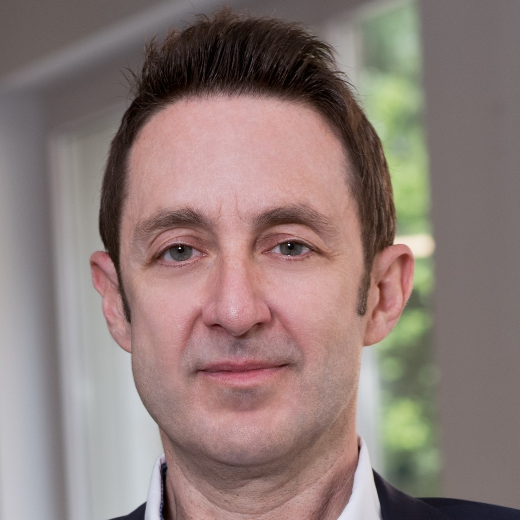
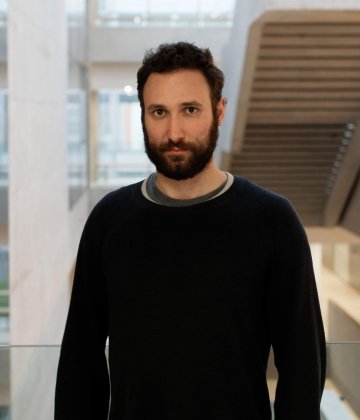
Daniele De Gennaro serves as a Research Fellow in the Department of Decision Sciences at Bocconi University, where he teaches the core course Optimization for the 2025/2026 academic year. His institutional role positions him within the university's quantitative research framework. His research centers on advanced optimization techniques applied to complex decision systems, spanning deterministic and stochastic modeling approaches. Key focus areas include algorithmic efficiency in resource allocation, mathematical programming frameworks, and computational decision theory—reflecting the Department of Decision Sciences' emphasis on analytical rigor. Professional engagement is evidenced through active course instruction, though no advisory roles, research teams, or external collaborations are documented in available sources. The absence of award listings or publication records suggests either early-career status or non-publication of such details in institutional profiles.
Flavio Chierichetti is a Full Professor in the Department of Computer Science at Sapienza University of Rome, Italy. His research focuses on algorithmics, machine learning, and mathematical modeling, particularly in the contexts of social networks and the Web. His work integrates theoretical and applied approaches to address complex challenges in these domains. Research Interests : His primary areas of investigation include the design and analysis of algorithms, application of machine learning techniques, and the development of mathematical models to explore social network dynamics and web-based systems. These fields reflect his expertise in bridging computational theory with real-world data science problems. Scientific Awards : Google Focused Research Award Grants and Academic Engagement : PRIN project 20229BCXNW Additionally, he serves as an associate editor for ACM Transactions on Algorithms and has held leadership roles in program committees of major conferences like KDD, WWW, NeurIPS, and SODA. His teaching responsibilities include courses on Algorithms, Advanced Algorithms, and Algoritmi e Complessità.
Francesca Pelosi serves as an Associate Professor in the Department of Information Engineering and Mathematical Sciences at the University of Siena, teaching core numerical analysis courses including Numerical Calculation for Computer Engineering undergraduates and Numerical Modeling for Applied Mathematics master's students across multiple academic years (2022/2023–2025/2026). Her research expertise spans Numerical Analysis , Computer-Aided Geometric Design , and Approximation Theory , with specialized focus on: Pythagorean-hodograph curve construction and modification Geometric continuity constraints in spatial interpolants Fractal properties of subdivision schemes Spectral analysis of isogeometric matrices Wavelet scattering applications for signal classification Numerical algorithms for computer-aided design systems Analysis of her 2023–2025 publications reveals consistent innovation in geometric modeling algorithms, particularly for preserving curve properties under control-point modifications and developing specialized interpolants with prescribed arc lengths, demonstrating strong interdisciplinary connections between computational mathematics and engineering applications. Scientific awards: No awards or fellowships were documented in the source material. Advising and grants: The provided text contains no information regarding graduate student supervision, research grants, or funded projects. Labs and teams: No laboratory affiliations, research groups, or collaborative teams were specified in the available documentation.
Leonardo Pellegrina is an Assistant Professor (RTT) at the Department of Information Engineering (DEI) of the University of Padua, where he joined in March 2023 and advanced to a tenure-track position in March 2025. He is a member of the AIDA Lab and previously completed his Ph.D. at the same institution under Prof. Fabio Vandin, with a visiting research period at Brown University's Department of Computer Science under Prof. Eli Upfal from December 2018 to July 2019. His research focuses on developing practical and theoretically sound algorithms for Data Mining and Computational Biology, with particular expertise in pattern mining, graph algorithms, and cancer phylogenetics. His work bridges theoretical computer science with real-world applications in biology and healthcare, emphasizing statistical rigor and computational efficiency. Analysis of his recent publications reveals a strong trend toward statistically-sound pattern mining with applications in computational biology. His research combines advanced sampling techniques, Rademacher averages, and hypothesis testing to develop efficient algorithms for large-scale data analysis, with significant contributions to cancer evolution modeling and metagenomics. His scientific achievements include: Teaching Award of Merit from University of Padova (November 2024) Honorable mention for 2021 SIGKDD Dissertation Award Best PC member of ACM The Web Conference 2023 Best PC member of ACM The Web Conference 2022 RECOMB 2019 Travel Fellowship Dr. Pellegrina has secured significant research funding including a Senior type B grant (December 2022) and a Junior type B grant (December 2020) from the Department of Information Engineering. His collaborative work includes supervision of students like Sijing Tu and extensive collaboration with researchers including Fabio Vandin, Matteo Riondato, and Diego Santoro. As part of the AIDA Lab at the University of Padua, he contributes to a vibrant research environment focused on data science and artificial intelligence applications, with particular emphasis on biomedical data analysis and algorithm development.
Pasquale De Meo is an Associate Professor in the Department of Information Processing Systems at the University of Messina, where he also serves as Coordinator of the Master's Degree Course in Methods and Languages of Journalism. Previously, he was a Tenured Researcher at the same university from 2011 to 2015. He received his PhD in Computer Science from the University of Calabria in 2006 and his VO Degree in Electronic Engineering (magna cum laude) from the University of Reggio Calabria in 2002. His academic journey includes prestigious fellowships such as the Marie Curie Fellowship at VU University Amsterdam (2010-2011) and roles as External Member at Birbeck Institute for Data Analytics since 2017. Dr. De Meo specializes in Social Network Analysis, Graph Mining, Community Detection, and Network Centrality. His research spans multiple domains including social media analysis, criminal network analysis (as evidenced by Salvo Catanese's PhD thesis on "The Network Structure of Mafia Syndicates"), and data science applications. He has published extensively in top-tier venues with an H-Index of 35 on Google Scholar and 29 on Scopus. His recent publications demonstrate strong interdisciplinary connections between computer science, social sciences, and practical applications, covering advanced techniques for educational technology, fraud detection, knowledge graphs, and social influence modeling. Best Italian doctoral thesis in Artificial Intelligence (AI*IA, 2006) Marie Curie Fellowship (2009-2010) Multiple best paper awards at international conferences Dr. De Meo has supervised several graduate students and serves on program committees for major conferences including ACM SIGKDD and IJCAI. His research is supported by significant grants including an ARC Discovery Project on "Dynamics and Control of Complex Social Networks" and a Microsoft Azure Research Grant for community detection in directed graphs.
Donatella Alessandra Della Porta is Full Professor of Political Science at Scuola Normale Superiore in Florence, where she serves as Director of the PhD program in Political Science and Sociology and leads the Center on Social Movement Studies (COSMOS). Formerly Dean of the Faculty of Political and Social Sciences, her research spans social movements, political violence, corruption, and democratic theory across Europe, the Middle East, Asia, and Latin America. She directs major international projects including the €2 million Horizon Europe initiative 'Feminist Movements Revitalizing Democracy in Europe'. Her research program investigates contentious politics through methodological innovation including protest event analysis, life histories, and transnational comparisons. Current work examines climate activism's organizational dynamics, digital labor conflicts, pandemic-era mutual aid networks, and resistance to right-wing populism. She pioneered the 'Mobilizing for Democracy' ERC project analyzing civil society's role in democratization, and her theoretical contributions bridge social movement studies with democratic theory. Recent publications reveal evolving focus on emergency contexts: political contention during pandemics, algorithmic management in platform labor, and transnational diffusion of protest tactics. These works demonstrate how movements adapt repertoires across digital and physical spaces while confronting democratic backsliding through innovative solidarity practices and institutional experimentation. Her scientific recognition includes: Alexander von Humboldt Forschungspreis (2021) Mattei Dogan Prize (2011) John D. McCarthy Lifetime Achievement Award (2024) Membership in American Academy of Arts and Sciences (2022) Accademia Nazionale dei Lincei (2023) Seven honorary doctorates Professor Della Porta has supervised 43 PhD students on topics including social movements, political violence, and democratic theory. Her research is funded by €15+ million in grants including ERC Advanced Grants (€1.8M), Horizon Europe projects (€2M), Volkswagen Stiftung (€500K), and national ministries. Current projects address climate politics, migrant solidarity, and corruption with teams across 15 European institutions. As Director of COSMOS, she oversees research networks like AUTHLIB (authoritarianism and liberalism), TraPoCo (transnational political contention), and FIERCE (feminist movements). The center hosts annual Summer Schools on global conflicts, COSMOS Talks lecture series, and the 'Movimenti del Mondo' publication platform connecting academic research with activist knowledge.
Giovanni M. Marchetti is a Professor in the Department of Statistics, Computer Science, Applications "G. Parenti" at the University of Florence, Italy. His office is located at viale Morgagni, 59, 51134 Florence, with contact information including email giovanni.marchetti@disia.unifi.it and phone +39 055 275 1516. He teaches Statistics courses for Mathematics and Economics degree programs at the university. Professor Marchetti's primary research interests focus on Statistical Inference and Applied Statistics , with specific expertise in Regression Graphical Models and Multivariate Analysis . His recent research projects include Parameterizations of chain graphs, Graphical models under constraints, Inference in graphical models, and Palindromic binary distributions. His work bridges theoretical statistical developments with practical applications across various scientific domains, as evidenced by publications in journals ranging from mathematical statistics to ecological research. An analysis of Professor Marchetti's 15 most recent publications (2009-2017) reveals a consistent focus on graphical models and statistical theory. His research spans from foundational work on binary distributions and chain graphs to applications in biological networks and social sciences. The predominant themes include conditional independence structures, parameterizations of complex statistical models, and computational approaches for high-dimensional data analysis. His collaborative work, particularly with Nanny Wermuth, has produced significant contributions to the understanding of graphical model structures. Professor Marchetti has established significant collaborations, particularly with Nanny Wermuth, and his work appears in prestigious journals including The Annals of Statistics , Journal of Multivariate Analysis , and Electronic Journal of Statistics . His research contributes substantially to the theoretical foundations of graphical models while maintaining relevance to practical applications in diverse fields such as evolutionary biology, marine ecology, and social sciences.
Professor Gaia Nicosia is a Full Professor of Operations Research at the Department of Civil, Computer Science and Aeronautical Technologies Engineering of Roma Tre University. She serves as the Deputy Director of the Department starting November 1, 2024, for the academic triennium 2024/2027. Previously, she held positions as Associate Professor (2012-2022) and Assistant Professor (2002-2011) at the same institution. Her educational background includes a Laurea degree in Mathematics from the University of Rome "Tor Vergata" (1995) and a Ph.D. in Operations Research from the University of Rome "La Sapienza" (1999). Part of her doctoral curriculum was completed at the Department of Systems and Industrial Engineering at the University of Arizona in Tucson. Professor Nicosia's research focuses on combinatorial optimization models for planning and scheduling problems, with applications in manufacturing and logistics. Her work encompasses the characterization of problems in terms of computational complexity, development of exact, heuristic, randomized, approximate and online combinatorial algorithms, and validation of proposed approaches through computational experiments. Her main research areas include: Scheduling Graph Optimization Knapsack Problems Applications in Production Systems and Services Multi-agent Systems Logistics and Transportation Her recent publications demonstrate a strong focus on multi-agent scheduling problems, fairness-utility tradeoffs, robust optimization, and applications in healthcare and logistics. She has developed sophisticated models for flow shop scheduling with inter-stage flexibility, organ donation process simulation, meal delivery scheduling, and Stackelberg games applied to knapsack problems. Professor Nicosia has received recognition through her editorial roles, serving as Associate Editor of the Central European Journal of Operations Research (Springer) since November 2024. She has also guest edited special issues of Discrete Applied Mathematics dedicated to CTW2020 and CTW2011 conferences. She has supervised approximately 50 Bachelor theses, 40 Master theses, and advised 4 Ph.D. students in Computer Science and Automation at Roma Tre University. Her teaching portfolio includes courses such as Decision Support Systems and Analytics, Decision-Making Methods Laboratory, Algorithms and Models for Optimization, and Operations Research II. Professor Nicosia has been actively involved in numerous research projects funded through competitive national and international calls, including PRIN2017 "AHeAD: efficient Algorithms for HArnessing networked Data" (2019-2022) and PRIN2012 "AMANDA: Algorithmics for MAssive and Networked DAta" (2014-2017). She has served on program committees for multiple international conferences including ODS 2025, ICORES 2025, and various Cologne-Twente Workshops.
Stefano Frabboni is a Full Professor at the University of Modena and Reggio Emilia (UNIMORE) within the Department of Physical, Computer and Mathematical Sciences. His academic career focuses on experimental physics, particularly in electron microscopy and material science. He teaches courses such as General Physics III , The Profession of Physicist , and Physics Laboratory I , emphasizing mechanical and electromagnetic wave phenomena, data analysis, and laboratory techniques. His research interests span Electron Microscopy , Materials Science , and Quantum Physics , with a strong emphasis on Orbital Angular Momentum (OAM) applications in electron beam shaping and magnetic field analysis. He has contributed extensively to High Entropy Alloys , Computational Ghost Imaging , and Nanoscale Magnetic Spectroscopy . The articles reflect a focus on electron beam manipulation , phase shifts in materials , and high-resolution imaging techniques . Recent article trends include optimizing substrate bias voltage in HEA films , Mo content effects on coatings , enhancing TEM resolution via computational methods , and fabricating 3D nanoarchitectures with direct-write approaches. Sub-fields covered in his work are electron vortex generation , quantum state discrimination , OAM sorting , plasmonic excitation analysis , and defect characterization in semiconductors .
Claudia LANDI is a Full Professor at the University of Modena and Reggio Emilia, affiliated with the Department of Engineering Sciences and Methods. Her primary academic rank is Professor, focusing on research in computational topology, geometry, and their applications. She teaches courses such as Computational Topology, Geometry and Linear Algebra, and Additional Training Requirements for engineering programs. Her work integrates algebraic topology with data science, emphasizing topological data analysis (TDA) for biomedical and environmental applications. Research Interests: Dr. LANDI specializes in computational topology, with a focus on persistent homology, Reeb graphs, and discrete Morse theory. Her applied work spans proteomics, fibrosis treatment, and environmental safety assessments. She has contributed to developing algorithms for multi-parameter persistence and topological metrics, bridging theoretical mathematics with practical applications in imaging and machine learning. Teaching: She leads courses on computational topology for mathematics and engineering students, emphasizing practical skills in TDA libraries and visualization. Her geometry and linear algebra courses are foundational for management and mechatronic engineering programs, integrating theoretical rigor with problem-solving exercises. Education: Not explicitly detailed in provided texts. Labs/Teams: Engaged in interdisciplinary projects involving proteomic analysis and topological data science. Grants/Awards: None explicitly mentioned, though her extensive publication record suggests active research funding.
Prof. Sascha Kraus is a Full Professor of Management and Chairholder at the University of Siegen (Germany), concurrently serving as a teaching and research staff member at the Free University of Bozen-Bolzano's Faculty of Economics and Management since 2020. He holds a doctorate from Klagenfurt University, a Ph.D. from Helsinki University of Technology, and a Habilitation from Lappeenranta University of Technology. His academic journey includes Full Professorships at Utrecht University (Netherlands), the University of Liechtenstein, École Supérieure du Commerce Extérieur Paris (France), Durham University (UK), and part-time roles at other institutions. His research focuses on Strategy, Entrepreneurship, Family Business, and Innovation, with over 100 publications in top journals such as Academy of Management Perspectives and Global Strategy Journal . He is a Clarivate Highly Cited Researcher (2022-2023) and ranked 3rd in Germany/Austria/Switzerland for 'Current Research Performance' (WirtschaftsWoche 2024). His work bridges theoretical frameworks with practical applications, emphasizing digital transformation and sustainability in entrepreneurial contexts. Education: Doctorate in Social and Economic Sciences, Klagenfurt University (AT) Ph.D. in Industrial Engineering and Management, Helsinki University of Technology (FI) Habilitation (Venia Docendi), Lappeenranta University of Technology (FIN) His research trends emphasize AI-driven business models, digital innovation in SMEs, and family firm resilience. He advises on strategic pragmatism for crisis navigation and explores ethical dimensions in family business operations. Recent work includes studies on metaverse entrepreneurship, generative AI applications, and post-pandemic talent management strategies. Awards: WirtschaftsWoche 2024: 3rd in Current Research Performance, 9th in Lifetime Achievement International Council for Small Business: Top 10 Most Influential Researcher Clarivate Highly Cited Researcher 2022-2023 Prof. Kraus leads initiatives at Bozen-Bolzano on innovation contests, strategic agility, and digital entrepreneurship education. His labs focus on cross-cultural management and trilingual academic collaboration, leveraging South Tyrol's unique multicultural environment to foster global research networks.
Carlo Lucibello is an Assistant Professor of Computer Science at Bocconi University since 2018. He holds a PhD in Physics from Sapienza University (2015), supervised by Giorgio Parisi and Federico Ricci-Tersenghi. His research bridges statistical physics and machine learning, focusing on analytical methods for neural networks and optimization problems. Roles: Faculty member in Computing Sciences Department Affiliations: Bocconi University Education: PhD in Physics from Sapienza University (2015) Research interests include neural networks, statistical inference, disordered systems, and combinatorial optimization. He contributes to open-source projects like GraphNeuralNetworks.jl, Flux.jl, and Zygote.jl for Julia. Teaching includes courses on machine learning, programming, and complex systems. He actively develops physics-inspired algorithms for learning and optimization. Publications span topics in statistical physics and machine learning, with recent work on associative memory capacity and neural network theory. His collaborative projects include contributions to Julia's ecosystem and theoretical advancements in message-passing algorithms.
Ozalp Babaoglu is a Full Professor at the Department of Computer Science and Engineering, University of Bologna. He has held this position since 1987, following a PhD in Computer Science from the University of California, Berkeley in 1981. His research focuses on distributed systems, High-Performance Computing (HPC), fault tolerance, self-organization, and machine learning applications in data-driven autonomics. He has led numerous European research projects like BROADCAST, CABERNET, ADAPT, BISON, and DELIS, contributing to foundational work in biology-inspired distributed algorithms and gossip-based systems. He co-founded the Bertinoro International Center for Informatics (BiCi) in 2001 and the IEEE SASO conference series in 2007. Babaoglu is a Fellow of the ACM (2002) and has received prestigious awards, including the Sakrison Memorial Award (1982) and the USENIX Lifetime Achievement Award (1993). His contributions to BSD Unix and open standards are seminal, including virtual memory extensions during his PhD. Babaoglu has served on editorial boards for ACM Transactions on Autonomous and Adaptive Systems, and previously for ACM Transactions on Computer Systems and Distributed Computing. His recent work addresses HPC fault classification, data-driven resource allocation, and energy-efficient computing in hybrid systems. He actively advises on European projects and explores cognitive paradigms in distributed systems.
Matteo Albani is a Full Professor at the Department of Information Engineering and Mathematical Sciences, University of Siena. His research focuses on antenna engineering, computational electromagnetics, and metamaterials, with particular emphasis on GRIN lens antennas, metasurfaces, and reconfigurable intelligent surfaces (RIS). He teaches courses in Mathematical Methods for Engineering and Microwave Engineering at the Master’s level in Electronics and Communications Engineering. **Research Interests**: Albani’s work spans numerical methods for antenna design, electromagnetic scattering analysis, and optimization of wave propagation phenomena. His recent contributions include advancements in geometrical optics-based lens design, fast sweeping methods for eikonal equations, and ray-based modeling of RIS systems. He has pioneered techniques for wide-angle anomalous refraction using surface field optimization and developed hybrid analytical-numerical approaches for diffraction coefficient calculations. **Publications Trends**: Over 15 recent articles highlight his focus on numerical methods (Lax-Friedrichs sweeping method), smart surface applications (RIS, metasurfaces), and innovative antenna technologies (3D-printed lenses). These studies emphasize practical implementations for millimeter-wave systems and smart radio environments. **Grants & Labs**: While specific grants aren’t detailed, his work aligns with cutting-edge projects in antenna innovation and electromagnetic systems. He collaborates on projects like the Antarctic firn propagation measurements and radar antenna development for industrial applications.
Stefano BATTISTON is a Full Professor at the Department of Economics of Ca' Foscari University of Venice and a member of the Research Institute for Complexity. His research focuses on economic and financial networks, systemic risk, sustainable finance, and climate finance. He holds a position as Associate Professor at the University of Zurich's Department of Banking and Finance and has led major EU-funded projects such as DOLFINS and SIMPOL. He is an Associate Editor of the Journal of Financial Stability and has organized international conferences on financial networks and climate change. Teaching includes courses on Economic Policy, Climate Change and Finance, and Climate Finance across graduate and doctoral programs. His work bridges academia and policy, with collaborations with institutions like the Institute for New Economic Thinking (INET). He has supervised multiple research grants and doctoral programs, including the BigDataFinance Marie Curie Network. Key research areas include modeling systemic risk in financial systems, assessing climate transition risks, and developing climate financial metrics. He has contributed to policy dialogues on integrating climate risks into financial frameworks and sustainable development goals.