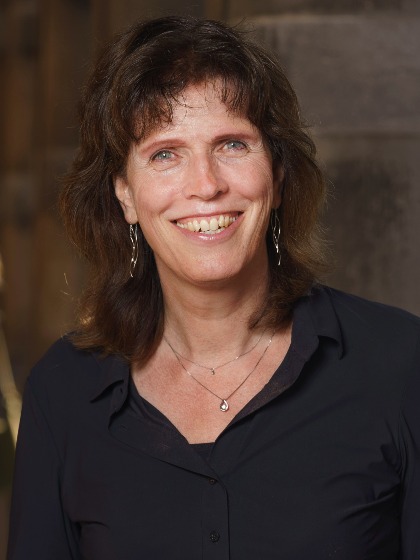
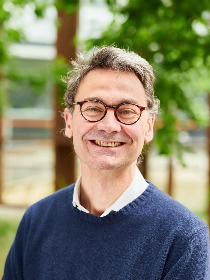
Raymond H. Cuijpers is an Associate Professor at Eindhoven University of Technology in the Human Technology Interaction group. His research focuses on Cognitive Robotics , Human-Robot Interaction , and Artificial Intelligence for cognitive agents, with applications in healthcare robotics and aging population support. PhD in Physics of Man from Utrecht University (2000) Postdoctoral research at Erasmus MC Rotterdam and Radboud University Nijmegen Key research areas include: Developing socially intelligent robots with proper social cue interpretation Hybrid AI approaches for real-world complexity handling Visual-haptic perception integration in human motor control Service robots for COPD patient assistance (KSERA project) Rescue robotics and tele-operation applications Recent research output (2025) includes studies on: Personalization in human-robot communication Optimal lighting for elderly visual perception Human-robot bonding mechanisms Interactive sensorized platforms for homecare (GUARDIAN) Audiovisual temporal integration in virtual environments He coordinates large-scale European projects like GUARDIAN and previously KSERA, contributes to sustainable development goals through healthcare robotics, and serves on editorial boards of leading journals including International Journal of Social Robotics . His work spans both technical robotics development and human-centric interaction studies.
Twan Basten is a Full Professor in the Electronic Systems group at Eindhoven University of Technology (TU/e). He leads research on embedded and cyber-physical systems, focusing on model-driven design, computational models, and system dependability. He holds an MSc (1993) and PhD (1998) in Computing Science from TU/e, advancing from Assistant to Full Professor by 2009, and became the Electronic Systems group chair in 2013. His research spans international projects (FP5-7, H2020, ECSEL) and Dutch initiatives (STW, NWO, RVO), with over 200 publications and seven best paper awards. He has co-supervised 21 PhD students and actively participates in program committees and conferences. His work contributes to UN Sustainable Development Goals through innovations in smart systems. Education: MSc in Computing Science, TU/e (1993) PhD in Computing Science, TU/e (1998) Research Interests: Explores design methodologies for embedded systems, including scenario-based design, real-time scheduling, and performance analysis. Specializes in model-driven engineering and computational models to ensure system dependability. Active in projects like TRANSACT (real-time systems) and SAM-FMS (flexible manufacturing). Key Contributions: Co-author of 1 book and over 200 scientific publications Recipient of seven best paper awards Co-supervised 21 PhD degrees Senior member of IEEE and lifetime member of ACM Labs & Teams: Leads the Model-Based Design Lab and contributes to EAISI High Tech Systems initiatives. Collaborates on tools like TRACE4CPS for execution trace analysis and CReTS for vehicle platooning simulation.
Magnus Botnan is an Assistant Professor at the Department of Mathematics, Vrije Universiteit (VU) Amsterdam. He held a tenure-track position from 2018-2022, was a postdoc at TU Munich (2016-2018) under Ulrich Bauer, and earned his PhD at NTNU in 2015 under Nils A. Baas. His research spans topological data analysis, bridging pure mathematics (representation theory of quivers) with computational and applied aspects (persistent homology, data signatures). Education: PhD in Mathematics at Norwegian University of Science and Technology (NTNU) Research Grants: VIDI career grant (€850,000) Research Collaborations: with Mike Lesnick, Ulrich Bauer, S. Oppermann, and S. Oudot His recent work includes extremal Betti numbers, bottleneck stability, and signed barcodes for multiparameter persistence. He co-organized applied topology meetings in the Netherlands and supervises graduate students in computational topology. Key scientific contributions: Advances in Mathematics Journal of Applied and Computational Topology SoCG conference proceedings He teaches courses such as Calculus 2, Complex Analysis, and Topological Data Analysis at VU Amsterdam and Mastermath, with past courses in Differential Equations, Linear Algebra, and Modelling of Dynamical Systems.
Jacquelien Scherpen is a Professor at the University of Groningen, currently serving as Rector Magnificus. She holds a position in the Engineering and Technology institute Groningen (ENTEG) within the Faculty of Science and Engineering. Her academic journey includes a PhD in Applied Mathematics from the University of Twente (1994) and post-doctoral roles at Delft University of Technology before joining Groningen in 2006. She has been a leader in systems and control research, with roles as Scientific Director of ENTEG (2013–2019) and Director of the Groningen Engineering Center (2016–2023). Her research focuses on model reduction, nonlinear control, smart energy systems, and distributed control applications in smart grids. Key achievements include the Automatica Best Paper Prize (2020), Knight of the Order of the Netherlands Lion (2019), and the Prince Friso Engineer of the Year Award (2023). She has held leadership roles in organizations like the European Control Association (EUCA) and is a Fellow of IEEE. Her professional activities include editorial roles in journals like the IEEE Transactions on Automatic Control and the International Journal of Robust and Nonlinear Control. She has organized major conferences, including the European Control Conference (ECC) 2021 and 2023. Her work bridges theoretical advancements with practical applications, emphasizing sustainability and engineering innovation.
Claudio De Persis is a Professor in the Faculty of Science and Engineering at the University of Groningen, Netherlands. He holds a Laurea degree (cum laude) in Electrical Engineering from the University of Rome La Sapienza (1996) and a PhD in Control Systems (2000) from the same institution. His research focuses on automatic control, particularly data-driven control, nonlinear systems, cyber-physical systems, and energy systems. He has held academic positions at the University of Rome La Sapienza (2002–2011), the University of Twente (2009–2011), and currently leads the Groningen Center for Systems and Control within the Engineering and Technology Institute. His expertise includes fault detection in nonlinear systems, resilient control under Denial-of-Service attacks, and distributed control of energy networks. He has authored over 250 publications, including seminal works on quantized control and cyber-physical systems. He serves on editorial boards of journals like Automatica and IEEE Transactions on Automatic Control . De Persis has received two IEEE Outstanding Paper Awards for contributions to control theory. His research integrates control theory with data science, addressing challenges in smart grids and distributed systems. He holds patents for energy system control and collaborates on interdisciplinary projects, such as data center optimization and resilient networked systems. His current research emphasizes data-driven methods for controller synthesis, leveraging convex optimization and system identification to ensure stability and performance. He also explores privacy-preserving distributed control algorithms for power networks and aggregative games.
Valentina Breschi is an Assistant Professor in the Control Systems Group at the Department of Electrical Engineering, Eindhoven University of Technology (TU/e). She holds a Ph.D. from IMT School for Advanced Studies Lucca, with postdoctoral and junior faculty experience at Politecnico di Milano. Her research focuses on data-driven control, jump model learning, meta-learning for system identification, and human-centered policy design for mobility systems. She contributes to UN Sustainable Development Goals related to sustainable infrastructure and innovation. Education: B.Sc. in Electronic and Telecommunication Engineering (University of Florence, 2011) M.Sc. in Electrical and Automation Engineering (University of Florence, 2014) Ph.D. in Control Systems (IMT School for Advanced Studies Lucca, 2018) Research Interests: Her work spans data-driven control methodologies, including LPV control, predictive control, and ethical frameworks for policy design. She explores applications in sustainable mobility, energy systems, and healthcare, emphasizing fairness and social impact. Labs/Teams: She is part of the Control Systems Group, collaborating on projects like the CONSIDER study and the design of fair-MPC frameworks. Her work integrates theoretical control principles with real-world applications in smart systems and social networks.
Sjoerd van der Heide is a University Researcher at Eindhoven University of Technology, affiliated with the Electrical Engineering department and the Electro-Optical Communication group. His work focuses on advanced optical communication systems, with expertise in quantum key distribution, digital signal processing, and space-division multiplexing. Education: MSc in Optical Communication Systems (2017), thesis titled Low-complexity pre-compensation and advanced modulation techniques for high capacity intensity-modulated direct detection systems , supervised by Prof. C.M. Okonkwo. Research interests include: Quantum cryptography over free-space and fiber links GPU-accelerated real-time optical receivers Mode-division multiplexing techniques Holography-based fiber device characterization Atmospheric turbulence compensation Statistical modeling of mode-dependent loss Recent publications demonstrate trends in Continuous-variable QKD integration Co-propagation of classical and quantum signals Neural network applications for transmission High-capacity SDM systems Real-time GPU-based signal processing Off-axis digital holography techniques Scientific awards include: ECOC 2018 Student Paper Award Optica Student Paper Award (2022) OECC 2019 Best Paper Award Active in experimental validation of transmission systems, with collaborations on multi-core fiber implementations, turbulence generators, and software-defined optical receivers. Currently involved in the Zwaartekracht ECO project for integrated nanophotonics research.
Dr. Sanne Meles is a researcher at the Faculty of Medical Sciences , part of the University of Groningen . Her work focuses on Neuroimaging and Neurodegenerative Disorders , particularly Parkinson's Disease and REM Sleep Behavior Disorder . She contributes to advanced imaging techniques like 18F-FDG PET and applies Machine Learning for data harmonization and disease classification. Email: s.k.meles@umcg.nl ORCID: https://orcid.org/0000-0002-5505-3527 Her research explores metabolic brain networks in neurodegenerative conditions, identifying patterns in essential tremor , Parkinson's prodromal stages , and REM sleep disorders . She has published extensively on neuroimaging biomarkers , machine learning applications , and longitudinal disease progression studies. Recent work includes machine learning harmonization of multicenter PET data, metabolic brain patterns in REM disorders, and validation of phenoconversion markers for Parkinson's. Her articles highlight cross-disciplinary collaborations with institutions like Seoul National University and Alzheimer's Disease Neuroimaging Initiative . Press/media coverage of her research includes public commentary on a Parkinson's detection test , which has been referenced in Wikipedia and picked up by news outlets and X (Twitter) users .
Paula Chanfreut Palacio is an Assistant Professor in the Control Systems Technology section of the Department of Mechanical Engineering at Eindhoven University of Technology (TU/e). She joined TU/e in February 2023 after previously contributing to the ERC Advanced Grant project OCONTSOLAR (Optimal Control of Thermal Solar Energy Systems). Education: B.Sc. and M.Sc. in Industrial Engineering (University of Seville, 2017/2019) Ph.D. in Automation Engineering (University of Seville, 2018–2022) Visiting scholar at UC Berkeley (2021) and MIT (2022) Research Interests: Her work centers on decentralized and data-driven model predictive control (MPC) for large-scale interconnected systems. Key applications include renewable energy plants, traffic networks, and smart grids, with emphasis on scalability, cooperative multi-agent frameworks, and real-time optimization. She also investigates cyber-security in control systems and learning-based supervisory methods. Publications: Recent articles (2025) focus on advanced MPC techniques for safety-critical systems like vehicle platooning and power grids, highlighting themes such as cyber-attack resilience, nonlinear cooperative control, and invariant set design. Cross-cutting topics include distributed optimization, robustness, and machine learning integration. Projects: Active member of the Model Predictive Pandemic Control project (2023–2025), funded by an ERC Advanced Grant, focusing on control strategies for large-scale health crises. Affiliation: Part of the Cyber-Physical Systems and Systems Engineering research group at TU/e, contributing to interdisciplinary work in control theory and real-world engineering solutions.
Sandra Bellekom is a Lecturer-researcher at Hanze University of Applied Sciences, working within the Entrance – Center of Expertise Energy. Her work focuses on system integration in the energy transition, with particular expertise in renewable energy systems, solar power optimization, and smart grid technology. She contributes significantly to research projects related to sustainable energy solutions and environmental systems analysis. Education: Ph.D. in Electrical Engineering from Delft University of Technology (1993-1998) Master's degree in Energy and Environmental Sciences, cum laude, from University of Groningen (2002-2005) Basic Teaching Qualification (BKO) from University of Groningen (2010-2011) Master's degree in Electrical Engineering (ir), cum laude, from Delft University of Technology (1989-1993) Sandra Bellekom's research interests span the critical areas of energy transition and sustainable systems. Her work emphasizes practical applications of renewable energy technologies, particularly focusing on system integration challenges. She investigates how solar energy systems perform under real-world conditions, examining factors like panel contamination and cleaning effectiveness. Her research also extends to hydrogen energy systems, smart grid integration, and the economic optimization of renewable energy solutions. Through her work, she addresses key challenges in making the energy transition technically feasible and economically viable, with a strong focus on data-driven analysis and system modeling. Her recent publications (2019-2025) demonstrate a clear trend toward applied research in solar energy optimization and hydrogen systems. The research shows increasing focus on practical field studies examining how real-world factors like bird droppings, dust, and other contaminants affect solar panel performance. There's also a notable shift toward system-level analysis, particularly in hydrogen energy configuration and the integration of multiple renewable sources. Her work consistently bridges technical analysis with practical implementation considerations, making it highly relevant for industry applications. Sandra actively participates in multiple research projects including 'Effect of pollution and cleaning of solar parks,' 'Hydrogen Works,' and studies on sensible heat storage systems. Her collaborative approach is evident in her numerous co-authored publications across various energy domains. While specific mentoring relationships aren't detailed in the available information, her background includes supervising master's students during previous academic positions. Her research laboratory and team work primarily through the Entrance – Center of Expertise Energy, focusing on practical field studies and system modeling. Current projects involve monitoring solar parks across the Netherlands, developing hydrogen configuration tools, and optimizing energy storage solutions for buildings. The team employs a combination of field measurements, data analysis, and system modeling to address real-world energy challenges.
Prof. Irmgard Borghouts is an endowed professor of HRM & Social Security at Tilburg University, Netherlands, with an endowment from Instituut Gak. She leads research on inclusive labor markets within the Department of Human Resource Studies at the Tilburg School of Social and Behavioral Sciences. As director of the People Management Center and a visiting professor at University West (Sweden), her work focuses on labor market policy, social security, and inclusive HRM. Her Ph.D. (2012) explored employment security systems across Europe, earning the German Science Prize (2016). She advises on disability insurance systems and sits on boards of organizations like Willem II Betrokken and ETZ Hospital's Supervisory Board. Education: Ph.D. in Employment Security Systems (2012), Tilburg University Research Interests: Her expertise bridges social security and HRM, addressing transitions to employment for vulnerable groups (e.g., disabled individuals) and job-to-job mobility. She emphasizes inclusive practices, policy integration, and employer roles in disability inclusion. Key themes include labor market flexibility, social policy alignment, and digital transformation impacts on work. Grants & Awards: German Science Prize (2016) EU-funded projects on labor market policies Netherlands Ministry of Social Affairs collaborations Labs & Teams: Leads the People Management Center, fostering interdisciplinary research on inclusive labor markets. Collaborates with global institutions on disability inclusion and HRM innovation.
Nikita Divissenko serves as Assistant Professor in the Department of International and European Law at Utrecht University's Faculty of Law, Economics and Governance. He coordinates the Master's Programme 'Law and Technology in Europe' and co-teaches 'Law of Market Technologies', bridging legal scholarship with digital finance innovation. His academic credentials include a 2022 PhD from the European University Institute (EUI), complemented by dual LLM degrees in International, European and Comparative Law (EUI) and European Law from Leiden University (cum laude). Prior to Utrecht, he worked as a research associate at the Florence School of Banking & Finance. Divissenko's research centers on regulatory adaptation to disruptive technologies , with expertise spanning Law and Technology , Digital Finance , and Market-State-Society Interactions . His work critically examines demand-side regulatory frameworks for fintech innovations including crypto-assets, open banking, and BNPL services within EU legal structures. This scholarship employs empirical and comparative methodologies to assess regulatory effectiveness across financial sectors. Analysis of his 2020-2025 publications reveals a cohesive trajectory toward future-proof regulatory paradigms that balance innovation with consumer protection. Key themes include demand-conscious regulation, financial integration challenges, and the evolving role of state-market relationships in digital finance. His research demonstrates increasing influence through citations in crypto-asset regulation (5 citations) and significant Mendeley readership (20+). As an active member of the RENFORCE research group on EU Internal Market Law Regulation and Enforcement, Divissenko contributes to collaborative projects on financial integration while shaping next-generation legal education through his Master's program leadership.
Chigo Okonkwo is Full Professor and Chair of Secured Ultra High Capacity Transmission at the Department of Electrical Engineering , Eindhoven University of Technology. He leads the high-capacity optical transmission laboratory at the Institute for Photonics Integration and contributes to the Center for Quantum Materials and Technology Eindhoven (QT/e) . Academic Qualifications: MSc in Telecommunications and Information Systems, University of Essex (2002) PhD in Optical Signal Processing, University of Essex (2010) Research Interests: Professor Okonkwo focuses on: Maximizing capacity of single-mode fiber systems through advanced-coded modulation and Probabilistic/Geometrically shaped signals Developing Space Division Multiplexing (SDM) systems for Petabit/s transmission using multi-mode/multi-core fibers Quantum secure communications and cryptographic protocol development Optical vector network analyzer (OVNA) technology for SDM fiber characterization Free-space optical link deployment in urban environments Low-complexity digital signal processing algorithms Recent Publications Trends: His 15 most recent articles (2023-2025) demonstrate active research in: Quantum-classical network integration Extreme capacity fiber transmission (Petabit/s systems) Machine learning for optical diagnostics SDM fiber measurement technologies Hybrid QKD-PQC security frameworks Free-space optical urban communication Scientific Awards: Asia Communications and Photonics Conference (ACP) 2018 Best Paper Award European Conference on Optical Communications (ECOC) 2018 Student Paper Award Optica Student Paper Awards (2022) Corning Outstanding Student Paper Competition Finalist (2025) Advisory & Collaborations: Advisor to 8+ researchers including Menno van den Hout, Vincent van Vliet, and Thomas Bradley Technical Program Committee Member, European Conference on Optical Communications (ECOC) since 2014 Sub Committee Chair for Digital Signal Processing track at ECOC 2018 General Chair for OSA Advanced Photonics Congress on Signal Processing for Photonics Collaborates with EU projects (HOMTech, PhotonDelta) and industrial partners Co-founder and Chief Technology Officer of CUbIQ Technologies Laboratory & Infrastructure: Maintains the world-class High Capacity Optical Transmission Lab at TU/e, featuring: Advanced SDM fiber testing equipment Quantum communication research infrastructure Free-space optical link experimental setups Multi-core fiber amplification systems Coherent transmission testbeds Machine learning-enabled diagnostic tools
Stella Kapodistria is an Associate Professor at Eindhoven University of Technology's Department of Mathematics and Computer Science, specializing in Stochastic Operations Research. She holds roles as EAISI High Tech Systems Associate Professor and editorial board member of journals like MCAP and PEIS. Her research focuses on data-driven decision-making, stochastic systems optimization, and maintenance policies, with applications in renewable energy, critical infrastructure, and cryptocurrency networks. She has secured grants including NWA-ORC, NWO Big Data, and TKI WoZ, and collaborates with industry partners in the Brainport region. Education: BSc (2003), MSc (2006, Hons.), and PhD (2009, summa cum laude) in Mathematics from the University of Athens. Postdoc at TU/e, followed by roles at Groningen University and TU/e's Stochastic Operations Research group. Teaching includes courses on Optimal Decision Making, Stochastic Performance Modeling, and Financial Mathematics. Research interests emphasize real-time learning, system resilience, and scalable algorithms for complex networks. Recent work addresses maintenance logistics, blockchain confirmation times, and wind energy prediction. She has published over 40 peer-reviewed articles and contributed to the 4TU Resilience Engineering Center. Awards include editorial leadership roles and grant funding. Advised 32 academic works and oversees industrial projects bridging theory and practice. Her labs and collaborations focus on adaptive systems, predictive analytics, and sustainable engineering solutions.
Michiel E. Hochstenbach is an Associate Professor at Eindhoven University of Technology (TU/e), affiliated with the EAISI High Tech Systems and EAISI Foundational initiatives. He holds positions in the Department of Mathematics within the School of Mathematics and Computer Science. His research focuses on numerical linear algebra, ill-posed problems, and computational methods. Hochstenbach earned his PhD from Utrecht University (2003) and held roles at Düsseldorf University and Case Western Reserve University before joining TU/e in 2006. His work spans numerical analysis, scientific computing, and software development for numerical algorithms. He has secured grants including an NSF (2004–2007) and NWO Vidi (2012–2017). His research group advises PhD students who have also received awards for their contributions. Key research areas include matrix computations, inverse problems, and optimization techniques. Recent publications address subspace methods, gradient algorithms, and matrix factorization innovations. He is an editorial board member of several journals and actively contributes to interdisciplinary computational science projects. Notable awards include the NWO Vidi Award (2011) recognizing his rapid advancements in matrix methods. His teaching includes courses on calculus, linear algebra, and mathematics fundamentals. Hochstenbach collaborates internationally, contributing to computational mathematics and sustainable development through algorithmic efficiency.