Heike Trautmann is a Full Professor of Data Science: Statistics and Optimization at the University of Münster, holding dual appointments in Datamanagement & Biometrics and the Digital Society Institute. She directs the European Research Center of Information Systems (ERCIS). Her academic journey includes a PhD (2004) and Habilitation (2013) in Statistics from Universitat Dortmund, focusing on optimization methodologies. Her research spans evolutionary optimization, machine learning, and algorithm selection, with applications in multi-objective problems and social media analytics. Recent work emphasizes deep learning-driven exploratory landscape analysis and hybrid algorithms for complex optimization challenges. Education: Habilitation in Statistics (2013): Universitat Dortmund PhD in Statistics (2004): Universitat Dortmund Master in Statistics (2000): Universitat Dortmund Her research interests prioritize advancing optimization techniques through interdisciplinary approaches, particularly leveraging machine learning for algorithm configuration and performance analysis. Collaborations highlight global networks addressing computational challenges in continuous and mixed-variable spaces. As ERCIS director, she drives innovation in information systems and societal impact through data science.
Dr. Sander Mann is a Visiting Professor at the Institute of Physics (IoP-WZI), Faculty of Science, University of Amsterdam. His research focuses on quantum optics, nanophotonics, and metasurface engineering. He can be contacted at Science Park 904, 1090 GL Amsterdam, or via email s.mann@uva.nl. His work explores light-matter interactions at the nanoscale, particularly in nonreciprocal systems and topological photonics. Recent publications highlight quantum metasurface design, thermal radiation control, and ultrafast optical switching mechanisms. Using nanophotonic and polaritonic systems, he investigates fundamental limits in optical resonators, nonlinear effects, and energy conversion efficiency. His studies span semiconductor physics, plasmonics, and quantum device engineering.
Pengjie Ren is an academic lecturer specializing in information retrieval, recommendation systems, and conversational AI. He holds teaching roles in courses such as Introduction to Big Data Processing Technology, Probability Theory and Mathematical Statistics, Ph.D Professional English, and Statistical Natural Language Processing. As a supervisor, he has guided both PhD and Master's students in research-oriented projects. His research focuses on advancing conversational systems, generative models, and reinforcement learning applications in recommendation systems. He has contributed to top conferences like SIGIR, WWW, AAAI, and ACL, with notable work on knowledge-grounded dialogues, sequential recommenders, and debiasing techniques in AI. Pengjie actively serves the academic community as an organizing committee member (NLPCC 2021, YSSNLP 2021) and workshop co-chair (SIGIR AIIS 2020, WSDM NLP4REC 2020). He is also a program committee member for major conferences and a reviewer for journals like TOIS, TKDE, and IPM. His teaching and research emphasize practical applications of AI in dialogue systems, privacy-aware recommendation, and multi-domain learning, with a focus on bridging theory and real-world implementation.
Zhaochun Ren is an Associate Professor at Leiden University, Netherlands, specializing in Information Retrieval, Natural Language Processing, and Large Language Models. He previously served as a Professor at Shandong University (2019–2023) and worked as a Research Scientist at JD.com (2017–2023). He holds a PhD from the University of Amsterdam (2016), supervised by Prof. dr. Maarten de Rijke and Prof. dr. Evangelos Kanoulas, with earlier degrees from Shandong University (B.E. 2009, M.E. 2012). His research focuses on conversational information-seeking, generative retrieval, empathetic dialogue systems, and LLM alignment, aiming to develop intelligent agents for complex user interactions. Key research interests include Recommender Systems, Knowledge Representation, and Tool Learning. Notable achievements include the Best Full Paper award at ACM RecSys 2024 and Best Paper Honorable Mention at SIGIR 2024 . He currently serves as an Associate Editor for ACM Transactions on Information Systems and actively contributes to workshops like the Search Futures Workshop and R3AG . Recent work explores generative retrieval methods, empathetic conversational systems, and privacy-preserving LLMs. His projects include the DeepShop benchmark and Confucius tool learning framework , emphasizing practical applications in e-commerce and legal judgment prediction.
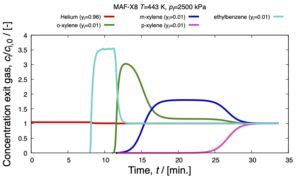
Dr. David Dubbeldam is a researcher at the University of Amsterdam's Faculty of Science, affiliated with the Van 't Hoff Institute for Molecular Sciences. His work focuses on molecular simulations of nanoporous materials and fluids, with a particular emphasis on developing and applying simulation software like RASPA, iRASPA, and RUPTURA. Research areas include adsorption, diffusion, and thermodynamics in nanoporous systems Develops simulation tools for computational chemistry and materials science Organizes workshops and educational schools on molecular simulation techniques His contributions to the field span over a decade, with recent advancements in GPU-accelerated simulations, force field development, and gas mixture separation technologies. The RUPTURA software enables breakthrough curve analysis and isotherm fitting, while RASPA3 offers significant performance improvements in Monte Carlo simulations of nanoporous materials.
Hugh Desmond is an Assistant Professor at Wageningen University & Research, specializing in the philosophy and ethics of science and biology. He holds interdisciplinary degrees in physics/mathematics from KU Leuven and music performance from the Royal Conservatory of Brussels and Conservatory of Paris. His research focuses on scientific explanation, trust in science, scientific integrity, evolutionary theory (including Darwinism and agency in evolution), and bioethics. He has co-edited volumes like Human Success and Evolutionary Thinking Across Disciplines , and published 32 peer-reviewed articles in top journals. Key research areas include the politicization of science, ethics of technology, and scientific professionalism. He co-leads the FWO-funded 'Professionalism in Science' project (€196,000) with Kris Dierickx. Desmond is a founding member of the Darwinism Network and the Embassy of Good Science, advocating for ethical scientific practices. His work bridges philosophy with societal challenges, emphasizing communication and integrity in science. Teaching responsibilities include courses on Data Science Ethics, Climate Change Strategies, and Consumer Studies for Sustainability at Wageningen University. His interdisciplinary approach integrates philosophical rigor with practical ethical dilemmas in modern science and technology.
Siamak Farshidi is an Assistant Professor in the Department of Information Technology at Wageningen University & Research. His research focuses on AI-driven Research Software Engineering (AI-RSE), emphasizing the integration of artificial intelligence into software development to enhance reusability, sustainability, and environmental responsibility. He holds a Ph.D. in Computer Science from Utrecht University (2020) and has held postdoctoral positions at the University of Amsterdam and Utrecht University until 2024. His research themes include technical debt management, FAIR principles compliance, and the development of AI-enhanced tools for decision-making in software ecosystems. He has contributed to projects like LTER-LIFE (digital twin ecosystems) and ENVRI-HUB Next/ENVRI-FAIR (environmental research systems). His expertise spans decision models, AI, software architecture, and scientific software frameworks. Recent work explores serverless platform selection, blockchain oracles, and conversational recommender systems. His publications reflect trends in decision support systems, FAIR-compliant frameworks, and environmental software engineering. Projects like FAIRSECO and D-VRE highlight his focus on collaborative research ecosystems and decentralized solutions. No scientific awards are explicitly mentioned, but his contributions to open-source ecosystems and environmental research are notable. He teaches courses including Software Engineering (INF32306), Generative Artificial Intelligence (INF53306), and Programming in Python (INF22306). His advising and grants are tied to projects like LTER-LIFE and ENVRI initiatives. He leads efforts in developing frameworks like FAIRSECO and Trustseco to reinforce trust in software ecosystems.
Fenny van Egmond is a researcher at Wageningen University & Research , affiliated with ISRIC - World Soil Information . Her work focuses on soil science, particularly in soil health, carbon mapping, and sensor technology integration for agricultural soils across Europe. Current role: Researcher in Soil, Water, and Land Use Key collaborations: EJP Soil, European institutions Active in EU soil monitoring law implementation Her research combines soil property analysis with remote sensing and sensor data to develop downscaling frameworks for soil carbon and clay maps. She contributes to policy development through interdisciplinary projects linking soil science with environmental law. Recent publications highlight her expertise in digital soil mapping , proximal sensing , and monitoring system design . She has led multiple projects (2016–2026) involving spectral libraries, UAV-based soil analysis, and field sensor testing. Notable contributions include creating metadata catalogues for European soil datasets and organizing workshops on soil health monitoring challenges. Her work supports the European Soil Monitoring Directive through technical and policy-oriented solutions.
Hylke Faber holds dual roles as a PhD Candidate and Lecturer-Researcher at Hanze University of Applied Sciences, affiliated with the Centre of Expertise Healthy Ageing. His research focuses on computational thinking education in primary schools, particularly for young children, and adaptive technology integration in teacher training programs. He actively contributes to educational design research and has presented at international conferences such as Koli Calling and Onderwijs Research Dagen. Key research areas include algorithmic problem-solving in early childhood, abstraction development in programming education, and the use of tools like ScratchJr and educational robotics. His work emphasizes inclusive educational practices and has led to publications in peer-reviewed journals and conference proceedings. Faber has delivered invited talks on topics such as 'Digital Literacy in Teacher Education' and 'Short-term Progression of Abstraction in Primary Programming Education.' His activities include organizing workshops and contributing to innovation challenges focused on adaptive learning methodologies. No scientific awards are explicitly noted in the provided materials. His research has been cited and widely shared, with 27 readers on Mendeley for select works.
Dr. Bram de Jonge is an Associate Professor and program coordinator for the BSc in Econometrics and Operations Research (EOR) at the Faculty of Economics and Business, University of Groningen. He is affiliated with the Department of Operations, where he specializes in Operations Research & Management Science with a focus on Industrial Operations Management. His academic journey began at the University of Groningen, where he earned both his MSc in Econometrics, Operations Research & Actuarial Studies (cum laude) and his PhD. Dr. de Jonge's educational background includes: MSc in Econometrics, Operations Research & Actuarial Studies (cum laude), University of Groningen PhD, University of Groningen His research primarily focuses on maintenance optimization, asset management, reliability engineering, and stochastic operations research. Dr. de Jonge has developed significant expertise in condition-based maintenance optimization, where he applies mathematical modeling and stochastic processes to solve complex maintenance problems. His work often bridges theoretical operations research with practical industrial applications, particularly in optimizing maintenance policies under various constraints and uncertainties. He has made notable contributions to understanding the economic implications of different maintenance strategies and developing data-driven approaches for maintenance optimization. Analysis of Dr. de Jonge's publication record reveals a strong trajectory in maintenance optimization research, with particular emphasis on condition-based approaches. His work demonstrates increasing sophistication in handling complex scenarios including limited data availability, mobile maintenance resources, production-maintenance integration, and multi-unit systems. He has developed innovative mathematical techniques, such as matrix algebra applications for maintenance optimization, and has contributed significantly to the theoretical foundations through comprehensive literature reviews. His research consistently addresses practical industrial challenges while maintaining rigorous mathematical foundations. Dr. de Jonge actively supervises Master's thesis projects in Operations Research and teaches multiple courses including OR Modelling, Data-driven Optimization, and Planning and Control of Stochastic Systems. His teaching portfolio reflects his research expertise, creating a strong connection between his academic instruction and scholarly work. One of Dr. de Jonge's notable contributions to the field is the Maintenance Library, a comprehensive resource containing over 1,300 scientific papers in maintenance planning and optimization. This library serves as an important tool for researchers in the field, categorizing literature from 1,836 authors published across 139 different journals. The library demonstrates his commitment to advancing the field through knowledge organization and sharing.
Niels Agatz is a Full Professor of Last-mile Supply Chain Analytics at the Rotterdam School of Management, Erasmus University Rotterdam. He serves as Scientific Director at TKI Dinalog and is affiliated with ERIM since 2004. His work focuses on integrating technology and sustainability in urban logistics, shared mobility, and online retailing through data-driven optimization. Erasmus University Rotterdam (2004-present) Georgia Institute of Technology (visiting) Pontifical Catholic University of Chile (visiting) Professor Agatz's research explores analytics applications in last-mile delivery, including drone and truck combinations, dynamic ride-sharing, and sustainable time slot management. His work bridges academic rigor with industry practice through collaborations with major stakeholders in logistics and retail sectors. Recent publications highlight his contributions to: Drone delivery route optimization Dynamic ride-sharing systems Urban logistics sustainability Online time slot booking Truck platooning efficiency Public transport integration Awarded the NWO Rubicon Grant and INFORMS TSL Stella Dafermos Achievement Award, he also serves as Area Editor for Transportation Science. His teaching portfolio includes courses on distribution networks, management science, and decision-making frameworks. As academic advisor, he has directly supervised multiple PhD candidates including Alp Arslan, Joydeep Paul, and Anirudh Bhoopalam, while serving on committees for various dissertation projects related to: On-demand delivery systems Omni-channel retail operations Truck platooning behavior Dynamic decision-making Sustainable optimization Robotized warehouse design His methodological approach combines mathematical programming, simulation modeling, and empirical analysis to address real-world logistics challenges, particularly emphasizing environmental impacts and technology integration in urban transportation ecosystems.
Inonge Reimert is an Assistant Professor in Adaptation Physiology at Wageningen University. She specializes in animal welfare and behavior, particularly focusing on pigs and veal calves. Her research emphasizes environmental enrichment, genetic selection for maternal care, and the application of precision livestock farming technologies like thermal imaging and wearable sensors. Her work integrates interdisciplinary approaches combining computer vision, machine learning, and behavioral ecology to improve livestock management. Notable projects include predicting parturition onset in sows and reducing piglet mortality through genetic selection. She collaborates extensively on EU-funded research and supervises PhD candidates in areas like veal calf welfare and social network analysis in pigs. Recent contributions include developing automated thermal imaging pipelines for livestock monitoring and exploring how housing systems affect animal health. Her research has been presented globally at conferences like the European Conference on Precision Livestock Farming.
Bas Kemp is a Full Professor at Wageningen University, specializing in Adaptation Physiology. His research focuses on animal production systems, particularly in dairy cows, broiler chickens, and sows, emphasizing welfare, nutrition, and physiological adaptation. He leads projects exploring lactation management, husbandry practices, and genetic influences on livestock. Key research areas include optimizing lactation length in dairy cows, understanding broiler welfare in different husbandry systems, and evaluating sow nutrition during lactation. His work integrates machine learning for anomaly detection in poultry farming and behavioral monitoring in dairy cattle. Notable achievements include a prize for studying early feeding impacts on gut microbiome development. He supervises over 70 PhD projects, including studies on cow-calf contact systems and sow maternal behavior. Kemp collaborates globally, addressing challenges like heat stress mitigation and antibiotic reduction in livestock. His contributions span 1089 publications, with recent focus on animal resilience, environmental enrichment, and precision agriculture techniques. He actively participates in conferences and media outreach to promote sustainable livestock practices.
Jan Clevers is an External employee affiliated with the Laboratory of Geo-information Science and Remote Sensing at Wageningen University & Research. His research focuses on advancing remote sensing methodologies for environmental and agricultural applications, particularly in land cover analysis, vegetation indices, chlorophyll content estimation, and UAV-based monitoring. He has contributed to over 390 research outputs, including peer-reviewed articles, datasets, and collaborative projects. Clevers has supervised 22 PhD candidates, notably in projects like 'Towards Comprehensive Aquatic Land Cover Mapping' and 'UAV-Based Chlorophyll Fluorescence Measurement.' His work integrates multi-source Earth observation data to address global environmental challenges, such as monitoring water stress in crops and characterizing aquatic ecosystems. Key projects include 'Measuring Sun-Induced Fluorescence Using UAV-Based Remote Sensing' and 'A Multi-Sensor Approach for Forest Biophysical Products.' Clevers has also developed datasets like 'Field Data of Monitoring Forest Phenology' and 'Diurnal UAV-Based Chlorophyll Fluorescence.' Clevers actively collaborates internationally, contributing to advancements in remote sensing technology and its applications in precision agriculture, ecological modeling, and climate research. His research emphasizes bridging gaps between satellite data and ground-based measurements to enhance environmental monitoring accuracy and utility.
Bram Agema is a Researcher at Erasmus MC, specializing in Medical Oncology with a focus on pharmacokinetics and model-informed precision dosing. His work integrates pharmacometrics to optimize drug therapies in oncology and other clinical settings. He holds a doctoral degree from Erasmus University Rotterdam, awarded in June 2025 for his thesis on data-driven dosing strategies in oncology. Key research areas include drug exposure-response relationships, individualized therapy optimization, and predictive modeling of chemotherapy regimens. Recent projects address challenges in transitioning between subcutaneous and transdermal drug administration, nintedanib pharmacokinetics in pulmonary fibrosis, and ensemble modeling for precision dosing. His publications emphasize translational research bridging pharmacokinetic theory to clinical practice, with contributions to journals like Drugs , Journal of Pain and Symptom Management , and Clinical Pharmacokinetics . Collaborations span multidisciplinary teams at Erasmus MC and other institutions, focusing on improving treatment efficacy and safety through advanced dosing strategies.