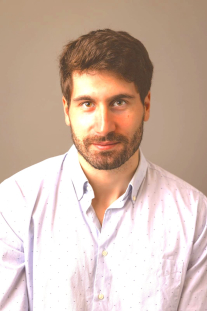
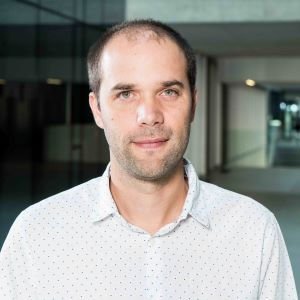
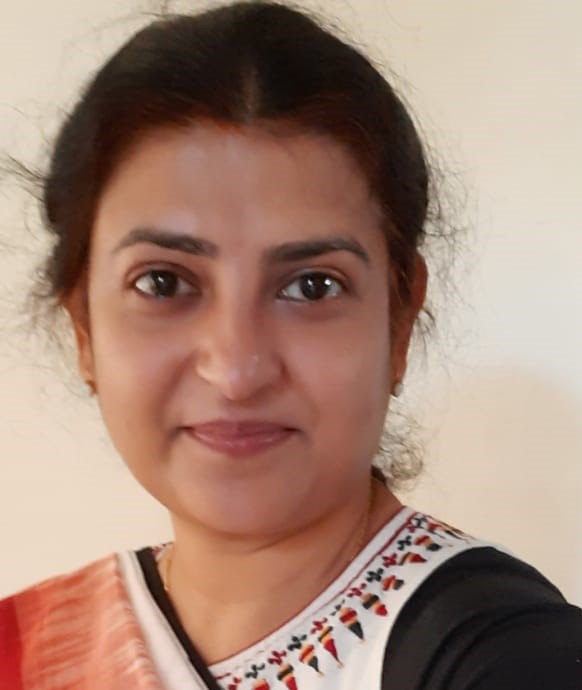
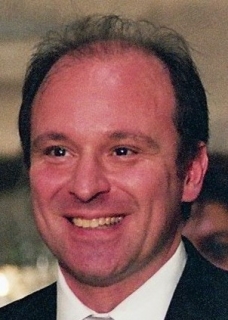
Maurizio Ramanzin is a Full Professor at the University of Padova , affiliated with the School of Animal Science and Department of Agronomy, Animals, Food and Natural Resources (DAFNAE) . His research focuses on Agricultural Sustainability , Environmental Impact Assessment , and Precision Livestock Farming . Academic Field : AGR/19 Email : maurizio.ramanzin@unipd.it Address : Agripolis - Viale dell'università, 16 - Legnaro (Padova) – ITALY His work explores the interactions between livestock systems and ecosystem services in mountainous regions, with emphasis on: Grazing Management and biodiversity conservation Life Cycle Assessment (LCA) of dairy and beef systems Climate Change Adaptation in Alpine ungulates Animal Welfare in small-scale farms Technological Tools (GPS, NIRS) for monitoring grazing behavior Key trends in his recent publications include: Quantifying environmental drivers of wolf predation on livestock Developing low-cost biologging systems for dairy cows Analyzing social-ecological trade-offs in mountain agriculture Assessing microbial dynamics in alpine soils
Federico Nutarelli is an Assistant Professor of Economics at the IMT School for Advanced Studies Lucca, Italy. His research focuses on the intersection of machine learning and economic analysis, particularly in international trade, health economics, and industrial organization. He holds a Ph.D. in Economics from IMT Lucca, and previously conducted postdoctoral research at Bocconi University. In 2024, he was a Visiting Scholar at MIT Sloan School of Management. Key research interests include causal machine learning methods to analyze heterogeneous firm responses to economic shocks, pharmaceutical market pricing strategies, and structural demand models. His work bridges methodological rigor with applied relevance, contributing to health economics, trade dynamics, and innovation policy. Recent publications (2020–2025) explore topics such as matrix completion for world trade analysis, machine learning applications in economic complexity, and modeling innovation ecosystems. His work often employs advanced statistical techniques like Shapley values and reinforced Bernoulli processes. No scientific awards were explicitly mentioned in the provided texts. Federico collaborates with institutions like Bocconi University and MIT Sloan, reflecting his interdisciplinary network in economics and data science.
Luca Barra is Full Professor of Television and Digital Media at the Department of Arts, University of Bologna. His research focuses on media studies, particularly television history and contemporary evolution, transnational circulation of content, serialization, and comic/humorous genres. He has coordinated the Master's Degree in Information, Cultures and Media Organization since 2021 and serves as editor-in-chief of VIEW. Journal of European TV History and Culture. University of Bologna, Department of Arts Research areas: Television History, Transnational Media, Digital Transformation, Italian TV Production Barra's work examines the international mediation of ready-made TV formats, Italian streaming partnerships, and the cultural implications of digital television. His recent articles analyze dystopian narratives, sitcom reception in Italy, and the redefinition of celebrity during the pandemic. He contributes to academic discourse through editorial roles in journals like SERIES and Comunicazioni Sociali. His publications include monographs on Italian television programming, sitcoms, and co-edited volumes exploring European premium TV fiction and digital media frameworks. Barra has led research projects such as ATLas and F-ACTOR, and collaborates with international institutions including Brown University and NECS.
Sarah Azimi is a fixed-term researcher at the Department of Control and Computer Science (DAUIN) within the College of Computer, Film and Mechatronics Engineering at Politecnico di Torino. She actively contributes to research and teaching in the domains of reliable computing, reconfigurable systems, and AI applications for space and smart city security. Research Interests: Reliability and fault tolerance in safety-critical and space systems RISC-V and FPGA-based architectures High-performance computing (HPC) and reconfigurable computing AI resilience and real-time gesture recognition for public safety Radiation effects and hardening techniques for aerospace applications Publication Trends: Her recent publications focus on RISC-V reliability, radiation effects in space missions, AI resilience in reconfigurable platforms, and smart city security through gesture recognition. Her work spans both journal and conference venues, emphasizing practical and mission-tailored solutions in embedded and aerospace computing. Scientific Awards: No awards explicitly mentioned in the provided text. Advising and Grants: Sarah Azimi supervises multiple PhD students including Federico Buccellato, Aobo Cui, and Giorgio Cora. She leads the competitive research project Safe Smart City: Detecting Violence and Requests for Help in Real Time Through Video Surveillance Devices (2024). She is also a member of the RAMSES CubeSat-1 Development project (2025–2026) and led the commercial research project on the Rempro fault-tolerant processor (2022–2023). Labs and Teams: She is a key member of the CAD - Electronic CAD & Reliability Group (DAUIN) at Politecnico di Torino, contributing to cutting-edge research in electronic design automation and system reliability for aerospace and terrestrial applications.
Thomas Le Barbanchon is a Full Professor of Economics at Bocconi University since 2025 and holds the Rodolfo Debenedetti Chair in Labor Economics. He received his PhD from Ecole Polytechnique (CREST-ENSAE) in 2012 and has been affiliated with institutions like CEPR, CREST, J-PAL, LEAP, BIDSA, IGIER, IZA, and IFS. His research focuses on labor economics, particularly job search mechanisms, unemployment insurance effects, gender disparities, and labor market policy evaluation. Educational background: PhD in Economics (Ecole Polytechnique), MSc in Economics (Universitat Pompeu Fabra), Diplôme d'ingénieur statisticien-économiste (ENSAE), and Diplôme d'ingénieur (Ecole Polytechnique) Research highlights include: Quantifying the impact of unemployment insurance reforms in France Analyzing gender differences in job search behavior Studying the effectiveness of hiring credits during economic crises Investigating how traditional AI improves job matching Examining migrant-native job search segregation patterns Scientific contributions appear in top journals like American Economic Journal: Applied Economics , Quarterly Journal of Economics , and Review of Economic Studies . Awards include two ERC grants (2017 & 2024) and the Bocconi Impact Award (2022). He mentors PhD students in economics and labor policy, currently serves as Director of IGIER research center, and maintains active editorial roles at Review of Economic Studies and Journal of the European Economic Association .
Bernardo Tellini is a Full Professor of Electrical and Electronic Measurements at the Department of Energy, Systems, Land, and Construction Engineering (DESTEC) at the University of Pisa, where he also serves as Vice-Rector for Doctoral Research. He has held this institutional role since 2020, overseeing doctoral program planning, accreditation, and admission procedures. Previously, he chaired the doctoral program in Energy, Electrical, and Thermal Engineering from 2012 to 2016 and served on the Leonardo da Vinci Doctoral School in Engineering from 2008 to 2016. Education: PhD in Electrical Engineering, University of Pisa (1999) Degree in Electrical Engineering, University of Pisa (1993) Postdoctoral research at Karlsruhe Research Center for Technology and Environment Industry experience at ABB Tellini's research focuses on electrical and magnetic measurement methodologies for high-power pulsed applications, characterization of electrical and magnetic properties of materials, aging processes in battery cells, and electromagnetic emissions from power circuits. His work spans from fundamental measurement theory to practical industrial applications, particularly in railway technologies where he represents the University on the Steering Committee of the District for Railway Technologies, High-Speed, and Network Safety in Tuscany. He has served as president of the European Pulsed Power Laboratories agreement and chaired major IEEE conferences including I2MTC 2015 and MELECON 2020. His recent publications reveal a strong emphasis on RFID-based localization systems , nanoparticle-enhanced optical sensors , and advanced battery characterization techniques . The research trajectory shows increasing integration of measurement science with emerging technologies like plasmonic sensing, microwire-based transducers, and smart systems for industrial monitoring. His team has developed innovative approaches for battery health monitoring under vibration stress, temperature sensing using magnetic materials, and precise localization methods using phase-based RFID systems. Professional Service: President of Italian Section of IEEE (2019-2021) Scientific director of Pisa research unit in Association of Electrical and Electronic Measurements (GMEE) Member of Certification Committee of Italcertifer SpA (since 2019) Representative on District for Railway Technologies Steering Committee (since 2013) Tellini has authored approximately 200 publications in international journals and conference proceedings. His leadership extends to academic governance through roles on the DESTEC Department Human Resources Committee and various university committees overseeing scientific qualifications and doctoral programs. His research bridges theoretical measurement principles with practical engineering solutions for energy systems, transportation infrastructure, and industrial monitoring applications.
Dr. Kathleen Curtius is an Assistant Professor in the Department of Medicine at the University of California San Diego (UCSD), affiliated with the Division of Biomedical Informatics and the UCSD Moores Cancer Center. She leads the Quantitative Cancer Control laboratory, focusing on early cancer detection and prevention through mathematical modeling and multi-scale data analysis. Previously, she held a Medical Research Council Rutherford Fellowship at Barts Cancer Institute (London) and completed postdoctoral training in Prof. Trevor Graham's lab. Her research integrates applied mathematics, computational biology, and clinical oncology to address cancer evolution and screening strategies. Education: PhD in Applied Mathematics, University of Washington (2015) MS in Applied Mathematics, University of Washington (2011) BS in Mathematics, UCLA (2010) Research Interests: Mathematical oncology Cancer evolution modeling Epigenetic drift analysis Screening optimization Multiscale tumor dynamics Her work bridges disciplines to develop predictive tools for early cancer detection and personalized surveillance strategies. Publications: Recent work includes studies on metagenomic data bias (Nature Communications 2025), AI-driven cancer biomarker discovery (JCI Insight 2022), and computational models of Barrett's esophagus progression (Gut 2020). Her research emphasizes translational applications in clinical oncology and public health. Awards: Recognized with the 2024 Leah Edelstein-Keshet Prize, 2022 AGA Research Scholar Award, and 2018 MRC Rutherford Fellowship. Her work has been cited over 1,000 times across key oncology journals. Funding: Principal Investigator on NIH grants (R01CA270235, I01BX005958) supporting projects on Barrett's esophagus modeling and colitis-associated colorectal cancer surveillance optimization. Collaborates with clinicians, geneticists, and computational biologists to advance cancer control efforts. Labs/Teams: Leads the Quantitative Cancer Control Lab at UCSD, part of the Bioinformatics and Systems Biology division. Active in interdisciplinary initiatives like the Moores Cancer Center's Cancer Control Program.
Dr. Dipanwita Thakur serves as Assistant Professor at the Department of Computer Engineering, Modeling, Electronics and Systems (DIMES) at the University of Calabria, Italy since July 2023. She is an active member of the European Cooperation in Science & Technology (COST Action CA22104) focusing on cybersecurity and serves in the IEEE Future Networks Working Group for Artificial Intelligence/Machine Learning. Previously, she held a 15-year Assistant Professor position at Banasthali University, Rajasthan, and has industry experience at TechMahindra and C-DAC. Education: Ph.D. in Smart Healthcare from West Bengal University of Technology, Kolkata M.Tech. in Software Engineering from Banasthali Vidyapith MCA from NIELIT, Government of India B.Sc. from University of Calcutta Her research pioneers Green Artificial Intelligence with emphasis on energy-efficient federated learning and smart healthcare applications. She develops privacy-preserving human activity recognition systems using multimodal data fusion, focusing on performance evaluation and environmental sustainability. Her work bridges theoretical machine learning with practical healthcare solutions, optimizing AI systems for reduced carbon footprint while maintaining clinical efficacy through hardware-algorithm co-design and quantization techniques. Recent publications reveal a strong trajectory toward sustainable AI, with increasing focus on energy-aware federated learning frameworks, multimodal medical segmentation, and non-IID data handling. Her work consistently addresses the critical balance between model accuracy, convergence speed, and energy consumption across edge devices, with growing emphasis on quantization techniques and hardware-algorithm co-design for real-world deployment. Scientific Awards: Elevated to IEEE Senior Member (2024) Dr. B.C. Roy Memorial Scholarship for outstanding 10th Board results (1992) Student Science Seminar Award by West Bengal Government (1990) Dr. Thakur actively mentors students as evidenced by her congratulations to advisee Farwa for paper acceptances. She serves as Associate Editor for Information Fusion (Elsevier) and IEEE Sensors Journal, and holds editorial roles at Scientific Reports. Her research is advanced through COST Action CA22104 and IEEE working groups, though specific grant details aren't listed in the source material. She has organized key workshops including Green-Aware AI 2024 and Green Federated Learning at IJCNN 2025. She leads research within the MONAI community on data quality and federated learning, and contributes to IEEE IoT and Future Networks initiatives. Her work with the COST Action CA22104 Behavioral Next Generation in Wireless Networks connects cybersecurity with sustainable AI development, while her Missouri S&T visiting scholar position focuses on energy optimization for federated learning systems.
Riccardo Lancellotti is an Associate Professor at the Department of Engineering 'Enzo Ferrari' of the University of Modena and Reggio Emilia. His research focuses on Edge/Fog/Cloud Computing, Cyber Security, and Resource Management in distributed systems. He has extensive contributions in optimizing infrastructure performance, load balancing, and energy efficiency in cloud and fog environments. His work often combines theoretical models with practical simulations, addressing challenges like stale information in edge systems and heterogeneous resource allocation in smart cities. Key research areas include: Fog/Edge computing infrastructure design and optimization Cloud resource provisioning and SLA compliance Security for Industry 4.0 and automotive systems Genetic algorithms for service placement Scalable VM clustering and resource allocation Publications highlight trends in cloud/fog integration, robust game theory for microservices, and distributed load balancing under dynamic conditions. His work emphasizes practical applications, such as pharmaceutical distribution routing and smart city sensor management. No awards are explicitly listed, but his extensive publication record reflects recognition in the field.
Chiara Cortinovis is a Researcher at the Department of Civil, Environmental and Mechanical Engineering, University of Trento. Her work focuses on urban planning, ecosystem services, and climate adaptation, integrating Geographic Information Systems (GIS) and Strategic Environmental Assessment (SEA) into sustainable development frameworks. Current research emphasizes nature-based solutions, urban green infrastructure, and spatial databases for territorial planning. Recent publications analyze ecosystem service hotspots, geodesign methodologies, and policy instruments for sustainable peri-urban landscapes. Teaches Introduction to Urban Planning and Ecological Land Planning Specializes in GIS applications, environmental sustainability, and urban-climate resilience
Luca Di Gaspero is an Associate Professor of Information Technology at the University of Udine, specializing in metaheuristic optimization techniques. His research enhances combinatorial optimization through hybridization of algorithms for scheduling, routing, and industrial applications. Research spans artificial intelligence in optimization, scheduling algorithms for manufacturing/healthcare, and metaheuristic framework development. Recent publications focus on LLMs in optimization, parallel batch scheduling, and energy-efficient manufacturing. Key Contributions: Developed EasyLocal++ framework for local search algorithms Advanced multi-neighborhood simulated annealing techniques Applied metaheuristics to healthcare logistics and emergency services
Antonio Corradi is a Full Professor of Computer Networks and Infrastructures supporting Cloud and Big Data at the University of Bologna's School of Engineering, within the Department of Computer Science - Science and Engineering. His roles include President of the regional CLUSTER RER for service innovation, President of the Alma Mater FAM Foundation, and Director of the UNIBO High Studies Center in Buenos Aires. He previously served as Director of the DISI department (2018–2021) and International Delegate for Latin America (2014–2018). His research focuses on distributed systems, middleware for pervasive computing, cloud solutions, mobile systems, smart cities, Industry 4.0/5.0, and 5G communication standards. Education: Laurea cum laude in Electrical Engineering (University of Bologna, 1979) and a Master's in Computer Engineering from Cornell University (1981, supported by a Fulbright-Hayes grant). He joined the University of Bologna as a Researcher in 1983 and became Full Professor in 2000. Research interests span distributed/parallel systems, middleware for mobile agent systems, cloud computing, smart city monitoring, and Industry 4.0 protocols. He emphasizes QoS-aware solutions, edge computing, and IoT integration. His work includes designing frameworks for big geospatial data and novel architectures for serverless and fog computing environments. Selected scientific awards include the 1980 'Cavalieri del Lavoro' prize for his thesis. He actively contributes to institutional duties, including the CCIB (Computer Services Centre of the Engineering School) and CINI Bologna University Section (Italian Interuniversity Consortium). In advising and grants: He coordinates PhD programs and has led projects funded by MIUR, CNR, and European initiatives. Notable collaborations include industry grants with Jakala, OTConsulting, ENAV-Sicta, and the Zefiro Consortium. His projects address challenges in energy efficiency, smart manufacturing, and healthcare management during crises. Labs/Teams: Developed platforms like SOMA and REDMAN middleware. Involved in initiatives such as ParticipAct (mobile crowdsensing), COLOMBO (vehicular traffic monitoring), and the Audit4Cloud platform for cloud performance auditing.
Andrea Celli is an Assistant Professor in the Department of Computing Sciences at Bocconi University. He is affiliated with the ELLIS Society and the Bocconi Institute for Data Science and Analytics. Previously, he was a postdoctoral researcher at Meta (formerly Facebook Research) in London. He holds a Ph.D. in Computer Science from Politecnico di Milano and conducted research at Carnegie Mellon University's Electronic Marketplaces Lab. His research focuses on intersections of computer science, machine learning, and economics, particularly in strategic interactions and online learning environments. Notable achievements include a NeurIPS 2020 Best Paper Award and the 2017 Lesmo Prize for his MSc thesis. His research is supported by grants including an ERC Starting Grant (2024) for the PLA-STEER project and an MUR-PRIN grant (2022). He teaches courses such as Deep Learning and Reinforcement Learning, Machine Learning, and Optimization at the Ph.D. level. His work spans topics like equilibrium finding, online learning under constraints, and mechanism design. Key publications include contributions to ICLR, NeurIPS, EC, and other top venues. Celli advises Master’s students including Annalisa Barbara, Emanuele Coccia, Davide Drago, and Antonio Preiti. He collaborates with postdocs like Riccardo Poiani and Martino Bernasconi. He actively organizes academic events, such as the EC 2025 workshop on Online Learning and Economics. His research emphasizes theoretical foundations while addressing practical challenges in algorithmic game theory and data-driven decision-making.
Lorenzo Farina is a Full Professor at Sapienza University of Rome's Faculty of Information Engineering, Computer Science and Statistics, specializing in Electronic and Computer Bioengineering (ING-INF/06). With over 25 years of academic leadership, he co-founded Italy's first Bioinformatics degree program and established key oncology precision medicine initiatives, maintaining active collaborations with Harvard Medical School's network medicine division. His educational background includes a cum laude Electronic Engineering degree and PhD in Systems Engineering, both from Sapienza University. These foundational studies evolved into pioneering work in positive linear systems theory, evidenced by his highly-cited Wiley textbook Positive Linear Systems: Theory and Applications (2000). Farina's research centers on network medicine – applying complex network science to molecular medicine since his 2004 breakthrough. His work spans cancer mechanisms (breast, glioblastoma, lung), drug repositioning (including COVID-19 applications), and liquid biopsy biomarker development. Current projects focus on miRNA-based network biomarkers for cancer diagnostics and immunotherapy response prediction, integrating multi-omics data through advanced computational frameworks. Analysis of his 15 most recent publications (2024-2025) reveals dominant themes: sexual dimorphism in cancer networks (MIRROR platform), immunotherapy response signatures, and critical examinations of AI's role in precision medicine. His work consistently bridges computational innovation with clinical applications, particularly in oncology diagnostics and therapeutic optimization. His scientific recognition includes: 2001 Guillemin-Cauer Award for best IEEE Transactions on Circuits and Systems article 2014 SysBio Award for annual best publication Farina actively mentors through interdisciplinary programs he established, including the Network Oncology doctoral program. His laboratory collaborations span Sapienza's Oncogenomics and Immunology Laboratories, Harvard's Channing Division of Network Medicine, and clinical departments in oncology and radiology, driving translational research from computational models to patient applications. He leads multiple research teams focused on network-based diagnostics, including the MIRROR platform for cancer disparity analysis and liquid biopsy development teams investigating circulating miRNA networks for early cancer detection across multiple malignancies.
Karim Abu Salem serves as a Fixed-term Assistant Professor in the Department of Mechanical and Aerospace Engineering (DIMEAS) at the Polytechnic University of Turin, affiliated with the College of Mechanical, Aerospace, and Automotive Engineering. He additionally holds invited membership in the College of Management and Production Engineering. His teaching portfolio includes Aerospace Vehicle Design, Space Flight Mechanics/Structures, Space Environment Operations, and Aeronautical Legislation courses for both bachelor's and master's programs in Aerospace Engineering. Dr. Abu Salem's research centers on sustainable aviation innovation, specializing in box-wing aircraft configurations, hybrid-electric and hydrogen propulsion systems, and advanced structural design methodologies. His work addresses critical challenges in emissions reduction, flight dynamics optimization, and climate impact mitigation through computational modeling, metamodeling techniques, and multidisciplinary design analysis. Key focus areas include unconventional aircraft architectures, power management systems, and metamaterial applications for next-generation aerospace vehicles. Analysis of his recent publications (2023-2025) reveals a concentrated research trajectory toward decarbonizing regional and medium-range aviation. His work demonstrates increasing emphasis on liquid hydrogen propulsion, box-wing aerodynamic efficiency, and holistic environmental impact assessment beyond CO 2 emissions. The publications exhibit strong collaboration patterns with researchers like G. Palaia and E. Carrera, primarily targeting high-impact journals in aerospace engineering and sustainability. As an active educator, Dr. Abu Salem contributes to curriculum development across multiple aerospace engineering programs, bridging theoretical concepts with emerging sustainable aviation technologies through his course collaborations and lectures.