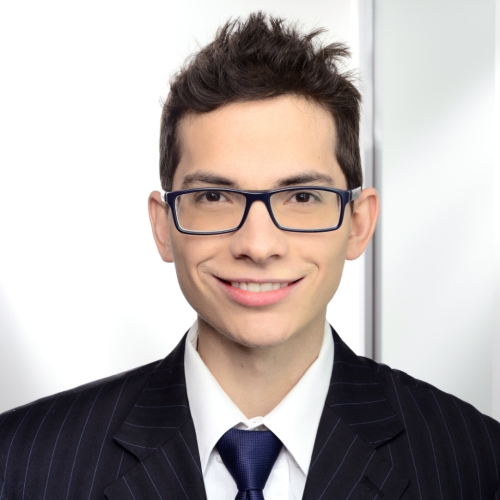
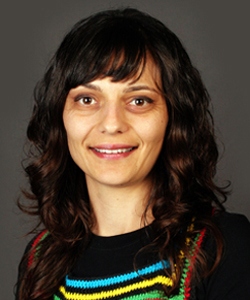
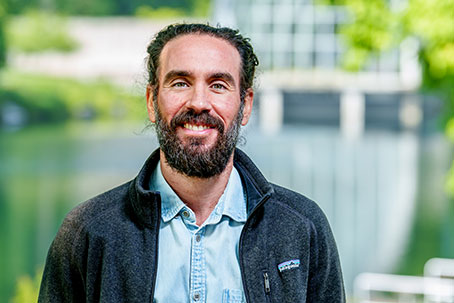
Dr. Lothar Richter is a researcher at the Technical University of Munich (TUM), affiliated with the Chair for Bioinformatics within the Department of Informatics. He holds a doctoral degree (Dr. rer. nat.) and is actively involved in interdisciplinary research spanning bioinformatics, machine learning, and computational biology. His work integrates advanced data mining techniques with biological applications, particularly in protein structure-function prediction and medical informatics. Research Interests: Bioinformatics & Computational Biology: Development of algorithms for protein structure and function prediction. Machine Learning in Healthcare: Application of radiomics and predictive modeling in oncology. Data Mining Systems: Design of inductive databases and query languages for biological data analysis. His publications demonstrate a consistent focus on leveraging computational methods to address complex biological questions, from predicting protein interactions to modeling drug resistance in HIV. Recent work emphasizes translational applications, such as machine learning-based radiomics for sarcoma diagnosis. Affiliations & Contact: Technical University of Munich - Informatics 12 (Chair for Bioinformatics) Email: lothar.richter@mytum.de Room: 5609.01.061, Boltzmannstr. 3, Garching b. Munich
John Kececioglu is a Professor in the Department of Computer Science at the University of Arizona, maintaining his office in Gould-Simpson Hall (GS 727). Holding a Ph.D. from the University of Arizona (1991), he bridges theoretical computer science with practical applications in biology and astronomy through rigorous algorithmic development. His research spans computational biology, algorithm design, and combinatorial optimization, with significant contributions to protein sequence alignment, metabolic network analysis, and astronomical alert systems. Recent work focuses on hypergraph-based pathway inference in cellular reaction networks and robust optimization for metabolic engineering, while his astronomy collaborations include the ANTARES broker system for real-time classification of transient events. Analysis of his 2018-2024 publications reveals a dual research trajectory: bioinformatics work emphasizing hyperpath algorithms for metabolic networks (60% of recent output) and astronomy projects developing machine-learning brokers for time-domain discovery (40%). Both streams demonstrate his signature approach of transforming complex biological and astronomical problems into combinatorial optimization challenges with efficient algorithmic solutions. No scientific awards were documented in the source material. While specific advising records and grant histories remain unreported in available texts, his extensive publication record spanning protein alignment (1989-2020) and metabolic engineering (2022-2024) suggests sustained mentorship of graduate researchers. His methodology of "parameter advising" for sequence alignment indicates innovative approaches to algorithm configuration that likely shaped student projects. Kececioglu leads computational efforts within the ANTARES (Arizona-NOAO Temporal Analysis and Response to Events System) collaboration, developing software infrastructure for next-generation astronomical surveys. His bioinformatics work implies active participation in interdisciplinary teams combining computer science, systems biology, and metabolic engineering, though specific lab affiliations are not explicitly stated in source materials.
Hans Van Oosterwyck serves as a full Professor in the Department of Mechanical Engineering at KU Leuven's Faculty of Engineering Sciences. He leads the Prometheus-Mechanobiology subdivision and actively contributes to the iSi Health and LIMNI research institutes, driving interdisciplinary work at the engineering-biology interface. His research centers on cellular mechanobiology in vascular and musculoskeletal pathologies, with pioneering work in traction force microscopy and organ-on-chip systems . Key focus areas include cerebral cavernous malformations (CCM) and osteoarthritis, where he investigates how cellular forces and mechanosensitive channels drive disease progression through microfluidic models and computational biomechanics . Analysis of his 2023-2025 publications reveals a dominant trend toward 3D force measurement techniques in disease modeling, particularly using degradable hydrogels for chondrocyte studies and vessel-on-chip platforms for CCM. Over 60% of recent work targets CCM pathomechanics, emphasizing Piezo/TRPV channels and cellular force dynamics. Prof. Van Oosterwyck directs multiple FWO-funded projects including "Cerebrale caverneuze misvormingen op een chip" (2023-2026) and "De relatie tussen osteoarthritis en krachten" (2023-2027). His team develops advanced tools like the Confocal BioAFM nano-opto-mechanical platform for multiscale biological analysis. He heads the Prometheus-Mechanobiology subdivision within KU Leuven's Biomechanics unit, leveraging collaborations through iSi Health for physics-based in silico health modeling and LIMNI for micro-nano technology integration. This ecosystem enables translational research from cellular mechanics to clinical applications.
Dr. Dmytro Uhryn is an Associate Professor at the Department of Computer Science, Yuriy Fedkovych Chernivtsi National University. With a Doctor of Technical Sciences degree (2021) and specialization in Computer Science (12DC No. 029057, 2011), he actively contributes to research in swarm intelligence and geographic information systems . As a member of the Bukovina Information Technology Cluster since 2019, he focuses on intelligent forecasting systems , medical image analysis , and financial data modeling . Education: Applied Mathematics (2003, Chernivtsi National University) and Organizational Management (National Technical University "Kharkiv Polytechnic Institute") Research Interests: Information technologies for decision support, swarm intelligence systems, industry-specific GIS, medical image processing, and financial market algorithms. Recent publications (2023-2024) demonstrate expertise in swarm intelligence applications for migration forecasting, medical diagnostics using laser autofluorescence, and financial systems modeling. His 2021 dissertation established foundational methods for swarm intelligence in GIS . Professional development includes certifications in educational programming (Sigma Software University), NATO modeling , and international teaching methodologies (Lyublin Institute, 2023). He collaborates with researchers across Ukraine and Poland on biomedical optics, financial IT, and tourism technology projects.
Sophia Tsoka is a Reader in Bioinformatics at King's College London specializing in computational genome analysis, network reconstruction, and machine learning applications in cancer immunology and microbiome research. She leads the 'Algorithms for Antibodies' project funded by the Royal Society and serves as Co-Investigator on multiple research projects including 'Understanding the significance of patient B cells and expressed antibodies in melanoma' supported by the British Skin Foundation. Dr. Tsoka's research focuses on computational genome analysis, genome data mining, network analysis and reconstruction, metabolic networks, protein interaction networks, and the evolution of genome properties and dynamics. Her work bridges bioinformatics, machine learning, and immunology, with particular emphasis on applying computational approaches to understand antibody mechanisms, tumor microenvironments, and microbiome dynamics. She has developed innovative algorithms for network analysis, classification, and multi-omics data integration that have advanced our understanding of complex biological systems. Her recent publications demonstrate a strong trajectory in applying computational methods to cancer immunology, with multiple high-impact papers in 2025 spanning IgE antibody therapeutics, tumor microenvironment analysis, and machine learning approaches for biomedical data. These works reveal a consistent focus on developing interpretable computational models that can translate complex biological data into clinically relevant insights. Best paper award (2022) Best Paper Award (2020) Dr. Tsoka supervises numerous research projects and has secured significant grant funding from prestigious organizations including the Royal Society and British Skin Foundation. Her collaborative work spans multiple disciplines, connecting computational scientists with immunologists and clinicians to advance cancer therapeutics. She has established herself as a key contributor to the field of computational immunology with over 4,800 citations to her work. Her laboratory focuses on developing and applying advanced computational methods for analyzing complex biological networks, with particular emphasis on cancer immunology applications. The team combines expertise in algorithm development, machine learning, and biological data analysis to address challenging problems in antibody engineering and tumor microenvironment characterization.
Professor Huiru (Jane) Zheng is a Professor of Computer Science at the School of Computing, Ulster University. She serves as Theme Leader of Data Analytics and Systems in the AI Research Centre and is a full member of the Computer Science Research Institute. As a Fellow of the UK Higher Education Academy and Senior Member of IEEE, she has established herself as a leading researcher with significant contributions to bioinformatics and healthcare informatics. Her educational background includes: PhD in Bioinformatics (2003) from Ulster University Postgraduate Certificate in Teaching in Higher Education (2005) from Ulster University Professor Zheng's research spans multiple domains of data science with applications in healthcare, agriculture, and environmental monitoring. Her primary interests include integrative data analytics in systems biology, machine learning for healthcare decision support, and assistive technology development. She has particular expertise in applying advanced data mining techniques to complex biological datasets, with a focus on improving healthcare outcomes and supporting independent living through technology. Her extensive publication record demonstrates a clear trend toward interdisciplinary research that bridges computer science with practical applications. Recent work shows increasing focus on real-world implementations of AI in digital health, precision agriculture, and environmental monitoring systems. The breadth of her research interests is evident in publications ranging from gait analysis using smart insoles to methane prediction in dairy farming and wildfire monitoring using UAVs. Professor Zheng has received notable recognition for her contributions: Fellow of the UK Higher Education Academy Senior Member of IEEE As a principal investigator, Professor Zheng has successfully secured substantial research funding from diverse sources including EPSRC, TSB, DEL, NHS, Invest NI, Innovation UK, and the European Commission. Her leadership extends to editorial roles for international journals and organizing major conferences such as the UK Workshop on Computational Intelligence. She has supervised numerous research students through her various projects. Professor Zheng leads several active research initiatives including the AI Research Centre's Data Analytics and Systems theme. Her current projects involve developing digital twin technology for personalized healthcare, AI-assisted systems for post-stroke rehabilitation, methane prediction models for sustainable dairy farming, and age-friendly built environment assessment systems. These projects often involve multidisciplinary collaboration across computer science, healthcare, agriculture, and environmental science domains.
Sidney Pontes-Filho is a Postdoctoral Fellow at Simula Research Laboratory in Oslo, Norway, with a strong academic affiliation to the Norwegian University of Science and Technology (NTNU) where he completed his PhD in Computer Science. His primary departmental affiliation is with the Department of Computer Science at Oslo Metropolitan University (OsloMet). His research spans multiple institutions including Simula Research Laboratory where he works in the Numerical Analysis and Scientific Computing department. His educational background includes a B.Sc. in Computer Science from Federal University of Paraíba, Brazil (2013), an M.Sc. in Computer Science from Technical University of Kaiserslautern, Germany (2018), and a Ph.D. in Computer Science from NTNU. His research focuses on the intersection of complex systems, unconventional computing, computational neuroscience, and artificial general intelligence, with particular emphasis on neural cellular automata and criticality phenomena. Pontes-Filho's publication record reveals a consistent trajectory in exploring how critical systems can serve as substrates for intelligent behavior. His work demonstrates how neural cellular automata operating near critical points exhibit emergent properties relevant to artificial intelligence, including attention mechanisms, scalability, and robust control systems. His research spans theoretical frameworks like EvoDynamic, practical applications in soft robotics control, and medical imaging tools for brain extraction from fMRI data. His scientific contributions show an interdisciplinary approach merging concepts from statistical physics, neuroscience, and computer science to develop novel computational paradigms. The evolution of his work demonstrates increasing sophistication in connecting theoretical criticality concepts with practical AI applications, particularly in embodied systems and neuromorphic computing.
Faizan Ahmed is a Lecturer in the Formal Methods and Tools department at the University of Twente, part of the Faculty of Electrical Engineering, Mathematics and Computer Science. His work spans artificial intelligence, machine learning, and education technology. Research Focus: Explainable AI, software design, railway infrastructure analysis, and nonlinear equation optimization. Collaborations: Active in international conferences like CSEDU and FTC, with co-authors from diverse institutions. Key Contributions: Development of C-SHAP for temporal explanations, IterSHAP for feature selection, and studies on generative AI in programming education.
Michelle Hampson is a Professor of Radiology & Biomedical Imaging at Yale School of Medicine. She holds secondary appointments as an Associate Professor in the Child Study Center and Psychiatry departments, and directs real-time fMRI research at Yale's Bioimaging Sciences Division. Undergraduate: Computing Science, University of Alberta (1993) PhD: Cognitive & Neural Systems, Boston University (1999) Her research focuses on real-time fMRI neurofeedback for clinical populations, particularly targeting disorders like tic disorders, OCD, PTSD, borderline personality disorder, and autism. Key technical interests include resting-state functional connectivity analysis and neuroimaging data harmonization across scanners. Recent publications highlight clinical trials for Tourette Syndrome neurofeedback (2023), OCD treatment (2023), and Parkinson's disease interventions (2022), alongside foundational work on ethical frameworks for neurofeedback (2021) and technical tools like HALO for MR scanner alignment (2022). Her studies frequently appear in Translational Psychiatry , NeuroImage , and Biological Psychiatry . Collaborators include Dustin Scheinost (Yale MR Core), Denis Sukhodolsky (Child Study Center), John Krystal (Psychiatry), and Michael Bloch (Yale Pediatrics). She leads the Hampson Lab, which develops novel brain imaging paradigms combining resting-state analysis with neurofeedback interventions.
Laura Langohr is a Postdoctoral Researcher at the Finnish Institute of Molecular Medicine (FIMM), University of Helsinki, specializing in computational approaches to biomedical research. Her work bridges computer science and molecular medicine through advanced data analysis techniques. Her core research domains include: Data Mining for pattern extraction in complex datasets Graph Theory applied to biological networks Computational Biology for genetic and physiological modeling Network Analysis of weighted and probabilistic systems Genetics-focused algorithm development Langohr's publication history reveals consistent innovation in subgroup discovery and network algorithms, with emphasis on identifying non-redundant information and representative nodes in biological contexts. Her methodologies directly support molecular medicine applications through computational rigor. Current research funding includes: MetaStem: Academy of Finland Center of Excellence in Stem Cell Metabolism (2023-2025) New insights into leukemia development (Academy of Finland, 2022-2026) iCAN: Digital personalized cancer medicine flagship (Academy of Finland, 2022-2026) Organ transport mechanisms in stem cells (Academy of Finland, 2024-2028) No scientific awards or fellowships are documented in available sources. As a research-focused academic, her contributions center on collaborative project execution rather than formal student supervision. She operates within FIMM's interdisciplinary ecosystem, connecting computational theory with experimental biomedical research.
Myra B. Cohen is a Professor and the Lanh and Oanh Nguyen Chair in Software Engineering within the Department of Computer Science at Iowa State University's College of Engineering. She previously served as a Susan J. Rosowski Professor at the University of Nebraska-Lincoln and leads the LaVA-OPs Laboratory for Variability-Aware Assurance and Testing of Organic Programs. Her research spans software testing of highly-configurable systems, search-based software engineering, combinatorial design applications, and synergies between software engineering and synthetic biology. She investigates assurance techniques for self-adaptive systems through bio-inspired algorithms and examines software testing representations of natural processes like chemical reaction networks. Her 15 most recent publications demonstrate strong focus on cyber-physical systems (particularly drone safety), biological computing, and configuration-aware testing. These works reveal interdisciplinary trends combining software engineering with synthetic biology, emphasizing real-world applications in autonomous systems and computational biology. NSF CAREER Award AFOSR Young Investigator Award ACM Distinguished Scientist Best Student Paper Award at SPLC 2019 ACM Distinguished Paper Award at ASE 2020 Best Paper Award at GI@ICSE 2021 Professor Cohen advises PhD students Salil Purandare, Md Obaidul Kabir, and Michael Gerten, with research focusing on cyber-physical systems and biological software applications. She leads multiple significant projects including the DOE-funded Dependable, Explainable, Reusable, AI-Driven Computational Biology initiative and blockchain fault tolerance research. Her LaVA-OPs laboratory develops assurance techniques for highly-configurable and self-adaptive programs through bio-inspired algorithms.
Angela Angeleska serves as a Professor in the Mathematics Department at The University of Tampa, teaching advanced courses including Modern Abstract Algebra, Differential Equations, and the full Calculus sequence from introductory to advanced levels. Her office is located in Science Wing - Plant Hall Room SC-247 at 401 W. Kennedy Blvd., Tampa. Her academic credentials include: 2002: B.S. from Ss. Cyril and Methodius University, Macedonia 2005: M.A. from University of South Florida 2009: Ph.D. from University of South Florida Professor Angeleska's research focuses on applied discrete mathematics , where she pioneers applications of graph theory, knot theory, and formal languages to natural computing systems and bio-molecular process modeling. Her recent work centers on network clustering problems with significant applications in biochemical and social network analysis, demonstrating how discrete structures can model complex biological phenomena. This interdisciplinary approach bridges theoretical mathematics with real-world biological challenges. Her publication record (2019-2021) reveals a strong trajectory in network theory applications to biological systems, with articles appearing in premier journals like Theoretical Computer Science , Bioinformatics , and Discrete Applied Mathematics . These works consistently develop novel mathematical frameworks for analyzing protein interaction networks and network partitions, establishing her as a key contributor to computational biology through discrete mathematical lenses. Her honors include: Provost’s Commendation for Outstanding Teaching (USF) Departmental Teaching Award (USF Mathematics) University of Tampa Learning Enrichment, Delo, and RISE Grants NSF-AWM Travel Grant and NSF/NIH Research Collaborator Grant As an educator, Angeleska has directed numerous undergraduate research projects resulting in student presentations at regional conferences. She served as Math Club advisor and internship coordinator at UT for ten years while organizing the Mathematics Lecture Series. Her research collaborations span international institutions including Princeton University, University of Potsdam, Max Planck Institute, and BI Norwegian School of Business, forming global research teams that advance discrete mathematics applications in biological contexts.
Attila Kertesz-Farkas is a Hungarian-born academic currently serving as Assistant Professor at the Faculty of Computer Science, Department of Data Analysis and Artificial Intelligence, at the National Research University Higher School of Economics (HSE) in Moscow. Since 2021, he has also been Head of the Research and Educational Laboratory of Artificial Intelligence for Computational Biology. He joined HSE in 2015 after completing postdoctoral positions at the University of Washington and the International Centre of Genetic Engineering and Biotechnology. His educational background includes: Doctor of Science (2022) from National Research University Higher School of Economics PhD (2010) from University of Szeged Master's degree in Computer Science (2004) from University of Szeged Kertesz-Farkas's research focuses on the intersection of artificial intelligence and computational biology, particularly in mass spectrometry data analysis. His work spans computational proteomics, human gait analysis, and medical applications of machine learning. He develops novel algorithms for peptide identification, protein classification, and single-cell analysis, with applications ranging from cancer research to environmental contamination analysis. His research group actively explores how deep learning can improve the analysis of biological data that is inherently non-human readable. His scientific contributions have been recognized with several awards including a Letter of thanks from the Rector of HSE (December 2022), a Letter of gratitude from the Faculty of Computer Science (September 2021), and the Best presentation award at ICMLC 2023 conference. As an academic supervisor, Kertesz-Farkas mentors multiple PhD students working on diverse projects including generative models for mass spectrometry data, human gait control systems for prosthetics, and deep learning applications for single-cell analysis. His research is supported by the allowance for defending a doctoral dissertation (2022-2025) and various research projects at HSE. He leads the Laboratory of Artificial Intelligence for Computational Biology, which focuses on developing AI methods specifically tailored for biological data analysis problems. The laboratory conducts research in computational proteomics, medical applications of machine learning, and the development of tools for mass spectrometry data interpretation.
Eduardo Izquierdo Torres is an Associate Professor in the Department of Electrical and Computer Engineering at Rose-Hulman Institute of Technology. His academic work bridges multiple disciplines including Artificial Intelligence, Cognitive Science, Neuroscience, Robotics, and Electrical and Computer Engineering, contributing to the excellence of education at Rose-Hulman through his highly interdisciplinary approach. Dr. Izquierdo received his academic degrees from prestigious institutions: Ph.D. in Computer Science and AI (2008) from the Centre for Computational Neuroscience and Robotics at the University of Sussex, Brighton, UK Master of Science in Intelligent Systems (2004) from the University of Sussex, Brighton, UK Bachelor of Science in Computer Engineering (2002) from Universidad Simon Bolivar, Venezuela Dr. Izquierdo's research focuses on understanding intelligence in living organisms and developing artificial systems with similar robustness, flexibility, and adaptivity. His work spans Evolutionary and Adaptive Systems, including Evolutionary Robotics, Cognitive Science, Artificial Life, Evolutionary Computation, Morphological Computation, Embodied Intelligence, Evolutionary Hardware, Neuromorphic Engineering, BioRobotics, NeuroRobotics, and Biologically-Inspired Artificial Intelligence. He takes an integrated approach, studying how behavior arises from the interaction between brains, bodies, and environments through computational models of complete brain-body-environment systems. His recent publications demonstrate a strong trend toward understanding social interaction, neural plasticity, and multifunctional neural circuits, particularly using C. elegans as a model organism. His work combines computational neuroscience with artificial life principles to explore how complex behaviors emerge from neural circuits, with applications in robotics and artificial intelligence. Many of his recent papers focus on perceptual crossing, central pattern generation, and the role of homeostatic plasticity in neural networks. Dr. Izquierdo has received significant recognition for his research: NSF CAREER award: "From connectome to behavior: computational models of multifunctional neural circuits in C. elegans" (2019-2025), $882,772.00 as PI NSF Workshop grant: "Functional logic of neural circuits: diamonds in the rough" (Part 2, 2022-2023), $50,000.00 as Co-PI NSF Workshop grant: "Functional logic of neural circuits: diamonds in the rough" (Part 1, 2021-2022), $50,000.00 as Co-PI NSF Supplemental grant: "Reinforcement learning in dynamical recurrent neural networks" (2021), $50,683.00 as PI Winner of the 2021 ISAL (International Society of Artificial Life) Outstanding Student Paper Award Dr. Izquierdo has advised numerous graduate students, including PhD candidates Lindsay Stolting, Zachary Laborde, Andrew Claros, Josh Nunley, and Haily Merritt, as well as postdoctoral researchers Dr. Madhavun Candadai and Dr. Jason Yoder. His research has been consistently supported by multiple NSF grants totaling over $1.5 million, demonstrating the significance and impact of his work in computational neuroscience and bio-inspired AI. His grants have focused on understanding neural circuits in C. elegans, reinforcement learning in neural networks, and computational models of behavior. Dr. Izquierdo leads a research group focused on computational neuroethology and bio-inspired AI, with collaborative projects involving researchers from multiple institutions. His lab develops computational models of brain-body-environment systems, with particular expertise in neuromechanical models of C. elegans. He has created numerous open-source software tools for analysis and simulation, including packages for information theoretic analysis, connectome exploration, and neuromechanical modeling. His collaborative work with researchers like Dr. Erick Olivares, Prof. Randall Beer, and others has produced significant advances in understanding how neural circuits generate behavior.
Zhou Fan is an Associate Professor in the Department of Statistics and Data Science at Yale University, specializing in mathematical statistics, probability theory, and computational algorithms with applications in statistical genetics and computational biology. Education: Ph.D. in Statistics, Stanford University, 2018 His research spans Random matrices and free probability , Statistical physics and inference , High-dimensional statistics and machine learning , and Applications in genetics and computational biology . He develops theoretical frameworks for complex data analysis, focusing on inferential problems in scientific contexts through advanced computational methods. Recent publications demonstrate leadership in Approximate Message Passing algorithms, empirical Bayes methods, and group orbit estimation, with significant contributions to high-dimensional statistics and biological applications. His work bridges statistical theory with practical computational solutions for modern data challenges. As Co-Director of Graduate Studies, Professor Fan provides academic leadership for the department's graduate program while teaching advanced courses in high-dimensional probability, statistical theory, and random matrix applications.