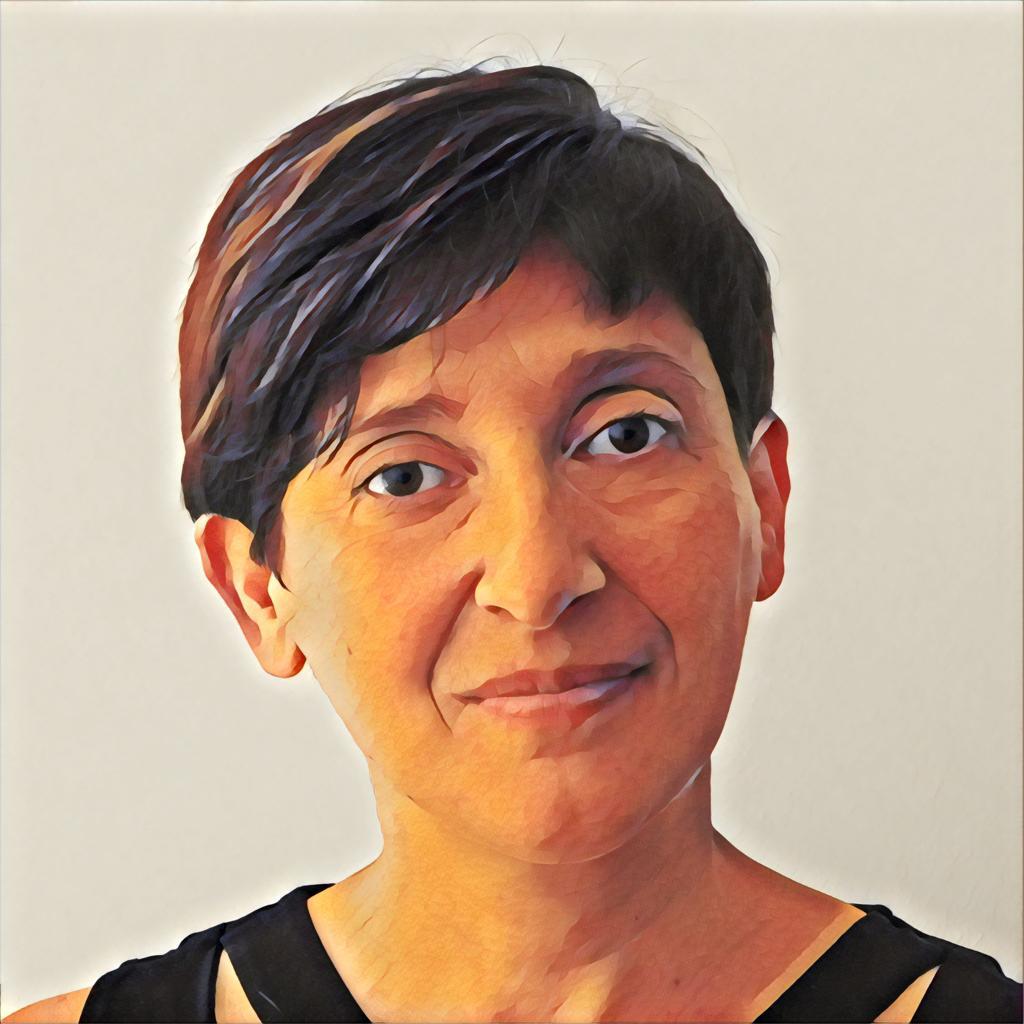
Achille GIACOMETTI is a Full Professor at Ca' Foscari University of Venice, affiliated with the Department of Molecular Sciences and Nanosystems and the European Center for Living Technology (ECLT) , where he serves as Director. His research focuses on theoretical physics, soft matter, and biophysics, with a strong emphasis on polymer physics, protein structures, and self-assembly processes. Key roles include leadership at ECLT, a multidisciplinary research center exploring living technology and complex systems. His work bridges physics and biology, addressing topics like phase transitions in colloids, solvent effects on polymers, and computational modeling of protein interactions. Recent projects include studies on crystalline order in charged rods, embodied intelligence in soft materials, and solvent-driven oligomer folding. Publications highlight contributions to understanding polymeric systems, phase behavior, and nanoscale self-assembly. Collaborative efforts span international partners, reflecting his commitment to interdisciplinary research. No awards explicitly listed, but his extensive publication record underscores academic impact.
Vijayanarasimha Hindupur Pakka is a Senior Lecturer in Electrical Power Systems & Smart Grids at De Montfort University, UK, based in the School of Engineering and Sustainable Development within the Faculty of Computing, Engineering and Media. He is affiliated with the Institute of Energy & Sustainable Development (IESD) and the Engineering & Physical Sciences Institute (EPSI), contributing to cutting-edge research in sustainable energy systems and smart grids. Education: PhD in Computer Science, University of Southampton, UK (2005–2009) MSc (Engg) in Electrical Engineering, Indian Institute of Science, Bangalore, India (2002–2004) B.E. in Electrical & Electronics Engineering, Bangalore University, India (1997–2001) PGCertHE, De Montfort University, UK (2016–2017) His research focuses on smart grids, distributed energy integration, microgrid control, voltage regulation, electricity markets, and agent-based modeling. He applies advanced techniques such as machine learning, multi-agent systems, statistical models, and metaheuristics to power system challenges. His teaching includes power system analysis, electrical principles, and power electronics at both undergraduate and postgraduate levels. His recent publications (2022–2024) reflect a strong trend toward intelligent optimization in distribution systems, local energy planning, water quality modeling, and real-time occupancy sensing for energy efficiency. These works span disciplines including electrical engineering, environmental science, and building automation, with a clear emphasis on sustainability, data-driven modeling, and smart infrastructure. Scientific Awards and Recognition: Higher Certificate in Statistics, Royal Statistical Society (2013) Fellow of the Higher Education Academy (FHEA, 2017) Reviewer for EPSRC, Netherlands Organization for Scientific Research, IET, MDPI Energies, and several international journals Vijay Pakka actively supervises MSc and PhD students and has led or contributed to major research grants such as CASCADE, AMEN (EPSRC), and the UKRI-funded CEPREC project. His consultancy includes power and statistical system analysis. He is involved in KTP projects with industry partners like Advanced Infrastructure Technology Ltd and Midas Productions Ltd, focusing on data-driven energy planning and demand optimization. He is a member of IEEE, IET, CIGRE, and the Energy Institute, and regularly presents at international conferences such as CIRED, EEM, and IEEE SmartGridComm. His work bridges technical power systems with socio-economic and behavioral aspects of energy transitions, positioning him at the forefront of interdisciplinary energy research.
Luigi Palopoli is a Full Professor and Director at the Department of Information Engineering and Computer Science (DISI), University of Trento, Italy. He is also a member of the University Council. His research spans hybrid systems, real-time scheduling, quality of service control, robotics, embedded systems, and cyber-physical systems. His research interests include: Hybrid Systems and Real-Time Scheduling Service and Assistive Robotics for Elderly Support AI Applications in Robotics and Embedded Systems Outlier Detection and Anomaly Explanation Audio Super-Resolution and Signal Processing Biological Network Analysis and Graph Alignment His recent publications reflect a strong interdisciplinary focus, combining AI, robotics, real-time systems, and bioinformatics. Trends show increasing work in explainable AI, assistive technologies, and multimodal learning (e.g., vision transformers for audio). He has made notable contributions to robotic navigation for the elderly, real-time embedded systems, and logic-based outlier detection. Scientific awards include: Outstanding Paper Award at RTAS 2017 He advises students and collaborates widely, especially with Daniele Fontanelli, Luca Abeni, and other researchers in robotics and AI. He maintains an active research group, evidenced by a dedicated YouTube channel for the Embedded Intelligence and Robotic Systems group. He is involved in teaching, including courses on Robot Planning and Real-Time Operating Systems, and participates in AI seminar series. There is no indication of retirement or former status; he is actively engaged in research, teaching, and academic service.
Ingrid Daubechies is a prominent mathematician and physicist known for her foundational work in wavelet theory. Born in Belgium, she earned her B.S. and Ph.D. from the Free University of Brussels. She transitioned from a physics background to applied mathematics, becoming a leading authority on wavelets while at AT&T Bell Laboratories. In 1993, she became the first woman tenured professor of mathematics at Princeton University, later joining Duke University as the James B. Duke Professor of Mathematics. Her research spans signal processing, image compression, and interdisciplinary applications in biology and art restoration. Daubechies' academic journey includes roles at Bell Labs, Princeton, and Duke, alongside extensive collaborations in computational biology and mathematics education. She has pioneered wavelet-based algorithms for data compression (JPEG 2000), developed metrics for biological morphology analysis, and contributed to art restoration techniques using mathematical imaging. Her leadership roles include presidency of the International Mathematical Union (2011–2014) and advocacy for women in mathematics. Recognized with prestigious awards like the National Academy of Sciences Award, John von Neumann Lecture Prize, and Nemmers Prize, her work bridges pure mathematics and applied sciences. She has supervised numerous research projects and authored influential texts, including Ten Lectures on Wavelets . Her legacy includes advancing computational tools for diverse fields, from medical imaging to evolutionary biology.
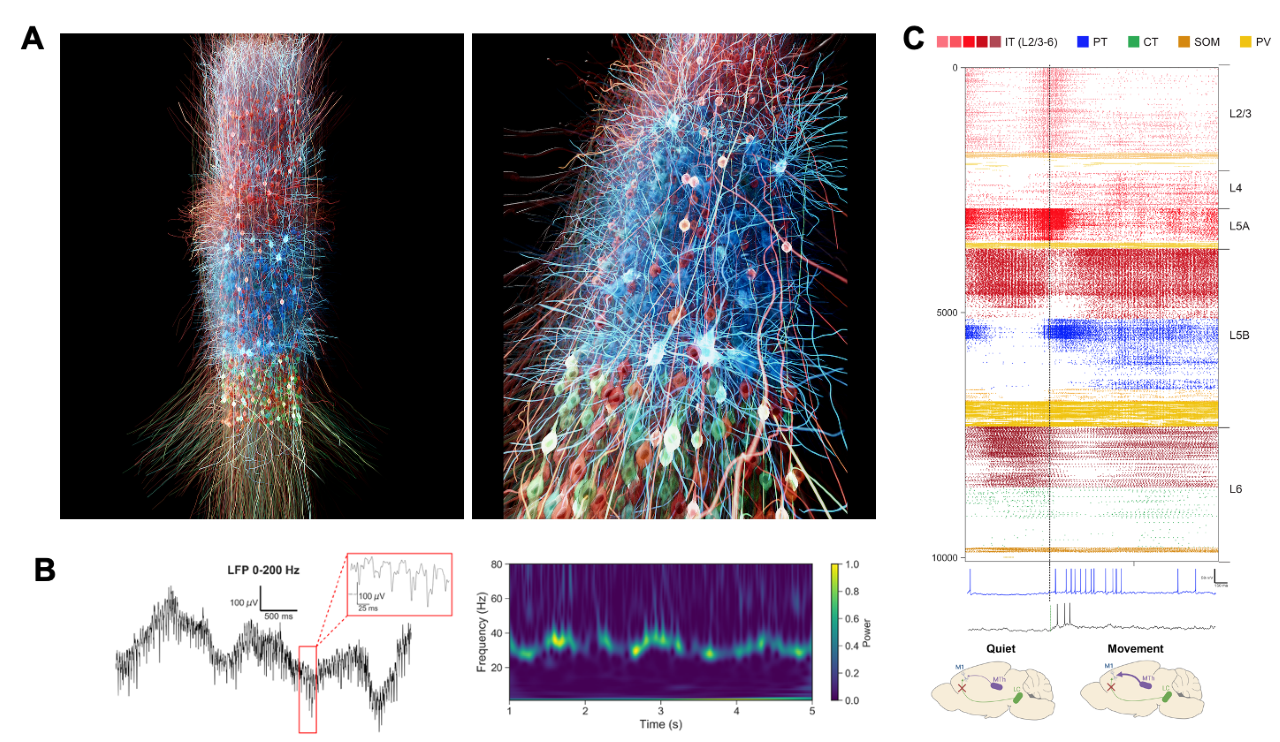
Salvador Dura-Bernal, PhD, is an Assistant Professor in the Department of Physiology and Pharmacology at SUNY Downstate Medical Center. He leads a computational neuroscience lab focused on multiscale brain modeling, machine learning applications in neuroscience, and biomimetic neuroprosthetics. His research bridges molecular, cellular, and systems-level neuroscience through biophysically detailed simulations. Developed NetPyNE, an open-source Python package for multiscale neuronal network modeling Collaborates with Nathan Kline Institute and global computational neuroscience organizations Co-Director of SUNY Downstate's Global Center for AI in Mental Health Research interests include: multiscale cortical circuit modeling, neural coding mechanisms, neuroprosthetic systems using spiking networks, and brain-machine interfaces. His work combines supercomputing simulations with experimental data validation, focusing on thalamocortical interactions and neuromodulatory effects. Recent publications demonstrate his team's success in creating biologically accurate models for motor and auditory cortices, with applications in understanding brain disorders and developing treatment strategies. The lab employs machine learning for model optimization and analysis, including evolutionary algorithms and Bayesian networks. 2024: Theoretical thalamus model for deviance detection 2023: Primary motor cortex model validated with in vivo data 2022: Somatosensory thalamocortical NetPyNE implementation Scientific contributions include: SUNY Downstate Annual Research Day best work (2022) Key developer of NetPyNE software Editorial board member for NeuroML NIH reviewer for BRAIN Initiative The lab trains graduate students and postdoctoral fellows, currently mentoring Joao Moreira (M.Sc.) and three postdocs. Research funding includes NIH grants for integrating NetPyNE with The Virtual Brain tool and developing neuroprosthetic systems that could replace damaged brain regions with in silico models.
Prof. dr. Sjoerd Verduyn Lunel is a Professor at the Mathematical Institute within the Faculty of Science at Utrecht University. He also serves as Research Director at ASML and has held leadership roles at Leiden University, including Dean of Science (2007-2013) and Scientific Director of the Mathematical Institute (2014-2018). His research spans analysis, dynamical systems, and applied mathematics. His research areas include Mathematical modeling of complex systems Applying data science to biological dynamics Stability analysis in nonlinear differential equations Development of numerical methods for delay equations His recent publications focus on delay differential equations, stochastic stability, and applications in biophysics and oncology. Key journals include SIAM Journal on Applied Dynamical Systems , Journal of Differential Equations , and Radiation and Environmental Biophysics . Notable scientific awards : Elected member of the Royal Holland Society of Sciences and Humanities (2012) He has advised numerous PhD students and collaborated on interdisciplinary projects, integrating mathematical analysis with biomedical and industrial applications. His editorial roles include Associate Editor, SIAM Journal on Mathematical Analysis Member of multiple editorial boards
Claudia Martins Antunes is an Associate Professor at the Department of Computer Engineering, Instituto Superior Técnico, Universidade de Lisboa. Her work focuses on data mining, pattern discovery, and knowledge integration across diverse domains including healthcare, education, and bioacoustics. Primary Affiliation: Instituto Superior Técnico, Universidade de Lisboa Academic Role: Associate Professor Research Interests: Claudia specializes in data mining methodologies that incorporate domain knowledge, with particular emphasis on temporal data analysis and structured pattern mining. Her research spans healthcare analytics, educational data modeling, and multi-dimensional pattern discovery. Temporal data mining Constraint-based pattern discovery Knowledge-driven data analysis Healthcare data repositories Publication Trends: Claudia's work demonstrates consistent innovation in pattern mining techniques applied to healthcare and educational contexts. Recent publications focus on blockchain data analysis, urban planning applications, and advanced feature engineering methods, while earlier works established foundations in student modeling and sequential pattern mining. Teaching Activities: She teaches courses in Programming for Data Science, Data Science fundamentals, and Computer Engineering, alongside supervision of integrative projects in Industrial Engineering and Management.
Andres Faina is a Lecturer at the IT University of Copenhagen , specializing in Robotics, Evolution, and Artificial Life Lab . He serves as Academic Director at The Maritime Hub and co-leads the Robotics, Evolution, and Art Lab . Research Focus: Robotics, Morphological Development, Bipedal Walking Key Collaborations: European Commission-funded projects (EVOBLISS, BIG-MAP, MOZART), Novo Nordisk Foundation His work explores growth-based morphological development for robotics, focusing on: Bipedal and quadrupedal locomotion Artificial Neural Network control systems Evolutionary algorithms for fitness landscape shaping Modular and reconfigurable robot design Scientific Awards : Best Paper Award at RIE 2017 Winner of Virtual Creatures Competition at GECCO 2017 Honorable Mention for Technical Achievement at GECCO 2017 Active in project leadership (e.g., Teaming up a quadruped robot with a drone ) and media engagement (14 mentions in press/media), including commentary on robotics entrepreneurship and industry challenges.
Hector Garcia Martinez is a Permanent Professor in the Department of Materials Science, Optics and Electronic Technology at the Miguel Hernández University of Elche. He is affiliated with the Elche Microwave Laboratory research group and contributes to academic programs such as the Bachelor's and Master's in Telecommunications Technology Engineering. His research focuses on microwave engineering, biomedical applications of microwaves, and additive manufacturing for electronic devices. Recent work includes the development of tissue-mimicking phantoms for microwave imaging, glucose monitoring sensors, and 3D-printed waveguide components. His teaching involves courses like Electronic Communications Systems and High Frequency Electronics Laboratory , with a focus on telecommunications engineering. Analysis of his publications reveals expertise in microwave sensors for biomedical diagnostics, waveguide design, and 3D printing techniques applied to RF/microwave circuits. Topics span from abdominal aortic aneurysm detection to corn plant counting algorithms, showcasing interdisciplinary applications.
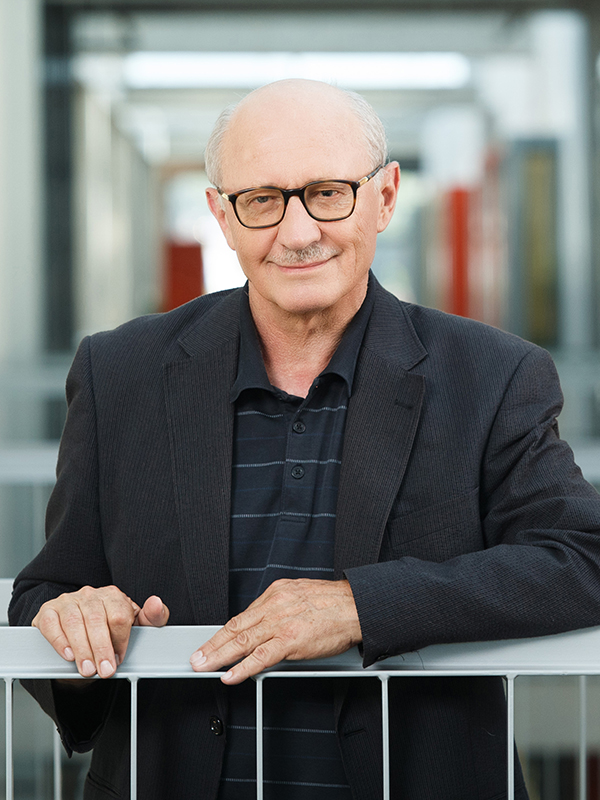
Prof. Dr.-Ing. Gerd-Jürgen Giefing serves as Professor of Information and Communication Technology at Georg Agricola University of Applied Sciences since 2003, concurrently leading the Electrical and Information Engineering Master's Program, Digital Signal Processing Laboratory, and serving as Deputy Head of the Software Engineering Laboratory. His academic foundation includes: Electrical engineering studies with data processing focus at University of Karlsruhe and Technical University of Munich (1983-1988) Doctorate in neuroinformatics and technical vision from Ruhr University Bochum (1988-1993) Research spans cognitive robotics with emphasis on behavior-oriented scene analysis and distributed communication frameworks, augmented reality systems, and traffic telematics applications including driver face recognition. His foundational work in biologically inspired computer vision established video-based facial capture systems using multiprocessor architectures, later evolving into cognitive robotics frameworks. Current investigations focus on brain-computer interfaces and nomadic point cloud calibration for mobile robotics. Publication trends reveal a progression from neurobiological vision models (1990s) to cognitive robotics infrastructure (2010s), consistently addressing real-world applications in automation and human-machine interaction through IEEE conference proceedings. Key recognitions: Innovation Award '94 from Bochum Technology Transfer Association European Information Technology Award 1996 from European Council for Applied Sciences and Engineering As IEEE Systems Man and Cybernetics Society member, he maintains active research leadership without documented grant specifics. His laboratory direction fosters applied research in signal processing and software engineering for cognitive systems development.
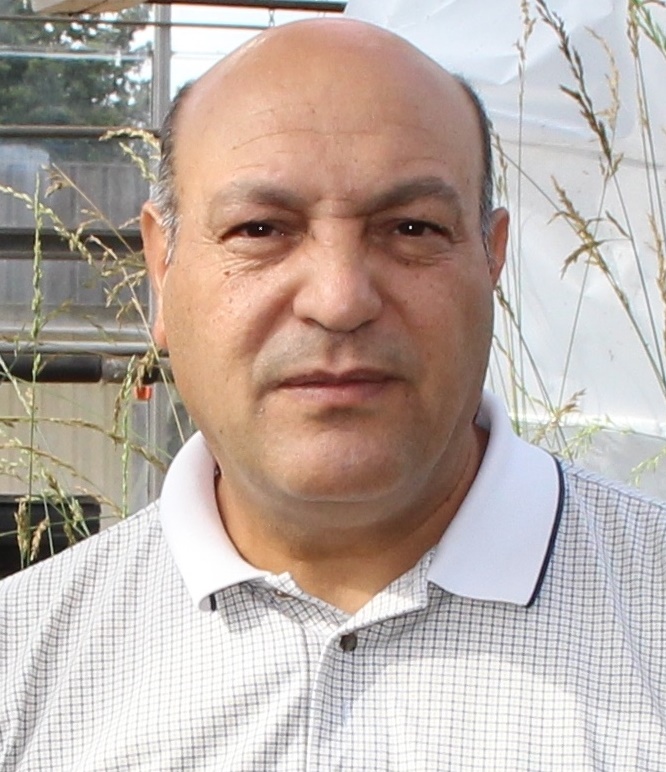
Ali Missaoui is an Associate Professor in the Department of Crop and Soil Sciences at the University of Georgia's College of Agricultural and Environmental Sciences. He is affiliated with the Center for Applied Genetic Technologies (CAGT) and the Institute of Plant Breeding, Genetics and Genomics (IPBGG). His research integrates genomics, remote sensing, and machine learning to address challenges in bioenergy crop production, sustainable agriculture, and plant-pathogen interactions. Research Interests: Dr. Missaoui's work spans plant genetics, bioenergy crop optimization, and precision agriculture technologies. Key areas include: Genomic mapping for biomass yield and stress tolerance in switchgrass and alfalfa Drone-based remote sensing for crop phenotyping and yield prediction Plant-microbe interactions, particularly endophyte dynamics in grasses Sustainability assessment of bioenergy production systems His recent publications demonstrate a strong focus on machine learning applications for biomass forecasting, genomic characterization of plant-microbe relationships, and economic modeling of bioenergy crops. Research consistently addresses field-level challenges through computational and technological innovation.
Ivan Bratko is a Professor of Computer Science at the University of Ljubljana's Faculty of Computer and Information Science. He founded the Artificial Intelligence Laboratory in 1985 and served as its head until 2017, remaining an active member. Until 2002, he also directed the AI group at the Jožef Stefan Institute. His academic journey includes B.Sc., M.Sc., and Ph.D. degrees in electrical engineering and computer science, all from the University of Ljubljana. Bratko's research spans machine learning, knowledge-based systems, qualitative modeling, intelligent robotics, heuristic programming, and computer chess. His work focuses on learning from noisy data, combining learning with qualitative reasoning, constructive induction, Inductive Logic Programming, and applications in medicine and dynamic system control. He has authored over 200 scientific papers and influential books including Prolog Programming for Artificial Intelligence (third edition, 2001), KARDIO: A Study in Deep and Qualitative Knowledge for Expert Systems (MIT Press, 1989), and Machine Learning and Data Mining: Methods and Applications (Wiley, 1998). His publication portfolio demonstrates consistent contributions to AI, with recent work emphasizing argument-based machine learning, qualitative modeling applications, and medical AI systems. These publications reveal strong interdisciplinary connections between theoretical AI and practical applications in environmental science, healthcare, and robotics. Fellow of the European Coordinating Committee for Artificial Intelligence (ECCAI) Member of the Slovene Academy of Arts and Sciences (SAZU) Former editorial board member of Artificial Intelligence , Machine Learning , Journal of AI Research , and other leading journals Co-founder and first chairman of the Slovenian AI Society (SLAIS) Bratko has secured numerous research projects including ARRS programs on artificial intelligence (2009-2020), the PARKINSCHECK project for Parkinson's disease detection, and European projects like X-MEDIA and XPERO. His laboratory serves as the central hub for AI research at the University of Ljubljana, fostering collaborations across medical, environmental, and industrial domains. He has mentored numerous researchers and maintained active collaborations through visiting positions at institutions including Edinburgh University, University of New South Wales, and Delft University of Technology.
Anne de Jong is a researcher in the Molecular Genetics department at the University of Groningen, specializing in bioinformatics and computational biology. Her work focuses on developing user-friendly pipelines and web servers for integrating data mining and statistics, particularly in bacterial genetics and transcriptomics. She contributes to tools like BAGEL3, PePPER, and Genome2D, which aid in analyzing prokaryotic genome and transcriptome data. Her group utilizes Linux servers to manage large datasets from techniques such as Next Generation Sequencing and proteomics analysis. Her research interests include RNA folding, biospectroscopy, and translating big-data into biological knowledge. She has published extensively on bacteriocin detection, promoter prediction, and data visualization frameworks for prokaryotic systems biology.
Sander Roet is a researcher at Utrecht University , affiliated with the Faculty of Science and the Structural Biochemistry department. His work spans computational chemistry, structural biology, and molecular dynamics, with a focus on advanced simulation techniques. Role: Infrastructure and Application Manager Email: sjsroet@uu.nl , s.j.s.roet@uu.nl Research Interests Sander Roet's research primarily involves computational methods to study complex biochemical systems. Key areas include: Path sampling techniques for rare events Molecular dynamics simulations Machine learning applications in reaction pathway identification Structural analysis of macromolecules using cryo-EM Development of simulation tools like PyRETIS The 15 most recent articles highlight his expertise in rare event simulations, replica exchange algorithms, and protein dynamics, particularly in cancer-related proteins like KRas. His work bridges theoretical chemistry and practical applications in biomedical research.
Qiang Zhang is an Assistant Professor in the Department of Mechanical Engineering and an Adjunct Faculty in the Department of Chemical and Biological Engineering at The University of Alabama, College of Engineering. He joined the Mechanical Engineering department in August 2023 after serving as an Advanced Rehabilitation Research and Training (ARRT) Post-Doctoral research fellow at the UNC/NCSU Joint Department of Biomedical Engineering. Dr. Zhang's educational background includes: B.S. in Mechanical Engineering from Wuhan University (2014) M.S. in Mechatronics Engineering from Wuhan University (2017) M.S. in Mechanical Engineering from The University of Pittsburgh (2019) Ph.D. in Biomedical Engineering from The University of North Carolina at Chapel Hill & North Carolina State University (2021) His research focuses on the intersection of robotics, biomechanics, and artificial intelligence to develop wearable robotic devices for rehabilitation. Key areas include biological signal-based neuromusculoskeletal modeling , human motion intent detection , nonlinear and adaptive control , and machine learning-based control . His work leverages surface electromyography and ultrasound imaging for real-time control of wearable robots, aiming to provide personalized assistance for individuals with mobility challenges such as stroke, spinal cord injury, and multiple sclerosis. Dr. Zhang's recent publications demonstrate a strong trend toward integrating advanced machine learning techniques, particularly reinforcement learning and deep learning, with wearable robotics. His research emphasizes closed-loop control systems that adapt to individual users, with applications in ankle, hip, and hand exoskeletons. He has pioneered the use of ultrasound imaging for prosthetic control and human-robot interaction. Among his notable scientific achievements: Finalist for the Best Student Paper Award, IEEE/RAS-EMBS ICORR 2019 UNC/NCSU BME Department Ph.D. Student Research Award 2021 ASME DSCD Rising Star Award 2022 Dean’s Distinguished Dissertation Award, UNC-Chapel Hill 2023 Finalist for the Journal of Biomechanics Award 2023 Diversity Travel Award at ASB 2023 Finalist at the NIDILRR-sponsored Early Career Investigator Symposium 2023 Dr. Zhang mentors graduate students including PhD candidates Yun Chen and Oluwasegun Akinniyi. His research is supported by grants including funding from the SEC Faculty Travel Program and the Office for Research and Economic Development (ORED) at The University of Alabama. He serves as an associate editor for the IEEE RAS EMBS 10th International Conference on Biomedical Robotics and Biomechatronics (BioRob 2024) and as the ASME DSCD Mechatronics TC Secretary for 2024. He leads the Enhanced NeuroRobotics Autonomy and Biomechanical Engineering (ENABLE) Lab, which brings together expertise in robotics, biomechanics, neuromuscular modeling, and artificial intelligence to create effective systems for improving quality of life. The lab utilizes multiple robotic platforms including Baxter manipulator, Kinova arm, and quadcopters for control development.