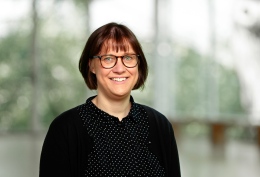
Paolo VinaiView profile
Associate Professor
Paolo Vinai is an Associate Professor at Chalmers University of Technology, working within the Subatomic, High Energy and Plasma Physics department. His academic career has been focused on nuclear reactor modeling and safety analysis, with continuous research activity evidenced by publications spanning from 2008 to the present. Dr. Vinai's research interests center on computational modeling of nuclear reactors, with particular emphasis on neutron noise analysis, reactor diagnostics, and safety assessment. His work bridges computational physics, nuclear engineering, and increasingly incorporates machine learning techniques for anomaly detection and reactor monitoring. He has developed high-fidelity simulation tools for analyzing nuclear reactors under both operational and accidental conditions, with significant contributions to understanding reactor dynamics, xenon oscillations, and sensitivity analysis. Analysis of his recent publications (2022-2024) reveals a strong focus on neutron noise applications for reactor diagnostics, with increasing integration of machine learning techniques. His work spans from fundamental reactor physics (modeling xenon oscillations, fuel assembly vibrations) to practical applications in nuclear safeguards and safety monitoring. The research demonstrates a clear progression toward more sophisticated computational methods, including reduced order modeling and hybrid deterministic-Monte Carlo approaches. Dr. Vinai has been actively involved in multiple research projects funded by organizations including the Swedish Radiation Safety Authority (SSM), the Swedish Energy Agency, the European Commission, and the Swedish Research Council. His projects often address critical challenges in nuclear reactor safety, diagnostics, and non-proliferation. He collaborates extensively with researchers across Chalmers and with international partners, particularly within the CORTEX project framework which focuses on core monitoring and diagnostics using reactor neutron noise. His work demonstrates strong connections between theoretical modeling, computational implementation, and practical nuclear engineering applications.