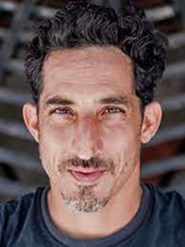
Nikolce Murgovski is an Assistant Professor at Chalmers University of Technology, specializing in Mechatronics . He focuses on electric and hybrid vehicle energy management , autonomous driving systems , and optimization algorithms for powertrain design. His work bridges control theory , battery technology , and transport electrification . Current projects include CHARGE (2023–2026) for charging and trip planning , and EcoPilot (2022–2026) for energy-efficient autopilot development. Collaborates with institutions like Volvo Cars , Swedish Electromobility Centre , and VINNOVA on autonomous vehicle control and thermal energy systems . His recent publications emphasize convex optimization , eco-driving strategies , and collision avoidance in complex environments. He has contributed to tools like CONES for electromobility studies and has led research on hybrid powertrains and predictive energy management .
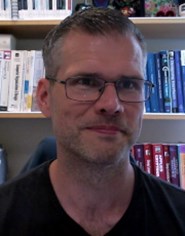
Alejandro Haiek Coll is an Associate Professor and Lecturer at the Umeå School of Architecture, part of Umeå University. He teaches in Studio 12 for Year 4-5 (Architecture Programme) and Year 1-2 (Master's Programme). His research focuses on architectural chronology, urban form dynamics, and self-generating spatial systems. Location: Arkitekthögskolan, Östra Strandgatan 30c, SE-90187 Umeå Research interests span architectural theory, urban design, and the intersection of geomorphology with built environments. Recent publications explore temporal structures in architecture and urban evolution through studies like 'Chronologies Laboratorios' and 'El futuro de las formas urbanas'. Publications emphasize innovative approaches to urban form and temporal analysis, reflecting deep engagement with both theoretical and applied architectural research.
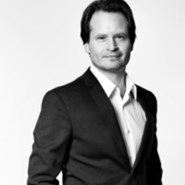
Tommy Löfstedt is an Associate Professor at Umeå University , affiliated with the Department of Computing Science and the Department of Mathematics and Mathematical Statistics. His research focuses on machine learning , computer vision , and medical image analysis , with applications in life sciences, radiation therapy, and biomedical imaging. He leads multiple research projects, including AI-driven delineation in radiation therapy, quantitative MRI for radiotherapy, and machine learning for plant nutrient uptake. Current research emphasizes structured regularization methods to improve model interpretability and robustness. Key applications include medical image segmentation , Alzheimer's classification , and uncertainty estimation in MRI . Recent publications highlight his work on morphological regularization , adversarial attack mitigation , and multi-task learning in medical imaging contexts. His projects span 2022–2026 with funding for pediatric oncology automation and gynecological cancer staging. Affiliated with both computing and mathematical departments, he bridges algorithm development with applied mathematical frameworks in medical and life science domains.
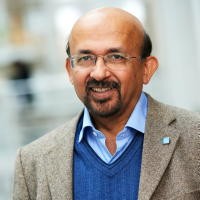
Mikael Wiberg is full Professor of Informatics at Umeå University, Sweden, where he leads research groups in Design Informatics and Digital Interaction & Design. He is co Editor-in-Chief of ACM Interactions and has held chaired and guest professorships at Uppsala, Södertörn and Chalmers universities. His work sits at the intersection of human-computer interaction, materiality, architecture and emerging technologies. Education: PhD in Informatics, Umeå University, 2001 Docent (Associate Professor) in Informatics, Umeå University, 2004 Research interests revolve around interactivity, mobility, materiality and architecture . Wiberg coined the notion of “materiality of interaction” to study how digital resources merge with physical materials, spaces and artefacts. Recent strands include more-than-human design, human-building interaction, autonomous systems UX, and social justice in HCI, all interrogating how interactive technologies shape—and are shaped by—human and non-human actors. Across more than two decades he has published in top venues such as ACM TOCHI, Design Issues, Int. Journal of Design, Human-Computer Interaction journal and the magazine ACM Interactions . His 2018 MIT Press monograph The Materiality of Interaction consolidates his theoretical stance and has become a touchstone for architectural and material HCI discourse. Editorial & scientific awards: Co Editor-in-Chief, ACM Interactions (2019-) Member, Royal Skyttean Society (Kungliga Skytteanska Samfundet) Board member, Professors’ Association, Umeå University He currently leads interdisciplinary projects on digital heritage archives, autonomous vehicle experiences for children with intellectual disabilities, and sustainable interaction infrastructures. Although the provided text does not enumerate specific grants or doctoral students, his continuous project leadership and editorial roles evidence sustained funding and supervisory activity. Wiberg directs the Design Informatics research environment and is a core member of Umeå’s Internet of Things group, fostering collaboration between informatics, architecture, design and social sciences. His overarching agenda asks how interactive technologies can support just, sustainable and aesthetically rich futures at architectural and urban scale.
Eva Erman is Professor of Political Science at Stockholm University and Deputy Head of the Department of Political Science. She serves as Chief Editor of Ethics & Global Politics and has held visiting scholar positions at institutions including the University of Melbourne, London School of Economics, and George Mason University. Her research bridges political philosophy, global democracy, and the ethical implications of artificial intelligence governance. Her scholarly work emphasizes meta-theoretical and methodological questions in political theory, focusing on feasibility, epistemic norms, and the interplay between moral and political legitimacy. She explores the democratization of global governance structures and the role of civil society actors in transnational decision-making processes. Key article themes since 2025 include algorithmic fairness, moral norms in AI governance, and democratic challenges in transnational AI frameworks 2024 contributions analyze legitimacy, behaviorism in political realism, and function-sensitive approaches to global governance 2023 research expands on empirical and normative AI governance, political normativity definitions, and behavioral theory critiques Erman's academic leadership extends to organizing international workshops and refereeing for top journals like Journal of Philosophy , American Political Science Review , and Political Studies . Her projects address critical intersections of technology, democracy, and justice in the 21st century.
Gustav Henter is an Assistant Professor in Intelligent Systems at KTH Royal Institute of Technology, specializing in Machine Learning. He is affiliated with the Division of Speech, Music and Hearing (TMH) within the School of Electrical Engineering and Computer Science. His research focuses on deep generative models for applications like speech synthesis, 3D character animation, and human-computer interaction. He holds a Docent degree from KTH and has held post-doctoral positions at the University of Edinburgh and the National Institute of Informatics in Tokyo. Education: PhD in Electrical Engineering (KTH, 2013), MSc in Engineering Physics (KTH, 2007). He supervises doctoral students in areas like gesture synthesis and multimodal interaction. His work is supported by grants from the Wallenberg AI, Autonomous Systems, and Software Program (WASP) and South Korea's MOTIE. He co-founded Motorica AB to commercialize motion synthesis research. Awards include Best Paper Awards at ICMI 2020 and IVA 2020, and recognition for student theses. His research spans generative AI, perceptual evaluation, and robust statistical models. He organizes the GENEA Challenge and Workshop series for gesture generation benchmarking.
Martin Brisfors is a part-time researcher at KTH Royal Institute of Technology since 2019 and a PhD student in the Department of Electrical Engineering and Computer Science (EECS) since 2022. He is affiliated with the Division of Electronics and Embedded Systems and works in Kista. His research focuses on hardware security and side-channel attacks, with a particular emphasis on cryptographic implementations and countermeasure design. His work spans topics such as post-quantum cryptography (e.g., CRYSTALS-Kyber), AES vulnerability analysis, and the application of deep learning in side-channel attacks. He has contributed to evaluating the efficacy of countermeasures like clock randomization and duplication, uncovering fundamental flaws in their implementation. Brisfors has collaborated on courses such as Hardware Security (IL1333) and Hardware Security (FIL3030) , demonstrating his involvement in both research and education. His publications (2019–2024) reflect a consistent focus on advancing hardware security through empirical analysis and novel attack methodologies.
Erik Prytz is a Senior Associate Professor in Cognitive Science at the Department of Computer and Information Science (IDA) at Linköping University. His research focuses on applying human factors principles to improve safety-critical systems, particularly in emergency response domains such as first aid, disaster medicine, and prehospital care. He holds a PhD in Human Factors Psychology and has served in roles including Director of the Forum Securitatis graduate school and Program Chair for the Cognitive Science BSc program. Education: PhD in Human Factors Psychology (Old Dominion University, 2014), MSc in Cognitive Science (LiU, 2010). Research Interests: Simulation-based training, stress and mental workload, emergency responder teamwork, and human-system interaction in crisis scenarios. His work emphasizes interdisciplinary collaboration, combining cognitive science, computer science, and medicine to enhance emergency response systems. Recent projects explore driver behavior toward emergency vehicles, ad-hoc responder group dynamics, and optimal placement of bleeding control kits in public spaces. He contributes to initiatives like the Center for Advanced Research in Emergency Response (CARER) and the Forum Securitatis graduate school. Erik’s teaching includes courses on human factors, distributed cognition, and emergency response systems. He actively participates in curriculum development and quality assurance committees within the Faculty of Arts and Sciences.
Erik Hjalmarsson is a Professor of Banking and Financial Economics at the Department of Economics, University of Gothenburg. He holds the Felix Neubergh Chair and previously served as Director of the Centre for Finance. His research focuses on empirical asset pricing, financial econometrics, and long-run stock returns. Hjalmarsson earned his PhD from Yale University and has held roles at the Federal Reserve Board and Winton Capital Management. Education: PhD (Yale University, 2005), M.Sc. in Econometrics (London School of Economics, 2000), B.Sc. in Mathematical Statistics (University of Gothenburg, 1999). Research interests include stock return predictability, high-frequency trading, and econometric methods. His work has been published in top journals like the Journal of Finance and Journal of Financial Economics . Key grants include funding from the Swedish Research Council and Marianne and Marcus Wallenberg Foundation. Awards include the Carl Anderson Prize (2004) and multiple stipends for doctoral education. He supervises PhD students and advises on central bank policies. His recent studies explore long-horizon returns, inflation expectations, and portfolio strategies. Teaching includes PhD courses in econometrics and financial economics. He serves on editorial boards and as a referee for leading journals.
Jonas Strandberg is an Associate Professor at KTH Royal Institute of Technology's Department of Physics, part of the School of Engineering Sciences. His research focuses on particle physics, particularly within the ATLAS Collaboration at the Large Hadron Collider (LHC). He contributed to the Higgs boson discovery and currently studies its properties. Strandberg has been involved in detector development, including the HGTD timing detector for the LHC upgrade. He holds a PhD from Stockholm University (2006) and worked as a postdoc at the University of Michigan (2006-2011) before joining KTH. His teaching responsibilities include courses on experimental particle physics, statistical methods, and engineering skills. Research interests span high-energy physics, collider technology, and detector systems. Research Highlights: Member of the ATLAS Collaboration since 2011 Key contributor to Higgs boson measurements Developed timing detector systems for LHC upgrades Published extensively on particle physics and accelerator technology Teaching & Supervision: Course responsible for Experimental Particle Physics (SH2203) Teaching roles in Applied Modern Physics (SH1015), Embedded Systems Design (IL2232), and more Professional Activities: ATLAS Data Preparation Coordinator (2015-2017) Member of the Particle and Astroparticle Physics Group at AlbaNova University Centre
Professor Ahmed Hemani is a faculty member at the Division of Electronics and Embedded Systems, KTH Royal Institute of Technology, affiliated with the Digital Futures Faculty. He holds the role of PI for the project 'New Chip Architectures for Industrial Vision' and leads research in reconfigurable computing, memristor-based systems, and hardware acceleration for AI and edge computing. His work bridges theoretical computer science with practical VLSI design and embedded systems development. He actively contributes to cross-disciplinary initiatives at Digital Futures, a joint center with Stockholm University and RISE Research Institutes of Sweden focused on digital innovation. His research emphasizes scalable FPGA/HPC architectures, low-power neuromorphic systems, and optimization techniques for custom silicon solutions. Current projects include a Lego-inspired edge AI framework and memristor-driven MIMO acceleration. Teaching responsibilities span advanced courses in SOC design, digital system verification, and embedded systems. He supervises advanced-level degree projects across computer engineering and ICT innovation specializations, emphasizing hands-on hardware-software co-design methodologies. Recent publications highlight innovations in memristor applications, FPGA-based acceleration, and reconfigurable architectures for neural networks and bioinformatics. His work addresses challenges in dark silicon utilization, energy-efficient computation, and high-performance embedded systems.
Martin Norgren is a Professor at KTH Royal Institute of Technology, leading the Department of Electromagnetic Fusion Physics. His research focuses on electromagnetic inverse problems, including material characterization, biomedical imaging (e.g., brain current sources), environmental monitoring (e.g., snow and avalanche prediction), and smart grid technologies. He specializes in reconstructing object properties using electromagnetic measurements and has contributed to applications in healthcare, energy systems, and environmental science. His work involves advanced analytical and numerical methods such as mode-matching techniques, perturbation theory, and convex optimization. Notable projects include noncontact current measurement in power grids and transformer diagnostics using microwave radiation. Norgren teaches courses in electromagnetic field theory and electrical engineering design, emphasizing practical applications and interdisciplinary collaboration. Recent research trends highlight advancements in glide/twist symmetry-based metamaterial design, waveguide analysis, and inverse scattering techniques. His studies bridge fundamental physics with applied engineering, addressing challenges in energy infrastructure and medical diagnostics. As a department head, he oversees educational and research programs at KTH, fostering innovation in electromagnetism and fusion physics. His contributions to curriculum development include project-based courses integrating theory and hands-on design.
Anna-Karin Tornberg is a Professor in Numerical Analysis at the Department of Mathematics, KTH Royal Institute of Technology. She holds positions as Vice Chair of the Department of Mathematics and previously served as Head of the Numerical Analysis division (2011–2023). Her research focuses on numerical methods for PDEs, particularly boundary integral methods for fluid flows involving particles and drops. She is active in the Linne FLOW Centre and Swedish e-Science Research Center (SeRC). Key roles include membership in the Royal Swedish Academy of Engineering Sciences (IVA), Royal Academy of Sciences, and receipt of awards like the Göran Gustafsson Prize (Mathematics, 2014). She has advised numerous PhD students and postdocs, including current supervisees Anna Broms, David Krantz, and Emanuel Ström. Her work spans theoretical, computational, and applied fluid dynamics with emphasis on microfluidics and high-accuracy numerical techniques. Education includes a PhD in Numerical Analysis from KTH (2000) followed by postdoctoral positions at NYU’s Courant Institute. Promoted to Full Professor at KTH in 2012. Service roles include membership in KTH’s University Board, Faculty Council, and editorial roles at Advances in Computational Mathematics and BIT Numerical Mathematics . Active in international conferences, delivering plenary/invited lectures at ICIAM, ECM, and ICM. Research group projects include development of fast numerical methods for microfluidics and molecular dynamics simulations. Current openings for PhD candidates in numerical methods for non-elliptic PDEs in time-dependent domains. Her lab collaborates on high-performance computing and fluid-structure interaction problems.
Aylin Cakanlar serves as Assistant Professor in the Department of Marketing and Strategy at the Stockholm School of Economics, focusing on the critical intersection of consumer behavior, sustainability, and political ideology with emphasis on recycling systems and climate communication. Her research program centers on six key domains: Sustainability Marketing : Historical evolution and future trajectories of green marketing frameworks Political Ideology and Consumption : Mechanisms through which conservative/liberal values shape environmental actions Recycling Behavior : Interventions to reduce contamination in waste streams Sharing Economy Dynamics : Trust mechanisms in peer-to-peer consumption models Identity-Driven Consumption : Self-expression through purchasing during societal uncertainty Climate Change Polarization : Strategies to overcome ideological barriers to environmental action Analysis of her 15 most recent publications reveals consistent methodological rigor in experimental design applied to urgent sustainability challenges, particularly examining how privacy concerns deter recycling, how parenting influences eco-behavior, and how political polarization fragments climate responses. Her work demonstrates increasing focus on actionable interventions since 2021. Scientific recognition: No awards or fellowships documented in source materials Academic mentorship and funding: Source documentation contains no references to graduate student supervision, research grants, or external funding mechanisms. Laboratory infrastructure and collaborative teams are not mentioned in available materials.
Anna Johansson is an Assistant Professor at the Karolinska Institutet , leading research in cancer epidemiology and biostatistics at the Department of Medical Epidemiology and Biostatistics . She serves as a Docent and group leader, with affiliations at Karolinska University Hospital, Capio St Göran Hospital, and Uppsala University Hospital. Research Interests: Her work spans Cancer epidemiology with focus on breast cancer Reproductive factors and cancer risk Socioeconomic inequalities in healthcare Applied biostatistics and register-based methods Nordic cross-country collaborations Recent Article Trends show emphases on Nordic cancer survival comparisons Pregnancy-associated cancer outcomes Stage-specific mortality analysis Impact of healthcare disruptions Statistical methods for registry data Fertility preservation in oncology Scientific Awards Senior Investigator Award, Swedish Cancer Society Teaching & Mentorship includes survival analysis, epidemiological designs, and data management workshops within the Karolinska Doctoral Programme. She supervises PhD students in cancer and reproductive epidemiology. Collaborative Networks extend to the Nordic Cancer Union, Cancer Registry of Norway, and clinical research teams across Sweden and the Nordic region.