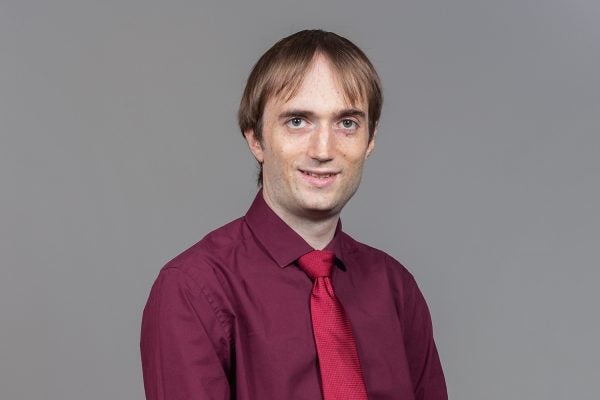
Quan Quan Tan is a Research Fellow at Nanyang Technological University (NTU), Singapore, specializing in symmetric-key cryptanalysis and automation tools. He previously served as a Cybersecurity Engineer at CSIT, Singapore for nearly two years. His educational background includes: Ph.D. in Mathematical Sciences from NTU (2023) under Prof. Thomas Peyrin. Thesis: "Cryptanalysis of Lightweight Symmetric-Key Cryptographic Algorithms" M.Sc. in Mathematical Sciences from NTU, with research on optimization techniques for block cipher hardware implementations B.Sc. in Mathematical Sciences from NTU Dr. Tan's research focuses on automation in cryptographic design and analysis, emphasizing secure symmetric-key primitives and advanced cryptanalysis tools. His work bridges theoretical cryptography with practical security engineering through algorithm development and vulnerability assessment. Analysis of his 2020-2025 publications reveals dominant themes in symmetric-key cryptanalysis, including innovative meet-in-the-middle attacks, differential cryptanalysis frameworks, and automated verification systems. His contributions span attack methodologies (e.g., higher-order differential-linear techniques), tool development (Trail-Estimator), and novel cipher design (uKNIT-BC), demonstrating consistent advancement in lightweight and low-latency cryptographic systems.
Kaidi Yang is an Assistant Professor at the National University of Singapore (NUS) in the Department of Civil and Environmental Engineering, specializing in Intelligent Transportation Systems and related fields. He holds a PhD from ETH Zurich (2019), an M.Sc. in Control Science and Engineering from Tsinghua University (2014), and dual bachelor’s degrees in Automation and Mathematics from Tsinghua University (2011). His research focuses on advancing traffic control, connected/automated vehicles, shared mobility systems, and data privacy in transportation. He has contributed to developing algorithms for efficient traffic signal control, platooning coordination, and privacy-preserving data sharing in transportation networks. Education: Ph.D., Civil and Environmental Engineering (Transportation), ETH Zurich, 2019 M.Sc., Control Science and Engineering, Tsinghua University, 2014 B.Sc./B.Eng., Dual Degrees in Pure/Applied Mathematics and Automation, Tsinghua University, 2011 Yang has received prestigious awards including the Swiss National Science Foundation’s Postdoc Mobility Fellowship (2021–2022) and the IEEE ITS Conference Best Student Paper Award (2020). He serves as an Associate Editor for the IEEE Conference on Intelligent Transportation Systems (2024). His work bridges theoretical advancements in operations research, robotics, and machine learning with practical applications in urban mobility systems. Recent efforts emphasize integrating privacy-preserving techniques into traffic management and optimizing mixed-autonomy platoon control.
Anthony TUNG Kum Hoe is a Professor in the Department of Computer Science at the National University of Singapore (NUS), where he has established himself as a leading researcher in database systems and data mining. He is also affiliated with the NUS Graduate School for Integrative Sciences and Engineering and serves as a SINGA supervisor. His educational background includes a Ph.D. in Computer Science from Simon Fraser University (2001), an M.Sc. in Information Systems & Computer Science from NUS (1998), and a B.Sc. with 2nd Class Upper Honours in Information Systems & Computer Science from NUS (1997). Professor Tung's research spans several interconnected areas within database systems and data mining. His primary focus is on developing efficient methods for indexing and searching complex data structures including time series, trajectories, trees, graphs, and high-dimensional objects. He has pioneered work in visual query processing, keyword search, and ranking systems. His GENIE (Generic Inverted Index) and LAMP (semi-Lazy Mining Paradigm) projects represent significant contributions to big data analytics, particularly in handling the 'variety' aspect of big data by providing unified frameworks for processing diverse data structures while preserving semantic meaning. His research bridges theoretical database concepts with practical applications in visual data mining, collaborative analytics, and just-in-time model construction. His recent publications reveal a clear evolution from traditional database research toward more complex analytics on diverse data types. While maintaining his core expertise in database indexing and query processing, his work has expanded to incorporate machine learning techniques, particularly in areas like nearest neighbor search, anomaly detection, and predictive analytics. There's a noticeable trend toward interdisciplinary applications, with publications spanning computer vision, natural language processing, transportation systems, and social computing. His research group consistently publishes in top-tier venues including SIGMOD, VLDB, ICDE, and KDD, demonstrating both theoretical rigor and practical relevance. 2005 Best Paper Award for 'Indexing DNA Sequences Using q-grams' 2007 Invited panel speaker on 'Advice for a successful database researcher career in Asia' at SIGMOD 2010 Guest Lecturer for VLDB Database School 2012 VLDB 2012 Research PC Co-chairs 2015 10 Years Best Paper Award, DASFAA 2015 Invited to SIGMOD 2008 and SIGKDD 2008 Program Committees Professor Tung has supervised numerous PhD students and research associates throughout his career, including notable researchers like Zhang Zhenjie (recipient of the 2007 President Graduate Fellowship) and Wang Nan (published in SIGMOD'08). His research group has been consistently productive, with students publishing in top conferences including SIGMOD, ICDE, and VLDB. His professional service is extensive, having served as PC Chair for COMAD'06, Research PC Co-chair for VLDB 2012, and on program committees for virtually all major database and data mining conferences over the past two decades. His research has been supported by various grants that have enabled significant contributions to database technology. His GENIE and LAMP projects represent a cohesive research direction focused on developing systematic approaches to big data analytics. GENIE provides a unified platform for storage and retrieval of big data with various structures, while LAMP introduces a novel paradigm for predictive analytics that combines the strengths of lazy and eager learning approaches. These projects have evolved to incorporate GPU acceleration and parallel processing capabilities, reflecting his commitment to addressing real-world scalability challenges in data-intensive applications.
Sarah CHAN Hian May is a Research Fellow at the Lee Kuan Yew Centre for Innovative Cities (LKYCIC), Singapore University of Technology and Design (SUTD), under the Chan Heng Chee Research Fellowship. She holds a Ph.D. in Interdisciplinary Studies from Nanyang Technological University (NTU) and a B.A. (Hons) in Economics from NTU. Her research focuses on environmental psychology, exploring human-environment interactions across natural, built, and virtual domains. Key themes include urban sustainability, virtual reality applications, and behavioral change mechanisms to bridge environmental and technological challenges. Education Ph.D., Interdisciplinary Graduate Programme, Nanyang Technological University (2022) B.A. (Hons) in Economics, Nanyang Technological University (2017) Research Projects She collaborates with Dr. Neo Harvey on the 'Leveraging Shared Experience of Urban Heat' project, addressing climate resilience in Singapore. Her work integrates computational methods to analyze digital self-expression, emotions, and landscape perceptions. Recent studies include the impact of virtual nature on stress reduction and pro-environmental attitudes through metaverse interventions. Grants & Collaborations Recipient of Chan Heng Chee Research Fellowship Active collaborations with institutions like NTU's School of Social Sciences and interdisciplinary teams at LKYCIC Lab & Team Involvement Contributes to urban resilience and computational social science research teams, focusing on data-driven solutions for environmental and social challenges.
ZHANG Zhiyuan is a Full-time Assistant Professor of Computer Science (Practice) at the School of Computing and Information Systems (SCIS) at Singapore Management University. His research focuses on Artificial Intelligence, Machine Learning, and Data Science, with specialties in 3D object detection, neural networks, and computer vision. He holds a PhD from the National University of Singapore (2015). Key research areas include developing efficient neural architectures (e.g., binarized vision transformers, hybrid diffusion models), multimodal human pose estimation, and medical imaging applications like dental biometrics. His work spans theoretical advancements and practical applications in autonomous systems, LiDAR fusion, and low-light image enhancement. Teaching expertise includes Data Structures & Algorithms, Programming Fundamentals II, and Object-Oriented Programming. No grants or awards are explicitly listed in the provided materials.
CHEN Yu serves as a NUS Presidential Young Professor (Assistant Professor) in the Department of Computer Science, School of Computing, National University of Singapore. Prior to joining NUS, he was a postdoctoral researcher with the theory group at EPFL. His academic credentials include: Ph.D., University of Pennsylvania, 2022 B.E., Shanghai Jiao Tong University, 2016 Dr. Chen's research spans theoretical computer science and mathematics, with a primary focus on graph algorithms. He has particular expertise in sublinear algorithms and graph sparsification, contributing to the fields of combinatorial algorithms and graph theory. His work addresses foundational challenges in algorithm design through rigorous mathematical approaches. His notable scientific awards are: SODA 2019 Best Paper Award The Morris and Dorothy Rubinoff Award at the University of Pennsylvania He teaches courses such as CS3230 Design and Analysis of Algorithms and CS5234 Algorithms at Scale, demonstrating commitment to both undergraduate and graduate education while maintaining active research leadership in theoretical computer science.
Vivy Suhendra serves as Associate Professor of Practice and Programme Director for Master Programmes at the National University of Singapore's School of Computing, while also holding the position of Assistant Dean for Graduate Studies. Previously, she led the Singapore Cybersecurity Consortium (SGCSC) as Executive Director from 2016 to 2022, driving collaborative cybersecurity research between academia, industry, and government agencies. Her career at NUS spans over two decades, beginning as a Research Assistant before advancing to her current leadership roles. Her academic credentials include: Ph.D. in Computer Science, National University of Singapore (2009). Thesis: "Memory Optimizations for Time-predictable Embedded Software". Advisors: Abhik Roychoudhury and Tulika Mitra. B.Comp. (Honors) in Computer Science, National University of Singapore (2004). Dr. Suhendra's research integrates Software Assurance, Cybersecurity, Security and Privacy, and Embedded Systems domains. Her work bridges theoretical foundations with practical applications, particularly in national cybersecurity ecosystem development, smart grid security protocols, denial-of-service mitigation techniques, and real-time embedded system optimization. This interdisciplinary approach enables innovative solutions for critical infrastructure protection and time-predictable software execution in multi-core environments. Her 14 selected publications (2004-2020) demonstrate an evolving research trajectory from foundational embedded systems timing analysis to applied cybersecurity solutions. Early work focused on memory optimization for predictable execution in multi-core embedded systems, which naturally transitioned into cybersecurity applications for smart grids, cloud environments, and national infrastructure. This progression highlights her ability to translate low-level system expertise into high-impact security frameworks for complex real-world systems. Scientific recognition includes: Microsoft Research Asia Fellowship (2006) Valedictorian at NUS School of Computing Ph.D. Commencement (2010) While specific graduate student advising details aren't provided, her leadership as SGCSC Executive Director involved extensive mentorship across academic-industry partnerships. She has also contributed significantly to the research community through roles including Conference Chair for ESEC/FSE 2022 and Workshops Committee Member for ICSE 2024. Dr. Suhendra established the Singapore Cybersecurity Consortium as a national platform for collaborative R&D during her directorship (2016-2022). Though no personal laboratory is specified, her research leadership manifests through cross-institutional teams focused on cybersecurity innovation, particularly in critical infrastructure protection and embedded systems security where she maintains active publication records.
Benjamin Lee is a Senior Lecturer of Accounting and Director of Student Matters at the School of Accountancy, Singapore Management University. He serves as an SMU-X Academic Champion, driving experiential learning initiatives and promoting AI integration in accounting education and practice across multiple institutional roles. His academic background includes: Doctor of Philosophy in Management (Strategy and Technology Management), University of Glasgow, 2025 Master of Science in Business Analytics with Distinction, University of Surrey, 2017 Bachelor of Accountancy, Singapore Management University He is a Chartered Accountant of Singapore with prior industry experience as a consulting data analyst at Singapore's Accountant-General’s Department. Dr. Lee's research centers on AI-driven analytics (AIDA) applications for accounting problem-solving, including fraud detection, financial forecasting, and credit risk analysis. His work explores organizational dynamic capabilities in digital transformation and AI governance frameworks within professional service firms. His publication portfolio (2017-2025) reveals consistent focus on digital transformation across accounting and SME contexts, with recent emphasis on machine learning applications in fraud detection and public transport optimization. The research bridges academic theory with practical industry implementation through numerous case studies. His teaching excellence has been recognized through multiple awards including: Dean’s List for Teaching Excellence (2023-2025) SMU-X Excellent Teacher Award (2023) Howard Teall Award for Innovation in Accounting Education (2023) Wharton-QS Reimagine Education Digital Readiness Award (2022) While specific doctoral advising isn't documented, Dr. Lee actively mentors students through SMU-X experiential projects and industry collaborations. His industry partnerships with ISCA and media contributions to The Business Times demonstrate practical knowledge transfer beyond academia. He holds leadership positions including Director of Student Matters, SMU-X Academic Champion, and member of ISCA's AI Taskforce Sub-Committee on Policy and Regulation, where he shapes professional standards for AI implementation in Singapore's accounting sector.
Professor FOONG Sew Bun is an Adjunct Associate Professor at the Department of Information Systems and Analytics, School of Computing, National University of Singapore. He holds dual roles as Chief Technology Officer (CTO) for IBM Singapore and IBM ASEAN Software Group, and previously served as Managing Director at DBS Bank, Deputy Chief Executive at GovTech, and Global Head of Digital Transformation at Standard Chartered Bank. His career spans over three decades in IT leadership, technical architecture, and national-level advisory roles. Education: BSc and MSc in Computer Science from the University of Texas at Austin. Research interests focus on IT architecture patterns, service-orientation, software reuse, enterprise architecture, and fuzzy logic. He has authored/co-authored multiple IBM Redbooks and peer-reviewed publications in AI and software engineering. Awards include the 2016 IT Professional of the Year (SCS), IBM Distinguished Engineer distinction, and leadership accolades from IBM. He chairs the National Infocomm Competency Framework Steering Committee and has held key roles in Singapore's IT policy-making bodies. Teaching includes courses on digital transformation in finance (FT5002) and AI-driven business innovations (IS4261). His professional activities span technical councils, industry certifications, and academic collaborations.
Dr. Muhammad Azmi UMER is a Lecturer at DHA Suffa University and a Ph.D. Scholar at Karachi Institute of Economics and Technology, Pakistan. His research focuses on Machine Learning applications in Cyber Physical Systems (CPS), particularly intrusion detection in industrial control systems like the SWaT testbed. He holds a Master’s in Computer Science from Karachi Institute of Economics and Technology and a Bachelor’s from the University of Karachi. His academic work emphasizes cybersecurity challenges in smart grids, IoT healthcare systems, and adversarial machine learning techniques. Key contributions include developing decision tree-based intrusion detection frameworks and adversarial attack simulations for industrial systems. He collaborates with researchers like Dr. Jit BISWAS and Dr. Eyasu G. CHEKOLE within interdisciplinary teams. Publications span machine learning applications in smart cities, CPS security protocols, and IoT conceptual frameworks. His research bridges theoretical models with practical implementations in critical infrastructure security and urban technology systems.
Emir Hrnjic is Senior Lecturer in the Department of Finance at NUS Business School, where he also serves as Academic Director of the UCLA-NUS EMBA program and Head of FinTech Training at the Asian Institute of Digital Finance (AIDF). He holds a PhD in Finance from Tulane University (2005) and has held prior academic positions at Tulane University and Virginia Tech. Research Interests: Banking, finance, investment, and commercial services with specialization in FinTech applications Blockchain technology and digital currency ecosystems Corporate finance, behavioral economics, and emerging markets Aviation finance, debt restructuring, and capital market innovations His publications demonstrate strong focus on practical finance applications, with 38 case studies covering corporate finance dilemmas, digital assets, and emerging market challenges. Recent works (2024-2025) show concentrated research in blockchain applications, CBDCs, and aviation industry financing, while earlier contributions emphasized behavioral finance and IPO strategies. Awards: TEC Case Impact Award for "Alibaba Bonds: Timing, Location, and Pricing" Leadership & Service: Developed FinTech training programs and digital asset curricula for MBA/EMBA Revamped UCLA-NUS EMBA curriculum and digital learning integration Provides expert commentary for media and industry conferences Conducted consulting projects in blockchain and litigation finance
Haifeng Yu serves as Dean's Chair Associate Professor in the Department of Computer Science at the National University of Singapore's School of Computing. He actively contributes to academic governance as a Member of the Faculty Teaching Excellence Committee (FTEC) and teaches graduate courses including CS4231 Parallel and Distributed Algorithms and CS5223 Distributed Systems. His educational background includes: Ph.D. in Computer Science, Duke University, USA (2002) M.S. in Computer Science, Duke University, USA (1999) B.E. in Computer Science, Shanghai Jiao Tong University, P.R. China (1997) Professor Yu's research centers on Distributed Systems Security —particularly blockchain vulnerabilities like sybil attacks—and Distributed Algorithms for dynamic networks. His work bridges theoretical foundations with practical applications in vehicle-to-vehicle communication and disaster recovery systems, where mobile devices form ad-hoc networks when infrastructure fails. Current projects include BCube and Flint for overcoming blockchain's 50% barrier and Massively Parallel Aggregation in dynamic networks. Analysis of his 2018-2022 publications reveals a dominant focus on blockchain scalability challenges and dynamic network theory. Key trends include developing Byzantine fault tolerance beyond malicious majority thresholds, establishing fundamental lower bounds for network diameter uncertainty, and optimizing sublinear algorithms for T-interval dynamic networks. His work consistently targets top-tier venues like IEEE Security & Privacy (Oakland), JACM, and PODC. His research excellence is recognized through multiple prestigious awards: Best Paper at ACM SPAA (2020) Best Paper at ACM SIGCOMM (2010) Best Paper at ACM/IEEE IPSN (2009) Best Paper at USENIX NSDI (2006) Professor Yu mentors graduate students including Yuda Zhao and Irvan Jahja, with whom he co-authored seminal works on network diameter costs and dynamic network lower bounds. His research is supported by competitive grants enabling participation in premier conferences where he serves on program committees for PODC, DISC, SIGCOMM, CCS, and Oakland. He leads the BCube/Flint research group investigating blockchain security and dynamic network algorithms, with findings having direct implications for vehicle communication systems and post-disaster recovery networks.
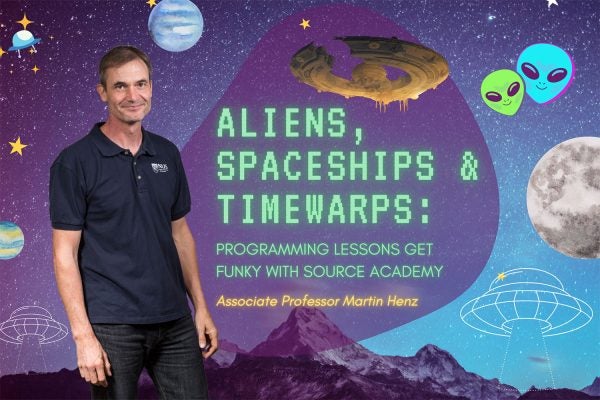
Martin Henz is an Associate Professor at the National University of Singapore , affiliated with the School of Computing and its Department of Computer Science . His academic journey includes an M.Sc. in Computer Science from Stony Brook University (1993) and a Dr.rer.nat. in Computer Science from Saarland University (1997). He has also worked as a Research Scientist at the German Research Centre for Artificial Intelligence. Research Focus : Scalable Experiential Learning, Systems for Teaching/Learning, AI in Education, Programming Languages, Algorithms, and Constraint Programming. Key Projects : Source Academy (immersive programming environment), Deep Teaching (LMS enhancements), and NUS Seafarers (maritime experiential learning). Publications span education technology, programming languages, and sustainable engineering, with recent works focusing on JavaScript-based pedagogy, automated question generation, and electric vehicle conversions. He supervised Rahul Singhal 's PhD, leading to the educational startup Cerebry, and co-founded Workforce Optimizer Pte Ltd with Alan Sevugan. Awards : NUS Annual Digital Education Award (2021) NUS Annual Teaching Excellence Award (2016/17) Fulbright Scholarship (1990) Startup @ Singapore Champion (2001)
Akshay Narayan is a Senior Lecturer (Educator Track) at the School of Computing, National University of Singapore (NUS), where he teaches senior undergraduate and graduate-level courses in AI Planning and Decision Making, as well as introductory and intermediate-level Software Engineering courses. Education: Ph.D. in Computer Science from National University of Singapore (completed in 2020) M.Tech. in Information Technology from International Institute of Information Technology Bangalore, India B.E. in Computer Science & Engineering from Visveswaraya Technological University, India Research Interests: Dr. Narayan's research spans multiple domains within computer science with a primary focus on artificial intelligence and its applications. His current research centers on transfer learning in reinforcement learning, multi-agent decision making, and AI planning. He has also made significant contributions to cloud computing research, particularly in areas such as smart metering, chargeback systems, power-aware cloud metering, and workload analysis for virtual machine sizing. His work bridges theoretical foundations with practical applications, addressing real-world challenges in computing systems. He has recently expanded his research to include technology in education, exploring how AI can be integrated into teaching and learning processes. Publication Trends: Dr. Narayan's publication record demonstrates a clear evolution from foundational work in cloud computing to more recent explorations in reinforcement learning and AI education. His early work focused on practical applications in cloud systems, including smart metering and QoS monitoring. More recently, his research has shifted toward AI planning, decision making, and the educational applications of AI. This progression shows his ability to adapt to emerging fields while maintaining a strong foundation in systems research. Awards and Recognition: Teaching and Mentoring: Dr. Narayan teaches a variety of courses at NUS including CS2113 Software Engineering & Object-Oriented Programming, CS3219 Software Engineering Principles and Patterns, CS3268 Responsible AI: From Algorithms to Impact, and IT5100F Industry Readiness: Data Analytics and AI in Practice. He has also taught CS4246/CS5446 AI Planning and Decision Making. His teaching approach integrates his research expertise with practical applications, providing students with both theoretical foundations and hands-on experience. He has taught these courses across multiple academic years from AY-2013/14 through AY-2020/21. Research Groups and Collaborations: Dr. Narayan has collaborated with researchers across multiple institutions, including work with Prof. Tze Yun Leong at NUS (his PhD advisor), Shrisha Rao, Zhuoru Li, and others. His research has often involved interdisciplinary collaborations that bridge theoretical computer science with practical system implementations.
Jonathan Scarlett is an Associate Professor jointly appointed in the Department of Computer Science, Department of Mathematics, and Institute of Data Science at the National University of Singapore (NUS). He also serves as Assistant Dean (Graduate Studies) in the School of Computing. His research focuses on information theory, machine learning, and high-dimensional statistics, with applications to optimization, group testing, and statistical inference. Education: Ph.D. (Information Engineering), University of Cambridge (2014) B.Eng. (Electrical Engineering) and B.Sci. (Computer Science), University of Melbourne (2010) Research Interests: Algorithmic foundations of machine learning and statistical estimation Information-theoretic limits and adaptive algorithms Applications in group testing, compressed sensing, and DNA storage Robust optimization under uncertainty and adversarial settings His work bridges theoretical guarantees with practical algorithm design, emphasizing scalable solutions for high-dimensional problems. Key Achievements: Recipient of Singapore NRF Fellowship (2018) and NUS Presidential Young Professorship Listed in MIT Technology Review's 'Innovators Under 35' Asia Pacific (2021) Over 100 publications in top venues like ICML, NeurIPS, and IEEE Transactions Advising & Grants: Supervised multiple PhD students in areas like Bayesian optimization, group testing, and compressed sensing Lead researcher on projects supported by NRF and NUS grants Developed novel frameworks for safe Bayesian optimization and robust bandit algorithms Labs & Collaborations: Active in the Information Theory and Statistical Learning Group at NUS, collaborating with global institutions like EPFL and MIT on data science challenges.