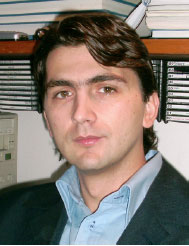
Milan Despotović serves as a Professor in the Department for Energy and Process Engineering at the Faculty of Engineering, University of Kragujevac. His academic career spans over a decade since his election in 2012, with research deeply rooted in energy systems and sustainable engineering practices. His primary research focuses on solar energy forecasting , renewable energy integration , and energy efficiency optimization across building systems and industrial processes. Notable work includes developing advanced metrics for solar irradiance prediction, analyzing electric vehicle adoption barriers in Serbia, and optimizing thermal performance in sports facilities repurposed as emergency warming shelters. His methodology frequently combines statistical modeling , artificial intelligence , and thermodynamic analysis to address energy challenges. Analysis of his recent publications reveals a strong trend toward hybrid forecasting systems that integrate machine learning with meteorological data, particularly for short-term solar irradiance prediction. His work increasingly addresses practical implementation challenges in Serbian energy infrastructure, including grid integration of renewables and sustainable transportation adoption. The interdisciplinary nature of his research bridges traditional process engineering with modern computational techniques. Professor Despotović maintains active research output through the SciDAR repository and contributes to the Faculty's mission in energy engineering education. His office (B-III-9) and direct contact (+381 34 335 990 ext. 730) indicate ongoing engagement with academic activities at the Kragujevac campus.
Goran Bošković is an Associate Professor at the Department of Energy and Process Engineering, Faculty of Engineering, University of Kragujevac, Serbia. He specializes in energy systems optimization, waste management, and circular economy implementation. His work integrates environmental engineering principles with technological solutions to address urban and industrial sustainability challenges. Research interests include: Waste-to-energy systems and biogas optimization Smart municipal waste collection logistics Circular economy strategies in manufacturing Energy efficiency in thermal systems Risk assessment in industrial facilities Recent publications focus on: Plastic packaging analysis (2024) Fire risk modeling in warehouses (2024) Biogas production synergies (2024) Urban waste management digitalization (2024) His research emphasizes practical applications of GIS, IoT, and multi-criteria decision-making frameworks to improve environmental and energy management systems. No scientific awards are explicitly listed, though his contributions to sustainable infrastructure development are notable.
Prof. Danijela Nikolić is a Professor at the Department for Energy and Process Engineering, Faculty of Engineering, University of Kragujevac. Her research focuses on thermodynamics, energy systems optimization, and sustainable building design. She holds a professorship since 2020 and chairs the Energy and Process Engineering division. Her work emphasizes renewable energy integration, energy efficiency in buildings, and climate change mitigation strategies in Serbia. She collaborates with SciDAR for publications and is affiliated with the Faculty's Department for Energy and Process Engineering, office D-28. Research interests include solar energy applications, building energy systems, and lifecycle assessment. She has conducted case studies on ventilation strategies, photovoltaic systems, and waste management in automotive industries. Her work combines numerical analysis with multi-criteria decision-making frameworks to address energy challenges in Serbia’s urban and industrial sectors. Publications highlight innovations in solar greenhouse design, composite material optimization, and AI-driven energy management. She advocates for low-carbon urban development, emphasizing Serbia’s transition to sustainable energy systems. Her applied research bridges theoretical models with practical implementation in Kragujevac and beyond.
Prof. Zoran D. Jovanovic is a Full Professor at the Department of Automation, Faculty of Electronics, University of Nis. He earned his PhD in Automation from the same faculty in 2006, following a Master's degree (1992) and undergraduate degree (1984) in Automation. His academic career includes extensive contributions to control systems, signal processing, and automation technologies. Education: PhD in Automation, Faculty of Electronics, University of Nis (2006) MSc in Automation, Faculty of Electronics, University of Nis (1992) BEng in Automation, Faculty of Electronics, University of Nis (1984) Research Interests: Focuses on control systems, dynamical systems modeling, fuzzy logic control, orthogonal functions, and their applications in engineering. His work bridges theoretical advancements with practical implementations in automotive systems, signal processing, and electromechanical systems. Publications: His research spans 9 journal articles in high-impact journals such as Journal of the Franklin Institute and International Journal of Electronics , emphasizing orthogonal function applications, sliding mode control, and system modeling. Awards and Activities: Recipient of the Dr Miroslav Despotović Diploma for mentoring the winning student team project on wireless traffic signal control (2011). Active in national/international projects: 3 national and 5 international. Advising & Projects: Supervised projects including the award-winning "Pалилулска Рампа" traffic control system, involving students in real-world automation challenges. His mentorship reflects a commitment to bridging academic research and industrial applications.
Миодраг Д. Спасић is an Associate Professor at the Department of Automatics, Faculty of Electronic Engineering, University of Niš, appointed in 2021. His academic journey includes completing his undergraduate studies at the same institution in 2010, followed by earning his PhD from the Norwegian University of Science and Technology in Trondheim in 2019. Dr. Spasić's research focuses on advanced control systems, particularly in the areas of model predictive control, orthogonal functions, neural networks, and nonlinear systems. His work demonstrates a strong emphasis on practical implementations for electromechanical systems, particularly DC motor control and magnetic levitation systems. He has developed innovative approaches combining orthogonal polynomial networks with traditional control methodologies to address challenges in robustness and real-time implementation. His publication record shows consistent productivity with 13 papers in journals with impact factors. Analysis of his recent publications reveals a clear research trajectory focused on enhancing control system performance through orthogonal function-based approaches, with increasing sophistication in handling nonlinearities and uncertainties in complex systems. His work bridges theoretical control concepts with practical engineering applications. Dr. Spasić is actively involved in research projects, currently participating in 2 national and 1 international projects. His collaborative work with colleagues at the University of Niš demonstrates strong institutional research connections within the Department of Automatics.
Dragan N. Radenkovic is a full professor at the Faculty of Electronics in Niš, University of Niš, specializing in Metrology and Measurement Techniques. He received his PhD in 1992, Master's in 1981, and graduated in Electrical Engineering in 1978, all from the same faculty. His research focuses on metrology systems, telecommunications, and electronic signal processing. Education: PhD (1992), Master's (1981), BEng (1978) His work emphasizes innovative measurement technologies and satellite-based signal dissemination. Notable contributions include programmable digital phase shifters and compensated satellite signal systems. He has published extensively in journals like Electronic Engineering and Facta Universitatis . He received a gold medal at the Geneva Patent Fair (1979), a gold plaque from Yugoslav inventors' association (1981), and Serbia's RTV award (1992). Dr. Radenkovic has participated in national/international projects and contributed to metrology advancements. His lab work includes experimental models for precise signal standardization via satellite networks.
Dejan D. Rancic is a Professor at the Faculty of Electronics , University of Niš, Department of Electrical Engineering and Computer Science. His academic career spans over two decades, with promotions to Assistant Professor in 2005 and Full Professor in 2015. He earned his PhD (2004), Master's (1997), and BSc (1993) degrees from the same department. Current projects: 3 National, 1 International Reviewer for WSEAS journal series Rančić’s research focuses on Geographic Information Systems (GIS), 3D terrain visualization, and algorithm optimization for large-scale spatial data processing. His work bridges computer science with geospatial engineering, emphasizing parallelism and web-based frameworks. His publications highlight trends in GIS integration (mobile/web), terrain rendering algorithms, and advanced signal processing for meteorological applications. Key subfields include raster map creation, adaptive rendering, and spatial coherency techniques. Contact: Email: dejan.rancic@elfak.ni.ac.rs Address: Aleksandra Medvedeva 4, 18104 Niš Tel: +381 (18) 529-105
Professor Vladan V. Vuckovic holds the position of Full Professor at the Faculty of Electronics, University of Nis, specializing in Computing and Informatics. He earned his PhD in Electrical Engineering and Computer Science from the same institution in 2006, following a Master's degree (1997) and undergraduate studies (1994) in the same field. His research focuses on advanced chess algorithms, 3D modeling of historical engineering inventions (notably Nikola Tesla's wireless-controlled boat), and interdisciplinary applications of signal processing in biological sciences. Key contributions include groundbreaking work on chess engine optimization through novel data structures and parallelization techniques, as well as computational reconstructions of Tesla's inventions. He has published in journals like ICGA Journal, Facta Universitatis, and Archives of Biological Science, and delivered invited lectures at TU Ilmenau, Germany. His work bridges traditional engineering with cutting-edge computational methods, emphasizing both theoretical rigor and practical implementation. Recipient of prestigious awards including the Tesla Award (2012) and Pupin Award (1995), his research trends reflect an emphasis on historical technology revival, biomedical signal analysis, and artificial intelligence applications. Active in national and international projects, he maintains strong academic-industry collaboration through his research in real-time simulation and control systems.
Bratislav B. Predić is a Full Professor at the Faculty of Electronics in Niš, University of Niš, Department of Computing and Informatics. He began his academic career as an Assistant Trainee in 2004 and was elected to his current rank in 2024. He graduated in 2003 from the same faculty (Department of Electrical Engineering and Computer Science), and holds a master's and doctorate in related fields. His research focuses on mobile geographic information systems (GIS), transportation systems, data analysis, and algorithm optimization for real-world applications. Key research interests include context-aware mobile GIS frameworks, automatic vehicle location systems (AVL), and large terrain rendering algorithms. He has authored/co-authored multiple papers in journals and conferences such as WSEAS Transactions on Computers, AGILE Conference, and IASTED International Conferences. His work spans transportation optimization, meteorological visualization, and embedded GIS systems. Currently, he participates in 2 national and 1 international scientific projects. His laboratory and collaboration work involves developing practical solutions for urban mobility, field work automation, and cloud-based geospatial systems. Contact: bratislav.predic@elfak.ni.ac.rs
Jelena Nikolić is an Associate Professor in the Department of Telecommunications at the Faculty of Electronic Engineering, University of Niš. Her research specializes in signal quantization techniques, data compression, and information theory. She holds a Ph.D. (2011) and M.S. (2006) in Telecommunications from the University of Niš. Her work focuses on designing efficient quantizers for Gaussian sources and developing adaptive compression algorithms. Key research areas: Design of polar companded quantizers Dual-mode scalar quantization Variable-length coding optimization Asymptotic analysis of quantization systems She received the Prof. Dr. Ilija Stojanović Award for contributions to telecommunications for her work on product polar companded quantizers.
Zoran H. Perić is a Full Professor at the Faculty of Electronic Engineering, University of Niš, specializing in Telecommunications. He obtained his PhD (1999), master’s (1994), and bachelor’s (1989) degrees from the same institution. PhD in Telecommunications (1999) Master’s in Telecommunications (1994) Bachelor’s in Electronics and Telecommunications (1989) His research focuses on advanced quantization techniques, signal processing, and artificial intelligence applications in telecommunications. He has contributed to algorithms for grayscale image compression, polar quantization, and adaptive delta modulation. Publications highlight trends in optimizing quantization methods for Gaussian sources, improving compression efficiency, and exploring AI-driven signal processing. He has led national projects, including Advanced Methods of Quantization, Compression and Learning in Artificial Intelligence (2020–2022), funded by the Science Fund of Serbia. He is affiliated with the Department of Telecommunications at the Faculty of Electronic Engineering, with extensive involvement in national research projects and over 160 scientific papers published in high-impact journals.
Olga Bodroža-Pantić is a Professor at the Department of Mathematics and Informatics , Faculty of Sciences , University of Novi Sad . Her research spans Graph Theory , Combinatorics , and Discrete Mathematics , with significant contributions to the study of Hamiltonian cycles , 2-factors , and Kekule structures in grid graphs and topological surfaces like torus and Klein bottle. Email: bodroza@dmi.uns.ac.rs Recent publications focus on graph enumeration and structural analysis in grid graphs, alongside interdisciplinary applications in mathematical biology and food production processes . Her work on the MTE-model highlights interests in mathematics education.
Bojan Bašić is Full Professor in Mathematical Logic and Discrete Mathematics at the Faculty of Sciences, University of Novi Sad. His office is located in building DMI&DF (second floor, room 27). His research spans discrete mathematics with focus areas in combinatorial word theory, geometric tiling problems (Heesch number analysis), and discrete structures. He maintains an active publication record in combinatorial mathematics. His recent articles demonstrate sustained focus on combinatorial problems in discrete geometry (particularly Heesch tiling problems) and combinatorics on words (palindromic structures and permutation theory). The research combines abstract combinatorial reasoning with algorithmic approaches. He maintains a personal research website and provides academic consultations.
Rajko Nenadov is a Lecturer in Theoretical Computer Science at the University of Auckland, New Zealand. Previously, he earned his PhD from ETH Zurich in 2016 under Angelika Steger. He held postdoctoral positions at Monash University (Australia) and ETH Zurich, focusing on combinatorics and graph theory. Between 2018–2022, he worked as a software engineer at Google Zurich, contributing to search ranking algorithms. Returning to academia in 2023, his research emphasizes probabilistic methods, random structures, and applications in theoretical computer science. His education includes a PhD in Computer Science from ETH Zurich (2016). Notable career milestones include postdoctoral research on expanders, pseudorandomness, and Ramsey theory, followed by industry experience in algorithmic development. Rajko’s research interests revolve around combinatorics, with a focus on probabilistic methods, random graphs, extremal graph theory, and Ramsey theory. His work bridges foundational combinatorics with practical applications in computer science, particularly in algorithm design and computational complexity. His recent publications explore topics like hypergraph universality, container theorems, and extremal subgraph counting. These contributions highlight advancements in probabilistic combinatorics and structural graph theory. No scientific awards or grants are explicitly listed in the provided information. His career transition from academia to industry and back underscores his interdisciplinary expertise in theory and applied computing.
Yoshio Okamoto is a Professor at the Department of Computer and Network Engineering, Graduate School of Informatics and Engineering, at The University of Electro-Communications in Tokyo, Japan. He has held this position since April 2017, after serving as an Associate Professor at the same institution from April 2012 to March 2017. Prior to his appointment at the University of Electro-Communications, he held academic positions at Tokyo Institute of Technology, Japan Advanced Institute of Science and Technology, and Toyohashi University of Technology. His educational background includes: Bachelor of Systems Science from The University of Tokyo (1999) Master of Systems Science from The University of Tokyo (2001) Doctor of Theoretical Science from ETH Zurich (2005) Professor Okamoto's research spans several interconnected areas in theoretical computer science and discrete mathematics. His primary interests include Discrete and Computational Geometry, Graph Algorithms, Combinatorial Optimization and Polyhedral Combinatorics, Discrete Mathematics and Combinatorics, and Game Theory. His work often explores the interplay between these fields, developing theoretical foundations with practical algorithmic implications. He has made significant contributions to understanding the structural properties of geometric and combinatorial objects, as well as designing efficient algorithms for related problems. His recent publications demonstrate a continued focus on fundamental problems in discrete mathematics and theoretical computer science, with increasing applications in quantum computing, fair division, and reconfiguration problems. His work often appears in top-tier journals such as ACM Transactions on Algorithms, Algorithmica, and Theoretical Computer Science, reflecting his standing in the theoretical computer science community. Professor Okamoto has received several prestigious awards recognizing his contributions to the field: IPSJ-CS Outstanding Achievement and Contribution Award (January 2024) Research Award from The Operations Research Society of Japan (September 2020) Best Review Paper Award (with colleagues) from Japan Society for Software and Technology (September 2014) Research Encourage Award from The Operations Research Society of Japan (September 2012) 8th EATCS/LA Presentation Award (February 2010) Editors' Choice 2003 from Discrete Applied Mathematics (September 2004) As an educator, Professor Okamoto has taught numerous courses at The University of Electro-Communications since 2012, including Discrete Mathematics, Graphs and Networks, Discrete Mathematical Engineering, and Foundations of Discrete Optimization. He has served as an editor for multiple prestigious journals including Graphs and Combinatorics (Managing Editor since 2020), Acta Informatica, Journal of Computational Geometry, and Journal of Graph Algorithms and Applications. His extensive service on program committees for major conferences in theoretical computer science demonstrates his active engagement with the research community. Professor Okamoto leads a research laboratory at The University of Electro-Communications, where his team explores fundamental questions in discrete mathematics and theoretical computer science. The lab maintains strong connections with researchers worldwide, as evidenced by his numerous international collaborations. His research has been supported through various channels, including Japan Society for the Promotion of Science grants, and he has served as a reviewer for international funding agencies including the Swiss National Science Foundation and The Netherlands Organization for Scientific Research.