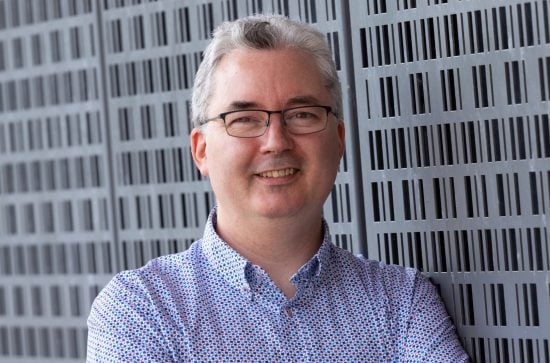
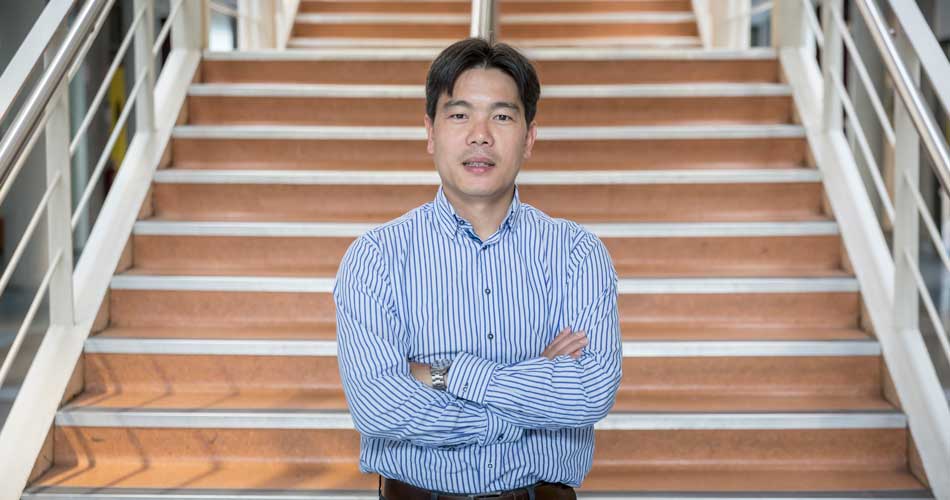
Dr. John G. Hayes is a Senior Lecturer at University College Cork (UCC) in the Department of Electrical & Electronic Engineering . He holds a Ph.D. from UCC (1998), an M.S.E.E. from the University of Minnesota (1989), an M.B.A. from California Lutheran University (1993), and a B.E. from UCC (1986). His academic career began at UCC in 2000, and he directs the Power Electronics Research Laboratory (PERL) , focusing on industrial collaborations with companies like Analog Devices and General Motors. Research Interests : Power electronics, magnetic components, electric vehicles, renewable energy systems, smart grids, and energy storage. Notable Work : Joint author of Electric Powertrain: Energy Systems, Power Electronics and Drives for Electric, Hybrid and Fuel Cell Vehicles (Wiley, 2018) and its Chinese edition (2021). Scientific Awards : 2011 IEEE William M. Portnoy Award for Best Paper/Presentation at IEEE ECCE. Advising : Supervised 10+ Ph.D. students across powertrain modeling, magnetic materials, and converter control. Current advisee: Conor Healy (Doctoral Degree). Labs : Leads PERL, which develops high-power converters for automotive and renewable energy applications, partnering with industry leaders like SMA Magnetics and United Technologies.
Dr. Francisco Vitor Santos da Silva is a Senior Lecturer at University College Cork (UCC), Ireland, with a joint appointment between the School of Microbiology and the School of Engineering and Architecture. He holds a PhD from Otto von Guericke University Magdeburg (2017, Summa Cum Laude) and a first-class honours degree from Federal University of Paraná (2012). His research focuses on reducing uncertainty in bioprocess development through hybrid modelling techniques combining first-principles and statistical inference. He has contributed to novel strategies for monoclonal antibody capture and sustainable biopharmaceutical production. Key academic milestones include a FAPESP postdoctoral fellowship (2018) and leadership roles in the Bernal Bio Labs at University of Limerick. His work has been published in journals like Journal of Chromatography A and supported by grants from FAPESP and CAPES. He actively engages in science communication, including Wikipedia contributions and public outreach events. Dr. da Silva teaches bioprocess design using modern data-driven approaches and serves as a peer reviewer for multiple journals. His research spans bioprocess optimization, PAT implementation, and sustainable chemical/biotechnological processes for food and pharmaceuticals. Education: BSc (Hons) Bioprocess Engineering & Biotechnology, Federal University of Paraná (2012) PhD (Summa Cum Laude), Otto von Guericke University Magdeburg (2017) Awards: Top Student of the Year Award, Federal University of Paraná (2012) Summa Cum Laude PhD Distinction (2017) Grants: FAPESP Postdoctoral Fellowship (2018) CAPES Brazil grants His professional activities include organizing international conferences, reviewing PhD funding applications, and advising on industry collaborations. He leads UCC's efforts in integrating cutting-edge simulation tools into bioprocess education and research.
Dr. Harriet Bennett-Lenane is a Lecturer in Clinical Pharmaceutics at the School of Pharmacy, University College Cork (UCC). She holds a BSc(Pharm) from Trinity College Dublin (2017), an MPharm from the Royal College of Surgeons in Ireland (2018), and a PhD in Pharmaceutics from UCC (2022), supported by an Irish Research Council Postgraduate Scholarship. Her research focuses on machine learning applications in drug formulation, computational pharmaceutics, and digital pharmacy practice. She has industry experience in Quality Assurance and Regulatory Affairs roles at Eli Lilly, MSD, and Clinigen. Research Interests include optimizing medicines using AI, improving drug delivery systems, and enhancing pharmacy services for vulnerable patients. Her work bridges academia and industry, emphasizing translational research. Notable Awards: Gold Medal for Pharmaceutics (Trinity College Dublin, 2017), Irish Research Council Postgraduate Scholarship (2018), and Entrance Exhibition Scholar (Trinity College Dublin, 2014). Teaching: Focuses on integrating research-led, active learning approaches in Clinical Pharmacy and Pharmaceutics.
Liadh Kelly is an Assistant Professor in the Department of Computer Science at Maynooth University's Faculty of Science & Engineering. She supervises PhD students in applied artificial intelligence, focusing on intelligent search, ubiquitous computing, and multimodal information access. She is affiliated with the ADAPT SFI Research Centre, SFI Centre for Research Training in Foundations of Data Science, and Human Health Institute. BSc in Computer Science MSc (Research) in Computer Science PhD in Computer Science Her research explores context-sensitive retrieval and evaluation methodology in AI-driven systems. Key areas include ubiquitous computing for personal data analysis, deep learning classification for mental wellness indicators, and multimodal lifelogging integration. Recent publications focus on urban mental wellbeing classification , contextual cue analysis , and AI-driven health search systems . Articles address smart city applications , consumer health search , and cross-lingual medical retrieval . Professional roles include Doctoral Consortium Chair at ECIR 2023 and Programme Committee member for SIGIR and ICWSM conferences. She leads grants for 4-year PhD studentships with stipend and fee coverage.
Professor Damien Woods is a faculty member at Maynooth University's Faculty of Science & Engineering, specifically affiliated with the Department of Computer Science and the Hamilton Institute. He leads groundbreaking research in DNA computing, molecular programming, and optical computing, focusing on self-assembly, algorithmic design, and computational complexity. ERC Consolidator Grant: 'Computationally Active DNA Nanostructures' SFI ERC Support Award EIC Pathfinder Challenge Grant: 'DISCO - DNA Infrastructure for Storage and Computation' His research projects explore programmable DNA storage, molecular robotics, and robust self-assembly systems. Recent publications span diverse topics like algorithmic DNA tile assembly, thermodynamic stability, and computational universality in nanosystems. Awards include ERC and SFI grants, with a focus on bridging theoretical computer science and experimental molecular biology. Scientific Contributions include: 2022: 'Turning Machines' - Molecular Robotics 2019: 'Diverse Molecular Algorithms' in Nature 2017: 'A Cargo-Sorting DNA Robot' in Science
Usman Ali is an Assistant Professor and Adjunct Lecturer at the School of Mechanical and Materials Engineering, University College Dublin. He holds a Ph.D. in 'A data-driven GIS-based approach for multi-scale residential building energy modeling' (2020) from UCD and an M.Sc. in Computer Science from Lahore University of Management Science (2013). His research focuses on machine learning, GIS modeling, urban building energy systems, and energy performance certification. He has contributed to projects like the U.S.-Ireland R&D initiative on building stock classification and energy prediction, and collaborated with the Sustainable Energy Authority of Ireland (SEAI) on energy policy research. His work emphasizes data-driven solutions for energy efficiency, urban sustainability, and policy decision-making. Education: Ph.D., University College Dublin (2020) M.Sc., Lahore University of Management Science (2013) B.Sc., International Islamic University Islamabad (2008) Research emphasizes machine learning applications in energy modeling, GIS integration for urban planning, and energy policy frameworks. His recent work includes synthetic building datasets, occupancy-based energy analysis, and uncertainty quantification in energy systems.
Rui Teixeira is an Assistant Professor in the School of Civil Engineering at University College Dublin (UCD). He leads UCD's Centre for Critical Infrastructure Research (CCIR) and focuses on Uncertainty Quantification, Safety, and Risk in civil engineering systems, with applications to infrastructure resilience. His research emphasizes reliability analysis, multi-fidelity modeling, and AI-driven risk assessment. Education: MSc in Civil Engineering, University of Porto, Portugal PhD in Civil Engineering, Trinity College Dublin Professional Certificate in University Teaching and Learning, UCD Research Interests: Development of novel reliability analysis techniques Resilience of infrastructure systems Artificial intelligence applications for risk assessment Probabilistic system evaluation and safety standards Grants & Projects: Smart Enforcement of Transport Operations (SETO), Horizon Europe (2023–2026) Optimality-Tracking Civil Engineering Systems, Enterprise Ireland (2023–2025) Floating Offshore Wind Dynamic Cables (FlOWDyn), Sustainable Energy Authority of Ireland (2024–2027) Teaching: Coordinates courses such as 'Civil Engineering Systems' and 'Design of Structures 1'. Labs/Teams: Director of the Centre for Critical Infrastructure Research (CCIR), focusing on interdisciplinary approaches to infrastructure resilience.
Dr. Le-Nam Tran is a researcher at the UCD School of Electrical & Electronic Engineering , University College Dublin. His work focuses on optimizing the last hop of 5G/6G wireless networks through mathematical programming, with emphasis on energy efficiency, interference management, and security against eavesdropping. Develops low-cost, low-complexity transmission techniques Projects supported by Science Foundation Ireland Career Development Award Author of over 80 peer-reviewed publications Research Keywords: Wireless Communications Network Security Signal Processing Energy-Efficient Systems Beamforming Optimization Interference Mitigation
Dr. Felix Mezzanotte is an Assistant Professor of Law at Trinity College Dublin and Director of the MSc in Law and Finance Programme, a collaboration between Trinity Law School and Trinity Business School. He holds a PhD and advanced degrees from the University of East Anglia, SOAS (University of London), and the University of Warwick. His research focuses on the legal dimensions of sustainable finance, corporate sustainability reporting, investor protection, and compliance frameworks within financial markets. Academic Role: Assistant Professor of Law Affiliations: Trinity Law School, Trinity Business School (MSc Programme Director) Professional Experience: Former teaching at Hong Kong Polytechnic University, policy advisor for the World Bank, and visiting scholar at Columbia Law School and others. Dr. Mezzanotte's research interests span sustainable finance regulatory design, ESG compliance, blockchain applications in reporting, and cross-border enforcement challenges. His recent work emphasizes the legal accountability mechanisms linking corporate sustainability disclosures to investor rights under EU directives. Publications reflect a focus on EU sustainable finance policy, with analysis of regulatory complexity, blockchain innovations, and investor protection gaps. Recent articles address double materiality frameworks, impact reporting standards, and the role of robo-advisors in ESG integration. Key Award: Faculty of Business Award for Outstanding Teaching (Hong Kong Polytechnic University) Research Collaborations: European-China Law Studies Association, Columbia Center for Sustainable Investment He supervises doctoral candidates exploring topics like greenwashing prevention, non-financial disclosure obligations, and regulatory enforcement in sustainable finance contexts.
Simon Colreavy Donnelly is an Associate Professor in the Department of Computer Science & Information Systems at the University of Limerick. He is a member of the Interaction Design Centre and focuses on interdisciplinary research at the intersection of artificial intelligence, educational technology, and healthcare informatics. His work spans machine learning applications in medical data analysis, virtual reality (VR) and extended reality (XR) for inclusive education, and deep learning techniques in chemical analysis and spectroscopy. Research Interests: His primary areas of investigation include generative AI for education equity, semisupervised learning algorithms, virtual learning environments design, and the ethical deployment of immersive technologies in healthcare and palliative care. He also explores NMR spectroscopy analysis using deep learning and develops tools for nutritional content estimation through image processing. Collaborations: His recent collaborations span international teams addressing challenges in toxicity-free online discourse (PAN 2024), semisupervised learning distribution mismatches, and VR applications for post-pandemic blended learning. His work integrates computational methods with real-world applications in education, healthcare, and chemical analysis. Labs/Teams: Active within the Interaction Design Centre at UL, his research group develops practical solutions for accessibility in digital education and healthcare systems, emphasizing user-centered design principles for extended reality applications.
Constantine Evans is a Research Fellow at the Hamilton Institute, Maynooth University, focusing on the physics of complex self-assembly processes. His work examines how simple particles organize into intricate structures through algorithmic self-assembly, with applications in DNA nanotechnology and computational modeling. Institution: Maynooth University Research Unit: Hamilton Institute Location: Eolas Building, 3rd Floor, Office 339 Research Interests: Evans investigates non-equilibrium self-assembly systems, particularly DNA tile crystal growth and kinetic control mechanisms. His research bridges physics, computational theory, and molecular engineering to uncover unexpected behaviors in basic physical processes. Publication Trends: His recent work (2018-2024) demonstrates interdisciplinary advancements in DNA computing, focusing on proofreading systems, tile compiler optimization, and kinetic modeling. These publications span peer-reviewed journals, conference proceedings, and algorithmic frameworks that connect theoretical computer science with experimental biophysics. Labs & Teams: He is affiliated with the Hamilton Institute, a research center specializing in systems biology, computational modeling, and interdisciplinary scientific investigations.
Dr. Barry Cardiff is an Assistant Professor in the School of Electrical and Electronic Engineering at University College Dublin (UCD), where he has been a member of academic staff since September 2013. His career spans both industry and academia, with significant experience at Nokia Mobile Phone (UK) Ltd and Silicon & Software Systems (S3 group) before returning to complete his PhD at UCD. Education: B.Eng (1992), M.Eng.Sc. (1995), PhD (2011) from University College Dublin Professional Experience: Design Engineer at Nokia (1993-2001), Systems Architect at S3 group (2001-2007, 2011-2013) Current Position: Assistant Professor at UCD School of Electrical and Electronic Engineering Dr. Cardiff's research focuses on Digital Signal Processing applications in communication systems, with particular emphasis on theoretical analysis and practical implementation. His work bridges traditional communication theory with emerging biomedical applications, especially in wearable IoT sensors. He has made significant contributions to power/complexity reduction techniques in circuit design, specifically DSP algorithms for digitally assisted analog circuits. His research program addresses critical challenges in biomedical signal processing, sensor fusion, and efficient data transmission for healthcare applications. His recent publications demonstrate a strong trend toward biomedical applications of signal processing techniques, with a focus on ECG analysis, atrial fibrillation detection, and respiratory rate estimation using multimodal sensor fusion. The research shows a clear progression from traditional communication systems toward healthcare applications, with an emphasis on edge computing solutions that reduce power consumption in wearable devices. IEEE BioCas best paper award (2024) IEEE senior member since 2019 Active reviewer for multiple IEEE journals including Transactions on Biomedical Circuits and Systems, Circuits and Systems, and VLSI Systems Dr. Cardiff has supervised numerous research projects and has been instrumental in developing curriculum for digital communications, signal processing, and wireless systems. His teaching philosophy emphasizes open, friendly, and hands-on approaches that encourage independent thinking. He coordinates multiple modules including Communication Theory, Digital Electronics, DSP Technology, and Wireless Systems, demonstrating his commitment to both theoretical foundations and practical applications of electrical engineering principles. His research group works at the intersection of signal processing, machine learning, and biomedical engineering, developing innovative solutions for wearable healthcare monitoring. Current projects focus on event-driven processing architectures, decentralized classification systems, and signal quality-aware fusion techniques that enable robust performance in noisy real-world environments.
Dr. Fatemeh Golpayegani is an Assistant Professor at the School of Computer Science, University College Dublin. She leads the Multi-agent Systems and Sustainable Solutions lab (MAS3.ucd.ie) and has secured over €1.5M in research grants. Her academic roles include BSc Stage 4 Coordinator and Chair of Women@CS (2012–2023). She holds a PhD from Trinity College Dublin (2018) and professional qualifications in university teaching from UCD. Education: PhD in Computer Science, Trinity College Dublin (2018) Professional Diploma in University Teaching & Learning, University College Dublin (2024) Professional Certificate in University Teaching & Learning, University College Dublin (2023) Research Interests: Focuses on multi-agent systems, sustainability, intelligent transport systems, autonomous decision-making, and edge computing. Her work integrates reinforcement learning, ontology-based models, and adaptive systems to address challenges in smart cities, energy grids, and infrastructure monitoring. Grants & Projects: Principal Investigator for the EU-funded RE-ROUTE project (€multi-million, 2023–2026) on intelligent transport networks. Co-Principal Investigator for the Augmented CCAM project on connected/cooperative autonomous mobility. Funded investigator in SFI centres (I-Form, CONNECT, Biorbic). Awards & Recognition: Researcher of the Year Award (2022) Member of Young Academy of Ireland (2023) Teaching & Mentoring: Coordinates modules in algorithms, Java programming, and operating systems. Supervises PhD students in SFI centres and mentors postdoctoral researchers. Active in promoting EDI as Chair of d-real doctoral training centre. Labs & Collaborations: Leads the MAS3 lab, collaborating on projects like CAPTAIN CARBON (sustainable transport gamification) and ontology-enhanced traffic signal control systems.
Ian Pitt is a Lecturer in Usability Engineering and Interactive Media at University College Cork (UCC). He leads the Interaction Design, E-Learning and Speech (IDEAS) Research Group, focusing on multimodal human-computer interaction, auditory interfaces, and accessibility solutions for visually impaired users. Pitt holds a D.Phil from the University of York, followed by research fellowships at Otto-von-Guericke University in Germany before joining UCC in 1997. His research interests include speech-based interfaces, e-learning systems, and accessibility technologies for blind users. Key projects include the EU-funded ENABLE Network (2011–2014) and prototype development for UniWink. He has secured significant grants, including €72,009 from IRCSET for voice analysis research and €19,478 from the EU for ICT-supported learning initiatives. Pitt has advised numerous PhD students, including Flaithri Neff (2011), Emma-Kate Crowley (2014), and current candidates Aine Kearns and Patrick Egan. His publications span journals like International Journal of Game-Based Learning and conferences such as ICCHP and ACM SIGACCESS. He has contributed to committees for conferences like CHI and the Irish HCI conference. Teaching modules include Usability Engineering, Human-Computer Interaction, and Digital Media Development. His work emphasizes inclusive design principles, with projects addressing navigation systems for blind students and adaptive e-learning frameworks. Recent research trends focus on ICT-delivered aphasia rehabilitation, emotional BCI interfaces, and multimodal learning systems. Collaborations include international partners through EU grants, reflecting his global impact in accessibility and educational technology.
Philip Cardiff is a Professor in Computational Mechanics at the School of Mechanical and Materials Engineering, University College Dublin. He holds a BE (2008) and PhD (2012) in Mechanical Engineering from UCD. His research focuses on computational mechanics, machine learning, and their integration, with expertise in finite volume methods, fluid-solid interaction, and biomechanics. He leads the Bekaert University Technology Centre and contributes to editorial roles in the Journal of Open Source Software and OpenFOAM Journal . Cardiff has secured grants from ERC, I-Form, and the UCD Energy Institute, addressing challenges in offshore energy, advanced manufacturing, and cardiac xenotransplantation. Education: BE in Mechanical Engineering, University College Dublin (2008) PhD in Development of the Finite Volume Method for Hip Joint Analysis, University College Dublin (2012) Professional Diploma in University Teaching & Learning, University College Dublin Research Interests: Computational mechanics, finite volume methods, and machine learning integration Fluid-solid interaction, biomechanics, and materials science Applications in additive manufacturing, energy systems, and biomedical engineering Grants & Awards: ERC Consolidator Grant (2020–2025) Funded Investigator in I-Form and UCD Energy Institute Principal Investigator in UCD Centre for Biomedical Engineering Teaching & Leadership: Programme Director for MEngSc in Materials Science and Engineering (2018–2023) Coordinates modules in computational mechanics and advanced materials processing Advocates constructivist teaching approaches with active learning strategies Labs & Collaborations: UCD Centre for Mechanics Bekaert University Technology Centre MaREI and I-Form Research Centres