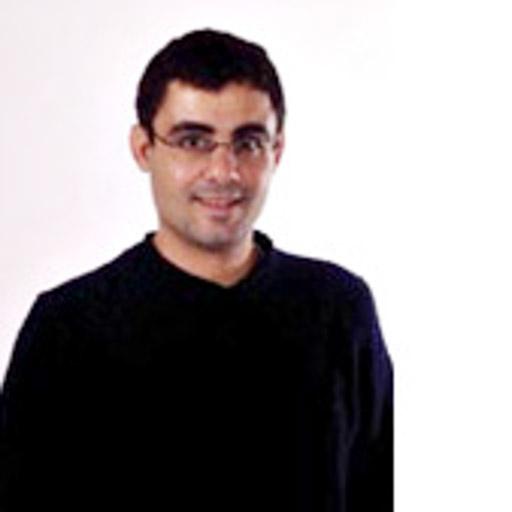
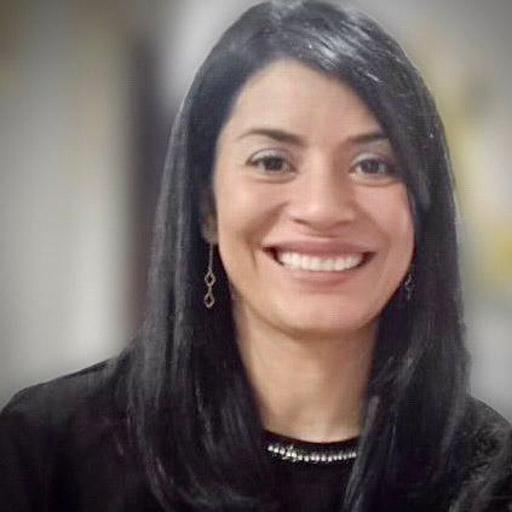
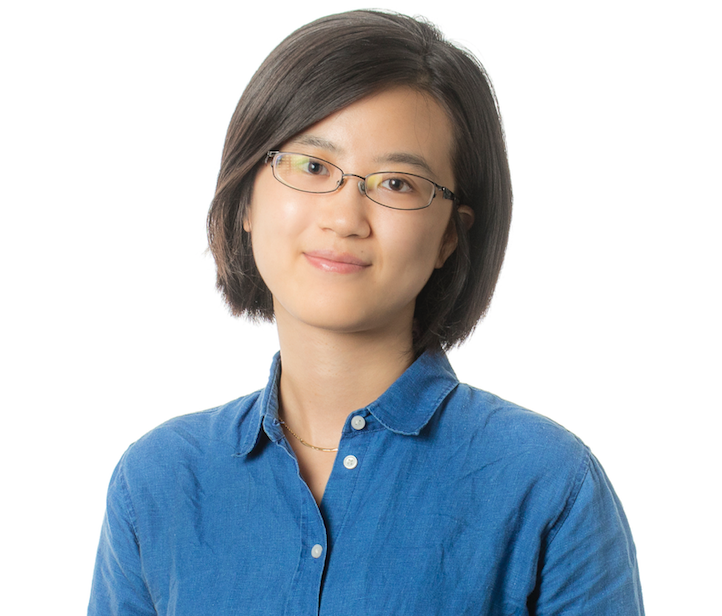
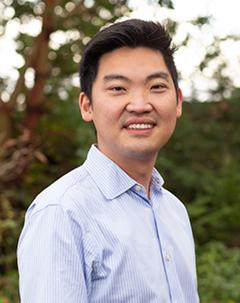
Dr. Edward Brown is an Associate Professor in the Department of Computer Science at Memorial University of Newfoundland, part of the Faculty of Science. His research focuses on human-computer interaction, hypertext systems, scientific visualization, and legal aspects of technology. He holds degrees from Memorial University (B.Sc.), the University of Toronto (M.Sc., Ph.D.), and the University of Victoria (LL.B.). His current research includes augmented reality applications for marine navigation, multimedia teaching strategies for K-12 education, and the design of user interface agents. Notable projects involve developing hypermedia tools for educational environments and studying complexity in finite-domain problems using genetic algorithms. Dr. Brown also practices technology law and has expertise in intellectual property issues. Teaching responsibilities include courses such as CS2760 (Encountering the Computer) and CS3718 (Programming in the Small). His work bridges computer science with pedagogical innovation and legal implications of emerging technologies.
Kevin Englehart is a Professor in the Department of Electrical and Computer Engineering at the University of New Brunswick and currently serves as the Associate Dean of Graduate Studies. He holds a PhD and is a Professional Engineer (PEng). His primary affiliation is with the Institute of Biomedical Engineering, where he conducts groundbreaking research on advanced prosthetic control systems. Englehart's work focuses on improving the usability and adaptability of myoelectric prostheses through machine learning, signal processing, and biomechanical modeling. He previously served as Director of the Institute of Biomedical Engineering, demonstrating leadership in fostering interdisciplinary research. His research interests include electromyography (EMG) signal analysis, human-machine interfaces, and the application of artificial intelligence in healthcare technologies. Englehart's publications span over two decades, with a strong emphasis on real-time control systems, noise reduction techniques, and user-centric design principles for assistive devices. His academic contributions extend to the development of novel training paradigms for prosthetic users and the mitigation of technical challenges such as electrode shift and signal instability. Englehart collaborates extensively with clinical and engineering teams to translate theoretical advancements into practical solutions for individuals with physical disabilities. His office is located at R.N. Scott Hall 219 in Fredericton, New Brunswick.
Jason Jaskolka is an Associate Professor in the Department of Systems and Computer Engineering at Carleton University, part of the Faculty of Engineering and Design. He holds a Ph.D. from McMaster University and is a licensed Professional Engineer in Ontario. His research focuses on cyber security evaluation and assurance, formal methods, and secure software engineering. He leads the Cyber Security Evaluation and Assurance (CyberSEA) Lab, emphasizing security-by-design principles for complex systems like industrial control systems and IoT-enabled healthcare. Education: Ph.D. (Software Engineering, McMaster University, 2015), M.A.Sc. (Software Engineering, McMaster University, 2010), B.Eng. (Software Engineering and Game Design, McMaster University, 2009). Research interests include: Cyber Security Evaluation & Assurance, Data-Driven Security Metrics, Formal Verification of Security Properties, Secure Software Architecture Design, and Industrial Cyber-Physical Systems Security. His work addresses challenges in threat modeling, compliance with security standards, and mitigating implicit system vulnerabilities. Recognition includes the 2021 New Faculty Excellence in Teaching Award for innovative pedagogy. He actively supervises graduate students in funded research positions. Key collaborations include Health Canada's Scientific Advisory Committee on Digital Health Technologies and the U.S. Department of Homeland Security’s Cybersecurity Postdoctoral Fellowship at Stanford University. Labs/Teams: CyberSEA Lab, focusing on developing rigorous security evaluation frameworks and tools for software-dependent systems.
Lucas Lehnert is an Assistant Professor in the Department of Computer Science at the University of Saskatchewan, specializing in Artificial Intelligence and Reinforcement Learning (RL). His research focuses on how intelligent systems can learn to solve complex decision-making tasks through representation learning, abstraction mechanisms, and lifelong learning strategies. He also explores applications of AI/RL in scientific and engineering domains. Education: PhD in Computer Science (Brown University, 2021), MSc (McGill University, 2016), BSc (McGill University, 2014). Postdoctoral positions included Meta's FAIR team (2022–2024) and the Mila Quebec AI Institute (2021–2022). Research interests include reinforcement learning fundamentals, generative AI reasoning, exploration strategies, and reward-predictive representations. His work bridges model-based and model-free RL paradigms, emphasizing scalable and generalizable solutions. Awards include the Best Student Workshop Paper Award (2017) and an NIMH training grant in cognitive neuroscience. His research has been published in top conferences like NeurIPS, ICML, and ICLR. He advises graduate students in RL and collaborates on projects involving transformer-based planning, exploration algorithms, and multi-agent systems. Current work includes developing SearchFormer for efficient planning tasks and exploring maximum entropy exploration methods.
Chadi Assi is a Professor and Tier II Concordia Research Chair at the Concordia Institute for Information Systems Engineering, Concordia University. His research focuses on wireless networks, information security, and smart grid systems, with particular emphasis on reconfigurable intelligent surfaces (RIS), integrated sensing and communication (ISAC), cybersecurity for electric vehicles (EVs), and machine learning-driven network optimization. He has pioneered work on mitigating cyber-physical attacks in power grids and IoT ecosystems, while advancing cooperative communication protocols like RSMA and NOMA. His technical contributions span theoretical frameworks for energy efficiency maximization in hybrid SDMA/NOMA schemes, low-complexity RIS element selection algorithms, and adversarial PINN models for grid dynamics. He also investigates vulnerabilities in EV charging infrastructure and O-RAN synchronization protocols, proposing robust detection mechanisms like PEACE and Grid Mirror. His interdisciplinary work bridges communications, power systems, and AI, addressing challenges in 5G/6G security and resilient IoT provisioning. Key Research Areas: RIS-enabled ISAC networks, EV cybersecurity, meta-learning in communications, IoT malware analysis Current Projects: Grid resilience against load-altering attacks, Movable antenna optimization, federated learning for AGC systems Recent publications (2024-2025) emphasize deep reinforcement learning frameworks for RIS-aided networks, cooperative RSMA performance enhancement, and defense mechanisms against dynamic trigger-based attacks. He has also developed novel datasets for advanced persistent threats and frameworks like ChargePrint for EV charging security analysis. His work is published in top venues including IEEE Transactions on Smart Grid, IEEE JSAC, and IEEE ICC, reflecting contributions to both theoretical advancements and practical system implementations.
Rachida Dssouli is a Professor at the Concordia Institute for Information Systems Engineering (Concordia University). Her research focuses on advanced software engineering methodologies, quality assurance systems, and distributed computing frameworks. She specializes in model-based testing, federated learning optimization, and big data quality management. Her work integrates formal verification techniques with modern machine learning approaches to address challenges in edge computing, IoT, and safety-critical systems. Key research areas include: Development of hybrid swarm intelligence algorithms for optimizing large language model deployment in edge-cloud environments Design of reinforcement learning frameworks for robotics motion planning and IoT device scheduling Creation of interpretable machine learning tools for fault detection in software systems Establishment of holistic big data quality frameworks for continuous monitoring and unstructured data analysis Formal verification methods for avionics systems using multi-agent models Her recent work demonstrates trends toward AI-driven solutions for testing methodologies (e.g., SHAP-Driven fault detection) and edge-cloud integration (e.g., MIMO-based computation offloading optimization). The 2025 publications highlight advancements in federated learning and trust-aware IoT scheduling. Earlier works (2018-2020) emphasize foundational contributions to cloud trust models, big data quality metrics, and safety-critical system testing. Her research also addresses emerging technologies for developing countries through frameworks like neurodegenerative disease monitoring systems and mobile application requirements engineering. She has contributed to service-oriented architectures for healthcare systems and cloud-based resource orchestration strategies.
Sandra Cespedes is an Assistant Professor at Concordia University's Department of Computer Science & Software Engineering within the Gina Cody School of Engineering and Computer Science. She previously held roles as an Associate Professor and Head of Research at NIC Chile Research Labs, Universidad de Chile, and maintains an honorary Adjunct Professorship at Universidad Icesi, Colombia. She is also an Associate Researcher at the Advance Center of Electrical and Electronic Engineering (AC3E), Chile. Education: B.Eng. (Telematics Engineering) and Specialization (Management of Information Systems), Universidad Icesi, Colombia (2003, 2007) Ph.D. (Electrical and Computer Engineering), University of Waterloo, Canada (2012) Research Interests: Her research focuses on wireless networks, IoT, vehicular communications, and satellite networking. Key areas include: Design of protocols for constrained IoT devices Vehicular safety systems and cooperative communication Direct-to-satellite IoT (DtS-IoT) architectures Rural connectivity solutions Publications: Her recent work explores satellite IoT protocols, vehicular network optimization, and distributed hypothesis testing. Notable contributions include MAC protocol design for satellite IoT and safety message dissemination in VANETs. Teaching: At Concordia, she teaches undergraduate courses like Data Communications and Computer Networks and Embedded Systems , and graduate courses such as Computer Networks and Protocols . Previously, she taught wireless networking and IoT development at Universidad de Chile.
Jinqiu Yang is an Associate Professor in the Department of Computer Science and Software Engineering at Concordia University. His research focuses on software reliability, automated program repair, software testing, and quality assurance of machine learning systems, particularly in autonomous vehicles. He holds a PhD and MASc from the University of Waterloo and a B.Eng. from Nanjing University. Yang has been a tenure-track faculty member at Concordia since 2018, following research roles at IBM Watson and IBM CAS. Research Interests: Automated Program Repair Software Testing Machine Learning Systems Text Analytics of Software Artifacts Mining Software Repositories Autonomous Systems Quality Assurance Key Contributions: His recent work includes detecting concept drifts in ML systems (ICSE-25) and investigating social bias in LLM-generated code (AAAI-25). He leads the O-RISA Lab and has authored over 50 peer-reviewed publications, including distinguished papers at MSR-2018. Yang currently holds grants such as the NOVA FRQNT-NSERC Program (2024-2027) and the NSERC Discovery Grant (2019-2025). Service & Awards: Editorial Board Member of the Empirical Software Engineering Journal (EMSE) and active PC member in top venues like ICSE and FSE. Recipient of the IBM CAS Fellowship and ACM SIGSOFT Distinguished Paper Award. Teaching & Students: He mentors students in Master's and PhD programs, with funding available. His lab focuses on cutting-edge topics like secure code generation and autonomous vehicle reliability.
Tien D. Bui is a Professor in the Department of Computer Science and Software Engineering at Concordia University, Montreal, Canada. He has been affiliated with Concordia for over 30 years, having joined the university in 1984 as a full professor. Previously, he held positions at McGill University and earned his education from Carleton University, the University of Ottawa, the University of Toronto, and York University. His roles include Chair of the Department of Computer Science (1985–1990) and Associate Vice-Rector Research (1992–1996). He currently serves on multiple research boards, including the Board of Governors at Concordia University and editorial roles for journals like the International Journal of Wavelets, Multiresolution and Information Processing. His research focuses on image processing, document analysis, machine learning, and pattern recognition. Notable contributions include work on wavelet-based image segmentation, handwritten document analysis, and applications of sparse representations in texture classification. He has supervised over 20 graduate students and authored/co-authored over 150 publications, including the book Computer Transformation of Digital Images and Patterns (1989). Bui has held visiting positions at the Istituto per le Applicazioni del Calcolo in Rome and the University of California, Berkeley. He has received significant research grants and served on numerous grant selection committees and federal/provincial panels. His work has practical applications in medical imaging, biometrics, and computational fluid dynamics. Current lab members include doctoral and master’s students focusing on advanced topics like control systems and algorithm design. Bui’s academic leadership extends to teaching courses such as Control Systems and Applications, Mathematics for Computer Science, and advanced design and analysis of algorithms.
Mireille Paquet is an Associate Professor in the Department of Political Science at Concordia University, holding the University Research Chair in Immigration Policies. She directs the Concordia University Institute for Research on Migration and Society (IRMS) and co-directs the RQ3I research network, connecting academic research with Quebec public policy. Education: PhD from Université de Montreal Her research examines comparative immigration policies with focus on bureaucratic influences, political debates around migration technology, and federal-provincial dynamics in Canada. She specializes in Canadian immigration within comparative frameworks including Australia, UK, and US contexts, analyzing how subnational governments shape national migration systems through 'province-building' strategies and evolving selection criteria. Recent publications (2024-2025) reveal intensified focus on intergovernmental complexities in asylum processing, digital migration governance, and Quebec's distinct immigration policy evolution. Her work increasingly addresses racialized immigrant experiences, migration backlogs, and the impact of external shocks like pandemics on policy implementation, demonstrating methodological diversity from survey experiments to comparative institutional analysis. Scientific awards: 2018 Best Book in French Award from the Canadian Political Science Association Member of the College of the Royal Society of Canada Professor Paquet actively supervises graduate students in immigration policy, integration theories, and media-politics intersections. She leads the CFREF-funded 'Bridging Divides' research program and directs multiple inter-institutional collaborations including ERIQA, IRI, and RQ3I. Her policy engagement spans Canadian and international forums, regularly contributing expert commentary to media outlets in both English and French. She directs IRMS while participating in CRIDAQ, BMRC, Weatherhead Research Cluster, and CRIEM, focusing on migrant resilience, intercultural relations, and urban integration. Her research teams bridge academic disciplines and policy sectors, emphasizing knowledge mobilization through the RQ3I network connecting Quebec researchers with policymakers.
Paul Savary is a Horizon Post-doctoral Fellow and Junior Associate at the Loyola Sustainability Research Centre (LSRC) within Concordia University's Department of Biology. His research focuses on understanding biodiversity patterns through environmental, ecological, and spatial processes, employing graph-theoretical methods. Key projects include analyzing metacommunity structures and urban green space impacts on ecological connectivity. He collaborates with Jean-Philippe Lessard and Pedro Peres-Neto, and his work integrates landscape and genetic data to address ecological connectivity challenges. Research Interests: Paul’s work bridges theoretical and applied ecology, emphasizing graph-based approaches to study dispersal networks, urban biodiversity, and genetic patterns. He explores how landscape features influence species distribution and gene flow in fragmented environments. His projects often involve simulations and spatial modeling tools like Graphab and R's graph4lg package. Publications Highlight: Recent studies (2023–2025) focus on validating graph-based models using genetic and presence-absence data, optimizing landscape resistance metrics, and assessing urban policies for habitat connectivity. These contributions advance methodologies for ecological connectivity analysis in both natural and urbanized landscapes. Awards: No specific awards are listed, though his research aligns with grants supporting ecological sustainability and urban biodiversity initiatives. Advising & Grants: No advising or grant information is explicitly provided. His work is supported through postdoctoral fellowships at LSRC. Labs/Teams: Based at the Loyola Sustainability Research Centre, he contributes to interdisciplinary projects addressing ecological challenges in urban and natural ecosystems.
Andrew Park is an Assistant Professor of Information Systems at the Peter B. Gustavson School of Business, University of Victoria. He holds a PhD and has dual expertise in business and biotechnology, having previously founded and sold a health technology venture. His research focuses on organizational impacts of digital and biotechnologies, innovation ecosystems, and science-based entrepreneurship. He contributes to interdisciplinary journals spanning medicine, engineering, and management. Research interests include cybersecurity leadership, ethical implications of biometric technologies, blockchain applications, and university spin-off innovation. His work bridges management theory with emerging technologies, emphasizing practical implications for firms and economic development. Recent articles explore cybersecurity governance, AI ethics, biometric dignity concerns, and the role of intangible assets in scientific ventures. His award-winning 2022 paper on NFT trust dynamics highlights his focus on digital asset economics. He collaborates in national innovation networks evaluating North American tech ecosystems. No formal grants or labs are explicitly listed, but his entrepreneurial background indicates active industry partnerships.
Guher Gorgun is a Professor affiliated with the Faculty of Education at the University of Alberta, holding a role in the Dean’s Office. Their research focuses on educational measurement, psychometrics, and learning analytics, with a strong emphasis on leveraging machine learning and natural language processing for advancing assessment design and analysis. Key contributions include work on adaptive testing frameworks, automated question generation, and anomaly detection in educational data. Research interests span test-taking engagement dynamics , non-cognitive skill measurement , and data-driven approaches to formative assessment . Recent studies explore the intersection of AI and educational assessment, including LLM applications for item generation and bias mitigation in predictive models. They have published extensively on topics like response time modeling, Bayesian knowledge tracing, and the psychometric evaluation of cross-cultural instruments. Publications highlight innovation in digital assessment analytics, such as behavioral engagement modeling and sequential process analysis. While no formal awards are listed, their prolific output reflects significant contributions to the field of educational measurement. Advising and grant details are not explicitly mentioned, but their research collaborations likely involve interdisciplinary teams focused on educational technology and data science.
Ruth Milman is an Associate Professor in the Department of Electrical, Computer and Software Engineering at the University of Ontario Institute of Technology. She holds a BASc (Honours Computer Engineering), MASc (Electrical Engineering), and PhD (Electrical Engineering) from the University of Toronto (1995, 1997, 2004 respectively). Her research focuses on advanced control systems, including Model Predictive Control (MPC), systems control theory, nonlinear control, constrained systems, and optimization. She has contributed to adaptive control of electromechanical systems and disturbance rejection in MPC frameworks. Her academic career includes teaching core engineering courses such as Discrete Math, Digital Systems, Probability and Random Signals, Linear Algebra, and Calculus. Her honors include multiple Ontario Graduate Scholarships (1998-2001) and the IEC Everitt Award (1994-1995) for excellence in communications systems. Dr. Milman's publications span over two decades, emphasizing algorithmic advancements in MPC and optimization. Recent work includes non-feasible active set methods for QP subproblems and transient response shaping in control systems. Technical reports highlight her contributions to pressure control and spline-based motor control strategies. Her expertise bridges theoretical control systems with practical engineering challenges, particularly in industrial and electromechanical applications. She maintains an active research agenda with a focus on real-time control systems and system robustness.
Dr. Loutfouz Zaman is an Associate Professor in the Game Development and Interactive Media department at Ontario Tech University , part of the Faculty of Business and Information Technology . He holds a PhD in Computer Science with a focus on Human-Computer Interaction from York University. His research explores visual programming interfaces, game analytics, and extended reality technologies, with a focus on practical applications such as automated bug detection and user experience optimization. Dr. Zaman has collaborated on projects funded by MITACS, NSERC, and industry partners, addressing challenges in healthcare incident management, language learning gamification, and air traffic control simulation training. He teaches courses ranging from introductory game math to graduate-level topics in human-computer interaction and machine learning for game analytics. Education: Bachelor of Science in Computer Science (Software Systems) – Concordia University Master of Science in Computer Science (Human-Computer Interaction) – York University PhD in Computer Science (Human-Computer Interaction) – York University Research Interests: Dr. Zaman’s work spans user research in gaming, game evaluation methodologies, and emerging technologies like AR/VR. His team focuses on developing tools for visual game analytics and automated testing, with recent projects including mixed reality fitness gaming interfaces and deep learning-based bug detection systems. Grants & Collaborations: His industry partnerships include projects on healthcare incident management during pandemics, CRM gamification, and pet identification systems using computer vision. He actively seeks doctoral candidates to expand research in visual analytics, XR technologies, and automated bug detection. Labs & Affiliations: Dr. Zaman is affiliated with the Software and Informatics Research Centre (SIRC) and contributes to the university’s efforts in bridging academic research with real-world applications.