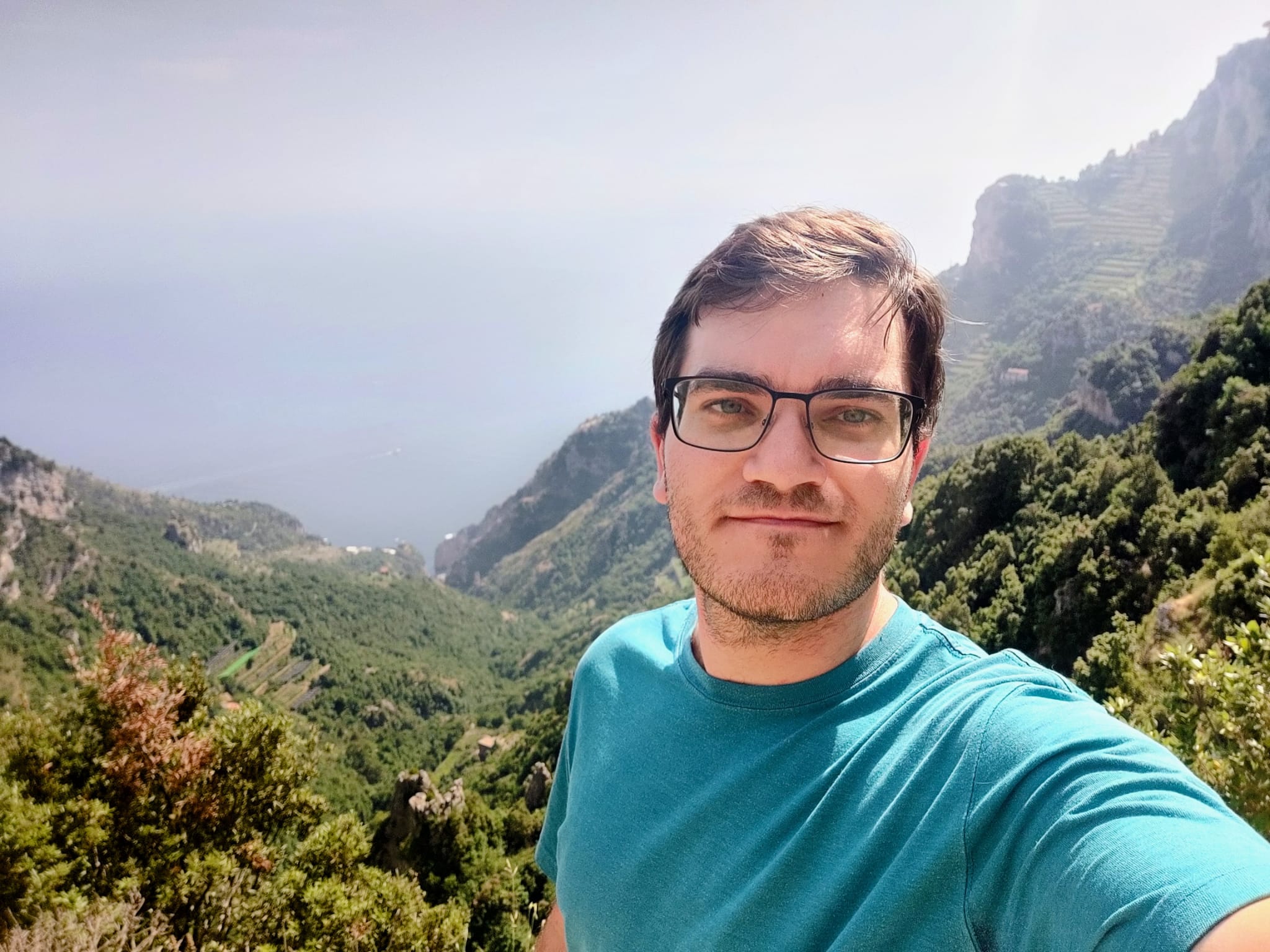
Juan Garay is a Professor in the Department of Computer Science & Engineering at Texas A&M University, affiliated with the College of Engineering. His research focuses on cryptography, information security, and distributed systems, with notable contributions to cryptographic protocols, blockchain technologies, and consensus mechanisms. He holds a leadership role in advancing theoretical and applied aspects of secure computation and network security. Research Interests: Cryptography and Information Security Secure Multiparty Computation Cryptocurrencies and Blockchain Protocols Consensus Algorithms Distributed Computing Game Theory in Cryptography Publications highlight his work on the Bitcoin Backbone Protocol, secure multiparty computation, and post-quantum cryptographic systems. He actively contributes to conferences and workshops in cryptography and distributed systems. He advises graduate students in computer science and engineering, though specific advisee names are not listed. His work is supported by grants from the National Science Foundation (NSF) and other institutions, focusing on secure protocols and distributed systems. Office: Peterson Building (PETR 429) Contact: garay@cse.tamu.edu
Tengyao Wang is a Professor in the Department of Statistics at the London School of Economics and Political Science (LSE), serving as the MSc Statistics (Financial Statistics) Programme Director. Prior to LSE, he held positions as a Lecturer at University College London and a Research Fellow at the Cantab Capital Institute for the Mathematics of Information, University of Cambridge. His research focuses on high-dimensional statistics, computational efficiency, and statistical limitations imposed by computational constraints. Education: PhD in Statistics under Prof Richard Samworth at the University of Cambridge, with earlier studies including a Part III Essay in Empirical Process Theory. Research interests include sparse signal detection, change-point analysis, dimension reduction, robust statistics, and applications in medical statistics, financial data analysis, and material discovery. Key contributions include methodologies for handling missing data, high-dimensional change-point detection algorithms, and statistical learning techniques. Publications span theoretical advancements and applied innovations, with recent work emphasizing deep learning with missing data, residual permutation tests, and semi-supervised learning via random projections. His work has been recognized with awards such as the Royal Statistical Society Research Prize (2019) and the Guy Medal in Bronze (2023). He is an Associate Editor of the Journal of the Royal Statistical Society, Series B (JRSS B), and actively contributes to open-source tools like the 'ocd' and 'MissInspect' R packages for changepoint detection and missing data analysis.
Shivani Agarwal is an Associate Professor of Computer and Information Science and (by courtesy) Statistics and Data Science at the University of Pennsylvania. Her research focuses on computational, mathematical, and statistical foundations of machine learning, including algorithm design, theory, and applications in life sciences. She holds leadership roles in initiatives like the NSF-funded Penn Institute for Foundations of Data Science (PIFODS) and the Penn Research in Machine Learning (PRiML) forum. Previously, she was a Radcliffe Fellow at Harvard, and held academic positions at MIT, Indian Institute of Science, and the University of Illinois at Urbana-Champaign. Education: PhD in Computer Science from the University of Illinois, Urbana-Champaign. Prior roles include Assistant Professor (Ramanujan Fellow) at IISc, postdoctoral lecturer at MIT, and Radcliffe Fellow at Harvard. Research interests span machine learning theory, ranking systems, bandit algorithms, noisy label learning, and interdisciplinary applications in economics, operations research, and psychology. She has organized numerous conferences and workshops, including COLT 2020 and NIPS workshops on ranking and learning. Key professional activities include leadership in Indo-US research collaborations and editorial roles for the Journal of Machine Learning Research and Harvard Data Science Review.
Vadim Lozin is a Professor of Mathematics at the University of Warwick, affiliated with the Department of Mathematics within the School of Mathematics. His research interests span graph theory, combinatorics, and discrete mathematics, focusing on areas such as clique-width, Ramsey numbers, and structural graph theory. He has held visiting positions at institutions including the Université Paris-Dauphine, EPFL, and KAUST. Lozin has received several accolades, including the Best Paper Award for 'Linear Ramsey numbers' in 2018 and a 2024 award at the International Symposium on Algorithms and Computation. His work involves collaborations with global researchers and contributions to conferences like IWOCA and WG. Lozin serves on editorial boards for journals such as Discrete Applied Mathematics and Electronic Notes in Discrete Mathematics . His research explores foundational problems in graph theory, with applications in algorithm design and complexity analysis. Lozin’s publications include studies on union-closed sets, functional graph properties, and algorithmic approaches to graph parameters. He has also contributed to books like Words and Graphs , bridging formal language theory with graph structures. His grants focus on clique-width and stability in graphs, reflecting his commitment to advancing theoretical and applied discrete mathematics.
Francisco Barillas Bedoya is an Associate Professor at the School of Banking and Finance within the UNSW Business School, University of New South Wales. His research focuses on theoretical and empirical asset pricing, particularly portfolio choice, asset pricing tests, macrofinance, and term structure of interest rates. He has published extensively in top-tier journals like the Journal of Finance and Management Science. PhD from New York University MA from University of British Columbia BSc from Trent University His recent publications analyze Sharpe ratios for model comparison, speculative behavior in bond markets, and risk premia in fixed income markets. While no formal awards are listed, his work intersects financial economics, econometrics, and computational methods. Office: Level 3, Room 333C, Ref E12 Email: f.barillas@unsw.edu.au
Ola Svensson is an Associate Professor at the School of Computer and Communication Sciences , EPFL. His research spans approximation algorithms, combinatorial optimization, computational complexity, and scheduling. He holds an ERC Consolidator Grant (2023–) and previously received an ERC Starting Grant (2014–2019) and SNF grant (2019–2023). Education: PhD in Computer Science from IDSIA, Università della Svizzera italiana (2009) M.Sc. from Uppsala University (2005) Research Focus: Svensson develops novel techniques for NP-hard problems, with emphasis on primal-dual methods, LP/SDP hierarchies, and hardness proofs. His work applies to clustering, scheduling, network design, and submodular optimization. Publications: His 15 most recent works (2018–2021) focus on learning-augmented algorithms, robust optimization, and improved approximations for clustering/TSP. Key trends include integration of ML with classical algorithms and quasi-polynomial methods for combinatorial problems. Awards: Best Paper Awards at FOCS (2011, 2017) and STOC (2018) I&C Teaching Award at EPFL Advising & Grants: He advises 6 current PhD students and graduated 8 others. Major grants include ERC Starting Grant 'OptApprox' (€1.4M) and ERC Consolidator Grant 'POTCO' (€2M). Teaching: Leads courses in Advanced Algorithms, Computational Complexity, and Approximation Algorithms. He developed pedagogical frameworks for scribe notes and project-based learning in theoretical computer science.
Yan Huang is an Associate Professor in the Department of Computer Science at Indiana University Bloomington, focusing on security and cryptography. His work bridges theoretical foundations with practical systems, emphasizing cryptographic protocols with strong security guarantees for generic computation. University: Indiana University Bloomington School: College of Arts and Sciences Department: Computer Science Academic Rank: Associate Professor His research combines theoretical computer science , program analysis , artificial intelligence , and software engineering to address real-world security problems. Key areas include secure computation , zero-knowledge proofs , and privacy-preserving technologies . Recent publications, such as Phecda (SP'25) and Dubhe (USENIX Security'23), highlight advancements in post-quantum cryptography , AES verification , and privacy-preserving deep packet inspection , reflecting his focus on scalable and practical cryptographic solutions. He has advised notable students including Changchang Ding (PhD, Computer Science) and Ruiyu Zhu (PhD, now at Facebook), and served on program committees for top conferences like ACM CCS and CRYPTO .
Mazdak Nik-Bakht is an Associate Professor at Concordia University's School of Building, Civil, and Environmental Engineering. His work bridges construction engineering with digital innovation, focusing on smart infrastructure and sustainable development. PhD, Construction Engineering & Mgmt., University of Toronto PhD, Structural Engineering, Iran University of Science & Technology MASc & BASc, Structural and Civil Engineering, Iran University of Science & Technology His research integrates Artificial Intelligence and Social Network Analysis into construction management systems. Key areas include: Smart infrastructure and urban computing Deconstruction and circular economy principles Building Information Modeling (BIM) and digital twinning Process mining in Architecture, Engineering, and Construction (AEC) industry Decision models in construction project management Semantic computing and computational linguistics applications Recent publications show a focus on BIM analytics , urban resilience , and social media's role in infrastructure planning . Papers often combine AI and network theory to solve complex construction challenges. 2015 Outstanding paper award - Built Environment Project and Asset Management journal He teaches courses on: Big Data Analytics for Smart City Infrastructure Building Information Modeling (BIM) for Construction Building Economics Project Cost Estimating
Guglielmo Scovazzi is a Professor at Duke University with appointments across multiple departments including the Department of Civil and Environmental Engineering, the Thomas Lord Department of Mechanical Engineering and Materials Science, and as Professor of Mathematics. His interdisciplinary research bridges computational mechanics, scientific computing, and engineering applications. Dr. Scovazzi earned his B.S/M.S. in aerospace engineering (summa cum laude) from Politecnico di Torino (Italy), followed by an M.S. and Ph.D. in mechanical engineering from Stanford University. Prior to joining Duke, he was a Senior Member of the Technical Staff at Sandia National Laboratories' Computer Science Research Institute. His research focuses on developing advanced numerical methods for computational mechanics, particularly finite element methods for fluid and solid mechanics. Key areas include multiphase porous media flows, computational methods for materials under extreme conditions, turbulent flow computations, and instability phenomena. His work emphasizes creating accurate computational approaches that reduce design/analysis costs for complex engineering problems involving fluid-structure interactions and transient phenomena in complex geometries. Dr. Scovazzi's most significant recent contribution is the development of the Shifted Boundary Method, an innovative computational framework that enables efficient simulations on complex geometries without requiring boundary-fitted meshes. This method has found applications in geomechanics, energy systems, and resilient infrastructure design. Kavli Fellow, National Academy of Sciences & Kavli Foundation (2018) Presidential Early Career Award for Scientists and Engineers (PECASE), White House (2017) Early Career Award, U.S. Department of Energy, Advanced Scientific Computing Research Program (2014) Dr. Scovazzi teaches multiple courses in computational mechanics including Nonlinear Finite Element Analysis and Introduction to the Finite Element Method. His research has been supported by substantial federal funding, and he actively collaborates across disciplines to address challenging problems in energy, environment, and infrastructure resilience through advanced computational methods.
Brian Hie is an Assistant Professor of Chemical Engineering at Stanford University , a Dieter Schwarz Foundation Stanford Data Science Faculty Fellow , and an Innovation Investigator at Arc Institute . He leads the Laboratory of Evolutionary Design , focusing on the intersection of biology and machine learning . His prior roles include a Stanford Science Fellow in the Stanford University School of Medicine and a Visiting Researcher at Meta AI . Education: Ph.D. , Electrical Engineering and Computer Science , Massachusetts Institute of Technology (2021) Bachelor’s Degree , Stanford University Research Interests: Brian’s work bridges machine learning and computational biology , with a focus on protein engineering , single-cell RNA sequencing , and viral evolution . His Evolutionary velocity framework predicts protein evolutionary dynamics across timescales, while his Scanorama algorithm enables efficient integration of heterogeneous single-cell datasets. He also develops structure-informed language models for antibody optimization and uncertainty-aware ML for biological discovery. Publication Trends: His recent work (2023) emphasizes structure-based inverse folding for antibody evolution, evolutionary scale modeling , and unsupervised optimization . Earlier studies (2022-2021) cover evolutionary velocity , multi-modal single-cell analysis , and viral escape prediction using natural language analogies. Scientific Awards: Stanford Science Fellow (2021) National Defense Science and Engineering Graduate Fellowship (2019) Advising: He mentors doctoral students including Brandon Ameglio , Garyk Brixi , and Chang M. Yun , with a focus on biological design and computational methods . Labs & Collaborations: His lab collaborates with Bio-X and the Institute for Human-Centered Artificial Intelligence (HAI) , and he maintains affiliations with Sarafan ChEM-H and Stanford Data Science .
Jignesh M. Patel is a Professor in the Computer Science Department at Carnegie Mellon University , focusing on Data Management , System Efficiency (e.g., Scalable Data Platforms), and Human Efficiency (e.g., LLM-Based Query Interfaces). His work bridges Database Systems , Machine Learning , and Human-Computer Interaction . Co-founder of four startups: Paradise (1997), Locomatix (2007), Quickstep (2015), and DataChat (2017). Member of SIGMOD 2025 (AE) , CIDR 2024 (Co-Chair) , and other program committees. Research Interests include efficient data analysis algorithms , LLM-based data interaction , and systems security . His group develops platforms combining scalability and user productivity . Scientific Awards include Best Paper Awards at SIGMOD and VLDB, and Fellowships from AAAS, ACM, and IEEE. He also received Teaching Awards at CMU. Professional Activities feature co-founding startups , serving on program committees , and teaching courses like Database Systems and Advanced Database Systems at CMU.
Dr. Zara Ersozlu is a Senior Lecturer in Mathematics Education within the School of Education at the University of Newcastle, Australia. With a distinguished international career spanning multiple continents, she has held academic positions at prestigious institutions including North Carolina State University (USA), Gazi and Gaziosmanpasa Universities (Turkey), National Taiwan Normal University (Taiwan), The University of Western Australia, Murdoch University, and Deakin University. Her academic journey includes tenured positions as an Associate Professor and leadership roles as Department Head and Chair in teacher education disciplines. Currently, she teaches undergraduate and postgraduate courses in mathematics education, including Effective Pedagogies in Primary Mathematics, K-6 Mathematics, K-6 Numeracy, and Digitally Supported Learning. Dr. Ersozlu earned her Doctor of Philosophy from Firat University in Turkey and her Master of Art from Sakarya University. Her extensive academic preparation is complemented by five years of practical teaching experience in public schools prior to entering academia. This blend of theoretical knowledge and practical classroom experience informs her approach to teacher education and educational research. At the broadest level, Dr. Ersozlu's research investigates solutions to real-life problems impacting people's well-being, success, and capacity to achieve. Her scholarly work spans primary and secondary mathematics education, the psychology of mathematics (including metacognition, self-regulation, and anxiety), cross-cultural educational studies, teacher education, virtual simulated learning environments, and educational assessment. She has increasingly focused on the transformative potential of AI and machine learning in education, exploring how these technologies alter teaching, learning, and research processes. Her methodological expertise encompasses both quantitative and qualitative approaches, allowing her to effectively analyze both small and large educational datasets. Analysis of Dr. Ersozlu's recent publications reveals a strong emphasis on mathematics anxiety, teacher education, and the integration of technology in learning environments. Her work demonstrates a consistent focus on practical applications of educational research to address real-world challenges in mathematics education. The interdisciplinary nature of her research connects educational psychology, technology integration, and cross-cultural perspectives, with particular attention to how these elements intersect in teacher preparation and student learning outcomes. 2023 ATEA Research Recognition Award from the Australian Teacher Education Association 2021 Fellow of the Higher Education Academy (Advance HE, UK) 2010 Fellowship Program for Postdoctoral Researchers from the Council of Higher Education of Turkey Dr. Ersozlu is deeply committed to mentoring the next generation of scholars, currently supervising four PhD students and having successfully guided ten students to completion. Her grant portfolio includes significant funding for projects such as Best Practice Guidelines for RPL in Initial Teacher Education Programs ($60,000), Exploring the Reciprocal Relationship Between Mathematics Anxiety and Mathematical Resilience ($2,599), and multiple conference travel awards. She serves as an Associate Editor for several prominent journals including the International Electronic Journal of Mathematics Education and as Editor for Interdisciplinary STEM Education. Her editorial work reflects her standing as a respected voice in mathematics education research. Dr. Ersozlu's academic leadership extends to her role in developing innovative teaching approaches that integrate virtual simulation technology and learning analytics. Her work with TeachLivE™, a mixed-reality classroom simulation platform, demonstrates her commitment to creating authentic learning experiences for teacher education students. Through these initiatives, she bridges the gap between educational theory and classroom practice, preparing future educators to effectively implement evidence-based teaching strategies in diverse learning environments.
Jee Choi is an Assistant Professor in the Department of Computer and Information Science within the College of Arts and Sciences at the University of Oregon. His research focuses on developing high-performance algorithms for big data analytics, particularly in tensor decomposition and parallel computing systems. Education: PhD in Electrical and Computer Engineering, Georgia Institute of Technology, 2015 MS in Electrical and Computer Engineering, Georgia Institute of Technology, 2004 BS in Electrical and Computer Engineering, Georgia Institute of Technology, 2000 Research Interests: Dr. Choi specializes in High Performance Computing with expertise in parallel algorithm design, performance modeling, and energy efficiency. His work targets Tensor Decomposition & Data Mining for big data, developing scalable solutions for sparse and dense tensor computations. He advocates leveraging HPC systems to transform massive datasets into societal benefits through efficient data mining techniques. Publication Trends: Choi's recent publications (2021-2025) demonstrate consistent innovation in tensor decomposition methodologies, with increasing focus on adaptive storage (Alto), streaming data factorization, and energy-aware autotuning. His work spans GPU clusters, distributed systems, and emerging architectures, maintaining strong connections to real-world big data challenges while advancing theoretical algorithm design. Professional Background: After completing his PhD under Richard Vuduc at Georgia Tech (notable for SpMV GPU autotuning and Energy Roofline Model), Choi conducted DoD-funded research on tensor decomposition at IBM Watson Research Center (2015-2018) before joining the University of Oregon faculty.
Gary King is the Albert J. Weatherhead III University Professor at Harvard University and Director of the Institute for Quantitative Social Science. He is based in the Department of Government within Harvard's Faculty of Arts and Sciences. One of only 22 University Professors at Harvard, this represents the institution's most distinguished faculty position. King received his B.A. from SUNY New Paltz in 1980 and his Ph.D. from the University of Wisconsin-Madison in 1984. His academic journey has led him to become one of the most influential scholars in political methodology and quantitative social science. Professor King's research spans numerous areas of methodological innovation in the social sciences. His work focuses on developing and applying empirical methods across various domains. Key research interests include: Ecological Inference - developing methods to infer individual behavior from group-level data Automated Text Analysis - creating techniques for extracting knowledge from massive text collections Causal Inference - methods for detecting and reducing model dependence in causal effect estimation Missing Data and Measurement Error - statistical approaches to handle incomplete or imperfect data Survey Research - developing methods for more accurate cross-cultural survey comparisons Unifying Statistical Analysis - integrating diverse methodological approaches into coherent frameworks King's recent publications demonstrate a continued focus on methodological innovation with practical applications. His work spans political science, public health, and data science, with particular emphasis on privacy-preserving data analysis, maternal health metrics, survey methodology, and media effects. A notable trend is the increasing interdisciplinary nature of his research, bridging political methodology with public health, computer science, and demography. His work on census data privacy, maternal mortality disparities, and media influence represents cutting-edge applications of social science methodology to critical societal issues. His scientific achievements have been recognized with numerous prestigious awards: Fellow of the National Academy of Sciences (2010) Fellow of the American Statistical Association (2009) Fellow of the American Academy of Arts and Sciences (1998) Guggenheim Foundation Fellow (1994-1995) Career Achievement Award (2010) Warren Miller Prize (2008) Multiple awards for research software and methodology King has mentored numerous students and postdocs, many of whom now hold faculty positions at leading universities. His research has been supported by major funding agencies including the National Science Foundation, Centers for Disease Control and Prevention, World Health Organization, and National Institute of Aging. He has collaborated with over seventy scholars on research publications and served on numerous editorial boards and professional organization councils. His work on the Mexican universal health insurance program represents one of the largest randomized health policy experiments to date, demonstrating his commitment to rigorous evaluation of real-world policy interventions. As Director of the Institute for Quantitative Social Science, King leads a vibrant research community focused on methodological innovation. His work has practical applications in diverse areas including legislative redistricting (used by the U.S. Supreme Court), health policy evaluation (including the largest randomized health policy experiment to date in Mexico), Chinese censorship analysis (revealing government fabrication of 450 million social media comments annually), and automated text analysis (through Crimson Hexagon, a company he co-founded).
Gabriele Farina is an Assistant Professor at MIT in the Department of Electrical Engineering and Computer Science (EECS) and the Laboratory for Information and Decision Systems (LIDS), with additional affiliations at the Operations Research Center (ORC). Holding the X-Window Consortium Career Development Chair, his research focuses on theoretical and algorithmic foundations for learning and computational decision-making under imperfect information, integrating game theory, machine learning, optimization, and statistics. He previously served as a Research Scientist at Meta's Fundamental AI Research (FAIR) group, where he contributed to Cicero, a human-level AI agent combining strategic reasoning and natural language. Ph.D. in Computer Science from Carnegie Mellon University (advisor: Tuomas Sandholm) Facebook Fellowship (2019-2020) in Economics and Computation Recipient of multiple awards including ACM SIGecom dissertation award, NSF CAREER, and AI2050 Early Career Fellow His research spans four key areas: (1) No-Regret Learning Dynamics in extensive-form games; (2) Correlation and Mediated Equilibria in sequential decision-making; (3) Team Games and Team Max-Min Equilibria; and (4) Human Modeling and Equilibrium Perfection. His work addresses challenges in scalable equilibrium computation, stability of learning algorithms, and robustness to mistakes in multi-agent systems. Recent publications highlight advancements in polynomial-time equilibrium computation, cautious optimism algorithms, and connections between regret minimization and mirror descent. These contributions appear in top venues like COLT, NeurIPS, ICML, and AAAI, with keywords spanning game theory, optimization, and machine learning. NSF CAREER award AI2050 Early Career Fellow Facebook Fellowship ACM SIGecom dissertation award GameSec 2024 best paper award ICLR 2023 outstanding paper honorable mention His research group at MIT collaborates on projects involving strategic reasoning, human-level AI agents, and equilibrium refinements, with applications to games like Diplomacy and poker. Current efforts include developing faster algorithms for correlated equilibria and exploring connections between machine learning and economic theory.