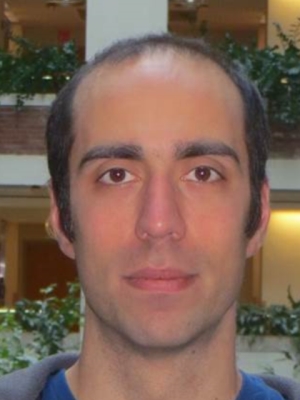
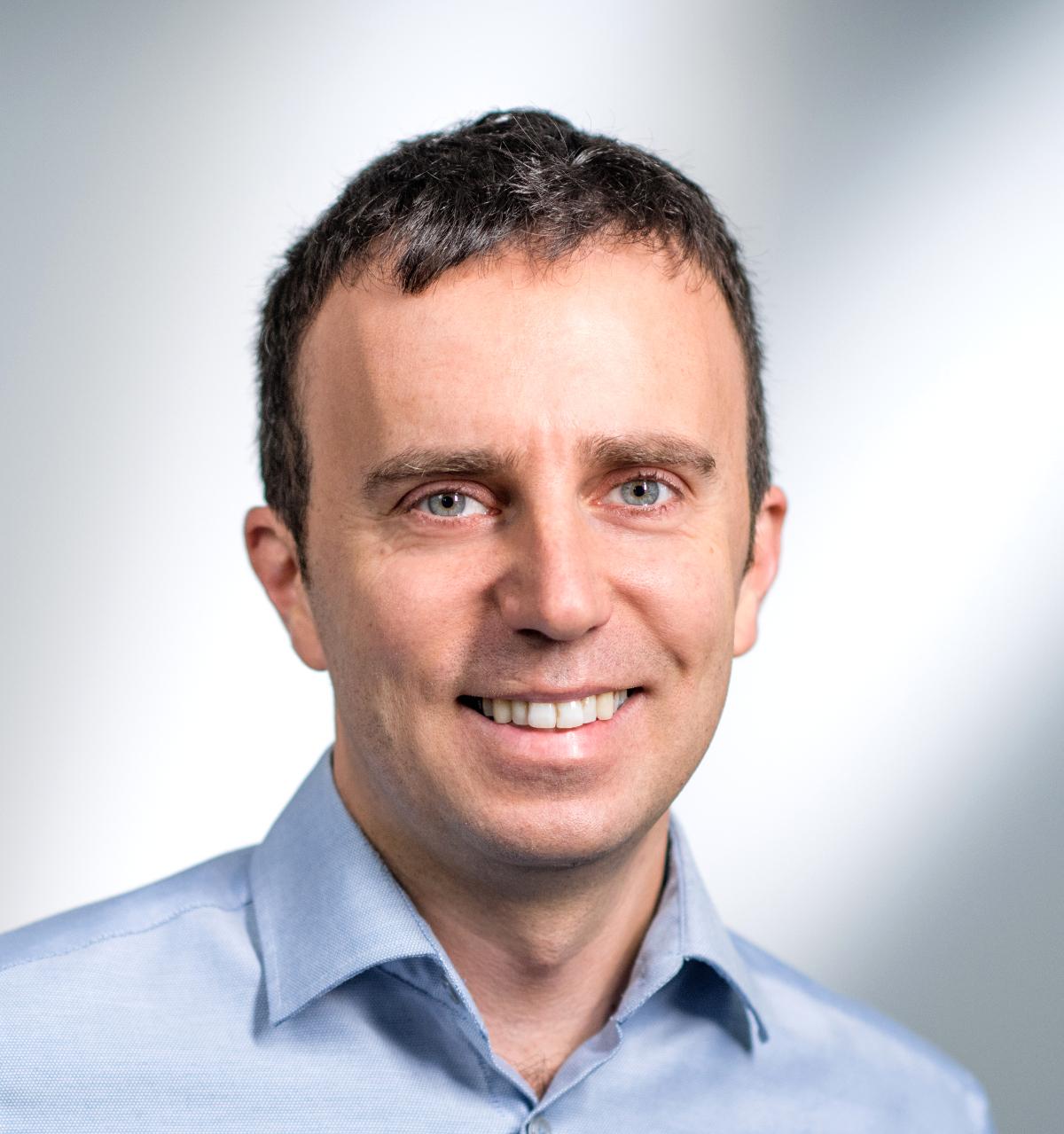
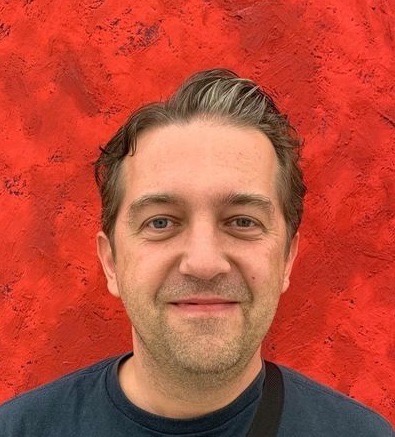
Michal Friedman is an Assistant Professor at the Department of Computer Science, ETH Zurich, specializing in systems, concurrent computing, programming languages, and sustainable computing. He leads research on designing system fundamentals across software and hardware to enhance performance and efficiency in next-generation computing platforms. Prior to ETH, he completed a postdoc at the same institution and earned his Ph.D. from the Technion under Prof. Erez Petrank, focusing on concurrent data structures for non-volatile memories. Education: Ph.D. in Computer Science (Technion, advised by Erez Petrank), BSc Summa Cum Laude (Technion). Awards include the Eric and Wendy Schmidt Postdoctoral Award (2022), Blavatnik Prize (2021), and Azrieli Fellowship (2018–2021). His work spans persistent memory systems, concurrent algorithms, and energy-efficient computing. Key contributions include PCcheck (ML checkpointing), Dirigent (serverless orchestration), and foundational research on non-volatile memory correctness conditions. He has authored over 15 papers in top conferences like ASPLOS, SOSP, and VLDB, and serves on program committees for systems and programming languages venues.
Prof. Niao He is an Associate Professor in the Department of Computer Science at ETH Zürich. His research focuses on optimization theory, reinforcement learning, stochastic systems, and their applications in machine learning and multi-agent systems. He holds an academic position at one of the world's leading technical universities, contributing to both theoretical advancements and practical algorithmic solutions. His research interests span optimization theory (e.g., convex/non-convex optimization, stochastic optimization), reinforcement learning (policy gradient methods, multi-agent systems), and statistical learning (risk-averse methods, entropy regularization). He has also explored applications in data science, network revenue management, and deep reinforcement learning for complex systems. Recent work emphasizes algorithmic reproducibility, robustness under model uncertainty, and efficient methods for large-scale problems. Notable contributions include novel approaches to minimax optimization, mean-field games, and adaptive learning frameworks. His articles consistently address theoretical guarantees while maintaining practical relevance for real-world computational challenges.
Prof. Dr. Johannes Lengler is a Lecturer at the Department of Computer Science at ETH Zürich. He focuses on theoretical computer science with specialties in evolutionary algorithms, algorithm design, and network analysis. His research explores the theoretical foundations of optimization heuristics, random graph models, and stochastic processes in computational systems. Lengler has contributed to understanding population diversity in evolutionary algorithms, network connectivity in scale-free models, and algorithmic performance in dynamic environments. His work bridges theoretical insights with practical applications in manufacturing and AI safety. Key research areas include evolutionary computation theory, algorithmic analysis of complex networks, and optimization under uncertainty. His studies often address fundamental questions in computational complexity, such as the efficiency of self-adjusting algorithms and the challenges posed by multimodal landscapes. Lengler frequently collaborates on interdisciplinary projects, applying theoretical methods to real-world problems like laser metal deposition and AI ethics. Publications highlight his expertise in crossover mechanisms, graph traversal algorithms, and rumor spreading dynamics. He has explored the interplay between population diversity and algorithmic efficiency, demonstrating how genetic drift can accelerate optimization processes. His work on expander graphs and scale-free networks contributes to network science, analyzing average distances and connectivity thresholds in complex systems.
Prof. Martin O. Saar is a Full Professor at ETH Zürich's Department of Earth and Planetary Sciences, leading the Geothermal Energy and Geofluids research group, funded by the Werner Siemens Foundation. His work focuses on geophysical fluid dynamics, subsurface multiphase fluid processes, and geothermal energy innovation. Key research areas include CO2-Plume Geothermal (CPG) systems, numerical modeling of geodynamic processes, and CO2 storage integration. His research group develops advanced numerical codes like I2(EL)VIS and I3(EL)VIS for simulating tectonic and planetary processes, incorporating fluid-rock interactions, melt transport, and seismic dynamics. Recent projects address the techno-economic feasibility of CPG systems, plasma-pulse drilling (PPGD), and subsurface energy utilization. Notable contributions include advancing geothermal heat pump systems, optimizing CO2 storage-geothermal energy co-production, and assessing geothermal potential in regions like the Ethiopian Rift and Switzerland. His work bridges fundamental geoscience with applied energy solutions, emphasizing sustainability and climate mitigation. Current initiatives include the BedrettoLab underground research facility, exploring subsurface processes, and policy briefs for fossil-fuel independence in Switzerland. His research portfolio reflects a commitment to transformative geothermal and carbon management technologies.
Prof. Ender Konukoglu is an Associate Professor at the Department of Information Technology and Electrical Engineering at ETH Zürich, leading the Computer Vision Laboratory. He holds a PhD from the University of Nice Sophia Antipolis (2009), following B.S. and M.S. degrees from Bogazici University. His postdoctoral work included roles at Microsoft Research (2009–2012) and Harvard Medical School (2012–2016), where he contributed to computational neuroimaging and radiology. His research focuses on biomedical image computing, with emphasis on medical image segmentation, computer vision in surgery, and deep learning applications in healthcare. Key contributions include real-time anatomical guidance systems, multimodal image analysis, and predictive models for clinical outcomes. His work spans 3D reconstruction, radiomics, and domain adaptation in medical imaging. His research interests include leveraging computer vision and deep learning for medical diagnostics, surgical assistance, and quantitative imaging. Notable projects include the AENEAS initiative for endoscopic neurosurgery guidance and the development of benchmark datasets for cross-modality harmonization. He has published extensively on topics like camouflaged object segmentation, Gaussian splatting for scene understanding, and predictive analytics for cardiovascular procedures. Prof. Konukoglu’s awards and recognitions are not explicitly listed in the provided text. His team’s work on synthetic CT generation for radiotherapy and the Tera-MIND brain simulation project highlights his interdisciplinary impact. Ongoing efforts focus on robust medical image segmentation, domain generalization, and real-time surgical navigation systems.
Francesco Corman is an Associate Professor at the Department of Civil, Environmental and Geomatic Engineering at ETH Zürich, where he also serves as the Head of the Institute for Transport Planning and Systems (IVT). His academic career spans from his doctoral studies at Delft University of Technology to his current position at one of Europe's leading technical universities. He has established himself as a leading researcher in transport systems with a focus on railway operations and optimization. His educational background includes: Doctoral Degree (Ph.D.) from Delft University of Technology (2007-2010) Master's Degree in Management & Automation Engineering from Roma TRE University, Italy (2004-2006) Bachelor's Degree in Computer Science Engineering from Roma TRE University, Italy (2001-2004) Professor Corman's research focuses on analytics, optimization and control in transport systems, with particular emphasis on public transport, railway networks, and logistics systems. His work bridges the gap between theoretical optimization models and practical applications in real-world transportation networks. He has developed innovative approaches to railway traffic management, public transport operations, and freight logistics that address contemporary challenges in transportation systems. His recent publications demonstrate a strong trend toward data-driven approaches in transportation, with increasing integration of machine learning techniques, particularly deep learning and Bayesian networks, into traditional transportation optimization problems. There's also a growing emphasis on sustainability considerations in transportation systems, as evidenced by research on environmental impacts of railway infrastructure. His scientific contributions include: Development of advanced models for railway traffic management and optimization Innovative approaches to public transport disruption analysis and recovery Integration of on-board monitoring data for railway infrastructure management Probabilistic modeling of transportation operations under uncertainty Professor Corman leads several significant research projects including ESTRA (Efficient Safe Train Dynamics), LeRaBe (Learning railways for better schedules), NCCR (Dynamic stochastic learning of train dynamics as enabler to highly automated train operation), RaDiCa (Modeling the Impact of Digitalization on Railway Capacity), and UrbanEcho (Envisioning tomorrow - A digital twin technology for sustainable urban planning in data poor regions). He teaches multiple courses at ETH Zürich including Public Transport Design and Operations, Public Transport and Railways, Logistics and Freight Transportation, and contributes to doctoral seminars on Data Science and Machine Learning in Civil Engineering. His teaching reflects his research expertise, bridging theoretical concepts with practical applications in transportation systems.
Georg Kocur is a Researcher at the Institute of General Mechanics, RWTH Aachen University. He holds a Diploma in Civil Engineering from Bergische Universität Wuppertal and a Ph.D. from ETH Zurich (IBK), focusing on non-destructive testing of structural concrete. His research emphasizes experimental mechanics, elastic wave propagation, and acoustic emission localization in complex materials. Previously, he served as a post-doctoral researcher at MIT’s Laboratory for Infrastructure Science and Sustainability and worked as a development engineer at Leviat (HALFEN). Key research interests include structural health monitoring, wave propagation modeling, and the application of machine learning in acoustic sensing. His work bridges civil engineering, materials science, and computational methods to enhance infrastructure safety and reliability. Publications highlight advancements in acoustic source localization, time reverse modeling, and numerical simulations for defect mapping in concrete and pipework. His contributions address challenges in sensor array optimization, signal processing, and algorithmic development for industrial and academic applications. Kocur’s career combines academic research with industry innovation, focusing on practical solutions for structural analysis and non-destructive testing in civil infrastructure.
Alireza Karimi is a Full Professor at École Polytechnique Fédérale de Lausanne (EPFL) within the School of Engineering, Institute of Mechanical Engineering. He leads the Data-Driven Modelling and Control (DDMAC) research group and serves on the Doctoral Program Commission for Robotics, Control, and Intelligent Systems. His educational background includes: B.Sc. and M.Sc. in Electrical Engineering from Amir Kabir University (Tehran Polytechnic), 1987 and 1990 DEA and Ph.D. in Automatic Control from Institut National Polytechnique de Grenoble (INPG), 1994 and 1997 Karimi's research focuses on data-driven controller tuning and robust control methodologies, with significant applications in mechatronic systems and electrical grids. His work bridges theoretical control concepts with practical implementations in power systems, robotics, and adaptive optics. Recent publications demonstrate strong emphasis on frequency-domain methods, Koopman operator applications, and robustness against nonlinearities. Analysis of his 15 most recent publications (2023-2024) reveals dominant research themes: data-driven frequency-domain control (appearing in 70% of works), power system applications (40%), and advanced robotics/optics implementations (30%). His group consistently develops methods for fixed-structure controllers validated through industrial case studies. Regarding academic leadership, Karimi supervises 6 active PhD students while having directed 11 completed theses. His teaching portfolio includes courses in Automatic Control, System Identification, and Advanced Control Systems. He maintains the DDMAC laboratory focused on experimental validation of control algorithms, with notable projects in adaptive optics for astronomy, grid-forming inverters for renewable integration, and precision motion control systems.
Marianne Liebi serves as a Tenure Track Assistant Professor at the Swiss Federal Institute of Technology Lausanne (EPFL), affiliated with the School of Engineering (STI), Institute of Materials (IMX), and specifically the Laboratory for X-ray Materials Characterization (CAM-X). She also holds a teaching position within the SMX-ENS division. Her research focuses on advanced X-ray characterization techniques applied to materials science and biological systems. Her primary research interests include X-ray tensor tomography, small-angle X-ray scattering, crystallography, and the structural analysis of biological materials such as bones, tendons, and biomaterials. She investigates hierarchical structures across multiple length scales—from nanoscale to macroscopic—with applications in biomedicine, sustainable polymers, and energy storage materials. Her work often integrates computational methods with experimental synchrotron-based techniques. Analysis of her recent publications reveals a strong emphasis on developing and applying advanced X-ray imaging methodologies to solve complex problems in materials science and biology. Key themes include structural characterization of biological tissues (e.g., narwhal tusks, bone healing, breast cancer metastasis), analysis of polymer nanocomposites, and in-situ studies of material behavior under mechanical or chemical stress. Her research bridges physics, engineering, and life sciences through innovative multi-modal imaging approaches. Liebi actively supervises six doctoral students and teaches courses including Structure of Materials (covering crystallography, amorphous materials, and characterization techniques) and Material Science at Large Scale Facilities (focusing on X-ray and neutron research methods). Her laboratory (CAM-X) is located at MX F 310, Station 12, 1015 Lausanne, and she utilizes major research facilities including synchrotron beamlines for her experimental work.
François Maréchal is a Professor at the Industrial Process and Energy Systems Engineering Group (IPESE) within the School of Engineering (STI) at the Swiss Federal Institute of Technology in Lausanne (EPFL). His research focuses on computer-aided process integration, exergy analysis, and thermo-economic optimization of industrial and energy systems, with particular emphasis on renewable energy integration and waste heat valorization. Education : Chemical Engineer (1986) and PhD in Applied Sciences (1995) from the University of Liège, Belgium. Professional Affiliations : 2012–Present: Professor, EPFL 2005–2012: Research Teaching Master, EPFL 1995–2005: First Assistant, EPFL 1986–1995: Researcher, University of Liège Maréchal’s research addresses the integration of renewable energy resources into industrial processes and energy conversion systems, aiming to bridge thermodynamics with optimization techniques for sustainable development. He leads projects on decarbonization of industries like aluminum production, biorefineries, and pulp mills. The 15 most recent articles highlight his work on: system design optimization for aluminum decarbonization, district heating network modeling, biorefinery integration, machine learning applications in energy systems, and techno-economic assessments of hydrogen networks. Keywords span Environmental Engineering , Industrial Decarbonization , and Renewable Energy Systems . Teaching includes advanced courses in Process Integration, Exergy Analysis, and Energy Audits for Masters and postgraduate programs at EPFL. His pedagogical approach emphasizes computer-aided project-based learning to connect teaching with research. Key Collaborations involve the EDEY Doctoral Program and the Energy Domain at EPFL , with contributions to energy system modeling tools like EnergyScope and ROSMOSE.
Marco Mattavelli is a Professor at the École Polytechnique Fédérale de Lausanne (EPFL), affiliated with the School of Engineering (STI) and the Microsystems Engineering Laboratory (MM). His research focuses on data compression, hardware design for embedded systems, biomedical electronics, and blockchain/metaverse applications. He leads the GRAMM lab and has contributed to standards like MPEG-G for genomic data. His work spans FPGA-based systems, signal processing, and implantable medical devices. Education and affiliations: EPFL faculty since at least 2000, with roles in teaching and research. Collaborations include MPEG standards development, multidisciplinary projects in genomics and biomedical engineering. Research interests emphasize interdisciplinary innovation: genomic data compression, high-performance embedded systems, and leveraging blockchain for digital assets. His lab develops cutting-edge solutions for medical devices and energy-efficient electronics. Publications highlight contributions to neural clustering algorithms, genomic compression, and metaverse data analysis. Over 200 publications in top venues like IEEE Transactions and conferences like DCC, ICASSP, and BioCAS. Grants and labs: Active in securing research funding for projects in biomedical sensors, heterogeneous computing, and genomic standards. The GRAMM lab is central to his research activities.
Mario Paolone is a Full Professor at the Swiss Federal Institute of Technology Lausanne (EPFL) , leading the Distributed Electrical Systems Laboratory (DESL) within the School of Engineering (STI). His work focuses on smart grid technologies, power system dynamics, and renewable energy integration. Chair of DESL Teaching roles in Electrical and Electronic Engineering PhD Program Committee Member, Doctoral Program Energy EPFL Academic Strategic Committee Member His research spans real-time monitoring , optimal grid operation , and advanced protection techniques for power systems. Key contributions include PMU-based situational awareness and convex optimization methods for Active Distribution Networks. Recent work explores hybrid AC/DC grids , linear induction motors for transportation, and machine learning applications in energy systems. Notable scientific awards include: IEEE Fellow (2022) Richard B. Schulz Best Paper Awards (2017, 2018, 2020) IEEE EMC Technical Achievement Award (2013) He has supervised numerous PhD theses on grid-aware control , synchrophasor technologies , and renewable energy systems , with research sponsored by the Swiss National Science Foundation , Swiss Electric Research , and the European Union .
Jürg Alexander Schiffmann is an Associate Professor at École Polytechnique Fédérale de Lausanne (EPFL), leading the Laboratory for Applied Mechanical Design (LAMD). His work focuses on gas-lubricated bearings, small-scale turbomachinery, and automated design methodologies for energy systems. Academic Affiliation: EPFL School of Engineering Key Roles: Teaching, PhD program committee member (Energy & Robotics), Lab Director Research Interests His research bridges mechanical design optimization and small-scale energy systems , with a focus on gas bearings for turbocompressors, Organic Rankine Cycles for waste heat recovery, and herringbone grooved journal bearings . He pioneers AI-driven tools like DARTS-NETGAB for real-time turbomachinery simulation and surrogate modeling for robust design. Recent Publications span 2025–2023, emphasizing neural networks in optimization, experimental validation of gas bearings, and thermal management in high-speed turbomachinery. Trends highlight cross-disciplinary integration of AI and energy systems. Scientific Awards SwissElectric Research Award (PhD work) Advising includes supervising 25+ PhD students (e.g., Abramishvili Anna, Massoudi Soheyl) on topics like scroll expanders , rotordynamics , and haptics in automated driving . His grants involve collaborations with MIT, CERN, and industry partners like Fischer Engineering Solutions.
Thorsten Hens is a Swiss Finance Institute Professor of Financial Economics at the University of Zurich and Adjunct Professor at University of Lucerne and the Norwegian School of Economics. He holds a Deputy Head role in the Department of Finance at the University of Zurich. His research focuses on Behavioral Finance, Evolutionary Finance, Fintech, Blockchain, and Sustainable Investing. He has authored over 80 journal articles and co-founded companies like Behavioral Finance Solutions and the UZH Blockchain Center. His teaching includes courses on Portfolio Management, Asset Management, and Economic Foundations for Finance. Education: Studied at Universities of Bonn and Paris, previously held professorships at Bielefeld University and taught at Stanford University. Research interests emphasize evolutionary models applied to asset pricing, behavioral heterogeneity in markets, and sustainable investing frameworks. He advises pension funds, banks, and insurance companies, and frequently speaks at practitioner conferences. Publications span experimental finance, evolutionary portfolio strategies, and behavioral decision-making. His work bridges theoretical finance with practical applications in wealth management and financial innovation. Professional activities include roles as President of the Pension Fund 'Rentenfabrik' and advisory positions in regulatory frameworks.
Prof. Marc Chesney is a Professor of Mathematical Finance at the University of Zurich’s Department of Banking and Finance, within the Faculty of Economics. He holds leadership roles including Chair of the Center of Competence for Sustainable Finance and is affiliated with the Center for Ethics. His research focuses on financial crises, systemic risk, market manipulation, and the intersection of finance with global warming and sustainability. Chesney has authored numerous books and articles, including works on sustainable finance and critiques of the financial sector’s systemic risks. He holds a Habilitation from Panthéon-Sorbonne University and a PhD from the University of Geneva. His teaching covers topics like real options, financial ethics, and environmental finance. Notable awards include the Latsis Prize (1991) and the Chevalier dans l’ordre des Palmes académiques (2001). Chesney has advised numerous theses and contributes to policy discussions on financial reform and sustainability.