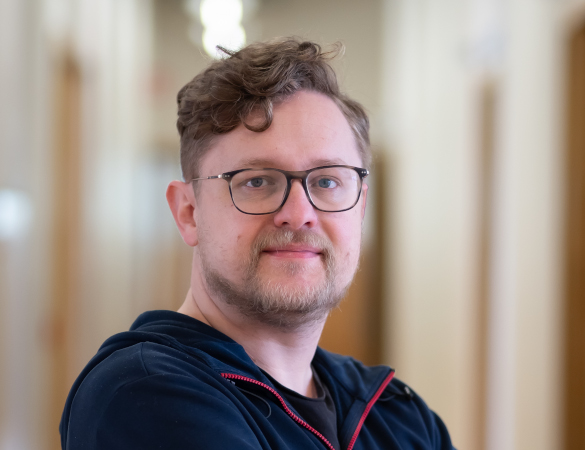
Tom Francart is a Professor at the Department of Neuroscience, Faculty of Medicine, KU Leuven. He leads research in auditory attention, EEG decoding, and speech processing, with affiliations to iSi Health, LBI (KU Leuven Brain Institute), and Leuven.AI. His research focuses on: Neural decoding of auditory attention using EEG Objective measures for aphasia and hearing impairment Brain-computer interfaces for hearing aids Audiovisual integration in speech perception Machine learning applications in auditory neuroscience Recent publications analyze neural tracking of speech in aphasia, transformer-based EEG decoding, and audiovisual context integration. He supervises projects on cochlear implants, attention decoding algorithms, and post-stroke recovery.
Herman Bruyninckx is a Professor at the Faculty of Engineering Sciences , KU Leuven , where he also serves as Vice-Chair of the Department of Mechanical Engineering and head of the Robotics, Automation and Mechatronics (RAM) subdivision. His research focuses on integrating formally represented domain knowledge into robotic systems for real-time, self-explanatory, and certifiable control. He advocates for open standards and software engineering practices in robotics, with a career-long emphasis on knowledge-driven robotic systems over data-driven approaches.
Maxime Cordy is a researcher in Computer Science with a focus on Software Engineering and Formal Verification. He holds a PhD in Computer Science from the University of Namur, earned in 2014, and has engaged in visiting research at the University of Luxembourg (2017-2018). He also co-founded SkalUp as an R&D manager from 2015 to 2016. Education: Doctor of Science (University of Namur, 2014), Master in Computer Science (University of Namur, 2011) His research spans Software Product Lines , Model Checking , and Variability-Intensive Systems , emphasizing formal verification and automated analysis. He has contributed to over 53 research outputs with 949 citations and an h-index of 17. Recent publications include advancements in Featured Transition Systems , Mutation-Based Model Checking , and Machine Learning for Software Quality . He co-organized workshops like MaLTeSQuE 2019 and the Machine Learning and Software Engineering in Symbiosis workshop (2018). Scientific Awards: VAMOS 2024 Ten-Year Most Influential Paper Award (co-recipient) Maxime has collaborated extensively with institutions including the University of Luxembourg and co-authored works with leading researchers in formal methods and software engineering.
Daniel Peralta Cámara is a Postdoctoral Researcher at Ghent University's Faculty of Engineering and Architecture, Department of Information Technology (EA05). His work spans Machine Learning , Bioinformatics , High Performance Computing , and Biometrics , with a focus on Single-Cell Data Analysis , Image Cytometry , and Missing Value Handling . Affiliation: Ghent University Academic Rank: Researcher Research Disciplines: Data Mining, Parallel Computing, Bioinformatics, High Performance Computing His research designs scalable machine learning frameworks for biological and engineering applications, including SCIP for morphological profiling and MSDeepAMR for antimicrobial resistance prediction. He explores advanced techniques like Polar Encoding for missing data and Fuzzy Rough Sets for classification uncertainty, contributing to one-class classification and novelty detection through Python libraries like Fuzzy-rough-learn 0.2 . Key Trends: Hybrid CNN-LSTM for sports analytics Time-series feature selection in healthcare UWB/IMU wearable integration for animal monitoring Dr. Peralta supervises PhD candidates like Maxim Lippeveld (2025) and Oliver Urs Lenz (2023). His collaborations span Ghent University researchers including Eli De Poorter , Chris Cornelis , and Yvan Saeys . Applications: Badminton strategy analysis Goat activity classification White blood cell identification
Ali Mohammed Mohammed Al-Zawqari is a postdoctoral researcher at Vrije Universiteit Brussel (Brussels, Belgium). His research focuses on interdisciplinary areas combining natural language processing (NLP) with engineering applications, particularly in Arabic debate analysis and photonics design. He has collaborated internationally on projects involving machine learning models for argumentation mining and optimization algorithms for antenna systems. Key research interests include computational linguistics for Arabic discourse analysis, generative photonics modeling, and stochastic optimization in microwave engineering. His work bridges computational methods with real-world applications in both humanities and technical domains. Recent publications (2023-2025) highlight advancements in Arabic debate corpus development, neural argumentation classification, and automated antenna design optimization. He actively participates in academic conferences, presenting at events like ICALP 2023/2024 and the International Conference on Microelectronics (ICM 2024). Al-Zawqari holds an ORCID identifier (0000-0002-6649-7705) and has an h-index of 98 with over 500 citations. His research spans collaborations across multiple countries and institutions, reflecting a global approach to interdisciplinary challenges.
Pietro D'Antuono is a postdoctoral researcher affiliated with the Applied Mechanics Acoustics & Vibration Research Group. His research focuses on fatigue analysis, structural health monitoring, and offshore wind turbine systems. He has contributed to advancing methodologies for data-driven lifetime assessment of support structures and foundations, integrating physics-informed machine learning and probabilistic modeling. His work bridges mechanical engineering, civil engineering, and renewable energy systems. Research Interests: Offshore wind turbine structural dynamics Fatigue and damage mechanics Data-driven predictive models Structural health monitoring Materials degradation analysis Key Contributions: Developed the py-Fatigue open-source toolbox for fatigue assessment. Authored 24+ peer-reviewed publications and datasets on structural reliability and offshore energy systems. Awards: Best Paper Award (2nd place, ex-aequo) at an international conference (2022). Professional Activities: Presenter at conferences on topics like fatigue modeling, data-driven methodologies, and structural health monitoring. Contributed to international research collaborations in Europe and beyond.
Malaika Brengman serves as a Senior Lecturer and postdoctoral researcher at the Free University of Brussels, specializing in consumer behavior within retail contexts. Her academic work bridges Communication Sciences, Business Studies, and Media Innovation through interdisciplinary research on digital retail environments. Her research focuses on consumer decision-making processes in physical and virtual retail spaces, with particular expertise in trust formation, digital signage effectiveness, and the psychological impact of emerging technologies. Key interests include: How virtual worlds influence retail appeal and consumer threat perception The relationship between store environment design and initial trust development Implicit measurement techniques for assessing service experiences Consumer responses to AI-driven personalization in retail settings Analysis of her recent publications reveals a strong emphasis on augmented reality applications, vaccine attitude segmentation, and social media addiction pathways, demonstrating methodological diversity across behavioral experiments and large-scale consumer surveys. Her scientific contributions have been recognized through multiple awards including the Best Conference Paper Award (2010), Best Extended Abstract Award (2020), and a Highly Commended Paper distinction (2016). These accolades highlight her impact in retail technology and consumer psychology research. Brengman actively supervises doctoral candidates and serves on PhD committees, with documented supervision of at least 153 academic works. She frequently engages with media as an expert on consumer finance topics, particularly regarding energy pricing impacts and savings behaviors during economic uncertainty. Her current projects include Brubotics (human-centered robotics) and SHALGO (algorithmic systems research). She maintains significant external engagement through advisory roles in consumer protection initiatives and regular media commentary on retail trends and consumer behavior patterns.
Roel Henckaerts is a Research Fellow at the Insurance Research Group, KU Leuven. His work centers on integrating advanced computational methods with actuarial science to optimize insurance pricing models. Research Focus: Henckaerts specializes in machine learning applications for insurance, including telematics-based dynamic pricing, interpretable AI for regulated industries, and data-driven risk assessment. His methodologies emphasize neural networks, tree-based models, and transparent surrogate systems to balance accuracy with regulatory compliance. Publication Trends: Recent articles (2019–2025) demonstrate a shift toward neural networks and model interpretability, while earlier work (2016–2018) established foundations in tree-based methods and risk factor engineering. Thematic evolution shows consistent focus on bridging machine learning scalability with actuarial rigor. Affiliations: As part of KU Leuven's Insurance Research Group, Henckaerts collaborates on industry-facing projects, though specific lab/team structures are undisclosed.
Prof. Dieter De Witte serves as a Professor at Ghent University, dedicating 50% of his time to the Internet Technology and Data Science Lab (IDLab) while simultaneously contributing 50% to the Royal Museums of Fine Arts Belgium (RMFAB) in Brussels through a FED-tWIN mandate from Belspo. At RMFAB, he spearheads the strategic overhaul of digital infrastructure toward FAIR-compliant and data-driven systems, while at Ghent University he collaborates with Prof. Steven Verstockt on applied AI projects across heritage, mental healthcare, and education domains. His academic foundation includes a Master's in Engineering Physics from Ghent University (2008) followed by doctoral research on Big Data technologies and FAIR data for life sciences. Prior to returning to academia in 2021, he gained industry experience as an AI consultant and team lead at Telenet and Ordina. De Witte's research centers on AI-driven transformation of cultural heritage through FAIR data publication , collection enrichment , and intuitive querying interfaces . His technical expertise spans multimodal algorithms, image segmentation, pose estimation, large language models (LLMs), and semantic technologies including SPARQL and IIIF. Current projects focus on human-in-the-loop AI systems that combine diverse AI building blocks for practical heritage applications. Analysis of his 15 most recent publications reveals a clear trajectory from early bioinformatics work (2007-2018) on genomic motif discovery and life sciences data infrastructure toward contemporary cultural heritage applications (2023-2024). Recent outputs demonstrate innovative fusion of pose estimation, linked data frameworks, and multimodal AI for museum contexts, highlighting increasing specialization in AI enrichment of digital collections while maintaining core expertise in FAIR data principles. His FED-tWIN grant enables critical knowledge transfer between academic research and cultural heritage institutions, supporting development of next-generation digital infrastructure at RMFAB. Current projects involve creating AI tools for intuitive collection exploration and systematic enrichment of heritage assets through advanced computational methods. De Witte operates within Ghent University's Internet Technology and Data Science Lab (IDLab), participating in interdisciplinary teams developing applied AI solutions. His work bridges technical innovation with practical implementation in cultural institutions, focusing on sustainable, interoperable systems that enhance public access to digital heritage collections through cutting-edge AI interaction paradigms.
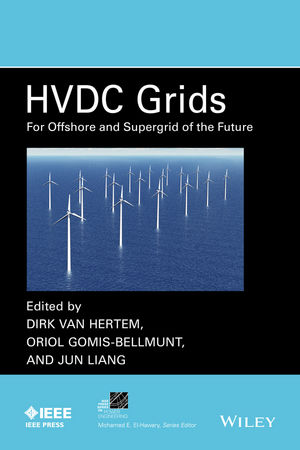
Professor Dirk Van Hertem is a faculty member at KU Leuven, Belgium, where he leads the Energy Transmission Competence Hub (ETCH) within the ELECTA division. He earned his M.Eng. (2001) from KHK Geel, M.Sc. (2003) and PhD (2009) from KU Leuven, and held a postdoctoral position at KTH Royal Institute of Technology (2010). His research focuses on power system planning, operation, and control, particularly for future transmission systems involving HVDC grids, offshore energy infrastructure, and supergrid concepts. Key research areas include: HVDC grid protection Underground power systems Cost-effective resilient energy supply Renewable energy integration Hybrid AC/DC system optimization He co-edited the seminal book HVDC GRIDS: For Offshore and Supergrid of the Future with researchers from UPC Barcelona and Cardiff University. His team includes 12 postdoctoral researchers and 24 PhD students working on topics ranging from grid restoration algorithms to cable fault localization and digital twin applications. Scientific distinctions: Fellow of the IEEE (PES, IAS) Active member of Cigré Principal investigator in multiple EU-funded projects Teaching responsibilities include advanced power system courses co-taught with senior professors. Regular PhD and postdoc vacancies are available through KU Leuven's job portal and the ETCH website.
Mathieu LEGA is a Researcher at the Department of Decision Sciences and Information Systems, Faculty of Economics, Social Sciences and Business Administration, University of Namur. His work focuses on Business Intelligence adoption models, governance data culture, and mitigating information overload in public policy contexts. He holds a Master in Business Engineering (2020) and a Doctorate in Sciences (2024) from the same institution. His research bridges academic contributions with practical applications in local government and business decision-making systems. Key research interests include dashboard design impacts on user cognition, data-driven prioritization frameworks, and fostering data literacy in public sectors. Recent work explores cognitive load theory applied to Business Intelligence tools and conceptual models for local government data culture. He has contributed to journals like Transforming Government: People, Process and Policy and Data and Knowledge Engineering . Lega actively participates in academic conferences including the International Conference on Research Challenges in Information Science (RCIS) and the European Big Data Management Summer School. His interdisciplinary approach addresses both technical and organizational challenges in data utilization, particularly within Belgian public institutions.
Wim Casteels is a Lecturer and researcher at AP University College, specializing in AI and data science. He transitioned from quantum physics research at the University of Antwerp and Paris to roles in data science at Argenta's Data Analytics Office and imec's IDLab research group. His work focuses on applying AI to education, transportation, and environmental monitoring. He leads projects like AI4UX (user pattern detection), LAP! (learning analytics dashboards), and AI4Care (AI for youth care support). Education: PhD in Physics (University of Antwerp), followed by postdoctoral research on quantum systems in Antwerp and Paris. Transitioned to data science roles in industry and academia. Research Interests: Machine Learning, Deep Learning, Learning Analytics, and AI applications in education and transportation. Projects include developing AI-driven road weather models using vehicle sensor data, predictive student success models, and energy-efficient building control systems. His work emphasizes ethical AI implementation and data-driven decision-making. Key Projects: AI4UX (2023–2025), AHUMAIN (2023–2025), LAP! (2019–2023), and AI4Care (2024–2026). His research is supported by grants like the Industrial Research Fund. Labs/Teams: Part of AP University College's Media, Design and IT Knowledge Center, previously affiliated with imec's IDLab group and Argenta's Data Analytics Office.
Dr. Alexander Bertrand is a Professor at the Faculty of Engineering Sciences , KU Leuven, heading the Dynamic Systems, Signal Processing and Data Analysis (STADIUS) division. He leads the Department of Electrical Engineering (ESAT) and contributes to Leuven.AI institute, with expertise spanning wireless sensor networks, brain-computer interfaces (BCI), and biomedical signal processing. Research Focus : Wireless acoustic/EEG sensor networks, distributed signal enhancement, adaptive filtering, neural decoding of auditory/visual attention, and AI-driven time series analysis. Key Projects : EEG-Linx platform for modular brain recordings (2025-2027) Calibration-free BCI systems (2025-2029) AI quality assessment for time series data (2024-2028) Wireless EEG patches for hearing technology (2024) Publications (2023-2025) demonstrate leadership in distributed signal processing , auditory attention BCI , and scalable sensor architectures , with applications in education, healthcare, and wearable tech. Teaching includes courses on digital signal processing, biomedical data analysis, and medical technology design.
Emmanuel De Jaeger is a Professor of Electrical Energy and Power Systems at the University of Louvain (UCLouvain) , Belgium, since 2012. He serves as Director of Studies for Electro-mechanical and Energy Engineering programs. Previously, he held leadership roles at Laborelec (ENGIE Lab) from 1991-2012, including Scientific Director and Technical Director of Electricity Grids. Education : 1991: Ph.D. in Electrical Engineering, UCLouvain 1985: M.Sc. in Electrical Engineering, UCLouvain His research focuses on energy systems , electrical power systems , power quality , and power electronics , with a strong emphasis on microgrids , smart grids , and renewable energy integration . Recent work includes dynamic modeling of power converters, harmonic disturbances in low-voltage grids, and optimization of energy storage systems. He actively contributes to IEC standardization committees and has published extensively on topics such as pumped storage hydropower , DC microgrid analysis , and voltage control strategies . His teaching portfolio includes courses on electrical power systems , smart grids , and dynamic modeling .
Ilse Jonkers is a full Professor at the Faculty of Movement and Rehabilitation Sciences, Department of Human Movement Sciences, KU Leuven. She directs the iSi Health Institute for Physics-based Modeling for In Silico Health and co-founded the LISCO Institute for Single Cell Omics. Her research bridges in vivo movement analysis, in vitro bioreactor experiments, and multi-scale computational modeling to study how mechanical loading affects musculoskeletal tissues in health and disease. Key focus areas include cartilage mechanobiology, osteoarthritis progression, and advanced imaging techniques. Recent publications highlight her group's work on 3D hydrogel systems for OA research, dynamic unloading of intervertebral discs, and predictive gait simulations for cerebral palsy. Her team develops tools like the MATE cloud-based load assessment system for ergonomics. Outstanding Researcher Award (2013) - NIH, Stanford