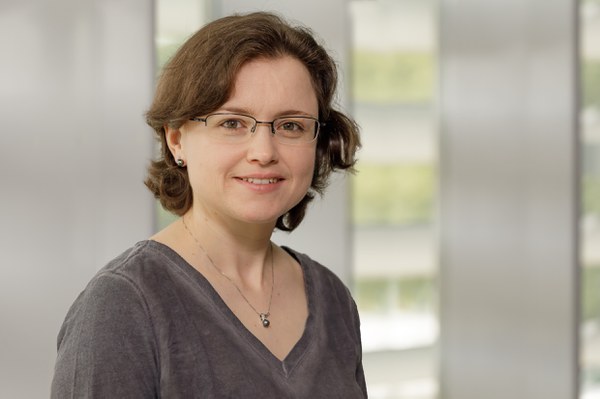
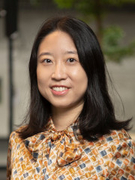
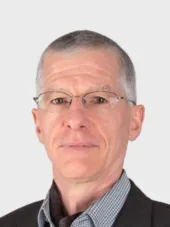
Michael Carbin is the Jamieson Career Development Assistant Professor of Electrical Engineering and Computer Science at the Massachusetts Institute of Technology (MIT) and leads the MIT Programming Systems Group. His research focuses on programming systems that address system uncertainty to enhance performance, energy efficiency, and resilience, particularly in environments involving neural networks , approximate computing , and unreliable hardware . His work spans probabilistic programming , quantum computing , and machine learning systems . Articles highlight contributions in pruning neural networks , quantum data structures , and compiler optimization , reflecting trends in deep learning , formal verification , and language-driven systems . Scientific Awards : MIT Frank E. Perkins Award (2020) Sloan Research Fellowship (2020) Facebook Research Award (2019) NSF CAREER Award (2018) Best Paper Awards at OOPSLA (2013, 2014) He has advised numerous graduate students and postdocs including Eric Atkinson, Cambridge Yang, and Charles Yuan, and served on program committees for conferences like POPL, OOPSLA, and ICLR. His group collaborates with institutions such as MIT CSAIL and explores applications in quantum algorithms and probabilistic inference .
Marco Platzner is a Professor for Computer Engineering at Paderborn University , Germany. He serves as the Dean of Research for the Faculty of Computer Science, Electrical Engineering and Mathematics and heads the Department of Computer Science. Previously, he held research positions at ETH Zurich, Stanford University, GMD (now Fraunhofer IAIS), and Graz University of Technology. Education: Diploma and PhD in Telematics (Graz University of Technology, 1991 and 1996), Habilitation in Hardware-Software Co-Design (ETH Zurich, 2002) Research Interests focus on reconfigurable computing, approximate computing, self-* computing, and embedded systems. His work addresses hardware security, FPGA design, and sustainable AI in data centers. Current projects include energy-efficient AI through deep neural network approximation for FPGAs (EKI-App) and lifecycle sustainability of socio-technical systems (SAIL). Publication Trends show expertise in FPGA security, approximate circuit synthesis, robotics, and hardware acceleration. Collaborations span robotics (ROS 2 integration), AI (transformer optimization), and cybersecurity (Trojan detection). Scientific Awards: ACM SIGDA Hall of Fame (2020) Significant Paper Award (FPL 2015) Best Paper Awards at IEEE ISVLSI (2024), ARC (2018), IEEE ReConFig (2015), and others Weierstraß Prize for Teaching (2008) Leadership Roles include membership in the board of Paderborn Center for Parallel Computing (PC2) and the Jenny Aloni Centre for Early Career Researchers. He has contributed to EU FP7 FET project EPiCS and German priority programs on embedded systems and organic computing.
Toby Jia-Jun Li is an Assistant Professor in the Department of Computer Science and Engineering at the University of Notre Dame, where he leads the SaNDwich Lab. He also serves as the Director of the Human-Centered Responsible AI Lab in the Lucy Family Institute for Data & Society and is a Faculty Fellow at the Institute for Educational Initiatives (IEI). Previously, he was affiliated with Carnegie Mellon University's Human-Computer Interaction Institute (HCII) and GroupLens Research. Dr. Li's research spans the intersection of Human-Computer Interaction (HCI), End-User Software Engineering, Machine Learning (ML), and Natural Language Processing (NLP), with recent work focusing on addressing societal challenges in the future of work through human-AI collaborative approaches. His work has resulted in over 40 publications at premier venues including CHI, UIST, CSCW, ACL, and ICSE, with 8 papers winning Best Paper or Honorable Mention awards. His recent publications demonstrate a strong focus on human-AI collaboration across various domains, including code understanding, privacy, accessibility, and creative tools. The work shows a trajectory toward increasingly sophisticated integration of human-centered design with AI capabilities, particularly using large language models to enhance human productivity and address societal challenges. Google Research Scholar Award recipient Recipient of Yahoo! Fellowship ($100,000/year) Best Paper Award at UIST 2020 Best Paper Honorable Mention Award at CHI 2021 Best Paper Award at CSCW 2024 Best Paper Award at CHI 2025 Dr. Li actively mentors Ph.D. students and has established collaborations with Google, Microsoft Research, IBM Research, Adobe, Verizon, and J.P. Morgan. His research has been supported by NSF, Google Research Scholar Program, AnalytiXIN Initiative, Yahoo! InMind project, and J.P. Morgan. He is currently recruiting Ph.D. students and undergraduate researchers for his SaNDwich Lab, which focuses on developing interactive systems to empower individuals to create, configure, and extend AI-powered computing systems.
Serkut Ayvasik is a Researcher at the Chair of Communication Networks at Technical University Munich (TUM). He joined TUM in March 2019 as a research and teaching associate, following his M.Sc. in Communications Engineering (2019) and B.Sc. in Electrical and Electronics Engineering (2016) from Middle East Technical University. His research focuses on: Wireless Network Resource Management for heterogeneous latency-critical 5G applications Channel State Information Prediction using depth images Network Slicing and Quality of Service optimization Machine Learning for proactive network configuration Telemedicine Applications in cross-border communication Key article trends include 5G/6G technology , IoT sustainability , digital twins , and haptic feedback systems . He contributes to IEEE and ACM journals, with recent work on Digiot (2025) and OCTOPUS (2024). Collaborations include researchers like Wolfgang Kellerer (Chair), Edwin Babaians , Alba Jano , and Fidan Mehmeti . His work spans projects such as 6G Future Lab Bavaria , DFG GGI QCDE , and ERC FlexNets .
Chanchal K. Roy is Professor of Software Engineering/Computer Science at the University of Saskatchewan and Co-Director of the Software Research Lab. He leads an NSERC CREATE graduate program on Software Analytics Research and co-leads the Data Management group for an NSERC CFREF project on Food Security, with over 170 publications cited 6,000+ times. His research centers on software clone detection using the widely adopted NICAD system, software evolution, empirical studies, and AI-driven software analytics. Recent work integrates large language models for code generation, clone detection in the AI era, and developer interactions with tools like ChatGPT, emphasizing practical applications in maintenance and analytics. Analysis of his 15 most recent publications reveals a strong trend toward AI/ML integration in software engineering: 12 of 15 articles (2025) explore LLMs, quantum computing, or deep learning for tasks like bug localization, code snippet generation, and feature-toggle analysis. Key themes include empirical validation of AI tools, Stack Overflow data mining, and cross-domain frameworks for Society 5.0. His scientific awards include: Most Influential Paper Awards (SANER 2018, ICPC 2018) Outstanding Young Computer Science Researcher Award (CS-Can/Info-Can, 2018) New Researcher Award (University of Saskatchewan, 2019) New Scientist Research Award (College of Arts and Science, 2019) As lead of the NSERC CREATE program and CFREF data group, he mentors graduate students in software analytics while securing major grants. He actively serves on program committees for ASE, ICSE, and FSE, reviewing journals and organizing workshops on clone detection and empirical methods. His lab focuses on real-world applications in food security data management and software evolution. The Software Research Lab, co-directed by Roy, drives projects like NICAD and the NSERC CREATE initiative, emphasizing open-source contributions and industry collaboration. Current efforts include quantum-SE integration and AI-augmented maintenance tools under the CFREF food security mandate.
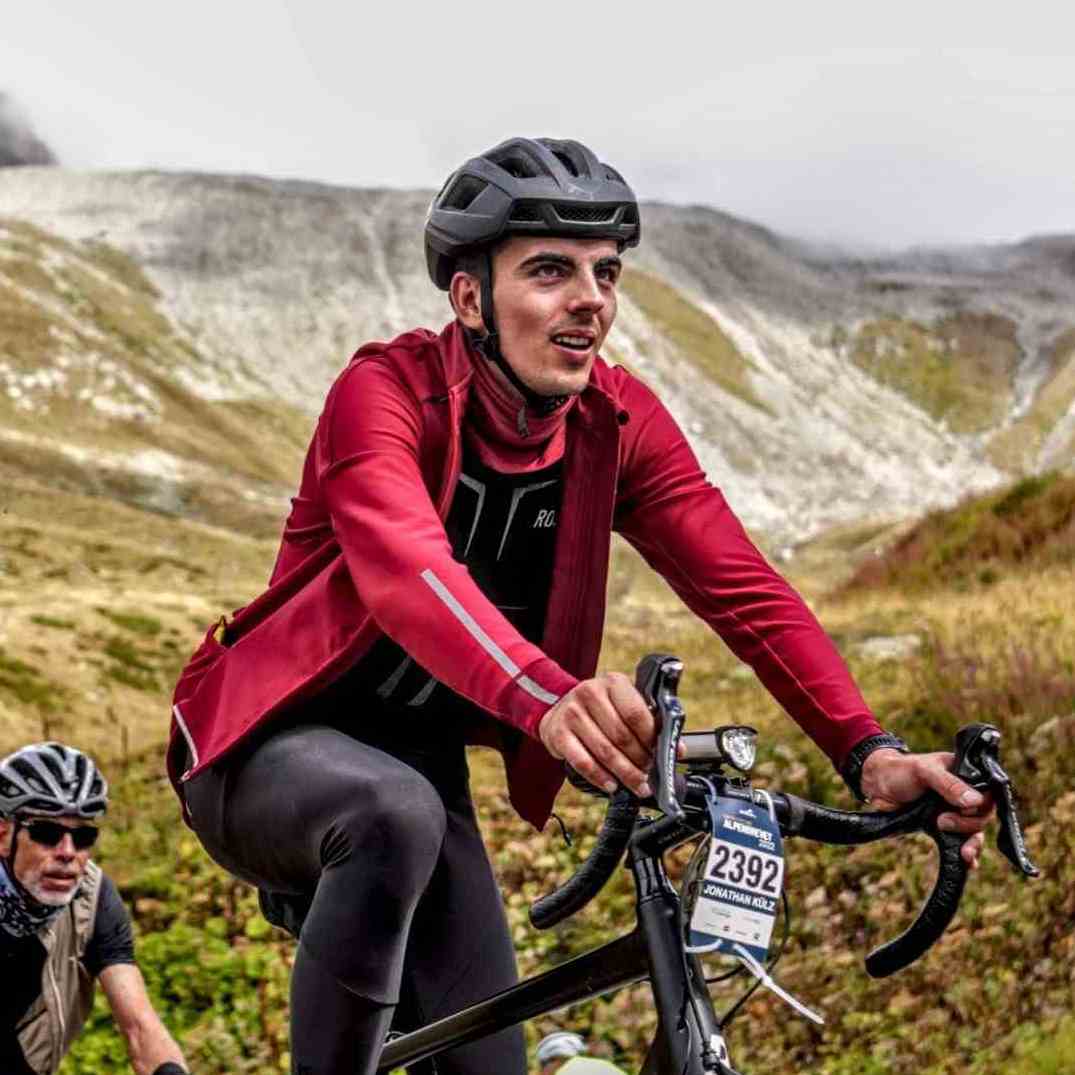
Jonathan Külz is a Researcher at the Technical University of Munich (TUM) , affiliated with the Department of Informatics 6 - Chair for Cyber Physical Systems under Prof. Matthias Althoff. His research focuses on Modular Robotics , Reinforcement Learning , Cyber-Physical Systems , and Control Systems . His work includes algorithmic synthesis of modular robot compositions, model-based manipulator co-design, and unifying benchmarks for robotics. He has supervised multiple Master’s theses Bachelor’s theses Practical courses on topics like Robot Workspace Representation and Dynamic Model Identification . Notable supervised projects include Autonomous Navigation of Reachbot and Task-Based Modular Robot Configuration Synthesis . His recent publications span Robotics , Benchmarking , and Computational Social Science . Key trends include Computationally efficient assessment of robot capabilities Deep reinforcement learning for robotics Analysis of political discourse polarization Jonathan emphasizes structured thesis supervision, requiring exposés, shared folders, and protocol-driven meetings. He advocates for LaTeX in scientific writing and tools like NotebookLM and Zettlr for research documentation.
Jelena Mirkovic serves as Principal Scientist at USC Information Sciences Institute (USC/ISI) and Research Associate Professor at the University of Southern California's Thomas Lord Department of Computer Science. She has held faculty positions at USC since 2010, progressing from Research Assistant Professor to her current role as Research Associate Professor since 2017, while also serving as Project Leader at USC/ISI. Her educational background includes: PhD in Computer Science from UCLA (2003) MS in Computer Science from UCLA (2000) B.Sc. in Computer Science from University of Belgrade, Serbia (1998) Mirkovic's research spans network security, human-centered attacks, and cybersecurity experimentation infrastructure. Her work focuses on critical security challenges including botnets, denial-of-service attacks, IP spoofing, vulnerability scanning, and user-centric privacy. She has pioneered methodologies for security experiments and led major infrastructure projects including the DETER testbed and SPHERE (Security and Privacy Heterogeneous Environment for Reproducible Experimentation). Analysis of her recent publications reveals consistent innovation across multiple security domains. Her work demonstrates strong technical depth in DDoS defense systems (particularly DNS protection), binary vulnerability analysis, privacy-preserving systems, and security experimentation infrastructure. A notable trend is her focus on bridging theoretical security concepts with practical implementation through large-scale testbeds and real-world data analysis. Her significant scientific achievements include: IEEE Senior Member distinction Best paper award at IEEE COMSNETS 2023 for DNS DDoS defense research Mirkovic has secured substantial research funding as Principal Investigator or Co-PI on numerous grants from NSF, DHS, and other agencies. Current major projects include SPHERE (Security and Privacy Heterogeneous Environment for Reproducible Experimentation), DISCERN (Datasets to Illuminate Suspicious Computations), and modernizing DeterLab education infrastructure. She has successfully led multiple REU sites focused on cybersecurity education and workforce development. She directs the STEEL (Security Research Lab) at USC/ISI, which develops innovative security solutions through interdisciplinary research in network security, human factors in security, and cybersecurity experimentation infrastructure. The lab emphasizes practical implementations that address real-world security challenges while advancing theoretical understanding of security systems.
Prof. Dr. Estela Suarez is a Professor of High Performance Computing at the Institute for Computer Science, University of Bonn (W2 in the Jülich Model) and Joint Lead of the Division "Novel System Architecture Design" at the Jülich Supercomputing Centre (JSC), Forschungszentrum Jülich GmbH. She also leads the Research Group "Next Generation Architectures and Prototypes" at JSC and serves as Spokesperson of Helmholtz Information Program 1, Topic 2. Currently on sabbatical during the 2024/2025 and 2025 academic years, she remains active in research leadership roles. 2010: PhD in Physics from University of Geneva, Switzerland 2004: Master in Physics, Specialization in Astrophysics, University Complutense of Madrid, Spain Professor Suarez specializes in high performance computing with particular expertise in heterogeneous HPC system architectures and modular supercomputing architecture (MSA). Her research spans hardware prototyping and evaluation, system software development, operational data analysis, and co-design methodologies. She has pioneered approaches to address hardware heterogeneity through system-wide orchestration of diverse computing resources, enabling more efficient scientific computing across multiple domains. Her work bridges theoretical computer architecture with practical implementation challenges in exascale computing environments, focusing on real-world applications that require specialized hardware configurations. Professor Suarez's publication record shows a clear evolution from foundational work on the DEEP project (2016) through the development of modular supercomputing concepts (2019-2021) to current applications across diverse scientific domains (2022-2024). Her recent publications demonstrate how modular architectures can be effectively applied to climate modeling, neuroscience simulations, quantum chemistry calculations, and other computationally intensive fields. This trend highlights her focus on practical implementation challenges and the growing importance of adaptable computing architectures in modern scientific research. 2023/2024 Lehrpreis der Universität Bonn: UniBonn teaching award Professor Suarez has secured significant research funding through major projects including NUMERIQS (Projects A05, B02, and Z02), European Processor Initiative (EPI), DEEP-SEA (Software for Exascale Architectures), IFCES2 (optimization of simulation algorithms for exascale supercomputers), and AIDAS (virtual laboratory between Forschungszentrum Jülich and CEA on AI and data analytics). While currently not accepting new students due to sabbatical, she has previously mentored graduate students in high performance computing techniques and has delivered numerous invited lectures at international conferences. Professor Suarez leads the "Next Generation Architectures and Prototypes" research group at JSC and serves as Joint Lead of the "Novel System Architecture Design" division. She chairs the Research and Innovation Advisory Group (RIAG) from EuroHPC Joint Undertaking since 2024. Her work involves close collaboration with international research teams on advancing supercomputing architectures, including contributions to the University of Bonn's new HPC system "Marvin" which ranks on both the TOP500 and GREEN500 lists.
Dr. Yiting Xia is a tenure-track faculty member at the Max Planck Institute for Informatics (MPI-INF), leading the Network and Cloud Systems research group. She previously worked as a research scientist at Facebook and holds a PhD in Computer Science from Rice University (2018) and a B.S. in Telecommunications Engineering from Beijing University of Posts and Telecommunications and Queen Mary University of London (2011). Her research focuses on high-performance and energy-efficient networking for cloud computing, including reconfigurable data center networks, optical communications, and network protocols. Notable contributions include innovations in transport protocols, time synchronization for optical networks, and failure-resilient network design. Education: PhD in Computer Science, Rice University, 2018 M.S. in Computer Science, Rice University, 2014 B.S. in Telecommunications Engineering, BUPT & QMUL, 2011 Research Interests: Data center networking, optical communications, cloud systems, network protocols, distributed systems, and network security. Her work bridges theoretical contributions with practical implementations, addressing challenges in latency-sensitive flows, traffic engineering, and system reliability. Awards include the Ken Kennedy-Cray Fellowship and the N2Women Rising Star Award (2021). She has co-lectured courses on distributed systems and data networks at Saarland University and previously contributed to teaching at Rice University. Key projects include Aurora (for MoE inference optimization), Lighthouse (an open research framework for optical networks), and Occam (a reliable network management system). Grants & Projects: Focus on deployable optical network architectures and resilient backbone management during pandemic-driven traffic shifts. Labs/Teams: Leads the Network and Cloud Systems group at MPI-INF, collaborating with academia and industry on cutting-edge networking solutions.
Akash Kumar is a Professor at Ruhr University Bochum, Germany, with affiliations to multiple institutions including TU Dresden and National University of Singapore. His research focuses on computer architecture, hardware acceleration, and approximate computing, with a strong emphasis on FPGA-based systems and neural network optimization. He has contributed extensively to embedded systems, mixed-criticality systems, and security in emerging technologies like reconfigurable nanodevices. His work spans cross-layer approximation methodologies, graph neural networks, and energy-efficient processing for edge AI. Collaborations with industry and academia highlight his leadership in VLSI design and secure hardware implementations. Notable contributions include frameworks for bounding time in mixed-criticality systems and resilient logic locking techniques. Research interests include hardware-software co-design, real-time systems, and efficient neural network architectures. His publications in top-tier conferences (DAC, DATE, FCCM) and journals (IEEE Trans. CAD, ACM TECS) underscore his impact in the field.
Angkana Rüland is a Professor at the University of Bonn's Mathematical Institute and holder of the Hausdorff Chair at the Hausdorff Center for Mathematics (HCM), a Cluster of Excellence. She is a member of the Transdisciplinary Research Area ‘Modelling’ and a recipient of the prestigious Leibniz Prize (2025). Her research focuses on inverse problems, fractional PDEs, and phase transformations in materials science, with contributions to the Calderón problem and microstructure analysis. She has held positions at Oxford, the Max Planck Institute in Leipzig, and Heidelberg University before returning to Bonn in 2023. Education: She completed her Abitur, bachelor's/masters, and PhD (2014, Hausdorff Memorial Prize) at the University of Bonn, where she also co-founded the Bonn Math Club. Her academic journey includes postdoctoral research at Oxford and leadership roles in Leipzig and Heidelberg. Research interests span inverse problems (e.g., fractional Calderón problem), material microstructures (shape-memory alloys), and mathematical physics. Her work bridges pure and applied mathematics, addressing questions in elasticity, nonlocal operators, and energy scaling laws. Scientific awards include the Leibniz Prize (2025) for her groundbreaking research and the Hausdorff Memorial Prize for her doctoral thesis. She aims to use Leibniz Prize funds to strengthen her research group at HCM, furthering interdisciplinary collaborations. Her contributions have positioned Bonn as a global leader in mathematical research, with 20 Leibniz laureates since 1986.
Rainald Loehner is a Distinguished Professor of Fluid Dynamics at George Mason University's Center for Computational Fluid Dynamics. Since 2003, he has led the Center for Computational Fluid Dynamics at George Mason University. He is currently a Hans Fischer Senior Fellow at the Technical University of Munich's Institute for Advanced Study (TUM-IAS) for 2023, hosted by Professors Kai-Uwe Bletzinger and Roland Wüchner in the 'Adjoint-Based System Identification of Large-Scale Structures' Focus Group. Loehner received his Diplom Ingenieur (Maschinenbau) degree from the Technical University of Braunschweig, and his PhD and a DSc in civil engineering from the University College of Swansea, Wales. After teaching at Swansea for a year, he worked at the Naval Research Laboratory in Washington, DC, followed by a research professorship at George Washington University. He joined George Mason University as an associate professor and was promoted to full professor in 1995 and distinguished professor in 2004. With over 35 years of experience, Professor Loehner's research spans the complete pipeline of numerical solvers and simulation tools. His expertise includes pre-processing, grid generation, numerical methods, field solvers, parallel computing, adaptive mesh refinement, fluid-structure interaction, shape optimization, system identification, and computational crowd dynamics. His current work focuses on developing advanced field solvers for compressible and incompressible flows, acoustics, electromagnetic wave propagation, heat and mass transfer, structural mechanics, and fluid-structure interaction. Key application areas include blast mitigation, ship hydrodynamics, blood flow, contaminant transport, and pedestrian safety. Loehner's recent research output (2020-2024) shows a strong trend toward digital twin technology and adjoint-based methods for structural analysis and optimization. His publications focus on high-fidelity digital twins for detecting structural weaknesses, risk assessment in engineering systems, and optimization of sensor placement. His work bridges computational mechanics with machine learning approaches, particularly in system identification and inverse problems, demonstrating how computational methods can solve complex real-world engineering challenges. 2020: Ranked #15119 in the Stanford List of Most Influential Scientists of the World; #8 in Aerospace and Aeronautics 2010: Distinguished International Career Award, Argentine Association of Computational Mechanics 2008: Fellow, International Association for Computational Mechanics 2006: Associate Fellow, AIAA 2005: Honorary Professor, University of Wales Swansea 2005: Advisory Professor, Shanghai Jiao Tong University 2004: Distinguished Professor of Fluid Dynamics, George Mason University 1999: Computational Mechanics Achievements Award, Japan Society of Mechanical Engineering 1993: Doctor of Science in Civil Engineering, University College of Swansea 1979-1983: Studienstiftung des Deutschen Volkes (Top 1% of German Students) Professor Loehner has mentored numerous students through his work at George Mason University and has supervised research in computational fluid dynamics, structural mechanics, and related fields. His research has been supported by various grants from government agencies and industry partners, enabling the development of advanced simulation tools applied in aerodynamics, hydrodynamics, shock-structure interaction, and medical applications. His codes and methods have been widely adopted in industry and academia for applications ranging from aircraft and ship design to medical simulations and urban pathogen transmission modeling. Loehner leads the Center for Computational Fluid Dynamics at George Mason University, which focuses on developing cutting-edge computational methods for fluid dynamics and related multiphysics problems. The center works on strategic application areas including blast mitigation, ship hydrodynamics, blood flow simulation, and pedestrian movement modeling. As a TUM-IAS Fellow, he collaborates with the Chair of Computational Modeling and Simulation at TUM on adjoint-based system identification of large-scale structures, bringing together expertise in computational mechanics and digital twin technology to address complex engineering challenges.
Prof. Dr. Julia Rieck is a Full Professor of Business Administration at the University of Hildesheim , leading the Department of Business Administration and Operations Research within the Faculty of Mathematics, Natural Sciences, Economics and Computer Science. As Dean of the Faculty , she oversees academic programs, quality management, and research initiatives. Her roles include academic advising for the Business Information Systems (B.Sc./M.Sc.) programs and active participation in examination boards and quality committees. Education: PhD in Political Science (Dr. rer. pol.) with summa cum laude (2008), Habilitation at Clausthal University of Technology (2014), and studies in Business Mathematics (Diploma, University of Hamburg, 2003) and Mathematics (Georg-August-University Göttingen, 2000). Research: Focuses on Operations Research , Supply Chain Management , Project Planning , and Logistics . Her work integrates mathematical modeling , machine learning , and real-world applications , particularly in disaster response , dynamic transportation , and sustainable e-commerce . Projects: Leads third-party funded initiatives like "IT für die sorgende Gesellschaft" (AI in healthcare/social sectors) and contributes to the HULLS real-lab (AI in aging societies). Collaborates with regional companies (e.g., Youco, ADITUS) and institutions (HAWK, University of Hannover). Teaching: Emphasizes practical application through case studies, industry partnerships, and the IT-Speed Dating event for student-company connections. Her courses cover project resource planning , logistics , and digital transformation . Labs & Teams: Active in the Institute of Business Administration & Business Information Systems , contributing to the KET Kompetenzwerkstatt (entrepreneurship support) and interdisciplinary teams in AI and sustainability research.
Atreyee Banerjee is a Researcher and Early Career Fellow at Albert-Ludwigs-Universität (Oct 2024–Jun 2025) and a Postdoctoral Researcher at the Max Planck Institute for Polymer Research (MPIP), Mainz, Germany, under Prof. Kurt Kremer. She completed her PhD in Chemical Science at CSIR-National Chemical Laboratory (2017) and postdocs at Cambridge University (2017–2019) and MPIP (2019–present). Education PhD (2017): CSIR-NCL, Pune, India (Supervisor: Dr. Sarika Maitra Bhattacharyya) MSc (2011): Visva Bharati, Santiniketan (Physical Chemistry) BSc (2009): Visva Bharati, Santiniketan Research Interests Focused on data-driven analysis of complex systems, including supercooled liquids, polymers, and organic crystals. Specializes in combining theory, simulations, and machine learning to study structural/dynamical properties. Key areas include glass transition, free energy landscapes, and polymer dynamics. Publications Overview Recent work includes machine learning approaches to glass transition in acrylic polymers (J. Chem. Phys., 2023), data-driven analysis of polymer dynamics (ACS Macro. Lett., 2023), and thermodynamic studies of supercooled liquids (Soft Matter, 2022). Research emphasizes methodological innovations like PCA clustering and basin-hopping optimization. Awards Recipient of DST-India Travel Award (2017), Best Research Scholar Award (CSIR-NCL, 2017), Shell-India Computational Talent Prize Bronze (2015), and multiple best poster awards (2014–2015). Grants & Labs Collaborates with Dr. Oleksandra Kukharenko in the Polymer Theory Group at MPIP. Active in computational initiatives like the ENGAGE Summer School (2023). Research involves datasets from GROMACS trajectories and open-source tools (e.g., scikit-learn).
Prof. Dr.-Ing. Frank Thielecke is a full Professor and the head of the Institute of Aircraft Systems Engineering (Flugzeug-Systemtechnik) at Technische Universität Hamburg (TUHH), Germany. His research is centered on advanced aircraft systems, avionics, flight control, and the integration of emerging technologies such as hydrogen and hybrid-electric propulsion. Institution: Technische Universität Hamburg Department: Institute of Aircraft Systems Engineering (Flugzeug-Systemtechnik) Email: frank.thielecke@tuhh.de Office: Neßpriel 5, Room 1.012, 21129 Hamburg His research interests include integrated modular avionics (IMA), model-based systems engineering (MBSE), aircraft load estimation, health monitoring, fault diagnosis, and sustainable aviation technologies. He leads a research group actively contributing to next-generation aircraft design, with a strong focus on digitalization, virtual testing, and system safety. The recent publications highlight a consistent trend in developing model-based tools and architectures for avionics and aircraft systems. Key themes include the design of IMA platforms, virtual integration, system validation, hydrogen aircraft systems, and control algorithms for UAVs and flexible aircraft. His work frequently appears in AIAA, DASC, DLRK, and CEAS conferences and journals. Prof. Thielecke has been involved in numerous collaborative research projects focusing on more-electric aircraft, fuel cell systems, and advanced actuation. He has contributed to the development of frameworks such as ASHLEY and SArA for avionics platform design and systems architecting. His team also works on noise reduction in hydraulic systems and condition monitoring for aircraft subsystems. He supervises a group of researchers and PhD students, many of whom co-author his publications. While specific student names are not listed, long-term collaborators like Oliver Luderer, Thimo Bielsky, Nils Külper, and Philipp Chrysalidis are likely doctoral candidates or postdoctoral researchers in his group. He has secured funding for projects related to hydrogen aircraft, hybrid propulsion, and digital avionics engineering. His lab, the Institute of Aircraft Systems Engineering, operates test benches for avionics, hydraulic systems, and flight control validation. The team uses advanced simulation, co-simulation (e.g., FMI), and hardware-in-the-loop techniques for virtual integration and testing. Ongoing work includes the development of tools for early validation of flight control platforms and automated requirement-based testing.