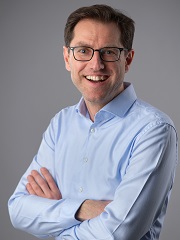
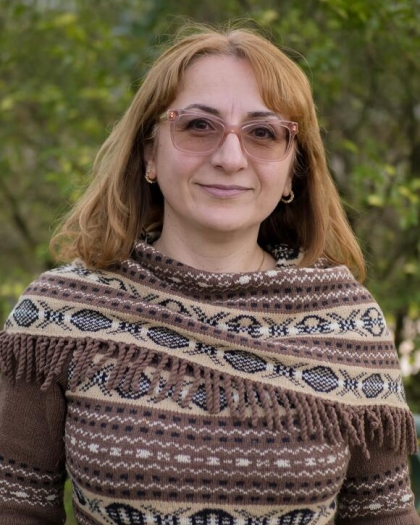
Eva Bayer Fluckiger is an Honorary Professor at the School of Basic Sciences (SB) at EPFL, Lausanne. She holds a position in the Mathematics Section (SB-DEC) and is affiliated with the Department of Mathematics. Her academic career includes a Doctorate from the University of Geneva (1978) under Michel Kervaire, postdoctoral work in Germany, France, and the U.S., and a CNRS position (1987–2001). She became a full professor at EPFL in 2001. Her research focuses on algebraic number theory, Galois cohomology, quadratic and Hermitian forms, knot theory, and applications to algebraic codes. She has held visiting positions at prestigious institutions like IAS Princeton and has been actively involved in editorial roles and international committees. Her awards include the Vacheron Constantin Prize (1983) and the Maria Sybilla Merian Prize (2001). She has advised numerous PhD students and contributed over 150 publications, with recent work emphasizing K3 surfaces, lattice theory, and algebraic geometry. She is an editor of five international journals and has held leadership roles in mathematical societies, including the European Mathematical Society.
Andrei Khrennikov is Professor of Mathematics at the Department of Mathematics, Linnaeus University, where he also serves as director of the International Center for Mathematical Modeling (ICMM) . He leads a vibrant research group focused on interdisciplinary modeling in physics, biology, cognition, and social systems. Research Interests: His work spans a vast interdisciplinary landscape, including mathematical physics, p-adic and non-Archimedean analysis, quantum foundations, quantum-like modeling of cognition and decision-making, econophysics, and biological dynamics . He is a pioneer in applying quantum probability and formalism outside quantum physics, especially in psychology and social sciences. The Växjö series of quantum theory conferences , which he organizes, is the longest-running continuous conference series on quantum foundations, fostering dialogue between theorists, experimentalists, and philosophers. His recent publications (2021–2025) show a strong focus on quantum cognition, p-adic biology, entanglement models, and social laser theory , often leveraging generalized probability and open quantum systems frameworks. Scientific Contributions: Developed quantum-like models for cognition, decision-making, and biological processes. Pioneered use of p-adic and ultrametric analysis in genetics and brain dynamics. Advanced classical random field models as alternatives to quantum interpretations. Introduced the social laser model for collective emotional amplification in societies. He is actively involved in major research projects such as QUARTZ (Quantum Information Access and Retrieval Theory) and DYNALIFE (Information, Coding, and Biological Function) . His work bridges mathematics, physics, and cognitive science, promoting a unified framework for understanding complex systems through quantum-inspired tools.
Professor Yue Rong is a Full Professor at Curtin University's Department of Electrical and Computer Engineering, within the School of Electrical Engineering, Computing and Mathematical Sciences. He holds editorial roles at IEEE Transactions on Signal Processing and IEEE Wireless Communications Letters. His research focuses on signal processing for communications, underwater acoustic systems, wireless networks, and healthcare IoT. Rong has authored over 140 journal and conference papers and received multiple awards, including the 2010 Young Researcher of the Year Award. Education: B.E. (Electrical Engineering), Shanghai Jiao Tong University (1999) M.Sc. (Electrical Engineering), University of Duisburg-Essen (2002) Ph.D. (Electrical Engineering), Darmstadt University of Technology (2005) Research Interests: Rong's work spans cooperative MIMO communications, underwater acoustic systems, OFDM modulation, radar-based healthcare monitoring, and secure wireless protocols. His innovations include adaptive modulation schemes for underwater environments and radar-based vital signs detection. Recent trends in his publications emphasize AI-driven signal processing for healthcare IoT and underwater optical communication systems. Awards: Best Paper Awards (WCSP 2011, APCOMM 2010) Chinese Government Award (2004) DAAD/ABB Fellowship (2001-2002) Grants & Labs: His research is supported by grants focusing on UAV-enabled data collection and underwater network optimization. He leads projects in the Distributed Data Fusion and Emerging Technologies (DDFE) lab, advancing radar-cardiography and wearable health monitoring systems.
Mikael Johansson is a Professor at Kungliga Tekniska Högskolan (KTH), specializing in Control Technology . He teaches and coordinates courses such as Distributed Optimization (FEL3311) and various advanced-level degree projects in computer science, electrical engineering, and systems engineering. His research spans Control Systems , Machine Learning , and Optimization , with a focus on asynchronous algorithms, federated learning, and applications in energy systems and construction. His work includes 15 recent publications on topics like neural networks, distributed optimization, and battery technology. Notable areas of contribution are in asynchronous learning, federated learning with privacy constraints, and quasi-Newton methods for optimization. His research bridges theoretical advancements with practical applications in urban design, healthcare, and autonomous systems.
Christopher Umans is a Professor of Computer Science at the California Institute of Technology, where he serves as the William M. Coughran Jr. Leadership Chair and Executive Officer for the Department of Computing and Mathematical Sciences. He joined Caltech in 2002 as an Assistant Professor, became Associate Professor in 2008, and was promoted to Professor in 2010. He has held multiple leadership positions including Division Deputy Chair (2018-2020) and Executive Officer since 2020. His educational background includes a B.A. from Williams College (1996) and a Ph.D. in Computer Science from the University of California, Berkeley (2000), where he was advised by Christos Papadimitriou. After completing his Ph.D., he was a postdoc at Microsoft Research from 2000-2002 before joining Caltech. Professor Umans's research focuses on theoretical computer science, particularly computational complexity with an algebraic flavor. His work spans derandomization, explicit combinatorial constructions, algebraic algorithms, coding theory, and hardness of approximation. He has made significant contributions to understanding the complexity of fundamental problems like matrix multiplication through group-theoretic approaches and developing fast algorithms for generalized discrete Fourier transforms over finite groups. His recent publications reveal a strong emphasis on algebraic methods in computation, with particular focus on matrix multiplication algorithms, generalized DFTs, and polynomial factorization. His work consistently bridges theoretical computer science with deep mathematical concepts from group theory, representation theory, and algebraic combinatorics, demonstrating how these mathematical structures can yield more efficient computational methods. His scientific recognition includes the prestigious Simons Investigator in Computer Science award and the Northrop Grumman Prize for Excellence in Teaching at Caltech. Professor Umans has advised students including Chloe Ching-Yun Hsu, who received the Henry Ford II Scholar Award. His research has been supported by multiple NSF grants including 'AF: Small: Group Theory and Representation Theory in Matrix Multiplication and Generalized DFTs' and 'AF: Small: Algorithms for Matrix Multiplication, Polynomial Factorization and Generalized Fourier Transform.' He serves on numerous program committees including FOCS, STOC, and CCC, and is Vice-Chair of SIGACT (2021-24). He is an active member of Caltech's Theory Group within the Computing and Mathematical Sciences department, contributing to its research direction and mentoring junior researchers. His work often involves collaborations with researchers across institutions, as evidenced by his extensive publication record with co-authors from various universities.
Professor Petros Elia is a faculty member at EURECOM, holding the position of Professor within the Department of Communications systems. He specializes in Information Theory , Coding Theory , Caching , Distributed Computing , and Wireless Networks , with additional research in Biometrics . His work focuses on advancing theoretical foundations and practical applications in distributed systems and wireless communication efficiency. He received a prestigious ERC Consolidator Grant for his DUALITY project (2016) and a four-year Fulbright Scholarship (1993-1997). He is also a recipient of the Newcom++ Network of Excellence Distinguished Achievement Award (2008-2011) and the Best Student Paper Award at SPAWC 2011, awarded to his advisee Arun Singh. His research explores cutting-edge topics such as tessellated distributed computing , hypergraph decomposition , and topology-aware caching , with recent contributions presented at venues like the IEEE International Symposium on Information Theory (ISIT 2025). His work bridges theoretical advancements with real-world applications in wireless networks and distributed systems. Education: Supported by his Fulbright Scholarship, he pursued studies in the U.S. during 1993-1997. Grants: ERC Consolidator Grant (2016), and others. Advising: Mentor to Arun Singh , whose work earned a student paper award. He actively contributes to teaching Mobile Communications at EURECOM and remains a key figure in advancing the field through interdisciplinary collaborations and leadership in the Communication Systems department.
Vinod Vaikuntanathan is the Ford Foundation Professor of Engineering in the MIT EECS department and a principal investigator at MIT CSAIL. He holds a BTech from IIT Madras (2003), and SM/PhD degrees from MIT (2005/2009). His research focuses on cryptography, particularly fully homomorphic encryption (FHE), lattice-based cryptography, and quantum-resistant systems. He co-founded Duality Technologies as Chief Cryptographer. **Education:** BTech in Computer Science (2003), Indian Institute of Technology Madras SM in Electrical Engineering & Computer Science (2005), MIT PhD in Computer Science (2009), MIT **Research Interests:** His work spans FHE (enabling computations on encrypted data), lattice-based cryptography (post-quantum security), and intersections with quantum computing, machine learning, and privacy. He explores applications in secure computation, algorithm design, and cryptographic protocols. **Awards:** Recipient of the Gödel Prize (2022), Simons Investigator (2023), and MacVicar Faculty Fellow (2024). His work on FHE and lattice algorithms has earned widespread acclaim in cryptography and theoretical computer science. **Teaching & Mentorship:** Advanced cryptography courses at MIT (e.g., 6.5630, 6.876J) Advised PhD students (e.g., Sergey Gorbunov, Tianren Liu) and postdocs (e.g., Nir Bitansky, Mark Zhandry) now leading positions in academia and industry **Collaborations:** Organizer of the Charles River Crypto Day and MIT Cryptography Seminar Principal investigator on grants from NSF, DARPA, and Microsoft
Alexander Müller-Hermes is an Associate Professor at the Department of Mathematics, University of Oslo. His research focuses on quantum information theory with emphasis on mathematical questions in quantum Shannon theory and entanglement. He also explores functional analysis and convex geometry inspired by quantum phenomena. Before joining UiO, he held a Marie Skłodowska-Curie fellowship at University Claude Bernard Lyon 1 and was a postdoc at the Centre for Mathematics in Quantum Theory (QMATH), University of Copenhagen. He earned his PhD in Mathematics from Technical University Munich in 2015. Teaching includes advanced courses like Quantum Information Theory (MAT4430) and Linear Algebra (MAT1120). His research interests span quantum communication, entanglement theory, operator algebras, and functional analysis, with over 20 peer-reviewed publications since 2014. His work on fault-tolerant quantum coding and entanglement monotones has advanced theoretical foundations in quantum information. He collaborates with the Operator Algebras research group at UiO and is part of the QOMBINE project on quantum computation and many-body theory.
Chris Peikert is a Professor in the Department of Computer Science and Engineering at the University of Michigan's College of Engineering. He received his Ph.D. from MIT's Computer Science and Artificial Intelligence Laboratory in 2006 under the supervision of Silvio Micali. Peikert is a leading researcher in cryptography, particularly known for his foundational work in lattice-based cryptography. His research interests span cryptography, lattices, coding theory, algorithms, and computational complexity, with a particular focus on cryptographic schemes whose security can be based on the apparent intractability of lattice problems. Peikert has made significant contributions to the development and analysis of lattice-based cryptographic primitives, including ring-LWE, fully homomorphic encryption, and zero-knowledge proofs. Peikert's recent work demonstrates continued leadership in post-quantum cryptography, with publications in top venues like CRYPTO, EUROCRYPT, and STOC. His research spans theoretical foundations of lattice problems to practical implementations of lattice-based cryptographic systems, including hardware acceleration for fully homomorphic encryption. IACR Fellow (2024) Test-of-Time Award from Crypto 2008 (2023) TCC Test-of-Time Award (2017) Patrick C. Fischer Development Professor of Theoretical Computer Science (2017) Best Paper Award at Eurocrypt 2010 Best Paper Award at STOC 2009 Alfred P. Sloan Foundation Fellowship Google Research Award Peikert has been actively involved in the cryptographic research community, serving on program committees for major conferences including CRYPTO, EUROCRYPT, FOCS, and TCC (where he was program co-chair in 2021). He has also developed educational resources, including extensive lecture materials on lattice-based cryptography and teaching courses on cryptography and theoretical computer science at both the undergraduate and graduate levels.
Jan Draisma is a full professor of Mathematics at the University of Bern and a part-time full professor of Applied Algebra and Geometry at Eindhoven University of Technology (TU/e), where he is affiliated with the Department of Mathematics and Computer Science, specifically in Discrete Algebra and Geometry and Coding Theory and Cryptology. He obtained his Master's and Ph.D. degrees from TU/e cum laude and held a postdoctoral position at the University of Basel (2002–2005). He returned to TU/e as an assistant professor, later advancing to associate professor (2011–2016), and served as a part-time full professor at VU Amsterdam (2015–2016). His research focuses on the interplay between combinatorics, statistics, and algebraic geometry. Key areas include tropical geometry, algebraic statistics, symmetric systems of polynomial equations in infinitely many variables, and representation stability. His work often explores the structure of infinite-dimensional algebraic objects and their finite approximations. The most recent publications highlight trends in polynomial functors, topological Noetherianity, amoebas of linear spaces, and the geometry of tensor representations. These works reflect a deep integration of algebraic geometry with combinatorics and category theory, emphasizing stabilization phenomena and symmetry in algebraic structures. NWO Vici Award: Stabilisation in Algebra and Geometry (2015) NWO Vidi Award: Finite thanks to symmetry (2010) Draisma has received significant research funding, including the NWO Vidi and Vici grants, and two NWO Free Competition grants (2008, 2012). He has supervised 16 students and is actively involved in the academic community as an associate editor for Experimental Mathematics, SIAM Journal on Applied Algebra and Geometry, and Linear and Multilinear Algebra. He has held leadership roles in major conferences such as MEGA 2015 and SIAM AG 19. He is affiliated with the research groups in Discrete Algebra and Geometry and Coding Theory and Cryptology at TU/e and leads research activities centered on algebraic methods in discrete mathematics and statistics.
Prof. Dr. Sören Laue is a Professor of Machine Learning at the University of Hamburg's Department of Informatics. His research focuses on optimization algorithms, machine learning frameworks, and high-performance computing. He leads the Machine Learning research group and developed the GENO optimization framework and the Matrix Calculus toolset. His work emphasizes GPU acceleration, tensor operations, and scalable solutions for classical machine learning problems. Projects: GENO solver (Python-based optimization), Matrix Calculus (derivative computation), and SQL-based tensor operations. Key Research Themes: Optimization frameworks, GPU computing, neural network scalability, and algorithm design. Selected recent publications highlight contributions to tensor calculus benchmarks, GPU-optimized machine learning pipelines, and novel optimization methods. His work bridges theoretical foundations and practical software tools for the machine learning community.
Aida Abiad Monge is an Associate Professor in the Department of Mathematics and Computer Science at Eindhoven University of Technology (TU/e), where she chairs the Algebraic Combinatorics group. She holds a 0.1fte position as an Associate Professor at Vrije Universiteit Brussel and is a guest researcher at Ghent University. Her research focuses on algebraic graph theory, including spectral graph properties, combinatorial optimization, and applications in quantum information theory and coding theory. Her academic career includes postdoctoral fellowships at Ghent University (2020-2023) and Vrije Universiteit Brussel (2020-2023). She has been awarded grants such as the NWO VIDI and BOF Postdoctoral Fellowship. Her editorial roles include serving on the boards of the Electronic Journal of Linear Algebra and The Electronic Journal of Combinatorics. Research Interests: Spectral graph theory, coding theory, quantum information, finite geometry Key Achievements: Over 60 publications, including works on sum-rank metric codes and cospectral hypergraphs Teaching: Courses like Algebraic Combinatorics and Combinatorics and Applications Her work bridges theoretical advancements with practical applications, particularly in optimizing coding schemes and analyzing graph structures through algebraic methods.
Dr. James Saunderson is a Senior Lecturer and Director of Education in the Department of Electrical and Computer Systems Engineering at Monash University. He holds a PhD in Electrical Engineering and Computer Science from MIT and has held postdoctoral roles at Caltech and the University of Washington. His expertise spans convex optimization, semidefinite programming, and quantum information theory. Education : PhD in EECS, MIT (2015) MS in EECS, MIT (2011) Bachelor of Engineering (Honours) and Bachelor of Science (Honours), University of Melbourne (2008) Research Interests : Convex optimization, quantum information theory, signal processing, and algorithm design. Focuses on algebraic and geometric aspects of optimization, with applications in engineering and quantum systems. Recent Projects : Exploiting duality in quantum relative entropy optimization Hyperbolic programming and conic optimization Applications in nanotechnology and bioinformatics Teaching : Courses include Control System Design, Signals and Systems, and Optimization for Engineers. Awards : SIAM Optimization Best Paper Prize (2020) Grants and Collaborations : Australian Research Council Discovery Early-Career Research Fellow (2020–2024) Leading projects in quantum optimization and bioengineering applications.
Lilya Budaghyan is a Professor at the Department of Informatics, University of Bergen, Norway, leading the Boolean functions research team at the Selmer Center. She holds a PhD from the University of Magdeburg (2005) and a habilitation from Paris 8 University (2013). Her research focuses on Boolean functions, particularly APN (Almost Perfect Nonlinear) functions and their cryptographic applications, with contributions to hardware implementations, equivalence relations, and cryptographic protocol design. She has authored the book *Construction and Analysis of Cryptographic Functions* and received awards including the TMS Starting Grant (2016) and Emil Artin Junior Prize (2011). Her work includes projects like the EU-funded BoolTI (2021–2025) and collaborations across institutions in Armenia, Germany, Italy, and France. Key research themes include constructing APN functions, analyzing their properties, and optimizing their hardware implementations for secure systems. Her recent publications emphasize hardware architectures for APN permutations, equivalence between cryptographic functions, and theoretical advancements in algebraic coding and finite fields. She serves as an editor for journals in cryptography and has organized international workshops such as WCC 2013.
Andreas Abel is a Senior Lecturer in the Division of Computing Science at the Department of Computer Science and Engineering, Chalmers University of Technology and the University of Gothenburg. He has previously served as an Assistant Professor at Ludwig-Maximilians-Universität (LMU) Munich and has been a visiting researcher at INRIA in Paris. His primary affiliations are with Chalmers and the University of Gothenburg, where he conducts research and teaches in programming languages and type theory. Chalmers University of Technology, Department of Computer Science and Engineering, Senior Lecturer University of Gothenburg, Division of Computing Science LMU Munich, Assistant Professor (former) INRIA Paris, Visiting Researcher Abel’s research lies at the intersection of type theory, functional programming, and formal verification. He is particularly known for his work on dependent types, normalization by evaluation, and the development of the Agda proof assistant. His interests include constructive logic, logical frameworks, modal and linear typing, program verification, and compiler construction. He leads the Modal Dependent Type Theory project funded by the Swedish Research Council (Vetenskapsrådet) and has contributed to several other major research initiatives in programming language theory. His recent publications reflect a strong focus on foundational aspects of type systems, including cubical type theory, decidability of conversion, and formalization of algebraic completeness. These works appear in top-tier venues such as ICFP, LICS, POPL, and TYPES, showcasing both theoretical depth and practical implementation in Agda. Distinguished Paper Award, ICFP 2019 Editor, Theoretical Pearls column, Journal of Functional Programming Member, IFIP WG 1.3 on Foundations of System Specification Abel actively supervises students and contributes to the research community through program committee memberships for major conferences including LICS, ICFP, and CPP. He is a senior developer of Agda and the maintainer of the BNFC (Backus-Naur Form Compiler) tool. His work bridges theoretical computer science with practical software development for formal methods. He is involved in several research groups and projects, including the Programming Logic Group at Chalmers and the international EUTYPES network. His role as principal investigator and core contributor in multiple funded projects highlights his leadership in the field of programming language foundations.