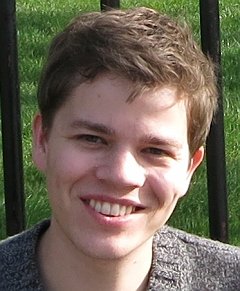
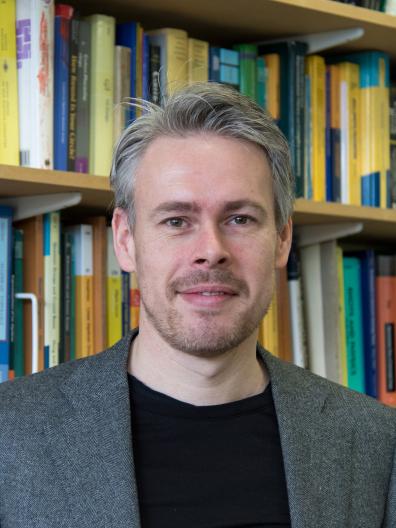
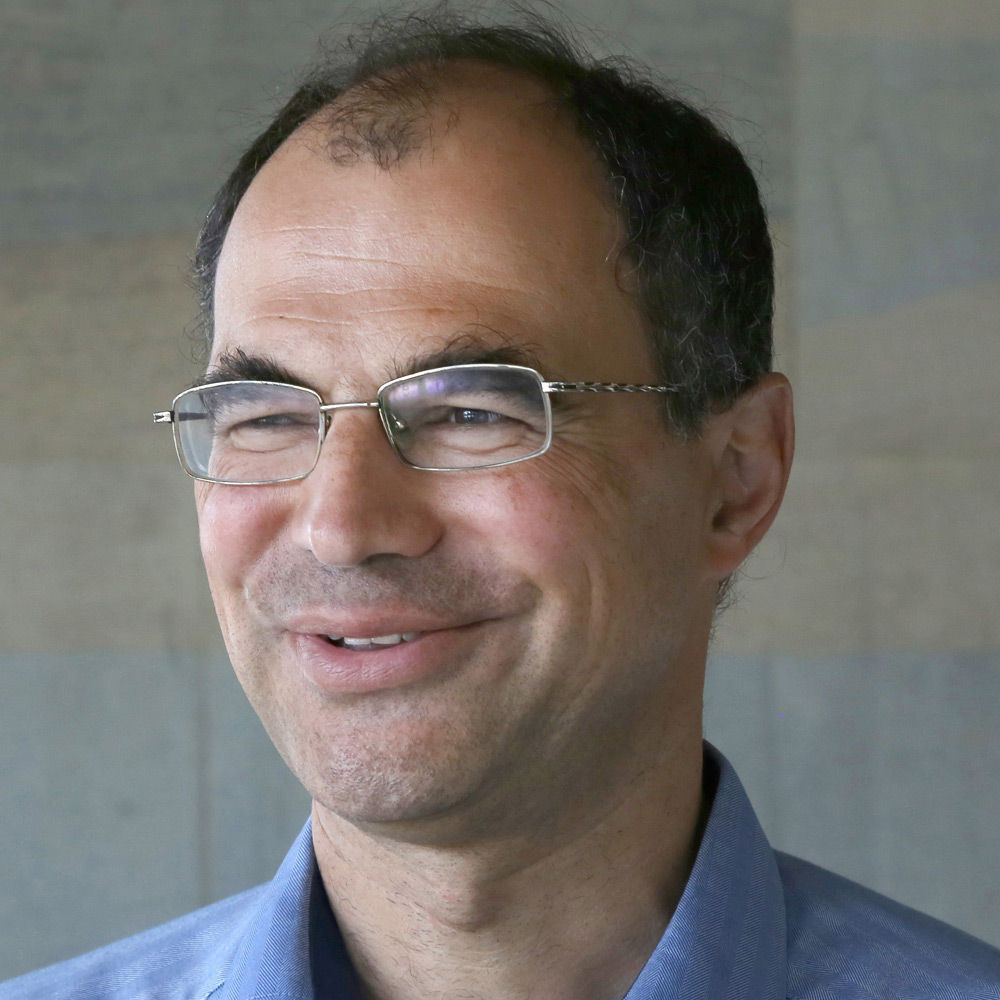
Volker Mehrmann is a full professor at the Technical University of Berlin in the Institute of Mathematics , Faculty II - Mathematics and Natural Sciences. He has held academic positions at Chemnitz University of Technology and RWTH Aachen University . His roles include leadership in research centers: Spokesperson for the DFG Research Center Matheon (2008-2016), President of the European Mathematical Society (2017-2022), and committee member of the Cluster of Excellence MATH+. PhD: Bielefeld University (1982) Habilitation: Bielefeld University (1987) His research interests span Numerical Linear Algebra , Differential-Algebraic Equations (DAEs) , Control Theory , and Industrial Mathematics . Recent work focuses on port-Hamiltonian systems and model order reduction for multi-physics applications. Key scientific contributions include: ERC Advanced Grant (2011-2016) on multi-physics systems Hans Schneider Prize (2019) SIAM Fellow (2011) and AMS Fellow (2022) He serves as editor-in-chief of Linear Algebra and Its Applications and contributes to numerous editorial boards. His leadership roles include presidency in the European Mathematical Society and GAMM .
Rainer Sinn is a University Professor (on leave) at Leipzig University, specializing in Applied Algebra within mathematics. His research centers on real algebraic geometry, convex optimization, and sums of squares, with significant contributions to spectrahedra, amplituhedra, and nonnegativity certificates. His primary research interests include real algebraic geometry (focusing on nonnegative polynomials and quadratic forms), convex algebraic geometry (studying convex hulls of algebraic varieties), and combinatorial applications in optimization. He explores geometric structures like amplituhedra in theoretical physics and investigates algebraic solutions to optimization problems. Recent publications (2022-2025) demonstrate a cohesive focus on algebraic approaches to optimization, with recurring themes in nonnegativity certificates, tropical geometry, and combinatorial aspects of algebraic varieties. His German-language works also address the philosophy and public understanding of mathematics, highlighting interdisciplinary impact. No scientific awards were documented in the provided sources. Details regarding academic advising, research grants, laboratories, or collaborative teams were not specified in the available information.
Benjamin Lucien Kaminski is a Professor at Saarland University and a Lecturer at University College London . He specializes in quantitative aspects of formal program verification , with a focus on probabilistic and quantum programs , incorrectness logic , and non-classical computation models . His research includes semantics , probabilistic program verification , expected runtimes , and explainable verification . He leads the Examination Board for B.Sc. Computer Science (English) and actively mentors PhD, Master’s, and Bachelor’s students in logic and verification. 2025 : A Taxonomy of Hoare-Like Logics (POPL), Partial Incorrectness Logic (TPSA) 2024 : Quantitative Weakest Hyper Pre (OOPSLA), Caesar: A Verifier for Probabilistic Programs (Dafny), Hoare-Like Triples (Incorrectness-track) 2023 : A Deductive Verification Infrastructure (OOPSLA), Lower Bounds (OOPSLA), A Calculus for Amortized Expected Runtimes (POPL) He has received notable awards including the Ackermann Award (2020), Best Paper at LOPSTR 2020 , and EATCS Best Paper Award at ETAPS 2016 . He has also served on program committees for leading conferences like CAV , POPL , and LICS , and reviewed for prestigious journals such as Journal of the ACM and TOCL .
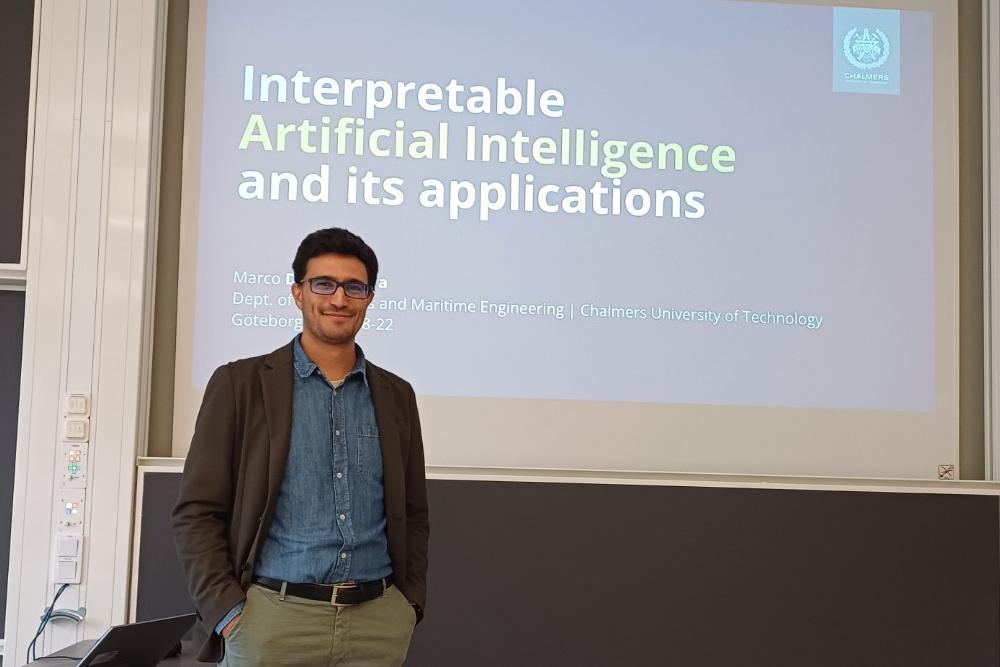
Marco L. Della Vedova is a Senior Lecturer in Applied Artificial Intelligence at Chalmers University of Technology, Sweden. He works in the Vehicle Engineering and Autonomous Systems division within the Department of Mechanics and Maritime Sciences, as part of Prof. Mattias Wahde's research group. Since 2025, he has served as Director of the Data Science and AI master's programme (MPDSC) at Chalmers, where he teaches courses including Introduction to Artificial Intelligence and Digitalization in Sports. Dr. Della Vedova earned his academic foundation at the University of Pavia, Italy, where he completed his BSc (2006), MSc (2009), and PhD (2013) in Computer Engineering. His doctoral research focused on "Real-Time Physical Systems and Electric Load Scheduling" under Prof. Tullio Facchinetti. During his PhD studies, he spent a year at U.C. Berkeley hosted by Prof. Francesco Borrelli at the Model Based Predictive and Distributed Control Lab. His research spans multiple AI domains with a strong emphasis on interpretability. Dr. Della Vedova develops interpretable methods for conversational AI, naturalness evaluation of forests using canopy height models, and geospatial applications. His work bridges theoretical AI with practical societal benefits, particularly in environmental monitoring, transportation systems, and orienteering. He has previously contributed to cloud computing, hate speech detection, and cyber-physical energy systems, demonstrating his interdisciplinary approach to AI research. Dr. Della Vedova's publication record reveals a consistent trajectory of impactful research across multiple domains of artificial intelligence. His recent work shows a strong focus on interpretability in AI systems, with significant contributions to natural language processing, geospatial analysis, and causal inference. The research demonstrates both theoretical depth and practical applications, particularly in environmental monitoring and social media analysis. His methodology often combines traditional machine learning approaches with novel interpretability techniques, creating bridges between complex AI systems and human understanding. Dr. Della Vedova has received several prestigious recognitions for his work: Best PhD thesis award from the Order of the Engineers of Bergamo (2013) Italian champion of Il Cervellone (2012) Top Italian performer in IEEEXtreme 6.0 programming competition (148th overall globally, 2012) Premio Arturo Schena award from Fondazione Credito Valtellinese (2010) With over 50 students supervised through bachelor's and master's theses, Dr. Della Vedova has established himself as a dedicated mentor in the AI community. His current PhD students include Minerva Suvanto working on interpretable NLP and Vivien Lacorre developing AI for railway infrastructure inspection. His supervision spans diverse topics from forest naturalness evaluation to hate speech detection and transportation optimization. Beyond formal supervision, he actively contributes to educational initiatives including serving as Director of Chalmers' Data Science and AI master's program and developing innovative teaching methods that connect theoretical concepts with real-world applications. Dr. Della Vedova is deeply embedded in both academic and professional communities. He leads the Applied Artificial Intelligence research group at Chalmers while maintaining strong connections with European research networks through projects like the ERASMUS+ EUrienteering initiative. His interdisciplinary approach is reflected in collaborations across computer science, environmental science, and social sciences. Notably, he applies his AI expertise to orienteering both as a researcher developing localization methods and as a licensed Event Advisor for the International Orienteering Federation, demonstrating how his professional and personal interests converge in innovative ways.
Elizaveta Rebrova is an Assistant Professor in the Department of Operations Research and Financial Engineering (ORFE) at Princeton University. She is also associated with the Program in Applied and Computational Mathematics (PACM) and the Center for Statistics and Machine Learning (CSML). Education: Specialist degree from Moscow State University (2012), PhD in Mathematics from University of Michigan (2018 under Roman Vershynin) Prior Appointments: Postdoctoral Scholar at Lawrence Berkeley National Lab (2021), Assistant Adjunct Professor at UCLA Mathematics Department (2018-2021) Her research focuses on randomized numerical linear algebra , mathematics of data science , and high-dimensional probability . Key interests include developing algorithms for large-scale data with non-trivial structure, robust and interpretable learning, and stochastic optimization. Her recent work analyzes algorithmic convergence in structured settings, tensor-based data compression, and nonnegative matrix/tensor factorization under constraints. Recent publications span topics in randomized NLA , robust solvers , tensor methods , and nonnegative matrix factorization . Notable trends include improving convergence rates for iterative methods, handling adversarial noise in linear systems, and leveraging tensor structures for efficient data recovery. She supervises Ph.D. students including Jackie Lok, Shambhavi Suryanarayanan, and Sofiia Shvaiko. Her teaching at Princeton covers graduate probability theory (ORF526), convex optimization (ORF523), and network science (ORF387), with prior teaching roles at UCLA and University of Michigan.
Iain Gordon is a Professor and Head of the School of Mathematics at the University of Edinburgh. He holds a BSc in Mathematics from the University of Bristol and a Part III Mathematics degree from the University of Cambridge. His research focuses on representation theory, Lie algebras, quantum groups, and Cherednik algebras, with notable contributions to the study of symplectic reflection algebras and categorification. He has held positions at the University of Glasgow and Bielefeld University, and received the Seggie Brown Fellowship during his postdoc. As Head of School, he oversees the School’s academic mission, including the expansion of the Bayes Centre and the International Centre for Mathematical Sciences (ICMS). Education: BSc Mathematics, University of Bristol Part III Mathematics (MASt), University of Cambridge Key Roles: Professor of Mathematics, University of Edinburgh (2006–present) Head of School of Mathematics, University of Edinburgh (since 2017) His research interests revolve around algebraic structures with geometric interpretations, particularly Cherednik algebras and their connections to representation theory, combinatorics, and mathematical physics. Notably, he proved a significant combinatorial theorem linking noncommutative algebras and combinatorics, earning recognition in the mathematical community. His work has fostered interdisciplinary collaborations, bridging pure mathematics with emerging fields like quantum algebra and geometric representation theory. The School’s growth under his leadership, including the Bayes Centre’s expansion and ICMS initiatives, reflects his commitment to advancing mathematical research and education. Awards: Seggie Brown Fellowship, University of Edinburgh (Postdoc, early career support) Research Contributions: Pioneering studies on rational Cherednik algebras and their categories Geometric approaches to representation theory Applications of Cherednik algebras to symmetric functions and combinatorics His leadership emphasizes balancing research excellence with societal impact, exemplified by the School’s role in major UK government-funded initiatives for mathematical sciences.
Dr. Alexei Vernitski is a Senior Lecturer in the School of Mathematics, Statistics and Actuarial Science (SMSAS) at the University of Essex. His research focuses on applying artificial intelligence (including reinforcement learning and deep learning) to mathematical problems in knot theory, algebra (e.g., braid theory), and universal algebra. He also explores mathematics education, particularly enhancing student motivation. Previously, he worked in the financial sector as a programmer and as a computer science lecturer. His research interests span AI-driven knot theory, algebraic structures (semigroups, groups), and mathematics education. Notable areas include the application of neural networks to braid untangling, automated reasoning in knot diagrams, and cognitive studies on math anxiety using EEG. He has supervised PhD students in mathematics education, universal algebra, and computer science applications of mathematics. His recent work demonstrates trends in combining machine learning with topological and algebraic problems, emphasizing practical AI solutions for abstract mathematical challenges. His articles reflect interdisciplinary approaches, merging computer science techniques with pure mathematics. Dr. Vernitski has advised multiple PhD students, contributing to diverse fields from knot theory to educational technology. His work bridges theoretical mathematics with real-world applications, such as optimizing data transmission and enhancing learning systems through neuroadaptive methods.
Julia Wolf is a Professor of Pure Mathematics at the University of Cambridge, affiliated with the Department of Pure Mathematics and Mathematical Statistics (DPMMS) and Trinity College. Her research focuses on arithmetic combinatorics, harmonic analysis, and analytic number theory, with interdisciplinary connections to model theory, discrete geometry, and theoretical computer science. She holds an EPSRC Open Fellowship and has organized events like the Warwick-Oxbridge-Manchester-Bristol-London (WOMBL) meetings. Wolf teaches advanced courses such as 'Higher-Order Uniformity' and 'Analytic Number Theory,' emphasizing structure and applications. Her work bridges combinatorial, analytic, and algebraic techniques, addressing problems like polynomial configurations in primes, extremal hypergraph theory, and Ramsey multiplicity. Recent research includes structural stability in finite abelian groups and applications of model theory to additive combinatorics. Wolf actively promotes open-access publishing and has mentored numerous postdoctoral researchers and students through initiatives like the Philippa Fawcett Internship Programme. She also contributes to academic equity efforts, such as gender-inclusive hiring in mathematics. Professional activities include editorial roles, conference organization (e.g., the Simons Institute's Pseudorandomness program), and leadership in collaborative projects like the 'Combinatorics Meets Model Theory' workshop. Her grants and fellowships underscore her contributions to advancing discrete mathematics and fostering international academic networks.
Tamar Ziegler is a Professor of Mathematics at the Einstein Institute of Mathematics, Hebrew University, holding the Henry and Manya Noskwith Chair in Mathematics since 2018. She currently serves as Chair of the Einstein Institute (2020-present) and has held visiting positions at prestigious institutions including IAS Princeton (2022-2023 Distinguished Visiting Professor), MSRI (2017 Simons Professor), and Stanford University (2012-2013). Her academic journey began with a B.Sc. summa cum laude (1995), M.Sc. (1998), and Ph.D. (2003) in mathematics from Hebrew University under advisor Hillel Furstenberg. Her career progression shows steady advancement from Zassenhaus Assistant Professor at Ohio State University (2002-2005), through positions at Technion (rising from Senior Lecturer to Professor), to her current role at Hebrew University since 2013. Ziegler's research spans number theory, ergodic theory, and combinatorics, with particular focus on additive combinatorics, higher order Fourier analysis, and connections between dynamical systems and number theory. Her work frequently involves collaborations with leading mathematicians including Terence Tao, Ben Green, and David Kazhdan. Analysis of her publication record reveals consistent contributions to fundamental mathematical problems, particularly in establishing polynomial patterns in primes, inverse conjectures for Gowers norms, and connections between ergodic theory and combinatorial number theory. Her research demonstrates a progression from foundational work on characteristic factors to increasingly sophisticated applications in prime number theory. 2025-2030 ERC Advanced grant 2024 Rothschild Prize in Mathematics 2024 9th European Congress in Mathematics, Plenary Speaker 2023 AIM Alexanderson Award 2021 Elected to Academia Europaea 2016 Rector's Prize for Excellence in Research and Teaching 2016-2021 ERC Consolidator grant 2015 Michael Bruno Memorial Award Ziegler has received continuous research funding through prestigious grants including multiple ERC awards and fellowships. Her leadership role as Chair of the Einstein Institute demonstrates significant institutional responsibility. While specific advising information isn't provided in the sources, her Erdős number is 2 (via Hillel Furstenberg) and she has collaborated with many prominent mathematicians throughout her career. As Chair of the Einstein Institute of Mathematics, Ziegler leads one of Israel's premier mathematical research centers, overseeing research programs and academic activities that connect ergodic theory, number theory, and combinatorics with other mathematical disciplines.
David Goldberg is a Professor of Mathematics at Purdue University and serves as Executive Director of the National Alliance for Doctoral Studies in the Mathematical Sciences within the College of Science. His primary affiliation is with the Department of Mathematics at Purdue University. Goldberg's research focuses on Automorphic Forms, Lie Groups, Number Theory, and Representation Theory. His work explores topics such as elliptic representations, Hecke algebras, and the tempered spectrum of classical groups, contributing to the foundational understanding of algebraic and analytic structures in mathematics. His extensive publication record spans over three decades, with key contributions to reducibility of representations, harmonic analysis, and the study of p-adic groups. Notable works include investigations into SLn-types, similitude groups, and local coefficients in non-generic representations. Goldberg also holds administrative roles, including leadership in the National Alliance for Doctoral Studies, which aims to diversify and strengthen doctoral education in mathematical sciences. His teaching includes courses like MATH 460, reflecting his engagement with both research and education. Labs/Teams: Executive Director of the National Alliance for Doctoral Studies in the Mathematical Sciences (NSF-funded initiative).
Oleksandr Tsymbaliuk is an Associate Professor of Mathematics at Purdue University, specializing in Representation Theory, Quantum Algebra, and Integrable Systems. His research focuses on quantum affine and toroidal algebras, shuffle algebras, Yangians, and their connections to algebraic geometry and mathematical physics. He has held positions at Yale University and the Simons Center for Geometry and Physics. Tsymbaliuk earned his PhD from MIT in 2014 and has been supported by NSF grants DMS-2302661 and others. His research interests include Cherednik algebras, Coulomb branches, and Toda systems. He has mentored students in programs like PRIMES and Yulia’s Dream, leading to collaborative publications. Notable contributions include works on Lyndon words, R-matrices, and orthogonal bases in quantum groups. Teaching roles span courses such as Infinite-Dimensional Lie Algebras and Linear Algebra at Purdue. He actively participates in academic conferences and seminars, with notable talks at Temple University and Northeastern University. Grants and collaborations include NSF funding and partnerships with researchers like Michael Finkelberg and Andrei Neguț. His work bridges algebra, geometry, and physics, emphasizing integrable systems and categorification.
Jianlin Xia is a Professor of Mathematics at Purdue University, with a courtesy appointment in the Department of Computer Science. He joined the university in 2014. Xia holds a Ph.D. in Applied Mathematics from the University of California, Berkeley (2006). His research focuses on numerical linear algebra, fast algorithms for structured matrices, and their applications in computational science and engineering. His work addresses challenges in solving large-scale linear systems, eigenvalue problems, and partial differential equations (PDEs) using innovative methods like fast multipole techniques, hierarchical structures, and randomized algorithms. Key areas of research include: Design and analysis of fast algorithms for structured matrices (e.g., hierarchical, semiseparable, Cauchy matrices) Efficient direct and iterative solvers for PDEs, especially Helmholtz equations in seismic modeling Stability and robustness of numerical methods in high-performance computing Applications in wave propagation, inverse problems, and machine learning Xia’s contributions include advancements in low-rank approximations, divide-and-conquer eigenvalue decomposition, and scalable preconditioning techniques. His work emphasizes both theoretical analysis and practical implementation, often leveraging parallel computing architectures. Contact: xiaj@purdue.edu .
Justin Campbell is a Dickson Instructor in the Department of Mathematics at the University of Chicago, specializing in geometric representation theory. His research explores connections between algebraic geometry and representation theory, with particular interest in the geometric Langlands program. Current investigations focus on categorical structures in representation theory and their applications to automorphic forms. His work bridges abstract mathematical theories with computational approaches to fundamental problems in algebra and geometry.
Youssef Marzouk is a Professor of Aeronautics and Astronautics at MIT, serving as co-director of the MIT Center for Computational Engineering and director of the Aerospace Computational Design Laboratory. His research focuses on integrating physical modeling with statistical inference, emphasizing Bayesian computation, uncertainty quantification, and optimal experimental design. He holds a SB, SM, and PhD from MIT and has been recognized with prestigious awards including the DOE Early Career Award and the Junior Bose Teaching Prize. Education: PhD in Aeronautics and Astronautics, MIT SM in Aeronautics and Astronautics, MIT SB in Aeronautics and Astronautics, MIT Research Interests: Uncertainty Quantification techniques for complex systems Bayesian computational methods and inverse problem solutions Optimal experimental design strategies Interdisciplinary applications in geophysics, environmental science, and engineering Awards: 2022: Report to the President, Center for Computational Science and Engineering 2021: Bayesian Inference Software Framework (hIPPYlib-MUQ) 2012: MIT School of Engineering Junior Bose Award 2010: DOE Early Career Research Award Labs & Leadership: Aerospace Computational Design Laboratory (Director) MIT Center for Computational Engineering (Co-Director) Editorial Board roles: SIAM Journal on Scientific Computing, Advances in Computational Mathematics
Andrew D. Lewis is a Professor and Associate Head of the Department of Mathematics & Statistics at Queen's University, Kingston, Canada. His research focuses on geometric control theory, global analysis, and geometric mechanics, with applications to mechanical systems and dynamical systems. He holds a Ph.D. from Caltech, along with M.Sc. and B.Sc. degrees from Caltech and the University of New Brunswick, respectively. His research explores the intersection of geometric methods, topology, and algebra in solving structural problems in control theory and mechanics. He actively mentors graduate students and emphasizes mathematical rigor combined with applied perspectives. Lewis teaches advanced courses in control theory, differential equations, and geometric mechanics, and has developed extensive lecture notes and software tools for academic use. He has organized numerous research events, including the CRM Trimester on Control Geometry and Engineering and the Meeting on Nonlinear Control Theory and its Applications. His work spans theoretical contributions to control systems, geometric mechanics, and applied mathematics, with a focus on controllability, stabilization, and system dynamics. Education: Ph.D., California Institute of Technology M.Sc., California Institute of Technology B.Sc., University of New Brunswick Awards/Honors: None explicitly mentioned in the provided texts. Grants/Advising: Supervised numerous graduate students and postdoctoral researchers, fostering interdisciplinary work in control theory and mechanics.