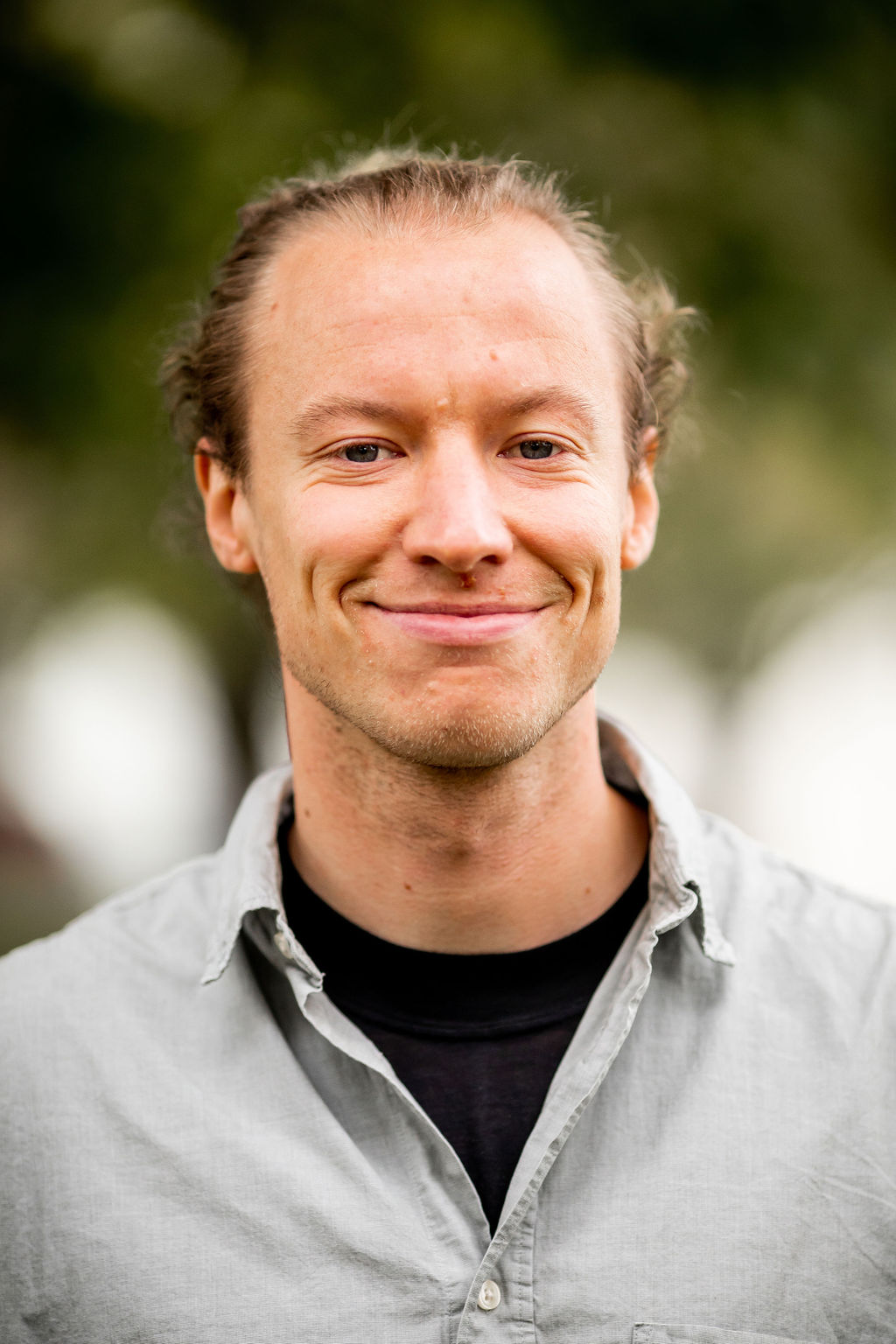
Dr. Jonas Stelzig is a Senior Lecturer in the School of Mathematics at Ludwig Maximilian University of Munich (LMU). He is currently on leave during the summer term 25 to substitute a position at Johannes Gutenberg University Mainz, where he teaches Riemann surfaces and a seminar on topological K-theory. In 2026, he will assume a Heisenberg-position funded by the German Research Foundation (DFG). Current Role: Senior Lecturer (Privatdozent) at LMU Leave Status: Substituting a position at Mainz (2024) Future Role: DFG Heisenberg-position (2026) Stelzig's research lies at the intersection of Geometry, Topology, and Number Theory. He specializes in (almost-)complex manifolds, particularly their cohomology and rational homotopy theory. His work explores the interplay between algebraic structures and geometric properties, such as Massey products, formality, and bigraded cohomological notions. Recent publications focus on cohomological properties of Kähler and non-Kähler manifolds, rational homotopy theory, and spectral sequences. He collaborates with researchers like G. Placini, L. Zoller, and A. Milivojevic, contributing to journals like Advances in Mathematics and Mathematical Research Letters . Teaching highlights include courses on complex geometry, topology, and homotopy theory. He co-organizes workshops like Geometry and TACoS and participates in international conferences, including Luminy (2024), Osaka (2022), and Banff (2019).
Erkao Bao is an Assistant Professor in the School of Mathematics at the University of Minnesota, where he is a member of the differential geometry group. His office is located at Vincent Hall 356, 206 Church Street SE, Minneapolis, MN 55455, and he can be reached at bao@umn.edu. Dr. Bao specializes in Symplectic Geometry and Contact Geometry, with research focusing on Morse homology, Floer theory, and Lagrangian submanifolds. His work explores equivariant structures in geometric contexts, with recent publications addressing reflection actions via broken trajectories, coherent orientations in symplectic field theory, and immersed Lagrangian Floer cohomology. His research demonstrates a clear progression from foundational work on J-holomorphic curves and contact homology toward increasingly sophisticated treatments of equivariant structures. The integration of geometric methods with potential applications in neural networks (as seen in his 2019 paper on equivariant neural networks) shows his ability to bridge pure mathematics with contemporary computational challenges. Office: Vincent Hall 356, 206 Church Street SE, Minneapolis, MN 55455 Email: bao@umn.edu Office Hours: Typically Monday and Friday 1:00-2:00 PM, or by appointment As an educator, Dr. Bao teaches undergraduate courses including Math 2374 (CSE Multivariable Calculus) and Math 5378 (Differential Geometry), as well as graduate courses Math 8301-8302 and Math 8365 (Manifold and Topology), covering topics from vector calculus to advanced differential geometry and topological methods.
Louis Theran is a Lecturer in Mathematics at the University of St Andrews , School of Mathematics and Statistics. His research bridges geometry, combinatorics, and algorithmic problems, with applications in physics, materials, and machine learning. Education: Ph.D. in Computer Science, University of Massachusetts, Amherst (2010) M.S. in Computer Science, University of Massachusetts, Amherst (2007) B.S. in Computer Science and Mathematics, University of Massachusetts, Amherst (2006) Theran’s research focuses on the rigidity theory of frameworks , exploring how geometric and combinatorial properties determine structural stability. He investigates discrete geometry, sparse hypergraphs, and pebble game algorithms, connecting these to machine learning (e.g., low-rank matrix completion) and materials science (e.g., auxetic metamaterials, sticky disks). His recent work analyzes rigidity transitions in random graphs , universal rigidity in one-dimensional frameworks, and maximum likelihood thresholds via graph rigidity. Collaborations span computational geometry, algebraic statistics, and physics, emphasizing interdisciplinary applications. Scientific Awards: Heilbronn small grants scheme (2021) NSF/KOSEF East Asia and Pacific Summer Institutes Fellowship (2006) Theran has supervised numerous BSc, MMath, and PhD projects , including topics like tensegrities, graphons, and geometric constraint systems. He has also contributed to Gaussian graphical models and universality theorems for Delaunay triangulations.
Prof. Hülya KADIOĞLU is a Mathematics Education faculty member at Yıldız Technical University's Faculty of Education , Department of Mathematics and Science Education. With over 15 years of academic experience, she has held positions from Lecturer to Full Professor since 2024. PhD in Mathematics from Gazi University (2007-2011) Postdoctoral research at Idaho State University (2011-2012) Research Interests span differential geometry, Lie algebras, and mathematics education innovation. Her work combines geometric structures with computational methods while developing novel educational approaches for mathematical concepts. Awards include multiple TÜBİTAK Publication Incentive Prizes (2013, 2018) and Yıldız Technical University Faculty-Level Authorship Awards (2018). She has supervised multiple graduate theses and managed 9 funded projects, including several TÜBİTAK initiatives focused on mathematics education and geometric understanding. Her publication record includes 39 WoS-indexed articles with 26 H-index and over 52 total citations.
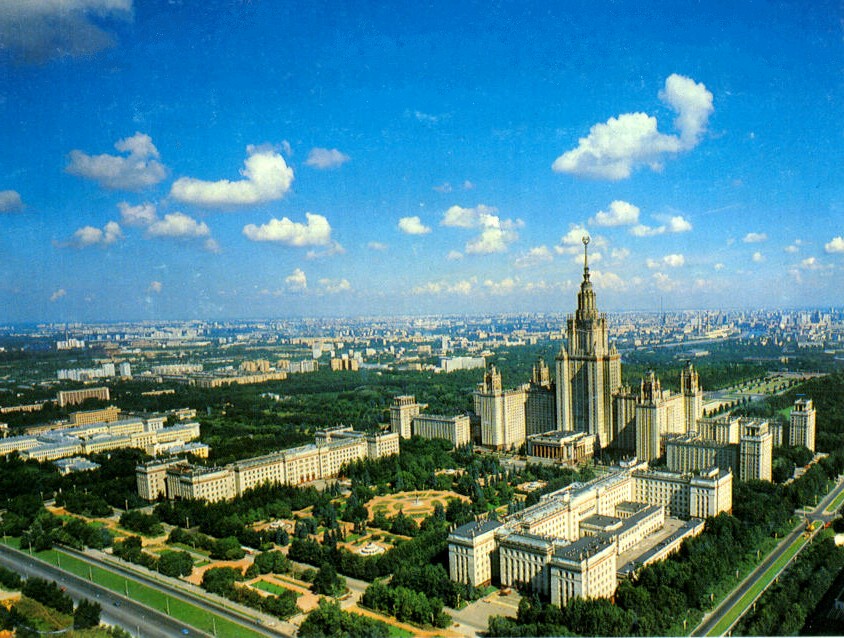
Arthemy Kiselev is an Assistant Professor at the University of Groningen's Faculty of Science and Engineering, specifically within the Department of Mathematics at the Johann Bernoulli Institute. He has been working at the Chair of Algebra since January 2011, contributing significantly to mathematical physics research. His educational background includes: (Under)graduate studies at Lomonosov Moscow State University (summa cum laude, 2001) and Independent University of Moscow PhD in mathematical physics (2004) Professor Kiselev's research focuses on the interface of (super)geometry and quantisation, particularly examining the (non)commutative geometry of Kontsevich's deformation and Batalin-Vilkovisky's approaches to quantisation of gauge field models. His work centers on deformation quantisation, BV quantisation, geometry of differential equations, Poisson geometry, and brackets. He has developed algebraic and geometric tools for the mathematical language of fundamental physics, with particular emphasis on the geometry of variations in Batalin-Vilkovisky formalism and Kontsevich's deformation quantization. His fingerprint in research shows strong connections to Cocycle Mathematics (100%), Poisson Bracket Mathematics (95%), Vector Field Mathematics (77%), Manifold Mathematics (65%), Poisson Structure Mathematics (51%), and Partial Differential Equation Mathematics (41%). His recent publications (2023-2024) demonstrate continued exploration of Kontsevich graphs acting on Nambu-Poisson brackets, star-products for affine Poisson brackets, and associativity properties in deformation quantization. These works show a consistent focus on understanding the mathematical structures underlying quantization procedures, with particular attention to graph complexes, cocycles, and their applications to Poisson geometry. His research reveals deep connections between algebraic structures, differential geometry, and theoretical physics. Scientific recognition includes: NWO VENI post-doctoral grant at Mathematical Institute Utrecht (2008-2010) Throughout his career, Kiselev has given 107 international talks at mathematics and theoretical physics research seminars. His collaborative work with PhD and master's students, such as M.S. Jagoe Brown and F. Schipper, has produced significant results in Poisson geometry and deformation quantization. His research has been supported by various institutions including visits to prestigious centers like IHES (France), MPIM (Germany), CRM (Montreal, Canada), and SISSA (Trieste, Italy). He has held positions at institutions including ISPU in Ivanovo, Russia (as docent since 2009). Kiselev is an active member of the Geometry and Quantum Theory (GQT) research group, contributing to the vibrant mathematical physics community at Groningen. His work continues to bridge abstract mathematical structures with fundamental physical theories, particularly through the lens of deformation quantization and Poisson geometry.
Owen Gwilliam is an Assistant Professor in the Department of Mathematics and Statistics at the University of Massachusetts Amherst. His research focuses on the intersection of quantum field theory, derived geometry, and higher categories, with a particular emphasis on algebraic and topological structures in mathematical physics. Research Interests His work explores advanced topics in theoretical physics and mathematics, including: Quantum field theory Derived geometry Higher categories Factorization algebras Topological defects and symmetries Deformation quantization Recent publications (2020–2025) highlight his contributions to framing novel algebraic frameworks for quantum field theories, with a focus on holomorphic and topological models, factorization structures, and their applications to supersymmetry and gauge theory.
Ionut Chifan is a Professor of Mathematics at the University of Iowa. His research focuses on operator algebras, ergodic theory, and group theory, with a particular emphasis on structural properties of von Neumann algebras associated with negatively curved groups and graph product groups. He earned his PhD from UCLA and has contributed extensively to understanding rigidity phenomena in operator algebras and group actions. Key research interests include: Superrigidity for von Neumann algebras Classification of II₁ factors Rigidity results for group von Neumann algebras with diffuse centers Structural analysis of graph product groups His work has explored topics such as quasinormalizers, outer automorphisms, and embeddings in von Neumann algebras. He has also investigated applications of small cancellation theory and geometric group theory to operator algebras. Notable contributions include foundational results on W*-superrigidity for wreath-like products and graph product groups. His research bridges connections between von Neumann algebras, geometric group theory, and continuous model theory. Chifan has collaborated on grants such as the NSF-funded project "FRG: Collaborative Research: von Neumann Algebras Associated to Groups Acting on Hyperbolic Spaces" (2019). His work often emphasizes the interplay between algebraic structures and functional analytic properties.
Alexander Borisov is an Associate Professor of Mathematics at Binghamton University (since 2014), specializing in Algebraic Geometry, Number Theory, and Discrete Geometry. He holds a Ph.D. from Pennsylvania State University (1996). His research focuses on intersections of algebraic geometry with number theory, including topics like toric varieties, polynomial maps, and arithmetic dynamics. Borisov has advised multiple Ph.D. students, including Sayak Sengupta (2024), Pat Carney (2023), and Changwei Zhou (2019). He organizes the Upstate New York Online Number Theory Colloquium and contributes to academic leadership through roles like seminar coordination. His teaching includes advanced courses like Honors Calculus (Math 230) and Arithmetic Seminar (Math 562). Research outputs span over 30 publications, with recent work emphasizing polynomial dynamics and geometric structures. Borisov maintains active collaborations, reflected in joint papers with mathematicians like Valery Alexeev and Mikhail Sapir.
Remus Floricel is a Professor and Department Head in the Department of Mathematics and Statistics at the University of Regina, Faculty of Science. His research focuses on functional analysis, operator algebras, quantum probability, and noncommutative dynamics. He currently teaches MATH 890AM Topics In Analysis II. His recent publications explore advanced topics in operator algebras and noncommutative geometry, including studies on C∗-algebras, spectral triples, and Ricci curvature in noncommutative settings. No scientific awards or grants are explicitly noted in the provided information.
Thang T. Q. Le is a Professor at the School of Mathematics, Georgia Institute of Technology, USA. His research focuses on differential topology, 3-manifolds, knot theory, and quasicrystals. He has an extensive publication record in quantum topology, skein modules, and topological quantum field theory. Research Interests: Differential topology, 3-manifolds, knot theory, quasicrystals, quantum topology, and skein algebras. His recent work explores quantum traces, root of unity invariants, and stated skein modules of 3-manifolds. He serves as an editor for journals like Quantum Topology , The Journal of Knot Theory and its Ramifications , and Acta Mathematica Vietnamica . Email: letu@math.gatech.edu .
Nikolai Thode Opdan is a Doctoral Research Fellow at the Department of Mathematics , University of Oslo. His work spans multiple areas of theoretical mathematics, with a focus on advanced algebraic and topological frameworks. Research Interests : Motivic homotopy theory, Logarithmic algebraic geometry, Higher category theory, Algebraic number theory, and Ramification theory. These fields explore the intersection of algebraic structures, geometric principles, and topological invariants. Publications highlight his contributions to cohomology theories and framed correspondences, aligning with his involvement in the Equations in Motivic Homotopy project. His affiliations include the Geometry and Topology research group. Opdan is actively engaged in collaborative research, as evidenced by his co-authored works with prominent mathematicians like Kay Rülling and Marc Hoyois.
Prof. Dr. Sascha Orlik is a Professor at the University of Wuppertal, leading the Algebra and Number Theory Working Group within the Department of Mathematics. His research focuses on arithmetic geometry, with particular emphasis on p-adic period ranges, the Langlands Program, Deligne-Lusztig varieties, and representation theory of p-adic and finite groups of Lie type. He has contributed to foundational studies in cohomology of period domains and equivariant vector bundles over Drinfeld's spaces. His working group includes members such as Dr. Andreas Bode, MSc. Erik Barinaga, and MSc. Dominik Briganti, alongside former members like Dr. Martin Bender and Dr. Christoph Spenke. He has authored a notable monograph *Period domains over finite and p-adic fields* (Cambridge Tracts in Mathematics) and numerous influential publications in journals like *Inventiones mathematicae* and *Advances in Mathematics*. Research trends in his articles span the interplay between geometric and cohomological methods in p-adic settings, with a focus on representation theory and its applications to number theory. His work bridges algebraic geometry, topology, and arithmetic, addressing key problems in modern arithmetic geometry and the Langlands Program.
Wolfgang Lück is a Professor of Mathematics at the University of Bonn, affiliated with the Hausdorff Center for Mathematics (HCM) and the Hausdorff Research Institute for Mathematics (HIM). He holds a Max Planck Fellowship at the Max Planck Institute for Mathematics (MPIM) and served as HCM spokesperson from 2019–2022. His research focuses on topology, particularly topological invariants, K- and L-theory, and geometric group theory. He has pioneered work on the Farrell-Jones conjecture and L²-invariants, earning prestigious awards like the Leibniz Prize (2008) and ERC Advanced Grant (2015). Education: Studied mathematics in Göttingen (BSc 1981, PhD 1984), habilitation (1989) Prior roles: Full professor at Mainz (1991–1996), Münster (1996–2010), and spokesperson for the SFB “Geometry, Groups & Actions” His research interests span manifold classification, surgery theory, and algebraic K-theory. Over 50 publications since 2013 alone demonstrate his prolific contributions. Awards include membership in the German Academy of Sciences (2010) and North Rhine-Westphalian Academy (2013). Grants: ERC Advanced Grant (2015), Max Planck Research Prize (2003) Leadership: Directed HIM (2011–2017), led collaborative research initiatives
Viktoriya Ozornova is a Researcher at the Max Planck Institute for Mathematics in Bonn, specializing in algebraic topology with a focus on abstract homotopy theory and higher category theory. Her work explores foundational questions in (∞,n)-categories and their applications to mathematical physics. She collaborates extensively with researchers such as Martina Rovelli, Emily Riehl, and others on topics including model structures, categorical equivalences, and homotopy coherence. Her research has been published in leading journals like Advances in Mathematics , Algebraic & Geometric Topology , and Transactions of the American Mathematical Society . She co-organized workshops on infinity categories and Picard groups of topological modular forms (TMF). She has supervised students including Julian Brüggemann (PhD) and mentored numerous bachelor and master theses on topics ranging from elliptic curves to homotopy theory. Ozornova has taught at institutions including the University of Bochum and Bonn, covering courses in topology, analysis, and number theory. Her pedagogical contributions include designing online curricula for engineering mathematics and organizing seminars on advanced topics like Lie groups and braid theory.
Petra Schwer is a full professor of Geometry at Heidelberg University, holding the position since February 2024. Previously, she was a professor at Otto von Guericke University Magdeburg (2018–2024) and the Karlsruhe Institute of Technology (2014–2018). She has also held research and academic positions at institutions including the University of Münster and UC Davis. Education: She earned her PhD in Mathematics from Westfälische Wilhelms-Universität Münster in 2009, supported by a stipend from the Studienstiftung des deutschen Volkes. Prior to that, she received her Diplom in Mathematics from the University of Bonn in 2005. Research Interests : Her work focuses on the interplay between geometric structures and group theory, particularly in metric spaces of nonpositive curvature, polyhedral complexes, and Coxeter groups. She explores geometric and combinatorial aspects of buildings, including Bruhat-Tits buildings and their generalizations, using methods from geometric group theory and metric geometry. Key Contributions : Recent publications include studies on folded galleries in affine buildings, the geometry of Coxeter groups, and the application of cube complexes in computational geometry. These contributions highlight her expertise in nonpositive curvature and geometric group theory. Grants and Funding : Dr. Schwer has secured grants such as DFG projects on buildings and symmetric spaces, collaborative grants in mathematical complexity reduction, and initiatives like the Young Investigator Network exploring geometric data analysis. Students and Advising : She has advised doctoral and master’s students including Isobel Davies, Marco Lotz, and Anna Michael (OVGU); Julia Heller and Annette Karrer (KIT). Her teaching includes advanced topics in geometry and group theory.