Maria Rita Casali is a Full Professor at the Department of Physical, Computer and Mathematical Sciences, University of Modena and Reggio Emilia. Her research focuses on geometry, topology, and mathematical structures, particularly in relation to PL-manifolds and colored tensor models. Teaching: Courses in Geometry, Discrete Mathematics, and Linear Algebra for Engineering and Strategic Sciences degrees. Research: Investigates combinatorial invariants (regular genus, G-degree, gem-complexity) for compact 4-manifolds, linking them to quantum gravity and tensor models. Publications: Recent works include studies on trisections of 4-manifolds, classifications via colored graphs, and combinatorial properties of the G-degree. Her contributions to crystallization theory and PL-manifold representation have advanced the understanding of geometric topology and its applications in theoretical physics.
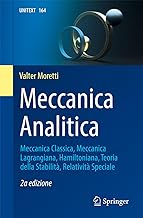
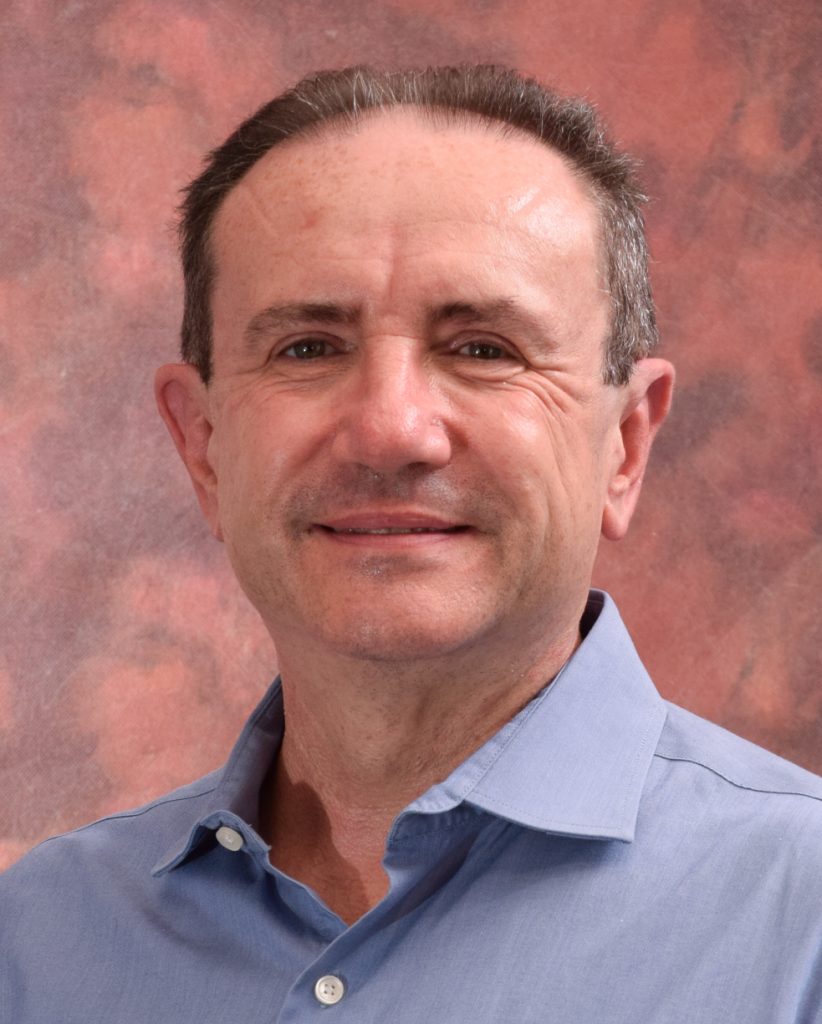
Valter Moretti is a Full Professor in the Department of Mathematics at the University of Trento. His academic career spans roles from Research Fellow to Full Professor, focusing on Mathematical Physics and Quantum Field Theory (QFT) in curved spacetime. He earned an MSc in Physics from Genova University and a PhD in Theoretical Physics from Trento University. Research Interests : Algebraic QFT, General Relativity, Quantum Mechanics, Operator Algebras, and Spectral Theory. His work bridges mathematical rigor with physical applications, particularly in quantum localization, entanglement, and curved spacetime phenomena. Publications : Authored 15+ recent papers on topics like quantum particle localization, entanglement certification, and QFT on curved backgrounds. Collaborated on a 2022 patent for generating entangled photon states. Awards : Holds a patent for a quantum-certified random number generator (2022). Supervision : Advised 8 PhD students, including N. Pinamonti, L. Franceschini, and C. van de Ven. Coordinated national and international research projects (e.g., H2020-MSCA-COFUND-2015). Labs & Collaborations : Affiliated with INFN, TIFPA-INFN, and Q@TN (Quantum@Trento). Organized conferences like Quantum Physics and Geometry (2014) and Quantum Machine Learning (2023). Teaching : Lectures on Analytical Mechanics, Quantum Relativistic Theories, and Special Relativity. Authored textbooks on Spectral Theory and Quantum Mechanics.
Paola Cristofori is an Associate Professor in the Department of Physical, Computer and Mathematical Sciences at the University of Modena and Reggio Emilia. Her research focuses on Algebraic Topology, Differential Geometry, and Manifold Theory, with contributions to PL topology, 4-manifolds, and combinatorial structures like crystallization theory. She teaches courses in Geometry, Linear Algebra, and Algebraic Topology for undergraduate and graduate programs in Mathematics, Civil Engineering, and Strategic Sciences. Her work emphasizes topological invariants, combinatorial methods in manifold classification, and applications of colored graphs. Key areas include trisections of 4-manifolds, Kirby diagrams, and G-degree theory. She collaborates extensively on projects involving geometric topology and computational topology tools. Dr. Cristofori’s teaching spans foundational topics in linear algebra, Euclidean geometry, and advanced algebraic topology, emphasizing rigorous proofs and practical applications. Her research is published in top journals and includes over 40 articles, reflecting her deep engagement with low-dimensional topology and geometric structures.
Affiliations: Domenico Fiorenza is an Associate Professor at the Department of Mathematics, University of Rome La Sapienza since October 2015. Previously, he held roles as Assistant Professor (2005–2015) and PostDoc Researcher at the Universities of Rome Tor Vergata and La Sapienza. Education: Laurea in Mathematics (University of Rome La Sapienza, 1996); PhD in Mathematics (University of Pisa, 2002). Research Interests: His work focuses on mathematical physics, algebraic geometry, and topology, with contributions to deformation theory, higher structures in quantum field theory, and categorical constructions. Notable areas include T-duality in rational homotopy theory, M-theory, and derived algebraic geometry. Publications: Over 60 peer-reviewed articles, including studies on C-infinity algebras, twistor spaces, and the geometric interpretation of M5-branes. Recent work emphasizes connections between homotopy theory and physics, such as twisted Cohomotopy and anomaly cancellation in M-theory. Labs/Teams: Collaborations with Hisham Sati and Urs Schreiber on topics like super-exceptional geometry and higher TQFTs. Visiting positions at IHÉS, MPIM, and ETH Zurich highlight his international engagement.
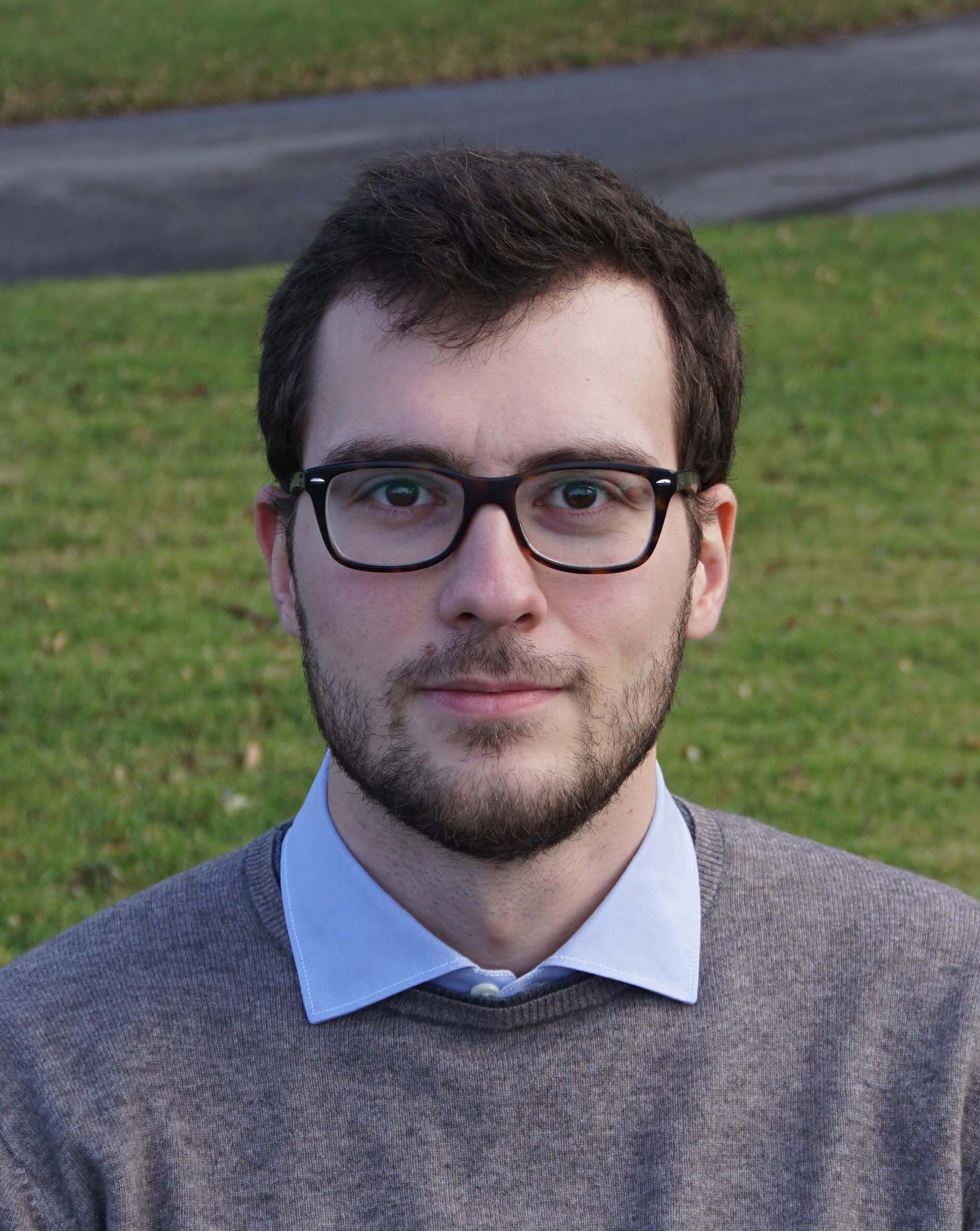
Fabrizio Riguzzi is a Full Professor at the Department of Mathematics and Computer Science of the University of Ferrara, Italy. His academic career spans over two decades at the same institution, having served as Associate Professor (2014-2020) and Assistant Professor/Ricercatore (1999-2014). He is an active researcher in the fields of Logic Programming and Statistical Relational Artificial Intelligence with numerous publications and leadership roles in international conferences. His educational background includes: PhD in Electronic and Computer Engineering from the University of Bologna (1999) Laurea in Computer Engineering from the University of Bologna (1995) Riguzzi's research focuses on probabilistic approaches to artificial intelligence, particularly probabilistic logic programming and statistical relational AI. His work bridges symbolic reasoning with probabilistic methods, developing frameworks for uncertain knowledge representation and reasoning. He has made significant contributions to probabilistic answer set programming, neuro-symbolic integration, and applications in areas like network intrusion detection and knowledge graph completion. His research demonstrates how logical formalisms can be enhanced with probabilistic reasoning to tackle real-world problems with uncertainty. An analysis of his recent publications reveals a strong trend toward integrating neural and symbolic approaches in AI, with significant work on probabilistic answer set programming frameworks. His research spans theoretical foundations of probabilistic logic programming, practical implementations, and applications in cybersecurity, knowledge graphs, and decision-making under uncertainty. The interdisciplinary nature of his work connects computer science theory with practical AI applications. His notable awards include: Alain Colmerauer 10-Year Test-of-Time Award at ICLP 2021 Best Paper Award for "BUNDLE: A Reasoner for Probabilistic Ontologies" at RR-2013 Highly Commended Paper Award for "Probabilistic declarative process mining" at KSEM 2010 Riguzzi has supervised several PhD students to completion, including Elena Bellodi, Riccardo Zese, and Giuseppe Cota, who have gone on to win prestigious awards for their theses. He has served in numerous editorial roles, including Associate Editor of the Journal of Artificial Intelligence Research and Editor in Chief of Intelligenza Artificiale. His leadership extends to organizing major conferences like ILP 2018 and serving on program committees for top AI venues including IJCAI, AAAI, and ECAI. He is a member of the ML@unife research group and has developed several online systems including cplint, TRILL, and an Online AUC calculator. His work has fostered collaborations across the AI research community, particularly in the areas of probabilistic logic programming and neuro-symbolic AI.
Francesco Galuppi is an Assistant Professor at the University of Warsaw, within the Faculty of Mathematics, Informatics and Mechanics. His research focuses on complex algebraic geometry, tensor decompositions, and their applications to signature tensors of paths, bridging theoretical mathematics with applied sciences like data analysis and machine learning. He leads the Sonata grant 'Tensor rank and its applications to signature tensors of paths' funded by the National Science Center, Poland. His work explores geometric approaches to tensor structure, emphasizing interactions across disciplines. Key topics include secant varieties, tensor rank, and symmetry analysis of signature tensors. Galuppi has organized workshops such as 'Apolarity in Varsavia' and co-organized conferences like the SIAM minisymposium 'Tensors in Applications.' His recent activities include talks on path signatures, eigenpoint schemes, and defectivity of Segre-Veronese varieties, reflecting his commitment to advancing algebraic geometry’s practical applications. He actively engages in academic communities, delivering seminars and collaborating internationally. His research narrative includes grants, interdisciplinary collaborations, and contributions to thematic semesters like AGATES, focusing on tensors in diverse fields from quantum physics to optimization.
Roberto Valandro is an Associate Professor at the Department of Physics, University of Trieste, where he serves as a member of the Department's Board, President of the Joint Board of Studies, and Vice-Coordinator of the Doctoral Studies Boards for multiple physics doctoral programs (cycles XXXIV-XXXIX). He leads the String Compactifications research group within the Fields and Strings research strand of the Theoretical Physics division. Professor Valandro's research focuses on three main pillars: Strings on Singular Manifolds and Quantum Field Theories , where he uses geometric engineering to translate M-theory geometries into five-dimensional effective field theories; T-Branes , investigating bound states of D6-branes and their M-theory interpretation; and String Phenomenology , exploring connections between string theory and observable physics through both top-down and bottom-up approaches. Analysis of his recent publications reveals a strong concentration on 5-dimensional physics emerging from string compactifications, Calabi-Yau geometry, and the relationship between geometric structures and quantum field theories. His work frequently involves international collaborations, particularly with researchers from SISSA and other leading institutions in theoretical physics. As a dedicated mentor, Professor Valandro supervises PhD students including Chiara Crinò, Andrea Sangiovanni, and Davide Bason. His leadership extends to significant institutional roles, including serving as President of the Joint Board of Studies and Vice-Coordinator of multiple doctoral programs, demonstrating his commitment to academic governance and the development of future physicists. At the forefront of theoretical physics research, Professor Valandro continues to advance our understanding of string compactification and its implications for fundamental physics, contributing to Trieste's reputation as a global hub for theoretical physics research.
Romeo Brunetti is an Associate Professor of Mathematical Analysis at the Department of Mathematics, University of Trento. His academic career includes roles such as 'Rientro dei Cervelli' fellow (2006–2010) and research positions at the University of Naples and the DFG (Germany). He specializes in foundational aspects of classical and quantum field theories, with a focus on quantum gravity, algebraic structures in QFT, and relativistic systems. Education: Bachelor’s Degree in Physics, University of Rome 'La Sapienza' (supervised by Prof. Marzio Cassandro and Prof. G. Parisi). PhD in Physics, University of Naples 'Federico II' (supervised by Prof. G. Marmo and Prof. R. Longo). Research Interests: His work explores perturbative quantum gravity, Bose-Einstein condensation in relativistic QFT, quantum spacetime coordinates, nonlinear dynamics in field theories, and classical relativistic scalar fields. He emphasizes rigorous mathematical approaches to quantum field theories in curved spacetimes. Publications: His articles span topics like renormalization in algebraic QFT, quantum gravity models, and time observables in quantum mechanics. The most recent studies address thermodynamic aspects of fermions and covariant approaches to effective quantum gravity. Awards: Featured Review in Mathematical Reviews (MR1736329). Conferences & Committees: Co-organized major events including 'Recent Mathematical Developments in Quantum Field Theory' (Oberwolfach, 2016) and 'Advances in Mathematics and Theoretical Physics' (Accademia dei Lincei, 2017). Active in promoting interdisciplinary dialogue between mathematics and physics. Labs/Teams: Collaborates extensively with international groups on algebraic QFT and quantum gravity, though no dedicated lab is explicitly mentioned in the text.
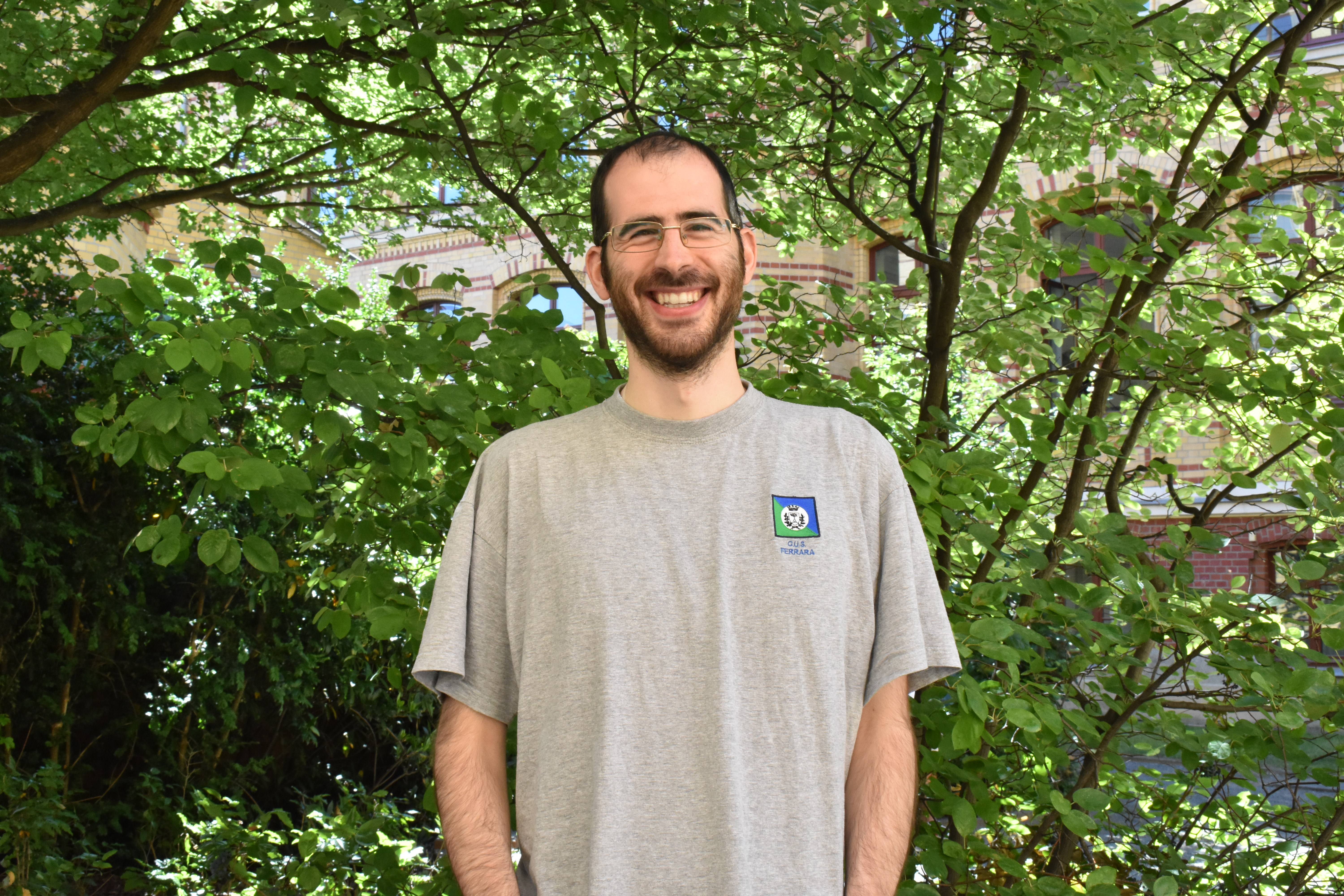
Michele Ruggeri is an Assistant Professor of Numerical Analysis (RTD-B) at the Department of Mathematics, University of Bologna, and an Honorary Lecturer at the University of Strathclyde, UK. His research focuses on numerical analysis of partial differential equations in materials science and engineering, including liquid crystal theory, micromagnetism, nonlinear elasticity, and spintronics. He is also active in developing numerical methods for uncertainty quantification and model order reduction. Education: PhD in Technical Mathematics (TU Wien, Austria), Laurea Magistrale in Mathematics (University of Pavia, Italy), and a Diploma in Science and Technology from Scuola Universitaria Superiore IUSS, Italy. He holds a Fellowship (FHEA) from Advance HE and a PGCert in Learning & Teaching in Higher Education from the University of Strathclyde. His work emphasizes finite element methods and their applications, with contributions to computational micromagnetics and software development (e.g., Commics). He is affiliated with the (AM)² Research Center on Applied Mathematics and ARCES at the University of Bologna. Awards: Fellowship (FHEA), Advance HE, UK. Key Projects: Development of numerical methods for micromagnetic simulations, uncertainty quantification in stochastic models. Contact: m.ruggeri@unibo.it
Roberto Valandro is an Associate Professor in the Department of Physics at the University of Trieste, where he serves on the Department's Board, acts as President of the Joint Board of Studies, and is Vice-Coordinator of the Doctoral Studies Boards for Physics cycles XXXIV through XXXIX. His academic work focuses on theoretical physics, particularly string theory and its applications to fundamental physics. Dr. Valandro leads the 'String Compactifications' research group within the 'Fields and Strings' research strand of Theoretical Physics. His research explores geometric aspects of string theory compactifications, with particular emphasis on singular manifolds, T-branes, and string phenomenology. He investigates how string theory on singular spaces yields important physical phenomena such as non-abelian gauge groups and chiral particles through the geometric engineering paradigm. Valandro's publication record demonstrates expertise across multiple subfields of theoretical physics, with recent work centered on 5-dimensional quantum field theories derived from M-theory, Calabi-Yau orientifolds, and de Sitter string vacua. His research connects abstract mathematical structures in string theory to potentially observable physical phenomena, bridging the gap between theoretical frameworks and experimental physics. As an academic advisor, Valandro mentors PhD students Chiara Crinò, Andrea Sangiovanni, and Davide Bason. He plays an active role in graduate education as Vice-Coordinator for multiple cycles of the Doctoral Program in Physics at the University of Trieste, contributing significantly to the development of the next generation of theoretical physicists. Valandro collaborates extensively with both local researchers including Lorenzo Di Pietro and international colleagues. His work represents an important contribution to the Department of Physics at the University of Trieste, which has a long tradition in theoretical physics dating back to notable figures like Paolo Budinich and Luciano Fonda, and which has contributed to the establishment of prestigious institutions in Trieste including the Abdus Salam International Center of Theoretical Physics (ICTP) and the International School for Advanced Studies (SISSA).
Stefano Vignolo serves as a Full Professor of Mathematical Physics (SSD MATH-04/A) within the Department of Mechanical, Energy, Management and Transport Engineering (DIME) at the University of Genoa's Polytechnic School. His institutional roles include: Member of the Polytechnic School Council Member of the DIME Department Board He teaches Mathematical Physics for the Master's Degree in Yacht Design and Rational Mechanics for the Nautical Engineering program, with office hours held Thursdays 2:30-4:30 pm at Via all'Opera Pia 15. His research integrates advanced geometric frameworks with theoretical physics, specializing in differential geometry applications to gravitational systems and quantum fields. Core focus areas include Lie derivatives of affine connections, polar decompositions of Dirac fields, integrability conditions in curved spacetimes, and modified gravity formulations like f(Q)-gravity. This work demonstrates consistent methodological rigor in applying geometric structures to solve fundamental physics problems. Analysis of his 2023-2025 publications reveals a cohesive research trajectory centered on geometric unification principles. Key contributions address affine connection derivatives, Dirac field symmetries, and junction conditions in alternative gravity models, primarily through collaborations with Luca Fabbri and Roberto Cianci. These publications collectively advance mathematical techniques for analyzing field theories in non-trivial spacetime geometries. No scientific awards, fellowships, or honors are documented in the available information. The provided materials contain no specifics regarding graduate student supervision or research funding. As a Full Professor, he likely mentors Master's and PhD candidates in mathematical physics, though no advisee names or grant details are referenced in the source text.
Chiara Franceschini is a Researcher (tenure-track) in the Department of Physical, Computer, and Mathematical Sciences at the University of Modena and Reggio Emilia. Her research focuses on interacting particle systems, stochastic duality theory, and non-equilibrium statistical mechanics. She has held prestigious fellowships at the MSRI (Berkeley) and Instituto Superior Tecnico (Lisboa), and is affiliated with organizations like the Gruppo Nazionale per la Fisica Matematica (GNFM) and the Academic Senate of her university. PhD Supervised by Cristian Giardinà Uhlenbeck Postdoctoral Fellow at MSRI Postdoctoral Fellow at Instituto Superior Tecnico Her research explores scaling limits of stochastic systems, duality relations in Markov processes, and integrable models. She is particularly active in mathematical physics and probabilistic approaches to non-equilibrium dynamics. Recent publications highlight her work on hydrodynamic limits, large deviations, and duality in asymmetric and boundary-driven systems. She also contributes to interdisciplinary topics like privacy evaluation in location-based systems. Uhlenbeck Postdoctoral Fellowship MSRI Program: Universality and Integrability in Random Matrix Theory Chiara serves as a mentor and participates in academic governance through the University's Academic Senate. She organizes international workshops such as PSPDE XII and Interacting Particle Systems and Related Fields.
Carlo Sanna is an Associate Professor at the Department of Mathematical Sciences (DISMA) of Politecnico di Torino, Italy. His research focuses on algebraic and analytic number theory, cryptography, and their intersections, particularly in post-quantum and public-key cryptographic systems. Research Interests : Algebraic Number Theory, Analytic Number Theory, Cryptanalysis, Post-Quantum Cryptography, Public-Key Cryptography, Discrete Mathematics. Teaching : He teaches Linear Recurrences (PhD level) and Advanced Cryptography (Master's level) at Politecnico di Torino, while also lecturing Linear Algebra and Geometry for Aerospace and Management Engineering. Publications : His recent work spans Fibonacci partitions, Lucas sequences, post-quantum cryptographic algorithms, and properties of linear recurrences. Supervised PhD Students : Leonardo Errati (Post-Quantum Cryptography, 2025) Giulia Salvatori (2024) Federico Accossato and Enrico Guglielmino (2022) Giuliano Romeo (2021-2025, p-adic continued fractions) Research Projects : Algebraic Methods in Cryptanalysis (2025-2027, Scientific Director) QUBIP (Quantum-oriented browser updates, 2023-2026, Scientific Head) SERICS Spoke 5 (Cybersecurity, 2023-2025, Scientific Manager) Email : carlo.sanna@polito.it
Laura Maria Andrianopoli is an Associate Professor in the Department of Applied Science and Technology (DISAT) at the Polytechnic University of Turin. Her research focuses on theoretical physics, particularly in the areas of supersymmetry, supergravity, and dualities. Her scientific expertise spans theoretical physics of fundamental interactions, with specialization in mathematical methods and applications. She has established significant research collaborations with prestigious institutions including CERN, the Historical Museum of Physics and Enrico Fermi Study and Research Center, and universities across Europe. Professor Andrianopoli's research program centers on advanced theoretical physics concepts. She investigates the mathematical structures underlying fundamental physical theories, with particular focus on supersymmetry transformations, supergravity frameworks, and duality principles. Her work bridges abstract mathematical concepts with physical phenomena, particularly in black hole physics and string theory. The sophistication of her research is evident in her extensive use of Lie groups, Lie algebras, and complex geometric structures to model physical systems. Her publication record shows a sustained research trajectory from the mid-1990s through the 2000s, with continued academic activity through teaching and supervision. The publications reveal a progression from foundational work on N=2 supergravity to more specialized investigations of black hole physics in supergravity contexts and moduli space descriptions. Her research consistently addresses deep questions in theoretical physics, particularly concerning the mathematical structures that underpin our understanding of fundamental forces. Her scientific achievements have been recognized with several prestigious awards and fellowships: "Le Scienze" Award from the magazine "Le Scienze", Italy (2006) Fellow of the Historical Museum of Physics and Enrico Fermi Study and Research Center, Italy (2004-2007) New-Talent Grant Fellow at CERN (Geneva), Switzerland (2002-2004) Fellow of CERN TH-Division at Th-Division of KULeuven (Belgium) (1998-2000) Post-Doctoral position under the EU project: TMR ERBFMRXCT96-0045 "Angelo Della Riccia" Fellowship Professor Andrianopoli maintains an active role in academic mentoring and education. She currently supervises PhD student Stefano Maurelli in the Physics program (39th cycle, 2023-present). Her teaching portfolio is extensive, having served on Doctoral Colleges for Physics at the Polytechnic University of Turin from 2015/2016 through 2022/2023 (31st through 38th cycles). She teaches Elements of Field Theory and Classical and Quantum Field Theory for PhD students, and Physics II for undergraduate students in Biomedical Engineering across multiple academic years from 2020/2021 through 2025/2026. She is a key member of the Theory of Fundamental Interactions research group within the Condensed Matter Physics and Complex Systems Institute (DISAT). Additionally, she serves as Scientific Director of the Interuniversity Center for Algebra, Geometry and Theoretical Physics "Centro Regge" (2023-2027) and as Internal Reference Staff of the Interuniversity Center for Algebra, Geometry and Theoretical Physics "Arnold-Regge", demonstrating leadership in collaborative academic initiatives.
Massimiliano Sala is a Full Professor at the Department of Mathematics of the University of Trento. His expertise spans Algebra, Algebraic Coding Theory, Boolean Algebras, Cryptography, and Computational Algebra. He specializes in cryptographic protocols, post-quantum security, and elliptic curve cryptography. His recent work includes advancements in blockchain-agnostic multi-signature schemes, searchable encryption, and elliptic curve group structures. Research Focus: Dr. Sala's research integrates mathematical foundations with applied cryptography, emphasizing secure communication protocols, cryptographic algorithm design, and blockchain technologies. He has contributed to the analysis of Boolean functions, APN permutations, and secure multi-party computation. Recent Contributions: His 2024 publications address topics like cubic Boolean functions, blockchain-agnostic asset management, and randomized searchable encryption. He also explores post-quantum cryptographic frameworks and elliptic curve-based security mechanisms. Awards & Recognition: None explicitly listed in the provided materials. Teaching & Academic Leadership: Teaches Algebraic Cryptography at the Master's level, focusing on public-key systems and post-quantum cryptography. His academic contributions include editorial work for cryptographic journals and conference proceedings.